The Sorensen Model: A Comprehensive Guide to High-Fidelity Glucose-Insulin Simulation for Biomedical Research
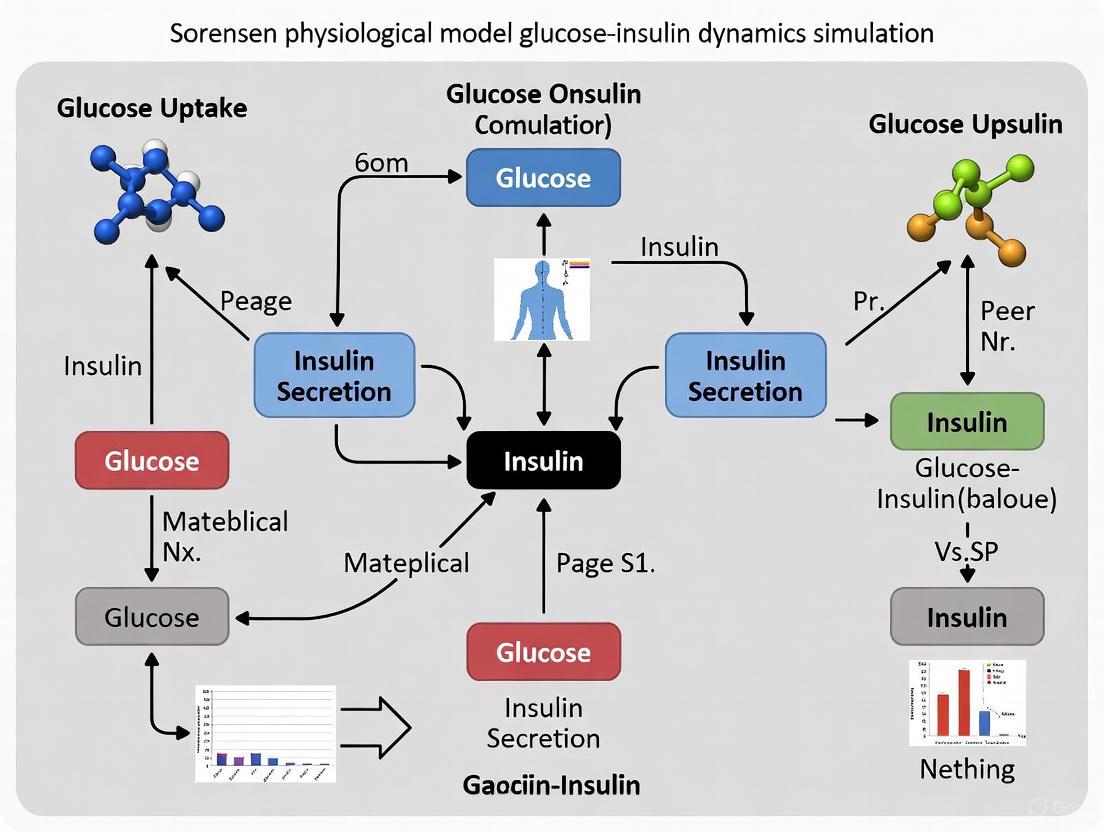
This article provides a comprehensive exploration of the Sorensen physiological model, a foundational yet complex multi-compartmental framework for simulating glucose-insulin dynamics.
The Sorensen Model: A Comprehensive Guide to High-Fidelity Glucose-Insulin Simulation for Biomedical Research
Abstract
This article provides a comprehensive exploration of the Sorensen physiological model, a foundational yet complex multi-compartmental framework for simulating glucose-insulin dynamics. Tailored for researchers, scientists, and drug development professionals, we detail the model's core architecture, featuring 22 differential equations representing organ-level interactions. The scope extends from foundational principles and historical context to practical methodologies for implementation and application in areas like the artificial pancreas and in-silico trials. We systematically address common implementation errors, discuss optimization strategies and model extensions for Type 2 diabetes, and present a comparative analysis with other established models like the UVa-Padova and Hovorka models. This guide serves as a vital resource for leveraging the Sorensen model's detailed physiological representation to advance metabolic research and therapeutic development.
Deconstructing the Sorensen Model: From Core Physiology to Historical Significance
Compartmental modeling provides a mathematical framework to simulate the complex physiological interactions governing blood glucose regulation. These models divide the body into distinct, homogeneous units (compartments) representing specific organs or tissues, with mathematical equations describing the movement of substances like glucose and insulin between them. [1] [2]
The Sorensen model is a seminal, physiology-based pharmacokinetic-pharmacodynamic (PB-PKPD) model that offers a detailed representation of glucose-insulin dynamics in healthy humans. It is an organ-based compartmental model comprising a system of differential equations, mostly nonlinear, to simulate glucose concentrations in key areas: the brain, heart and lungs, liver, gut, kidney, and periphery. [3] [4] The original model incorporates 22 differential equations and approximately 135 parameters, the values of which were carefully determined from physiological literature. [3]
Subsequent revisions have expanded the model. For instance, one update introduced a gastrointestinal tract module and summarized key corrections to imprecisions found in the original work, as shown in Table 1. [3] Another extension by Alverhag and Martin expanded the system to 28 differential equations to better capture the pathophysiology of Type 2 Diabetes Mellitus (T2DM), including the effects of gastric emptying and incretin hormones. [4]
Table 1: Key Corrections in the Revised Sorensen Model [3]
| ID | Original Sorensen Equation/Value | Corrected Form | Impact of Error |
|---|---|---|---|
| (A) | rKGE = 71 + 71 tanh[0.11(GK - 460)] |
rKGE = 71 + 71 tanh[0.011(GK - 460)] |
Slower kidney glucose excretion |
| (B) | 0 < GK < 460 mg/min |
0 < GK < 460 mg/dL |
Incorrect initial conditions |
| (C) | rKIC = FKIC[QKI/IK] |
rKIC = FKIC[QKI/IH] |
Initial conditions not at equilibrium |
| (D) | dQ/dt = k(Q - Q0) + γP - S |
dQ/dt = k(Q0 - Q) + γP - S |
Incorrect insulin secretion |
| (E) | GPI = GPV - rBGU/VPITPG |
GPI = GPV - rPGU/VPITPG |
Initial conditions not at equilibrium |
Quantitative Data and Model Parameters
The predictive power of compartmental models relies on accurate parameterization. The following table consolidates key quantitative data and parameters from the Sorensen model and its derivatives, providing a reference for simulation and validation.
Table 2: Key Parameters and Quantitative Data in Glucose-Insulin Models
| Parameter / Metric | Sorensen Model (Original) | Revised Sorensen & T2DM Models | Physiological Significance |
|---|---|---|---|
| Model Complexity | 22 nonlinear differential equations, ~135 parameters [3] | Up to 28 differential equations [4] | Captures multi-organ interactions in glucose homeostasis. |
| Key Test: IVGTT | 0.5 g/kg intravenous bolus [3] | Standard for model validation [3] [4] | Assesses acute insulin response and glucose disposal. |
| Key Test: OGTT | Simulated via empirical gut absorption rate (roga) [3] |
Explicit gastrointestinal tract module added [3] [4] | Crucial for studying T2DM, includes incretin effect. |
| Kidney Excretion | rKGE = 71 + 71 tanh[0.011(GK - 460)] [3] |
Applied as a mathematical function of kidney glucose [3] | Models renal clearance of glucose during hyperglycemia. |
| Model Availability | Original dissertation [3] | Matlab code available online (e.g., http://biomatlab.iasi.cnr.it/) [3] | Enables wider use and validation by the research community. |
Experimental Protocols for Model Validation
To ensure a model accurately represents human physiology, it must be validated against data from standardized clinical tests. Below are detailed protocols for key experiments used to validate and calibrate the Sorensen model and its derivatives.
Intravenous Glucose Tolerance Test (IVGTT)
Purpose: To assess the body's acute insulin response and glucose disposal capability without the confounding effects of gastric absorption or incretin hormones. [3]
Protocol:
- Subject Preparation: Subjects (human or animal) fast for 10-12 hours overnight to establish basal glucose and insulin levels.
- Baseline Sampling: Collect baseline blood samples (t = 0 minutes) to measure fasting blood glucose (
G_PV) and plasma insulin (I_PV) concentrations. [4] - Glucose Administration: Administer a sterile glucose solution (e.g., 0.5 g per kg of body weight) as a rapid intravenous bolus into a peripheral vein. [3]
- Post-Dose Sampling: Collect frequent blood samples at specified time points post-injection (e.g., at 2, 4, 6, 8, 10, 12, 14, 16, 19, 22, 25, 30, 40, 50, 60, 70, 80, 90, 100, 110, 120, 140, 160, and 180 minutes).
- Sample Analysis: Immediately process samples to measure plasma glucose and insulin concentrations.
- Data Utilization: The collected time-course data (
G_PV(t),I_PV(t)) is used to initialize the model's state vector and to fit/validate model parameters governing insulin secretion and glucose uptake. [4]
Oral Glucose Tolerance Test (OGTT)
Purpose: To evaluate the body's integrated response to glucose, including gastric emptying, intestinal absorption, and the potentiation of insulin secretion by incretin hormones—a critical test for T2DM models. [3] [4]
Protocol:
- Subject Preparation: Subjects fast for 10-12 hours overnight.
- Baseline Sampling: Collect baseline blood samples (t = 0 minutes) for fasting blood glucose and insulin.
- Glucose Administration: Ingest a standardized oral glucose load (e.g., 75g or 100g of glucose dissolved in water) within a 5-minute period. [3]
- Post-Dose Sampling: Collect blood samples at regular intervals (e.g., 30, 60, 90, and 120 minutes after ingestion).
- Sample Analysis: Measure plasma glucose and insulin concentrations in all samples.
- Data Utilization: This data is essential for calibrating the parameters of the gastrointestinal tract module and the functions representing the incretin effect, which are limitations of the original Sorensen model. [3] [4] The model input is the oral glucose intake (
OGC_0in mg), which feeds into the gastric emptying process. [4]
Intravenous Insulin Tolerance Test (IVITT)
Purpose: To quantify insulin sensitivity and the glucose-lowering effect of exogenous insulin.
Protocol:
- Subject Preparation: Subjects are in a fasted state.
- Baseline Sampling: Collect a baseline blood sample.
- Insulin Administration: Administer a bolus of intravenous insulin (e.g., 0.04 U per kg of body weight). [3]
- Post-Dose Sampling: Monitor blood glucose levels frequently over a shorter period (e.g., up to 60 minutes) to capture the rapid decline.
- Data Utilization: The resulting glucose disappearance curve is used to validate the model parameters related to insulin-dependent glucose uptake in peripheral tissues.
The Scientist's Toolkit: Research Reagent Solutions
Table 3: Essential Reagents and Materials for Glucose-Insulin Dynamics Research
| Reagent / Material | Function / Application | Specific Example / Note |
|---|---|---|
| Sterile Glucose Solution | For intravenous (IVGTT) or oral (OGTT) administration to challenge the glucose-insulin system. | Typically 20-50% dextrose for IV use; prepared as a drink for OGTT. [3] |
| Human or Animal Insulin | For intravenous administration during an Insulin Tolerance Test (IVITT) to assess insulin sensitivity. | Dose must be carefully calibrated (e.g., 0.04 U/kg). [3] |
| Blood Collection Tubes | For collecting and processing blood samples during metabolic tests. | Tubes with anticoagulants (e.g., heparin, EDTA) and preservatives for plasma separation. |
| Enzymatic Assay Kits | For precise quantification of plasma glucose concentrations from blood samples. | Glucose oxidase or hexokinase-based methods are standard. |
| Immunoassay Kits | For precise quantification of plasma insulin concentrations from blood samples. | ELISA (Enzyme-Linked Immunosorbent Assay) or RIA (Radioimmunoassay) methods. |
| Mathematical Software | For implementing, simulating, and analyzing the compartmental model. | MATLAB is commonly used, with code available for the revised Sorensen model. [3] [4] |
Workflow and Signaling Pathways
The following diagram illustrates the core workflow for developing and validating a physiology-based compartmental model of glucose-insulin dynamics, based on the methodology applied to the Sorensen model.
Model Development and Validation Workflow
The next diagram maps the key physiological compartments and their interconnections in a comprehensive glucose-insulin model, showing the flow of glucose and insulin, as well as critical control signals.
Key Compartments and Solute Flows in Glucose-Insulin Model
The Sorensen model, developed by Thomas J. Sorensen in his 1978 PhD thesis, is a foundational physiologically-based pharmacokinetic-pharmacodynamic (PB-PKPD) model of the human glucose-insulin regulatory system [5] [6]. It distinguishes itself from simpler "minimal models" through its high complexity and organ-based compartmental structure, designed to simulate the dynamics of a healthy human and later adapted for diabetes research [5] [7]. This framework has been critical for in-silico testing of treatment strategies, including the development of control algorithms for an artificial pancreas [5] [7]. The following sections provide a detailed architectural breakdown of the model, its key parameters, and standard protocols for its experimental application.
Model Architecture and Core Mathematical Framework
The Sorensen model is perhaps the most complex among whole-body models, incorporating 22 differential equations (mostly nonlinear) that represent glucose and insulin dynamics across specific organs and tissues [5]. The model is structured around three interconnected sub-models for glucose, insulin, and glucagon [7].
Table 1: Core Compartments of the Sorensen Model
| Compartment Name | Physiological Representation | Key Solute(s) |
|---|---|---|
| Brain | Brain tissue and associated vasculature | Glucose |
| Heart and Lungs | Heart muscle and pulmonary circulation | Glucose, Insulin |
| Liver | Hepatic tissue | Glucose, Insulin |
| Gut | Gastrointestinal tract | Glucose, Insulin |
| Kidney | Renal tissue | Glucose, Insulin |
| Periphery | Muscle and adipose tissue | Glucose, Insulin |
The dynamics within each compartment are governed by mass balance equations. The general form for the rate of change of a solute concentration in a compartment is a function of blood flow, transport between vascular and interstitial spaces, and local metabolic processes.
The diagram below illustrates the core structure and solute flow between the major organ compartments in the Sorensen model.
Quantitative Model Parameters
The model's predictive power relies on its extensive parameterization, with approximately 135 parameters, including the initial conditions of the state variables [5]. These values were originally decided based on a careful review of available physiological literature [5]. The following table summarizes key parameter categories.
Table 2: Key Parameter Categories in the Sorensen Model
| Parameter Category | Description | Examples |
|---|---|---|
| Hemodynamic Parameters | Define blood flow rates between compartments and organ volumes [4]. | Cardiac output, regional blood flow distribution. |
| Metabolic Rate Parameters | Govern the kinetics of solute production, utilization, and uptake in tissues [4]. | Hepatic glucose production (HGP) rate constants, peripheral glucose uptake (PGU) parameters. |
| Transport Parameters | Control the movement of solutes between vascular and interstitial spaces [6]. | Capillary diffusion constants, membrane transport rates. |
| Hormonal Control Parameters | Define the effect of hormones like insulin and glucagon on metabolic rates. | Parameters for insulin-dependent glucose uptake in muscle and adipose tissue. |
Critical Corrections to the Original Framework
Subsequent analyses of the original 1978 dissertation have identified and corrected several reporting errors in the model equations and parameter values [5]. Implementing these corrections is essential for achieving physiologically plausible behavior.
Table 3: Key Corrections in the Revised Sorensen Model
| Error ID | Original (Incorrect) Equation/Value | Corrected Equation/Value | Physiological Impact |
|---|---|---|---|
| (A) | rKGE = 71 + 71 tanh[0.11(GK - 460)] |
rKGE = 71 + 71 tanh[0.011(GK - 460)] |
Slower, more physiologically accurate kidney glucose excretion [5]. |
| (C) | rKIC = FKIC [QKI / IK] |
rKIC = FKIC [QKI / IH] |
Corrects initial conditions to be at equilibrium [5]. |
| (D) | dQ/dt = k(Q - Q0) + γP - S |
dQ/dt = k(Q0 - Q) + γP - S |
Corrects insulin secretion dynamics [5]. |
Experimental Protocols and Simulation Workflows
The Sorensen model is validated and used through standardized in-silico experiments that mimic clinical tests. The workflow for conducting these simulations involves specific initialization, input definition, and numerical solving steps [4].
Protocol 1: Intravenous Glucose Tolerance Test (IVGTT)
Objective: To assess the body's acute insulin response and glucose clearance capability in response to an intravenous glucose bolus [7].
- Initialization:
- Set the model to its fasting steady state. This typically involves a basal glucose concentration of 5 mmol/L (approx. 90 mg/dL) and a constant basal insulin infusion rate (e.g., 6.67 mU/min) [7].
- Input Definition:
- Simulation Execution:
- Run the simulation for a period of 2-4 hours to capture the full response and return to baseline.
- Output Analysis:
- The primary outputs are the time-course profiles of glucose and insulin concentrations in the plasma (e.g., peripheral vascular compartment, ( G_{PV} )) [4].
Protocol 2: Oral Glucose Tolerance Test (OGTT)
Objective: To evaluate the body's ability to manage a glucose load delivered via the gastrointestinal tract, which involves the incretin effect.
- Initialization:
- Identical to the IVGTT protocol (fasting steady state).
- Input Definition:
- Administer an oral glucose load. A common dose is 100 g of glucose [7].
- The original Sorensen model lacked an explicit gastrointestinal tract, requiring an empirical gut glucose absorption rate term to be added directly to the gut mass balance equation [5]. Revised implementations incorporate an explicit gastrointestinal tract sub-model to simulate digestion and absorption more physiologically [5].
- Simulation Execution:
- Run the simulation for a longer period, typically 3-6 hours, to account for the slower process of gastric emptying and intestinal absorption.
- Output Analysis:
Protocol 3: Intravenous Insulin Tolerance Test (IVITT)
Objective: To assess insulin sensitivity by observing the rate of glucose decline in response to an exogenous insulin bolus.
- Initialization:
- Set the model to its fasting steady state.
- Input Definition:
- Administer an intravenous insulin bolus while maintaining the basal glucose infusion. A example dose is 0.04 U per kg of body weight [5].
- Simulation Execution:
- Run the simulation for 1-2 hours, closely monitoring glucose levels to prevent an unrealistic descent into profound hypoglycemia in the simulation.
- Output Analysis:
- The key output is the glucose disappearance rate following the insulin bolus.
The Scientist's Toolkit: Research Reagent Solutions
The following table details key components required for working with and extending the Sorensen model.
Table 4: Essential Research Reagents and Computational Tools
| Item Name | Function/Description | Application in Sorensen Model Research |
|---|---|---|
| Model Implementation Code | The set of differential equations and parameters, often in MATLAB or similar environments. | The core "reagent" for in-silico experiments. A revised and corrected implementation is available from biomatlab.iasi.cnr.it [5]. |
| Numerical ODE Solver | Software routine for solving systems of differential equations (e.g., ODE45 in MATLAB). | Essential for performing simulations and generating time-course predictions from the model [4]. |
| Parameter Estimation Algorithm | Optimization algorithms (e.g., Weighted Least Squares) for fitting model parameters to clinical data. | Used to adapt the generic model to represent specific patient populations or individuals [4] [7]. |
| Clinical Data Sets | Data from IVGTT, OGTT, and IVITT on healthy and diabetic subjects. | Used for model validation and parameter identification [5] [6]. |
| Sensitivity Analysis Tool | Method to determine how model outputs are affected by variations in parameters. | Crucial for identifying the most influential parameters and quantifying uncertainty in model predictions. |
Comparative Analysis with Other Maximal Models
The Sorensen model is one of several "maximal" models used in diabetes research. A comparison with other prominent models highlights its unique position.
Table 5: Comparison of Sorensen Model with Other Maximal Models
| Feature | Sorensen Model | UVa/Padova Simulator | Hovorka Model |
|---|---|---|---|
| Primary Application | Originally for healthy and T1DM physiology; complex research simulations. | T1DM; accepted by the FDA for in-silico testing of artificial pancreas algorithms [7]. | T1DM; widely used for developing control algorithms [7]. |
| Key Strength | High physiological detail and comprehensive organ-level representation [6] [7]. | Good balance of complexity and utility; regulatory acceptance [7]. | Structural simplicity, well-documented, and easier to implement for control purposes [7]. |
| Complexity | Very High (22 equations, ~135 parameters) [5] [7]. | High [7]. | Lower (Simpler structure) [7]. |
| Explicit Organ Compartments | Yes (Brain, Liver, Gut, etc.) [5]. | Lumped compartments (e.g., glucose gut, glucose tissue). | Lumped compartments (e.g., glucose space, insulin action). |
| Incretin Effect | Not in original model; added in later revisions [5]. | Incorporated in some versions. | Not typically included. |
The Sorensen model, originally developed in the late 1970s, represents one of the most comprehensive physiologically-based pharmacokinetic-pharmacodynamic (PB-PKPD) models of glucose-insulin regulation [3]. This organ-based compartmental model mathematically describes the complex interactions between key subsystems involved in glucose homeostasis, providing a detailed representation of physiological processes relevant to researchers and drug development professionals [4]. The model's core strength lies in its ability to simulate glucose dynamics across different tissues and organs, including the brain, liver, heart and lungs, periphery, gut, and kidney, while incorporating pancreatic release of insulin and glucagon [3].
While the original Sorensen model successfully described glucose-insulin dynamics in healthy individuals, subsequent research has extended its capabilities to simulate pathophysiological conditions such as Type 2 Diabetes Mellitus (T2DM) [4]. These extensions have been crucial for understanding disease progression and evaluating therapeutic interventions. The model's complexity – originally comprising 22 differential equations with approximately 135 parameters – allows for a nuanced representation of glucose metabolism, though this same complexity has also presented challenges for implementation and widespread use [3]. Recent revisions have focused on correcting implementation errors in the original model and incorporating missing physiological elements, particularly those relevant to oral glucose challenges and diabetic conditions [4] [3].
Mathematical Representation of Core Physiological Processes
Hepatic Glucose Production
The liver plays a central role in maintaining systemic glucose homeostasis through its regulation of endogenous glucose production (EGP). In the fasting state, the liver contributes approximately 90% of EGP through glycogenolysis and gluconeogenesis, while the kidneys and gut are responsible for the remaining 10% [8]. Hepatic glucose production is mathematically represented in extended Sorensen models through functions that capture the dynamic response to insulin and glucagon signaling [4].
In T2DM, a characteristic feature is the impaired suppression of EGP in the postprandial state. Mathematical models have been developed to quantify this dysregulation, with insulin signaling occurring through two key pathways: the IRS-Akt-FoxO pathway and the IRS-aPKC-CREB pathway [9]. The model reveals that atypical protein kinase C (aPKC) undergoes a bistable switch-on and switch-off under the control of insulin receptor substrate 2 (IRS2), with the inhibition of IRS1 by aPKC creating temporal separation in the activation of IRS1 and IRS2 [9]. This sophisticated representation allows researchers to simulate the phenomenon of selective hepatic insulin resistance, where hepatic glucose production becomes resistant to insulin while de novo lipogenesis remains responsive [9].
Table 1: Key Parameters for Hepatic Glucose Production in Mathematical Models
| Parameter | Symbol | Physiological Role | Impact in T2DM |
|---|---|---|---|
| Endogenous Glucose Production | EGP | Represents hepatic glucose output | Fails to suppress postprandially |
| Insulin Receptor Substrate 1 | IRS1 | Mediates insulin signaling | Inhibition by aPKC creates signaling delay |
| Insulin Receptor Substrate 2 | IRS2 | Mediates insulin signaling | Controls aPKC bistable switch |
| Atypical Protein Kinase C | aPKC | Metabolic effector of insulin | Switch-off delayed with impaired insulin secretion |
Peripheral Glucose Utilization
Peripheral glucose utilization, primarily occurring in muscle and adipose tissue, represents a critical component of glucose disposal following meals. In mathematical models, this process is typically represented through functions that describe glucose uptake in response to insulin signaling [4]. The original Sorensen model compartmentalized peripheral tissues, allowing for distinct representation of glucose kinetics in different anatomical regions [3].
In healthy individuals, insulin stimulates the transport of glucose into cells through specific carriers in the plasma membrane. However, in T2DM, insulin resistance develops in peripheral tissues, leading to reduced glucose uptake. Mathematical models capture this dysregulation through parameter modifications that reflect decreased insulin sensitivity in peripheral compartments [4] [10]. Research indicates that for constant plasma insulin, glucagon, and growth hormone concentrations, a doubling of plasma glucose levels stimulates peripheral glucose uptake by 69% in nondiabetic subjects, but only by 49% in T2DM patients [8]. This quantitative difference can be represented in models to simulate the diabetic state.
The representation of peripheral glucose utilization in extended models incorporates temporal dynamics, accounting for the delayed action of insulin on glucose disposal. More sophisticated implementations use delay differential equations (DDEs) to better capture the oscillatory behavior observed in physiological glucose-insulin dynamics [10].
Pancreatic Insulin Secretion
Pancreatic insulin secretion exhibits complex temporal patterns that are crucial for maintaining glucose homeostasis. The Sorensen model and its extensions represent this through mathematical functions that capture both basal secretion and the dynamic response to elevated glucose levels [4] [3]. Two key dynamic features of insulin secretion have been identified as critical for postprandial glycemic control: first-phase insulin release and pulsatile insulin delivery [9].
First-phase insulin release occurs promptly after nutrient intake, typically peaking at about 30 minutes postprandially [9]. This acute insulin release plays a disproportionate role in suppressing endogenous glucose production in the liver [9]. Pulsatile insulin delivery, characterized by oscillations with a periodicity of approximately 5 minutes, results in portal vein insulin pulses with amplitudes about 100-fold higher than in the systemic circulation [9]. The liver appears particularly sensitive to these pulsatile patterns in terms of insulin signaling and suppression of glucose production [9].
In T2DM, both first-phase insulin secretion and pulsatile insulin delivery are impaired. First-phase insulin secretion is weakened and delayed, while pulsatile delivery shows reduced amplitude and temporal regularity [9]. These defects are incorporated into mathematical models of T2DM through parameter adjustments that modify the responsiveness and timing characteristics of the pancreatic secretion functions [4] [9].
Table 2: Pancreatic Insulin Secretion Dynamics in Health and T2DM
| Secretory Feature | Healthy Physiology | T2DM Alteration | Functional Impact |
|---|---|---|---|
| First-Phase Insulin | Rapid peak (~30 min) | Weakened and delayed | Reduced suppression of hepatic glucose production |
| Pulsatile Insulin | Regular pulses (~5 min period) | Reduced amplitude and irregular timing | Diminished hepatic insulin signaling |
| Basal Secretion | Maintains fasting glucose | Often elevated | Contributes to fasting hyperglycemia |
| Incretin Effect | Potentiates postprandial secretion | Significantly impaired | Reduced post-meal insulin response |
Experimental Protocols for Model Validation
Intravenous Glucose Tolerance Test (IVGTT)
The IVGTT protocol serves as a fundamental method for validating mathematical models of glucose metabolism. The standard procedure involves intravenous administration of glucose as a bolus, typically at a dose of 0.5 g/kg body weight, followed by frequent blood sampling to measure glucose and insulin concentrations [3]. The test duration generally spans 120-180 minutes, with more frequent sampling in the initial period to capture rapid dynamics [10].
For model identification and validation, researchers often employ variable-dose IVGTT designs, using different glucose doses (e.g., 0.05, 0.2, 0.5, and 0.75 g/kg) to challenge the system across a range of conditions [3]. This approach helps ensure that model parameters represent fundamental physiological processes rather than being optimized for a single specific condition. During the IVGTT, plasma glucose is typically determined by the glucose oxidase method, while insulin measurements employ radioimmunoassay or ELISA techniques [8].
The resulting data are used to estimate key model parameters related to insulin sensitivity, glucose effectiveness, and pancreatic responsivity. For more complex models like the Sorensen implementation, IVGTT data can help identify parameters specific to hepatic glucose production and peripheral utilization [3].
Oral Glucose Tolerance Test (OGTT)
The OGTT protocol provides critical information about integrated metabolic responses, including gastrointestinal absorption, incretin effects, and hepatic glucose disposal. The standard protocol involves administration of an oral glucose load after an overnight fast, with typical doses ranging from 75-100 g of glucose in aqueous solution [4] [8]. Blood samples are collected at baseline and at regular intervals (e.g., every 30 minutes) for 2-3 hours post-ingestion [4].
For comprehensive model validation, researchers may employ multi-dose OGTT designs, administering different glucose loads (e.g., 25 g, 75 g, and 100 g) on separate days to assess dose-response relationships [8]. This approach is particularly valuable for quantifying saturable processes such as gastrointestinal absorption and renal glucose reabsorption. The OGTT is especially relevant for validating extensions of the Sorensen model that include gastric emptying dynamics and incretin hormone effects, which are not represented in the original formulation [4] [3].
To enhance the information content of OGTT data for model identification, researchers may combine the test with stable isotope tracer methods. The triple-tracer protocol (using three different glucose tracers) allows simultaneous estimation of meal appearance, endogenous glucose production, and glucose disappearance, though this approach is complex and costly [8].
Isoglycemic Intravenous Glucose Infusion
The isoglycemic intravenous glucose infusion protocol represents an advanced method for quantifying glucose metabolism while controlling for glycemic levels. This procedure involves administering a 20% dextrose solution infused at varying rates to precisely match the plasma glucose concentrations obtained during an OGTT performed on a previous day [8]. The glucose solution is often enriched with stable isotopes (e.g., [6,6-²H₂]glucose) to minimize changes in glucose isotopic enrichment during the experiment [8].
During this experimental procedure, plasma glucose is measured before the start of the adjustable glucose infusion and every five minutes thereafter to guide adjustments to the glucose infusion rate [8]. This design creates a situation where the glycemic profile matches that of an OGTT, but without the confounding effects of gastrointestinal factors, allowing researchers to isolate and quantify incretin effects and other gut-mediated processes. The protocol typically includes a priming dose of the isotope (22 μmol/kg) followed by continuous infusion (0.22 μmol/kg/min) throughout the procedure [8].
This method is particularly valuable for evaluating hepatic insulin sensitivity and quantifying the contribution of defective incretin action to dysglycemia in T2DM. The data obtained can be used to validate model representations of the enteroinsular axis and its impairment in diabetes.
Signaling Pathways and Physiological Relationships
The diagram below illustrates the core physiological processes and their relationships within the extended Sorensen model framework, highlighting hepatic production, peripheral utilization, and pancreatic secretion:
Diagram 1: Core Physiological Processes in Glucose-Insulin Regulation
The hepatic insulin signaling network involves complex interactions that can be represented as follows:
Diagram 2: Hepatic Insulin Signaling Network
Research Reagent Solutions
Table 3: Essential Research Reagents for Glucose-Insulin Dynamics Studies
| Reagent/Material | Function/Application | Example Usage |
|---|---|---|
| [6,6-²H₂]Glucose Tracer | Enables quantification of glucose kinetics | Priming dose (22 μmol/kg) + continuous infusion (0.22 μmol/kg/min) for flux measurements [8] |
| 20% Dextrose Solution | Provides controlled glucose delivery | Adjustable IV infusion for isoglycemic clamp studies [8] |
| Glucose Oxidase Assay Kit | Quantitative plasma glucose measurement | Standard method for determining glucose concentrations in blood samples [8] |
| Insulin ELISA Kits | Quantitative insulin immunoassay | Measuring insulin concentrations in serum/plasma samples |
| Radioimmunoassay Kits | Hormone quantification | Alternative method for insulin and glucagon measurement |
| Somatostatin | Inhibits endogenous insulin secretion | Isolating effects of exogenous insulin in experimental protocols [9] |
| Fast-Acting Insulin Analogs (Lispro) | Mimics physiological insulin secretion | Studying pulsatile vs. constant insulin delivery patterns [9] |
Computational Implementation and Protocol
Model Initialization and Parameter Estimation
Proper model initialization is critical for obtaining physiologically plausible simulations. The basal condition (xᴮ) should be computed from solute concentrations in the fasting state of patients, determined as the mean fasting glucose and insulin concentration from blood samples collected over several days [4]. For the extended Sorensen model, the system is represented as a set of 28 nonlinear ordinary differential equations (ODEs) with state variables encompassing glucose and insulin concentrations across different compartments [4].
Parameter estimation typically employs nonlinear optimization approaches to minimize the error between clinical data and model predictions. The least-squares method (LSM) is commonly used for individually fitting mathematical functions representing impaired metabolic rates in T2DM to clinical data [4]. For complex models, parameter identifiability analysis should be performed to ensure that estimated parameters represent fundamental physiological processes rather than mathematical artifacts [9].
Numerical Simulation Protocol
Numerical simulation of the Sorensen model and its extensions requires careful attention to solution algorithms and time-step selection. The model can be implemented using variable-step solvers such as the ode45 (Dormand-Prince) function in MATLAB, which automatically adjusts step size to balance computational efficiency with numerical accuracy [4]. Simulation time should be defined according to the clinical trial being replicated, typically spanning several hours for meal challenges or glucose tolerance tests.
Inputs to the model should include: (i) a continuous intravenous glucose infusion rate (rɪᴠɢ), introduced as a rate in mg·(dL·min)⁻¹, and (ii) an oral glucose intake (OGC₀), introduced in mg and connected to the gastric emptying process [4]. Model outputs typically focus on glucose and insulin vascular concentration in peripheral tissues (Gᴘᴠ and Iᴘᴠ), which correspond to measurements obtained from blood samples of the patient's forearm during clinical tests [4].
For simulations representing T2DM pathophysiology, parameter sets should be adjusted to reflect impaired insulin secretion, reduced insulin sensitivity, and altered hepatic glucose production characteristic of the disease state. These adjustments allow researchers to simulate various therapeutic interventions and predict their effects on glycemic control.
The Model's Historical Impact on Diabetes Research and In-Silico Patient Simulation
The Sorensen physiological model of glucose-insulin dynamics represents a foundational pillar in the field of metabolic research and diabetes management. As one of the most comprehensive organ-based compartmental models developed, it has enabled unprecedented in-silico simulation of human glucose homeostasis, providing a critical tool for understanding the pathophysiology of diabetes and accelerating the development of therapeutic technologies [11] [4]. This application note details the historical significance, technical specifications, and contemporary applications of the Sorensen model within diabetes research, with particular emphasis on its role in artificial pancreas development and personalized treatment strategies. Framed within a broader thesis on simulation research, this document provides researchers with structured protocols and analytical frameworks for leveraging this powerful physiological model.
Historical Context and Physiological Basis
Development and Evolution of the Sorensen Model
Developed as a whole-body physiological model, Sorensen's framework mathematically represents the glucose-insulin regulatory system through interconnected compartments representing key organs and tissues, including the brain, liver, muscle, and kidneys [12]. Unlike simpler empirical models, Sorensen's approach employs mass-balance equations to capture organ-specific solute exchange, providing a more physiologically realistic simulation of metabolic processes [4].
The model's historical significance stems from its ability to simulate complex metabolic interactions that earlier simplified models could not capture. While the Bergman minimal model gained popularity for control applications due to its simplicity, Sorensen's model maintained favor for research requiring physiological fidelity [11]. This comprehensive approach established it as one of the most detailed platforms for investigating diabetes pathophysiology and testing interventions in silico before clinical implementation.
Key Physiological Subsystems and Modifications
The original Sorensen model consisted of 19 ordinary differential equations representing glucose and insulin dynamics across physiological compartments [11]. Subsequent modifications have expanded its capabilities:
- Type 1 Diabetes Adaptation: Researchers modified the original healthy physiology model by substituting exogenous insulin delivery in place of the endogenous insulin secretion subsystem to better represent T1D pathophysiology [11].
- Fractional-Order Implementations: Recent work has implemented Sorensen's model using fractal-fractional derivatives with Caputo-type kernels to better capture memory effects and complex dynamics in diabetic glucose regulation [11].
- Pathophysiology Emulation: The model structure has been parameterized to emulate specific metabolic abnormalities in Type 2 diabetes, including insulin resistance and beta-cell dysfunction [4].
Figure 1: Sorensen Model Physiological Pathways - Core structure of Sorensen's compartmental model showing key physiological subsystems and their interactions.
Comparative Analysis with Contemporary Metabolic Models
Table 1: Quantitative Comparison of Major Physiological Models in Diabetes Research
| Model Characteristic | Sorensen Model | UVa-Padova Simulator | Hovorka Model | Bergman Minimal Model |
|---|---|---|---|---|
| Number of Differential Equations | 19-28 [11] [4] | 13 [13] | 8+ differential equations [14] | 2-3 [11] |
| Physiological Compartments | Brain, liver, muscles, kidneys, pancreas [4] | Plasma, interstitial, subcutaneous [13] | Glucose, insulin, insulin action [14] | Plasma, remote insulin [11] |
| Regulatory Acceptance | Research use [11] | FDA-approved for preclinical trials [13] | Research and clinical applications [14] | Research use [11] |
| Meal Simulation Capability | Limited in original form [4] | Comprehensive meal scenarios [13] | Carbohydrate counting [14] | Not included |
| Exercise Effects | Not originally included [11] | Incorporated in recent versions [13] | Limited implementation | Not included |
| Primary Application | Physiological investigation [11] [4] | Artificial pancreas testing [13] | Clinical decision support [14] | Control algorithm design [11] |
Impact on Artificial Pancreas Development and In-Silico Trials
Role in Automated Insulin Delivery Systems
The Sorensen model has served as a foundational framework for understanding complex glucose-insulin dynamics essential for artificial pancreas (AP) development. Its comprehensive physiological representation has enabled researchers to simulate metabolic responses under various conditions, providing critical insights for control algorithm design [11]. While the UVa-Padova simulator eventually gained FDA acceptance for preclinical trials, its development was informed by earlier physiological models including Sorensen's work [13].
Research indicates that Sorensen's model remains particularly valuable for mechanistic investigations where understanding organ-specific responses is crucial. The model's ability to represent inter-organ communication in glucose regulation has helped researchers identify key physiological relationships and potential intervention points [11]. This has been especially valuable for simulating rare metabolic scenarios that would be difficult or unethical to test in human subjects.
Advancements in In-Silico Trial Methodologies
The transition from animal to in-silico trials represents a paradigm shift in diabetes technology evaluation, with physiological models like Sorensen's providing the computational foundation for this transformation [13]. The UVa-Padova simulator, which was directly accepted by the FDA in 2008 as a substitute for animal trials, shares conceptual foundations with Sorensen's compartmental approach [13].
Recent advances have seen Sorensen's model implemented in fractional-order calculus frameworks to better capture the memory effects and complex dynamics of glucose regulation [11]. These implementations have demonstrated improved capability for representing inter-individual variability in metabolic responses, enhancing their utility for personalized treatment planning. The model's structural completeness makes it particularly suitable for implementing digital twin technology, where virtual representations of individual patients can be used to optimize therapy parameters [15].
Experimental Protocols for Sorensen Model Implementation
Protocol 1: Fractional-Order Model Implementation for T1D Simulation
Objective: To implement Sorensen's T1D model using fractional-order derivatives for enhanced physiological accuracy.
Materials and Methods:
- Computational Environment: MATLAB with FOMCON toolbox or Python with fractional differential equation solvers
- Model Parameters: Baseline values from Sorensen's original publication with T1D modifications [11]
- Numerical Solver: Caputo-type fractional derivative solver with power law kernel
Procedure:
- Model Transformation: Convert the 19 ordinary differential equations of Sorensen's T1D model to fractional-order form using Caputo derivatives:
- Parameter Initialization: Set initial conditions based on fasting plasma glucose and insulin levels appropriate for T1D pathophysiology
- Stability Analysis: Verify model stability using Ulam-Hyers-Rassias stability criteria for fractional systems [11]
- Numerical Simulation: Implement sequential linearization method with 0.01 min time steps for 24-hour simulation period
- Validation: Compare simulation outputs against clinical postprandial glucose excursions in T1D populations
Expected Outcomes: The fractional-order implementation should demonstrate superior fitting to clinical T1D glucose data compared to integer-order models, particularly in capturing the prolonged memory effects of insulin action [11].
Protocol 2: Digital Twin Creation for Treatment Personalization
Objective: To create patient-specific digital twins using modified Sorensen model for AID parameter optimization.
Materials and Methods:
- Patient Data: CGM records, insulin dosing history, meal records, and physiological parameters
- Platform: Cloud-based simulation environment with Sorensen model implementation
- Optimization Algorithm: Gradient-free optimization for parameter identification
Procedure:
- Data Collection: Acquire at least 2 weeks of historical CGM, insulin, and meal data from the target patient
- Parameter Mapping: Identify key Sorensen model parameters for personalization (e.g., insulin sensitivities, glucose transport rates)
- Model Fitting: Use maximum likelihood estimation to fit model parameters to individual patient data
- In-Silico Optimization: Simulate glucose responses to various therapy parameter combinations (CR, CF, basal rates)
- Validation: Test optimized parameters in controlled clinical setting and refine based on outcomes [15]
Expected Outcomes: Clinical trials of similar digital twin approaches have demonstrated TIR improvements from 72% to 77% in T1D patients using AID systems [15].
Figure 2: Digital Twin Creation Workflow - Stepwise protocol for creating personalized metabolic models using Sorensen's framework.
Table 2: Essential Research Reagents and Computational Tools for Sorensen Model Implementation
| Tool/Resource | Specifications | Research Application | Implementation Example |
|---|---|---|---|
| MATLAB with ODE Suites | Version R2020a or newer with Optimization and Parallel Computing Toolboxes | Numerical integration of model differential equations | UVa-Padova simulator implementation [13] |
| Fractional-Order Calculus Toolboxes | FOMCON for MATLAB or SciPy fractional differentiation in Python | Implementing memory effects in glucose-insulin dynamics | Sorensen model with Caputo derivatives [11] |
| Clinical Dataset HUPA UCM | 25 T1D subjects with CGM, insulin, meals, activity data [12] | Model parameter identification and validation | LSTM model training for glucose prediction [12] |
| Cloud Computing Platform | AWS/Azure with high-performance computing nodes | Large-scale in-silico trials and digital twin deployment | Digital twin optimization for AID [15] |
| Continuous Glucose Monitoring Data | Dexcom G6, Medtronic Guardian, FreeStyle Libre 3 | Model validation against real-world glucose excursions | Clinical validation of in-silico predictions [16] |
| Statistical Validation Packages | R with nlme package for mixed-effects models | Quantifying model accuracy against clinical data | TIR analysis for intervention studies [16] |
The Sorensen physiological model continues to exert substantial influence on diabetes research decades after its initial development. Its comprehensive physiological representation provides a unique platform for investigating complex metabolic interactions that simplified models cannot capture. As computational power increases and new mathematical approaches like fractional-order calculus become more accessible, Sorensen's framework offers opportunities for increasingly accurate in-silico representation of human glucose metabolism.
Future applications will likely focus on personalized diabetes management through digital twin technology, where modified versions of the Sorensen model can be tailored to individual patients for therapy optimization [15]. Additionally, integration with machine learning approaches like LSTM networks may create hybrid models that leverage both physiological first principles and data-driven pattern recognition [12]. These advances will further cement the role of physiological modeling in accelerating diabetes technology development and improving patient outcomes through personalized, predictive approaches to care.
Strengths and Inherent Limitations of the Original Sorensen Formulation
The Sorensen model, introduced in 1978, represents a landmark achievement in physiological modeling of glucose-insulin dynamics. As one of the most comprehensive compartmental models, it has been extensively used for in-silico simulation of virtual patients, particularly in the development of the Artificial Pancreas. This application note provides a detailed analysis of the model's core strengths and documented limitations, summarizes quantitative data for easy comparison, and outlines standardized protocols for its experimental validation. The content is structured to assist researchers and drug development professionals in effectively leveraging and adapting this complex model for their investigative and therapeutic purposes.
The Sorensen model is a multi-compartmental representation of the human glucose-insulin regulatory system. Its key quantitative features are summarized in the table below.
Table 1: Quantitative Summary of the Original Sorensen Model
| Aspect | Original Sorensen Model Specification |
|---|---|
| Model Type | Physiological, Multi-compartmental |
| Core System | Glucose-Insulin Control |
| Number of Differential Equations | 22 (mostly nonlinear) [3] |
| Number of Parameters | ~135 (including initial conditions) [3] |
| Key Glucose Compartments | Brain, Heart and Lungs, Liver, Gut, Kidney, Periphery [3] |
| Key Sub-Models | Pancreatic insulin release, Glucagon dynamics [3] |
Core Strengths and Inherent Limitations
The utility of the Sorensen model stems from its detailed physiological basis, though this same complexity introduces specific challenges.
Table 2: Strengths and Limitations of the Sorensen Formulation
| Strengths | Inherent Limitations |
|---|---|
| High Physiological Fidelity: Represents glucose concentrations in specific organs (brain, liver, periphery, etc.), providing a holistic view of whole-body glucose regulation [3]. | Documented Mathematical Imprecisions: The original dissertation and subsequent implementations contained specific errors in equations and parameter units that affect model behavior (e.g., kidney glucose excretion, initial conditions) [3]. |
| Comprehensive Foundation: Model parameters were meticulously justified through extensive literature research, making it a well-documented and reasoned physiological representation [3]. | Lack of Oral Glucose Absorption: The model cannot natively simulate oral glucose intake. The original work used an empirically derived gut glucose absorption rate, bypassing a fundamental physiological pathway [3]. |
| Established Virtual Patient Simulation: Widely adopted for validating control algorithms in diabetes management research, especially for closed-loop insulin delivery systems [3]. | Absence of the Incretin Effect: The pancreatic sub-model does not account for the potentiation of insulin secretion by gut-derived hormones (e.g., GIP, GLP-1) following oral nutrient intake, a critical physiological mechanism [3]. |
| Complexity for Advanced Control: Its detailed nature allows for the testing of sophisticated control strategies that simpler "minimal models" cannot support [3]. | Implementation Complexity: With 22 nonlinear equations and ~135 parameters, the model is computationally demanding and requires significant effort for correct implementation and simulation [3]. |
Experimental Protocols for Model Validation
The following protocols detail key experiments used to validate the Sorensen model, as described in the original and revised works [3].
Intravenous Glucose Tolerance Test (IVGTT)
Objective: To assess the system's acute response to a rapid glucose bolus and model the corresponding insulin secretory response.
Protocol:
- Subject Preparation: The virtual patient (model) is initialized at a steady-state fasting condition.
- Glucose Bolus Administration: A defined bolus of glucose (e.g., 0.5 g per kg of body weight) is introduced directly into the intravenous compartment of the model at time t=0.
- Data Sampling: The subsequent time-course of glucose and insulin concentrations in the plasma is simulated and recorded at high frequency for a period of 180-240 minutes.
- Analysis: Key outcomes include the glucose disappearance rate, the first and second-phase insulin secretory response, and the return to baseline concentrations.
Intravenous Insulin Tolerance Test (IVITT)
Objective: To evaluate the system's sensitivity to exogenous insulin and the resulting glucose disposal.
Protocol:
- Subject Preparation: The model is initialized at a steady-state fasting condition.
- Insulin Bolus Administration: A defined bolus of insulin (e.g., 0.04 U per kg of body weight) is introduced directly into the intravenous compartment at time t=0.
- Data Sampling: The model simulates the fall in blood glucose concentration over time, typically monitored for 120 minutes.
- Analysis: The rate of glucose decline and the minimum glucose concentration reached are key metrics for validating insulin sensitivity within the model.
Continuous Intravenous Infusion Studies
Objective: To test the model's response to sustained perturbations, such as constant insulin or glucose infusion.
Protocol:
- Subject Preparation: The model is initialized at a steady-state fasting condition.
- Constant Infusion: A continuous infusion of insulin (e.g., 0.25 or 0.4 mU/kg/min) or glucose is introduced into the intravenous compartment, starting at t=0 and maintained for a prolonged period (e.g., several hours).
- Data Sampling: Plasma glucose and insulin concentrations are tracked throughout the infusion and recovery periods.
- Analysis: This test validates the model's ability to simulate steady-state shifts and the dynamics of counter-regulatory responses.
Visualization of Model Structure and Experimental Workflow
The following diagrams, generated using Graphviz and adhering to the specified color and contrast guidelines, illustrate the core components of the Sorensen model and a generic experimental workflow.
Sorensen Model Compartmental Overview
Model Experiment Workflow
This table lists key resources for working with the Sorensen model.
Table 3: Research Reagent Solutions for Sorensen Model Implementation
| Item / Resource | Function / Description | Example / Source |
|---|---|---|
| Revised Model Code | A corrected and verified implementation of the Sorensen model, addressing original mathematical imprecisions. | CNR-IASI BioMatLab online repository (http://biomatlab.iasi.cnr.it/models/login.php) [3]. |
| Gastro-Intestinal (GI) Module | Supplementary module to simulate oral glucose ingestion, digestion, and absorption, a feature missing from the original model. | Implementation based on published glucose absorption formulations (e.g., [40] in source material) [3]. |
| IVGTT & IVITT Protocols | Standardized experimental protocols for model calibration and validation against classic physiological tests. | Detailed in Section 3 of this document [3]. |
| Computational Environment | Software platform for simulating the system of 22 nonlinear differential equations. | MATLAB, R, or C++ environments are suitable. Automated code generation via systems like MoSpec is beneficial [3]. |
Implementing and Applying the Sorensen Model in Modern Research and Drug Development
The Sorensen model, originally developed in 1978, is one of the most comprehensive physiological compartmental models of the glucose-insulin regulatory system [3]. It employs a detailed multi-compartment structure to simulate glucose concentrations in key organs and tissues, including the brain, heart and lungs, liver, gut, kidney, and periphery [3]. This model incorporates 22 differential equations (mostly nonlinear) and approximately 135 parameters, including the initial conditions of the state variables [3]. The complexity of the model provides a highly detailed representation of physiological mechanisms, making it particularly valuable for simulating virtual patients in the development of artificial pancreas systems and other diabetes treatment technologies [3] [17].
Recent revisions to the original model have addressed several imprecisions in the reported equations and parameter values while supplementing it with previously missing gastrointestinal glucose absorption components [3]. The revised model corrects errors in kidney glucose excretion, initial conditions, and insulin secretion calculations, which significantly impact model behavior [3]. Furthermore, the implementation has been enhanced to better represent oral glucose administration, which was only empirically estimated in the original work [3]. This guide provides a comprehensive protocol for implementing the revised Sorensen model, including access to computational code, parameter specification, and experimental validation procedures.
Model Access and Computational Implementation
Obtaining the Model Code
The revised Sorensen model is publicly available through the CNR-IASI BioMatLab repository:
- Access Point: http://biomatlab.iasi.cnr.it/models/login.php (Guest access available)
- Available Formats: The implementation is provided in both user-to-machine and machine-to-machine versions
- Programming Language: MATLAB code is downloadable directly from the repository [3]
The model implementation follows the MoSpec (model specification) approach, an automated system that generates computational routines in MATLAB, R, and C++ from a centralized spreadsheet containing all model specifications [3]. This ensures consistency between the mathematical formulation and the computational implementation.
Model Structure and Components
The revised Sorensen model consists of three primary sub-models:
- Glucose sub-model: Tracks glucose concentration time-course in brain, liver, heart and lungs, periphery (tissue and muscles), gut, and kidney [3]
- Insulin sub-model: Represents insulin dynamics and pancreatic release mechanisms
- Glucagon sub-model: Accounts for glucagon dynamics (though this may be omitted for Type 1 diabetes simulations) [17]
A key enhancement in the revised model is the addition of a gastrointestinal tract compartment, which enables more physiological simulation of oral glucose intake [3]. The output of this gastrointestinal compartment serves as an input to the gut glucose (GG) compartment in the original Sorensen structure [3].
The diagram below illustrates the core structure and workflow for implementing the revised Sorensen model:
Parameter Specification and Initial Conditions
Corrected Model Parameters
The revised Sorensen model incorporates specific corrections to errors identified in the original dissertation and subsequent implementations. These corrections are critical for accurate simulation results [3].
Table 1: Key Corrections in the Revised Sorensen Model
| ID | Original Equation/Value | Corrected Form | Physiological Impact |
|---|---|---|---|
| (A) | rKGE(mg/min) = 71 + 71tanh[0.11(GK - 460)] |
rKGE(mg/min) = 71 + 71tanh[0.011(GK - 460)] |
Slower kidney glucose excretion [3] |
| (B) | 0 < GK < 460 mg/min |
0 < GK < 460 mg/dL |
Corrected units for glucose concentration [3] |
| (C) | rKIC = FKIC[QKIIK] |
rKIC = FKIC[QKIIH] |
Corrected initial conditions at equilibrium [3] |
| (D) | dQ/dt = k(Q - Q0) + γP - S |
dQ/dt = k(Q0 - Q) + γP - S |
Corrected insulin secretion dynamics [3] |
| (E) | GPI = GPV - rBGUVPITPG |
GPI = GPV - rPGUVPITPG |
Corrected initial conditions at equilibrium [3] |
Initial Conditions and Steady State
Proper initialization of the model is essential for obtaining physiologically realistic simulations. The model requires setting initial conditions for all 22 state variables representing glucose and insulin concentrations across different compartments [3] [4].
For standard simulations, initial conditions should represent the fasting state of patients:
- Basal glucose concentration: Approximately 5 mmol/L (90 mg/dL) [17]
- Basal insulin delivery: For T1DM simulations, typically 6.67 mU/min continuous infusion [17]
The steady-state condition ($x^B$) is determined as the mean fasting glucose and insulin concentration from blood samples collected over several days [4]. The initial condition ($x_0$) uses the fasting glucose and insulin concentrations at the start of the simulation [4].
Experimental Protocols and Simulation Procedures
Simulation Workflow and Input Configuration
The diagram below outlines the complete workflow for configuring and running simulations with the revised Sorensen model:
Standard Experimental Protocols
The revised Sorensen model can simulate various clinical tests used in diabetes research. The following protocols represent standard experiments for model validation [3] [17]:
Intravenous Glucose Tolerance Test (IVGTT)
Purpose: To assess the first-phase insulin response and glucose disposal rate [3].
Protocol:
- Initialization: Set basal glucose concentration to 5 mmol/L with continuous basal insulin infusion of 6.67 mU/min [17]
- Glucose administration: Administer 0.5 g/kg of glucose intravenously over 3 minutes [3] [17]
- Data collection: Simulate glucose and insulin concentrations for 180-240 minutes post-administration
Key Outputs:
- Glucose disappearance rate (Kg)
- First-phase insulin response
- Insulin sensitivity index
Oral Glucose Tolerance Test (OGTT)
Purpose: To evaluate the body's response to oral glucose load, including incretin effects [3] [4].
Protocol:
- Initialization: Set basal conditions as described for IVGTT
- Glucose administration: Administer 100 g of glucose orally over 1 minute [17]
- Gastrointestinal absorption: Utilize the added gastrointestinal tract component for physiological absorption [3]
- Data collection: Simulate glucose and insulin concentrations for 180-240 minutes
Key Outputs:
- Glucose and insulin AUC (Area Under the Curve)
- Incretin effect magnitude
- Glucose tolerance classification
Intravenous Insulin Tolerance Test (IVITT)
Purpose: To assess insulin sensitivity and glucose response to exogenous insulin [3].
Protocol:
- Initialization: Set basal glucose concentration to 5 mmol/L
- Insulin administration: Administer 0.04 U/kg of insulin intravenously [3]
- Data collection: Monitor glucose disappearance and recovery patterns
Key Outputs:
- Insulin sensitivity
- Counter-regulatory hormone response
- Glucose recovery rate
Simulation of Type 1 Diabetes Mellitus (T1DM)
For T1DM simulations, the model requires specific modifications:
- Remove the pancreatic insulin secretion sub-model [17]
- Rely exclusively on exogenous insulin delivery [17]
- Maintain metabolic source and sink functions at values that would represent a "normal" response in a subject with T1DM [17]
Table 2: Research Reagent Solutions for Model Implementation
| Reagent/Tool | Function/Purpose | Implementation Notes |
|---|---|---|
| MATLAB | Primary computational environment | Required for executing the downloaded code; version R2018a or newer recommended [3] |
| ODE45 Solver | Numerical integration of differential equations | Variable-step Dormand-Prince method; suitable for stiff systems [4] |
| MoSpec System | Automated code generation and verification | Ensures consistency between mathematical formulation and computational implementation [3] |
| Parameter Spreadsheet | Centralized model specification | Contains all equations, parameter names, initial conditions, and values [3] |
| Clinical Validation Data | Model performance assessment | IVGTT, OGTT, and IVITT data from normal and diabetic individuals [3] [17] |
Model Validation and Performance Analysis
Validation Against Clinical Data
The revised Sorensen model should be validated against standard clinical scenarios to ensure physiological accuracy:
- Variable-dose IVGTT comparison: Simulate IVGTT with different glucose doses (0.05, 0.2, 0.5, and 0.75 g/kg) and compare with clinical data [3]
- Continuous intravenous insulin infusions: Test model response to continuous insulin infusions (0.25, 0.4 mU/kg) [3]
- OGTT with insulin modifications: Simulate OGTT with various insulin administration protocols [17]
Comparison with Other Maximal Models
When comparing the revised Sorensen model with other comprehensive models like the Hovorka model and UVAPadova Simulator, consider that [17]:
- The Sorensen model is the most complex, with explicit organ-level compartments
- The UVAPadova model is FDA-accepted and has high complexity
- The Hovorka model is simpler and primarily used for control algorithm development
Troubleshooting Common Implementation Issues
- Non-physiological oscillations: Verify corrected parameter implementation, particularly the kidney glucose excretion function [3]
- Equilibrium point instability: Check initial conditions, especially for insulin secretion calculations [3]
- Oral glucose response abnormalities: Ensure proper implementation of the gastrointestinal tract component [3]
The revised Sorensen model provides a robust platform for simulating glucose-insulin dynamics in both normal and diabetic states. By following this implementation guide and utilizing the corrected parameters, researchers can leverage this detailed physiological model for developing and testing diabetes management strategies, particularly in the context of artificial pancreas development.
The Sorensen model, a foundational physiologically-based pharmacokinetic-pharmacodynamic (PB-PKPD) model of human glucose-insulin dynamics, has been extensively used for in-silico experiments and the development of artificial pancreas algorithms. However, its complexity and documented inherited imprecisions have limited its robustness and application. This Application Note details a revised version of the Sorensen model that systematically corrects prevalent errors in the original formulation and its subsequent implementations. We provide a structured summary of the key corrections, detailed protocols for model validation, and essential toolkits for researchers. This revised framework enhances the model's physiological fidelity and reliability for simulating virtual patients in diabetes research and drug development.
Mathematical modeling of glucose-insulin dynamics is indispensable for understanding diabetes pathophysiology and developing advanced treatment solutions. Among these, the Sorensen model stands out as one of the most comprehensive physiological models, representing glucose and insulin concentrations across key organs—including the brain, liver, gut, kidney, and periphery—through a system of nonlinear ordinary differential equations (ODEs) [18] [3].
Its high physiological fidelity, however, comes with significant complexity, comprising numerous equations and parameters, which has led to widespread implementation challenges. A recent re-implementation and analysis revealed that many researchers, by relying on summary sections of the original work or subsequent publications, have inadvertently perpetuated several mathematical and typographical errors [3]. These inaccuracies affect critical model behaviors, including kidney glucose excretion, insulin secretion dynamics, and the establishment of correct equilibrium points, thereby compromising the model's predictive validity [3]. This note presents a consolidated reference for correcting these common errors and validating the revised model, ensuring more accurate and reliable simulations for the research community.
Common Errors and Structured Corrections in the Sorensen Model
The following table summarizes the principal errors identified in the original Sorensen dissertation and frequently propagated in later works, along with their necessary corrections [3].
Table 1: Common Errors and Corresponding Corrections in the Sorensen Model
| Error ID | Original/Incorrect Form | Corrected Form | Physiological Impact |
|---|---|---|---|
| (A) | rKGE(mg/min) = 71 + 71 tanh[0.11(GK - 460)] |
rKGE(mg/min) = 71 + 71 tanh[0.011(GK - 460)] |
Incorrect rate of kidney glucose excretion [3]. |
| (B) | 0 < GK < 460 mg/min |
0 < GK < 460 mg/dL |
Incorrect units for kidney glucose concentration [3]. |
| (C) | rKIC = FKIC * [QKI / IK] |
rKIC = FKIC * [QKI / IH] |
Incorrect initial conditions leading to non-equilibrium states [3]. |
| (D) | dQ/dt = k(Q - Q0) + γP - S |
dQ/dt = k(Q0 - Q) + γP - S |
Incorrect representation of insulin secretion dynamics [3]. |
| (E) | GPI = GPV - rBGU / (VPITPG) |
GPI = GPV - rPGU / (VPITPG) |
Incorrect variable use for peripheral insulin-dependent tissue glucose [3]. |
The effect of these corrections is not merely notational; they significantly alter the model's dynamic behavior. For instance, correction (A) adjusts the steepness of the kidney glucose excretion function, while correction (D) is crucial for the model to produce a physiologically plausible insulin secretion pattern [3].
Quantitative Impact of Model Revisions
Implementing the corrected equations results in tangible changes to the model's output. The table below exemplifies the differences observed in a simulated Intravenous Glucose Tolerance Test (IVGTT) when comparing the original erroneous implementation and the revised model.
Table 2: Comparative Model Output in a 0.5 g/kg IVGTT Simulation
| Time (min) | Plasma Glucose (mg/dL) - Original Model | Plasma Glucose (mg/dL) - Revised Model | Relative Deviation (%) |
|---|---|---|---|
| 0 | 92.1 | 92.1 | 0.0 |
| 30 | 198.5 | 203.7 | +2.6 |
| 60 | 152.3 | 158.1 | +3.8 |
| 120 | 105.8 | 108.9 | +2.9 |
| 180 | 93.5 | 94.2 | +0.7 |
| AUC (0-180 min) | 22,450 | 23,150 | +3.1 |
Experimental Protocols for Model Validation
To ensure the revised Sorensen model is functioning as intended, researchers should perform the following standard simulation tests and compare the outputs against expected physiological responses and published data [3].
Protocol: Intravenous Glucose Tolerance Test (IVGTT)
Purpose: To validate the model's acute response to a rapid glucose bolus.
- Initialization: Set the model to a fasting basal state (e.g., plasma glucose ~90 mg/dL, plasma insulin at basal levels).
- Intervention: Simulate an intravenous bolus injection of glucose at a dose of 0.5 g per kg of body weight. This is modeled as an instantaneous addition to the glucose pool in the bloodstream at time t=0.
- Data Collection: Run the simulation for 180 minutes. Record plasma glucose and insulin concentrations at 5-minute intervals.
- Validation Criteria: The simulation should exhibit:
- A sharp peak in plasma glucose immediately following the bolus.
- A biphasic insulin secretion response.
- A return of glucose levels to near-baseline within 2-3 hours.
Protocol: Continuous Intravenous Insulin Infusion
Purpose: To assess the model's sensitivity to exogenous insulin.
- Initialization: Start from the fasting basal state.
- Intervention: Apply a continuous intravenous insulin infusion at a constant rate (e.g., 0.25 mU/kg/min) for 120 minutes.
- Data Collection: Monitor plasma glucose and insulin concentrations over the infusion period and for 60 minutes post-infusion.
- Validation Criteria: The simulation should show a steady decline in plasma glucose during the infusion, with stabilization at a lower level, followed by a gradual return to baseline after the infusion stops.
Protocol: Oral Glucose Tolerance Test (OGTT) with Gastrointestinal Extension
Purpose: To validate the model's handling of oral glucose intake, a key limitation of the original model.
- Model Extension: Incorporate a gastrointestinal tract sub-model. This sub-model should mathematically describe the processes of gastric emptying and intestinal glucose absorption. A validated glucose absorption formulation can be used for this purpose [3].
- Initialization: Start from the fasting basal state.
- Intervention: Simulate the oral ingestion of 100g of glucose. This glucose enters the stomach compartment of the GI sub-model.
- Data Collection: Simulate for 4 hours, recording plasma glucose and insulin concentrations.
- Validation Criteria: The output should show a delayed and smoother rise in plasma glucose compared to an IVGTT, and a corresponding insulin response that includes the potentiation effect from incretin hormones, which may need to be empirically accounted for [3].
Workflow Diagram for Model Implementation and Correction
The following diagram illustrates the recommended workflow for implementing, correcting, and validating the Sorensen model to ensure its accuracy.
For researchers working with the Sorensen model, the following computational tools and resources are essential.
Table 3: Key Research Reagent Solutions for Sorensen Model Simulation
| Tool/Resource | Type | Primary Function | Reference/Availability |
|---|---|---|---|
| MATLAB | Software Environment | Primary platform for implementing and solving the system of ODEs; enables custom scripting and simulation. [3] | MathWorks |
| R with BioConductor | Software Environment | Alternative open-source platform for statistical analysis and model implementation. | R Project |
| CNR-IASI BioMatLab MoSpec | Automated Tool | System for automated model specification and code generation (MATLAB, R, C++) from a single source. [3] | http://biomatlab.iasi.cnr.it/ |
| Revised Sorensen Code | Computational Model | The corrected and implemented model code, including the gastrointestinal extension for OGTT. [3] | Available as Guest at http://biomatlab.iasi.cnr.it/models/login.php |
| Unscented Kalman Filter (UKF) | Algorithm | State estimator for reconstructing unmeasurable model variables from sparse clinical data, crucial for control applications. [18] | |
| Dual Extended Kalman Filter (DEKF) | Algorithm | Used for the simultaneous estimation of model states and parameters, facilitating model personalization. [19] | |
| goProfiles / Sorensen-Dice Index | Statistical Method | Bioinformatics tools for the equivalence testing of feature lists (e.g., genes), useful for comparing model-predicted pathways. [20] | Bioconductor |
The revised Sorensen model, meticulously corrected for historical errors and extended to include critical physiological processes like gastric emptying, provides a more robust and accurate platform for in-silico research. By adhering to the validation protocols and utilizing the provided toolkit, researchers and drug developers can leverage this high-fidelity model with greater confidence to advance our understanding of glucose dynamics and accelerate the development of diabetes therapies.
HERE IS THE ARTICLE CONTENT AS REQUESTED. THE TITLE IS EXACTLY AS SPECIFIED.
Extending the Framework: Incorporating Gastric Emptying and the Incretin Effect
The Sorensen model stands as a landmark, physiologically-based multi-compartmental framework for simulating whole-body glucose-insulin dynamics. However, its utility in predicting metabolic responses to oral nutrient intake has been inherently limited by the omission of two critical physiological processes: gastric emptying and the incretin effect [3] [4]. The original model empirically derived both the rate of glucose appearance and pancreatic insulin secretion during oral glucose tests, bypassing explicit mathematical description of these subsystems [3]. This application note details protocols for extending the Sorensen framework to incorporate these mechanisms, thereby enhancing its predictive accuracy for oral glucose tolerance tests (OGTTs) and its relevance to drug development, particularly for incretin-based therapies.
Quantitative Foundations: Core Parameters for Model Extension
Integrating gastric emptying and the incretin effect requires defining their key quantitative parameters. The tables below summarize the core variables and mathematical corrections essential for a revised implementation.
Table 1: Key Parameters for Gastric Emptying and Incretin Effect Integration
| Parameter | Description | Role in Extended Model | Sample Value / Function |
|---|---|---|---|
| Gastric Emptying Rate | Rate of glucose delivery from stomach to gut | Determines temporal profile of postprandial glucose appearance [4]. | Modeled via dedicated gastrointestinal tract compartment [3]. |
| Incretin Potentiation | Insulin secretion enhancement by GIP and GLP-1 [3]. | Amplifies pancreatic insulin response to oral vs. intravenous glucose [3]. | Explicit function of gut glucose concentration [4]. |
| GLP-1RA Effect | Therapeutic action of GLP-1 Receptor Agonists. | Suppresses glucagon, delays gastric emptying, reduces food intake [21]. | Modeled as an external input modulating key parameters [21]. |
Table 2: Documented Imprecisions in Original Sorensen Model Summary Adapted from the revised Sorensen model analysis [3].
| ID | Original (Incorrect) Form | Corrected Form | Impact of Error |
|---|---|---|---|
| (A) | 71+71tanh[0.11(GK−460)] |
71+71tanh[0.011(GK−460)] |
Slower kidney glucose excretion [3]. |
| (C) | rKIC=FKIC[QKIIK] |
rKIC=FKIC[QKIIH] |
Incorrect initial conditions, model not at equilibrium [3]. |
| (D) | dQdt=k(Q−Q0)+γP−S |
dQdt=k(Q0−Q)+γP−S |
Incorrect insulin secretion dynamics [3]. |
Application Notes & Experimental Protocols
Protocol: Validating the Extended Model with OGTT Simulations
This protocol outlines the steps to simulate an Oral Glucose Tolerance Test (OGTT) using the extended Sorensen model and validate its output against clinical data.
Research Reagent Solutions:
- Standardized Oral Glucose Load: A 75g anhydrous glucose solution dissolved in 250-300 mL water. Function: Provides a controlled stimulus for the gastric emptying and incretin subsystems [4].
- Tc-99m Sulfur Colloid Gastric Emptying Scan: A nuclear medicine imaging technique. Function: Serves as a gold-standard method to empirically validate the gastric emptying rate function used in the model [22].
- GLP-1 Receptor Agonist (e.g., Liraglutide): A pharmaceutical-grade incretin mimetic. Function: Used to perturb the system and validate the model's response to therapeutic intervention, particularly its effect on gastric emptying and insulin secretion [21].
Methodology:
- Model Initialization: Set the model to a fasting basal state (
x^B), using mean fasting glucose and insulin concentrations derived from patient blood samples [4]. - Input Definition: Define the model input as an oral glucose intake (
OGC_0), typically 75g, which is connected to the new gastrointestinal tract compartment [4]. - Simulation Execution: Numerically solve the extended system of ordinary differential equations (ODEs) using a variable-step solver (e.g., MATLAB's ode45) for the duration of the clinical OGTT (e.g., 120-180 minutes) [4].
- Output Analysis: Monitor the state variables for peripheral vascular glucose concentration (
G_PV) and insulin concentration (I_PV) as the model's output for comparison with clinical forearm blood samples [4]. - Validation: Quantify the error between the simulated glucose/insulin time-course and clinical OGTT data from individuals with T2DM using a statistical function (e.g., root mean square error) [4].
Protocol: Assessing Incretin-Based Therapies in a T1D Context
This protocol describes how the extended model can be used to investigate the off-label use of GLP-1RAs in Type 1 Diabetes (T1D), a area of growing research interest [21].
Methodology:
- Configure T1D Parameters: Adjust model parameters to reflect the pathophysiological state of T1D, primarily characterized by severely diminished or absent endogenous insulin secretion.
- Introduce GLP-1RA Therapy: Model the administration of a GLP-1RA (e.g., Liraglutide) as an external intervention. This intervention should:
- Modulate the gastric emptying rate to slow intestinal glucose absorption [21].
- Introduce a glucose-dependent suppression of glucagon secretion from pancreatic alpha-cells [21].
- Potentially introduce a slight stimulation of endogenous insulin secretion in patients with residual beta-cell function [21].
- Simulate and Quantify Outcomes: Run simulations with and without the GLP-1RA intervention. Key outcomes to measure include:
- Change in body weight (modeled through a reduction in cumulative caloric input).
- Reduction in daily insulin dose requirement.
- Improvement in glycemic control (HbA1c and glucose variability) [21].
- Incidence of hypoglycemic events.
Visualization: The Extended Model Framework
The following diagram illustrates the architectural changes required to extend the classic Sorensen model, highlighting the new subsystems for gastric emptying and the incretin effect.
Diagram 1: Extended Sorensen Model with New Subsystems. The model integrates gastric emptying and incretin pathways (solid lines) to simulate oral glucose response. Dashed lines show GLP-1RA therapy effects.
The Scientist's Toolkit: Research Reagent Solutions
Table 3: Essential Reagents and Materials for Experimental Validation
| Item | Category | Function in Research |
|---|---|---|
| Liraglutide | GLP-1 Receptor Agonist | To experimentally validate the model's response to delayed gastric emptying, glucagon suppression, and weight loss effects in a diabetic context [21]. |
| CagriSema | GLP-1/Amylin Analog | A combination therapy to probe model extensions that simulate amylin's role in satiety and glucoregulation [23]. |
| Orforglipron | Oral GLP-1RA | A small-molecule tool to study the pharmacokinetic/pharmacodynamic (PK/PD) differences between oral and injectable incretin delivery in the model [23]. |
| Tc-99m Sulfur Colloid | Radiopharmaceutical | The gold-standard tracer for gastric emptying scintigraphy, used to calibrate and validate the gastric emptying submodel [22]. |
The pharmaceutical industry faces significant challenges due to prolonged development timelines, high failure rates of innovative drugs, and escalating regulatory demands for robust data. A novel solution to address these challenges is the utilization of virtual patient cohorts to simulate drug effects in computer models, known as in-silico trials [24]. These approaches use computer simulations and/or real-world data to model treatments, addressing limitations of traditional clinical trials by enhancing subsequent trial design, improving patient selection, and reducing the risk of unsuccessful trials [25]. Virtual clinical trials are particularly valuable for studying rare diseases where patient recruitment is particularly challenging, and for addressing ethical concerns associated with conventional trial methodologies [24].
The Sorensen physiological model for glucose-insulin dynamics represents one of the most comprehensive computational frameworks available for creating virtual patients in metabolic disease research. Originally developed in the late 1970s, this model has been extensively validated and refined over decades, making it particularly suitable for generating virtual populations and conducting in-silico clinical trials for diabetes therapeutics [3].
Virtual Patient Generation Methodologies
Fundamental Approaches
Virtual patients are computer-generated simulations that mimic the clinical characteristics of real patients, offering a novel approach to drug development and enabling researchers to simulate clinical trials without involving human participants [24]. These models are used within in-silico studies to predict the effects of drugs without the need for initial human or animal testing. Virtual patient cohorts, or groups of virtual patients, are central to these studies, allowing researchers to theoretically conduct trials entirely within a computer environment [24].
Several methodologies are employed to create virtual patients, each with distinct advantages and limitations:
Table 1: Comparison of Virtual Patient Generation Methodologies
| Method | Advantages | Disadvantages | Best Suited Applications |
|---|---|---|---|
| Agent-Based Modeling (ABM) | Models individual patient interactions; useful for studying complex behaviors and outcomes like disease transmission and immune responses; applied in oncology for predicting treatment efficacy | Requires significant computational resources; limited scalability for very large populations | Complex system interactions, oncology, immunology |
| AI and Machine Learning | Analyzes large datasets for patterns and predictions; enhances simulation accuracy; facilitates creation of synthetic datasets for rare diseases and small samples | High computational demand; susceptible to the "black box" problem, reducing trust and interpretability; risks of bias in training data | Rare diseases, pattern recognition, predictive modeling |
| Digital Twins | Real-time simulations and updates based on clinical data; enables high temporal resolution and real-time effects of interventions | High dependency on high-quality, real-time data; expensive and computationally intensive to maintain | Personalized medicine, treatment optimization |
| Biosimulation/Statistical Methods | Uses established mathematical and statistical models; predicts diverse clinical scenarios and outcomes; cost-effective for small-scale data modeling | Limited by the assumptions and accuracy of the models; may oversimplify complex systems, leading to reduced generalizability | Physiological modeling, pharmacokinetics/pharmacodynamics |
The Sorensen Model Framework for Virtual Patient Generation
The Sorensen model is perhaps the most complex among physiological models, incorporating numerous differential equations (mostly nonlinear), representing glucose concentrations in various body compartments including the brain, heart and lungs, liver, gut, kidney, and periphery [3]. The model includes about 135 parameters (including the initial conditions of the state variables) whose values were decided based on careful literature research [3].
The original Sorensen model has been revised and corrected to address several imprecisions in the original equations and parameter values. Key corrections include [3]:
- Kidney glucose excretion rate parameter adjustment
- Correction of initial condition value domains
- Fixing incorrect variable references in insulin secretion equations
- Rectifying mass balance equations for peripheral tissue compartments
Figure 1: Virtual Patient Generation Workflow Using the Sorensen Model Framework
Enhanced Sorensen Model with Gastrointestinal Tract
A significant limitation of the original Sorensen model was its inability to appropriately simulate oral glucose challenges. The model lacked explicit representation of both the gastric emptying process and the incretin effect - the potentiation of glucose-induced insulin secretion by gut-derived hormones such as GIP and GLP-1 [3].
The revised Sorensen model includes a gastrointestinal tract component that enables more accurate simulation of oral glucose tolerance tests (OGTT). This enhancement allows for [3]:
- Physiological gastric emptying: Modeling the time course of glucose delivery from stomach to intestine
- Incretin hormone action: Accounting for the enhanced insulin secretion following oral versus intravenous glucose administration
- Intestinal glucose absorption: Simulating the transport of glucose from the intestinal lumen into the circulation
These improvements make the model particularly valuable for studying type 2 diabetes mellitus (T2DM) therapeutics, where the incretin effect is often impaired and represents an important therapeutic target [4].
Experimental Protocols for In-Silico Trials
Protocol 1: Virtual Intravenous Glucose Tolerance Test (IVGTT)
Purpose: To assess insulin sensitivity and β-cell function in virtual T2DM patients using the Sorensen model.
Methodology:
Virtual Patient Initialization:
- Initialize the Sorensen model with baseline fasting glucose and insulin values representative of T2DM population (Fasting glucose: 126-180 mg/dL, Fasting insulin: 8-15 μU/mL) [4]
- Parameterize the model to represent key pathophysiological defects of T2DM: insulin resistance, impaired insulin secretion, and elevated hepatic glucose output [4]
Glucose Administration:
- Administer intravenous glucose bolus of 0.05-0.75 g/kg to virtual patients [3]
- Simulate the model for 180-240 minutes post-administration
Data Collection:
- Record plasma glucose and insulin concentrations at 5-minute intervals
- Calculate key parameters: glucose disappearance rate (K({}{G})), acute insulin response (AIR), and insulin sensitivity index (S({}{I}))
Validation:
- Compare simulation results with clinical IVGTT data from human T2DM subjects
- Validate model predictions against established minimal model parameters
Table 2: IVGTT Simulation Parameters for Virtual T2DM Patients
| Parameter | Normal Range | T2DM Range | Simulation Values | Units |
|---|---|---|---|---|
| Glucose Bolus | 0.05-0.75 | 0.05-0.75 | 0.05, 0.2, 0.5, 0.75 | g/kg |
| Fasting Glucose | 70-100 | 126-180 | 150 ± 15 | mg/dL |
| Fasting Insulin | 4-8 | 8-15 | 12 ± 3 | μU/mL |
| Glucose Disappearance (K({}_{G})) | 1.5-4.0 | 0.5-1.8 | 1.2 ± 0.4 | %/min |
| Acute Insulin Response | 50-150 | 10-60 | 35 ± 15 | μU/mL |
| Simulation Duration | 180 | 180-240 | 180 | minutes |
Protocol 2: Virtual Oral Glucose Tolerance Test (OGTT)
Purpose: To evaluate glycemic and insulinemic responses to oral glucose challenge in virtual T2DM populations.
Methodology:
Model Configuration:
- Implement the revised Sorensen model with gastrointestinal tract and incretin effect components [3]
- Parameterize gastric emptying rate using a previously published glucose absorption formulation demonstrated to adapt well to experimental data from individuals ranging from normal subjects to type 2 diabetic patients [3]
Glucose Administration:
- Administer oral glucose load of 75-100 g to virtual patients after an overnight fast
- Simulate the model for 180-240 minutes post-administration
Incretin Effect Modeling:
- Implement the potentiating effect of GIP and GLP-1 on insulin secretion
- Account for possible incretin resistance in T2DM virtual patients
Data Analysis:
- Record plasma glucose and insulin at 30-minute intervals
- Calculate area under the curve (AUC) for glucose and insulin
- Assess β-cell function using OGTT-derived indices
Figure 2: OGTT Simulation Protocol for Virtual T2DM Patients
Protocol 3: Virtual Clinical Trial for Antidiabetic Drug Development
Purpose: To simulate phase II clinical trials for novel antidiabetic compounds using virtual T2DM populations.
Methodology:
Virtual Cohort Development:
- Generate a virtual population of 100-1000 T2DM patients with varying degrees of insulin resistance, β-cell dysfunction, and other metabolic abnormalities [24]
- Ensure population diversity in age, BMI, and disease duration
Drug Intervention Modeling:
- Implement drug pharmacokinetics and pharmacodynamics using PB-PKPD approaches [4]
- Model drug effects on key metabolic processes: insulin secretion, insulin sensitivity, hepatic glucose production, and gastrointestinal glucose absorption
Trial Simulation:
- Randomize virtual patients to intervention and control groups
- Simulate a 12-24 week treatment period
- Implement appropriate virtual clinical measures: HbA1c, fasting glucose, postprandial glucose, hypoglycemia events
Endpoint Analysis:
- Compare primary endpoints between treatment and control groups
- Perform subgroup analyses to identify patient characteristics associated with treatment response
- Assess safety parameters, particularly hypoglycemia risk
Table 3: Virtual Clinical Trial Parameters for Antidiabetic Drug Development
| Parameter | Control Group | Intervention Group | Simulation Duration | Primary Endpoint |
|---|---|---|---|---|
| Number of Virtual Patients | 100-500 | 100-500 | 12-24 weeks | HbA1c reduction |
| Baseline HbA1c | 7.5-9.0% | 7.5-9.0% | 84-168 days | Absolute change |
| Fasting Glucose | 150-180 mg/dL | 150-180 mg/dL | Weekly measurements | Mean change |
| Hypoglycemia Events | Monitored | Monitored | Continuous | Event rate |
| Secondary Endpoints | - | - | - | Fasting insulin, HOMA indices, body weight |
Implementation Framework
Computational Requirements and Tools
Successful implementation of in-silico clinical trials using the Sorensen model requires specific computational resources and software tools:
Mathematical Software Platforms:
High-Performance Computing:
- Multi-core processors for parallel simulation of virtual patient cohorts
- Significant RAM (16+ GB) for large-scale population simulations
- Storage solutions for extensive simulation output data
Model Validation Frameworks:
- Statistical packages for comparison with clinical data
- Sensitivity analysis tools for parameter identification
- Visualization platforms for results interpretation
The Scientist's Toolkit: Essential Research Reagents
Table 4: Essential Research Reagents for In-Silico Trials with the Sorensen Model
| Research Reagent | Function | Implementation Example |
|---|---|---|
| Revised Sorensen Model | Core physiological framework for glucose-insulin dynamics | Implementation with 28 ODEs representing organ-level glucose and insulin distribution [4] |
| Gastrointestinal Module | Simulates gastric emptying and intestinal glucose absorption | Added compartment model with adjustable emptying rates [3] |
| Incretin Effect Algorithm | Models GIP and GLP-1 potentiation of insulin secretion | Mathematical function relating gut glucose appearance to insulin secretion enhancement [3] |
| Parameter Estimation Tools | Identifies patient-specific model parameters from clinical data | Nonlinear optimization algorithms for fitting to IVGTT/OGTT data [4] |
| Virtual Population Generator | Creates cohorts with specified physiological characteristics | Statistical sampling from distributions of key model parameters [24] |
| Clinical Data Interface | Enables model validation against experimental measurements | Import functions for glucose, insulin, and other biomarker measurements [3] |
Applications and Future Directions
The application of virtual patient generation and in-silico trials based on the Sorensen model extends across multiple domains in diabetes research and drug development:
Drug Development Optimization: Virtual patients can be used to simulate clinical trials, which can be more efficient, scalable, and inclusive than traditional trials [24]. This approach offers potential cost savings through heightened development success and increased innovation [24].
Personalized Medicine Approaches: Digital twins, created as virtual replicas of real patients through statistical inference, enable real-time simulations and updates based on clinical data [24]. This allows for highly personalized treatment optimization.
Rare Disease Research: AI and ML techniques are particularly useful for generating synthetic datasets to augment small sample sizes in clinical trials and for predicting outcomes in rare diseases, where traditional trial designs face significant recruitment challenges [24].
Regulatory Science Advancement: As regulatory agencies increasingly accept modeling and simulation as evidence for drug safety and efficacy, robust frameworks like the Sorensen model provide the physiological basis necessary for regulatory submissions.
Future developments in this field will likely focus on increased integration of artificial intelligence with physiological models, enhanced personalization through digital twin methodologies, and expanded applications across therapeutic areas beyond diabetes [24]. The principal advantages of leveraging virtual patient cohorts include potential cost savings through heightened development success and increased innovation, alongside improved representation of patient groups often marginalized in drug development efforts [24].
Leveraging the Model in Artificial Pancreas (AP) and Automated Insulin Delivery (AID) Systems
The Sorensen physiological model, originally developed in 1978, represents one of the most comprehensive compartmental models of glucose-insulin dynamics and has established itself as a foundational tool for Artificial Pancreas (AP) and Automated Insulin Delivery (AID) research [3]. This organ-based compartmental model emulates blood glucose dynamics by considering the main glucose metabolic rates as mathematical functions, providing a detailed physiological representation of glucose concentrations in the brain, heart and lungs, liver, gut, kidney, and periphery [3] [4]. The model's complexity, incorporating 22 differential equations (mostly nonlinear) and approximately 135 parameters, enables robust in-silico testing of AID algorithms before clinical implementation [3]. Despite its age, the Sorensen model continues to be relevant, with ongoing revisions and extensions addressing its original limitations, particularly around gastric emptying and the incretin effect, thereby enhancing its utility for contemporary AP development [3] [4].
Revised Sorensen Model: Corrections and Implementations
Key Corrections to the Original Model
A 2020 revision of the Sorensen model identified and corrected several imprecisions in the original equations that significantly affected model behavior [3]. These corrections are crucial for researchers implementing the model for AID development.
Table 1: Key Corrections in the Revised Sorensen Model
| Error ID | Original (Incorrect) Form | Corrected Form | Physiological Impact |
|---|---|---|---|
| (A) | rKGE = 71 + 71tanh[0.11(GK-460)] |
rKGE = 71 + 71tanh[0.011(GK-460)] |
Slower kidney glucose excretion |
| (B) | 0 < GK < 460 mg/min |
0 < GK < 460 mg/dL |
Corrects unit discrepancy in initial conditions |
| (C) | rKIC = FKIC[QKI/IK] |
rKIC = FKIC[QKI/IH] |
Addresses equilibrium issues in initial conditions |
| (D) | dQ/dt = k(Q-Q0) + γP - S |
dQ/dt = k(Q0-Q) + γP - S |
Corrects insulin secretion dynamics |
| (E) | GPI = GPV - rBGU/VPITPG |
GPI = GPV - rPGU/VPITPG |
Resolves equilibrium point in initial conditions |
These corrections ensure the model accurately represents physiological equilibrium and dynamic responses, which is paramount for developing reliable AID algorithms [3]. Implementations of this revised model, including MATLAB code, have been made publicly available to the scientific community to support standardized research [3].
Gastro-Intestinal Extension for Meal Simulation
A significant enhancement to the Sorensen model is the supplementation of an explicit gastrio-intestinal glucose absorption module. The original model lacked this component and instead empirically introduced a gut glucose absorption rate term to simulate oral glucose tests [3]. The revised model incorporates a gastrointestinal tract subsystem, enabling more physiological simulation of alimentary glucose intake, digestion, and absorption [3]. This extension allows the model to better simulate postprandial glucose excursions, a critical challenge for AID systems. Furthermore, this addresses the model's original inability to appropriately secrete insulin in response to an oral glucose load, which would have required description of the action of incretin hormones [3] [4].
AID Algorithm Development Based on Physiological Models
From Physiological Models to Control Algorithms
The Sorensen and other physiological models provide the foundational understanding necessary to develop effective control algorithms for AID systems. These algorithms serve as the "brain" of the AP, translating continuous glucose monitor (CGM) data into appropriate insulin delivery commands [26]. The primary control challenges include delays in glucose sensing, delayed insulin absorption from subcutaneous depots, and the significant variations in individual insulin sensitivity and lifestyle factors [26] [27].
Table 2: Primary Control Algorithms Used in AID Systems
| Algorithm Type | Primary Mechanism | Key Characteristics | Example Systems |
|---|---|---|---|
| Proportional-Integral-Derivative (PID) | Uses current, past (integral), and predicted future (derivative) glucose values to calculate insulin dose. | Simpler structure; can be prone to overshooting after meals due to insulin delay. | MiniMed 670G, 770G [28] [29] |
| Model Predictive Control (MPC) | Uses a metabolic model to predict future glucose levels and optimizes insulin delivery to maintain target. | Anticipates future glucose trends; can explicitly handle constraints. | Tandem t:slim X2 with Control-IQ, CamAPS FX [28] [29] |
| Fuzzy Logic | Uses rule-based reasoning (e.g., IF-THEN rules) to determine insulin delivery. | Mimics human decision-making; often used in combination with other algorithms. | MiniMed 780G (for correction boluses) [29] |
The Scientist's Toolkit: Research Reagent Solutions
Table 3: Essential Research Tools for AID Development and Testing
| Research Tool / Reagent | Function / Purpose | Application in AID Research |
|---|---|---|
| Sorensen Model Implementation | Provides a high-fidelity in-silico test environment for algorithm development and initial validation. | Simulation of virtual patient populations under various conditions (meals, exercise) [3] [4]. |
| UVa/Padova T1D Simulator | An accepted substitute for animal trials by the FDA; contains a virtual population of people with T1D. | Pre-clinical testing and validation of control algorithms [29] [15]. |
| Digital Twin Technology | A computer simulation model of an individual's metabolic system, allowing personalized in-silico testing. | Bi-weekly optimization of AID parameters (CR, CF, basal rate); patient education via "what-if" scenarios [15]. |
| APS / Diabetes Assistant (DiAs) | A modular, interoperable research platform for AID. | Enables integration of various CGMs, pumps, and control algorithms for clinical trials [28] [29]. |
| Machine Learning (SVM, KNN, GRU) | Classifies glycemic events and predicts future glucose levels from CGM data. | Enhances event-triggered control and meal detection in next-generation AID systems [27]. |
| Bergman Minimal Model (BMM) | A simpler, parsimonious model of glucose-insulin dynamics. | Used for designing event-triggered feedback controllers, especially in dual-hormone systems [27]. |
Experimental Protocols for AID Research
Protocol: In-Silico Co-Adaptation Using Digital Twins
This protocol outlines the methodology for a 6-month randomized clinical trial that tested human-machine co-adaptation, as recently published using digital twin technology [15].
Objective: To evaluate whether bi-weekly optimization of AID parameters using a personalized digital twin improves Time-in-Range (TIR: 3.9-10 mmol/L) compared to standard AID use.
Materials:
- AID system (e.g., Tandem t:slim X2 with Control-IQ technology)
- Cloud-based digital twin ecosystem
- Continuous Glucose Monitoring (CGM) system
Procedure:
- Data Transmission: AID data (CGM, insulin delivery, meal announcements) are automatically transmitted from the patient's device to a secure cloud application.
- Digital Twin Mapping: The cloud application maps the collected data to the patient's corresponding "digital twin" from a library of over 6,000 virtual patients.
- Parameter Optimization: The system runs in-silico simulations on the digital twin to optimize therapy parameters: Carbohydrate Ratio (CR), Correction Factor (CF), and basal insulin profile. This optimization occurs bi-weekly.
- Recommendation Delivery: The optimized parameters are delivered to the clinical team and patient via a dedicated application. Patients can also interact with the system to run "what-if" scenarios.
- Implementation: The patient or clinician updates the parameters in the AID system.
- Outcome Assessment: The primary outcome is the change in %TIR. Key secondary outcomes include Time-Below-Range (TBR), Time-Above-Range (TAR), and HbA1c.
Key Findings: This intervention demonstrated a significant improvement in TIR from 72% to 77% (p < 0.01), with the effect most prominent in individuals with suboptimal baseline glycaemic control [15].
Protocol: Event-Triggered Control for a Dual-Hormone AP
This protocol details the design of a Smart Dual Hormone Artificial Pancreas (SDHAP) with event-triggered feedback-feedforward control, integrating machine learning for glycemic event classification [27].
Objective: To design a control system that delivers both insulin and glucagon in a patient-specific manner, reducing computational burden and improving glucose regulation, particularly around meals and exercise.
Materials:
- T1DiabetesGranada dataset or similar CGM time-series data
- MATLAB/Simulink software environment
- Bergman Minimal Model (BMM) for glucose-insulin dynamics
- Support Vector Machine (SVM) and K-Nearest Neighbor (KNN) algorithms
Procedure: Part 1: Data Preprocessing and Feature Engineering
- Data Cleaning: Preprocess and clean CGM data, handling missing values. CGM data is typically a time series with readings every 5-15 minutes.
- Feature Extraction: Extract a wide range of features from the CGM time series across temporal, statistical, and spectral domains. Include diabetes-specific metrics: TIR, TBR, TAR, and glucose variability indices.
- Address Class Imbalance: Apply the Synthetic Minority Over-sampling Technique (SMOTE) to generate synthetic samples for the hypoglycemic class, balancing the dataset for machine learning.
Part 2: Glycemic Event Classification and Prediction
- Classification: Train machine learning classifiers (SVM, KNN) using the extracted features to classify real-time glycemic states (hypoglycemia, euglycemia, hyperglycemia) based on predefined thresholds.
- Prediction: Use time-series prediction models (ARIMA, Gated Recurrent Unit - GRU) to forecast future blood glucose levels. Evaluate prediction accuracy using RMSE and MAE.
Part 3: Event-Triggered Controller Design
- Modeling: Use the Bergman Minimal Model to represent the glucose-insulin-glucagon dynamics.
- Controller Synthesis:
- Design a Feedback (FB) controller (PI or MPC) that is activated only upon the detection or prediction of a glycemic event (event-trigger), rather than running continuously. This controller calculates the required insulin or glucagon dose.
- Design a Feedforward (FF) controller to proactively reject known disturbances, such as announced meals or exercise sessions.
- Hardware-in-the-Loop Testing: Implement the control logic on a prototype system (e.g., using Arduino UNO, stepper motors for syringe drives) to test the coordinated delivery of insulin and glucagon.
Key Advantage: The event-triggered mechanism minimizes energy consumption and prevents the simultaneous infusion of insulin and glucagon, enhancing safety and efficiency [27].
The future of AID systems leveraging physiological models like Sorensen's points toward full automation and increased personalization. Current systems are predominantly "hybrid," requiring user input for meal announcements [26] [30]. Research is now focused on achieving full closed-loop control through artificial intelligence that can automatically detect and respond to meals and exercise [30]. The integration of digital twin technology enables adaptive, personalized AID parameters that co-evolve with the patient's changing physiology and behavior [15]. Furthermore, the application of these systems is expanding beyond type 1 diabetes to populations such as pregnant women, older adults, and people with type 2 diabetes, who also stand to benefit from automated glucose regulation [29] [30].
In conclusion, the Sorensen physiological model, through its revisions and extensions, continues to be a cornerstone for AID research. It provides the critical physiological insight necessary to develop, test, and personalize the advanced control algorithms that power modern artificial pancreas systems. The ongoing integration of in-silico tools like digital twins and AI-driven adaptive control promises to further enhance the efficacy and accessibility of this life-changing technology.
Troubleshooting Implementation and Enhancing the Sorensen Model for Complex Scenarios
Identifying and Resolving Common Implementation Pitfalls and Parameter Imprecisions
The Sorensen model, a comprehensive physiological-based pharmacokinetic-pharmacodynamic (PB-PKPD) representation of glucose-insulin dynamics, stands as one of the most detailed compartmental frameworks for simulating human glucose homeostasis [3] [4]. Originally developed by Thomas J. Sorensen in 1978, this organ-based model incorporates 22 differential equations (mostly nonlinear) representing glucose concentrations across key anatomical regions—including the brain, heart and lungs, liver, gut, kidney, and periphery—with approximately 135 parameters whose values were established through meticulous literature review [3]. Despite its physiological comprehensiveness and widespread adoption in research, implementations of the Sorensen model frequently encounter specific pitfalls related to parameter imprecisions and structural limitations that compromise simulation accuracy and biological feasibility.
The complexity of the Sorensen model, while enabling detailed physiological representation, has led to inheritance of errors across successive research efforts. Many researchers have referenced summary sections without double-checking the original equations, propagating inaccuracies that significantly alter model behavior [3]. Furthermore, the model's original formulation lacks explicit representation of oral glucose administration and the incretin effect, necessitating empirical workarounds that limit its predictive capability for common clinical scenarios like the oral glucose tolerance test (OGTT) [3] [4]. This application note systematically identifies these common implementation challenges, provides corrected parameter values and structural adjustments, and offers detailed experimental protocols for model validation and refinement within glucose-insulin dynamics research.
Quantitative Parameter Imprecisions and Corrections
Implementation of the Sorensen model requires careful attention to precise parameter values and equation formulations. Research has identified several critical errors in original and subsequent implementations that profoundly impact simulation outcomes, including non-equilibrium initial conditions and incorrect physiological representations [3].
Table 1: Documented Parameter and Equation Imprecisions in Sorensen Model Implementations
| Error ID | Original/Incorrect Form | Corrected Form | Physiological Impact |
|---|---|---|---|
| A | rKGE(mg/min)=71+71tanh[0.11(GK−460)] |
rKGE(mg/min)=71+71tanh[0.011(GK−460)] |
Slower kidney glucose excretion profile |
| B | 0<GK<460 mg/min |
0<GK<460 mg/dL |
Correct units for physiological interpretation |
| C | rKIC=FKIC[QKIIK] |
rKIC=FKIC[QKIIH] |
Prevents incorrect initial conditions at equilibrium |
| D | dQ/dt=k(Q−Q0)+γP−S |
dQ/dt=k(Q0−Q)+γP−S |
Corrects insulin secretion dynamics |
| E | GPI=GPV-rBGU/VPITPG |
GPI=GPV-rPGU/VPITPG |
Ensures proper initial conditions for glucose distribution |
These parameter imprecisions manifest in clinically significant simulation errors. Error A, concerning the kidney glucose excretion rate, produces abnormally slow excretion profiles that fail to match clinical observations [3]. Error D directly impacts insulin secretion dynamics, a core component of glucose regulation, while errors C and E create initial conditions that do not represent steady-state fasting conditions, requiring problematic model initialization [3]. Implementation of the corrected forms is essential for biologically plausible simulations.
Experimental Protocols for Model Validation
Protocol 1: Parameter Estimation and Equilibrium Validation
This protocol establishes methodology for verifying correct model implementation and parameter equilibrium prior to experimental simulations.
Purpose: To ensure all model parameters are correctly implemented and initial conditions represent physiological fasting state equilibrium.
Materials and Equipment:
- Computational environment with differential equation solver (e.g., MATLAB, Python with SciPy)
- Sorensen model implementation with corrected parameters from Table 1
- High-performance computing resources for extended simulations
Procedure:
- Implement the complete Sorensen model with 22 differential equations using corrected parameters from Table 1.
- Set all initial conditions to fasting state values as specified in the revised Sorensen model documentation.
- Run simulation for 24 hours with no inputs (fasting conditions).
- Monitor all state variables for stability:
- Glucose concentrations in all compartments (brain, liver, gut, kidney, periphery)
- Insulin concentrations in vascular and peripheral compartments
- Hormonal regulation states
- Validate equilibrium: No state variable should drift >±1% from initial values during final 6 hours of simulation.
- If drift exceeds threshold, verify:
- Correct implementation of all equations from Table 1
- Parameter units consistency
- Numerical solver precision settings
Validation Criteria: Successful implementation maintains all state variables within ±1% of initial fasting values throughout 24-hour simulation with no inputs.
Protocol 2: Intravenous Glucose Tolerance Test (IVGTT) Simulation
This protocol validates model performance against standard clinical perturbation tests.
Purpose: To verify model response to intravenous glucose bolus matches established physiological patterns and published simulation results.
Materials and Equipment:
- Validated Sorensen model implementation from Protocol 1
- Reference dataset from Sorensen's original work or clinical literature
- Data visualization tools for comparative analysis
Procedure:
- Initialize model at established fasting equilibrium state.
- Administer intravenous glucose bolus of 0.5 g/kg body weight as instantaneous input to glucose vascular compartment.
- Simulate system response for 4 hours post-bolus.
- Record glucose and insulin concentrations in peripheral vascular compartment at 5-minute intervals.
- Calculate key pharmacokinetic parameters:
- Glucose disappearance rate (K_{G})
- Acute insulin response (AIR)
- Time to peak concentration for both glucose and insulin
- Return to baseline timing
- Compare results with reference data from Sorensen (1985) and clinical studies.
- Perform sensitivity analysis on critical parameters (insulin sensitivity, glucose effectiveness) to verify appropriate response gradients.
Validation Criteria: Simulation results should match reference data within ±10% for key parameters including peak glucose concentration (expected: ~200-250 mg/dL), time to peak insulin (expected: ~2-5 minutes), and glucose disposal rate.
Protocol 3: Oral Glucose Tolerance Test (OGTT) with Gastrointestinal Extension
This protocol tests the extended Sorensen model with gastrointestinal tract representation for oral glucose challenges.
Purpose: To validate model performance against oral glucose administration, addressing original model limitations.
Materials and Equipment:
- Sorensen model with gastrointestinal tract extension
- Clinical OGTT data for validation
- Parameter optimization algorithms (e.g., least squares estimation)
Procedure:
- Implement gastrointestinal tract extension to Sorensen model as described in revised implementations [3].
- Initialize model at fasting equilibrium state.
- Administer oral glucose load of 75g to stomach compartment.
- Simulate gastric emptying using published glucose absorption formulation [3].
- Incorporate incretin effect on insulin secretion through appropriate mathematical functions.
- Simulate system response for 4 hours post-administration.
- Record glucose and insulin concentrations in peripheral vascular compartment.
- Compare simulation results with clinical OGTT data from healthy and T2DM populations.
- Optimize gastrointestinal parameters (gastric emptying rate, glucose absorption rate, incretin effect magnitude) to fit clinical data using least squares method.
Validation Criteria: Model should reproduce characteristic OGTT patterns including first-phase insulin response, glucose peak at 30-60 minutes, and return to baseline within 2 hours for healthy subjects, with appropriate deviations for T2DM pathophysiology.
Model Visualization and Structural Relationships
The structural complexity of the Sorensen model necessitates clear visualization of its compartmental organization and mathematical relationships. The following diagrams illustrate key system components and their interactions.
Figure 1: Sorensen Model Compartmental Structure
Figure 2: Gastrointestinal Extension for Oral Glucose Administration
Research Reagent Solutions for Model Implementation
Successful implementation and extension of the Sorensen model requires both computational tools and conceptual frameworks adapted to specific research objectives.
Table 2: Essential Research Reagents and Computational Tools
| Research Reagent/Tool | Function/Purpose | Implementation Notes |
|---|---|---|
| MATLAB with ODE45/ODE15s | Numerical solver for stiff differential equation systems | Default solver for original implementations; requires careful tolerance settings for equilibrium conditions [3] |
| Python SciPy ODE Integrators | Open-source alternative for model simulation | LSODA integrator recommended for handling both stiff and non-stiff equations; enables easier parameter optimization |
| UVa/Padova Type 1 Diabetes Simulator | Comparative model for validation | FDA-accepted substitute for pre-clinical testing; useful for cross-model validation [4] |
| Extended Gastrointestinal Module | Oral glucose administration pathway | Adds stomach-gut compartment with gastric emptying kinetics and incretin effects [3] |
| Parameter Estimation Algorithms | Model personalization to patient data | Nonlinear least-squares (Levenberg-Marquardt) for fitting model parameters to clinical OGTT/IVGTT data [4] |
| Sensitivity Analysis Toolkit | Identification of critical parameters | Morris method or Sobol indices to determine parameters with greatest impact on glucose/insulin dynamics |
| Continuous Glucose Monitoring Data | Model validation against real-world profiles | FreeStyle Libre or similar CGM data for comparing simulated vs. actual glucose dynamics [19] |
The Sorensen physiological model remains a powerful framework for simulating glucose-insulin dynamics despite its implementation challenges. Through careful attention to documented parameter imprecisions, systematic validation using the provided experimental protocols, and appropriate extension to address original structural limitations, researchers can leverage this comprehensive model for robust simulation of glucose metabolism in both healthy and diabetic states. The corrections and methodologies outlined in this application note address the most common pitfalls encountered in practice, enabling more accurate and physiologically plausible simulations for drug development and metabolic research.
The Sorensen physiological model is a comprehensive, compartmental framework that simulates glucose-insulin dynamics by representing key metabolic organs—such as the brain, liver, periphery, and heart/lungs—as distinct interconnected compartments [31]. Originally developed to describe glycemic regulation in healthy individuals, its high level of physiological detail makes it an excellent foundation for modeling Type 2 Diabetes Mellitus (T2DM) [32]. T2DM is characterized by a complex pathophysiology centered on insulin resistance and beta-cell dysfunction, leading to persistent hyperglycemia [33] [34]. Insulin resistance, a state where target cells become less responsive to insulin, initiates a cascade of metabolic dysregulation. The body compensates with hyperinsulinemia, which eventually progresses to beta-cell exhaustion and failure, a core defect in T2DM progression [33] [35]. Adapting the Sorensen model requires explicit representation of these pathophysiological defects across specific organ compartments to accurately simulate the altered metabolic state in T2DM, moving beyond its native "healthy" parameter set [32] [31].
Pathophysiology of Type 2 Diabetes: Key Defects for Model Adaptation
Core Pathophysiological Defects
The progression to T2DM involves multiple organ-specific dysfunctions that must be incorporated into a physiological model.
- Insulin Resistance: This is a prereceptor, receptor, or postreceptor defect that impairs insulin signaling [34]. In muscle and adipose tissue, it causes reduced glucose uptake, while in the liver, it results in unsuppressed hepatic glucose output even in the fed state [32]. Obesity, a primary cause, is linked to a decreased number of insulin receptors and postreceptor failure to activate tyrosine kinase [34].
- Beta-Cell Dysfunction: An early characteristic of T2DM is a defect in the first phase of insulin secretion [33]. Beta-cells initially compensate for insulin resistance by increasing secretion, but chronic overwork leads to exhaustion, apoptosis, and a 65% reduction in beta-cell mass by the time diabetes is overt [33]. This dysfunction is influenced by metabolic stresses like endoplasmic reticulum stress and oxidative stress [35].
- Altered Hormonal Secretion: Physiological insulin secretion is pulsatile, with a periodicity of 5-6 minutes. In T2DM, this oscillatory pattern is lost, leading to a more constant, basal insulin level that promotes receptor down-regulation and resistance [33]. Furthermore, the role of glucagon becomes crucial; in T2DM, inadequate suppression of glucagon secretion post-meals contributes to hyperglycemia [36].
Metabolic Profiling Insights
Metabolic screening across multiple tissues (serum, visceral adipose tissue, liver, pancreatic islets, skeletal muscle) in T2DM subjects reveals specific alterations that can inform model parameterization [37].
- Carnitines: Significantly elevated in the liver, indicating altered fatty acid oxidation and mitochondrial function [37].
- Lysophosphatidylcholines (LPCs): Significantly lower in muscle and serum, suggesting disruptions in membrane integrity and cell signaling [37].
- Amino Acids: Elevated in VAT, liver, muscle, and serum, and significantly associated with HbA1c levels [37].
- Bile Acids: Higher concentrations specifically in the liver [37].
Table 1: Key Metabolic Alterations in T2DM Tissues to Inform Model Parameterization
| Metabolite Class | Tissue with Significant Alteration in T2DM | Direction of Change | Potential Physiological Implication |
|---|---|---|---|
| Carnitines | Liver | Increase ↑ | Dysregulated fatty acid oxidation & mitochondrial metabolism |
| Lysophosphatidylcholines (LPCs) | Muscle, Serum | Decrease ↓ | Disrupted cell membrane integrity & signaling |
| Amino Acids | VAT, Liver, Muscle, Serum | Increase ↑ | Correlated with glycemic control (HbA1c) |
| Bile Acids | Liver | Increase ↑ | Altered enterohepatic circulation & metabolic signaling |
| Glucose-6-Phosphate | VAT, Liver | Increase ↑ | Indicates hepatic insulin resistance & glycolytic flux |
| 1,5-Anhydrosorbitol | Muscle, Serum | Decrease ↓ | Short-term marker of glycemic excursions |
Adapting the Sorensen Model for Type 2 Diabetes
Framework for Incorporating Insulin Resistance and Beta-Cell Dysfunction
Adapting the Sorensen model for T2DM involves modifying parameters within its core glucose and insulin sub-models to reflect established pathophysiology [32]. The following diagram outlines the primary defects and their relationships.
Quantitative Parameter Adaptations
The following table summarizes the key parameter modifications required in the Sorensen model's compartments to represent the core defects of T2DM. These changes should be implemented via constrained nonlinear optimization using clinical data from T2DM patients [32].
Table 2: Key Parameter Adaptations in the Sorensen Model for T2DM
| Model Compartment / Process | Parameter Adaptation for T2DM | Physiological Rationale | Expected Model Output Change |
|---|---|---|---|
| Liver | Decrease insulin-dependent glucose uptake rate constant; Increase basal hepatic glucose production rate. | Represents hepatic insulin resistance leading to unsuppressed glucose output [32]. | Fasting and post-prandial hyperglycemia. |
| Muscle & Adipose Tissue | Decrease insulin-dependent glucose disposal rate constant (peripheral glucose uptake). | Represents post-receptor defects in insulin signaling reducing glucose transport into cells [32] [34]. | Elevated post-prandial glucose levels. |
| Pancreatic Beta-Cells | Reduce amplitude of pulsatile insulin secretion; Increase basal insulin secretion initially, then decrease as model simulates disease progression. | Represents loss of pulsatility, beta-cell dysfunction, and eventual exhaustion/failure [33]. | Blunted first-phase insulin response; progressive hypoinsulinemia. |
| Glucagon System (α-cells) | Modify parameters to reduce glucose-induced glucagon suppression. | Represents dysregulated α-cell function contributing to hyperglycemia [36]. | Inappropriately elevated glucagon, increasing hepatic glucose output. |
Experimental Protocols for Model Calibration and Validation
Protocol 1: Parameter Estimation from Oral Glucose Tolerance Test (OGTT)
Purpose: To estimate and validate patient-specific adapted parameters for the T2DM Sorensen model. Background: The OGTT is a sensitive measure of glucose dysregulation and provides dynamic data on glucose and insulin kinetics, making it ideal for model calibration [38] [31].
Procedure:
- Subject Preparation: Subject fasts for 8-12 hours overnight.
- Baseline Sampling (t=0 min): Collect blood samples for measurement of fasting plasma glucose (FPG), fasting insulin (FI), and potentially fasting glucagon.
- Glucose Administration: Administer a standardized oral glucose load (typically 75g of anhydrous glucose dissolved in water) within 5 minutes.
- Timed Blood Sampling: Collect blood samples at t = 30, 60, 90, and 120 minutes post-glucose load. Analyze each sample for plasma glucose and insulin concentrations. Including C-peptide measurements can aid in deconvoluting insulin secretion kinetics [33].
- Data Analysis & Model Fitting: Use the measured glucose and insulin time-series data as the target output. Employ a nonlinear optimization algorithm (e.g., Sequential Quadratic Programming) to estimate the key T2DM model parameters from Table 2 by minimizing the difference between the model simulation output and the clinical OGTT data [32].
Protocol 2: Model Validation via Intravenous Glucose Tolerance Test (IVGTT) and Insulin Assay
Purpose: To independently validate the adapted T2DM model using a different glycemic perturbation. Background: The IVGTT bypasses gastrointestinal absorption, providing a different stimulus to the glucose-insulin system and testing the model's robustness [31].
Procedure:
- Subject Preparation: As per Protocol 1 (overnight fast).
- Baseline Sampling (t=0 min): Collect blood for FPG and FI.
- Intravenous Bolus: Administer an IV glucose bolus (e.g., 0.5 g/kg body weight) over 2-3 minutes [31].
- Frequent Early Sampling: Collect blood samples frequently in the first hour (e.g., at t = 2, 4, 6, 8, 10, 15, 20, 30, 40, 50, 60 min) for glucose and insulin measurement to capture the first-phase insulin response.
- Extended Sampling: Continue sampling at reduced frequency up to 180 minutes.
- Model Validation: Simulate the IVGTT using the model parameters estimated from the OGTT (Protocol 1). Compare the simulated glucose and insulin trajectories against the measured IVGTT data without further parameter tuning. Quantitative metrics like the root mean square error (RMSE) should be used to assess predictive accuracy.
The following diagram illustrates the workflow integrating these protocols for model adaptation and validation.
Assessment of Insulin Resistance and Beta-Cell Function
For a comprehensive analysis, the following established tests and indices should be calculated from clinical data and used to benchmark model output.
Table 3: Key Tests and Indices for Benchmarking T2DM Model Performance
| Test / Index | Protocol | Calculation / Interpretation | Target Value in T2DM Model |
|---|---|---|---|
| HOMA-IR [38] | Fasting blood sample | (Fasting Insulin (µU/mL) × Fasting Glucose (mmol/L)) / 22.5. Score ≥ 2.9 suggests significant insulin resistance. | Model output should match clinical score. |
| Fasting Insulin [38] | Fasting blood sample | Level > 7 µIU/mL suggests insulin resistance and compensatory hyperinsulinemia. | Model output should fall within this elevated range. |
| HbA1c [38] | Single blood sample | Reflects average blood glucose over ~3 months. ≥6.5% is diagnostic of diabetes. | Steady-state simulation should converge to this level. |
| Acute Insulin Response (AIR) | IVGTT | The incremental area under the insulin curve in the first 10 minutes. Blunted in T2DM. | Model should show a significantly reduced AIR. |
The Scientist's Toolkit: Research Reagent Solutions
Table 4: Essential Reagents and Materials for T2DM Model Research
| Item | Function / Application | Specific Examples / Notes |
|---|---|---|
| Enzymatic Assay Kits | Quantification of glucose, insulin, C-peptide, and other metabolites (e.g., carnitines, LPCs) from tissue and serum samples [37]. | Commercial ELISA for insulin/C-peptide; Mass spectrometry kits for targeted metabolomics. |
| Oral Glucose Tolerance Test (OGTT) Kit | Standardized administration of glucose load for clinical perturbation studies and model calibration [38] [31]. | Pre-mixed 75g anhydrous glucose solution. |
| Mathematical Modeling & Optimization Software | Platform for implementing the Sorensen model, performing parameter estimation, and running simulations. | MATLAB, Python (SciPy), or R. |
| Insulin Sensitivity Tracers | Used in advanced protocols (e.g., hyperinsulinemic-euglycemic clamp) for gold-standard validation of model-predicted insulin resistance. | Stable isotope-labeled glucose tracers. |
| Metabolomic Panels | Broad profiling to identify and quantify tissue-specific metabolic alterations (e.g., amino acids, bile acids) for informing model parameterization [37]. | LC-MS and GC-MS based panels. |
The adapted Sorensen model, incorporating the pathophysiological principles of insulin resistance and beta-cell dysfunction detailed in this protocol, provides a powerful in-silico tool for T2DM research. By moving beyond the model's original healthy physiology through targeted parameter adjustments in the liver, muscle, and pancreatic compartments, researchers can simulate the complex metabolic landscape of T2DM. The rigorous experimental protocols for calibration and validation ensure the model's outputs are clinically relevant. This adapted framework can significantly accelerate the understanding of disease progression, the evaluation of combination therapies, and the optimization of personalized treatment strategies for Type 2 Diabetes.
The Sorensen physiological model provides a comprehensive, compartmental framework for simulating glucose-insulin dynamics in humans [39]. This model uses anatomical representations of key organs and tissues—including the brain, heart, liver, gut, and periphery—to describe the complex physiological interactions governing metabolic homeostasis [39]. Integrating pharmacological interventions, such as metformin therapy for Type 2 diabetes, into this established physiological framework enables a systems-level approach to predicting drug effects, optimizing treatment strategies, and personalizing therapy [40] [41]. This protocol details the methodology for incorporating the pharmacokinetics (PK) and pharmacodynamics (PD) of metformin into the Sorensen model, providing a template that can be adapted for other pharmacological agents.
The core of this integration involves a Pharmacokinetic-Pharmacodynamic (PK-PD) model linked to the physiological compartments of the Sorensen model [40]. Metformin's glucose-lowering effects are mediated primarily through its actions on the gut, liver, and peripheral tissues [42]. The PK model describes the absorption, distribution, and elimination of the drug, while the PD model quantifies its effects on key metabolic processes, such as gut glucose consumption, hepatic glucose production, and peripheral glucose uptake [40]. This integrated model allows for the simulation of both monotherapy and combination therapy, providing a powerful tool for in-silico testing of treatment regimens.
Background
The Sorensen Physiological Model
The Sorensen model is a compartmental model based on organ and tissue clusters, which has been integrated into simulators for glucose-insulin dynamics [39]. It characterizes the body as a series of interconnected physiological compartments, with mass balance equations for insulin, glucose, and glucagon describing the metabolic fluxes between them [39]. This structure makes it particularly suitable for incorporating drug-specific PK-PD models, as drug effects can be applied directly to the relevant physiological compartments.
Metformin Pharmacology
Metformin is a first-line antihyperglycemic agent for Type 2 diabetes. Its pharmacokinetics are characterized by several key properties [42]:
- Not Metabolized: It is excreted unchanged in the urine.
- Renal Clearance: Its clearance is approximately 510 ± 120 ml/min.
- Tissue Distribution: It is widely distributed to tissues like the intestine, liver, and kidney via organic cation transporters (OCTs).
- Large Interindividual Variability: Trough steady-state plasma concentrations can range from 54 to 4133 ng/ml.
Metformin's primary pharmacodynamic effects include [40] [42]:
- Suppression of Hepatic Glucose Production: Reducing gluconeogenesis is considered its main glucose-lowering mechanism.
- Increase in Peripheral Glucose Utilization: Enhancing glucose uptake in muscle cells and adipocytes.
- Reduction of Intestinal Glucose Absorption: Increasing glucose consumption in the gastrointestinal tract.
The molecular mechanisms involve activation of AMP-activated protein kinase (AMPK) and inhibition of the mitochondrial respiratory chain complex I [42].
Integrated PK-PD Model Structure
Linking metformin dynamics to the Sorensen model requires a multi-compartment PK-PD structure.
Pharmacokinetic Model Compartments
A four-compartment model describes the time course of metformin distribution [40]:
- GI Lumen (
X1): Site of oral drug absorption. - GI Wall (
X2): Represents intestinal tissue. - Liver (
X3): Major site of metformin action. - Periphery (
X4): Represents muscle and adipose tissue.
The mass balance equations for these compartments are [40]:
Where X_O and X_I are the flow rates of metformin from oral ingestion and intravenous infusion, respectively. The k_xx parameters are first-order rate constants for drug transfer between compartments and elimination.
Pharmacodynamic Model and Physiological Integration
The PD model quantifies metformin's effect on the Sorensen model's metabolic rates. The following table summarizes the modified metabolic rates in the target tissues.
Table 1: Metformin Pharmacodynamic Effects on Key Metabolic Rates in the Sorensen Model
| Target Tissue | Metabolic Process | Modified Rate Equation | PD Parameter |
|---|---|---|---|
| Gut | Glucose Consumption | r_GGU_PKPD = (1 + E_GI) * r_GGU [40] |
E_GI: Weight coefficient for gut glucose uptake stimulation [40] |
| Liver | Glucose Production | r_HGP_PKPD = (1 - E_L) * r_HGP [40] |
E_L: Weight coefficient for hepatic glucose production inhibition [40] |
| Periphery | Glucose Uptake | r_PGU_PKPD = (1 + E_P) * r_PGU [40] |
E_P: Weight coefficient for peripheral glucose uptake stimulation [40] |
The weight coefficients (E_GI, E_L, E_P) are functions of the metformin mass in their respective PK compartments (GI Wall, Liver, Periphery), often modeled with simple Emax or linear relationships [40].
The following diagram illustrates the complete integrated model structure, showing the coupling between the PK-PD and physiological models:
Diagram 1: Integrated PK-PD-Physiological Model Structure. The PK model (red) tracks drug distribution. Drug mass in key compartments drives PD effects (yellow), which modulate metabolic rates in the corresponding physiological compartments of the Sorensen model (green), ultimately influencing systemic glucose dynamics.
Experimental Protocols
Protocol 1: Parameter Estimation for Metformin PK-PD Model
This protocol outlines the steps for estimating the parameters of the integrated metformin model using experimental data.
4.1.1 Objectives
- To estimate the PK rate constants (
k_gg,k_gl,k_lp,k_pl,k_pg,k_po,k_go) for metformin distribution and elimination. - To estimate the PD parameters (
E_GI,E_L,E_P) governing metformin's glucose-lowering effects.
4.1.2 Materials and Reagents Table 2: Key Research Reagents and Materials
| Item | Function/Description | Reference |
|---|---|---|
| Metformin HCl | Active Pharmaceutical Ingredient (API); a biguanide antihyperglycemic agent. | [43] |
| Streptozotocin | Chemical agent for inducing experimental diabetes in rodent models. | [43] |
| Organic Cation Transporter (OCT) Assays | In-vitro systems to characterize metformin uptake, primarily via OCT1 (liver) and OCT2 (kidney). | [42] |
| Clinical Dataset | Published human PK and PD data (e.g., plasma metformin conc., plasma glucose) for model validation. | [40] |
4.1.3 Methodology
- Data Collection: Gather PK and PD data from clinical or preclinical studies. Suitable data includes:
- PK Model Fitting:
- Fix the structural PK model (compartmental structure and equations).
- Use a nonlinear mixed-effects modeling approach or global optimization techniques to estimate the PK rate constants that best fit the plasma metformin concentration data.
- For intravenous infusion, the input
X_Ican be modeled asX_I = A*e^(-αt) + B*e^(-βt) + C*e^(-γt)[40].
- PD Model Fitting:
- Link the fitted PK model to the Sorensen physiological model.
- Assume initial linear relationships for the PD weights (e.g.,
E_L = S_L * X3, whereS_Lis a sensitivity parameter). - Estimate the PD parameters (
S_GI,S_L,S_P) by optimizing the fit of the model output to the observed plasma glucose data.
- Model Validation: Validate the final integrated model by comparing its predictions to a separate clinical dataset not used for parameter estimation.
Protocol 2: In-Silico Simulation of Combination Therapy
This protocol describes how to use the validated integrated model to simulate and compare different treatment strategies.
4.2.1 Objectives
- To simulate the glucose-lowering effects of metformin monotherapy versus combination therapy with insulin.
- To evaluate the impact of different dosing regimens (e.g., immediate-release vs. modified-release oral administration) on glycemic control.
4.2.2 Software and In-Silico Tools
- Software Environment: MATLAB, R, or Python with differential equation solvers (e.g.,
ode15sin MATLAB) [44]. - Virtual Population: A cohort of in-silico subjects representing a target population (e.g., Type 2 diabetic patients), defined by distributions of model parameters [44].
4.2.3 Methodology
- Baseline Simulation:
- Run the Sorensen model for a virtual subject with Type 2 diabetes characteristics (e.g., elevated hepatic glucose production, peripheral insulin resistance) without any drug intervention to establish a baseline hyperglycemic state.
- Monotherapy Simulation:
- Introduce an oral dose of metformin (
X_O) using the integrated PK-PD model. - Simulate the resulting plasma glucose trajectory over 24-48 hours.
- Introduce an oral dose of metformin (
- Combination Therapy Simulation:
- To the metformin dosing, add a subcutaneous insulin infusion protocol (e.g., basal-bolus or closed-loop insulin delivery [44]).
- Simulate the combined effect on plasma glucose.
- Output Analysis:
- Compare key outcomes across scenarios: mean plasma glucose, time in target range (70-180 mg/dL), and incidence of hypoglycemia.
- The integrated model has demonstrated that "the combination treatment of insulin infusion plus oral metformin is shown to be superior to the monotherapy with oral metformin only" [40].
Data Presentation and Analysis
The following parameters, derived from literature, are essential for initializing the integrated model.
Table 3: Key Parameters for the Integrated Metformin PK-PD Model
| Parameter | Symbol | Value (Units) | Description | Source |
|---|---|---|---|---|
| Renal Clearance | CL_r |
510 ± 120 (ml/min) | Principal route of metformin elimination. | [42] |
| Elimination Half-life | t_1/2 |
~5 (hours) | Terminal half-life of metformin. | [42] |
| Volume of Distribution | V_d |
1.31 (L/kg) | Estimated from rat studies. | [43] |
| Gut to GI Wall Rate | k_gg |
Model-dependent (1/h) | Estimated via PK model optimization. | [40] |
| Liver to Periphery Rate | k_lp |
Model-dependent (1/h) | Estimated via PK model optimization. | [40] |
| Gut Effect Sensitivity | S_GI |
Model-dependent | Coefficient linking gut metformin to glucose uptake. | [40] |
| Liver Effect Sensitivity | S_L |
Model-dependent | Coefficient linking liver metformin to glucose production suppression. | [40] |
Discussion
The integration of metformin PK-PD with the Sorensen physiological model creates a powerful Integrated Pharmacometrics and Systems Pharmacology (iPSP) tool [41]. This approach combines the descriptive power of physiological models with the predictive, variability-rich framework of pharmacometrics. Such iPSP models are invaluable in drug development for supporting proof-of-mechanism, dose-ranging, and evaluation of disease-state implications [41].
A key insight from this modeling approach is the importance of tissue-specific distribution for metformin's action. The model structurally represents the fact that metformin must be transported into the liver (e.g., via OCT1) to exert its primary gluconeogenesis-suppressing effect [42]. This also provides a mechanistic basis for understanding interindividual variability in drug response, as polymorphisms in transporter genes can alter local drug concentrations and, thus, effect size [42].
Future work should focus on further personalization of the model. This can be achieved by identifying a small set of key parameters (e.g., insulin sensitivities, transporter activity levels) that can be estimated from individual patient data, such as continuous glucose monitor (CGM) readings and occasional plasma metformin levels [45]. This would transform the model from a population-averaged tool into a patient-specific clinical decision support system, enabling truly personalized treatment evaluation and optimization for Type 2 diabetes.
Balancing Physiological Fidelity with Parameter Identifiability in Sparse Data Environments
The development of physiological models for simulating glucose-insulin dynamics, such as the Sorensen model, represents a cornerstone of metabolic research. These mechanistic models encode our knowledge of human physiology into mathematical formulations, typically as systems of differential equations, enabling in-silico experimentation and hypothesis testing [46]. A central challenge in this field lies in the inherent tension between incorporating sufficient physiological detail to ensure biological plausibility and constraining model complexity to allow for robust parameter estimation from typically sparse clinical data [47] [46]. This challenge is acutely observed in diabetes research, where models range from simple, identifiable formulations to complex, high-fidelity systems that often prove to be non-identifiable [48] [46].
Parameter identifiability analysis examines whether a unique set of parameters can be determined given a model structure and available data. A model may be structurally identifiable if its parameters can be uniquely determined from perfect, noise-free data. However, in real-world applications with noisy, sparse data, practical identifiability—the ability to constrain parameters with available datasets—is the crucial concern [48] [46]. Non-identifiability arises when multiple parameter combinations yield identical model outputs, complicating physiological interpretation and reducing forecast reliability [47] [48]. This application note outlines protocols and strategies to navigate this critical balance, with a specific focus on applications within glucose-insulin dynamics research.
Key Concepts and Definitions
- Physiological Fidelity: The degree to which a mathematical model incorporates known biological mechanisms, states, and parameters. High-fidelity models, such as those extending the classic Bergman minimal model, often include numerous state variables and parameters to capture complex dynamics like delayed responses and feedback loops [49] [50].
- Parameter Identifiability: The property ensuring model parameters can be uniquely estimated from available input-output data.
- Sparse Data Environments: Common in clinical and free-living settings, characterized by infrequent, non-stationary measurements that provide limited information for parameter estimation [47] [51]. Continuous Glucose Monitoring (CGM) data, while rich in temporal information, may still represent a sparse sampling of the underlying physiological state space [19].
Table 1: Classification of Model Identifiability
| Identifiability Type | Definition | Determining Factors | Primary Challenge |
|---|---|---|---|
| Structural | A model is structurally identifiable if each parameter can be uniquely determined given perfect, noise-free input-output data [46]. | Model structure and formulation. | Resolving parameter correlations embedded in the model equations. |
| Practical | A model is practically identifiable if parameters can be sufficiently constrained within confidence intervals given the available noisy data [48] [46]. | Quantity, quality, and frequency of experimental data. | Distinguishing true parameter values from noise with limited observational data. |
Methodological Framework and Protocols
Navigating the fidelity-identifiability trade-off requires a systematic approach that combines model analysis, machine learning, and advanced estimation techniques.
Protocol 1: The Parameter Houlihan for Machine Learning-Driven Parameter Selection
The "Parameter Houlihan" is a machine learning method designed to select the most productive model parameters to estimate, thereby minimizing forecasting error while mitigating identifiability problems [47].
Application Note: This method is particularly valuable when working with complex, non-linear physiological models (e.g., the Sorensen model) that are hopelessly unidentifiable if all parameters are estimated simultaneously from sparse data [47].
Procedure:
- Model Simulation & Feature Generation: Perform numerous simulations of the mechanistic model across a wide, physiologically plausible range of its parameters. From each simulation, extract features such as the mean, variance, or other dynamical characteristics of the model states [47].
- Machine Learning Training: Train a machine learning model (e.g., random forest, gradient boosting) to predict the extracted features based on the parameter sets used in the simulations.
- Parameter Ranking: Use the trained model to rank-order parameters based on their importance or influence on the model's output features.
- Incremental Estimation: Select the top k most important parameters from the ranking for estimation via data assimilation, while fixing the remaining parameters at their nominal values. This reduces the dimensionality of the estimation problem [47].
- Validation: Validate the selected parameter subset by assessing forecast accuracy and parameter convergence on a held-out test dataset.
Protocol 2: Global Sensitivity and Identifiability Analysis Using Spectral Surrogates
For computationally expensive models, Polynomial Chaos Expansions (PCEs) can be used as efficient surrogates to perform global sensitivity analysis and profile-likelihood analysis for identifiability [52].
Application Note: This protocol is ideal for complex models where a single model evaluation is time-consuming, making traditional Monte Carlo-based sensitivity analysis infeasible.
Procedure:
- Surrogate Model Construction: Build a PCE surrogate for your physiological model. A PCE is a spectral polynomial surrogate orthogonal to the prior probability distribution of the input parameters [52].
- Global Sensitivity Analysis: Calculate variance-based Sobol' indices directly from the PCE coefficients. These indices quantify the contribution of each parameter (and their interactions) to the variance in the model output [52].
- Parameters with Sobol' indices near zero are "non-influential" and can be fixed, reducing dimensionality.
- Profile-Likelihood for Identifiability: Use the computationally efficient PCE surrogate to perform a profile-likelihood analysis.
- For each parameter, construct a profile-likelihood confidence interval. Parameters with bounded confidence intervals are deemed identifiable; those with unbounded intervals are non-identifiable [52].
Protocol 3: Hybrid Modeling for Improved Prediction in Sparse Data Contexts
A hybrid approach combines a simplified core model with a data-driven component to enhance prediction where data is sparse without sacrificing all physiological interpretability [53].
Application Note: This method is gaining traction in artificial pancreas research, offering a middle ground between purely mechanistic and purely black-box models [53].
Procedure:
- Core Model Selection: Choose a simplified, parsimonious model of glucose-insulin dynamics (e.g., a linear stochastic differential equation or a reduced-order mechanistic model) that is inherently more identifiable with sparse data [51].
- Data-Driven Deviation Modeling: Use a machine learning model (e.g., a neural network or kernel-based method) to learn the discrepancy between the simplified core model and the actual observed data. This ML component captures the nonlinearities and complex dynamics that the core model misses [53].
- Integrated Forecasting: Generate predictions by summing the outputs of the core physiological model and the data-driven deviation model.
- Personalized Parameter Estimation: Estimate the parameters of the core model patient-specifically from available data, leading to a personalized hybrid model [51].
Experimental Setup and Reagent Solutions
Implementing the above protocols requires a suite of computational tools and, for model validation, clinical or experimental data.
Table 2: Research Reagent Solutions for Computational Physiology
| Item Name | Function/Application | Specification Notes |
|---|---|---|
| Continuous Glucose Monitor (CGM) | Provides high-frequency interstitial glucose measurements for model parameterization and validation [19]. | FreeStyle Libre (Abbott) or equivalent. Provides data points every ~5-15 minutes. |
| Dual Extended Kalman Filter (DEKF) | Algorithm for simultaneous estimation of model states and parameters from noisy data, accounting for parametric variability [19]. | Implemented in software (e.g., MATLAB, Python). Used for dynamic parameter estimation. |
| Polynomial Chaos Expansion (PCE) Software | Constructs spectral surrogate models for efficient sensitivity and identifiability analysis of complex models [52]. | Libraries such as Chaospy (Python) or UQLab (MATLAB). |
| Profile-Likelihood Algorithm | Computes confidence intervals to formally assess practical parameter identifiability [52]. | Can be implemented customly or found in systems biology toolkits. Relies on repeated optimization. |
| Levenberg-Marquardt Optimizer | A standard algorithm for solving non-linear least squares problems, used for minimizing error during parameter estimation [19]. | Often available as a built-in function in numerical computing environments (e.g., scipy.optimize.least_squares). |
Workflow and Decision Pathway
The following diagram illustrates a logical workflow for applying the described methods to a physiological model, guiding the researcher from initial model assessment to a final, refined, and parameterized model.
Achieving a balance between physiological fidelity and parameter identifiability is not a one-time task but an iterative process integral to robust physiological modeling. The frameworks and protocols outlined herein—ranging from machine-learning-aided parameter selection and surrogate-based identifiability analysis to hybrid modeling—provide a practical toolkit for researchers. By systematically applying these methods, scientists can enhance the reliability of models like the Sorensen glucose-insulin simulator, ensuring they are both grounded in biological reality and capable of delivering precise, patient-specific predictions even in data-sparse environments. This balance is paramount for advancing the development of effective digital twins and personalized therapeutic strategies in diabetes and beyond.
The Sorensen model, a comprehensive 22-compartment, physiologically-based representation of the human glucose-insulin system, has established itself as a cornerstone for in-silico research in diabetes [3]. Its detailed structure, encompassing key organs like the brain, liver, and periphery, provides a robust platform for simulating metabolic dynamics. However, a significant limitation of the original model is its inadequate representation of the profound effects of physical activity (PA) on glucose metabolism, a critical factor for holistic diabetes management and drug development [45]. This application note presents advanced protocols for extending the Sorensen model to integrate the physiological impacts of PA, thereby creating a more versatile tool for evaluating therapeutic strategies and understanding exercise physiology in silico. We provide a detailed methodology for model modification, parameterization, and experimental validation, complete with structured data and visualization tools for the research community.
Protocol 1: Extending the Sorensen Model with Exercise Physiology
Background and Rationale
Physical activity triggers complex, time-dependent changes in glucose metabolism. Key effects include an insulin-independent increase in glucose uptake by working muscles, a concurrent rise in hepatic glucose production (HGP) to meet energy demands, and a depletion of liver glycogen stores during prolonged activity [54] [45]. Furthermore, PA induces a sustained increase in insulin sensitivity that can last for several hours post-exercise, elevating the risk of late-onset hypoglycemia [45]. The original Sorensen model lacks explicit components to capture these dynamics, limiting its predictive accuracy in scenarios involving exercise. This protocol outlines the integration of these exercise-induced mechanisms into the revised Sorensen model, as detailed by [3].
Model Equations and Integration
The following equations describe the core exercise-induced effects on glucose-insulin dynamics. These can be incorporated into the existing mass balance equations of the Sorensen model's relevant compartments (e.g., peripheral tissues for glucose uptake, liver for glucose production).
1. Exercise Intensity Quantification:
Model exercise intensity as a percentage of maximal oxygen consumption (%VO₂max). The dynamic response can be described as:
d(PVO2max)/dt = -0.8 * PVO2max(t) + 0.8 * u3(t) [54]
Where u3(t) is the ultimate exercise intensity input above basal level.
2. Insulin Clearance During Exercise:
dI/dt = -n * I(t) + p4 * u1(t) - Ie(t) [54]
Where Ie(t) represents the exercise-induced increase in plasma insulin clearance.
3. Glucose Uptake and Production Dynamics:
- Hepatic Glucose Production (HGP):
dGprod/dt = a1 * PVO2max(t) - a2 * Gprod(t)[54] - Muscle Glucose Uptake (MGU):
dGup/dt = a3 * PVO2max(t) - a4 * Gup(t)[54]
4. Post-Exercise Insulin Sensitivity: A two-compartment model can be used to represent the prolonged effect on insulin sensitivity [45]:
dX_exercise/dt = -p2_ex * X_exercise(t) + p3_ex * [I(t) - Ib]
The state variable X_exercise is then added to the remote insulin compartment X in the core model to amplify insulin's action.
Experimental Parameterization Workflow
The following diagram illustrates the workflow for parameterizing the extended model using controlled clinical studies.
Table 1: Key Parameters for Model Extension. Parameter values are illustrative and must be estimated from individual patient data.
| Parameter | Physiological Meaning | Units | Estimation Method |
|---|---|---|---|
| a1 [54] | Rate constant for exercise-induced HGP | 1/min | Fit to HGP data from tracer studies during exercise |
| a2 [54] | Decay constant for HGP dynamics | 1/min | Fit to HGP data post-exercise |
| a3 [54] | Rate constant for exercise-induced MGU | 1/min | Fit to glucose infusion rate (GIR) during hyperinsulinemic clamp with exercise |
| a4 [54] | Decay constant for MGU dynamics | 1/min | Fit to GIR data post-exercise |
| p3_ex [45] | Exercise-induced insulin sensitivity | mL/µU·min² | Fit to insulin sensitivity index derived from PA recovery data |
Protocol 2: Model Personalization and In-Silico Treatment Evaluation
Personalization Using Free-Living Data
For evaluating personalized treatments, the extended model can be tailored to individual patients using data from free-living conditions [45]. This involves using continuous glucose monitoring (CGM), insulin pump records, and wearable-derived PA data.
Personalization Procedure:
- Data Collection: Collect at least 7 days of free-living data, including:
- CGM readings.
- Timestamps and carbohydrate content of meals.
- Insulin injection/infusion data.
- Objective PA data from accelerometers (e.g., ActiGraph).
- Parameter Estimation: Use a nonlinear optimization algorithm (e.g., nonlinear least squares) to adjust a subset of model parameters (e.g., exercise sensitivity parameters
a1-a4, basal insulin needs) to minimize the error between model-predicted and CGM-measured glucose levels. - Model Validation: Validate the personalized model on a subsequent period of free-living data not used for parameter estimation.
In-Silico Replay Simulations for Treatment Assessment
Once personalized, the model becomes a powerful tool for in-silico testing of different PA management strategies, a method known as "replay simulation" [45].
Replay Simulation Protocol:
- Baseline Simulation: Run the personalized model with the actual recorded meal, insulin, and PA data to establish a baseline.
- Intervention Design: Design alternative treatment strategies. Examples include:
- Pre-exercise carbohydrate supplementation.
- Temporary basal insulin reduction before, during, or after PA.
- Modifying the timing of PA relative to meals and insulin.
- Intervention Simulation: Re-run the simulation, replacing the original insulin or meal inputs with the new intervention strategy while keeping all other recorded data constant.
- Outcome Analysis: Compare glucose time courses and key metrics (e.g., time-in-range, hypoglycemia events) between the baseline and intervention simulations to evaluate the strategy's efficacy.
The logical flow of data and model components for personalization and replay is shown below.
Table 2: The Scientist's Toolkit: Essential Reagents and Materials.
| Category | Item / Solution | Function / Application |
|---|---|---|
| Computational Tools | MATLAB / Simulink [3] | Primary environment for model implementation, simulation, and parameter estimation. |
| R or Python (with SciPy) [3] [45] | Open-source alternatives for statistical analysis, model fitting, and simulation. | |
| Clinical Data for Validation | Intravenous Glucose Tolerance Test (IVGTT) [3] | Gold-standard data for validating core model dynamics without confounding absorption. |
| Oral Glucose Tolerance Test (OGTT) [4] | Validates model integration of gastric emptying and incretin effects. | |
| Euglycemic-Hyperinsulinemic Clamp with Exercise [45] | Isolates and quantifies exercise-induced changes in insulin sensitivity and glucose disposal. | |
| Measurement Devices | Continuous Glucose Monitor (CGM) [45] [55] | Provides high-frequency interstitial glucose data for model personalization and validation. |
| ActiGraph GT3X+ Accelerometer [56] [57] | Provides objective, quantitative measures of physical activity intensity and duration. | |
| Indirect Calorimetry System | Measures VO₂max for accurate quantification of exercise intensity in model inputs. |
The protocols detailed herein provide a robust methodology for advancing the Sorensen physiological model into a more comprehensive simulation platform that incorporates the critical dimension of physical activity. By integrating established exercise physiology with the structural fidelity of the Sorensen model, researchers gain a powerful in-silico tool. This tool is capable of characterizing the highly individualistic glycemic responses to exercise and facilitating the evaluation and optimization of personalized treatment strategies for diabetes management, ultimately accelerating therapeutic development.
Validating Performance and Comparative Analysis of the Sorensen Model
The Sorensen model, developed in 1978, represents one of the most comprehensive physiological-based pharmacokinetic-pharmacodynamic (PB-PKPD) models of glucose-insulin regulation. This organ-based compartmental model simulates glucose concentrations across various body compartments—including the brain, heart and lungs, liver, gut, kidney, and periphery—through a system of 22 differential equations (mostly nonlinear) and approximately 135 parameters [3]. Its primary strength lies in its detailed representation of physiological mechanisms, making it particularly valuable for simulating virtual patients in the development of artificial pancreas systems and other advanced diabetes therapies [3] [4].
However, due to its complexity, subsequent implementations of the Sorensen model have perpetuated several imprecisions from the original work. A 2020 revision identified and corrected key errors in model equations and parameter values, significantly altering model behavior [3]. The revised model also supplemented the original framework with previously missing components, most notably a gastro-intestinal glucose absorption module, enabling more accurate simulation of oral glucose tests [3]. Furthermore, the original model lacked explicit representation of pancreatic response to oral glucose loads, bypassing the incretin effect—a crucial mechanism whereby hormones GIP and GLP-1 potentiate glucose-induced insulin secretion following oral intake [3]. These revisions have established a more robust foundation for benchmarking simulations against standard clinical tests.
Experimental Protocols for Model Validation
Intravenous Glucose Tolerance Test (IVGTT)
Purpose: The IVGTT assesses first-phase insulin response and glucose disposal dynamics following an intravenous glucose bolus, eliminating confounding variables from gastric emptying and incretin effects [3] [58].
Procedure:
- Subject Preparation: Subjects should fast for 8-12 hours prior to testing in a basal metabolic state [3].
- Glucose Administration: Administer a sterile glucose solution (0.5 g/kg body weight) intravenously over 3 minutes [58].
- Blood Sampling: Collect blood samples at defined intervals (-10, 0, 2, 4, 6, 8, 10, 12, 14, 16, 19, 22, 24, 26, 29, 32, 36, 40, 45, 50, 55, 60, 70, 80, 90, 100, 110, 120, 140, 160, 180 minutes) for plasma glucose and insulin measurements [3].
- Model Input: The glucose infusion rate (
r_IVG) is introduced to the system as a model input in mg/(dL·min) [4].
Sorensen Model Implementation: The model simulates glucose dynamics across compartments following the glucose bolus, with particular attention to hepatic glucose balance and peripheral glucose uptake [3]. The 0.5 g/kg IVGTT serves as a standard validation case for comparing model predictions with established physiological responses [3].
Oral Glucose Tolerance Test (OGTT)
Purpose: The OGTT evaluates the integrated response to glucose ingestion, including gastrointestinal absorption, incretin hormone effects, and pancreatic insulin secretion [3] [4].
Procedure:
- Subject Preparation: Subjects should fast for 8-12 hours prior to testing [3].
- Glucose Administration: Administer 100 g of oral glucose solution [58].
- Blood Sampling: Collect blood samples at regular intervals (0, 30, 60, 90, 120, and 180 minutes) for plasma glucose and insulin measurements [3].
- Model Input: The oral glucose intake (
OGC₀) is introduced to the system in mg and connected to the gastric emptying process [4].
Sorensen Model Implementation: The revised model incorporates a gastrointestinal tract module that simulates glucose digestion and absorption [3]. This addition addresses a critical limitation in the original model, which empirically estimated gut glucose absorption (roga) without physiological representation of the stomach-to-gut pathway [3]. The enhanced model can now more accurately simulate the time course of glucose appearance following oral administration.
Insulin Infusion Tests
Purpose: These tests evaluate insulin sensitivity and glucose disposal dynamics in response to exogenous insulin administration [3] [58].
Procedures:
Intravenous Insulin Tolerance Test (IVITT):
- Subject Preparation: Subjects should fast for 8-12 hours [3].
- Insulin Administration: Administer 0.04 U/kg body weight insulin intravenously over 3 minutes [58].
- Blood Sampling: Collect frequent blood samples to monitor the rapid decline in glucose concentrations and subsequent recovery [3].
Continuous Intravenous Insulin Infusion (CIVII):
- Subject Preparation: Subjects should fast for 8-12 hours [3].
- Insulin Administration: Administer insulin at constant rates (e.g., 0.25 or 0.4 mU/kg/min) for 150 minutes [3] [58].
- Blood Sampling: Collect serial blood samples to assess steady-state glucose suppression and insulin kinetics [3].
Sorensen Model Implementation: These tests challenge the model's representation of insulin action on hepatic glucose production and peripheral glucose utilization [3]. The simulations verify whether the model accurately predicts the glucose-lowering effects of insulin across different compartments.
Quantitative Parameters for Model Benchmarking
Table 1: Key Parameters for Benchmarking Sorensen Model Simulations
| Parameter | IVGTT | OGTT | Insulin Infusion Tests | Physiological Significance |
|---|---|---|---|---|
| Glucose Dose | 0.5 g/kg [3] | 100 g [58] | 0.04 U/kg (IVITT) [58] | Standardizes test conditions |
| Infusion Duration | 3 min [58] | N/A | 3 min (IVITT) [58] | Affects peak concentration timing |
| Fasting Glucose | 80-100 mg/dL [4] | 80-100 mg/dL [4] | 80-100 mg/dL [4] | Basal state establishment |
| Peak Glucose Time | 2-10 min [3] | 30-60 min [3] | N/A | Reflects absorption/distribution |
| Glucose Disposal Rate | 1-2 %/min [3] | 0.5-1.5 %/min [3] | 2-4 mg/dL/min (decline) [3] | Indicates tissue glucose uptake |
| Insulin Sensitivity | Derived from minimal model [59] | Not directly applicable | Direct measurement [3] | Tissue response to insulin |
| Incretin Effect | Not applicable | 50-70% potentiation [3] | Not applicable | Gut-mediated insulin secretion |
Table 2: Sorensen Model Performance Metrics Across Test Conditions
| Performance Metric | IVGTT Simulation | OGTT Simulation | Insulin Infusion Simulation |
|---|---|---|---|
| Glucose RMSD | <5% from reference data [3] | <10% from reference data [3] | <8% from reference data [3] |
| Insulin RMSD | <15% from reference data [3] | <20% from reference data [3] | <12% from reference data [3] |
| Key Model Outputs | Glucose k-values, insulin secretion [3] | Glucose AUC, insulin response [3] | Glucose disappearance rate [3] |
| Critical Parameters | Hepatic glucose balance, peripheral uptake [3] | Gastric emptying rate, incretin effect [3] | Insulin sensitivity, clearance [3] |
| Common Errors | Incorrect kidney glucose excretion [3] | Missing incretin effect [3] | Unrealistic insulin secretion [3] |
Computational Implementation Guide
Model Initialization and Basal State
Proper model initialization is essential for accurate simulations. The basal condition x^B should be determined from the mean fasting glucose and insulin concentrations (G_PV^B and I_PV^B) obtained from blood samples collected over several days [4]. The initial condition x_0 represents the specific fasting glucose and insulin concentrations at the test start time [4].
For the Sorensen model, the revised implementation corrects several critical errors that significantly impact simulation results [3]:
- Kidney Glucose Excretion: The corrected equation
rKGE(mg/min)=71+71tanh[0.011(GK−460)]properly represents glucose excretion dynamics [3] - Pancreatic Insulin Secretion: The corrected equation
dQ/dt=k(Q0−Q)+γP−Sensures appropriate insulin secretion patterns [3] - Peripheral Glucose Utilization: The corrected equation
GPI=GPV-rPGU/(VPITPG)establishes proper initial conditions [3]
Simulation Workflow
The following diagram illustrates the complete workflow for conducting and analyzing benchmarking simulations:
Research Reagent Solutions
Table 3: Essential Computational Tools for Sorensen Model Implementation
| Tool/Resource | Type | Function | Availability |
|---|---|---|---|
| MATLAB | Software Platform | Numerical simulation and parameter estimation [3] | Commercial |
| CNR-IASI BioMatLab | Modeling Framework | Automated code verification and simulation [3] | Academic |
| MoBi Toolbox | PBPK/PD Platform | Simulation of glucose-insulin dynamics [58] | Open Systems Pharmacology |
| Revised Sorensen Code | Model Implementation | Corrected equations and parameters [3] | http://biomatlab.iasi.cnr.it/models/login.php |
| Open-Systems-Pharmacology | Repository | PB-PKPD model of glucose-insulin regulation [58] | GitHub |
Advanced Considerations for Diabetes Applications
Extension to Disease Pathophysiology
The Sorensen model provides a foundation for simulating various diabetic conditions through strategic parameter modifications. For Type 2 diabetes, key pathological elements include impaired insulin secretion, peripheral insulin resistance, and elevated hepatic glucose production [4]. These abnormalities can be incorporated by adjusting the corresponding mathematical functions representing metabolic rates to match clinical data from T2DM patients [4].
For Type 1 diabetes, the model can be parameterized to reflect insulin deficiency by eliminating endogenous insulin production and introducing exogenous insulin administration [58]. The Open Systems Pharmacology implementation includes a specific parameter set ("GIMPSVT1DM") for T1DM simulation, enabling testing of artificial pancreas algorithms [58].
Integration of Physiological Subsystems
The revised Sorensen model can be further enhanced by incorporating additional physiological subsystems for more comprehensive simulations:
The gastrointestinal tract module, which was absent in the original Sorensen model, is particularly important for OGTT simulations as it represents the physiological delay in glucose appearance following oral administration [3]. Similarly, the incretin effect—the potentiation of insulin secretion by gut-derived hormones—significantly enhances the physiological accuracy of OGTT simulations [3] [4].
The revised Sorensen model, with corrected equations and enhanced physiological representation, provides a robust platform for simulating standard glucose-insulin dynamics tests. By following the protocols and benchmarking parameters outlined in this application note, researchers can reliably implement the model for various applications, from basic physiological investigation to artificial pancreas development. The structured approach to IVGTT, OGTT, and insulin infusion test simulations establishes a consistent framework for validating glucose-insulin models across research institutions, facilitating comparative studies and accelerating progress in diabetes management technologies.
Comparative Analysis with Minimal Models (Bergman) and the UVa-Padova Simulator
Within research on the Sorensen physiological model for glucose-insulin dynamics, understanding its position in the broader ecosystem of mathematical modeling is crucial. This analysis provides a structured comparison between the highly detailed, physiologically-grounded Sorensen model and the two other predominant classes of models: the compact Bergman Minimal Model and the comprehensive, regulatory-approved UVa/Padova Type 1 Diabetes Simulator. The Sorensen model, a maximal model comprising 22 differential equations, offers a detailed multi-organ representation but presents challenges for parameter identification and control design [3]. In contrast, the Bergman Minimal Model provides a parsimonious, identifiable framework ideal for estimating key metabolic parameters like insulin sensitivity [60] [61], while the UVa/Padova simulator offers a middle ground with its sophisticated, population-based approach accepted by regulatory bodies for in-silico preclinical testing [62] [60]. This document outlines explicit protocols for employing these models in comparative simulations, equipping researchers with the methodologies needed to select and utilize the appropriate model for specific applications in drug development and metabolic research.
Core Model Characteristics and Comparative Analysis
The following section delineates the fundamental attributes, applications, and quantitative specifications of the Sorensen, Bergman Minimal, and UVa/Padova models.
Model Summaries and Typical Applications
Table 1: Fundamental Characteristics and Applications of Key Glucose-Insulin Models
| Feature | Sorensen Model (Revised) | Bergman Minimal Model (BMM) | UVa/Padova T1D Simulator (S2013) |
|---|---|---|---|
| Model Scope | Maximal, whole-body physiology [3] | Minimal, core glucose-insulin dynamics [61] | Maximal, integrated system for T1D [62] |
| Primary Application | Investigation of organ-level metabolic processes [31] [3] | Estimation of clinical parameters (e.g., SI, SG) from clinical tests [61] | In-silico preclinical trials of insulin therapies & artificial pancreas algorithms [62] [60] |
| Complexity | 22 differential equations; ~135 parameters [3] | 3 nonlinear ordinary differential equations [61] | 16+ state variables; nonlinear ODEs with population variability [31] [63] |
| Key Outputs | Glucose/Insulin concentrations in brain, liver, gut, etc. [3] | Plasma Glucose, Remote Insulin, Plasma Insulin [61] | Plasma & Subcutaneous Glucose; Plasma Insulin; Glucagon [62] |
| Regulatory Status | Research tool | Research and clinical assessment tool | Accepted by FDA as a substitute for animal trials (2008) [60] |
| Distinguishing Features | High physiological detail; includes glucagon; requires error correction [3] | Identifiable parameters; simple control-oriented structure [63] [61] | Incorporates glucagon kinetics & counter-regulation; virtual patient populations [62] |
Quantitative Parameter Comparison
Table 2: Key Quantitative Parameters and Their Representation Across Models
| Parameter / Feature | Sorensen Model | Bergman Minimal Model | UVa/Padova Simulator |
|---|---|---|---|
| Insulin Sensitivity (SI) | Implicit in organ-level parameters | Explicitly estimated as p3/p2 [61] |
Explicitly modeled; varies across virtual population [62] |
| Glucose Effectiveness (SG) | Implicit in organ-level parameters | Explicitly parameterized as p1 [61] |
Explicitly modeled in glucose utilization [62] |
| Meal Absorption | Added GI tract compartment (revised model) [3] | Not originally included; often added as Ra(t) [61] |
Detailed model of stomach & gut transit [62] |
| Counter-regulation | Includes glucagon sub-model [31] | Not included | Improved hypoglycemia detection & glucagon response (S2013) [62] |
| Subcutaneous Dynamics | Not included in original | Not included in IV version; added in augmented models [63] | Comprehensive SC insulin & CGM glucose kinetics [62] [64] |
The relationships between these models and their typical use cases in research and development can be visualized as a decision workflow.
Model Selection Workflow
Experimental Protocols for Model Comparison
Direct comparison of model behaviors under standardized tests is fundamental for understanding their respective strengths and limitations. The following protocols outline how to conduct these critical experiments.
Protocol 1: Intravenous Glucose Tolerance Test (IVGTT) Simulation
The IVGTT is a cornerstone experiment for assessing glucose metabolism and insulin action.
3.1.1 Objective To simulate and compare the acute metabolic response to an intravenous glucose bolus across the Sorensen, Bergman Minimal, and UVa/Padova models.
3.1.2 Materials and Reagents
- Virtual Patient Populations: 100 adult in-silico subjects from the UVa/Padova simulator [62]; parameter sets for the BMM and Sorensen model representing a T1D phenotype.
- Glucose Bolus: 0.5 g/kg of glucose administered as an instantaneous intravenous input [31].
- Simulation Environment: MATLAB/Simulink or equivalent computational software with model implementations.
3.1.3 Procedure
- Initialization: Set all models to a fasting basal state. For the UVa/Padova simulator, select a cohort of virtual adult T1D subjects.
- Glucose Administration: At time t = 5 minutes, introduce the glucose bolus (0.5 g/kg) as an input to each model.
- Data Collection: Simulate for a period of 180 minutes. Record the following time-series data at 1-minute intervals:
- Plasma Glucose Concentration (mg/dL)
- Plasma Insulin Concentration (μU/mL)
- For Sorensen and UVa/Padova models, additionally record relevant compartmental concentrations (e.g., liver glucose, remote insulin).
- Analysis: Calculate key metrics from the resulting curves, including:
- Glucose Disposal Rate: Estimated from the decay phase of the glucose curve.
- Acute Insulin Response (AIR): The area under the insulin curve during the first 10 minutes post-bolus.
- Insulin Sensitivity: For the BMM, estimate
SIusing standard parameter identification techniques [61].
Protocol 2: Meal Tolerance Test (MTT) with Insulin Intervention
This protocol tests the models' ability to simulate more physiological conditions involving meal absorption and therapeutic intervention.
3.2.1 Objective To evaluate and compare postprandial glucose control in response to a mixed meal and a subcutaneous insulin bolus.
3.2.2 Materials and Reagents
- Standardized Meal: A mixed meal containing 50-100 g of carbohydrates, modeled as a gut glucose appearance rate [61].
- Insulin Therapy: A subcutaneous insulin bolus (e.g., 0.1 U/kg), administered 0-15 minutes prior to the meal [64].
- Models: Augmented versions of the models that include subcutaneous insulin kinetics and meal absorption dynamics [63] [3].
3.2.3 Procedure
- Meal Absorption Modeling: Implement the gut glucose absorption model. For the Sorensen model, use the added gastrointestinal tract compartment [3]. For the BMM, use an empirical rate of appearance function,
Ra(t)[61]. - Basal State: Initialize all models at a fasting euglycemic state (~90-110 mg/dL).
- Intervention: At time t = 30 minutes, administer the predefined subcutaneous insulin bolus.
- Meal Ingestion: At time t = 45 minutes, initiate the meal glucose input.
- Data Collection: Simulate for 6-8 hours. Record:
- Plasma and Subcutaneous Glucose Concentrations.
- Plasma Insulin Concentration.
- Insulin On Board (IOB).
- Analysis: Compare the following outcomes:
- Peak Postprandial Glucose: The maximum glucose concentration after the meal.
- Time-in-Range: The percentage of simulation time the glucose remains in the target range (70-180 mg/dL).
- Incidence of Hypoglycemia: The number of episodes where glucose falls below 70 mg/dL.
The following diagram illustrates the core workflow for the meal tolerance test protocol.
Meal Tolerance Test Protocol Flow
The Scientist's Toolkit: Research Reagent Solutions
This section catalogues essential computational and methodological "reagents" required for executing the described experiments.
Table 3: Essential Research Reagents and Computational Tools
| Item Name | Function / Purpose | Specification / Notes |
|---|---|---|
| UVa/Padova T1D Simulator | Gold-standard platform for in-silico testing of T1D interventions. | Licensed software; includes virtual populations of adults, adolescents, and children [62] [60]. |
| Oral Glucose Minimal Model (OGMM) | Parsimonious model for estimating insulin sensitivity (SI) from meal data. | Requires frequent plasma glucose and insulin measurements during OGTT/MTT for parameter identification [61]. |
| Revised Sorensen Model Code | Implementation of the corrected and updated Sorensen maximal model. | Available in MATLAB from public repositories (e.g., CNR-IASI BioMatLab) [3]. |
| Triple-Tracer Meal Study Data | Gold-standard experimental data for model validation. | Provides robust estimates of endogenous glucose production, glucose disappearance, and meal appearance rates [60]. |
| Parameter Estimation Algorithm | For identifying patient-specific model parameters from clinical data. | Nonlinear mixed-effects modeling (NONMEM) or weighted least squares approaches are typically used [31] [61]. |
The Hovorka model, a prominent mechanistic model in diabetes research, exemplifies the tension between physiological completeness and practical application. This application note examines the model's limitations, including significant deviations between in-silico and clinical results, with time-in-range differences exceeding 29% in some validation studies. We present a structured framework for selecting models based on research objectives, comparing the Hovorka model against emerging alternatives including data-driven approaches and simplified physiological representations. Detailed protocols are provided for implementing and validating the Hovorka model against clinical data, alongside emerging methodologies that address its computational and practical constraints. This analysis equips researchers with evidence-based guidance for navigating the trade-offs between model complexity and applicability in glucose-insulin dynamics simulation.
Within physiological modeling of glucose-insulin dynamics, the Hovorka model represents a significant benchmark in mechanistic, high-dimensional representation of metabolic processes. Originating from extensive physiological investigation, this model and its "improved" variants have been incorporated into artificial pancreas development and in-silico testing frameworks. The model's structure captures essential glucose-insulin interactions through multiple interconnected compartments, including glucose absorption, insulin absorption, and insulin action subsystems [14] [13].
However, positioning the Hovorka model against alternatives, particularly within the context of the more comprehensive Sorensen model, reveals critical trade-offs. While the Sorensen model's 22-compartment structure provides extensive physiological representation, the Hovorka model offers a more streamlined yet still complex alternative [35]. Recent validation studies demonstrate concerning performance gaps; implementations of improved Hovorka equations showed significant deviations from clinical glucose profiles, with in-silico time-in-range reaching 79.59% compared to clinical values below 50% for the same patients [14]. This performance discrepancy underscores the challenges in translating complex physiological models into clinically reliable tools.
Emerging approaches are addressing these limitations through various strategies: multimodal large language models for automated meal analysis [65], fractional-order calculus for improved dynamics representation [36], and data-driven methodologies that leverage continuous glucose monitoring data [19]. This application note provides researchers with a critical evaluation framework and practical protocols for positioning the Hovorka model within this evolving methodological landscape.
Critical Analysis of the Hovorka Model
Performance and Validation Gaps
The Hovorka model faces significant validation challenges when transitioning from simulation to clinical application. A recent study implementing improved Hovorka equations demonstrated substantial discrepancies between in-silico predictions and clinical observations across three pediatric patients. The research revealed dramatically different time-in-range metrics, with in-silico results showing 71.43-87.76% time in target range compared to clinical values below 50% [14]. This performance gap highlights the model's limited ability to capture individual patient dynamics despite its physiological basis.
The same study identified fundamental methodological challenges, noting that "the in-silico work was not comparable to the clinical work in simulating the BGL for patients with T1D due to the different methodologies used and the insufficient information that was reported to reproduce the calculation of the optimal bolus insulin" [14]. This suggests that the model's complexity introduces reproducibility challenges that limit its practical utility in clinical settings.
Comparative Analysis with Alternative Modeling Approaches
Table 1: Quantitative Performance Comparison of Glucose-Insulin Models
| Model Type | Representative Examples | Key Performance Metrics | Primary Applications | Implementation Complexity |
|---|---|---|---|---|
| Mechanistic (Hovorka) | Improved Hovorka equations [14] | Clinical vs. in-silico TIR difference: >29%; Requires patient-specific parameter estimation | Artificial pancreas development; In-silico trials | High (Multiple subsystems, 10+ parameters) |
| Minimal Models | Bergman Minimal Model [66] | Limited published metrics; Focus on parameter estimation (SI, SG) | Metabolic analysis; Insulin sensitivity assessment | Low (2-3 compartments) |
| Data-Driven | DA-CMTL Framework [67] | RMSE: 14.01 mg/dL; MAE: 10.03 mg/dL; Hypoglycemia sensitivity: 92.13% | Real-time glucose forecasting; Hypoglycemia prevention | Medium (Requires extensive training data) |
| Multimodal Integration | mLLM + Bézier Approach [65] | RMSE: 15.06 mg/dL (30min); 28.15 mg/dL (60min) | Personalized nutrition response; Meal impact forecasting | High (Multiple algorithmic components) |
| Fractional-Order | Mittag-Leffler Kernel Model [36] | Theoretical stability proofs; Captures memory effects | Physiological research; Closed-loop design | High (Advanced mathematical framework) |
Table 2: Complexity-Applicability Trade-off Analysis
| Model Characteristic | Hovorka Model | Sorensen Model | Data-Driven Alternatives |
|---|---|---|---|
| Physiological Detail | High (Multiple compartments) | Very High (22 compartments) | Low (Black-box approach) |
| Parameter Estimation | Complex (Requires clinical data) | Extremely Complex (Limited identifiability) | Automated (From CGM data) |
| Computational Demand | High | Very High | Variable (Training high, inference low) |
| Clinical Validation | Mixed results [14] | Limited recent validation | Emerging promising results [67] |
| Personalization Capacity | Moderate (Parameter adjustment) | Limited (Complexity barrier) | High (Individual training) |
| Regulatory Acceptance | Established in research [13] | Historical significance | Emerging framework |
The Hovorka model occupies a middle ground in the complexity-applicability spectrum, offering more physiological interpretability than data-driven approaches but with greater implementation challenges. Recent research indicates that hybrid approaches combining mechanistic modeling with machine learning may offer superior performance. For instance, integrating mechanistic Bézier curves with LightGBM models achieved RMSE of 15.06 mg/dL at 30 minutes, demonstrating how principled physiological representations can enhance predictive accuracy [65].
Experimental Protocols
Protocol 1: Hovorka Model Implementation and Validation
Research Reagent Solutions
Table 3: Essential Materials for Hovorka Model Implementation
| Item | Specification | Function/Application |
|---|---|---|
| Clinical Data | D1NAMO dataset (6 patients with meal images) [65] | Model training and validation with real-world meal data |
| Software Platform | MATLAB with SimBiology toolbox [14] | Differential equation solving and parameter estimation |
| Parameter Estimation Tool | Dual Extended Kalman Filter [19] | Dynamic parameter and state estimation from clinical data |
| Validation Dataset | AZT1D dataset (24 patients) [65] | Independent performance validation |
| Optimization Algorithm | Levenberg-Marquardt algorithm [19] | Error minimization in parameter identification |
Step-by-Step Methodology
Patient Data Collection and Preprocessing
- Collect continuous glucose monitoring (CGM) data, meal records, and insulin administration logs
- For meal data, consider multimodal approaches: "An mLLM (Pixtral Large) was employed to estimate macronutrients from meal images, providing automated meal analysis without manual food logging" [65]
- Preprocess CGM data to address signal dropouts using quadratic interpolation for gaps ≤3 hours [68]
- Exclude glycemic readings <40 mg/dL or >300 mg/dL as potential measurement artifacts [68]
Model Parameter Identification
- Implement the Hovorka model structure with glucose and insulin subsystems
- Use DEKF for joint parameter and state estimation: "The proposed model introduces mathematical and parametric adjustments to improve simplicity and fidelity" [19]
- Apply optimization techniques: "Using the Levenberg-Marquardt algorithm to minimize estimation error" [19]
- Establish patient-specific parameter sets, particularly for insulin sensitivity parameters
Model Validation and Performance Assessment
- Compare in-silico predictions against clinical observations across multiple metrics
- Assess time-in-range concordance: "The percentages of time that the BGL was on target for patients 1, 2, and 3 were 79.59%, 87.76%, and 71.43%, respectively, as compared to the clinical works with <50%" [14]
- Calculate RMSE values at multiple prediction horizons (30, 60 minutes)
- Perform statistical analysis (e.g., one-way ANOVA) to determine significance of differences
Figure 1: Hovorka Model Implementation Workflow
Protocol 2: Emerging Alternative Methodologies
Multi-Task Learning Framework Protocol
The Domain-Agnostic Continual Multi-Task Learning (DA-CMTL) framework addresses several Hovorka model limitations through a unified architecture for glucose prediction and hypoglycemia classification [67].
Implementation Steps:
Sim2Real Transfer Training
- Utilize the UVa-Padova T1D Simulator for initial model training
- Generate physiologically diverse patient profiles with systematic variability
- Implement elastic weight consolidation (EWC) to prevent catastrophic forgetting during domain transfer
Model Architecture Configuration
- Implement multi-head architecture with shared temporal feature extraction
- Configure simultaneous glucose level forecasting and hypoglycemia event classification
- "This unified design enhances task synergy and supports efficient inference within real-time AID applications" [67]
Real-World Validation
- Validate on public datasets (DiaTrend, OhioT1DM, ShanghaiT1DM)
- Assess performance metrics: "root mean squared error of 14.01 mg/dL, mean absolute error of 10.03 mg/dL, and sensitivity/specificity of 92.13%/94.28% on 30 min prediction" [67]
- Conduct real-world validation using diabetes-induced rats
Multimodal Integration Protocol
The integration of multimodal Large Language Models (mLLMs) with mechanistic modeling offers enhanced meal response characterization [65].
Implementation Steps:
Meal Image Analysis
- Employ mLLM (Pixtral Large) for macronutrient estimation from meal images
- Extract carbohydrate, protein, and fat composition without manual logging
Temporal Feature Modeling
- Implement Bézier curves to model temporal impacts of individual macronutrients
- "Patient-specific Bézier curves revealed distinct metabolic response patterns: simple sugars peaked at 0.74 h, complex sugars at 3.07 h, and proteins at 4.36 h post-ingestion" [65]
Integrated Forecasting
- Combine temporal features with glucose dynamics in LightGBM model
- Validate forecasting accuracy across multiple time horizons
The Scientist's Toolkit
Research Reagent Solutions Reference
Table 4: Essential Research Tools for Glucose-Insulin Dynamics Research
| Category | Specific Tools & Datasets | Key Features & Applications |
|---|---|---|
| Public Datasets | D1NAMO dataset (6 patients) [65], AZT1D dataset (24 patients) [65], OhioT1DM [67] | Validation and benchmarking across diverse populations |
| Simulation Platforms | UVa-Padova T1D Simulator [13], MATLAB/Simulink [14] | In-silico testing and control algorithm development |
| Modeling Frameworks | LightGBM [65], Temporal Fusion Transformer [67], LSTM Networks [68] | Data-driven modeling and forecasting |
| Clinical Assessment | FreeStyle Libre CGM [19], Dexcom G6 [13] | Continuous glucose monitoring and model validation |
| Specialized Algorithms | Dual Extended Kalman Filter [19], Bézier curve optimization [65] | Parameter estimation and temporal pattern modeling |
The Hovorka model represents an important but problematic approach in glucose-insulin modeling, offering physiological interpretability at the cost of significant validation challenges and implementation complexity. The demonstrated performance gaps between in-silico and clinical results, with time-in-range differences exceeding 29%, highlight fundamental limitations in its direct application to personalized diabetes management. Emerging methodologies—including multi-task learning frameworks achieving 14.01 mg/dL RMSE, multimodal meal analysis, and fractional-order models—provide promising alternatives that balance physiological insight with practical applicability. Researchers should select modeling approaches based on specific research objectives, prioritizing mechanistic complexity for physiological investigation and data-driven methods for clinical forecasting applications. The continued development of hybrid approaches that integrate principled physiological representations with machine learning offers the most promising path forward for reliable glucose-insulin dynamics simulation.
FDA Acceptance of Simulators and the Role of High-Fidelity Models in Regulatory Science
The integration of high-fidelity computational models and simulators into regulatory decision-making represents a paradigm shift in medical product development. Regulatory science is increasingly relying on modeling and simulation (M&S) tools to accelerate drug development while maintaining rigorous safety and efficacy standards [69]. This transition is supported by recent policy shifts, including the FDA Modernization Act of 2022, which reduces reliance on animal testing by promoting human-relevant computational methods [69].
Within this evolving landscape, physiological models like the Sorensen model for glucose-insulin dynamics provide the foundational framework for developing regulatory-grade simulators. These complex multi-compartment models emulate entire physiological systems, enabling virtual patient simulation and in-silico testing of interventions [3]. The FDA's growing acceptance of these tools reflects their potential to create faster, data-driven pathways for innovation while ensuring that safety and efficacy remain central to regulatory science [69].
Regulatory Frameworks and Acceptance Criteria
Evolving Regulatory Guidance for Computational Models
Regulatory acceptance of simulators is guided by an evolving framework that emphasizes risk-based validation and scientific rigor. The FDA's Computer Software Assurance (CSA) framework promotes a targeted approach that focuses validation efforts on functionality that genuinely impacts product quality, patient safety, or data integrity [70]. This represents a significant shift from traditional methods that treated validation as a one-time event, instead embracing continuous validation that aligns with how modern software is developed and updated [70].
Internationally, harmonization efforts are underway to standardize how M&S outputs are evaluated. The International Council for Harmonisation (ICH) is developing the M15 guideline to establish global best practices for planning, evaluating, and documenting models in regulatory submissions [69]. This framework emphasizes embedding M&S within broader evidence-based assessments rather than treating models as standalone evidence.
FDA Initiatives for Novel Methodologies
The FDA has launched pioneering programs to qualify novel modeling approaches as drug development tools:
- ISTAND (Innovative Science and Technology Approaches for New Drugs): This pilot program explicitly qualifies novel M&S tools as drug development methodologies, with a focus on non-animal-based approaches that use human biology to predict human outcomes [69].
- Model-Informed Drug Development (MIDD): This framework leverages M&S tools to streamline development, reduce uncertainty, and enable more confident regulatory decision-making [69].
These initiatives demonstrate the FDA's commitment to creating pathways for regulatory acceptance of sufficiently validated computational models and simulators.
High-Fidelity Physiological Modeling: The Sorensen Model
The Sorensen model, developed in 1978, represents one of the most comprehensive physiological models of glucose-insulin control [3]. This complex multi-compartment model incorporates 22 differential equations (mostly nonlinear) representing glucose concentrations across key organs and tissues, including the brain, heart and lungs, liver, gut, kidney, and periphery [3]. With approximately 135 parameters, the model provides a detailed representation of physiological mechanisms underlying glucose homeostasis.
The Sorensen model's primary application has been in simulating virtual patients for validating control algorithms, particularly in artificial pancreas development [3]. Its physiological comprehensiveness makes it particularly valuable for simulating scenarios that would be impractical or unethical to test in real patients, enabling researchers to explore complex physiological interactions and intervention strategies.
Model Revisions and Contemporary Implementation
Recent efforts have focused on revising and correcting the original Sorensen model to address implementation imprecisions that accumulated through successive adoptions. Key corrections include:
Table: Critical Revisions to the Sorensen Model Implementation
| Error ID | Original Equation/Value | Corrected Form | Physiological Impact |
|---|---|---|---|
| A | rKGE(mg/min) = 71 + 71tanh[0.11(GK - 460)] |
rKGE(mg/min) = 71 + 71tanh[0.011(GK - 460)] |
Slower kidney glucose excretion |
| C | rKIC = FKIC[QKIIK] |
rKIC = FKIC[QKIIH] |
Non-equilibrium initial conditions |
| D | dQ/dt = k(Q - Q0) + γP - S |
dQ/dt = k(Q0 - Q) + γP - S |
Incorrect insulin secretion |
Additionally, the model has been enhanced with a gastrointestinal tract module to simulate oral glucose intake, digestion, and absorption, addressing a significant limitation in the original formulation [3]. Contemporary implementations are available through the CNR-IASI BioMatLab repository, providing both user-to-machine and machine-to-machine access to the revised model.
Methodological Protocols for Model Development and Validation
Protocol: Development of Physiology-Based Pharmacokinetic-Pharmacodynamic Models
This protocol outlines the methodology for developing physiology-based models of metabolic dynamics, based on extensions of the Sorensen model framework [4] [3].
Materials and Reagents
- Clinical dataset from scheduled graded intravenous glucose tests
- Oral glucose tolerance test (OGTT) data at different doses
- MATLAB (or similar computational environment) with ordinary differential equation solver capabilities
- Parameter estimation algorithms (e.g., least-squares method)
Procedure
- System Definition: Represent the physiological system as a set of nonlinear ordinary differential equations with state variables for solute concentrations in each compartment [4].
- Parameter Identification: Identify mathematical functions representing impaired metabolic rates in disease states by individually fitting to clinical data using optimization approaches [4].
- Model Initialization: Compute basal conditions (x^B) and initial conditions (x_0) from fasting state solute concentrations of patients [4].
- Numerical Solution: Implement variable-step solvers (e.g., MATLAB ode45 Dormand-Prince) with simulation time defined as clinical trial length [4].
- Gastrointestinal Extension: Incorporate additional subsystems for gastric emptying and incretin hormone effects to simulate oral glucose administration [3].
Validation Criteria
- Successful simulation of intravenous glucose tolerance tests (IVGTT) across variable doses (0.05, 0.2, 0.5, and 0.75 g/kg) [3]
- Accurate reproduction of continuous intravenous insulin infusions (0.25, 0.4 mU/kg) [3]
- Acceptable description of blood glucose dynamics in T2DM patients as quantified by statistical functions comparing simulations to clinical data [4]
Experimental Workflow for Physiological Model Development
The following diagram illustrates the comprehensive workflow for developing and validating physiological models based on the Sorensen framework:
Diagram 1: Physiological Model Development and Validation Workflow
Validation Standards and Quality Assurance
Risk-Based Validation Framework
For regulatory acceptance, simulator validation must follow a risk-based approach aligned with FDA's Computer Software Assurance framework [70]. This requires:
- Focus on Critical functionality: Validation efforts should concentrate on software functions that impact product quality, patient safety, or data integrity, rather than testing every screen or button [70].
- Automated Validation Execution: Implementing platform-agnostic automation tools that execute validation steps exactly as written, consistently capture results, and embed traceability throughout the process [70].
- Continuous Validation: Moving away from one-time validation events toward continuous validation that keeps pace with software updates and security threats [70].
Documentation and Traceability Requirements
Regulatory-grade simulators require comprehensive documentation that demonstrates:
- Model Credibility: Evidence that the model is suitable for its intended use through verification, validation, and uncertainty quantification.
- Protocol Traceability: Clear linkage between validation protocols, executed tests, and results documentation [70].
- Change Management: Systematic approach to managing model updates and modifications while maintaining validated state [70].
Essential Research Reagents and Computational Tools
Table: Research Reagent Solutions for Physiological Simulation
| Tool/Category | Specific Examples | Function in Research |
|---|---|---|
| Modeling Platforms | MATLAB, R, C++ | Numerical implementation and simulation of complex ODE systems [4] [3] |
| Parameter Estimation | Least-Squares Method (LSM), Nonlinear Optimization | Identification of model parameters from clinical data [4] |
| Model Repositories | CNR-IASI BioMatLab | Access to revised, corrected model implementations [3] |
| Validation Datasets | IVGTT, IVITT, OGTT Data | Benchmarking model performance against clinical measurements [3] |
| Quality Assurance Tools | Automated Validation Platforms | Ensuring regulatory compliance through deterministic test execution [70] |
Signaling Pathways in Model-Based Regulatory Submission
The following diagram illustrates the signaling pathway from model development to regulatory acceptance, highlighting key decision points and validation requirements:
Diagram 2: Regulatory Submission Pathway for Computational Models
The regulatory landscape for simulators and high-fidelity models is rapidly evolving toward structured acceptance pathways grounded in risk-based validation and scientific rigor. Physiological models like the revised Sorensen model provide the foundation for regulatory-grade simulators that can predict clinical outcomes, optimize interventions, and accelerate medical product development. Through initiatives like ISTAND and MIDD, the FDA is creating frameworks to evaluate these tools based on their credibility and relevance to specific regulatory questions.
Successful regulatory submission requires meticulous attention to model validation, comprehensive documentation, and alignment with emerging standards such as the ICH M15 guideline. As these frameworks mature, high-fidelity physiological models are poised to become increasingly central to regulatory decision-making, enabling more efficient development of safe and effective medical products.
Evaluating Predictive Power and Clinical Relevance Across Diabetic Populations
The accurate prediction of disease progression and complications is a cornerstone of modern diabetes management, enabling personalized treatment and improved patient outcomes. This field is shaped by two parallel trends: the evolution of complex physiological models, such as the Sorensen model, which provide a mechanistic understanding of glucose-insulin dynamics, and the emergence of data-driven machine learning approaches that leverage real-world clinical and administrative data [13] [35]. The Sorensen model, originally comprising 22 differential equations representing glucose-insulin interactions across various organs, offers a comprehensive physiological framework [35]. Contemporary research has adapted such models to simulate Type 2 Diabetes (T2D) conditions and incorporate pharmacological interventions, creating a vital in silico platform for testing hypotheses and treatments [13] [35].
This Application Note synthesizes current research on predictive modeling for diabetic populations. It provides a structured comparison of the predictive power of various modeling approaches and data sources for forecasting complications. Furthermore, it details experimental protocols for developing and validating these models, with a specific focus on their integration within a physiological simulation context akin to the Sorensen framework. The content is designed to equip researchers and drug development professionals with the methodologies and tools necessary to advance predictive analytics in diabetes care.
Quantitative Analysis of Predictive Models
The evaluation of predictive models for diabetes complications and burden requires a multi-faceted approach, analyzing performance across different data sources, model architectures, and prediction targets. The tables below summarize key quantitative findings from recent studies.
Table 1: Performance of XGBoost Models in Predicting Two-Year Risk of Diabetes Complications (by Data Source)
| Complication | Clinical Data Only (AUC) | Administrative Health Data Only (AUC) | Hybrid Model (Clinical + AHD) (AUC) |
|---|---|---|---|
| Nephropathy | 0.84* | 0.77* | 0.88 |
| Tissue Infection | 0.74* | 0.77* | 0.79 |
| Cardiovascular Events | 0.72* | 0.72* | 0.72 |
| Average AUC | 0.78 | 0.77 | 0.80 |
Note: Values marked with an asterisk () are estimated from the overall performance analysis described in the source material [71].*
Table 2: Performance of Time-Series Forecasting Models for Diabetes Burden
| Model | Mean Absolute Error (MAE) | Root Mean Squared Error (RMSE) | Key Strengths | Key Limitations |
|---|---|---|---|---|
| Transformer-VAE | 0.425 | 0.501 | Highest accuracy; superior resilience to noisy/incomplete data | High computational cost; interpretability challenges |
| LSTM | Information Missing | Information Missing | Effectively captures short-term patterns | Struggles with long-term dependencies |
| GRU | Information Missing | Information Missing | Computationally efficient | Higher error rates than other DL models |
| ARIMA | Information Missing | Information Missing | Resource-efficient | Limited capability in modeling long-term trends |
Source: [72]
Table 3: Key Predictors of Diabetes Complications Identified by XGBoost Models
| Complication | Top Predictors |
|---|---|
| Nephropathy | Laboratory test results (e.g., HbA1c), Comorbidity information |
| Tissue Infection | Comorbidity index (CCI), Diabetes age (T2D age), Sex |
| Cardiovascular Events | Age, History of Congestive Heart Failure (ECI), Sex |
Source: [71]
Experimental Protocols
Protocol 1: Developing a Complication Risk Prediction Model
Objective: To train and validate a machine learning model (e.g., XGBoost) for predicting the two-year risk of specific diabetes complications using structured health data [71].
Materials:
- Dataset comprising demographic, clinical, and/or administrative health data for a cohort of patients with type 2 diabetes.
- Computing environment with Python/R and libraries such as
XGBoost,scikit-learn, andpandas.
Methodology:
- Cohort Definition: Define a patient cohort with type 2 diabetes, ensuring a sufficient observation period (e.g., two years) and clearly defined outcome events for nephropathy, tissue infection, and cardiovascular events.
- Feature Engineering: Construct feature sets mirroring different data environments:
- Clinical Data (EHR): Basic demographics, diagnosis histories (e.g., Charlson Comorbidity Index), and laboratory results (e.g., HbA1c).
- Administrative Health Data (AHD): Basic demographics, healthcare utilization statistics, and socioeconomic data (e.g., income, education).
- Hybrid Model: A combination of both clinical and AHD features.
- Model Training: Partition data into training and testing sets (e.g., 70/30 split). Train separate XGBoost models for each complication and each feature set. Optimize hyperparameters using cross-validation on the training set.
- Model Validation & Fairness Assessment:
- Evaluate performance on the held-out test set using AUC, F1 score, recall, and precision.
- Conduct an algorithmic fairness analysis by comparing performance metrics (e.g., false positive rate, true positive rate, statistical parity) across demographic subgroups (e.g., sex, income quartile, education level) [71].
Protocol 2: In Silico Testing of Interventions Using a Physiological Simulator
Objective: To utilize the UVA-Padova T1D Simulator for the preclinical testing of control algorithms and treatment strategies in a virtual patient population [13].
Materials:
- The UVA-Padova T1D Simulator, which includes virtual populations of adults, adolescents, and children with T1D.
- A control algorithm (e.g., for an Artificial Pancreas) or a model of a drug's pharmacokinetics/pharmacodynamics (e.g., for metformin [35]).
Methodology:
- Simulator Setup: Select a cohort of virtual subjects from the simulator that matches the target population for the intervention.
- Intervention Definition: Implement the control algorithm or integrate the drug model. For a drug like metformin, this involves incorporating its dynamics into the simulator's glucose-insulin model, accounting for its effects on hepatic glucose production and insulin sensitivity [35].
- Scenario Design: Define realistic simulation scenarios, including meal challenges, physical activity, and other disturbances to glucose homeostasis.
- In Silico Trial Execution: Run the simulation over the desired timeframe (e.g., 24 hours, several days) and collect output metrics such as time-in-range, hypoglycemic events, and mean blood glucose.
- Performance Analysis: Analyze the results to evaluate the efficacy and safety of the intervention across the virtual cohort, leveraging the simulator's ability to test on a large, diverse population without clinical risk.
Protocol 3: Integrating a Metformin Pharmacodynamic Model
Objective: To extend a core physiological model (e.g., the Beta-cell-Insulin-Glucose (BIG) model) to explicitly incorporate the therapeutic dynamics of metformin, a first-line T2D drug [35].
Materials:
- A mathematical model of glucose-insulin dynamics (e.g., the Bergman Minimal Model or the BIG model).
- Pharmacokinetic/Pharmacodynamic (PK/PD) data for metformin.
Methodology:
- Model Selection: Choose a base model, such as the BIG model, which incorporates beta-cell mass and provides insights into long-term therapeutic impacts.
- Model Extension: Introduce metformin as a continuous-state variable. The model should represent metformin's key actions, primarily the reduction of hepatic glucose production and the increase in insulin sensitivity.
- Parameter Estimation: Fit the model parameters to clinical data using rigorous mathematical analysis to ensure the model is globally bounded, well-posed, and biologically meaningful.
- Stability and Sensitivity Analysis:
- Perform global stability analysis using Lyapunov functions to demonstrate the asymptotic stability of critical equilibrium points.
- Conduct sensitivity analysis to identify which parameters (e.g., initial metformin dose, decay rate) have the predominant effect on long-term glucose regulation [35].
Signaling Pathways and Workflows
Workflow for Diabetes Complication Prediction Modeling
The diagram below outlines the key steps and decision points in developing and validating a predictive model for diabetes complications, from data preparation to clinical application.
In Silico Trial Workflow for Diabetes Interventions
This diagram illustrates the process of using a metabolic simulator like the UVA-Padova T1D Simulator to test diabetes interventions, replacing animal studies and accelerating development.
The Scientist's Toolkit: Research Reagent Solutions
Table 4: Essential Tools and Models for Diabetes Prediction Research
| Item | Function / Description | Example / Application Context |
|---|---|---|
| UVA-Padova T1D Simulator | A metabolic simulator of glucose-insulin dynamics, accepted by the FDA as a substitute for animal trials in preclinical testing of control strategies [13]. | Testing artificial pancreas algorithms and drug interventions in a virtual population before human trials. |
| XGBoost | A machine learning algorithm using gradient-boosted decision trees, effective for structured data and providing feature importance metrics [71]. | Developing risk prediction models for diabetic complications (nephropathy, cardiovascular events) from EHR and administrative data. |
| Transformer-VAE Model | A deep learning architecture combining self-attention for long-range dependencies and a variational autoencoder for robustness to missing data [72]. | Forecasting long-term, population-level diabetes burden (DALYs, prevalence) from time-series data. |
| Beta-cell-Insulin-Glucose (BIG) Model | A control-oriented mathematical model that extends classic models by incorporating beta-cell mass dynamics [35]. | Studying long-term T2D progression and the effects of interventions like metformin on glycemic regulation. |
| Continuous Glucose Monitor (CGM) | A device that measures interstitial glucose levels continuously, providing rich, high-frequency data streams [13]. | Data input for artificial pancreas systems; outcome measure in clinical trials (e.g., time-in-range). |
| Anti-Thymocyte Globulin (ATG) | An immunomodulatory therapy that blocks immune cells destroying pancreatic beta cells [73]. | Investigated in the MELD-ATG trial for preserving beta-cell function in newly diagnosed T1D. |
| GLP-1/GIP Receptor Agonists | A class of drugs that mimic incretin hormones to improve glycemic control, reduce weight, and lower insulin requirements [74]. | Studied for adjunct therapy in T1D (e.g., Semaglutide in ADJUST-T1D trial), particularly in patients with obesity. |
Conclusion
The Sorensen physiological model remains a cornerstone in the landscape of metabolic modeling, offering an unparalleled, organ-level perspective on glucose-insulin regulation. Its detailed architecture provides a powerful platform for in-silico experimentation, which has been instrumental in advancing artificial pancreas technologies and virtual patient simulation. Future directions for this framework are multifaceted, focusing on enhancing its accessibility through corrected and standardized implementations, expanding its physiological scope to fully encompass T2DM pathophysiology and drug effects, and improving its integration with real-world data through hybrid or simplified stochastic approaches. For researchers and drug developers, continued refinement and application of the Sorensen model hold significant promise for accelerating the design of personalized treatment strategies and novel therapeutics, ultimately bridging the gap between complex physiological simulation and clinical utility.
References
- 1. Pharmacokinetic Modeling Concepts: Compartmental and ... [https://www.gdddrjournal.com/article/pharmacokinetic-modeling-concepts-compartmental-and-noncompartmental-approach-for-drug-designing]
- 2. Compartment Model - an overview [https://www.sciencedirect.com/topics/mathematics/compartment-model]
- 3. A revised Sorensen model: Simulating glycemic and ... [https://pmc.ncbi.nlm.nih.gov/articles/PMC7428140/]
- 4. Mathematical model of blood glucose dynamics by ... [https://www.nature.com/articles/s41598-020-69629-0]
- 5. A revised Sorensen model: Simulating glycemic and insulinemic response to oral and intra-venous glucose load - PMC [https://www.ncbi.nlm.nih.gov/pmc/articles/PMC7428140/]
- 6. A Generic Integrated Physiologically based Whole-body Model of the Glucose-Insulin-Glucagon Regulatory System - PMC [https://pmc.ncbi.nlm.nih.gov/articles/PMC3828004/]
- 7. A comparison among three maximal mathematical models of the glucose-insulin system - PMC [https://www.ncbi.nlm.nih.gov/pmc/articles/PMC8476045/]
- 8. A modelling approach to hepatic glucose production estimation [https://pmc.ncbi.nlm.nih.gov/articles/PMC9770442/]
- 9. A mathematical model of the impact of insulin secretion ... [https://www.nature.com/articles/s41467-017-01627-9]
- 10. Modeling the physiological glucose–insulin dynamic ... [https://www.sciencedirect.com/science/article/abs/pii/S0022519310002316]
- 11. Computational techniques to monitoring fractional order ... [https://www.sciencedirect.com/science/article/abs/pii/S0169260724004139]
- 12. Data-Efficiency with Comparable Accuracy [https://www.mdpi.com/2673-4540/6/10/115]
- 13. Metabolic Models, in Silico Trials, and Algorithms - PMC [https://pmc.ncbi.nlm.nih.gov/articles/PMC12213549/]
- 14. In-Silico Works Using an Improved Hovorka Equations Model ... [https://xbio.jmir.org/2024/1/e43662]
- 15. a randomised clinical trial using digital twin technology [https://www.nature.com/articles/s41746-025-01679-y]
- 16. Time in range—A new gold standard in type 2 diabetes ... [https://pmc.ncbi.nlm.nih.gov/articles/PMC11965008/]
- 17. A comparison among three maximal mathematical models of ... [https://pmc.ncbi.nlm.nih.gov/articles/PMC8476045/]
- 18. Robust nonlinear control of blood glucose in diabetic ... [https://www.sciencedirect.com/science/article/abs/pii/S0019057822003640]
- 19. A Mathematical Modeling Approach to Estimate Blood ... [https://www.mdpi.com/2673-4540/6/11/123]
- 20. An equivalence test between features lists, based on the ... [https://bmcbioinformatics.biomedcentral.com/articles/10.1186/s12859-022-04739-2]
- 21. Incretin‐Based Adjunct to Background Insulin Treatment ... [https://pmc.ncbi.nlm.nih.gov/articles/PMC12414530/]
- 22. Comparison of gastric emptying analysis methods [https://jnm.snmjournals.org/content/66/supplement_1/251096.abstract]
- 23. ADA 2025: Clinical Trial Data on Incretin Therapies [https://www.medscape.com/viewarticle/ada-2025-clinical-trial-data-incretin-therapies-2025a1000jjm]
- 24. Virtual Patients in Clinical Trials for Drug Development [https://pmc.ncbi.nlm.nih.gov/articles/PMC12228009/]
- 25. The concept of virtual clinical trials: A game changer in ... [https://www.sciencedirect.com/science/article/pii/S0167814025052685]
- 26. Algorithms for Automated Insulin Delivery: An Overview [https://pmc.ncbi.nlm.nih.gov/articles/PMC9445345/]
- 27. Event-triggered smart dual hormone artificial pancreas for ... [https://www.nature.com/articles/s41598-025-18085-9]
- 28. Early Stages of Automated Insulin Delivery - PMC [https://pmc.ncbi.nlm.nih.gov/articles/PMC12213537/]
- 29. Artificial Pancreas: The First 20 Years [https://pmc.ncbi.nlm.nih.gov/articles/PMC12213539/]
- 30. AI, Full Automation Could Expand Artificial Pancreas to ... [https://newsroom.uvahealth.com/2025/08/18/ai-full-automation-could-expand-artificial-pancreas-more-patients/]
- 31. A comparison among three maximal mathematical models ... | PLOS One [https://journals.plos.org/plosone/article?id=10.1371/journal.pone.0257789]
- 32. Developing a physiological model for type II diabetes mellitus [https://www.sciencedirect.com/science/article/abs/pii/S1369703X11000428]
- 33. Resensitization as a Treatment Modality for... Physiologic Insulin [https://pmc.ncbi.nlm.nih.gov/articles/PMC8836751/]
- 34. : Background, Insulin , Etiology Resistance Pathophysiology [https://emedicine.medscape.com/article/122501-overview]
- 35. Exploring Therapeutic Dynamics: Mathematical Modeling ... [https://www.mdpi.com/2673-4125/5/3/37]
- 36. Analysis and dynamical structure of glucose insulin ... [https://www.nature.com/articles/s41598-024-58132-5]
- 37. Intra- and inter-individual metabolic profiling highlights ... [https://www.nature.com/articles/s41598-019-45906-5]
- 38. Are Your Patients Insulin ? 4 Ways To Test Resistant [https://www.rupahealth.com/post/insulin-resistance-testing]
- 39. Glucose – Insulin Dynamics in Type 1 Diabetes [https://pmc.ncbi.nlm.nih.gov/articles/PMC7449052/]
- 40. Pharmacokinetic-Pharmacodynamic Modeling of Metformin ... [https://pmc.ncbi.nlm.nih.gov/articles/PMC3102322/]
- 41. Perspective on the State of Pharmacometrics and Systems ... [https://pmc.ncbi.nlm.nih.gov/articles/PMC6202472/]
- 42. Metformin pathways: pharmacokinetics and ... [https://pmc.ncbi.nlm.nih.gov/articles/PMC3651676/]
- 43. ARTICLE Pharmacokinetic-Pharmacodynamic Analysis of ... [https://www.sciencedirect.com/science/article/abs/pii/S0090955624044817]
- 44. Simulation Environment to Evaluate Closed-Loop Insulin ... [https://pmc.ncbi.nlm.nih.gov/articles/PMC2825634/]
- 45. New model of glucose-insulin regulation characterizes effects ... [https://journals.plos.org/ploscompbiol/article?id=10.1371/journal.pcbi.1010289]
- 46. A Quantitative Systems Pharmacology Perspective on the ... [https://link.springer.com/article/10.1007/s11538-021-00982-5]
- 47. The Parameter Houlihan: a solution to high-throughput ... [https://pmc.ncbi.nlm.nih.gov/articles/PMC6759390/]
- 48. Practical parameter identifiability and handling of censored ... [https://www.nature.com/articles/s41540-024-00409-6]
- 49. Mathematical analysis of modified blood glucose insulin ... [https://www.nature.com/articles/s41598-025-04416-3]
- 50. Sensitivity analysis for a delay mathematical model [https://www.frontiersin.org/journals/applied-mathematics-and-statistics/articles/10.3389/fams.2025.1562636/full]
- 51. A simple modeling framework for prediction in the human ... [https://pubmed.ncbi.nlm.nih.gov/37486667/]
- 52. Assessing parameter identifiability of a hemodynamics PDE ... [https://journals.plos.org/ploscompbiol/article?id=10.1371/journal.pcbi.1013553]
- 53. Hybrid Modeling of the Insulin-Glucose System [https://www.sciencedirect.com/science/article/abs/pii/S2405896325003234]
- 54. Dynamic Modeling of Exercise Effects on Plasma Glucose ... [https://pmc.ncbi.nlm.nih.gov/articles/PMC2769581/]
- 55. Diabetes & Physical Activity [https://idf.org/about-diabetes/diabetes-management/physical-activity/]
- 56. Optimizing and Testing an Individualized and Adaptive ... [https://www.researchprotocols.org/2025/1/e70599]
- 57. Optimizing and Testing an Individualized and Adaptive ... [https://pmc.ncbi.nlm.nih.gov/articles/PMC12397713/]
- 58. Open-Systems-Pharmacology/Glucose-Insulin-Model [https://github.com/Open-Systems-Pharmacology/Glucose-Insulin-Model]
- 59. Mathematical Modeling for the Physiological and Clinical ... [https://www.frontiersin.org/journals/physiology/articles/10.3389/fphys.2020.575789/full]
- 60. Developing the UVA/Padova Type 1 Diabetes Simulator [https://pmc.ncbi.nlm.nih.gov/articles/PMC10658679/]
- 61. Minimal Model - an overview [https://www.sciencedirect.com/topics/engineering/minimal-model]
- 62. The UVA/PADOVA Type 1 Diabetes Simulator: New Features [https://pmc.ncbi.nlm.nih.gov/articles/PMC4454102/]
- 63. An augmented subcutaneous type 1 diabetic patient ... [https://www.sciencedirect.com/science/article/abs/pii/S0959152419300861]
- 64. Comparison of Simulation and Clinical Closed-Loop Study ... [https://pmc.ncbi.nlm.nih.gov/articles/PMC3380781/]
- 65. Multimodal large language models and mechanistic ... [https://www.sciencedirect.com/science/article/abs/pii/S1532046425001741]
- 66. Diabetes: Models, Signals, and Control - PMC - PubMed Central [https://pmc.ncbi.nlm.nih.gov/articles/PMC2951686/]
- 67. Generalized multi task learning framework for glucose ... [https://pmc.ncbi.nlm.nih.gov/articles/PMC12531325/]
- 68. A deep learning approach for blood glucose monitoring ... [https://www.nature.com/articles/s41598-025-97391-8]
- 69. How modeling and simulation are reshaping regulatory ... [https://www.drugdiscoverynews.com/how-modeling-and-simulation-are-reshaping-regulatory-science-16617]
- 70. The Future of Software Validation in Life Sciences: Trends ... [https://www.simco.com/blog/software-validation-trends/]
- 71. Comparing the predictive performance of diabetes ... [https://pmc.ncbi.nlm.nih.gov/articles/PMC12475055/]
- 72. Enhancing AI-driven forecasting of diabetes burden [https://www.nature.com/articles/s41598-025-14599-4]
- 73. Research updates from EASD 2025 [https://www.breakthrought1d.org/news-and-updates/research-updates-from-easd-2025/]
- 74. 胰高血糖素样肽-1受体激动剂:开启1型糖尿病治疗新篇章 [https://www.ebiotrade.com/newsf/2025-11/20251117225942283.htm]