Mastering Caco-2 and TC7 Cell Models: A Complete Guide to Intestinal Glucose Transport Research
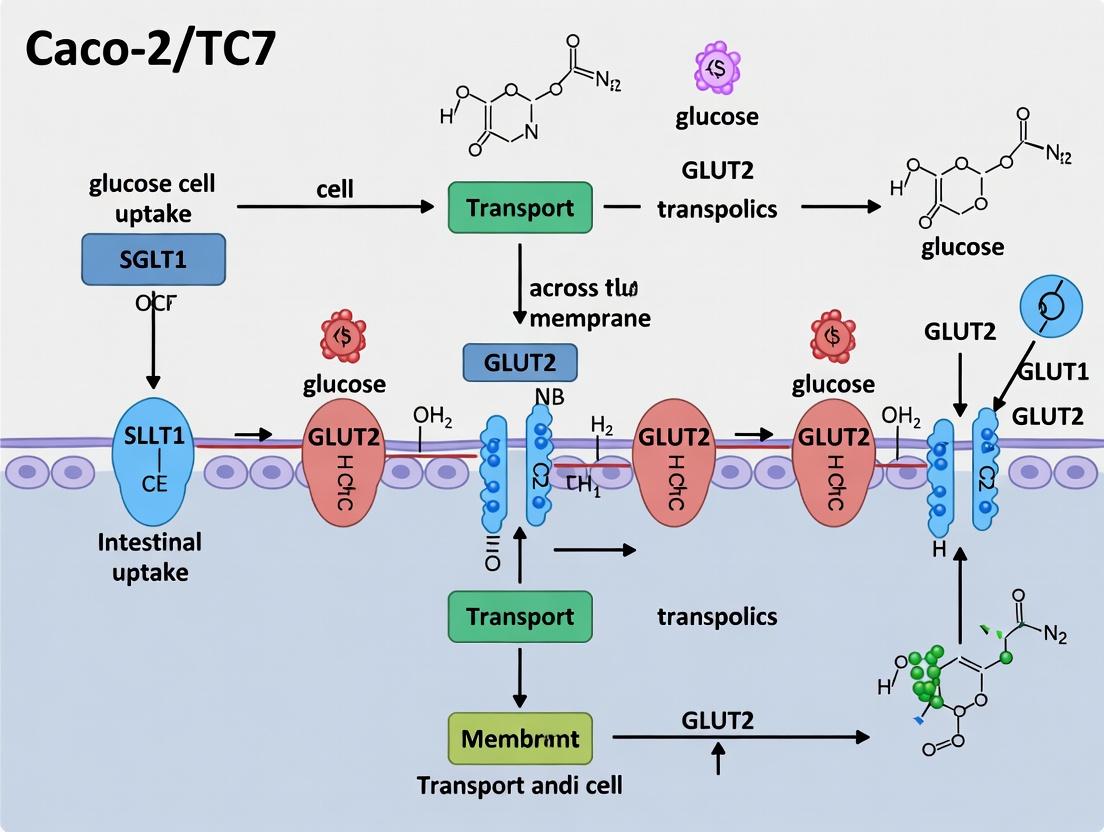
This comprehensive guide provides researchers and drug development professionals with an in-depth exploration of the Caco-2 and TC7 cell lines as premier in vitro models for studying intestinal glucose transport.
Mastering Caco-2 and TC7 Cell Models: A Complete Guide to Intestinal Glucose Transport Research
Abstract
This comprehensive guide provides researchers and drug development professionals with an in-depth exploration of the Caco-2 and TC7 cell lines as premier in vitro models for studying intestinal glucose transport. The article covers foundational biology, standardized methodologies, troubleshooting protocols, and comparative validation against other models. It addresses key intents including understanding transporter expression (SGLT1, GLUT2), designing robust permeability assays, optimizing culture conditions for reliable differentiation, and validating predictive correlation with in vivo absorption. The content synthesizes current best practices to enhance reproducibility and translational relevance in pharmacokinetics, nutraceutical research, and diabetes-related drug discovery.
Caco-2 and TC7 Cells Explained: The Gold Standard for Modeling the Intestinal Barrier
Within the context of a thesis on the Caco-2/TC7 cell line for intestinal glucose transport studies, understanding the origin and inherent properties of the parental Caco-2 cell line is foundational. This article details why and how Caco-2 cells undergo spontaneous enterocytic differentiation, making them a canonical in vitro model for human intestinal absorption.
Origin and Enterocytic Differentiation
Caco-2 cells are derived from a human colorectal adenocarcinoma. Despite their colonic origin, upon reaching confluence, they spontaneously differentiate into polarized enterocyte-like cells. This process mimics the differentiation cascade observed in the small intestinal epithelium, driven by genetic and molecular programming inherent to the cell line.
Table 1: Key Characteristics of Differentiated Caco-2 Cells vs. Human Enterocytes
| Characteristic | Differentiated Caco-2 Cells | Human Small Intestinal Enterocytes | Notes |
|---|---|---|---|
| Origin | Colorectal adenocarcinoma | Intestinal crypt stem cells | Caco-2 retain differentiation capacity. |
| Polarization | Forms tight junctions, distinct apical & basolateral membranes. | Highly polarized in vivo. | Forms functional tight junction complexes (ZO-1, occludin). |
| Brush Border Enzymes | Expresses sucrase-isomaltase, aminopeptidase N, alkaline phosphatase. | High expression of digestive hydrolases. | Enzyme activity increases post-confluence (peak ~15-21 days). |
| Transporter Expression | Expresses SGLT1, GLUT2, PEPT1, BCRP, P-gp. | Expresses full complement of nutrient & drug transporters. | Expression patterns can vary with culture conditions and subclone. |
| Transepithelial Electrical Resistance (TEER) | Typically 200-600 Ω·cm². | In vivo barrier function is complex. | TEER values are culture condition-dependent. |
| Differentiation Timeframe | 15-21 days post-confluence. | Continuous renewal (~3-5 day lifespan). | Differentiation is triggered by contact inhibition and signaling. |
Molecular Drivers of Differentiation
The differentiation is regulated by key transcription factors and signaling pathways that activate enterocyte-specific gene programs.
Diagram 1: Molecular pathway of Caco-2 differentiation.
Detailed Protocol: Culturing and Differentiating Caco-2 Cells for Transport Studies
This protocol is essential for establishing a reliable monolayer for glucose transport experiments.
Materials:
- Caco-2 cells (e.g., ATCC HTB-37)
- High-glucose Dulbecco's Modified Eagle Medium (DMEM)
- Fetal Bovine Serum (FBS), heat-inactivated
- Non-essential amino acids (NEAA)
- L-Glutamine
- Penicillin-Streptomycin
- Trypsin-EDTA (0.25%)
- Transwell permeable supports (e.g., 12-well, 1.12 cm², 0.4 µm pore)
- Phosphate Buffered Saline (PBS)
Procedure:
- Maintenance Culture: Grow cells in T-flasks in complete DMEM (20% FBS, 1% NEAA, 2 mM L-glutamine, 1% pen-strep) at 37°C, 5% CO₂. Subculture at 80-90% confluence using trypsin-EDTA.
- Seeding for Experiments: Detach cells, count, and seed onto collagen-coated Transwell inserts at a density of 60,000-100,000 cells/cm². Add medium to both apical (0.5 mL) and basolateral (1.5 mL) chambers.
- Differentiation: Change medium every 48 hours. Cells typically form a confluent monolayer by day 3-5. Differentiation occurs post-confluence over 15-21 days.
- Quality Control: Monitor Transepithelial Electrical Resistance (TEER) regularly using an epithelial volt-ohm meter. Accept monolayers with stable, high TEER (>250 Ω·cm²) for transport assays. Confirm differentiation by assaying for alkaline phosphatase activity.
Table 2: Typical Differentiation Timeline & QC Metrics
| Days Post-Seeding | Stage | Key Action | Expected TEER (Ω·cm²)* |
|---|---|---|---|
| 0 | Seeding | Seed cells on insert. | N/A |
| 3-5 | Confluence | First TEER measurement. | ~50-150 |
| 7-10 | Early Differentiation | Full medium change. | ~150-300 |
| 14-21 | Full Differentiation | TEER stable, ready for experiment. | >250 (Culture-dependent) |
| Note: TEER values are highly dependent on cell passage, serum lot, and insert type. Internal controls are critical. |
The Scientist's Toolkit: Key Reagents for Caco-2 Glucose Transport Studies
Table 3: Essential Research Reagent Solutions
| Reagent/Kit | Function in Experiment | Critical Notes |
|---|---|---|
| Transwell Permeable Supports | Provides a polarized, two-chamber system for transport and TEER measurement. | Choose appropriate pore size (0.4 µm) and coating (collagen I). |
| Epithelial Voltohmmeter (EVOM) | Measures TEER to non-invasively assess monolayer integrity and tight junction formation. | Must be calibrated daily. Use chopstick or cup electrodes. |
| ³H- or ¹⁴C-Labeled D-Glucose | Radiolabeled tracer for quantifying specific, carrier-mediated transport (e.g., via SGLT1). | Requires scintillation counter. Follow radiation safety protocols. |
| Phloretin (GLUT inhibitor) & Phlorizin (SGLT inhibitor) | Pharmacological tools to dissect the contribution of GLUT2 (basolateral) vs. SGLT1 (apical) transport pathways. | Prepare fresh stock solutions in DMSO. Use appropriate vehicle controls. |
| cDNA Synthesis & qPCR Kits | Quantifies mRNA expression levels of transporters (SGLT1, GLUT2, etc.) and differentiation markers (SI, CDX2). | Use stable reference genes (e.g., GAPDH, β-actin) for relative quantification. |
| Para-cellular Flux Marker (e.g., ³H-Mannitol, FITC-Dextran) | Assesses monolayer integrity by measuring passive, para-cellular diffusion. | A low flux rate confirms tight junction functionality during transport assays. |
Protocol: Differentiated Glucose Uptake Assay (Apical, SGLT1-Mediated)
This protocol measures Na⁺-dependent, phlorizin-sensitive glucose uptake.
Workflow:
Diagram 2: Workflow for apical glucose uptake assay.
Detailed Steps:
- Preparation: Differentiate Caco-2 cells on 12-well Transwell inserts for 18-21 days. Prepare Na⁺-containing uptake buffer (e.g., 137 mM NaCl, 5.4 mM KCl, 2.8 mM CaCl₂, 1.2 mM MgSO₄, 10 mM HEPES, pH 7.4) and Na⁺-free buffer (NaCl replaced with choline chloride).
- Inhibition: Pre-incubate inserts for 15 min at 37°C with either uptake buffer (control), buffer containing 1 mM phlorizin (SGLT1 inhibitor), or Na⁺-free buffer.
- Uptake Phase: Replace apical solution with 0.2 mL of corresponding buffer containing ³H-D-glucose (e.g., 1 µCi/mL, 0.1 mM cold D-glucose). Incubate for a short, defined time (e.g., 5-10 minutes) at 37°C.
- Termination: Quickly aspirate radioactive buffer and wash the apical side three times with ice-cold PBS.
- Quantification: Solubilize cells in the insert with 0.5 mL of 1% Triton X-100. Transfer lysate to scintillation vials, add cocktail, and count. Normalize counts to protein content (BCA assay).
- Analysis: Na⁺-dependent, SGLT1-mediated uptake = (Uptake in Na⁺ buffer) - (Uptake in Na⁺-free buffer or with phlorizin).
The Caco-2 cell line's unique origin and inherent genetic programming enable its robust differentiation into a functional enterocyte model. This characteristic, underpinned by the activation of specific transcription factors, makes it indispensable for mechanistic studies of intestinal glucose transport and drug absorption, forming the cornerstone of advanced research utilizing subclones like Caco-2/TC7.
Within the broader thesis on utilizing the Caco-2/TC7 cell line for intestinal glucose transport studies, the TC7 clone represents a critical advancement. The parental Caco-2 cell line, derived from human colon adenocarcinoma, spontaneously differentiates into enterocyte-like cells but exhibits heterogeneity in transport protein expression. The TC7 subclone was isolated to address this variability, demonstrating a more homogeneous and significantly enhanced expression and functional activity of the Sodium-Glucose Linked Transporter 1 (SGLT1). This makes TC7 cells a superior in vitro model for investigating intestinal glucose uptake, the effects of dietary compounds, and the screening of SGLT1-targeting pharmacological agents.
The enhanced phenotype is linked to more robust differentiation and brush border formation. Application notes highlight its use in:
- Mechanistic Transport Studies: Preferential for quantifying active, SGLT1-mediated glucose transport versus facilitative GLUT2/GLUT5 transport.
- Drug Interaction Screening: Identifying compounds that may modulate dietary glucose absorption.
- Nutraceutical Research: Studying the impact of flavonoids, polyphenols, and other bioactives on intestinal sugar uptake.
- Pathophysiological Modeling: Investigating transporter regulation in metabolic contexts.
Table 1: Comparison of SGLT1 Expression and Function in Caco-2 vs. TC7 Cells
| Parameter | Parental Caco-2 Cells | TC7 Subclone | Measurement Method & Notes |
|---|---|---|---|
| SGLT1 mRNA Level | 1.0 (Reference) | 2.5 - 4.0 fold higher | qRT-PCR (normalized to housekeeping genes) |
| SGLT1 Protein Abundance | Moderate / Variable | High & Consistent | Western Blot, Immunofluorescence |
| Apical SGLT1-Specific Activity (Vmax) | 100 - 500 pmol/min/mg protein | 300 - 900 pmol/min/mg protein | Radiolabeled α-Methyl-D-Glucoside (AMG) uptake, Na+-dependent component |
| Transepithelial Electrical Resistance (TEER) | ~300 - 600 Ω·cm² | ~250 - 500 Ω·cm² | Slightly lower, indicating intact but potentially tighter junctions post-differentiation |
| Full Differentiation Time | 18 - 21 days | 15 - 18 days | Time to stable, high TEER and peak transporter expression |
Table 2: Key Transport Kinetics in Differentiated TC7 Monolayers
| Substrate | Transporter | Km (mM) | Vmax (pmol/min/mg protein) | Experimental Condition |
|---|---|---|---|---|
| α-Methyl-D-Glucoside (AMG) | SGLT1 | 0.2 - 0.5 | 450 - 900 | Uptake in Na+ buffer, 37°C, pH 7.4 |
| D-Glucose | SGLT1 | 0.5 - 1.2 | 600 - 1200 | Uptake in Na+ buffer |
| D-Fructose | GLUT5 | 6 - 12 | 150 - 300 | Uptake in Na+-free buffer |
| Phlorizin Inhibition Constant (Ki) | SGLT1 | 0.001 - 0.01 mM | N/A | Inhibition of Na+-dependent AMG uptake |
Detailed Experimental Protocols
Protocol 1: Culture and Differentiation of TC7 Cells
Objective: To establish fully differentiated, polarized TC7 monolayers for transport assays.
- Cell Culture: Maintain TC7 cells in high-glucose Dulbecco's Modified Eagle Medium (DMEM), supplemented with 10% heat-inactivated fetal bovine serum (FBS), 1% Non-Essential Amino Acids (NEAA), 4 mM L-glutamine, 100 U/mL penicillin, and 100 µg/mL streptomycin. Culture at 37°C in a 5% CO₂ humidified atmosphere.
- Seeding for Assays: For transport experiments, seed cells at a high density (~60,000-100,000 cells/cm²) on collagen-coated permeable filter supports (e.g., Transwell inserts, 12 mm diameter, 0.4 µm pore).
- Differentiation: Change medium every 2 days. Monitor Transepithelial Electrical Resistance (TEER) regularly using a voltohmmeter. Cells are considered fully differentiated and ready for experiments (days 15-18 post-seeding) when TEER values plateau (typically >250 Ω·cm²).
Protocol 2: SGLT1-Specific Uptake Assay Using Radiolabeled α-Methyl-D-Glucoside (AMG)
Objective: To quantify active, Na+-dependent SGLT1 transport activity.
- Solution Preparation:
- Uptake Buffer (Na+): 137 mM NaCl, 5.4 mM KCl, 2.8 mM CaCl₂, 1.2 mM MgSO₄, 10 mM HEPES, pH 7.4.
- Uptake Buffer (Choline+): Replace NaCl with 137 mM Choline-Cl (Na+-free control).
- Stop/Wash Buffer: Uptake buffer with 0.1 mM phlorizin (SGLT1 inhibitor).
- Assay Solution: Uptake buffer containing trace ¹⁴C- or ³H-labeled AMG (0.1-1 µCi/mL) and unlabeled AMG (final concentration 0.1 mM for Km determination or lower).
- Assay Execution: a. Differentiated TC7 monolayers on filters are washed twice with pre-warmed (37°C) uptake buffer. b. For inhibition/Na+-dependence, pre-incubate filters for 10 min in Na+ or Choline+ buffer ± inhibitor. c. Initiate uptake by replacing the apical solution with assay solution. Incubate for a short, linear time course (e.g., 1-3 minutes) at 37°C. d. Terminate uptake by rapid aspiration and three ice-cold washes with Stop/Wash Buffer. e. Dissolve filters in 0.1% SDS or 0.1N NaOH. Quantify cell-associated radioactivity by liquid scintillation counting. Normalize to total protein content (BCA assay).
- Calculation: SGLT1-specific activity = (Uptake in Na+ buffer) - (Uptake in Choline+ buffer).
Protocol 3: Transcriptional Analysis of SGLT1 via qRT-PCR
Objective: To measure relative SGLT1 (SLC5A1) mRNA expression.
- RNA Isolation: Extract total RNA from TC7 monolayers using a TRIzol or silica-membrane kit. Treat with DNase I.
- cDNA Synthesis: Use 1 µg RNA with reverse transcriptase and oligo(dT)/random primers.
- qPCR: Prepare reactions with cDNA, SYBR Green master mix, and gene-specific primers (e.g., SLC5A1: F-5'-GGCATTGGCTTCATCATCGT-3', R-5'-ACAGCCAGCATCACCACATC-3'). Include housekeeping genes (GAPDH, β-actin). Run in triplicate.
- Analysis: Calculate relative expression using the 2^(-ΔΔCt) method, comparing to parental Caco-2 cells or a control condition.
Visualizations
TC7 Workflow for SGLT1 Research
SGLT1 Function & Regulation in TC7 Cells
The Scientist's Toolkit: Key Research Reagent Solutions
Table 3: Essential Materials for TC7-based SGLT1 Studies
| Item | Function/Description | Example/Key Note |
|---|---|---|
| TC7 Cell Line | Specialized Caco-2 subclone with high, consistent SGLT1 expression. | Source from a reputable cell bank (e.g., ECACC, ATCC derivatives). |
| Collagen-Coated Transwells | Permeable supports for culturing polarized, differentiated monolayers. | Corning or Falcon inserts; 0.4 µm pore, 12 mm diameter typical. |
| α-Methyl-D-Glucoside (AMG) | Non-metabolizable SGLT1-specific substrate for transport assays. | Use radiolabeled (¹⁴C-AMG) for uptake studies. |
| Phlorizin | Potent, selective competitive inhibitor of SGLT1. | Critical control for defining SGLT1-specific activity. |
| Chloride Salts (Choline-Cl) | Used to prepare Na+-free buffers to isolate Na+-dependent transport. | Validates SGLT1 activity (vs. passive/GLUT transport). |
| Transepithelial Electrical Resistance (TEER) Meter | Measures monolayer integrity and differentiation status. | Millicell ERS-2 or equivalent. Essential for QC. |
| qPCR Primers for SLC5A1 | Quantify SGLT1 mRNA expression relative to housekeeping genes. | Design primers spanning exon-exon junctions. |
| Anti-SGLT1 Antibody | Detect SGLT1 protein via Western Blot or Immunofluorescence. | Validate clone specificity for human SGLT1 (e.g., ab14686). |
| High-Glucose DMEM with NEAA | Standard growth and differentiation medium for Caco-2/TC7 lines. | Supplement with 10% FBS, L-glutamine, penicillin/streptomycin. |
This application note details protocols for studying intestinal glucose transport mechanisms using the Caco-2/TC7 cell line, a well-established model of human enterocytes. The focus is on the key transporters: SGLT1 (sodium-glucose linked transporter 1), GLUT2 (glucose transporter 2), and GLUT5 (fructose transporter). Research in this area is critical for understanding nutrient absorption, metabolic disorders, and developing therapeutics for diabetes and obesity.
Key Transporter Functions & Quantitative Data
Table 1: Characteristics of Key Intestinal Glucose Transporters
| Transporter | Primary Substrate | Transport Mechanism | Localization (Caco-2/TC7) | Inhibitor (Example) | Approx. Km (mM) |
|---|---|---|---|---|---|
| SGLT1 | Glucose, Galactose | Active, Na+-dependent | Apical Membrane | Phloridzin | 0.1 - 0.8 |
| GLUT2 | Glucose, Galactose, Fructose | Facilitative diffusion | Basolateral & Apical* | Phloretin | 11 - 67 |
| GLUT5 | Fructose | Facilitative diffusion | Apical Membrane | NBMPR (partial) | 6 - 16 |
| Note: GLUT2 is primarily basolateral but can be recruited to the apical membrane under high luminal sugar load. |
Research Reagent Solutions Toolkit
Table 2: Essential Research Reagents for Intestinal Transport Studies
| Reagent / Material | Function / Application | Example Product/Catalog # |
|---|---|---|
| Caco-2/TC7 Cell Line | Human colorectal adenocarcinoma cell line that differentiates into enterocyte-like cells. | ECACC 86010202 or derived subclone. |
| Transwell Permeable Supports | Provides polarized cell growth with distinct apical and basolateral compartments for transport assays. | Corning, Cat# 3460 (polycarbonate, 0.4µm pore). |
| 2-Deoxy-D-Glucose (2-DG) | Non-metabolizable glucose analog used to measure total cellular glucose uptake (SGLT1 & GLUT-mediated). | Sigma, D6134. |
| α-Methyl-D-Glucoside (AMG) | Non-metabolizable SGLT1-specific substrate to isolate Na+-dependent glucose uptake. | Sigma, M9376. |
| Phloridzin | Potent and specific competitive inhibitor of SGLT1. | Sigma, P3449. |
| Phloretin | Broad-spectrum inhibitor of facilitative GLUT transporters (GLUT2). | Sigma, P7912. |
| Hanks' Balanced Salt Solution (HBSS) | Standard physiological buffer for uptake and transport assays. | Thermo Fisher, 14025092. |
| Fluorescent D-Glucose Analogue (2-NBDG) | Tracers for real-time, semi-quantitative visualization of glucose uptake. | Thermo Fisher, N13195. |
| qPCR Primers (SLC5A1, SLC2A2, SLC2A5) | For quantifying mRNA expression of SGLT1, GLUT2, and GLUT5. | Designed via NCBI Primer-BLAST. |
| Selective SGLT2 Inhibitor (e.g., Dapagliflozin) | Negative control to confirm SGLT1-specific activity (SGLT2 is not expressed in intestine). | MedChemExpress, HY-10450. |
Detailed Experimental Protocols
Protocol 1: Measuring Na+-Dependent Glucose Uptake (SGLT1 Activity)
Objective: Quantify specific SGLT1-mediated transport using radiolabeled or fluorescent substrates.
- Cell Culture: Seed Caco-2/TC7 cells on 24-well plates at high density (~100,000 cells/well). Culture for 14-21 days post-confluence to ensure full differentiation. Change medium every 2-3 days.
- Solution Preparation: Prepare uptake buffers.
- Na+ Buffer (Krebs-Ringer HEPES, KRH): 136 mM NaCl, 4.7 mM KCl, 1.25 mM CaCl2, 1.25 mM MgSO4, 10 mM HEPES, pH 7.4.
- NMDG+ Buffer (Na+-free): Replace NaCl with equimolar N-Methyl-D-Glucamine (NMDG) chloride.
- Uptake Assay:
- Wash cell monolayers 2x with pre-warmed Na+ or NMDG+ buffer.
- Add 200 µL of uptake buffer containing 0.1 mM 14C-AMG (or 100 µM cold AMG + tracer) and 10 µM phloridzin (inhibitor control).
- Incubate at 37°C for 5-10 minutes (within linear uptake range).
- Terminate uptake by rapid washing 3x with ice-cold PBS containing 0.1 mM phloridzin.
- Lyse cells in 0.1% SDS. Measure radioactivity via scintillation counting or analyze AMG via HPLC/MS.
- Calculation: Na+-dependent uptake = (Uptake in Na+ buffer) - (Uptake in NMDG+ buffer). SGLT1-specific uptake = (Na+-dependent uptake) - (Uptake with phloridzin).
Protocol 2: Transepithelial Transport Assay (SGLT1 & GLUT2)
Objective: Determine apical-to-basolateral (A-B) flux of glucose across differentiated monolayers.
- Cell Culture: Seed cells on Transwell inserts (0.4 µm pore, 1.12 cm²). Culture for 21-28 days, monitoring Transepithelial Electrical Resistance (TEER > 300 Ω*cm²).
- Assay Setup:
- Wash inserts 2x with HBSS.
- Add 0.5 mL of transport buffer (e.g., HBSS with 25 mM glucose) to the apical (A) chamber and 1.5 mL of glucose-free buffer to the basolateral (B) chamber.
- Incubate at 37°C on an orbital shaker.
- Sampling & Analysis:
- At timed intervals (e.g., 30, 60, 90, 120 min), remove 100 µL from the B chamber for glucose quantification (e.g., using a glucose oxidase assay kit).
- Replace with 100 µL of fresh buffer.
- Calculate the apparent permeability coefficient (Papp): Papp (cm/s) = (dQ/dt) / (A * C0), where dQ/dt is the transport rate, A is the membrane area, and C0 is the initial apical concentration.
Protocol 3: Quantitative PCR Analysis of Transporter Expression
Objective: Quantify mRNA levels of SGLT1 (SLC5A1), GLUT2 (SLC2A2), and GLUT5 (SLC2A5).
- RNA Extraction: Harvest differentiated Caco-2/TC7 cells in TRIzol reagent. Isolate total RNA following manufacturer's protocol. Check purity (A260/A280 ~2.0).
- cDNA Synthesis: Use 1 µg of total RNA with a high-capacity cDNA reverse transcription kit, including a no-reverse transcriptase control.
- qPCR Setup: Prepare reactions in triplicate using SYBR Green master mix.
- Primer Sequences (Human):
- SLC5A1-F: 5'-CTTCGGGACTTCGTGCTCTT-3', SLC5A1-R: 5'-GCCACAGAGCAGGATGATGA-3' (~150bp).
- SLC2A2-F: 5'-TGGCATCGTCATTGGTGTTC-3', SLC2A2-R: 5'-CAGCCACGATGACCACTGTA-3' (~120bp).
- SLC2A5-F: 5'-GGTGGTGTCCTTCGTGGTCT-3', SLC2A5-R: 5'-CCACACAGCCAATGACCACT-3' (~100bp).
- Reference: GAPDH or β-actin.
- Cycling Conditions: 95°C for 10 min; 40 cycles of 95°C for 15s, 60°C for 1 min.
- Primer Sequences (Human):
- Analysis: Calculate relative expression using the 2-ΔΔCt method, normalizing to housekeeping gene and control group.
Visualization Diagrams
Diagram 1: Intestinal Glucose Transport Pathways
Diagram 2: Integrated Experimental Workflow
Application Notes
Within the context of a thesis on utilizing the Caco-2/TC7 cell line for intestinal glucose transport studies, understanding the precise timeline of differentiation and the corresponding expression of key markers is paramount. This clone, derived from the parental Caco-2 cells, exhibits more homogeneous and accelerated enterocytic differentiation. The transition from a proliferative state to a fully polarized monolayer with a functional brush border is a coordinated, time-dependent process critical for generating a reliable in vitro model of the intestinal barrier, particularly for studying SGLT1- and GLUT2-mediated glucose transport.
The differentiation process is not linear but occurs in overlapping phases: proliferation (Days 0-3), confluence-triggered onset of differentiation (Days 3-7), early differentiation (Days 7-14), and late differentiation/maturation (Days 14-21+). Key molecular events include the sequential expression of structural proteins (e.g., villin, sucrase-isomaltase) and functional transporters, alongside the establishment of tight junctions. The timeline can be modulated by the culture conditions, such as the use of semi-permeable filter supports and specific media formulations.
Table 1: Differentiation Timeline and Quantitative Expression of Key Markers in Caco-2/TC7 Cells
| Phase (Post-Seeding) | Key Morphological & Functional Events | Molecular Markers (Protein/Activity) | Quantitative Data (Peak Expression Time & Level) | Relevance to Glucose Transport |
|---|---|---|---|---|
| Proliferation (Days 0-3) | Rapid cell division, non-polarized morphology. | PCNA (Proliferating Cell Nuclear Antigen). | Peak at Day 2-3. Declines sharply post-confluence. | Negligible; cells lack specialized transport machinery. |
| Onset of Differentiation (Days 3-7) | Cell cycle exit at confluence, initial cell polarization, formation of nascent tight junctions. | p27Kip1 (Cyclin-dependent kinase inhibitor). | Upregulated from Day 4. >5-fold increase by Day 7 vs. Day 2. | Initiation of transporter protein synthesis. |
| Early Differentiation (Days 7-14) | Development of apical brush border, dome formation, increasing Transepithelial Electrical Resistance (TEER). | Villin (Brush border cytoskeleton), Alkaline Phosphatase (IAP). | Villin: Localizes apically by Day 7. IAP activity: Increases >10-fold from Day 7 to Day 14. | SGLT1 protein expression begins (Day 7-10), functional activity low. |
| Late Maturation (Days 14-21+) | Fully developed, dense microvilli (brush border), peak enzymatic and transport function, stable high TEER. | Sucrase-Isomaltase (SI), Dipeptidyl Peptidase IV (DPP-IV), Fully functional SGLT1 & GLUT2. | SI activity: Peak at Day 18-21 (~80-120 mU/mg protein). SGLT1 activity: Maximal phlorizin-sensitive uptake at Day 18-21. GLUT2: Apical insertion under high glucose conditions. | Model is fully competent for polarized, active (SGLT1) and facilitative (GLUT2) glucose transport studies. |
Table 2: Key Research Reagent Solutions for Differentiation and Assay
| Reagent/Material | Function & Role in Differentiation/Assay |
|---|---|
| Dulbecco's Modified Eagle Medium (DMEM), High Glucose | Standard culture medium. High glucose (25 mM) supports growth and differentiation. |
| Fetal Bovine Serum (FBS), Heat-Inactivated | Provides essential growth factors, hormones, and nutrients to initiate and sustain differentiation. |
| Non-Essential Amino Acids (NEAA) | Supplements medium to support optimal growth and expression of differentiated functions. |
| Transwell Permeable Supports (Polycarbonate, 0.4 µm pore) | Provides a polarized growth environment essential for proper differentiation and brush border formation. |
| L-Glutamine | Essential energy source for enterocytes. Must be replenished in culture. |
| D-Glucose, Radiolabeled (e.g., [¹⁴C]-D-Glucose) | Tracer for quantifying glucose transport rates (uptake or flux assays). |
| Phlorizin | Specific, competitive inhibitor of SGLT1. Used to dissect SGLT1-mediated component of total uptake. |
| Phloretin | Inhibitor of facilitative glucose transporters (GLUTs). Used to assess GLUT2 contribution. |
| Anti-SGLT1 / Anti-GLUT2 Antibodies | For Western blot quantification or immunofluorescence localization of transporters. |
| pNPP (p-Nitrophenyl Phosphate) | Substrate for colorimetric assay of Alkaline Phosphatase activity, a differentiation marker. |
Experimental Protocols
Protocol 1: Standard Differentiation of Caco-2/TC7 Cells on Transwell Filters
Objective: To establish a fully differentiated, polarized monolayer with functional brush border enzymes and transporters for glucose transport assays.
- Seeding: Trypsinize a confluent T75 flask of Caco-2/TC7 cells. Count and resuspend in complete growth medium (DMEM + 20% FBS + 1% NEAA + 2mM L-Glutamine).
- Filter Preparation: Plate cells on the apical side of collagen-coated, 12-well Transwell inserts (0.4 µm pore) at a density of 1.0 x 10⁵ cells/cm². Add 0.5 mL and 1.5 mL of medium to the apical and basolateral compartments, respectively.
- Initial Growth: Place plates in a humidified incubator (37°C, 5% CO₂). Replace medium every other day for the first 7 days.
- Differentiation Maintenance: After 7 days, switch the medium to differentiation/maintenance medium (DMEM + 10% FBS + 1% NEAA). Continue feeding every other day.
- Monitoring: Monitor Transepithelial Electrical Resistance (TEER) using a volt-ohmmeter every 2-3 days. A consistent TEER > 300 Ω·cm² (after subtracting blank filter resistance) typically indicates confluent, tight monolayer formation by Days 10-14. Cells are considered fully differentiated for transport assays between Days 18-21.
Protocol 2: Assessment of Brush Border Enzyme Activity (Sucrase-Isomaltase)
Objective: To quantify a key functional marker of enterocytic differentiation.
- Sample Preparation: At desired time points, wash filter-grown monolayers twice with ice-cold PBS. Scrape cells from the filter into 500 µL of homogenization buffer (e.g., 50 mM Mannitol, 2 mM Tris-HCl, pH 7.1).
- Homogenization: Homogenize cells on ice using a small Dounce homogenizer (15-20 strokes). Centrifuge at 2000 x g for 10 min at 4°C to remove nuclei and debris.
- Enzyme Reaction: Incubate supernatant (or a membrane fraction) with the substrate solution (56 mM sucrose in 0.1 M maleate/NaOH buffer, pH 6.0) at 37°C for 60 min.
- Glucose Detection: Stop the reaction by heating to 100°C for 2 min. Measure the liberated glucose using a glucose oxidase/peroxidase assay kit. Generate a standard curve with known glucose concentrations.
- Calculation: Normalize the glucose production to the total protein content of the sample (determined by a Bradford assay). Activity is expressed as mU (nmol of glucose produced per minute) per mg of protein.
Protocol 3: Sodium-Dependent Phlorizin-Sensitive Glucose Uptake Assay (SGLT1 Function)
Objective: To measure the specific activity of the apical SGLT1 transporter in differentiated monolayers.
- Differentiated Monolayers: Use Caco-2/TC7 monolayers cultured on Transwell filters for 18-21 days.
- Pre-incubation: Wash filters twice with pre-warmed (37°C) Uptake Buffer (137 mM NaCl, 5.4 mM KCl, 2.8 mM CaCl₂, 1.2 mM MgSO₄, 10 mM HEPES, pH 7.4). Incubate for 10 min.
- Inhibition (Optional): For specificity, pre-incubate some filters for 15 min in Uptake Buffer containing 0.5 mM Phlorizin (SGLT1 inhibitor).
- Uptake Reaction: Replace the apical buffer with Uptake Buffer containing 0.1 mM D-Glucose and a tracer amount of [¹⁴C]-D-Glucose (e.g., 0.5 µCi/mL), with or without Phlorizin. Incubate at 37°C for precisely 2-5 minutes (initial linear rate).
- Termination: Rapidly wash the filter 4 times with ice-cold Stop Buffer (Uptake Buffer with 0.5 mM Phlorizin). Excise the filter membrane and place in a scintillation vial.
- Quantification: Add scintillation fluid, lyse cells, and count radioactivity via scintillation counter. Calculate uptake (nmol/mg protein/min). Phlorizin-sensitive uptake = (Uptake without inhibitor) - (Uptake with Phlorizin).
Visualizations
Diagram 1: Caco-2/TC7 Differentiation Phases, Markers, and Function
Diagram 2: Workflow for Differentiating Caco-2/TC7 Cells
Diagram 3: Key Signals Driving Caco-2/TC7 Differentiation
Inherent Limitations and Advantages Compared to Primary Enterocytes
1. Introduction and Context within Caco-2/TC7 Research
Within the broader thesis investigating the Caco-2/TC7 cell line for intestinal glucose transport studies, a critical evaluation against the physiological gold standard—primary human enterocytes—is essential. While Caco-2/TC7 cells are a cornerstone in vitro model due to their spontaneous differentiation into enterocyte-like cells, understanding their inherent divergence from primary cells is fundamental for data interpretation. This document outlines the comparative limitations and advantages, supported by quantitative data and protocols for key validation experiments.
2. Comparative Analysis: Quantitative Data Summary
Table 1: Intrinsic Properties Comparison
| Property | Primary Human Enterocytes | Caco-2/TC7 Cell Line | Implication for Glucose Transport Studies |
|---|---|---|---|
| Origin & Heterogeneity | Isolated from human intestine; composition includes villus tip absorptive cells. | Homogenous clone derived from colorectal adenocarcinoma. | Primary cells reflect in vivo heterogeneity and regional specificity lost in clonal line. |
| Proliferation & Lifespan | Non-proliferative, short-term viability (hours to few days in culture). | Continuously proliferative, stable cultures for >21 days post-confluence. | Caco-2/TC7 enables long-term, reproducible experiments; primary cells require constant donor sourcing. |
| Differentiation Timeline | Isolated already differentiated. | Requires 14-21 days post-confluence to fully differentiate. | Increases experimental timeline but allows study of differentiation effects on transporter expression. |
| Transepithelial Electrical Resistance (TEER) | Variable, typically 30-100 Ω·cm² (proximal small intestine). | Develops high TEER (>300 Ω·cm²). | Caco-2/TC7 forms a tighter junctional barrier, potentially affecting paracellular compound study relevance. |
| Expression of Key Transporters (SGLT1, GLUT2) | Native, physiologically regulated levels. Expression includes apical GLUT2 under high glucose. | Constitutive SGLT1 expression. Apical GLUT2 expression is often minimal or absent without specific modulation. | Major limitation: May not fully recapitulate the high-capacity, facilitative apical component of glucose absorption. |
Table 2: Functional Transport Parameters (Representative Data)
| Parameter | Primary Enterocytes (Reported Range) | Caco-2/TC7 (Typical Findings) | Experimental Notes |
|---|---|---|---|
| SGLT1-mediated Glucose Uptake (Na+-dependent) | Km: 0.5 - 2.0 mM | Km: 1.0 - 3.0 mM | Affinity is relatively well preserved in Caco-2/TC7. |
| Maximal Transport Capacity (Vmax) | High, physiologically adaptable | Generally lower and less regulated | Reflects lower transporter density and/or activity. |
| GLUT2-mediated Component | Significant, acutely inducible. | Often negligible or not detectable at apical membrane. | Critical limitation for modeling postprandial high-glucose absorption. |
3. Experimental Protocols for Model Validation
Protocol 3.1: Differentiated Caco-2/TC7 Monolayer Culture for Transport Studies
- Objective: To establish reproducible, differentiated monolayers on permeable filter supports.
- Materials: Caco-2/TC7 cells, DMEM (4.5 g/L D-Glucose, GlutaMAX), Fetal Bovine Serum (heat-inactivated), Non-Essential Amino Acids, Penicillin-Streptomycin, 12-well Transwell inserts (polycarbonate, 1.12 cm², 0.4 µm pore), Trypsin-EDTA.
- Procedure:
- Seed cells at high density (e.g., 1.0 x 10⁵ cells/cm²) onto the apical side of collagen-coated Transwell inserts.
- Culture in maintenance medium (DMEM + 20% FBS) for the first 2 days post-seeding.
- Replace medium with differentiation medium (DMEM + 10% FBS) and culture for 21 days, changing media every 48 hours for both apical and basolateral compartments.
- Monitor Transepithelial Electrical Resistance (TEER) regularly using an epithelial voltohmmeter. Monolayers are typically ready for experiments when TEER stabilizes >300 Ω·cm².
- Prior to transport assay, wash monolayers twice with pre-warmed transport buffer (e.g., HBSS, pH 7.4).
Protocol 3.2: Sodium-Dependent vs. Sodium-Independent Glucose Uptake Assay
- Objective: To dissect the contributions of SGLT1 (Na+-dependent) and facilitative transporters (e.g., GLUTs) in Caco-2/TC7 vs. primary cell models.
- Materials: Hanks' Balanced Salt Solution (HBSS), D-Glucose, Radiolabeled [³H]-D-Glucose or fluorescent analog (e.g., 2-NBDG), Phloretin (GLUT inhibitor), Phloridzin (SGLT1 inhibitor), NaCl, Choline Chloride.
- Procedure:
- Prepare two uptake buffers: A) Na⁺-containing Buffer: HBSS with 137 mM NaCl, 10 mM HEPES. B) Na⁺-free Buffer: HBSS with NaCl iso-osmotically replaced by Choline Chloride.
- Add specific inhibitors to appropriate wells (e.g., 0.5 mM Phloridzin for SGLT1, 0.2 mM Phloretin for GLUTs).
- Add uptake buffer containing trace [³H]-Glucose (e.g., 10 µM cold glucose + tracer) to the apical side. Incubate at 37°C for a defined short interval (e.g., 2-10 minutes).
- Terminate uptake by rapid ice-cold stop buffer (HBSS + inhibitor). Wash inserts 3x in ice-cold buffer.
- Dissolve membranes in scintillation cocktail and measure radioactivity. For fluorescent 2-NBDG, lyse cells and measure fluorescence.
- Calculate: Na⁺-dependent uptake = (Uptake in Na⁺ Buffer) - (Uptake in Na⁺-free Buffer). Na⁺-independent uptake represents facilitative transport.
4. Visualization of Pathways and Workflow
Title: Caco-2/TC7 Differentiation Workflow
Title: Intestinal Glucose Transport Pathways
5. The Scientist's Toolkit: Key Research Reagent Solutions
Table 3: Essential Materials for Caco-2/TC7 Glucose Transport Studies
| Reagent/Material | Function/Purpose | Example/Catalog Consideration |
|---|---|---|
| Caco-2/TC7 Cell Line | Differentiating intestinal model. Sourced from reputable cell bank. | ECACC 10021102 or original lab. |
| High-Glucose DMEM with GlutaMAX | Standard culture medium providing energy and glutamine for optimal growth. | Gibco 10566016 or equivalent. |
| Transwell Permeable Supports | Polycarbonate filters for culturing polarized monolayers and conducting bidirectional transport. | Corning 3460 (12-well, 0.4 µm). |
| Epithelial Voltohmmeter (EVOM) | For routine, non-destructive measurement of Transepithelial Electrical Resistance (TEER) to monitor monolayer integrity. | World Precision Instruments EVOM2. |
| [³H]-D-Glucose or 2-NBDG | Radiolabeled or fluorescent glucose analog for quantitative or semi-quantitative uptake/transport assays. | PerkinElmer NET549 / Thermo Fisher N13195. |
| Phloridzin | Specific, competitive inhibitor of SGLT1. Used to block and quantify sodium-dependent glucose transport component. | Sigma-Aldrich P3449. |
| Phloretin | Inhibitor of facilitative glucose transporters (GLUTs). Used to quantify sodium-independent uptake. | Sigma-Aldrich P7912. |
| Hanks' Balanced Salt Solution (HBSS) | Isotonic salt solution used as a base for transport assay buffers. | Gibco 14025092. |
| Choline Chloride | Used to prepare sodium-free uptake buffers for dissecting Na+-dependent transport. | Sigma-Aldrich C1877. |
Step-by-Step Protocols: From Cell Culture to Glucose Uptake and Transport Assays
Optimal Cell Culture Conditions for Consistent Monolayer Formation and Differentiation
Application Notes
This protocol details optimized conditions for culturing the Caco-2/TC7 clone to generate highly reproducible, differentiated monolayers suitable for intestinal glucose transport studies. Consistency is paramount for reliable transepithelial electrical resistance (TEER) measurements and quantitative transport assays. The Caco-2/TC7 subclone exhibits more homogeneous and rapid differentiation compared to the parental line, making it ideal for high-throughput screening in pharmaceutical development.
Critical parameters include strict passage protocol, precise seeding density, standardized media composition, and quality-controlled matrix coatings. The following notes and protocols are framed within a thesis investigating the modulation of SGLT1 and GLUT2 transporter expression and function.
Key Culture Parameters for Caco-2/TC7 Monolayers Table 1: Summary of Optimal Quantitative Culture Conditions
| Parameter | Value/Range | Rationale |
|---|---|---|
| Passage Number Range | 25 - 45 | Maintains genomic stability and differentiation capacity. |
| Seeding Density for Transwells | 60,000 - 75,000 cells/cm² | Ensures confluency in 3-4 days, enabling timely differentiation. |
| Time to Confluence | 3 - 4 days | Indicator of healthy proliferation phase. |
| Differentiation Period | 14 - 21 days post-confluence | Full polarization, brush border formation, and stable transporter expression. |
| Target TEER Value | >350 Ω·cm² (for 0.33 cm² inserts) | Validates tight junction integrity. Must be plate/insert specific. |
| Medium Change Frequency | Every 48 hours during differentiation | Maintains nutrient and growth factor levels, removes metabolites. |
| Glucose in Culture Medium | 25 mM (Standard DMEM) | Standard concentration; studies may use lower glucose for specific induction. |
Experimental Protocols
Protocol 1: Routine Maintenance and Subculturing of Caco-2/TC7 Cells Objective: To maintain undifferentiated, proliferative stock cultures.
- Materials: Caco-2/TC7 cells, high-glucose DMEM, fetal bovine serum (FBS, heat-inactivated), non-essential amino acids (NEAA), penicillin/streptomycin, L-glutamine, Dulbecco’s phosphate-buffered saline (DPBS) without Ca²⁺/Mg²⁺, 0.25% Trypsin-EDTA, T-75 flasks.
- Culture Medium: DMEM supplemented with 10% FBS, 1% NEAA, 2 mM L-glutamine, 100 U/mL penicillin, 100 µg/mL streptomycin.
- Procedure: a. Culture cells in T-75 flasks at 37°C, 5% CO₂, 95% humidity. b. Monitor daily; subculture at 80-90% confluence (typically every 3-4 days). c. Aspirate medium, rinse with 5 mL pre-warmed DPBS. d. Add 2 mL trypsin-EDTA, incubate at 37°C for 3-5 minutes. e. Neutralize with 6 mL complete medium. Centrifuge cell suspension at 200 x g for 5 min. f. Aspirate supernatant, resuspend pellet in fresh medium. Seed new flasks at a split ratio of 1:6 to 1:8. Note: Do not allow cells to become over-confluent, as this will trigger spontaneous differentiation and reduce expansion potential.
Protocol 2: Seeding and Differentiation on Transwell Inserts for Transport Studies Objective: To generate consistent, polarized monolayers on permeable supports.
- Materials: 12-well or 24-well Transwell permeable inserts (polycarbonate membrane, 0.4 µm or 3.0 µm pore), collagen type I from rat tail, acetic acid, complete culture medium.
- Pre-coating (Optional but Recommended): a. Dilute collagen type I to 50 µg/mL in 0.02 N acetic acid. b. Add sufficient solution to cover the membrane (e.g., 150 µL for 12-well insert). c. Incubate at room temperature for 1 hour. d. Aspirate collagen and rinse twice with DPBS. Air dry in sterile hood.
- Cell Seeding: a. Prepare a single-cell suspension from a optimally confluent T-75 flask using Protocol 1, steps c-e. b. Count cells and dilute in complete medium to a density of 2.0 x 10⁵ cells/mL. c. Plate cells onto the apical compartment of the insert. For a 12-well insert (1.12 cm²), add 0.5 mL cell suspension (~100,000 cells). Add 1.5 mL medium to the basolateral compartment. d. Place plate in incubator. Carefully change medium in both compartments every 48 hours.
- Monitoring Differentiation: a. Measure TEER every 2-3 days using an epithelial voltohmmeter. b. Monolayers are typically ready for glucose transport assays at Day 14-21 post-seeding, when TEER values plateau above 350 Ω·cm².
Protocol 3: Validation of Monolayer Differentiation and Function Objective: To confirm phenotypic differentiation prior to transport experiments.
- Alkaline Phosphatase (ALP) Activity Assay: A marker of enterocyte differentiation. a. Wash monolayers on inserts with DPBS. b. Lysc cells in 200 µL M-PER or similar lysis buffer. c. Assay lysate using a p-Nitrophenyl Phosphate (pNPP) substrate kit. d. Measure absorbance at 405 nm. Differentiated Caco-2/TC7 should show a >5-fold increase in ALP activity vs. 3-day post-confluence cells.
- Immunofluorescence for Tight Junctions: a. Fix monolayers with 4% paraformaldehyde for 15 min. b. Permeabilize and block with 3% BSA, 0.1% Triton X-100 in PBS. c. Incubate with primary antibody against ZO-1 (1:100) overnight at 4°C. d. Incubate with Alexa Fluor-conjugated secondary antibody (1:500). e. Stain nuclei with DAPI and image with a confocal microscope. A continuous, honeycomb pattern of ZO-1 should be visible.
The Scientist's Toolkit: Research Reagent Solutions Table 2: Essential Materials for Caco-2/TC7 Culture and Assays
| Item | Function & Rationale |
|---|---|
| Caco-2/TC7 Cell Line | Differentiated human colon adenocarcinoma subclone with homogeneous, rapid enterocyte-like differentiation. |
| High-Glucose DMEM | Provides standard (25 mM) glucose as energy source and differentiation signal. |
| Heat-Inactivated FBS | Provides essential growth factors and hormones; heat inactivation removes complement activity. |
| Non-Essential Amino Acids (NEAA) | Required for optimal growth of epithelial cells in culture. |
| Transwell Permeable Supports | Polycarbonate membranes enabling independent access to apical and basolateral compartments, essential for polarization and transport assays. |
| Collagen Type I, Rat Tail | Extracellular matrix coating that improves cell attachment, monolayer uniformity, and differentiation. |
| Epithelial Voltohmmeter (e.g., EVOM2) | For non-destructive, regular measurement of Transepithelial Electrical Resistance (TEER) to monitor barrier integrity. |
| ZO-1 Antibody | Primary antibody for immunofluorescent validation of tight junction formation, a hallmark of polarization. |
| pNPP Alkaline Phosphatase Assay Kit | Quantitative colorimetric assay for measuring differentiation marker ALP activity. |
Visualizations
Title: Workflow for Optimal Caco-2/TC7 Monolayer Culture
Title: Signaling in Caco-2/TC7 Proliferation and Differentiation
This protocol details the methodology for assessing glucose transport across differentiated Caco-2/TC7 intestinal epithelial monolayers. Within the broader thesis framework, this assay serves as a critical functional readout of enterocyte differentiation and a direct measurement of transepithelial SGLT1 and GLUT2-mediated transport mechanisms. The Caco-2/TC7 subclone, selected for its more homogeneous and rapid differentiation into a mature enterocyte-like phenotype, is the gold standard for in vitro prediction of intestinal absorption and transport kinetics. Accurate execution of this Transwell-based assay is fundamental for studying nutrient uptake, transporter regulation, and the impact of pharmaceutical compounds on intestinal function.
Key Research Reagent Solutions & Materials
Table 1: Essential Materials and Reagents for the Glucose Transport Assay
| Item | Function/Brief Explanation |
|---|---|
| Caco-2/TC7 Cell Line | Human colon adenocarcinoma subclone with high expression of sucrase-isomaltase and consistent epithelial polarization. |
| Transwell Permeable Supports (e.g., Corning, 0.4 µm pore, Polycarbonate membrane) | Provides a porous membrane for cell growth and polarization, creating distinct apical (AP) and basolateral (BL) compartments. |
| Differentiation Media (DMEM High Glucose, 20% FBS, 1% Non-Essential Amino Acids, 1% L-Glutamine) | Supports post-confluent differentiation and maintenance of brush border enzyme activity over 21 days. |
| Transport Buffer (TB) (e.g., HBSS with 10 mM HEPES, pH 7.4) | Isotonic, buffered solution to maintain cell viability during assay. Prepared with and without glucose. |
| D-Glucose, Radioactive ([³H]- or [¹⁴C]-D-Glucose) | Radiolabeled tracer for sensitive, quantitative measurement of glucose flux. |
| Unlabeled D-Glucose (for cold stock solutions) | Used to create specific physiological (e.g., 25 mM) or experimental glucose gradients. |
| Inhibitors (e.g., Phloridzin, Phloretin) | Specific SGLT1 (phloridzin, apical) and GLUT (phloretin) inhibitors for mechanistic studies. |
| Liquid Scintillation Counter & Cocktail | Essential for quantifying radioactivity of sampled buffers to determine transported glucose. |
| TEER Measurement System (Volt-Ohm Meter) | Monitors monolayer integrity and tight junction formation before and after assays. |
| Paracellular Marker (e.g., [¹⁴C]-Mannitol or FITC-Dextran) | Validates monolayer integrity by measuring passive, paracellular leakage. |
Detailed Experimental Protocol: Transwell Setup & Sampling
Cell Seeding, Differentiation, and Pre-Assay Validation
- Seed Caco-2/TC7 cells on Transwell inserts at a density of 1.0 x 10⁵ cells/cm² in differentiation medium.
- Replace media every 48 hours. Culture for 21-23 days post-confluence to ensure full differentiation.
- Monitor Transepithelial Electrical Resistance (TEER) weekly using a volt-ohm meter. Acceptable monolayers for assay typically have TEER > 300 Ω·cm².
- 24 hours prior to assay, replace medium with serum-free, low-glucose (or glucose-free) DMEM to upregulate transporter expression.
Glucose Transport Assay Execution
Day of Experiment:
- Prepare Solutions: Warm Transport Buffer (TB) to 37°C. Prepare Apical TB (containing specific glucose concentration, e.g., 25 mM, with tracer) and Basolateral TB (glucose-free). Include wells for inhibitors if required.
- Wash Monolayers: Gently wash AP and BL compartments twice with pre-warmed, glucose-free TB.
- Establish Gradient: Add glucose-free TB to the BL compartment. For apical-to-basolateral (A->B) transport, add the AP TB containing glucose+tracer to the apical side.
- Inhibit Controls: For inhibitor studies, pre-incubate monolayers with inhibitor (e.g., 0.5 mM Phloridzin in AP) for 20 min, then add AP TB containing both glucose and inhibitor.
- Incubate: Place plate in 37°C incubator. Sampling times are critical: typically 30, 60, 90, and 120 minutes for kinetic studies.
- Sample: At each time point, remove the entire volume (e.g., 600 µL) from the BL receiver compartment and replace with fresh, pre-warmed glucose-free TB to maintain sink conditions. Also collect a small sample (e.g., 50 µL) from the AP donor compartment to confirm initial concentration.
- Terminate: At final time point, sample both compartments, wash inserts with ice-cold PBS, and optionally lyse cells for protein determination to normalize flux data.
- Quantify: Mix scintillation cocktail with samples and measure radioactivity via Liquid Scintillation Counting (LSC).
Data Calculation
- Calculate the apparent permeability coefficient (Papp) in cm/s:
Papp = (dQ/dt) / (A * C₀)Where dQ/dt is the transport rate (mol/s), A is the membrane area (cm²), and C₀ is the initial donor concentration (mol/mL). - Transport rate can be expressed as nmol or pmol transported per time per mg of cellular protein.
Table 2: Example Quantitative Data Output from a Standard Glucose Transport Assay
| Condition | Papp (x 10⁻⁶ cm/s) (Mean ± SD) | % Inhibition vs. Control | Final TEER (Ω·cm²) |
|---|---|---|---|
| Control (A->B) | 1.85 ± 0.21 | - | 345 ± 32 |
| + 0.5 mM Phloridzin (AP) | 0.41 ± 0.09 | 77.8% | 338 ± 28 |
| + 1.0 mM Phloretin (BL) | 1.02 ± 0.11 | 44.9% | 350 ± 25 |
| Paracellular Leak ([¹⁴C]-Mannitol) | 0.08 ± 0.02 | - | 355 ± 30 |
Visualization of Key Pathways and Workflow
Glucose Transport Assay Workflow
Glucose Transporter Pathways in Enterocyte
Within the broader thesis investigating intestinal glucose transport using the human intestinal epithelial Caco-2/TC7 cell line model, the accurate quantification of glucose uptake is paramount. This application note details and compares two principal methodological approaches: classical radioisotopic methods and contemporary non-radiometric alternatives. The selection of an appropriate technique is critical for studying transporter kinetics (e.g., SGLT1, GLUT2), drug inhibition, and nutrient absorption mechanisms in this physiologically relevant model.
Table 1: Comparison of Radioisotopic vs. Non-Radiometric Glucose Uptake Assays
| Feature | Radioisotopic Method (e.g., 2-DG-³H/¹⁴C) | Non-Radiometric Method (e.g., 2-NBDG Fluorescence) | Non-Radiometric Method (e.g., Glucose Analog FRET) |
|---|---|---|---|
| Primary Readout | Scintillation Counts (DPM/CPM) | Fluorescence Intensity (RFU) | Fluorescence Resonance Energy Transfer (Ratio) |
| Sensitivity | High (pico- to femtomole range) | Moderate (nanomole range) | High (comparable to isotopic) |
| Temporal Resolution | End-point measurement | Real-time kinetic possible (plate readers) | Real-time kinetic possible |
| Throughput | Moderate | High (96/384-well compatible) | High (96/384-well compatible) |
| Key Advantage | Gold standard, direct transport measure | Safe, no regulatory burden, live-cell imaging | Safe, homogenous, ratiometric (minimizes artifacts) |
| Key Disadvantage | Radioactive waste, safety regulations | Potential for non-specific uptake/efflux | Requires specific biosensor expression |
| Typical Assay Duration | 1-10 min uptake, then processing | 10-60 min incubation, immediate read | Continuous monitoring over minutes-hours |
| Compatibility with Caco-2/TC7 | Excellent, well-established | Good, requires optimization of dye loading | Good, requires stable transfection/transduction |
Table 2: Typical Experimental Parameters for Caco-2/TC7 Cells
| Parameter | Radioisotopic (2-DG-³H) | Fluorescent (2-NBDG) |
|---|---|---|
| Cell Culture Format | 12/24-well inserts (differentiated monolayers) | 96-well black plates or coverslips |
| Glucose Analog Concentration | 0.1-100 µM (for kinetics) | 10-200 µM |
| Uptake Incubation Time | 1-5 minutes (linear range) | 10-30 minutes |
| Inhibition Control | Phloridzin (SGLT1 inhibitor, e.g., 1 mM) | Phloridzin or specific transporter inhibitors |
| Wash Solution | Ice-cold PBS or Stop Buffer (with phloretin) | Ice-cold PBS or dye-free buffer |
| Key Validation Step | Protein assay for normalization | Cell viability assay (e.g., MTT), microscopy |
Detailed Experimental Protocols
Protocol 1: Radioisotopic 2-Deoxy-D-Glucose (2-DG) Uptake in Differentiated Caco-2/TC7 Monolayers
Objective: To measure sodium-dependent and -independent glucose uptake across differentiated intestinal epithelial monolayers.
Materials: See "The Scientist's Toolkit" below.
Procedure:
- Cell Culture: Seed Caco-2/TC7 cells at high density (~100,000 cells/cm²) on collagen-coated polyester membrane inserts. Culture for 18-21 days, changing medium every 2-3 days, to achieve full differentiation and tight junction formation. Confirm transepithelial electrical resistance (TEER) > 300 Ω·cm².
- Day of Experiment: a. Rinse cell monolayers twice with pre-warmed (37°C) Uptake Buffer (140 mM NaCl, 5 mM KCl, 2.5 mM CaCl₂, 1 mM MgCl₂, 10 mM HEPES, pH 7.4). For sodium-free condition, prepare an isotonic buffer with N-Methyl-D-glucamine or choline chloride replacing NaCl. b. Pre-incubate inserts for 20 min at 37°C in the appropriate buffer. c. Uptake Phase: Prepare working solution of radiolabeled 2-DG (e.g., 10 µCi/mL ³H-2-DG + 10 µM unlabeled 2-DG in uptake buffer). For inhibitor studies, add phloridzin (1 mM) to the apical solution. d. Aspirate pre-incubation buffer and rapidly add the radioactive working solution to the apical chamber. Incubate for precisely 2-5 minutes at 37°C. e. Termination: Quickly aspirate radioactive solution and wash the monolayer 4 times with ice-cold Stop Buffer (PBS containing 0.1 mM phloretin).
- Sample Processing: a. Excise membrane from insert and place in a scintillation vial. b. Solubilize cells with 0.5 mL of 0.1% SDS or 0.1N NaOH for 1 hour. c. Add 3-5 mL of scintillation cocktail, vortex thoroughly. d. Measure radioactivity in a liquid scintillation counter (DPM). e. Use an aliquot of the solubilized sample for protein quantification (e.g., BCA assay).
- Data Analysis: Calculate uptake as nmol/mg protein/min using the specific activity of the dosing solution. Subtract non-specific uptake (measured in sodium-free or inhibitor-treated wells) from total uptake.
Protocol 2: Non-Radiometric Glucose Uptake Using 2-NBDG in Caco-2/TC7 Cells
Objective: To measure glucose uptake in a high-throughput, fluorescence-based format.
Procedure:
- Cell Preparation: Seed Caco-2/TC7 cells in black-walled, clear-bottom 96-well plates. Use either undifferentiated cells (2-3 days post-confluence) for high-throughput screening or differentiated cells on membrane inserts placed in a compatible plate.
- Dye Loading: a. Wash cells twice with pre-warmed Krebs-Ringer-Phosphate-HEPES (KRPH) buffer or PBS containing 2% BSA. b. Prepare 2-NBDG working solution in uptake buffer (typically 100-200 µM). c. Replace wash buffer with the 2-NBDG solution. Include control wells with excess unlabeled 2-DG (20 mM) or phloridzin (1 mM) to assess non-specific uptake. d. Incubate plate at 37°C for 20-30 minutes protected from light.
- Termination and Readout: a. Quickly aspirate the dye solution and wash cells 3 times with ice-cold PBS. b. For endpoint reading, add 100 µL PBS per well. Immediately measure fluorescence using a plate reader (Ex/Em ~485/535 nm). c. Optional Live-Cell Kinetic Reading: Initiate reading immediately after adding 2-NBDG, taking measurements every 2-5 minutes.
- Normalization: a. Perform a cell viability/proliferation assay (e.g., MTT, CellTiter-Glo) on replicate wells for normalization, or stain nuclei with Hoechst 33342 for cell count normalization. b. Calculate specific uptake as: Fluorescence (Experimental) - Fluorescence (Inhibitor Control).
Visualizations
Title: Radioisotopic 2-DG Uptake Workflow for Caco-2/TC7
Title: Glucose Transporter Context in Enterocyte Uptake Assays
Title: Method Selection Decision Tree for Glucose Uptake
The Scientist's Toolkit: Key Research Reagent Solutions
Table 3: Essential Materials for Glucose Uptake Studies in Caco-2/TC7 Cells
| Item | Function & Specification | Example Vendor/Cat. No. (Illustrative) |
|---|---|---|
| Caco-2/TC7 Cell Line | Human colorectal adenocarcinoma clone with enhanced enterocytic differentiation and stable SGLT1/GLUT2 expression. | ECACC (Sigma) or original source labs. |
| 2-Deoxy-D-[³H] Glucose | Radiolabeled non-metabolizable glucose analog for direct transporter-mediated uptake measurement. High specific activity (>10 Ci/mmol). | PerkinElmer, Hartmann Analytic. |
| 2-NBDG (2-(N-(7-Nitrobenz-2-oxa-1,3-diazol-4-yl)Amino)-2-Deoxyglucose) | Fluorescent glucose analog for safe, high-throughput uptake assays. | Thermo Fisher Scientific (N13195). |
| Cell Culture Inserts (Polyester) | Permeable supports for growing differentiated, polarized monolayers. Pore size 0.4 µm, various diameters. | Corning Transwell, Greiner Bio-One. |
| Phloridzin | Potent, specific inhibitor of sodium-dependent glucose cotransporter (SGLT1). Used to define specific uptake. | Sigma-Aldrich (P3449). |
| Phloretin | Inhibitor of facilitative glucose transporters (GLUTs). Used in stop/wash buffers to halt uptake. | Sigma-Aldrich (P7912). |
| Hanks' Balanced Salt Solution (HBSS) or KRPH Buffer | Physiological salt solutions for uptake assays, with or without sodium ions. | Various (e.g., Gibco, Sigma). |
| Liquid Scintillation Cocktail | For solubilizing and reading beta emissions from ³H or ¹⁴C. | PerkinElmer Ultima Gold, Beckman Ready Safe. |
| Black-Walled Clear-Bottom 96-Well Plates | Optimal for fluorescence-based assays, minimizing cross-talk. | Corning (3603), Greiner (655090). |
| Microplate Reader with Capabilities | Fluorescence (Ex/Em ~485/535) and luminescence/absorbance for normalization assays. | BioTek Synergy, Tecan Spark, BMG Labtech CLARIOstar. |
| Glucose FRET Biosensor (e.g., FLII¹²Pglu-700μδ6) | Genetically encoded sensor for real-time, ratiometric intracellular glucose measurement. | Addgene (plasmid depositories). |
Assessing Trans-Epithelial Electrical Resistance (TEER) and Monolayer Integrity
Within the broader thesis investigating intestinal glucose transport using the Caco-2/TC7 cell line, the rigorous assessment of monolayer integrity is paramount. The Caco-2/TC7 subclone, derived from human colorectal adenocarcinoma, spontaneously differentiates into enterocyte-like cells, forming polarized monolayers with tight junctions. Trans-Epithelial Electrical Resistance (TEER) measurement is a critical, non-destructive, and quantitative technique to evaluate the formation and integrity of these tight junctions, which is a prerequisite for reliable glucose transport and drug permeability studies. This application note details protocols for TEER measurement and complementary integrity assays, contextualized for glucose transport research.
Table 1: Benchmark TEER Values for Caco-2/TC7 Monolayers
| Cell Culture Support | Typical Seeding Density | Days Post-Seeding for Assay | Acceptable TEER Range (Ω·cm²) | Indicative of Full Differentiation |
|---|---|---|---|---|
| 12-well Transwell (0.4 µm pore) | 5.0 x 10⁴ - 1.0 x 10⁵ cells/cm² | 18-24 | 300 - 600 | > 400 Ω·cm² |
| 24-well Transwell (0.4 µm pore) | 2.5 x 10⁴ - 5.0 x 10⁵ cells/cm² | 18-24 | 300 - 600 | > 400 Ω·cm² |
| 96-well HTS Transwell (0.4 µm pore) | 1.0 x 10⁴ - 2.0 x 10⁴ cells/cm² | 14-21 | 250 - 500 | > 300 Ω·cm² |
Table 2: Correlation of TEER with Paracellular Marker Flux
| TEER Value (Ω·cm²) | FITC-Dextran (4 kDa) Apparent Permeability (Papp, cm/s) | Monolayer Integrity Assessment |
|---|---|---|
| < 200 | > 3.0 x 10⁻⁶ | Poor / Leaky |
| 200 - 300 | 1.0 x 10⁻⁶ to 3.0 x 10⁻⁶ | Moderate / Acceptable for some studies |
| 300 - 600 | 0.5 x 10⁻⁶ to 1.5 x 10⁻⁶ | Good / Intact for transport studies |
| > 600 | < 0.5 x 10⁻⁶ | Excellent / Very Tight |
Experimental Protocols
Protocol 1: Standard TEER Measurement for Caco-2/TC7 Monolayers
Objective: To non-invasively monitor tight junction formation and validate monolayer integrity prior to glucose transport assays.
Materials:
- Differentiated Caco-2/TC7 monolayers on permeable filters (e.g., 12-well Transwell plates).
- Epithelial Voltohmmeter (EVOM) with "chopstick" or EndOhm electrode set.
- 37°C incubator or heated station.
- Sterile PBS or culture medium (pre-warmed to 37°C).
Procedure:
- Pre-measurement: Remove culture plates from the incubator. Carefully aspirate the medium from both the apical and basolateral compartments.
- Equilibration: Gently add pre-warmed PBS or culture medium to both compartments (e.g., 0.5 mL apical, 1.5 mL basolateral for a 12-well insert). Allow the plate to equilibrate at room temperature for 15-20 minutes to stabilize temperature and minimize measurement drift.
- Instrument Calibration: Calibrate the EVOM according to the manufacturer's instructions using the provided standard resistor.
- Measurement:
- For "chopstick" electrodes: Sterilize electrodes with 70% ethanol and rinse with sterile PBS. Place the shorter electrode in the apical compartment and the longer electrode in the basolateral compartment, ensuring they do not touch the monolayer.
- For EndOhm chamber: Follow the specific device protocol, transferring the insert to the measurement chamber filled with medium.
- Recording: Record the resistance value displayed (in ohms, Ω). Measure each insert in triplicate, rotating the plate 90 degrees between reads for chopstick electrodes.
- Calculation: Subtract the average resistance of a blank insert (cell-free, with medium) from the sample reading. Multiply this net resistance (Ω) by the effective surface area of the filter (cm²). TEER (Ω·cm²) = (R_sample - R_blank) × A.
- Post-measurement: Aspirate the PBS/medium and replace with fresh, pre-warmed culture medium. Return plates to the incubator if continuing the experiment.
Protocol 2: Complementary Integrity Assay via Paracellular Flux
Objective: To chemically validate monolayer integrity by measuring the passive diffusion of a non-absorbable marker.
Materials:
- Caco-2/TC7 monolayers with known TEER values.
- Fluorescein isothiocyanate–dextran (FITC-dextran, 4 kDa) stock solution (10 mg/mL in HBSS).
- Hanks' Balanced Salt Solution (HBSS) with 10 mM HEPES, pH 7.4.
- Multi-well plate reader (fluorescence capable, ex/em ~492/518 nm).
Procedure:
- Preparation: Aspirate culture medium from both compartments. Wash monolayers twice with pre-warmed HBSS-HEPES.
- Dosing: Add HBSS-HEPES to the basolateral receiver chamber (e.g., 1.5 mL for 12-well). Add FITC-dextran solution to the apical donor chamber to achieve a final concentration of 1 mg/mL in HBSS-HEPES (e.g., 0.5 mL total volume).
- Incubation: Place the plate on an orbital shaker (50-60 rpm) in a 37°C incubator for 1-2 hours.
- Sampling: At the end time point, collect a 100-200 µL aliquot from the basolateral chamber. For kinetic analysis, sample at multiple time points.
- Analysis: Measure fluorescence in the samples against a standard curve of FITC-dextran in HBSS-HEPES.
- Calculation: Calculate the Apparent Permeability (Papp): Papp (cm/s) = (dQ/dt) / (A × C₀) where dQ/dt is the flux rate (mol/s), A is the filter area (cm²), and C₀ is the initial donor concentration (mol/mL).
Visualizations
Title: Workflow for Monolayer Integrity Validation
Title: TEER Measures Tight Junction Integrity
The Scientist's Toolkit: Research Reagent Solutions
Table 3: Essential Materials for TEER and Integrity Assessment
| Item | Function & Relevance to Caco-2/TC7/Glucose Studies |
|---|---|
| Caco-2/TC7 Cell Line | Differentiates into enterocyte-like cells expressing SGLT1 and GLUT2 transporters; forms high-resistance monolayers. |
| Collagen-Coated Transwell Inserts (0.4 µm pore, Polyester) | Provide a rigid, porous growth support for polarization and access to both compartments. |
| Epithelial Voltohmmeter (EVOM2) | Gold-standard instrument for accurate, reproducible TEER measurement. |
| EndOhm Tissue Resistance Measurement Chamber | Provides more consistent readings for high-throughput formats vs. chopstick electrodes. |
| FITC-Dextran 4 kDa | Paracellular integrity marker; its low flux confirms tight junction formation, validating the model for glucose transport. |
| Fluorescence Plate Reader | Quantifies FITC-dextran flux for calculating apparent permeability (Papp). |
| HBSS Buffer with HEPES | Physiological salt solution used during flux and transport assays to maintain pH and ion balance. |
| DMEM with High Glucose, FBS, NEAA | Standard growth medium promoting differentiation and tight junction formation in Caco-2/TC7 cells. |
This application note is framed within a broader thesis investigating the Caco-2/TC7 cell line as a model for intestinal nutrient and drug transport. The TC7 clone, selected for its homogeneous expression of differentiated enterocyte markers, exhibits robust and reproducible activity of key transporters and enzymes, making it superior for standardized predictive assays. This work details how this model system is applied in industrial drug discovery to forecast oral absorption and mechanistically evaluate food-drug interactions (FDIs), critical parameters in lead compound optimization.
Table 1: Benchmark Transport Parameters of Caco-2/TC7 Monolayers
| Parameter | Typical Value (Mean ± SD) | Acceptability Criterion | Significance for Prediction |
|---|---|---|---|
| Transepithelial Electrical Resistance (TEER) | >300 Ω·cm² | Indicates tight junction integrity | Ensures paracellular pathway is restricted; absorption is primarily transcellular. |
| Apparent Permeability (Papp) of High-Permeability Marker (e.g., Metoprolol) | (20-30) x 10⁻⁶ cm/s | Validates active transporter functionality | Serves as a positive control for passive transcellular diffusion. |
| Papp of Low-Permeability Marker (e.g., Atenolol) | <1 x 10⁻⁶ cm/s | Confirms monolayer integrity | Serves as a negative control for paracellular leak. |
| Alkaline Phosphatase Activity (Apical) | High (>100 mU/mg protein) | Marker of enterocyte differentiation | Correlates with functional expression of other hydrolases and transporters. |
| SGLT1-mediated Glucose Transport (vs. parental Caco-2) | 2-3 fold higher | Specific to TC7 clone | Validates model for nutrient transport studies relevant to FDIs. |
Table 2: Classification of Drug Permeability and Predicted Absorption
| Papp (10⁻⁶ cm/s) Range | Permeability Classification | Predicted Human Fraction Absorbed (Fa%) | Example Compound |
|---|---|---|---|
| >10 | High | >90% | Propranolol, Metoprolol |
| 1-10 | Moderate | 20-90% | Ranitidine, Acyclovir |
| <1 | Low | <20% | Mannitol, Atenolol |
Experimental Protocols
Protocol 3.1: Standard Bidirectional Transport Assay for Permeability
Purpose: To determine the apparent permeability (Papp) of a test compound and identify active efflux. Materials: Caco-2/TC7 cells (passage 35-45), Transwell inserts (12-well, 1.12 cm², 0.4 µm pore), HBSS-HEPES transport buffer (pH 7.4), test compound. Procedure:
- Cell Culture: Seed cells at 1x10⁵ cells/cm² on Transwell inserts. Culture for 21-23 days, changing medium every 2-3 days. Confirm TEER >300 Ω·cm².
- Pre-incubation: Wash monolayers apically (AP) and basolaterally (BL) with pre-warmed HBSS. Equilibrate for 20 min at 37°C.
- A-to-B (Absorption) Direction:
- Add test compound in buffer to the AP donor compartment.
- Add fresh buffer to the BL acceptor compartment.
- Incubate on orbital shaker (37°C, 50 rpm).
- Sample (e.g., 200 µL) from BL compartment at 30, 60, 90, and 120 min, replacing with fresh buffer.
- B-to-A (Secretion) Direction: Repeat step 3, adding compound to BL compartment and sampling from AP.
- Analysis: Quantify compound concentration in samples via LC-MS/MS. Calculate Papp:
Papp = (dQ/dt) / (A * C₀), where dQ/dt is the steady-state flux, A is the membrane area, and C₀ is the initial donor concentration. - Efflux Ratio (ER):
ER = Papp(B-to-A) / Papp(A-to-B). ER >2 suggests active efflux (e.g., via P-gp).
Protocol 3.2: Investigating Food-Drug Interactions via Nutrient Co-Administration
Purpose: To assess the impact of food components (e.g., glucose, lipids) on drug permeability. Materials: As in Protocol 3.1. Plus: D-Glucose, sodium oleate, taurocholic acid. Procedure:
- Simulated Fed-State Conditions: Prepare "Fed-State Simulant" buffer: HBSS containing 28 mM glucose and 5 mM sodium oleate/taurocholic acid (mixed micelles).
- Pre-treatment (Optional): Pre-incubate monolayers with Fed-State Simulant for 60 min.
- Transport Assay: Perform A-to-B assay (Protocol 3.1) using Fed-State Simulant as the vehicle for the test compound in the donor compartment. Include a control arm with standard HBSS.
- Mechanistic Investigation: To test inhibition of a specific transporter (e.g., PEPT1), include a known inhibitor (e.g., glycylsarcosine) in the Fed-State Simulant.
- Analysis: Compare Papp (A-to-B) under fed vs. fasted conditions. A significant increase may indicate nutrient-mediated transporter upregulation or competition.
Visualization of Pathways and Workflows
Title: Food-Drug Interaction Mechanisms at Intestinal Epithelium
Title: Caco-2/TC7 Permeability Assay Workflow
The Scientist's Toolkit: Essential Research Reagents & Materials
| Item | Function in Caco-2/TC7 Research |
|---|---|
| Caco-2/TC7 Cell Line | Differentiated human colon adenocarcinoma clone with enhanced, consistent expression of SGLT1, digestive enzymes, and drug transporters compared to parental line. |
| Transwell Permeable Supports | Polycarbonate membrane inserts enabling independent access to apical and basolateral compartments, forming a polarized monolayer. |
| HBSS-HEPES Buffer (pH 7.4) | Physiological salt solution used as transport buffer to maintain pH and ion balance during experiments. |
| Metoprolol & Atenolol | High and low permeability benchmarks, respectively, for validating assay performance and classifying new compounds. |
| Glycylsarcosine (Gly-Sar) | Model dipeptide and specific substrate for the oligopeptide transporter PEPT1 (SLC15A1), used in FDI studies. |
| P-gp/BCRP Inhibitors (e.g., Zosuquidar, Ko143) | Pharmacological tools to confirm the involvement of specific efflux transporters in limiting drug absorption. |
| Mixed Micelles (Oleate/Taurocholate) | Used to simulate the lipidic component of food in fed-state experiments, affecting drug solubility and transporter activity. |
| LC-MS/MS System | Gold-standard analytical platform for sensitive, specific, and quantitative measurement of drug concentrations in transport samples. |
Solving Common Problems: How to Optimize Your Caco-2/TC7 Assays for Reliable Data
Within the broader thesis research employing the Caco-2/TC7 cell line for intestinal glucose transport studies, achieving high-quality, confluent monolayers with robust Transepithelial Electrical Resistance (TEER) is paramount. This cell line is a gold standard for modeling the human intestinal epithelium, particularly for nutrient and drug permeability assays. Low TEER values (< 300 Ω·cm² post-differentiation) and poor morphological integrity directly compromise the reliability of glucose transport data, leading to variable flux rates and inaccurate kinetic parameter estimations. This application note details evidence-based protocols for optimizing culture media formulations and extracellular matrix (ECM) coatings to resolve these critical issues, thereby ensuring physiologically relevant and reproducible barrier models for mechanistic transport research.
Key Factors Affecting TEER and Monolayer Integrity
Table 1: Primary Contributors to Low TEER in Caco-2/TC7 Models
| Factor | Typical Sub-Optimal Condition | Impact on TEER/Monolayer | Proposed Solution |
|---|---|---|---|
| Basal Media | Standard DMEM, low glutamine | Reduced tight junction protein expression; slow confluence | Use high-glucose (4.5 g/L) DMEM or advanced formulations like DMEM/F-12. |
| Serum | FBS batch variability, high concentration (>20%) | Increased para-cellular leakage; inconsistent differentiation | Use certified FBS (10-20%); test batches; reduce to 1% post-confluence. |
| Coating | None or poorly defined (e.g., Collagen I only) | Weak cell-ECM adhesion; uneven monolayer | Use structured coatings (e.g., Collagen IV, Laminin, Matrigel). |
| Seeding Density | Too low (< 50,000 cells/cm²) | Prolonged confluence time; heterogeneous patches | Optimize density (e.g., 60,000-100,000 cells/cm² on 12-well inserts). |
| Differentiation Time | Insufficient (< 14 days) | Immature tight junctions; low transporter expression | Extend differentiation to 21-25 days with regular medium changes. |
| Antibiotics | Persistent use of Pen/Strep | Cryptic cytotoxic effects on mitochondria | Use antibiotic-free media post-thawing and during differentiation. |
| Mycoplasma | Contamination | Chronic cellular stress; barrier disruption | Implement routine testing; use plasmocin prophylaxis. |
Optimized Protocols
Protocol 3.1: Preparation of Enhanced Coating Solution for Transwell Inserts
Objective: To create a bioactive ECM coating that promotes robust Caco-2/TC7 adhesion, polarization, and tight junction formation.
Materials:
- Rat Tail Collagen Type I (stock at 3-4 mg/mL in 0.02N acetic acid)
- Human Placental Collagen Type IV
- Laminin (from Engelbreth-Holm-Swarm murine sarcoma basement membrane)
- Sterile 0.02N Acetic Acid
- Polycarbonate or polyester Transwell inserts (e.g., 12-well, 1.12 cm²)
Procedure:
- Prepare a Composite Coating Solution in a sterile tube:
- Dilute Rat Tail Collagen I to 30 µg/mL in sterile 0.02N acetic acid.
- Add Collagen Type IV to a final concentration of 10 µg/mL.
- Add Laminin to a final concentration of 5 µg/mL.
- Mix gently by swirling. Do not vortex to prevent protein denaturation.
- Apply 200 µL of the coating solution to the apical chamber of each dry Transwell insert (12-well format). For the basal chamber, add 500 µL of sterile PBS to keep the membrane hydrated from below.
- Incubate inserts at 37°C for a minimum of 2 hours (or overnight at 4°C for convenience).
- Aspirate the remaining coating solution. Rinse the insert membrane twice with 300 µL of sterile, warm PBS.
- Aspirate PBS and immediately seed cells. Do not allow the coated membrane to dry.
Protocol 3.2: Formulation of Differentiation-Optimized Culture Media
Objective: To provide a nutrient and hormonal environment that supports sustained proliferation, timely confluence, and full functional differentiation.
Table 2: Optimized Differentiation Media Formulation
| Component | Concentration | Purpose & Rationale |
|---|---|---|
| DMEM (High Glucose) | 1X Base | Standard energy source; high glucose supports glycolytic needs. |
| Fetal Bovine Serum (FBS) | 10% (v/v) during proliferation; reduce to 1% for maintenance | Provides growth factors and hormones. Reduction post-confluence promotes differentiation. |
| Non-Essential Amino Acids (NEAA) | 1% (v/v) | Essential for Caco-2 cells, which lack some amino acid synthesis pathways. |
| L-Glutamine | 4 mM (or GlutaMAX supplement) | Critical energy substrate; GlutaMAX offers stable dipeptide form. |
| HEPES Buffer | 15 mM | Stabilizes pH during extended culture outside a CO₂ incubator. |
| Sodium Pyruvate | 1 mM | Provides an alternative energy source and supports redox balance. |
| Penicillin-Streptomycin | Optional (1% v/v) during initial proliferation only | Antibiotic-free conditions are recommended during differentiation phase. |
Procedure for Media Preparation and Schedule:
- Proliferation Phase (Days 0-7 post-seeding): Culture cells in complete media with 10% FBS. Change media every 48 hours.
- Confluence & Early Differentiation (Day 7-14): Once TEER shows a consistent rise (typically > 200 Ω·cm²), reduce FBS to 1%. Change media every 48 hours.
- Late Differentiation & Maintenance (Day 14-21+): Continue with 1% FBS media. Monitor TEER until it plateaus (target > 400 Ω·cm² for transport studies). Change media every 48-72 hours.
Protocol 3.3: TEER Measurement and Data Normalization
Objective: To accurately and consistently monitor monolayer integrity.
Procedure:
- Equilibrate the chopstick electrode and cells in the incubator for 20-30 minutes.
- Calibrate the Epithelial Volt/Ohm Meter according to manufacturer instructions.
- Measure the blank resistance (R_blank) of a coated, cell-free insert filled with media.
- Measure the sample resistance (R_sample) of each test insert.
- Calculate TEER: TEER (Ω·cm²) = (Rsample - Rblank) × Membrane Area (cm²).
- Record values in triplicate for each insert, averaging the readings.
- Graph TEER vs. Time to track differentiation progress.
Visualization of Pathways and Workflows
Diagram 1: Media & Coating Impact on Barrier Formation.
Diagram 2: Workflow for High-TEER Monolayer Development.
The Scientist's Toolkit
Table 3: Essential Research Reagent Solutions
| Item | Function in Caco-2/TC7 Model | Key Consideration |
|---|---|---|
| Collagen IV & Laminin | Basement membrane components that promote polarization via integrin signaling, leading to superior tight junction organization. | Use human-derived or recombinant proteins for highest bioactivity. |
| Matrigel (Growth Factor Reduced) | Defined basement membrane matrix providing a complex, physiological ECM for coating. | Batch variability is high; require pre-testing for TEER optimization. |
| GlutaMAX Supplement | A stable dipeptide (L-alanyl-L-glutamine) that replaces L-glutamine, preventing ammonia buildup and maintaining consistent growth. | Critical for long-term differentiation over 21+ days. |
| Certified Fetal Bovine Serum (FBS) | Source of essential growth factors, hormones, and lipids. Drives proliferation and supports differentiation upon reduction. | Must be heat-inactivated and batch-tested for optimal Caco-2 growth rates. |
| HEPES-buffered Media | Maintains physiological pH during prolonged manipulation outside a CO₂ incubator (e.g., during transport assays). | Use at 15-25 mM final concentration. |
| Epithelial Volt/Ohm Meter (e.g., EVOM2) | Accurate measurement of TEER as a non-destructive, quantitative readout of monolayer integrity and tight junction functionality. | Requires regular electrode cleaning and calibration. |
| Transwell Permeable Supports | Polycarbonate or polyester membranes that physically separate apical and basal compartments, enabling polarized growth and transport studies. | Choose appropriate pore size (0.4 µm or 3.0 µm) and membrane area for assay scale. |
Application Notes
Within the broader thesis on utilizing the Caco-2/TC7 clone for predictive intestinal glucose transport and drug absorption studies, the precise control of differentiation conditions is paramount. The functional expression of key transporters, particularly Sodium/Glucose Cotransporter 1 (SGLT1) and Glucose Transporter 2 (GLUT2), is highly sensitive to the cellular metabolic and epigenetic state. This protocol outlines an optimized two-stage differentiation strategy leveraging D-Glucose and Sodium Butyrate to drive maximal, physiologically relevant transporter expression. D-Glucose acts as both a metabolic substrate and a signaling molecule via carbohydrate-response element-binding protein (ChREBP) pathways, while Sodium Butyrate, a histone deacetylase inhibitor (HDACi), promotes a differentiated phenotype by altering chromatin accessibility and gene expression. The synergistic application of these agents post-confluence results in a robust, functionally polarized monolayer with enhanced transporter density, ideal for high-throughput screening of drug-nutrient interactions and intestinal transport kinetics.
Protocols
Protocol 1: Optimized Two-Stage Differentiation of Caco-2/TC7 Cells
Objective: To establish highly differentiated Caco-2/TC7 monolayers with maximized SGLT1 and GLUT2 expression. Key Materials: See "Research Reagent Solutions" table. Duration: 21 days post-seeding.
Procedure:
- Cell Seeding: Seed Caco-2/TC7 cells at a density of 1.0 x 10⁵ cells/cm² on collagen-coated Transwell filters (e.g., 12-well, 1.12 cm², 3.0 µm pore).
- Stage 1: Proliferation & Polarization (Days 0-7):
- Maintain cells in standard High-Glucose DMEM (25 mM D-Glucose) proliferation medium, changed every 48 hours.
- Monitor transepithelial electrical resistance (TEER) daily. A sharp increase indicates tight junction formation.
- Stage 2: Differentiation & Transporter Induction (Days 7-21):
- On day 7 post-confluence, switch the apical and basolateral compartments to Differentiation Medium.
- Differentiation Medium: Low-Glucose DMEM (5 mM D-Glucose) supplemented with 2 mM L-Glutamine, 5 mM Sodium Butyrate, 1x Non-Essential Amino Acids, and 10% (v/v) heat-inactivated FBS.
- Change the medium every 24 hours due to the volatility and metabolism of butyrate.
- Monitoring:
- Measure TEER bi-weekly. Values typically plateau >500 Ω·cm².
- Assess functional differentiation via Protocol 2 (SGLT1 Activity Assay) on day 21.
Protocol 2: Functional Assessment of SGLT1 Activity via α-Methyl-D-Glucose Uptake
Objective: To quantify sodium-dependent, phlorizin-sensitive glucose transporter activity. Duration: 2 hours.
Procedure:
- Preparation: On day 21, wash differentiated monolayers (from Protocol 1) twice with pre-warmed Uptake Buffer (137 mM NaCl, 5.4 mM KCl, 2.8 mM CaCl₂, 1.2 mM MgSO₄, 10 mM HEPES, pH 7.4).
- Inhibition Control: Pre-incubate control filters for 15 min with Uptake Buffer containing 0.5 mM Phlorizin (SGLT1 inhibitor).
- Uptake Assay:
- Replace apical buffer with Uptake Buffer containing 100 µM ¹⁴C-α-Methyl-D-Glucose (AMG, non-metabolizable analog) and ¹H-Inulin (extracellular space marker). For inhibitor controls, include phlorizin.
- Incubate for 10 minutes at 37°C.
- Terminate uptake by three rapid washes with ice-cold Stop Buffer (PBS with 0.5 mM phlorizin).
- Quantification:
- Dissolve filters in 0.1% SDS.
- Analyze samples by dual-label scintillation counting.
- Calculate sodium-dependent, phlorizin-sensitive uptake by subtracting uptake in the presence of phlorizin from total uptake. Normalize to total cellular protein (Bradford assay).
Data Tables
Table 1: Impact of Differentiation Conditions on Transporter Expression & Function
| Condition (Days 7-21) | Relative SGLT1 mRNA (qPCR) | Relative GLUT2 mRNA (qPCR) | Phlorizin-Sensitive AMG Uptake (nmol/mg protein/10min) | TEER (Ω·cm²) |
|---|---|---|---|---|
| High-Glucose DMEM (25 mM) Control | 1.0 ± 0.2 | 1.0 ± 0.3 | 15.2 ± 3.1 | 420 ± 45 |
| Low-Glucose DMEM (5 mM) | 3.5 ± 0.6 | 2.1 ± 0.4 | 42.7 ± 5.8 | 580 ± 60 |
| Low-Glucose + 2 mM Butyrate | 5.8 ± 0.9 | 3.8 ± 0.7 | 58.3 ± 6.5 | 650 ± 55 |
| Low-Glucose + 5 mM Butyrate | 8.2 ± 1.1 | 4.5 ± 0.8 | 89.5 ± 9.2 | 720 ± 65 |
Table 2: Research Reagent Solutions
| Item | Function in Protocol | Key Consideration |
|---|---|---|
| Caco-2/TC7 Cell Line | Human colon adenocarcinoma clone with enhanced, homogeneous brush border enzyme & transporter expression. | Lower passage numbers (<30) ensure stable phenotype. |
| Collagen-I Coated Transwell Filters | Provides a physiological substrate for polarization and formation of intact monolayers. | 3.0 µm pore size permits independent access to apical/basolateral compartments. |
| High-Glucose DMEM (25 mM) | Standard proliferation medium supports rapid cell growth pre-confluence. | High glucose prevents premature differentiation. |
| Low-Glucose DMEM (5 mM) | Differentiation medium component; modest glucose stress upregulates transport capacity. | Triggers nutrient-sensing pathways (e.g., ChREBP). |
| Sodium Butyrate (5 mM) | Histone deacetylase inhibitor (HDACi); induces cell cycle arrest and differentiation-specific gene expression. | Volatile; requires daily medium change. Cytotoxic at high concentrations. |
| ¹⁴C-α-Methyl-D-Glucose | Radiolabeled, non-metabolizable glucose analog for specific quantification of SGLT1 transport activity. | Allows distinction from facilitative diffusion (GLUTs). |
| Phlorizin | Specific, competitive inhibitor of SGLT1. Used to define sodium-dependent glucose uptake component. | High solubility in DMSO for stock solutions. |
Diagrams
Title: Differentiation Workflow for Maximal Transporter Expression
Title: Signaling Pathways of Glucose and Butyrate
Within the broader thesis on utilizing the Caco-2/TC7 cell line for intestinal glucose transport studies, achieving experimental reproducibility is paramount. Inter-assay variability in transepithelial electrical resistance (TEER), glucose transporter expression, and overall differentiation capacity often stems from inconsistencies in two fundamental culture parameters: passage number and seeding density. This document provides detailed application notes and protocols to standardize these critical factors, thereby enhancing the reliability of data generated for drug permeability and nutrient transport research.
The Impact of Passage Number and Seeding Density on Caco-2/TC7 Phenotype
Caco-2/TC7 cells, a clonal isolate of the parent Caco-2 line, exhibit distinct morphological and functional properties that are highly sensitive to culture history and initial plating conditions.
Quantitative Effects on Key Differentiation Metrics
The following table summarizes published and empirically observed data on the impact of these variables.
Table 1: Impact of Passage Number and Seeding Density on Caco-2/TC7 Differentiation
| Parameter | Low Passage (P20-P35) | High Passage (>P45) | Low Seeding Density (<50,000 cells/cm²) | Optimal/High Seeding Density (60,000-100,000 cells/cm²) |
|---|---|---|---|---|
| Time to Confluence | Consistent (5-7 days) | Often prolonged and variable | Prolonged (>10 days), inconsistent | Consistent (5-7 days) |
| Peak TEER (Ω·cm²) | High, reproducible (300-600) | Declining, variable (<250) | Low, irregular tight junctions | High, stable monolayer |
| SGLT1/GLUT2 Expression | Stable, high | Diminished, erratic | Delayed, sub-optimal | Timely, robust |
| Alkaline Phosphatase Activity | High | Significantly reduced | Low | High |
| Experimental Window | Predictable (Days 18-21) | Unpredictable, may shift | Delayed and extended | Predictable (Days 18-21) |
| Morphology | Uniform, domed cobblestone | Heterogeneous, flattened | Sparse, uneven | Uniform, dense |
Core Protocols for Standardization
Protocol 1: Master Cell Bank Creation and Passage Number Tracking
Objective: To establish a reproducible, low-passage working stock and implement a strict tracking system.
Materials:
- Caco-2/TC7 cells (from a certified repository).
- Complete growth medium: DMEM (high glucose, with stable glutamine), 20% Fetal Bovine Serum (FBS), 1% Non-Essential Amino Acids, 1% Penicillin-Streptomycin.
- Trypsin-EDTA (0.05%).
- Cryopreservation medium: 90% FBS, 10% DMSO.
- Controlled-rate freezer and liquid nitrogen storage.
Procedure:
- Initial Expansion: Upon receipt, thaw the vial and expand cells for a minimum of two passages under standard conditions (37°C, 10% CO₂).
- Master Bank Creation: At passage 3-5 (post-thaw), harvest cells at ~80% confluence. Resuspend in chilled cryopreservation medium at 1 x 10⁶ cells/mL. Aliquot 1 mL into cryovials.
- Freezing: Place vials in an isopropanol freezing container at -80°C for 24 hours, then transfer to liquid nitrogen vapor phase.
- Working Bank: Create a working bank from one vial of the Master Bank, using the same protocol. The working bank defines P0 for all experiments.
- Tracking: Implement a "Passage Clock" log. The in vitro age of any experimental monolayer is defined as:
P(experiment) = P(thaw from working bank) + N. N should never exceed 15 for glucose transport studies. Discard cultures when N > 15.
Protocol 2: Precise Seeding for Consistent Monolayer Formation
Objective: To achieve uniform, timely-confluent monolayers on permeable filter supports (e.g., Transwell).
Materials:
- Trypsinized cell suspension from a low-passage culture (P < 15 from working bank).
- Complete growth medium (as above).
- Hemocytometer or automated cell counter.
- 12-well or 24-well permeable filter inserts (polycarbonate membrane, 0.4 μm pore).
- Multichannel pipette.
Procedure:
- Pre-coating: Apply a dilute Matrigel or collagen solution (50 μL/cm², 5 μg/mL in PBS) to the filter membrane. Incubate for 1 hour at 37°C, then aspirate.
- Cell Harvest & Counting: Culture cells to 80-90% confluence. Trypsinize, neutralize, and centrifuge. Resuspend pellet in complete medium. Perform two independent cell counts and average the result.
- Seeding Calculation & Execution:
- Target Density: 60,000 cells/cm². For a standard 12-well insert (1.12 cm²), this equals 67,200 cells/insert.
- Prepare a single-cell suspension at a concentration of 1.2 x 10⁶ cells/mL.
- Seed 56 μL of this suspension onto the center of the pre-coated filter. Gently add 0.5 mL of medium to the basolateral chamber.
- After 2 hours (to allow cell attachment), carefully add 0.5 mL of medium to the apical chamber.
- Post-Seeding Protocol: Place plates in a 37°C, 10% CO₂ incubator. Change medium every 48 hours for the first 7 days, and daily thereafter until differentiation (typically 18-21 days post-seeding).
The Scientist's Toolkit: Essential Reagents & Materials
Table 2: Key Research Reagent Solutions for Caco-2/TC7 Standardization
| Item | Function in This Context | Recommendation |
|---|---|---|
| Caco-2/TC7 Cell Line | Differentiating intestinal model for glucose transport. | Source from a reputable cell bank (e.g., ECACC). Always use cells from the same master/working bank. |
| Fetal Bovine Serum (FBS) | Critical for growth and differentiation. | Use a single, large lot-tested batch for an entire thesis project. Pre-test for optimal differentiation capacity. |
| Permeable Filter Inserts | Support for polarized monolayer growth. | Use consistent brand, membrane material (PC), pore size (0.4 μm), and surface coating protocol. |
| Extracellular Matrix (e.g., Matrigel) | Mimics basement membrane, improves attachment and differentiation. | Use a consistent, dilute concentration. Aliquot to avoid freeze-thaw cycles. |
| Glucose Transport Assay Buffer (HBSS-HEPES) | Isotonic buffer for transport experiments. | Always include 25 mM glucose in the basolateral compartment for SGLT1 functionality studies. |
| Transepithelial Electrical Resistance (TEER) Meter | Monitors monolayer integrity and tight junction formation. | Take measurements at the same time daily, with blank insert values subtracted. |
Visualized Workflows
Title: Cell Culture Passage and Seeding Workflow
Title: Impact of Variables on Experimental Outcomes
Within the broader thesis investigating the Caco-2/TC7 cell line for intestinal glucose transport studies, a critical methodological challenge is the accurate distinction between specific, transcellular transport and confounding artifacts. Non-specific binding (NSB) to plasticware or cell membranes and paracellular leakage through imperfect tight junctions can significantly skew transport data, leading to erroneous conclusions about transporter activity, drug permeability, or inhibitor efficacy. This application note provides detailed protocols and strategies to identify, quantify, and mitigate these pitfalls, ensuring robust and interpretable results in Caco-2/TC7 monolayer assays.
Table 1: Common Artifacts in Caco-2/TC7 Transport Assays and Their Typical Magnitude
| Artifact Type | Typical Cause | Approximate Impact on Apparent Papp* (cm/s) | Common Marker Compound |
|---|---|---|---|
| High Paracellular Leakage | Immature monolayers, cytotoxic compounds, improper culture. | Increase of 0.5-5 x 10⁻⁶ | [³H]-Mannitol, Lucifer Yellow, FITC-Dextran 4kDa |
| Non-Specific Binding (NSB) | Lipophilic/charged compounds, low protein in buffer, certain plastics. | Can reduce recovered compound by 10-50% | Varies by compound; assessed via recovery studies. |
| Carrier-Mediated Efflux | Overexpression of efflux transporters (e.g., P-gp, BCRP). | Can reduce absorptive Papp by an order of magnitude. | Digoxin (P-gp), Mitoxantrone (BCRP) |
*Papp: Apparent Permeability Coefficient.
Table 2: Acceptance Criteria for Valid Caco-2/TC7 Monolayer Assays
| Parameter | Recommended Acceptance Criterion | Typical Measurement Method |
|---|---|---|
| Transepithelial Electrical Resistance (TEER) | >300 Ω·cm² (pre-experiment) | Voltmeter/EVOM |
| Paracellular Marker Flux (Papp) | Mannitol Papp < 2.0 x 10⁻⁶ cm/s | Radioactivity or LC-MS/MS |
| Compound Mass Balance Recovery | 100% ± 15% | Analysis of donor, receiver, and lysate/wipe samples |
| Monolayer Visual Integrity | Confluent, cobblestone morphology | Light microscopy |
Protocols for Identification and Mitigation
Protocol 1: Assessing and Controlling Paracellular Leakage
Objective: To ensure tight junction integrity before and during transport experiments.
Materials:
- Caco-2/TC7 monolayers grown on Transwell inserts (e.g., 12-well, 1.12 cm², 0.4 µm pore).
- Transport buffer (e.g., HBSS with 10 mM HEPES, pH 7.4).
- Paracellular marker: [³H]-Mannitol (10 µCi/mL) or 1 mg/mL Lucifer Yellow.
- Transepithelial Electrical Resistance (TEER) measurement system (e.g., EVOM²).
- Liquid scintillation counter or fluorescence plate reader.
Procedure:
- Pre-Assay TEER Check: Aspirate culture medium from both apical (AP) and basolateral (BL) compartments. Gently wash twice with pre-warmed transport buffer. Add fresh buffer to both sides (e.g., 0.5 mL AP, 1.5 mL BL). Measure and record TEER. Discard inserts with TEER < 300 Ω·cm².
- Marker Flux Assay: Replace buffer with fresh transport buffer. Add paracellular marker to the donor compartment (AP for A>B, BL for B>A). Incubate on orbital shaker (37°C). Sample from receiver compartment at regular intervals (e.g., 30, 60, 90, 120 min), replacing with fresh buffer.
- Analysis: Calculate the apparent permeability (Papp): Papp = (dQ/dt) / (A * C₀), where dQ/dt is the steady-state flux rate, A is the membrane area, and C₀ is the initial donor concentration. A mannitol Papp > 2 x 10⁻⁶ cm/s indicates unacceptable leakage.
Protocol 2: Quantifying Non-Specific Binding (NSB) and Recovery
Objective: To determine loss of test compound due to adsorption to the insert, membrane, or plasticware.
Materials:
- Transport buffer (with/without solubilizing agents like 0.01% BSA or serum).
- Test compound at relevant concentration.
- Acetonitrile or methanol (for lysing cells and extracting compound).
- LC-MS/MS system for quantification.
Procedure:
- Cell-Free Control: Place blank Transwell inserts (without cells) in a plate. Add transport buffer with test compound to the donor compartment. Incubate as per standard assay. Sample from donor and receiver compartments at the end time point.
- Post-Experiment Recovery: After a standard transport assay with cells, sample from donor, receiver, and also: a) Cell Lysate: Lyse cells on the insert with 0.5% Triton X-100 or 70:30 acetonitrile:water. b) Surface Wipe: Gently swab the insert membrane and sides with a solvent-soaked cotton swab.
- Quantification: Analyze all samples (donor, receiver, lysate, wipe) for test compound concentration.
- Calculation: % Recovery = [(Total mass in receiver + lysate + wipe + final donor) / (Initial mass in donor)] x 100. Recovery outside 85-115% suggests significant NSB or cellular accumulation.
The Scientist's Toolkit: Research Reagent Solutions
Table 3: Essential Materials for Robust Caco-2/TC7 Transport Assays
| Item | Function | Example/Note |
|---|---|---|
| Caco-2/TC7 Cells | Differentiated intestinal epithelial model. | Secure from reputable cell bank (e.g., ECACC). |
| Collagen-Coated Transwell Inserts | Provides surface for cell adhesion and polarized growth. | Corning or Costar polycarbonate membranes, 0.4 µm pore. |
| Transepithelial Electrical Resistance (TEER) Meter | Monitors tight junction integrity non-invasively. | World Precision Instruments EVOM² with chopstick electrode. |
| Paracellular Flux Marker | Quantifies passive, paracellular leak. | [³H]-Mannitol (radiometric) or Lucifer Yellow (fluorescent). |
| Serum-Free Transport Buffer with HEPES | Maintains pH during experiments outside a CO₂ incubator. | HBSS with 10-25 mM HEPES, pH 7.4. |
| BSA (Bovine Serum Albumin) or FBS | Added to buffer (0.01-1%) to reduce NSB of lipophilic compounds. | Use low fatty acid BSA. |
| Specific Transport Inhibitors | Validates involvement of specific carriers (e.g., SGLT1). | Phloridzin for SGLT1-mediated glucose transport. |
| LC-MS/MS System | Enables specific, sensitive quantification of unlabeled compounds. | Essential for mass balance recovery studies. |
Visualization of Workflows and Relationships
Title: Transport Assay Validation Workflow to Mitigate Pitfalls
Title: Specific Transport vs. Paracellular Leak in Caco-2 Cells
In studies utilizing the Caco-2/TC7 cell line model for intestinal glucose transport and drug permeability, accurate data normalization is critical. Experimental outcomes, such as transporter activity (e.g., SGLT1, GLUT2) or paracellular flux, can be confounded by variations in cell confluence, differentiation state, and culture duration. This application note details best practices for selecting between protein content, DNA content, and time-based normalization to ensure robust and biologically relevant conclusions in the context of a broader thesis on intestinal transport physiology.
Rationale for Normalization in Caco-2/TC7 Studies
Caco-2/TC7 cells undergo a time-dependent differentiation process over 14-21 days post-confluence, forming a polarized monolayer with tight junctions and brush border enzymes. Key experimental variables include:
- Cell Number/Confluence: Impacts total biomass.
- Differentiation Status: Directly affects transporter expression and function.
- Monolayer Integrity: Measured by Transepithelial Electrical Resistance (TEER). Normalization controls for these variables, allowing accurate comparison of transport rates (e.g., glucose µMol/cm²/hr) or gene/protein expression across different experimental batches and conditions.
Comparative Analysis of Normalization Methods
Table 1: Comparison of Normalization Methods for Caco-2/TC7 Experiments
| Method | Measured Parameter | Best Suited For | Key Advantages | Key Limitations | Typical Assay |
|---|---|---|---|---|---|
| Protein Content | Total cellular protein (µg/well) | Enzyme activity (e.g., Sucrase-Isomaltase), transporter kinetics, metabolic assays. | Directly relates to functional cellular machinery. Standardized, high-throughput assays (BCA, Bradford). | Can be influenced by differentiation-dependent changes in protein expression profile. | Bicinchoninic Acid (BCA) Assay |
| DNA Content | Total DNA (µg/well) | Cell proliferation studies, baseline for gene expression (qPCR), experiments where differentiation state significantly alters protein synthesis. | Stable molecule, independent of metabolic or differentiation state. Excellent for normalizing to cell number. | Does not reflect cellular hypertrophy or functional capacity. Requires cell lysis. | Fluorescence-based (Hoechst/PicoGreen) |
| Time (Post-Seeding/Confluence) | Days in culture | Standardizing differentiation protocols, longitudinal studies of transporter expression. | Simple, non-destructive. Essential for defining the differentiation timeline. | Does not account for batch-to-batch variation in cell growth or seeding density. | Calendar-based tracking |
Table 2: Normalization Data from a Representative Caco-2/TC7 Differentiation Study
| Day Post-Confluence | Total Protein (µg/well, Mean ± SD) | Total DNA (µg/well, Mean ± SD) | Protein:DNA Ratio | TEER (Ω·cm²) | SGLT1 Activity (Normalized to Protein) |
|---|---|---|---|---|---|
| Day 3 | 450 ± 35 | 12.1 ± 1.1 | 37.2 | 250 ± 45 | 1.0 ± 0.2 |
| Day 10 | 680 ± 50 | 13.5 ± 1.3 | 50.4 | 450 ± 60 | 3.5 ± 0.4 |
| Day 21 | 720 ± 60 | 13.8 ± 1.0 | 52.2 | 500 ± 55 | 4.2 ± 0.5 |
Detailed Experimental Protocols
Protocol 1: Protein Normalization using BCA Assay
Application: Normalizing glucose uptake rates or alkaline phosphatase activity in differentiated monolayers. Materials: See Scientist's Toolkit. Procedure:
- Following the transport assay, wash cell monolayers (on Transwell inserts) 2x with ice-cold PBS.
- Lyse cells in 150-300 µL of RIPA buffer containing protease inhibitors. Incubate on ice for 15 min.
- Scrape the membrane and transfer the lysate to a microcentrifuge tube. Centrifuge at 12,000 x g for 10 min at 4°C.
- Transfer the supernatant to a new tube.
- Perform the BCA assay according to the manufacturer's instructions using a standard curve of BSA (0-2000 µg/mL).
- Measure absorbance at 562 nm. Calculate the protein concentration for each sample.
- Express the final experimental data (e.g., D-glucose transport in nmol) per µg of total protein or per mg of protein per unit time.
Protocol 2: DNA Quantification using PicoGreen Assay
Application: Normalizing qPCR data for transporter expression (e.g., SGLT1 mRNA) across differentiation days. Materials: See Scientist's Toolkit. Procedure:
- After experimental treatment, lyse cells directly on the plate or insert using 100-200 µL of TE buffer (10 mM Tris-HCl, 1 mM EDTA, pH 7.5) containing 0.1% Triton X-100.
- Prepare DNA standards (0-1000 ng/mL) in the same lysis buffer.
- Mix 50 µL of standard or sample with 50 µL of a 1:200 dilution of Quant-iT PicoGreen reagent in TE buffer in a black 96-well plate.
- Incubate in the dark for 5-10 minutes.
- Measure fluorescence (excitation ~480 nm, emission ~520 nm).
- Calculate DNA concentration from the standard curve. Use this value to normalize gene copy numbers from qPCR analysis.
Protocol 3: Time-Based Normalization & Differentiation Schedule
Application: Standardizing monolayer maturity for comparative transport studies. Procedure:
- Seed Caco-2/TC7 cells at a standardized density (e.g., 1 x 10⁵ cells/cm²) on collagen-coated Transwell inserts.
- Replace culture medium every 48 hours.
- Monitor TEER regularly. Confluence is typically achieved at Day 5-7 post-seeding (TEER > 150 Ω·cm²).
- Designate the day of confirmed confluence as Day 0 Post-Confluence.
- Conduct experiments on standardized days post-confluence (e.g., Days 14-21 for fully differentiated phenotype). Report all data with the day post-confluence as a primary normalization parameter.
The Scientist's Toolkit: Research Reagent Solutions
Table 3: Essential Materials for Normalization in Caco-2/TC7 Work
| Item | Function & Rationale | Example Product/Catalog |
|---|---|---|
| BCA Protein Assay Kit | Colorimetric detection of total protein concentration. Compatible with detergent-containing cell lysis buffers. | Pierce BCA Protein Assay Kit |
| Quant-iT PicoGreen dsDNA Assay | Ultrasensitive fluorescent quantification of double-stranded DNA for cell number normalization. | Invitrogen PicoGreen (P11496) |
| RIPA Lysis Buffer | Comprehensive lysis buffer for efficient extraction of total cellular protein while inhibiting proteases. | RIPA Buffer (150 mM NaCl, 1% NP-40, 0.5% DOC, 0.1% SDS, 50 mM Tris, pH 8.0) |
| Collagen-Coated Transwell Inserts | Provide a biologically relevant matrix for Caco-2/TC7 cell attachment and polarized monolayer formation. | Corning BioCoat Collagen I 12-well inserts |
| TEER Measurement System | Non-destructive monitoring of monolayer integrity and differentiation status over time. | EVOM3 Voltohmmeter with STX3 electrode |
| DNase/RNase-Free Water & Tubes | Prevent nucleic acid contamination during sensitive DNA quantification and qPCR sample preparation. | Invitrogen UltraPure DNase/RNase-Free Water |
Decision Workflow and Pathway Visualizations
Diagram Title: Decision Tree for Choosing a Normalization Method
Diagram Title: Caco-2/TC7 Differentiation Timeline and Key Markers
Validation and Model Selection: How Caco-2/TC7 Stacks Up Against Other Intestinal Models
Within the broader thesis on the Caco-2/TC7 cell line for intestinal transport studies, this application note details protocols and validation data for using this model to predict human intestinal absorption (Fraction Absorbed, Fa). The Caco-2/TC7 subclone, characterized by more homogeneous and faster differentiation with enhanced expression of brush border enzymes and transporters, serves as a robust in vitro tool for permeability assessment. We present validated experimental workflows, correlation analyses with human Fa data, and a comprehensive toolkit for implementation.
The Caco-2/TC7 cell line, a clonal isolate of the parental Caco-2 cells, exhibits superior characteristics for permeability screening, including a more uniform monolayer morphology and consistent expression of key transporters like SGLT1, relevant to glucose transport studies. Correlating the apparent permeability coefficient (Papp) from this model to human fraction absorbed (Fa) is a critical step in validating its predictive power for drug candidate selection and biopharmaceutics classification.
Key Validation Data: Correlation of Pappwith Human Fa
The following table summarizes historical and recent validation data correlating Caco-2/TC7 permeability with human fraction absorbed for a set of reference compounds.
Table 1: Correlation of Caco-2/TC7 Apparent Permeability (Papp) with Human Fraction Absorbed (Fa)
| Compound Class | Compound Name | Papp (A-B) (×10⁻⁶ cm/s) | Human Fa (%) | Predicted BCS Class | Reference |
|---|---|---|---|---|---|
| High Permeability | Antipyrine | 30.5 ± 4.2 | ~100 | I | (1) |
| High Permeability | Metoprolol | 22.8 ± 3.1 | ~95 | I | (1,2) |
| Moderate Permeability | Caffeine | 15.2 ± 2.5 | ~100 | I | (1) |
| Low Permeability | Atenolol | 1.8 ± 0.5 | ~50 | III | (1,2) |
| Low Permeability | Ranitidine | 0.9 ± 0.2 | ~50 | III | (1) |
| Efflux Substrate | Fexofenadine | 1.5 ± 0.4 (B-A/A-B ratio >3) | ~35 | III/IV | (3) |
| Transporter-Mediated | D-Glucose (SGLT1) | 15.0 ± 3.0* (Na+ dependent) | ~100 | N/A | Thesis Context |
*Data representative of SGLT1-mediated transport under sodium gradient conditions. BCS: Biopharmaceutics Classification System. References: (1) Internal validation set; (2) Literature consensus; (3) Data with efflux inhibitor.
Table 2: Statistical Correlation Metrics for the Validation Set
| Correlation Model | Equation (Papp vs. Fa) | R² | n | Predictive Cut-off (Papp for Fa ≥90%) |
|---|---|---|---|---|
| Sigmoidal Fit | Fa = 100 / [1 + (k/Papp)-γ] | 0.95 | 20 | ~15 × 10⁻⁶ cm/s |
| Linear (Logit) | Log(Fa/(100-Fa)) = m·logPapp + c | 0.93 | 20 | N/A |
Detailed Experimental Protocols
Protocol: Caco-2/TC7 Monolayer Culture and Differentiation
Purpose: To generate consistent, high-resistance monolayers for permeability assays. Materials: See "Scientist's Toolkit" (Section 5). Procedure:
- Seeding: Thaw Caco-2/TC7 cells at passage 25-35. Seed onto collagen-coated polycarbonate filter inserts (e.g., 0.4 μm pore, 1.12 cm²) at a density of 1.0 × 10⁵ cells/cm² in complete DMEM (high glucose, GlutaMAX, 10% FBS, 1% NEAA).
- Culture: Change medium every 48 hours. Maintain at 37°C, 5% CO₂, 95% humidity.
- Differentiation: Culture for 18-21 days post-confluence to ensure full differentiation. For glucose transport studies, confirm functional SGLT1 expression by day 15-18.
- QC Monitoring: Measure Transepithelial Electrical Resistance (TEER) regularly using an epithelial volt-ohm meter. Accept monolayers with TEER > 350 Ω·cm² (for 1.12 cm² inserts) prior to experiment. Confirm monolayer integrity with a low-permeability paracellular marker (e.g., Lucifer Yellow, Papp < 1.0 × 10⁻⁶ cm/s).
Protocol: Bidirectional Permeability Assay
Purpose: To determine apparent permeability (Papp) and identify efflux transporter involvement. Procedure:
- Pre-incubation: Wash monolayers twice with pre-warmed transport buffer (e.g., HBSS-HEPES, pH 7.4). Equilibrate for 20 min at 37°C.
- Dosing: Prepare test compound at 10-100 μM in transport buffer. For A-B (apical-to-basolateral) study, add donor solution to apical chamber and fresh buffer to basolateral chamber. For B-A study, reverse the configuration. For glucose/SGLT1 studies: Use glucose-free HBSS buffer. For sodium-dependent transport, include 137 mM NaCl in the donor chamber and substitute with choline chloride in the sodium-free control.
- Incubation: Place plate on orbital shaker (50-60 rpm) at 37°C. Sample from the receiver compartment (e.g., 200 μL) at predetermined times (e.g., 30, 60, 90, 120 min). Replace with an equal volume of fresh pre-warmed buffer.
- Analysis: Quantify compound concentration in samples using a validated analytical method (e.g., LC-MS/MS, HPLC-UV).
- Calculations: Papp (cm/s) = (dQ/dt) / (A * C₀) where dQ/dt is the steady-state flux (mol/s), A is the filter area (cm²), and C₀ is the initial donor concentration (mol/mL). Efflux Ratio (ER) = Papp (B-A) / Papp (A-B). ER > 2 suggests active efflux.
Visualizations: Workflows and Pathways
Title: Caco-2/TC7 Permeability Assay Workflow
Title: Intestinal Glucose Transport via SGLT1 & GLUT2
The Scientist's Toolkit: Essential Research Reagent Solutions
Table 3: Key Reagents and Materials for Caco-2/TC7 Permeability Studies
| Item Name | Function & Rationale | Example Product/Catalog |
|---|---|---|
| Caco-2/TC7 Cell Line | Differentiated enterocyte model with consistent, high expression of brush border enzymes and transporters (e.g., SGLT1). | ECACC 10012204 or equivalent. |
| Collagen-Coated Transwell Inserts | Provide extracellular matrix for cell attachment and polarised growth on permeable supports. | Corning Collagen I Coated, 0.4 μm pore. |
| High Glucose DMEM with GlutaMAX | Culture medium providing energy and stable glutamine source for long-term differentiation. | Gibco DMEM, GlutaMAX supplement. |
| HBSS Buffer (10x), HEPES | Isotonic, buffered salt solution for permeability assays, maintaining physiological pH. | Gibco HBSS, 1M HEPES, pH 7.4. |
| Sodium-Free Buffer (Choline Chloride) | Critical for validating sodium-dependent transporter activity (e.g., SGLT1). | Custom HBSS with Choline Cl replacing NaCl. |
| Reference Compounds (Metoprolol, Atenolol, etc.) | High & low permeability standards for assay validation and calibration of the Fa correlation. | Sigma-Aldrich, USP/BP grade. |
| TEER Measurement System | Non-invasive monitoring of monolayer integrity and tight junction formation. | Millicell ERS-2 Volt-Ohm Meter. |
| P-gp Efflux Inhibitor (e.g., GF120918) | Used to confirm P-glycoprotein-mediated efflux in bidirectional assays. | Elacridar hydrochloride (Sigma). |
| LC-MS/MS System | Gold-standard for sensitive, specific quantification of test compounds in buffer matrices. | Sciex Triple Quad or equivalent. |
Within a thesis focused on utilizing the Caco-2/TC7 clone for intestinal glucose transport studies, it is critical to contextualize its utility against other prevalent intestinal epithelial models. While Caco-2/TC7 cells are prized for their spontaneous enterocytic differentiation and robust expression of SGLT1 and GLUT2 transporters, alternative models like HT-29, LS174T, and IPEC-J2 offer complementary advantages. This application note provides a comparative analysis and detailed protocols for these cell lines, aiding researchers in selecting the optimal model for specific research questions in nutrient transport, drug permeability, or inflammatory signaling.
Comparative Analysis of Cell Models
The table below summarizes key characteristics, enabling direct comparison for selection based on experimental goals.
Table 1: Comparative Analysis of Intestinal Epithelial Cell Models
| Feature | Caco-2/TC7 | HT-29 | LS174T | IPEC-J2 |
|---|---|---|---|---|
| Origin | Human colorectal adenocarcinoma | Human colorectal adenocarcinoma | Human colorectal adenocarcinoma | Porcine neonatal jejunum (non-transformed) |
| Key Differentiated Phenotype | Enterocyte-like | Can differentiate into enterocyte or goblet-cell like (subtype dependent) | Goblet-cell like | Enterocyte-like (with brush border) |
| Glucose Transporters (SGLT1/GLUT2) | High expression (differentiation-dependent) | Low/absent; primarily GLUT1 | Not characterized for glucose transport | Functional SGLT1 & GLUT2 expression |
| Typical Application | Gold standard for passive/active drug transport, nutrient uptake studies | Mucus production, cytokine signaling, co-culture models | Mucin (MUC2) production & study, inflammatory models | Transporter studies, host-pathogen interaction, barrier function |
| Differentiation Time | 14-21 days | 5-15 days (for enterocytic diff.) | Does not form tight monolayers | 7-14 days post-confluence |
| Transepithelial Electrical Resistance (TEER) | High (>300 Ω·cm²) | Low/Moderate (can form tight junctions) | Does not form polarised monolayers | Moderate to High (varies with culture) |
| Major Advantages | Well-characterized, predictive for human drug absorption. | Subtype variability (HT-29-MTX for mucus), responsive to cytokines. | High MUC2 secretion, model for goblet cell function. | Non-cancerous, physiologically relevant tight junctions. |
| Major Limitations | Cancer origin, lacks mucus layer, long culture time. | Heterogeneous, transporter expression low. | Non-polarized, not for transport studies. | Species difference (porcine), slower growth, cost. |
Table 2: Quantitative Marker Expression Profile
| Cell Line | SGLT1 mRNA (Relative Units) | GLUT2 mRNA (Relative Units) | MUC2 Protein | Alkaline Phosphatase Activity |
|---|---|---|---|---|
| Caco-2/TC7 (Day 21) | 100.0 ± 12.5 | 100.0 ± 15.2 | Undetectable | High |
| HT-29 (Undiff.) | 5.2 ± 1.8 | 8.5 ± 2.1 | Low/Variable | Low |
| LS174T | Not Detected | Not Detected | High (+++) | Not Detected |
| IPEC-J2 (Day 10) | 65.4 ± 9.7 | 78.3 ± 11.6 | Low | Moderate |
Detailed Experimental Protocols
Protocol 3.1: Differentiation of HT-29 Cells into Enterocyte-like Phenotype
- Objective: Induce a more differentiated state for limited transport or enzyme activity studies.
- Materials: HT-29 cells (ATCC HTB-38), McCoy's 5a Medium, Fetal Bovine Serum (FBS), Penicillin/Streptomycin, Sodium Butyrate.
- Procedure:
- Culture HT-29 cells in McCoy's 5a Medium supplemented with 10% FBS and 1% P/S at 37°C, 5% CO₂.
- Seed cells on Transwell filters at high density (1.0 x 10⁵ cells/cm²).
- At 24h post-confluence, switch to differentiation medium: McCoy's 5a with 2.5% FBS and 5mM Sodium Butyrate.
- Change differentiation medium every 2 days for 10-14 days.
- Monitor differentiation via sucrase-isomaltase activity (enzymatic assay) or reduced proliferation.
- Note: This yields a partially differentiated state. For mucus-producing phenotypes, use the HT-29-MTX subline maintained with methotrexate.
Protocol 3.2: Culturing and MUC2 Analysis in LS174T Cells
- Objective: Maintain LS174T cells for mucin production studies.
- Materials: LS174T cells (ATCC CL-188), RPMI-1640 Medium, FBS, P/S, Insulin.
- Procedure:
- Culture LS174T in RPMI-1640 with 10% FBS, 1% P/S, and 10 μg/mL bovine insulin.
- For MUC2 analysis, seed cells in 6-well plates (2.5 x 10⁵ cells/well).
- At ~80% confluence, stimulate with 10ng/mL IL-13 or 1mM DMSO for 48h to enhance MUC2 production.
- Harvest supernatant for secreted MUC2 (ELISA) and cells for total RNA (qRT-PCR) or protein (Western Blot).
- Fix cells for immunocytochemistry using anti-MUC2 antibody.
Protocol 3.3: Differentiation of IPEC-J2 Cells on Permeable Supports
- Objective: Establish polarised, functional monolayers for transport/barrier studies.
- Materials: IPEC-J2 cells, DMEM/F-12 Medium, FBS, P/S, Insulin-Transferrin-Selenium (ITS), Epidermal Growth Factor (EGF).
- Procedure:
- Culture IPEC-J2 in DMEM/F-12, 5% FBS, 1% P/S, 5 μg/mL insulin, 5 μg/mL transferrin, 5 ng/mL selenium (ITS), and 5 ng/mL EGF.
- Seed cells on collagen-coated (Type I, rat tail) Transwell filters at 5.0 x 10⁴ cells/cm².
- Upon reaching confluence (Day 3-4), switch to maintenance medium: DMEM/F-12, 2.5% FBS, 1% P/S, and 1x ITS.
- Change medium every other day. Monolayers differentiate 7-14 days post-confluence.
- Monitor TEER regularly. Functional glucose transport assays can be performed from Day 10 onwards.
Protocol 3.4: Comparative Glucose Uptake Assay (²²Na⁺-dependent SGLT1 Activity)
- Objective: Quantify and compare functional SGLT1 activity across different cell models.
- Materials: Krebs-Ringer HEPES Buffer (KRHB), ¹⁴C-methyl-α-D-glucopyranoside (¹⁴C-AMG, non-metabolizable SGLT1 substrate), ²²NaCl, Phlorizin (SGLT1 inhibitor), Scintillation cocktail, Cell lysis buffer (0.1% SDS).
- Procedure:
- Differentiate cells in 24-well plates (or on filters for IPEC-J2/Caco-2).
- Wash monolayers twice with warm, Na⁺-free KRHB (choline chloride replacement).
- Uptake Phase: Add uptake buffer (KRHB with 100μM ¹⁴C-AMG and 1μCi/mL ²²Na⁺) ± 500μM Phlorizin. Incubate for 10 min at 37°C.
- Termination: Rapidly wash wells 3x with ice-cold Na⁺-free KRHB.
- Lysis: Add 0.5 mL of 0.1% SDS to lyse cells. Transfer lysate to scintillation vials.
- Quantification: Add scintillation fluid and measure ¹⁴C and ²²Na⁺ radioactivity by dual-channel scintillation counting. Normalize ¹⁴C-AMG uptake to protein content (BCA assay). Sodium-dependent uptake = (Total Uptake) – (Uptake in presence of Phlorizin).
Signaling Pathways & Experimental Workflows
Title: Workflow for Selecting & Using Intestinal Cell Models
Title: Intestinal Glucose Transporter Pathways & Expression
The Scientist's Toolkit: Research Reagent Solutions
Table 3: Essential Materials for Featured Experiments
| Reagent/Material | Function/Application | Example Supplier/ Cat. No. |
|---|---|---|
| Transwell Permeable Supports (Polycarbonate, 0.4/3.0 µm) | Provides polarized cell culture interface for transport & TEER. Essential for Caco-2, IPEC-J2. | Corning, 3412/3419 |
| Type I Collagen, Rat Tail | Coating substrate for IPEC-J2 cells to improve attachment and differentiation. | Gibco, A1048301 |
| Sodium Butyrate | Differentiation inducer for HT-29 cells into enterocyte-like lineage. | Sigma, B5887 |
| ¹⁴C-AMG / ²²NaCl | Radiolabeled tracers for quantifying specific SGLT1-mediated sodium/glucose co-transport. | American Radiolabeled Chemicals |
| Phlorizin | Potent, specific competitive inhibitor of SGLT1; used as control in uptake assays. | Tocris, 2439 |
| Recombinant Human IL-13 | Cytokine stimulant to upregulate MUC2 production in LS174T and HT-29 models. | PeproTech, 200-13 |
| MUC2 ELISA Kit | Quantifies secreted or cellular mucin 2 protein levels from LS174T/HT-29-MTX. | MyBioSource, MBS263508 |
| Insulin-Transferrin-Selenium (ITS-G) | Serum-free growth supplement essential for IPEC-J2 and LS174T culture. | Gibco, 41400045 |
| TEER Voltohmmeter (EVOM2) | Measures transepithelial electrical resistance to monitor monolayer integrity. | World Precision Instruments |
| McCoy's 5a / DMEM/F-12 Media | Optimized basal media for HT-29 and IPEC-J2 cell lines, respectively. | Gibco, 16600082 / 11330032 |
Application Notes
Within the context of intestinal glucose transport studies using the Caco-2/TC7 cell line, the conventional monoculture Transwell model presents limitations. It lacks the mucus layer and immune components of the intestinal epithelium, which significantly influence barrier function, transport kinetics, and drug absorption. Integrating mucus-producing HT29-MTX-E12 cells and immune cells, such as macrophage-like THP-1 cells, creates a more physiologically relevant system. This advanced co-culture model allows for the study of glucose transport under conditions that better mimic the in vivo intestinal milieu, accounting for the physical mucus barrier and paracrine/immune signaling.
Key quantitative outcomes from recent studies comparing these models are summarized below.
Table 1: Comparative Metrics of Intestinal Epithelial Models
| Model Feature | Caco-2/TC7 Monoculture | Caco-2/TC7:HT29-MTX Co-Culture | Tri-Culture with Immune Cells |
|---|---|---|---|
| Apparent Permeability (Papp) for Mannitol | ~1.5 - 2.0 x 10⁻⁶ cm/s | ~0.8 - 1.2 x 10⁻⁶ cm/s | Variable; context-dependent |
| Transepithelial Electrical Resistance (TEER) | High (>500 Ω·cm²) | Moderately Reduced (∼300-500 Ω·cm²) | Can be modulated by immune activation |
| Mucus Layer Thickness | None | 15 - 80 µm | 15 - 80 µm (can be altered by cytokines) |
| Glucose Transport (SGLT1-mediated) | Baseline rate | Often reduced by 20-40% due to mucus/unstirred layer | Can be upregulated or downregulated by immune signals |
| Key Cytokine Response to Challenge | Low | Moderate IL-8 secretion | High, multi-cytokine secretion (e.g., IL-1β, IL-6, TNF-α) |
Protocols
Protocol 1: Establishment of a Caco-2/TC7:HT29-MTX-E12 Co-Culture for Glucose Transport Assays Objective: To create a differentiated intestinal epithelial monolayer with a functional mucus layer. Materials: Caco-2/TC7 cells, HT29-MTX-E12 cells, Dulbecco's Modified Eagle Medium (DMEM) high glucose, fetal bovine serum (FBS), non-essential amino acids, penicillin/streptomycin, Transwell inserts (12-mm diameter, 0.4 µm pore). Procedure:
- Cell Seeding: Harvest and count both cell lines. Mix at a 9:1 ratio (Caco-2/TC7:HT29-MTX-E12). Seed the mixed cell suspension onto the apical side of collagen-coated Transwell inserts at a density of 1 x 10⁵ cells/cm².
- Culture: Add complete medium to both apical and basolateral chambers. Change medium every 48 hours.
- Differentiation: Culture for 18-21 days to ensure full differentiation and mucus production. Monitor TEER regularly.
- Validation: Confirm mucus presence via Alcian Blue staining or immunofluorescence for MUC5AC. Measure TEER (>300 Ω·cm²) and Lucifer Yellow Papp (<1 x 10⁻⁶ cm/s) to confirm barrier integrity.
Protocol 2: Integration of THP-1 Macrophages into a Basolateral Tri-Culture System Objective: To incorporate immune components beneath the epithelial barrier to study immunomodulation of transport. Materials: Differentiated Caco-2/TC7:HT29-MTX co-culture (from Protocol 1), THP-1 monocytic cells, RPMI-1640 medium, Phorbol 12-myristate 13-acetate (PMA), cell culture plates. Procedure:
- Macrophage Differentiation: Differentiate THP-1 monocytes into adherent macrophages by treating with 100 nM PMA in the basolateral compartment of a cell culture plate (not the Transwell plate) for 48 hours.
- Assembly of Tri-Culture: After 48h, wash PMA-differentiated THP-1 cells thoroughly. Gently transfer the Transwell insert containing the differentiated epithelial co-culture into the well plate containing the basolateral THP-1 macrophages.
- Co-Culture Maintenance: Culture in a 1:1 mix of DMEM (from insert) and RPMI-1640 (from well) supplemented with 2% FBS for experimental duration (typically 24-72 hours).
- Stimulation & Analysis: Apply stimuli (e.g., LPS, pro-inflammatory cytokines) apically or basolaterally. Sample basolateral medium for cytokine analysis (ELISA). Measure glucose transport rates via radiolabeled (¹⁴C) or fluorescent analog uptake assays.
Visualizations
Title: Mucus and Immune Modulation of Glucose Transport
The Scientist's Toolkit: Key Research Reagent Solutions
Table 2: Essential Materials for Advanced Intestinal Co-Culture Models
| Item | Function & Rationale |
|---|---|
| Caco-2/TC7 Cell Line | Differentiated enterocyte model with high expression of SGLT1, optimal for glucose transport studies. |
| HT29-MTX-E12 Cell Line | Stable, mucus-producing subclone; integrates to form a consistent, in vivo-like mucus layer. |
| THP-1 Cell Line | Human monocytic line; differentiateable into macrophage-like cells for immune-epithelial crosstalk. |
| Collagen IV, from Human | For coating Transwell inserts to improve cell adhesion and mimic basement membrane. |
| Phorbol 12-Myristate 13-Acetate (PMA) | Differentiating agent for THP-1 monocytes into adherent, macrophage-like cells. |
| Fluorescent Dextrans (e.g., 4 kDa FITC-dextran) | Paracellular permeability marker to validate barrier integrity in the presence of mucus. |
| Radiolabeled D-Glucose (¹⁴C) | Gold-standard tracer for accurate, specific quantification of active SGLT1-mediated transport. |
| Cytokine ELISA Kits (e.g., IL-8, TNF-α) | Quantify inflammatory status and immune-epithelial signaling in the tri-culture system. |
| Mucin Staining Kit (Alcian Blue) | Histological validation of acidic mucins produced by HT29-MTX cells in the co-culture. |
1. Introduction and Context Within the broader thesis on the Caco-2/TC7 cell line for intestinal glucose transport studies, validation against physiologically relevant systems is paramount. This document details the application of ex vivo models—specifically Ussing chambers and isolated intestinal tissues—as critical benchmarks. These models preserve native tissue architecture, epithelial polarity, and the interplay of transporters, offering a gold standard against which monolayer permeability and transporter activity data from Caco-2/TC7 systems can be calibrated.
2. Comparative Data Summary: Caco-2/TC7 vs. Ex Vivo Models
Table 1: Key Transport Parameters for Glucose and Markers
| Parameter | Caco-2/TC7 Monolayer (21-day model) | Rat Jejunum (Ex Vivo) | Human Jejunum (Ex Vivo) | Primary Application |
|---|---|---|---|---|
| SGLT1-mediated Glucose Papp (x10⁻⁶ cm/s) | 1.5 - 3.5 | 8.0 - 15.0 | 5.0 - 10.0 | Active transport capacity |
| TEER (Ω·cm²) | 300 - 600 | 25 - 50 | 20 - 40 | Paracellular integrity |
| Passive Marker Papp (Manitol, x10⁻⁶ cm/s) | 0.2 - 0.8 | 1.5 - 3.0 | 1.0 - 2.5 | Paracellular pathway |
| GLUT2 Contribution (Post-prandial) | Low/Inducible | High | High | Facilitated diffusion |
Table 2: Advantages and Limitations of Model Systems
| Model System | Key Advantages | Key Limitations | Primary Use in Benchmarking |
|---|---|---|---|
| Caco-2/TC7 | High-throughput, reproducible, mechanistic studies, genetic manipulation. | Lack of mucus, underdeveloped villi, variable expression levels of some transporters. | Reference baseline for screening. |
| Rodent Intestine (Ex Vivo) | Intact morphology, functional nerves & crypt-villus axis, species-specific ADME data. | Species differences vs. human, viable for short periods (2-4h), inter-animal variability. | Functional validation of transporter activity. |
| Human Intestine (Ex Vivo) | Clinically relevant human transporters & morphology. | Scarce tissue supply, high donor variability, short viability window. | Ultimate clinical translation benchmark. |
3. Detailed Experimental Protocols
Protocol 3.1: Ussing Chamber Setup for Isolated Rodent Jejunum Objective: To measure electrogenic glucose transport via SGLT1 in real-time. Materials: Ussing chamber system with agar-salt bridges, voltage-current clamp amplifier, data acquisition software, oxygenated (95% O₂/5% CO₂) Krebs-Ringer bicarbonate buffer, male Sprague-Dawley rat (fasted 12h). Procedure:
- Tissue Isolation: Euthanize rat humanely. Excise 10cm jejunal segment, flush lumen with ice-cold buffer. Open longitudinally along mesenteric border, and mount on a plastic slab. Pin tissue and remove serosal/muscular layers by careful dissection.
- Mounting: Mount the mucosal-submucosal sheet (≈1.0 cm² exposure area) between the two halves of the Ussing chamber. Both hemichambers are filled with 10mL pre-warmed (37°C), oxygenated buffer.
- Electrode Placement: Insert agar-KCl bridges linked to calomel electrodes (for measuring transepithelial potential difference, PD) and Ag/AgCl electrodes (for current injection).
- Measurement: Under voltage-clamp mode (short-circuited, 0 mV), record the basal short-circuit current (Isc). After stabilization (≈15 min), add D-glucose (10-20 mM) to the mucosal hemichamber. The resultant increase in Isc (ΔIsc) represents net electrogenic Na⁺-coupled glucose transport (via SGLT1).
- Inhibition: Confirm specificity by adding a selective SGLT1 inhibitor (e.g., phlorizin, 0.1 mM) to the mucosal side.
- Calculations: Normalize ΔIsc to tissue area. Calculate equivalent glucose flux using Faraday's law.
Protocol 3.2: Benchmarking Caco-2/TC7 Monolayer Glucose Transport Objective: To correlate Caco-2/TC7 data with ex vivo findings. Materials: Differentiated (21-day) Caco-2/TC7 monolayers on permeable filters, transport buffer (HBSS-HEPES, pH 7.4), radio-labeled D-glucose (³H) or non-radiolabeled with HPLC/MS detection. Procedure:
- Experimental Setup: Wash monolayers. Add transport buffer to apical (AP) and basolateral (BL) compartments. Pre-incubate (37°C, 20 min).
- Active Transport Study: Add ³H-D-glucose (10 μM, trace) + unlabeled D-glucose (5 mM) to the AP side (donor). Sample from the BL side (receiver) at intervals (e.g., 15, 30, 45, 60 min). Maintain sink conditions.
- SGLT1 Inhibition: Include parallel wells with apical phlorizin (0.1 mM).
- Passive Permeability Control: Perform analogous experiment with L-glucose (a non-transported analog).
- Analysis: Quantify transported compound. Calculate Papp (apparent permeability): Papp = (dQ/dt) / (A * C₀), where dQ/dt is the transport rate, A is filter area, and C₀ is initial donor concentration.
- Benchmarking: Directly compare the phlorizin-sensitive glucose Papp from Caco-2/TC7 with the glucose-induced ΔIsc from the Ussing chamber experiment, normalized appropriately.
4. Visualization: Pathways and Workflow
Title: Benchmarking Workflow for Intestinal Transport Models
Title: SGLT1-Mediated Electrogenic Glucose Transport in Ex Vivo Tissue
5. The Scientist's Toolkit: Essential Research Reagents & Materials
Table 3: Key Research Reagent Solutions for Benchmarking Studies
| Item | Function & Application | Example/Notes |
|---|---|---|
| Differentiated Caco-2/TC7 Monolayers | In vitro standard for mechanistic intestinal permeability and transport studies. | Requires 21-day culture on permeable filters; batch consistency is critical. |
| Ussing Chamber System | Measures real-time ion and nutrient transport across intact epithelial tissues. | Systems from Warner Instruments or Physiologic Instruments; includes voltage-current clamp. |
| Oxygenated Krebs-Ringer Bicarbonate Buffer | Physiological buffer for ex vivo tissue viability, maintains pH and metabolism via carbogenation. | Must be continuously gassed with 95% O₂/5% CO₂ during experiments. |
| Phlorizin | Potent, selective inhibitor of SGLT1. Used to delineate active vs. passive glucose transport components. | Typically used at 0.1-0.5 mM in apical buffer. Soluble in DMSO. |
| ³H- or ¹⁴C-labeled D-Glucose | Radiolabeled tracer for sensitive, quantitative flux measurements in both Caco-2 and ex vivo systems. | Enables precise calculation of Papp and kinetic parameters. |
| L-Glucose | Stereoisomer not transported by SGLT1. Serves as a marker for paracellular/passive transcellular flux. | Essential control for distinguishing specific active transport. |
| Viability Assay Kits (e.g., MTT, LDH) | Assess tissue/cell viability pre- and post-experiment. Critical for validating ex vivo tissue integrity. | Run parallel tissue samples from Ussing chamber studies. |
| Flexible Data Acquisition & Analysis Software | Records and analyzes time-course data (Isc, conductance, flux) from Ussing chambers. | Examples: LabChart (ADInstruments), AcqKnowledge (BIOPAC). |
Application Notes
The BCS is a regulatory framework that classifies drug substances based on their aqueous solubility and intestinal permeability. Its acceptance by regulatory agencies (e.g., U.S. FDA, EMA) allows for waivers of in vivo bioequivalence studies for immediate-release solid oral dosage forms of BCS Class I (high solubility, high permeability) and, under certain conditions, Class III (high solubility, low permeability) drugs. This scientific, risk-based approach streamlines drug development and generic approval.
Regulatory acceptance of permeability data is central to BCS classification. While human pharmacokinetic studies are the gold standard, validated in vitro permeability methods are critical surrogates. The Caco-2 cell line, particularly the TC7 clone, has emerged as a preeminent in vitro model for predicting human intestinal drug permeability due to its robust expression of transporters and formation of tight junctions.
Within a thesis on the Caco-2/TC7 cell line for intestinal glucose transport studies, its role in BCS is twofold:
- Mechanistic Validation: Studies on glucose transport (via SGLT1 and GLUT2) validate the TC7 model's functional expression of key apical membrane transporters, establishing its physiological relevance for carrier-mediated drug permeability.
- Standardization for Regulation: Protocols optimized for glucose transport studies (e.g., monolayer integrity, assay conditions) directly inform the standardized methods required for generating BCS permeability data acceptable to regulators.
Table 1: Key Regulatory Criteria for BCS-Based Biowaivers
| Parameter | BCS Class I | BCS Class III | Key Evidence (Often from Caco-2/TC7) |
|---|---|---|---|
| Solubility | High (Dose soluble in ≤250 mL pH 1–6.8) | High (Dose soluble in ≤250 mL pH 1–6.8) | Shake-flask or potentiometric titration data. |
| Permeability | High (≥90% absorption or vs. reference) | Low | In vitro permeability data using a validated model (e.g., Caco-2/TC7 with high/low permeability controls). |
| Dissolution | Rapid (≥85% in 30 min in pH 1.2, 4.5, 6.8) | Very Rapid (≥85% in 15 min in pH 1.2, 4.5, 6.8) | USP apparatus I/II data. |
| Biowaiver Eligibility | Eligible (if no narrow therapeutic index, etc.) | Eligible (if excipients are same as IR products) | - |
Experimental Protocols
Protocol 1: Caco-2/TC7 Cell Culture and Monoclonal Preparation for Permeability Assays Objective: To culture and plate Caco-2/TC7 cells to form confluent, differentiated monolayers suitable for transport studies.
- Culture Maintenance: Grow Caco-2/TC7 cells in Dulbecco’s Modified Eagle Medium (DMEM) supplemented with 10% fetal bovine serum (FBS), 1% non-essential amino acids (NEAA), 2 mM L-glutamine, 100 U/mL penicillin, and 100 µg/mL streptomycin at 37°C in a 5% CO₂ humidified atmosphere.
- Cell Seeding: At 80-90% confluence, detach cells using trypsin-EDTA. Seed cells onto collagen-coated polyester membrane filters (e.g., 1.12 cm² surface area, 0.4 µm pore size) in 12-well transwell plates at a density of 1.0 x 10⁵ cells/cm².
- Monolayer Differentiation: Change culture medium every 48 hours. Allow cells to differentiate for 18-21 days. Confirm monolayer integrity by measuring transepithelial electrical resistance (TEER) >300 Ω·cm² using a volt-ohmmeter.
- Pre-experiment Validation: Prior to each transport experiment, confirm monolayer integrity via TEER and/or paracellular marker flux (e.g., Lucifer Yellow, <1% transport/hour).
Protocol 2: Bidirectional Permeability Assay for BCS Classification Objective: To determine the apparent permeability (Papp) of a test drug and classify it as high or low permeability.
- Solution Preparation: Prepare Hanks' Balanced Salt Solution (HBSS) buffered with 10 mM HEPES (pH 7.4). Add test compound at 10-100 µM. Include reference compounds: High-Permeability Control (Metoprolol, Papp ~15-20 x 10⁻⁶ cm/s), Low-Permeability Control (Atenolol, Papp ~0.5-1.5 x 10⁻⁶ cm/s), and Efflux Substrate Control (Digoxin).
- Apical-to-Basolateral (A-B) Transport:
- Aspirate medium from both apical (AP) and basolateral (BL) compartments.
- Add test/reference compound in buffer to the AP chamber. Add fresh buffer to the BL chamber.
- Incubate plate at 37°C with gentle orbital shaking (50-60 rpm).
- Sample 200 µL from the BL chamber at 30, 60, 90, and 120 minutes, replacing with fresh pre-warmed buffer.
- Basolateral-to-Apical (B-A) Transport:
- For efflux assessment, add compound to the BL chamber and buffer to the AP chamber. Sample from the AP side.
- Analysis: Quantify compound concentration in samples using HPLC-MS/MS. Calculate Papp: Papp (cm/s) = (dQ/dt) / (A * C₀), where dQ/dt is the steady-state flux (mol/s), A is the membrane area (cm²), and C₀ is the initial donor concentration (mol/mL).
- Classification: If the test drug's Papp is ≥ the Papp of the high-permeability reference and exhibits >90% mass balance recovery, it can be classified as highly permeable.
Table 2: Representative Permeability Data from a Validated Caco-2/TC7 Assay
| Compound (10 µM) | Papp (A-B) (x 10⁻⁶ cm/s) | Papp (B-A) (x 10⁻⁶ cm/s) | Efflux Ratio (B-A/A-B) | BCS Permeability Class |
|---|---|---|---|---|
| Metoprolol (Ref.) | 18.2 ± 2.1 | 19.5 ± 1.8 | 1.1 | High |
| Atenolol (Ref.) | 0.9 ± 0.2 | 1.1 ± 0.3 | 1.2 | Low |
| Digoxin (Ref.) | 2.5 ± 0.5 | 28.7 ± 3.2 | 11.5 | High (Efflux substrate) |
| Test Drug X | 15.8 ± 1.7 | 16.9 ± 2.0 | 1.1 | High |
Mandatory Visualizations
BCS Classification Decision Flow
Caco-2/TC7 Permeability Assay Workflow
The Scientist's Toolkit: Key Research Reagent Solutions
| Item | Function in Caco-2/TC7 BCS Studies |
|---|---|
| Caco-2/TC7 Cell Line | A well-differentiated human colon carcinoma clone with homogeneous, high expression of intestinal transporters and enzymes, providing a standardized model for permeability prediction. |
| Transwell Plates (Collagen-coated) | Permeable supports that allow for the culturing of cell monolayers separating apical and basolateral compartments, enabling bidirectional transport studies. |
| Fetal Bovine Serum (FBS) | Essential serum component for cell culture medium that supports the growth, differentiation, and maintenance of the Caco-2/TC7 monolayer phenotype. |
| Hanks' Balanced Salt Solution (HBSS) with HEPES | Physiological buffer used as the transport medium during permeability assays, maintaining pH and ion balance. |
| Transepithelial Electrical Resistance (TEER) Meter | Instrument to measure electrical resistance across the cell monolayer, a critical, non-destructive metric for quantifying tight junction integrity and monolayer quality. |
| Reference Compounds (Metoprolol, Atenolol, Digoxin) | Pharmacological benchmarks required for assay validation. They define the high/low permeability boundary and identify active efflux transport. |
| Lucifer Yellow CH | A fluorescent paracellular marker used to confirm the integrity of tight junctions prior to or after permeability experiments. |
| Liquid Chromatography-Tandem Mass Spectrometry (LC-MS/MS) | Analytical platform for sensitive and specific quantification of drug concentrations in transport samples, enabling accurate Papp calculation. |
Conclusion
The Caco-2 and TC7 cell lines remain indispensable, validated tools for dissecting the complex mechanisms of intestinal glucose transport and predicting solute absorption. Their value lies in a balanced understanding of their foundational biology, meticulous application of methodological protocols, proactive troubleshooting, and critical validation against clinical data. Future directions point towards more complex, multi-cellular systems that integrate enteric nerves, microbiota, and immune components to better capture the intestinal milieu. For researchers in drug development and metabolic disease, mastering these models is key to accelerating the discovery of next-generation therapeutics targeting glucose homeostasis, from SGLT inhibitors to novel nutraceuticals, with greater predictive accuracy and translational impact.