Glycogenolysis vs. Gluconeogenesis: A Comparative Analysis of Pathway Contributions to Glucose Homeostasis and Disease
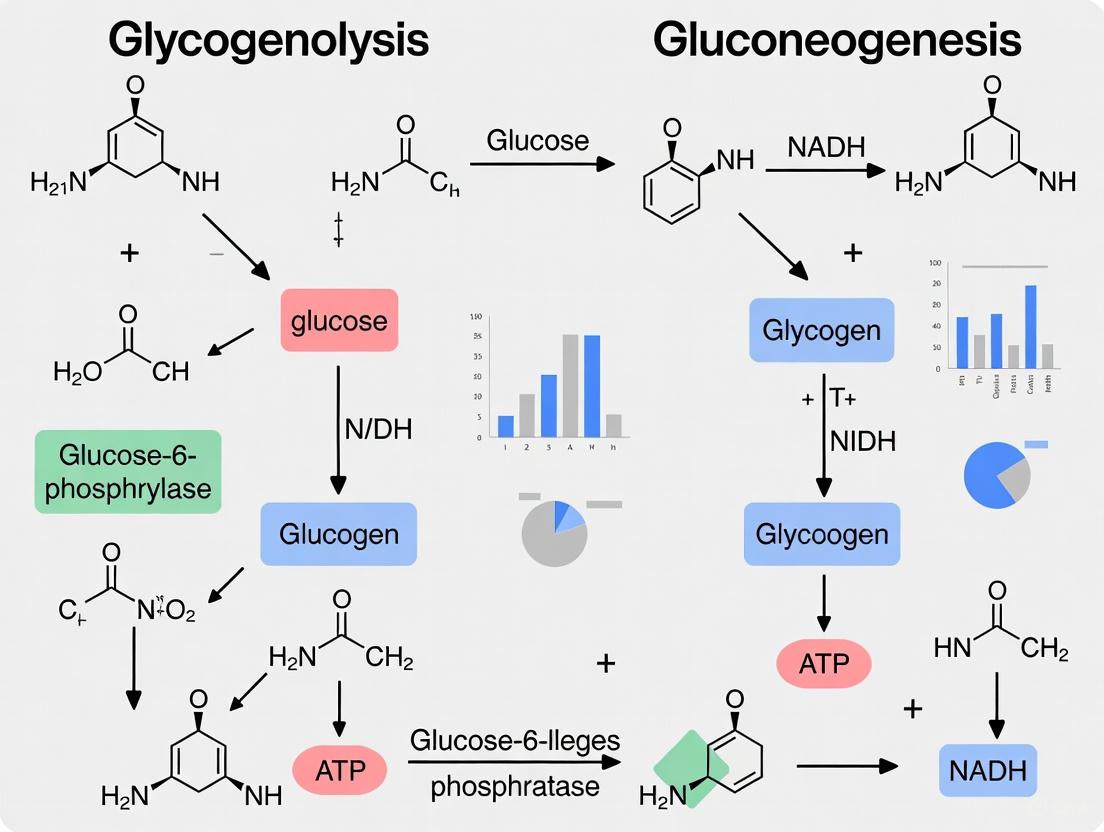
This article provides a comprehensive comparative analysis of the glycogenolysis and gluconeogenesis pathways, detailing their distinct yet complementary roles in maintaining systemic glucose homeostasis.
Glycogenolysis vs. Gluconeogenesis: A Comparative Analysis of Pathway Contributions to Glucose Homeostasis and Disease
Abstract
This article provides a comprehensive comparative analysis of the glycogenolysis and gluconeogenesis pathways, detailing their distinct yet complementary roles in maintaining systemic glucose homeostasis. Tailored for researchers, scientists, and drug development professionals, it explores the fundamental biochemistry, regulatory mechanisms, and tissue-specific functions of these pathways. The scope extends to methodological approaches for investigating pathway flux, the consequences of dysregulation in metabolic diseases like diabetes and glycogen storage disorders, and the integration of recent research findings, such as the glycogen/AMPK/CRTC2 signaling axis. The synthesis aims to inform the development of targeted therapeutic strategies for metabolic disorders.
Deconstructing the Pathways: Core Mechanisms and Regulatory Principles of Hepatic Glucose Production
Glycogenolysis is the fundamental biochemical process responsible for the controlled breakdown of glycogen, a branched polysaccharide, into glucose-1-phosphate and free glucose molecules [1] [2]. This catabolic pathway serves as a critical rapid-response system for maintaining blood glucose levels during fasting periods and provides immediate energy substrates for muscular contraction [1] [3]. The process occurs primarily in the liver and skeletal muscle, though with distinctly different physiological outcomes: hepatic glycogenolysis releases glucose into the bloodstream for systemic use, while muscular glycogenolysis generates glucose-6-phosphate for local energy production within myocytes [2] [3]. Glycogenolysis operates in careful coordination with glycogenesis (glycogen synthesis) and gluconeogenesis (de novo glucose synthesis) to maintain glucose homeostasis through hormonal regulation, primarily via insulin, glucagon, and epinephrine [1] [4].
The clinical and therapeutic significance of glycogenolysis extends across multiple domains, including diabetes management, glycogen storage diseases (GSDs), and emerging research areas such as cognitive function [1] [5]. For researchers and drug development professionals, understanding the precise regulation of glycogenolytic enzymes offers promising therapeutic targets for metabolic disorders. This review provides a comprehensive comparison of glycogenolysis and gluconeogenesis, detailing experimental methodologies, key findings, and emerging research tools in the field.
Molecular Mechanism of Glycogen Breakdown
Glycogenolysis employs a sophisticated enzymatic cascade to liberate glucose residues from the highly branched glycogen polymer. The process begins with glycogen phosphorylase, which catalyzes the sequential phosphorolytic cleavage of α-1,4-glycosidic linkages from the non-reducing ends of glycogen branches, releasing glucose-1-phosphate molecules [1] [2]. This reaction continues until approximately four glucose residues remain before an α-1,6 branching point, creating a structure known as a limit dextrin [4].
At this juncture, a dual-function debranching enzyme system takes over. First, oligo-α(1,4)→α(1,4)-glucantransferase activity relocates a block of three glucose residues from the branch to the end of a neighboring chain, connecting them via an α-1,4 linkage [1]. Subsequently, amylo-α-1,6-glucosidase (the debranching enzyme) hydrolyzes the remaining α-1,6 linkage at the branching point, releasing a single free glucose molecule [1] [3]. Through this coordinated process, the majority of glycogen residues are released as glucose-1-phosphate, with only approximately 7% emerging as free glucose from the branch points [1].
The glucose-1-phosphate produced is rapidly converted to glucose-6-phosphate by phosphoglucomutase [2] [3]. The metabolic fate of this glucose-6-phosphate then diverges based on tissue type. In hepatocytes and renal cells, glucose-6-phosphatase hydrolyzes glucose-6-phosphate to free glucose, which can exit the cells via GLUT transporters and enter the bloodstream [2] [3]. Myocytes lack glucose-6-phosphatase, thus the glucose-6-phosphate proceeds directly into glycolysis to generate ATP for local energy needs [3].
Table 1: Key Enzymes in Glycogenolysis
| Enzyme | Function | Tissue Distribution | Genetic Deficiency (GSD) |
|---|---|---|---|
| Glycogen phosphorylase | Cleaves α-1,4-glycosidic linkages via phosphorolysis | Liver, muscle, brain | Type V (McArdle disease) - muscle isoform [1] |
| Debranching enzyme (transferase & glucosidase activities) | Transfers branch residues & hydrolyzes α-1,6 linkages | Liver, muscle | Type III (Cori disease) [1] [3] |
| Phosphoglucomutase | Converts glucose-1-phosphate to glucose-6-phosphate | Ubiquitous | Type XIV (rare) [3] |
| Glucose-6-phosphatase | Produces free glucose from glucose-6-phosphate | Liver, kidney | Type I (von Gierke disease) [1] [3] |
The following diagram illustrates the sequential enzymatic process of glycogen degradation:
Diagram Title: Enzymatic Pathway of Glycogen Degradation
Regulatory Signaling Pathways
Glycogenolysis is precisely regulated through multiple hormonal signaling pathways that respond to fluctuating energy demands and blood glucose levels. The primary regulators include glucagon (in fasted states), epinephrine (during stress/exercise), and insulin (which potently inhibits glycogenolysis) [2] [4].
The glucagon and β-adrenergic signaling cascades operate through similar mechanisms. When these hormones bind to their specific G-protein-coupled receptors on hepatocytes or myocytes, they activate adenylate cyclase, which converts ATP to cyclic AMP (cAMP) [1] [3]. Elevated cAMP levels activate protein kinase A (PKA), which in turn phosphorylates and activates phosphorylase kinase [1]. This enzyme then phosphorylates glycogen phosphorylase, converting it from its less active b form to its highly active a form, thereby initiating glycogen breakdown [1] [3].
Calcium provides an additional regulatory dimension, particularly important in muscle tissue during contraction. Calcium released from the sarcoplasmic reticulum binds to calmodulin, and the calcium-calmodulin complex directly activates phosphorylase kinase, providing a rapid energy supply mechanism that bypasses the cAMP pathway [2] [3]. This enables immediate glycogenolysis in response to muscular activity without hormonal stimulation.
The following diagram illustrates the complex hormonal regulation of glycogenolysis:
Diagram Title: Hormonal Regulation of Glycogenolysis
Quantitative Methodologies for Pathway Measurement
Isotopic Tracer Techniques
Research quantifying the relative contributions of glycogenolysis and gluconeogenesis to glucose production employs sophisticated isotopic tracer methodologies. The most widely accepted approach involves measuring deuterium incorporation from body water into newly formed glucose [6]. This technique quantifies fractional gluconeogenesis (the percentage of glucose derived from gluconeogenesis), allowing glycogenolysis to be calculated as the difference between total glucose production and gluconeogenic contribution [6].
Stable isotopomers of various precursors including [2-13C]glycerol, [U-13C]lactate, and [U-13C]alanine enable researchers to track specific carbon fluxes through gluconeogenic pathways [6]. These methods require careful consideration of isotopic steady state, with measurements typically taken after 4-5 hours of tracer infusion to ensure complete glucose pool turnover [6]. Nuclear magnetic resonance (NMR) spectroscopy provides an alternative non-invasive method for directly quantifying hepatic glycogen content and its changes over time, particularly useful for tracking glycogen depletion rates during fasting [6].
Table 2: Comparison of Major Methodologies for Measuring Hepatic Glucose Production
| Methodology | Measured Parameter | Derived Parameter | Key Assumptions & Limitations |
|---|---|---|---|
| Deuterium Oxide (²H₂O) | Fractional gluconeogenesis (GNG) | Glycogenolysis = EGP - GNG | Assumes constant body water enrichment; cannot distinguish renal vs hepatic GNG [6] |
| Mass Isotopomer Distribution Analysis (MIDA) | Precursor-product relationship using [2-13C]glycerol or [U-13C]glucose | GNG contribution to glucose pool | Requires specific precursor labeling patterns; complex computational analysis [6] |
| NMR Spectroscopy | Liver glycogen content directly | Glycogenolysis rate from depletion kinetics | Expensive equipment; limited availability; may underestimate glycogen turnover [6] |
| Precursor Infusion ([U-14C]lactate/alanine) | Radioactivity incorporation into glucose | Relative GNG from specific precursors | Cannot quantify absolute rates; assumes precursor pool specific activity [6] |
Temporal Contributions During Fasting
Research using these methodologies has revealed the dynamic interplay between glycogenolysis and gluconeogenesis throughout fasting periods. In the postprandial state and early fasting (up to 12 hours), glycogenolysis accounts for approximately 45% of hepatic glucose production [6]. As fasting progresses to 23 hours, glycogenolysis contribution declines to about 30%, with gluconeogenesis becoming increasingly dominant [6]. After 68 hours of fasting, glycogen stores are nearly depleted, and glycogenolysis contributes only about 4% to glucose production, with gluconeogenesis accounting for the remaining 96% [6]. This progressive transition from glycogen utilization to de novo glucose synthesis represents a fundamental metabolic adaptation to prolonged fasting.
Glycogenolysis Versus Gluconeogenesis: A Comparative Analysis
Glycogenolysis and gluconeogenesis represent complementary yet distinct pathways for maintaining glucose homeostasis, with contrasting regulatory mechanisms, energy requirements, and temporal contributions.
Table 3: Comprehensive Comparison of Glycogenolysis and Gluconeogenesis
| Parameter | Glycogenolysis | Gluconeogenesis |
|---|---|---|
| Primary Function | Rapid glucose mobilization from stored glycogen | De novo glucose synthesis from non-carbohydrate precursors |
| Substrates | Glycogen polymer | Lactate, glycerol, glucogenic amino acids (alanine, glutamine) |
| Tissue Distribution | Liver, muscle, kidney, brain | Primarily liver (90%), kidney cortex (up to 20% during acidosis) [7] [6] |
| Energy Consumption | Minimal (energetically favorable) | ATP-intensive (6 ATP per glucose molecule) |
| Temporal Pattern | Dominant early fasting (0-12 hours) | Increases with fasting duration (>12 hours) |
| Key Regulatory Enzymes | Glycogen phosphorylase (rate-limiting) | Pyruvate carboxylase, PEPCK, Fructose-1,6-bisphosphatase, Glucose-6-phosphatase |
| Hormonal Activation | Glucagon (liver), Epinephrine (muscle/liver), Calcium (muscle) | Glucagon, Cortisol, Epinephrine (indirect) |
| Hormonal Inhibition | Insulin | Insulin |
| Primary Metabolic Role | Immediate energy availability | Long-term glucose maintenance during prolonged fasting |
| Response Time | Seconds to minutes | Hours |
| Intracellular Location | Cytosol | Mitochondria and cytosol |
The differential tissue expression of glucose-6-phosphatase fundamentally distinguishes the physiological outcomes of glycogenolysis in various tissues. Hepatic glycogenolysis releases free glucose into the systemic circulation, while muscular glycogenolysis generates glucose-6-phosphate for local glycolysis and ATP production [3]. This dichotomy explains why muscle glycogen cannot directly contribute to blood glucose maintenance, and why hepatic glycogenolysis is so critical for preventing hypoglycemia during fasting intervals.
Experimental Models & Research Applications
In Vitro Glycogen Synthesis Systems
Recent advances in in vitro glycogen synthesis systems have enabled precise investigation of glycogen structure and enzymatic regulation. The GBE-GP method developed by Loos and colleagues allows synthetic formation of glycogen β particles with tunable degrees of branching by adjusting reaction time, pH, and concentrations of glycogen branching enzyme (GBE) and glycogen phosphorylase (GP) [8]. This system has demonstrated that adjusting the ratio of GP to GBE promotes the formation of larger α particles from β particles, supporting the "budding hypothesis" of glycogen structure assembly [8].
These synthetic systems have revealed structural differences between healthy and diabetic glycogen particles, with α particles from diabetic mice and humans showing increased fragility and dissociation into smaller particles after exposure to dimethyl sulfoxide (DMSO), suggesting impaired structural organization in metabolic disease states [8].
Cognitive Function Research
Beyond its classical metabolic roles, glycogenolysis has emerged as a critical process in cognitive function and memory formation. Research in day-old chicks demonstrates that glycogen breakdown is essential for memory consolidation at three specific post-training timepoints (2.5, 30, and 55 minutes) [5]. Inhibition of glycogen phosphorylase with 1,4-dideoxy-1,4-imino-D-arabinitol (DAB) at these critical periods completely prevents long-term memory formation [5].
Noradrenaline acting through β₂-adrenergic receptors stimulates glycogenolysis in astrocytes during the second stage of memory consolidation, while serotonin via 5-HT₂B receptors regulates the first stage [5]. This neuromodulatory regulation of glycogenolysis supports the astrocyte-neuron lactate shuttle hypothesis, though recent evidence suggests additional signaling roles for lactate beyond merely metabolic fuel [5].
The Scientist's Toolkit: Essential Research Reagents
Table 4: Key Research Reagents for Glycogenolysis Studies
| Research Tool | Application/Function | Experimental Use |
|---|---|---|
| 1,4-Dideoxy-1,4-imino-D-arabinitol (DAB) | Potent glycogen phosphorylase inhibitor | Blocks glycogenolysis to investigate its metabolic and cognitive roles [5] |
| [6,6-²H₂]Glucose | Non-recyclable glucose tracer | Measures glucose turnover rates without recycling through gluconeogenesis [6] |
| Deuterated Water (²H₂O) | Labels new glucose molecules | Quantifies fractional gluconeogenesis contribution to glucose pool [6] |
| Pyridoxal Phosphate (PLP) | Cofactor for glycogen phosphorylase | Essential for in vitro phosphorylase activity assays [3] |
| Glucagon Receptor Agonists | Stimulate hepatic glycogenolysis | Investigate cAMP-mediated glycogenolytic signaling pathways [1] [3] |
| PAS (Periodic Acid-Schiff) Staining | Detects polysaccharides (glycogen) in tissues | Visualizes and semi-quantifies glycogen distribution in cells and tissues [9] |
Glycogenolysis represents a sophisticated biochemical pathway essential for dynamic glucose homeostasis, with complex regulatory mechanisms that differentiate its hepatic and muscular functions. The quantitative relationship between glycogenolysis and gluconeogenesis demonstrates a carefully orchestrated metabolic transition during fasting, ensuring continuous glucose availability to critical tissues.
For drug development professionals, glycogenolytic enzymes present promising therapeutic targets for metabolic disorders. Glycogen phosphorylase inhibitors offer potential for reducing excessive hepatic glucose output in diabetes, while modulators of the newly discovered glycogenin isoforms (GYG1 and GYG2) might provide tissue-specific approaches to glycogen metabolism disorders [9]. The emerging role of glycogenolysis in cognitive function further expands the potential therapeutic applications of glycogen metabolism modulators beyond traditional metabolic disease.
Future research directions include elucidating the structural biology of glycogenin isoforms and their tissue-specific regulation, developing more precise isotopic methods for quantifying pathway contributions in humans, and exploring the therapeutic potential of targeting glycogen metabolism in neurological disorders. The continued refinement of in vitro glycogen synthesis systems will further enhance our understanding of glycogen structure-function relationships in health and disease.
The maintenance of blood glucose levels is critical for survival, with the brain, kidneys, and erythrocytes relying almost exclusively on glucose as a metabolic fuel source [10]. The human body employs two primary hepatic mechanisms to prevent hypoglycemia: glycogenolysis, the rapid breakdown of glycogen stores, and gluconeogenesis, the more complex, energy-dependent synthesis of new glucose molecules from non-carbohydrate precursors [10] [11]. While glycogenolysis provides an immediate but limited glucose supply during short-term fasting, gluconeogenesis becomes indispensable after 12-18 hours of fasting as glycogen stores deplete, peaking around 24 hours and potentially accounting for nearly all glucose production during prolonged starvation [10] [6]. Understanding the distinct roles, regulation, and interplay between these pathways is fundamental to metabolic research, particularly in developing therapies for diabetes and other disorders of glucose homeostasis.
Pathway Definitions and Key Differences
Gluconeogenesis: De Novo Glucose Synthesis
Gluconeogenesis is a ubiquitous metabolic pathway that generates glucose from non-hexose precursors. It is not merely the reversal of glycolysis but involves distinct enzymatic steps to bypass its irreversible reactions [10] [12].
- Primary Substrates: Lactate (via the Cori cycle), glycerol (from adipose tissue lipolysis), and glucogenic amino acids (e.g., alanine via the Cahill cycle) [10].
- Cellular Location: Occurs primarily in the liver and, to a lesser extent, the renal cortex, especially during prolonged fasting or acidosis [10] [6].
- Key Enzymes: The pathway is defined by four key enzymes that circumvent the thermodynamic barriers of glycolysis:
- Pyruvate carboxylase: Converts pyruvate to oxaloacetate in the mitochondrion, requiring ATP and biotin.
- Phosphoenolpyruvate carboxykinase (PEPCK): Decarboxylates oxaloacetate to phosphoenolpyruvate (PEP) in the cytosol, requiring GTP.
- Fructose-1,6-bisphosphatase: Dephosphorylates fructose 1,6-bisphosphate to fructose 6-phosphate.
- Glucose-6-phosphatase: Final enzyme that dephosphorylates glucose-6-phosphate to release free glucose into the bloodstream [10].
Glycogenolysis: Glycogen Breakdown
Glycogenolysis is the cytosolic process of breaking down glycogen, the body's stored form of glucose, into glucose-1-phosphate and free glucose [11].
- Primary Substrate: Glycogen polymers stored in the liver and muscle.
- Cellular Location: Liver and skeletal muscle.
- Key Enzymes:
- Glycogen phosphorylase: The rate-limiting enzyme that catalyzes the phosphorolytic cleavage of α-1,4 glycosidic linkages to yield glucose-1-phosphate. Its activity is regulated allosterically and by phosphorylation [11].
- Debranching enzyme: A bifunctional enzyme that remodels the glycogen branch points for continued phosphorylase activity and hydrolyzes the α-1,6 linkages, releasing a single free glucose molecule [11].
The following diagram illustrates the core pathways of gluconeogenesis and glycogenolysis, highlighting their key substrates, intermediates, and the critical enzymes that define them.
Quantitative Comparison of Pathway Contributions
The relative contributions of glycogenolysis and gluconeogenesis to hepatic glucose production are highly dynamic, shifting dramatically with nutritional status. The table below summarizes data obtained from in vivo stable isotope studies in humans [6].
Table 1: Contribution of Glycogenolysis and Gluconeogenesis to Hepatic Glucose Production During Fasting
| Fasting Period | Total Glucose Production (mg/kg/min) | Glycogenolysis Contribution (%) | Gluconeogenesis Contribution (%) | Primary Experimental Method |
|---|---|---|---|---|
| Post-absorptive (0-6 h) | ~2.0 - 2.5 | ~40 - 50 | ~50 - 60 | Deuterated water (²H₂O) |
| Short-term (12-18 h) | ~1.8 - 2.2 | ~10 - 20 | ~80 - 90 | Deuterated water (²H₂O) |
| Prolonged (24-42 h) | ~1.4 - 1.8 | ~0 - 5 | ~95 - 100 | Deuterated water (²H₂O) |
| Prolonged + Kidney | ~1.4 - 1.8 | ~0 - 5 (Liver) | ~95 - 100 (Liver + up to 20% Kidney) | Deuterated water (²H₂O) |
Beyond their role in energy production, these pathways interface with other critical metabolic processes. Glycogenolysis-derived glucose-1-phosphate is not only a glycolytic substrate but also a key precursor for the pentose phosphate pathway (PPP), which generates NADPH for redox defense and pentoses for nucleic acid synthesis [11]. Recent research highlights a metabolic compartmentalization where glycogenolysis-derived, rather than glucose phosphorylation-derived, glucose-6-phosphate preferentially flows into the PPP in CD8+ memory T cells and macrophages, a process regulated by glucose-1-phosphate promoting liquid-liquid phase separation of the enzyme G6PD [13].
Methodologies for Measuring Pathway Flux
Quantifying the in vivo contributions of gluconeogenesis and glycogenolysis in humans is methodologically challenging. The table below compares the most prominent techniques, highlighting their principles and limitations.
Table 2: Comparison of Key Methodologies for Measuring Gluconeogenesis and Glycogenolysis In Vivo
| Method | Principle | Key Tracer(s) | Advantages | Limitations |
|---|---|---|---|---|
| Deuterated Water (²H₂O) | Measures deuterium incorporation from body water into newly formed glucose at carbon positions 6 and 2. | ²H₂O (oral or intravenous) | Most widely accepted; measures total gluconeogenesis from all precursors; relatively non-invasive. | Does not distinguish contributions of individual precursors (e.g., lactate vs. glycerol). |
| Mass Isotopomer Distribution Analysis (MIDA) | Analyzes the distribution of mass isotopomers in plasma glucose after infusion of a ¹³C-labeled precursor (e.g., lactate, glycerol). | [U-¹³C]Glycerol, [2-¹³C]Glycerol | Can provide information on the contribution of specific precursors. | Complex modeling and assumptions; precursor pool enrichment can be difficult to determine. |
| Nuclear Magnetic Resonance (NMR) Spectroscopy | Uses ²H or ¹³C NMR to directly assess the position-specific enrichment of glucose in the blood. | ²H₂O, [U-¹³C]Glucose | Provides positional enrichment data without chemical degradation of glucose. | Lower sensitivity compared to Mass Spectrometry (MS); requires specialized, expensive equipment. |
| Hepatic Glycogen Measurement | Quantifies liver glycogen content directly via ¹³C NMR before and after a fasting period; glycogenolysis rate is derived from its disappearance. | None (direct measurement) | Direct measurement of hepatic glycogen. | Does not measure gluconeogenesis directly (it is derived); expensive and limited availability of NMR. |
A critical experimental consideration is that measurements of mRNA expression for key gluconeogenic enzymes (e.g., PEPCK, Glucose-6-phosphatase) in liver biopsy specimens do not correlate reliably with actual in vivo gluconeogenic flux. This disconnect underscores the necessity of using the kinetic isotopic methods described above to assess pathway integrity and rates [6].
Detailed Protocol: Deuterated Water (²H₂O) Method
This protocol is currently the gold standard for measuring fractional gluconeogenesis in human clinical research [6].
- Tracer Administration: Administer ²H₂O (deuterated water) orally or intravenously to achieve a body water enrichment of ~0.5%.
- Steady-State Achievement: Initiate a primed, continuous infusion of a non-recyclable glucose tracer (e.g., [6,6-²H₂]glucose) to measure total glucose rate of appearance (Ra). Allow 4-5 hours for the entire glucose pool to turnover and reach an isotopic steady state.
- Blood Sampling: Collect plasma samples at steady-state for the isolation of glucose.
- Glucose Derivitization and Analysis:
- For GCMS: Convert plasma glucose to the hexamethylenetetramine (HMT) derivative. Use gas chromatography-mass spectrometry (GCMS) to measure the deuterium enrichment at the C5 position of glucose, which reflects gluconeogenesis.
- For ²H-NMR: Analyze plasma glucose directly via ²H-NMR spectroscopy to determine positional enrichment.
- Calculations:
- Fractional Gluconeogenesis (%) is calculated from the ratio of deuterium enrichment at C5 of glucose to the enrichment in body water.
- Absolute Gluconeogenesis Rate (mg/kg/min) = Fractional Gluconeogenesis (%) × Total Glucose Ra (mg/kg/min).
- Glycogenolysis Rate (mg/kg/min) = Total Glucose Ra - Absolute Gluconeogenesis Rate.
The Scientist's Toolkit: Essential Research Reagents
Table 3: Key Reagents for Investigating Gluconeogenesis and Glycogenolysis
| Reagent / Material | Function in Research | Example Application |
|---|---|---|
| Stable Isotope Tracers | To trace metabolic flux in vivo and in vitro. | ²H₂O for total gluconeogenesis; [6,6-²H₂]Glucose for glucose turnover; [U-¹³C]Lactate for precursor-specific studies. |
| Specific Enzyme Inhibitors/Activators | To probe the role and regulation of specific pathway enzymes. | Metformin (suppresses gluconeogenesis); Glucagon (activates glycogenolysis and gluconeogenesis via cAMP). |
| Hexokinase Inhibitors (e.g., 2-Deoxyglucose, Lonidamine) | To inhibit glycolysis and probe the source of G6P for branching pathways. | Used in cell studies to demonstrate that glycogenolysis-derived G6P, not glycolysis-derived G6P, feeds the PPP [13]. |
| Phospho-/Dephospho-Specific Antibodies | To assess the activation state of regulated enzymes. | Western blotting to detect phosphorylated (active) Glycogen Phosphorylase. |
| GC-MS / LC-MS Systems | For high-sensitivity measurement of isotopic enrichment in metabolites. | Quantifying ²H or ¹³C enrichment in plasma glucose or other intermediates from tracer studies. |
| Nuclear Magnetic Resonance (NMR) Spectrometer | For direct, position-specific analysis of isotopic enrichment in molecules. | ²H-NMR analysis of glucose to determine gluconeogenic fractional contribution without chemical derivation. |
Pathophysiological and Therapeutic Implications
Dysregulation of these pathways is central to metabolic diseases. In type 2 diabetes, excessive hepatic gluconeogenesis is a major contributor to fasting hyperglycemia, driven by insulin resistance and relative glucagon excess [10]. The first-line diabetic drug metformin suppresses hepatic gluconeogenesis through multiple mechanisms, including activation of AMPK, inhibition of mitochondrial complex I, and direct inhibition of glycerol-3-phosphate dehydrogenase [10].
In contrast, genetic defects in these pathways can be fatal. Von Gierke disease (Glycogen Storage Disease Type Ia), caused by a deficiency in glucose-6-phosphatase, impairs both the final step of gluconeogenesis and glycogenolysis, leading to severe fasting hypoglycemia, lactic acidosis, and hyperlipidemia [10] [11]. This highlights the critical role of this enzyme as the final common step for endogenous glucose production.
The integrated relationship between glycogenolysis and gluconeogenesis, from substrate entry to the release of free glucose, is summarized in the following diagram. It also highlights key regulatory nodes and the critical role of glucose-6-phosphatase, the absence of which in muscle prevents it from contributing to blood glucose.
Glycogenolysis and gluconeogenesis are fundamental metabolic pathways that ensure a continuous supply of glucose to meet energy demands during fasting or physiological stress. Glycogenolysis provides rapid glucose mobilization through the breakdown of stored glycogen, while gluconeogenesis enables de novo glucose synthesis from non-carbohydrate precursors. The precise regulation of these pathways is critical for maintaining systemic glucose homeostasis, and their dysregulation contributes significantly to metabolic diseases such as diabetes. Understanding the enzymatic drivers and rate-limiting steps of these processes provides crucial insights for therapeutic interventions targeting hyperglycemia. This guide offers a comparative analysis of the key enzymatic regulators—phosphorylase for glycogenolysis and PEPCK/FBPase for gluconeogenesis—focusing on their mechanistic roles, regulatory networks, and experimental assessment methodologies relevant to drug discovery research.
Glycogenolysis: Key Enzymes and Regulation
Glycogen Phosphorylase as the Primary Driver
Glycogen phosphorylase (PYGL) serves as the rate-limiting enzyme for glycogenolysis, catalyzing the phosphorolytic cleavage of α-1,4-glycosidic linkages in glycogen to release glucose-1-phosphate [11]. This initial step is the primary regulatory point for glycogen breakdown. The enzyme functions as the central component of a macromolecular signaling complex that includes scaffolding proteins such as Protein Targeting to Glycogen (PTG), which localizes the enzymatic machinery to glycogen particles for efficient degradation [14].
The activity of glycogen phosphorylase is regulated through allosteric mechanisms and reversible phosphorylation [11]. In its phosphorylated form, phosphorylase is active, while the dephosphorylated form is inactive. This phosphorylation status is dynamically controlled in response to hormonal signals, particularly glucagon in the liver and epinephrine in muscle tissue, which activate phosphorylase via cAMP-dependent protein kinase A (PKA) pathways [11].
Supporting Enzymatic Machinery
The complete breakdown of glycogen requires additional enzymatic components beyond phosphorylase:
- Debranching enzyme (amylo-1,6-glucosidase): Hydrolyzes α-1,6-glucosidic linkages at branch points, releasing free glucose molecules [11]
- Phosphoglucomutase: Converts glucose-1-phosphate to glucose-6-phosphate, making it available for glycolytic energy production or, in gluconeogenic tissues, for dephosphorylation to free glucose [11]
- Glucose-6-phosphatase: Present exclusively in the liver, kidney, and intestines, this enzyme performs the final step of hepatic glycogenolysis by dephosphorylating glucose-6-phosphate to produce free glucose that can enter the bloodstream [11]
Table 1: Key Enzymes in Glycogenolysis
| Enzyme | Function | Tissue Localization | Regulatory Mechanisms |
|---|---|---|---|
| Glycogen Phosphorylase (PYGL) | Rate-limiting enzyme; phosphorolytic cleavage of α-1,4 linkages | Liver, muscle | Allosteric regulation, phosphorylation (cAMP/PKA) |
| Debranching Enzyme | Hydrolyzes α-1,6 linkages at branch points | Liver, muscle | Substrate availability |
| Phosphoglucomutase | Converts glucose-1-P to glucose-6-P | Ubiquitous | Mass action |
| Glucose-6-Phosphatase | Final step: produces free glucose from G6P | Liver, kidney, intestines | Transcriptional regulation, substrate availability |
Gluconeogenesis: Key Enzymes and Regulation
PEPCK, FBPase, and G6Pase as Bypass Enzymes
Gluconeogenesis employs four key bypass enzymes to overcome the thermodynamic barriers of three essentially irreversible glycolytic steps [15] [16] [17]:
Phosphoenolpyruvate carboxykinase (PEPCK): Catalyzes the conversion of oxaloacetate to phosphoenolpyruvate (PEP), representing the first committed step in gluconeogenesis [15]. This enzyme exists as two isoforms—cytosolic (PEPCK-C, encoded by PCK1) and mitochondrial (PEPCK-M, encoded by PCK2)—with differential expression across tissues [15].
Fructose-1,6-bisphosphatase (FBPase): Catalyzes the hydrolysis of fructose-1,6-bisphosphate to fructose-6-phosphate, bypassing the phosphofructokinase (PFK-1) step of glycolysis [15]. This enzyme serves as a critical regulatory checkpoint for gluconeogenic flux.
Glucose-6-phosphatase (G6Pase): Performs the terminal step of gluconeogenesis, hydrolyzing glucose-6-phosphate to free glucose [15]. The G6Pase system consists of a catalytic subunit (G6PC) and a glucose-6-phosphate translocase (G6PT) that transports the substrate into the endoplasmic reticulum lumen.
Pyruvate carboxylase (PC): Catalyzes the ATP-dependent carboxylation of pyruvate to oxaloacetate, anaplerotically replenishing TCA cycle intermediates while providing substrate for PEPCK [7] [16].
Regulatory Hierarchy and Coordination
Among these enzymes, PEPCK is often considered the primary regulatory point for gluconeogenesis due to its position at the pathway entry point and its robust hormonal regulation [16]. However, contemporary research suggests that in vivo control is distributed across multiple enzymatic steps rather than residing in a single rate-limiting enzyme [18]. FBPase provides secondary regulation through its sensitivity to energy charge and allosteric effectors, while G6Pase controls the final output of glucose into circulation [15] [16].
Table 2: Key Enzymes in Gluconeogenesis
| Enzyme | Function | Glycolytic Step Bypassed | Regulatory Mechanisms |
|---|---|---|---|
| Pyruvate Carboxylase (PC) | Converts pyruvate to oxaloacetate | Pyruvate kinase | Acetyl-CoA activation, transcriptional regulation |
| Phosphoenolpyruvate Carboxykinase (PEPCK) | Converts OAA to phosphoenolpyruvate | Pyruvate kinase | Transcriptional (insulin, glucagon), allosteric |
| Fructose-1,6-bisphosphatase (FBPase) | Dephosphorylates F1,6BP to F6P | Phosphofructokinase-1 | Allosteric (AMP inhibition), transcriptional |
| Glucose-6-Phosphatase (G6Pase) | Final step: produces free glucose from G6P | Hexokinase/Glucokinase | Transcriptional regulation, substrate availability |
Comparative Analysis: Enzymatic Drivers and Regulatory Mechanisms
Structural and Functional Distinctions
Glycogen phosphorylase and the gluconeogenic enzymes represent distinct structural classes with different mechanistic approaches to controlling metabolic flux. Phosphorylase functions as the sole rate-determining enzyme in a primarily catabolic process, operating as part of a macromolecular complex on the glycogen particle surface [14] [11]. In contrast, PEPCK, FBPase, and G6Pase operate as sequential regulatory checkpoints in an anabolic pathway, with control distributed across multiple enzymatic steps that collectively determine net flux [15] [16] [18].
The temporal characteristics of regulation also differ significantly. Phosphorylase is regulated through rapid post-translational modifications (phosphorylation) that enable minute-to-minute control of glycogen breakdown in response to energy demands [11]. The gluconeogenic enzymes are subject to complex multi-level regulation including transcriptional control (hours), post-translational modifications (minutes to hours), and allosteric modulation (instantaneous) [16].
Hormonal Control Networks
Both pathways are regulated by the counter-regulatory hormones insulin and glucagon, but through distinct mechanisms:
Glycogenolysis regulation:
- Glucagon (liver) and epinephrine (muscle) activate adenylate cyclase, increasing cAMP levels and activating PKA
- PKA phosphorylates and activates phosphorylase kinase, which in turn phosphorylates and activates glycogen phosphorylase [11]
- Insulin opposes this process through activation of phosphodiesterases that decrease cAMP levels and promote dephosphorylation of phosphorylase [18]
Gluconeogenesis regulation:
- Glucagon activates the cAMP/PKA pathway, leading to phosphorylation of CREB, which enhances transcription of PEPCK and G6Pase [16]
- Glucocorticoids synergize with glucagon to potentiate gluconeogenic gene expression [16]
- Insulin suppresses gluconeogenic gene expression through the PI3K/Akt pathway, which phosphorylates FoxO1 and CRTC2, leading to their nuclear exclusion and decreased transcription of PEPCK, FBPase, and G6Pase [16] [18]
Figure 1: Glycogenolysis Signaling and Regulation via cAMP/PKA Pathway
Figure 2: Gluconeogenesis Transcriptional Regulation Network
Experimental Approaches and Methodologies
In Vivo Assessment Techniques
Isotopic tracer methods represent the gold standard for quantifying pathway fluxes in vivo [6]. The deuterated water (²H₂O) method is widely accepted for measuring gluconeogenesis by tracking deuterium incorporation into newly formed glucose [6]. For glycogenolysis assessment, nuclear magnetic resonance (NMR) spectroscopy enables direct quantification of hepatic glycogen content and its changes over time [6].
Advanced approaches combine multiple isotopic labels with mathematical modeling to simultaneously assess both pathways. For example, [6,6-²H₂]glucose is used to measure total glucose appearance rate, while deuterium incorporation from body water into glucose carbon 5 or 6 provides the fractional contribution of gluconeogenesis [6]. Glycogenolysis is then calculated as the difference between total glucose production and gluconeogenesis.
Genetic and Pharmacological Manipulation
Genetic manipulation models provide mechanistic insights through tissue-specific knockout or overexpression of target enzymes [14]:
- Liver-specific PTG knockout mice: Demonstrate reduced glycogen levels and amplified gluconeogenic gene expression in response to glucagon [14]
- PYGL knockdown models: Show increased glycogen accumulation and suppressed gluconeogenic gene expression [14]
- PEPCK knockout models: Exhibit persistent neonatal hypoglycemia and liver dysfunction [15] [16]
Pharmacological interventions enable acute pathway modulation:
- Glycogen phosphorylase inhibitors (GPIs): Increase hepatocellular glycogen by ~30% and suppress gluconeogenic gene expression [14]
- Metformin: Suppresses hepatic gluconeogenesis through multiple proposed mechanisms including AMPK activation and mitochondrial complex I inhibition [16]
Table 3: Experimental Models for Pathway Investigation
| Model Type | Specific Example | Key Findings | Utility in Drug Discovery |
|---|---|---|---|
| Genetic Knockout | Liver-specific PTG knockout | Glycogen depletion sensitizes hepatocytes to catabolic signals, amplifying gluconeogenesis | Validates PTG as potential target for glycogen modulation |
| Genetic Knockdown | PYGL knockdown via AAV8-CRISPR | Increases glycogen levels, represses gluconeogenic genes | Confirms phosphorylase inhibition strategy |
| Pharmacological Inhibition | Glycogen phosphorylase inhibitors (GPIs) | 30% increase in glycogen, suppression of gluconeogenesis | Demonstrates therapeutic potential for hyperglycemia |
| Isotopic Tracing | ²H₂O method with [6,6-²H₂]glucose | Quantifies fractional gluconeogenesis and glycogenolysis | Provides gold-standard efficacy assessment |
Research Reagent Solutions Toolkit
Table 4: Essential Research Reagents for Investigating Glycogenolysis and Gluconeogenesis
| Reagent/Category | Specific Examples | Research Application | Key Considerations |
|---|---|---|---|
| Isotopic Tracers | [6,6-²H₂]glucose, ²H₂O, [3-¹³C]lactate, [U-¹⁴C]alanine | In vivo flux measurements, precursor-product relationships | Purity, enrichment level, metabolic recycling corrections |
| Pharmacological Inhibitors | Glycogen phosphorylase inhibitors (GPIs), Metformin | Acute pathway modulation, target validation | Specificity, dose-response characterization, off-target effects |
| Antibodies | Anti-PEPCK, Anti-FBPase, Anti-G6Pase, Anti-phosphorylated PYGL | Western blot, immunohistochemistry, ELISA | Specificity validation, phosphorylation state detection |
| Animal Models | Liver-specific PTG knockout, PYGL knockdown, PEPCK heterozygous | Mechanistic studies, pathway physiology | Tissue-specificity, developmental compensation |
| Molecular Biology Tools | PEPCK promoter constructs, siRNA against FBP1, CRISPR-Cas9 kits | Transcriptional regulation studies, gene function analysis | Off-target effects, efficiency validation |
| Enzyme Activity Assays | Phosphorylase activity kit, PEPCK enzymatic assay, FBPase activity measurement | Functional assessment of enzymatic drivers | Substrate concentration optimization, cofactor requirements |
The comparative analysis of glycogenolytic and gluconeogenic enzymatic drivers reveals distinct regulatory philosophies employed by these complementary glucose-producing pathways. Glycogenolysis operates through a single dominant regulator (glycogen phosphorylase) enabling rapid, acute response to energy demands, while gluconeogenesis employs distributed control across multiple enzymatic checkpoints (PEPCK, FBPase, G6Pase) suited for sustained glucose production during prolonged fasting.
From a therapeutic perspective, glycogen phosphorylase presents an attractive target for acute glycemic control, with inhibitors demonstrating rapid glycogen-sparing effects and secondary suppression of gluconeogenic gene expression [14]. For gluconeogenesis, targeting the transcriptional regulation of PEPCK may offer greater therapeutic potential than direct enzyme inhibition, given the pathway's distributed control structure and functional redundancy [18]. The recently identified glycogen/AMPK/CRTC2 signaling axis demonstrates the sophisticated crosstalk between these pathways, revealing that hepatic glycogen levels directly modulate gluconeogenic capacity through AMPK-mediated regulation of CRTC2 stability [14].
These insights provide a framework for developing pathway-specific therapeutics with complementary mechanisms of action. Future research should focus on tissue-specific enzyme isoforms, allosteric regulatory sites, and the dynamic interplay between these pathways in pathological states, potentially yielding more precise interventions for diabetes and other metabolic disorders.
The precise regulation of blood glucose is a fundamental physiological process, essential for survival and overall metabolic health. This regulation is orchestrated by a complex interplay of hormones, primarily glucagon, epinephrine, insulin, and cortisol. These hormones act on various tissues, particularly the liver, muscle, and adipose tissue, to control the balance between glucose production and utilization. Their actions are mediated through distinct and intricate signaling pathways that integrate hormonal signals with the body's nutritional and energetic status. Understanding the specific mechanisms of these hormones—their receptors, intracellular signaling cascades, and final metabolic effects—is crucial for biomedical researchers and drug development professionals. This guide provides a comparative analysis of these hormonal pathways, focusing on their roles in governing the critical processes of glycogenolysis and gluconeogenesis, supported by experimental data and methodologies.
Hormonal Signaling Pathways: A Comparative Analysis
The following table provides a systematic comparison of the key hormones involved in glucose metabolism, detailing their origins, receptors, signaling mechanisms, and primary metabolic functions.
Table 1: Comparative Overview of Key Metabolic Hormones
| Hormone | Secreted By | Primary Stimulus for Release | Receptor Type | Key Second Messengers | Major Metabolic Functions |
|---|---|---|---|---|---|
| Glucagon | Pancreatic alpha cells [19] | Hypoglycemia, fasting [19] | G-protein coupled receptor (GPCR) [19] [20] | cAMP, Ca²⁺, IP₃ [19] [20] | Stimulates hepatic glycogenolysis & gluconeogenesis; increases fatty acid oxidation [19] |
| Epinephrine | Adrenal medulla [21] [22] | Acute stress, fight-or-flight response [22] | GPCR (α & β adrenergic) [21] | cAMP, Ca²⁺ [21] | Stimulates glycogenolysis in muscle & liver; promotes lipolysis [22] |
| Insulin | Pancreatic beta cells | Hyperglycemia, fed state | Receptor tyrosine kinase (RTK) [23] | IRS, PI3K, AKT [23] [24] | Promotes glucose uptake (via GLUT4); stimulates glycogenesis & lipogenesis; inhibits gluconeogenesis [24] |
| Cortisol | Adrenal cortex (zona fasciculata) [25] | Chronic stress, HPA axis activation [25] | Intracellular glucocorticoid receptor [25] | Cortisol-receptor complex (regulates gene transcription) [25] | Permissive effect on other hormones; stimulates gluconeogenesis & protein degradation [25] |
Quantitative Data and Experimental Outcomes
Research into these hormonal pathways has yielded quantitative data on their metabolic effects. The table below summarizes key experimental findings related to their roles in glycogenolysis and gluconeogenesis.
Table 2: Experimental Data on Hormonal Regulation of Glucose Metabolism
| Hormone / Intervention | Experimental Model | Key Measured Outcome | Effect vs. Control | Citation/Model Reference |
|---|---|---|---|---|
| Glucagon | Human & animal studies | Increased hepatic glucose production | Rapid 2-3 fold increase, primarily via glycogenolysis [19] | [19] |
| PTG Knockout (Glycogen Depletion) | PTGLKO mouse hepatocytes [14] | Gluconeogenic gene expression (Pck1, G6pc) | ~2x higher induction with glucagon stimulation [14] | [14] |
| Glycogen Phosphorylase Inhibition | Mouse primary hepatocytes [14] | Cellular glycogen content | ~30% increase with GPI treatment [14] | [14] |
| Glycogen Phosphorylase Knockdown | sgPYGL mouse hepatocytes [14] | Gluconeogenic gene expression | Significant repression vs. sgNT controls [14] | [14] |
| Cortisol | Human physiology [25] [26] | Blood glucose availability | Increased via gluconeogenesis and decreased peripheral glucose use [25] | [25] [26] |
Detailed Signaling Pathways and Mechanisms
Glucagon Signaling Pathway
Glucagon is the primary hormone responsible for combating hypoglycemia. It binds to its specific G-protein coupled receptor (GPCR) on hepatocytes [19] [20]. This binding activates Gs proteins, which in turn stimulate adenylate cyclase to produce cyclic AMP (cAMP) [20]. Elevated cAMP levels activate Protein Kinase A (PKA). PKA then phosphorylates and activates key enzymes, including phosphorylase kinase, which subsequently activates glycogen phosphorylase, the rate-limiting enzyme in glycogen breakdown (glycogenolysis) [19] [20]. Concurrently, PKA inactivates glycogen synthase, thereby inhibiting glycogen synthesis [20]. Furthermore, PKA phosphorylates the transcription factor CREB (cAMP response element-binding protein), which, along with its coactivator CRTC2, promotes the expression of gluconeogenic genes like Pck1 (PEPCK) and G6pc (glucose-6-phosphatase) [14] [19]. An alternative cAMP-independent pathway involving Gq protein and phospholipase C, leading to intracellular Ca²⁺ release, can also contribute to CREB activation [20].
Insulin Signaling Pathway
Insulin acts as the primary anabolic hormone, promoting glucose storage and utilization. It binds to the extracellular α-subunits of its receptor tyrosine kinase (IRTK), causing a conformational change that leads to autophosphorylation of the intracellular β-subunits [23] [24]. The activated receptor then phosphorylates insulin receptor substrate (IRS) proteins. Phosphorylated IRS recruits and activates phosphoinositide 3-kinase (PI3K), which converts PIP₂ to PIP₃. PIP₃ serves as a docking site for phosphoinositide-dependent kinase 1 (PDK1) and Akt (Protein Kinase B). PDK1 and mTORC2 phosphorylate and fully activate Akt [24]. A key action of Akt in glucose metabolism is to promote the translocation of the glucose transporter GLUT4 from intracellular vesicles to the plasma membrane in muscle and adipose tissue, facilitating glucose uptake [24]. In the liver, Akt activation inhibits gluconeogenesis and promotes glycogen synthesis.
Cortisol Signaling Pathway
Cortisol, a glucocorticoid, exerts its effects through genomic mechanisms. Being lipophilic, it readily diffuses across the plasma membrane and binds to its specific glucocorticoid receptor (GR) in the cytoplasm. In the unbound state, the GR is complexed with chaperone proteins like Hsp90. Hormone binding induces a conformational change, dissociating the chaperone proteins and allowing the cortisol-GR complex to translocate into the nucleus [25]. In the nucleus, the complex dimerizes and binds to glucocorticoid response elements (GREs) in the promoter regions of target genes, regulating their transcription [25]. This leads to the increased expression of gluconeogenic enzymes in the liver (e.g., PEPCK). Cortisol also promotes protein catabolism in muscle, providing gluconeogenic precursors (amino acids), and permissively enhances the effects of glucagon and catecholamines [25].
Epinephrine Signaling Pathway
Epinephrine, a catecholamine, mediates the fight-or-flight response and can signal through multiple adrenergic receptor subtypes (mainly β₂ in the liver), which are GPCRs [21] [22]. Like glucagon, binding to β-adrenergic receptors activates Gs, leading to a cAMP-PKA cascade that promotes glycogenolysis and inhibits glycogen synthesis [22]. Additionally, epinephrine can bind to α₁-adrenergic receptors, which couple to Gq proteins. This activates phospholipase C (PLC), which hydrolyzes PIP₂ to produce IP₃ and diacylglycerol (DAG). IP₃ triggers the release of Ca²⁺ from the endoplasmic reticulum, while DAG can activate protein kinase C (PKC). The rise in intracellular Ca²⁺ can further potentiate glycogen breakdown and activate other enzymes, providing a complementary pathway to the cAMP signal [21].
Experimental Protocols for Key Findings
Investigating the Glycogen/AMPK/CRTC2 Signaling Axis
Objective: To elucidate the cell-autonomous mechanism by which hepatic glycogen levels regulate gluconeogenic gene expression via the AMPK/CRTC2 pathway [14].
Methodology:
- Genetic Models:
- PTG Knockout: Generate liver-specific PTG knockout mice (PTGLKO) by crossing PTG-floxed mice with Albumin-Cre mice. Isolate primary hepatocytes from PTGLKO and wild-type (WT) littermates [14].
- PYGL Knockdown: Use adeno-associated virus (AAV8) containing TBG-Cre-driven sgRNA targeting the Pygl gene (encoding glycogen phosphorylase) in spCas9 knockin mice. Isolate primary hepatocytes from these and control (non-targeting sgRNA) mice [14].
- Pharmacological Inhibition: Treat isolated primary hepatocytes from WT mice with a specific glycogen phosphorylase inhibitor (GPI) to increase cellular glycogen [14].
- Stimulation and Measurement:
- Treat hepatocytes with glucagon or a cell-permeable cAMP analog (8-Br-cAMP) to stimulate gluconeogenic signaling.
- Gene Expression Analysis: Quantify mRNA levels of key gluconeogenic genes (Pck1, G6pc) and their regulators (Nr4a3, Pgc1a) using quantitative RT-PCR.
- Glucose Production Assay: Measure de novo glucose production from hepatocytes supplied with gluconeogenic substrates (lactate, pyruvate, glutamine) with or without glucagon stimulation.
- Glycogen Measurement: Quantify cellular glycogen levels.
- Protein Analysis: Assess phosphorylation status of AMPK and CRTC2, and CRTC2 protein stability via Western blotting.
Assessing Hormonal Effects on Glucose MetabolismIn Vivo
Objective: To quantify the acute effects of glucagon and cortisol on hepatic glucose production in vivo.
Methodology:
- Subject Preparation: Use human participants or animal models (e.g., dogs, rodents) in the fasted state.
- Hormone Infusion: Administer a controlled intravenous infusion of:
- Glucagon: At a physiological dose (e.g., 1-3 ng/kg/min).
- Cortisol: At a dose that mimics physiological stress levels.
- Control: Saline infusion.
- Tracer Methodology: Employ stable isotope tracers (e.g., [6,6-²H₂]glucose) to precisely measure the rates of endogenous glucose production (Ra) and glucose disappearance (Rd).
- Blood Sampling: Collect frequent blood samples before, during, and after the infusion period.
- Analytical Measurements:
- Plasma Glucose Concentration: Using glucose oxidase method.
- Glucose Isotopic Enrichment: Using mass spectrometry to calculate kinetics.
- Hormone Levels: Measure plasma glucagon, cortisol, and insulin concentrations via radioimmunoassay or ELISA.
The Scientist's Toolkit: Key Research Reagents
The following table lists essential reagents and tools used in the experimental studies of these hormonal pathways.
Table 3: Essential Research Reagents for Hormonal Signaling Studies
| Reagent / Tool | Category | Key Function in Research | Example Application |
|---|---|---|---|
| PTG-floxed Mice | Genetic Model | Enables tissue-specific (e.g., liver) knockout of the glycogen scaffold protein PTG to study its role in glycogen metabolism and signaling. | Studying cell-autonomous regulation of gluconeogenesis by glycogen [14]. |
| Glycogen Phosphorylase Inhibitor (GPI) | Small Molecule Inhibitor | Pharmacologically increases cellular glycogen levels by inhibiting glycogen breakdown. | Investigating the suppressive effect of high glycogen on gluconeogenic genes [14]. |
| 8-Br-cAMP | Cell-Permeable cAMP Analog | Directly activates PKA and downstream effectors, bypassing the glucagon receptor. | Testing signaling events downstream of cAMP production [14]. |
| AAV8-TBG Vectors | Viral Delivery System | Enables highly efficient, liver-specific gene delivery (e.g., for Cre recombinase or sgRNAs) in vivo. | Creating hepatocyte-specific genetic modifications in adult mice [14]. |
| Stable Isotope Tracers (e.g., [²H₂]-Glucose) | Metabolic Tracer | Allows precise quantification of glucose production, disposal, and conversion rates in vivo. | Measuring the kinetic effects of hormone infusion on glucose metabolism [19]. |
| Phospho-Specific Antibodies | Antibody | Detects the activated, phosphorylated form of signaling proteins (e.g., pAMPK, pCREB, pAkt). | Assessing the activation status of key nodes in hormonal signaling pathways [14] [24]. |
Living organisms constantly face challenges from irregular food supply, making the ability to maintain energy balance during food deprivation critical for survival [27]. This selection pressure has driven the evolution of complex systems that assess metabolic state to decide whether to grow, survive, or die [28]. At the heart of this regulatory network are key metabolite sentinels—AMP, ATP, acetyl-CoA, and fructose-2,6-bisphosphate—that function as allosteric regulators of metabolic pathways. These molecules provide real-time feedback on cellular energy status, connecting the catabolic processes of glycogenolysis and glycolysis with the anabolic pathway of gluconeogenesis.
The balance between glycogenolysis (glycogen breakdown) and gluconeogenesis (glucose synthesis) represents a fundamental physiological process for maintaining blood glucose levels. During fasting, the liver breaks down glycogen to increase blood glucose concentration for use as fuel by the body, particularly in the brain and red blood cells [11]. As glycogen stores deplete, the body increasingly relies on gluconeogenesis to produce glucose from non-carbohydrate precursors such as lactate, glycerol, and glucogenic amino acids [7] [29]. Understanding how allosteric effectors control the flux through these pathways provides crucial insights for developing therapeutic interventions for metabolic disorders like type 2 diabetes and glycogen storage diseases.
Allosteric Regulators: Molecular Mechanisms and Metabolic Roles
AMP and ATP: The Energy Charge Sensors
AMP serves as a primary indicator of cellular energy deficit. When ATP consumption outpaces production, rising AMP levels activate the energy-sensing enzyme AMP-activated protein kinase (AMPK) [27]. AMPK functions as a heterotrimeric protein consisting of catalytic α and regulatory β and γ subunits, and its activation occurs through a multi-step mechanism: (1) allosteric activation by AMP binding, (2) phosphorylation of threonine residue (Thr-172) within the activation domain of the α subunit by upstream kinases like LKB1, and (3) inhibition of dephosphorylation by protein phosphatases [27]. This sophisticated regulation allows AMPK to respond sensitively to the cellular AMP:ATP ratio.
ATP, in contrast, represents the energy-replete state and functions as a negative allosteric effector for numerous catabolic enzymes. The relative concentrations of AMP and ATP create an "energy charge" that dictates metabolic directionality. For instance, in glycolysis, AMP activates phosphofructokinase-1 (PFK-1) while ATP inhibits it, ensuring that glucose breakdown accelerates only when energy reserves are low [30]. This reciprocal regulation extends to gluconeogenesis, where AMP allosterically inhibits fructose-1,6-bisphosphatase (FBPase-1), preventing a futile cycle where glycolysis and gluconeogenesis would operate simultaneously [17].
Table 1: Allosteric Effects of AMP and ATP on Metabolic Enzymes
| Enzyme | Pathway | AMP Effect | ATP Effect | Physiological Significance |
|---|---|---|---|---|
| Phosphofructokinase-1 (PFK-1) | Glycolysis | Activation [30] | Inhibition [30] | Increases glycolytic flux during low energy charge |
| Fructose-1,6-bisphosphatase (FBPase-1) | Gluconeogenesis | Inhibition [17] | Activation [17] | Prevents futile cycle, inhibits gluconeogenesis when energy low |
| Isocitrate dehydrogenase | TCA Cycle | - | Inhibition [30] | Slows TCA cycle when energy abundant |
| α-ketoglutarate dehydrogenase | TCA Cycle | - | Inhibition [30] | Coordinates TCA cycle activity with energy status |
| Glycogen phosphorylase | Glycogenolysis | Activation (in muscle) [11] | - | Rapidly mobilizes glycogen when ATP depleted |
Acetyl-CoA: The Metabolic Integrator
Acetyl-CoA represents a key node in metabolism due to its intersection with multiple metabolic pathways and transformations [28]. Emerging evidence reveals that cells monitor acetyl-CoA levels as a key indicator of their metabolic state, with distinctive protein acetylation modifications dependent on this metabolite [28]. The subcellular localization of acetyl-CoA pools provides critical information about nutritional status: high nucleocytosolic acetyl-CoA concentrations signal a "growth" or "fed" state and promote utilization for lipid synthesis and histone acetylation, while mitochondrial enrichment of acetyl-CoA during "survival" or "fasted" states directs acetyl units toward ATP synthesis and ketone body production [28].
In the regulation of central carbon metabolism, acetyl-CoA exerts profound allosteric control. It serves as a critical activator of pyruvate carboxylase, the first enzyme committed to gluconeogenesis, effectively linking fatty acid oxidation (a major source of acetyl-CoA) to glucose synthesis [7] [29]. This activation ensures that when the cell has sufficient energy from lipid catabolism, pyruvate is directed toward glucose production rather than into the TCA cycle. Additionally, acetyl-CoA inhibits the pyruvate dehydrogenase complex, preventing further pyruvate oxidation when acetyl-CoA levels are already elevated [30].
Table 2: Metabolic Processes Regulated by Acetyl-CoA
| Process | Acetyl-CoA Role | Compartment | Functional Outcome |
|---|---|---|---|
| Gluconeogenesis | Allosteric activator of pyruvate carboxylase [7] [29] | Mitochondria | Commits pyruvate to glucose synthesis |
| Lipid Synthesis | Substrate and regulator [28] | Cytosol | Promotes storage of excess energy as fat |
| Histone Acetylation | Acetyl donor for modifications [28] | Nucleus | Activates growth genes in nutrient-rich conditions |
| TCA Cycle | Primary substrate for citrate synthesis | Mitochondria | Drives ATP production through cycle activity |
| Autophagy | Transcriptional repression of ATG genes [28] | Nucleus | Inhibits self-digestion during nutrient abundance |
Fructose-2,6-Bisphosphate: The Glycolytic Gatekeeper
Fructose-2,6-bisphosphate (Fru-2,6-P₂) represents a powerful regulatory metabolite that simultaneously activates glycolysis and inhibits gluconeogenesis, serving as a critical determinant of carbohydrate flux [31]. This unique bisphosphate ester is synthesized and degraded by a single bifunctional enzyme, 6-phosphofructo-2-kinase/fructose-2,6-bisphosphatase (PFK-2/FBPase-2), whose activity is controlled by hormonal signaling and phosphorylation status [31].
The molecular mechanism of Fru-2,6-P₂ action involves allosteric activation of phosphofructokinase-1 (PFK-1), the key committed step of glycolysis. Fru-2,6-P₂ increases PFK-1's affinity for its substrate fructose-6-phosphate while decreasing the enzyme's sensitivity to inhibitory ATP and citrate [31]. At physiological concentrations, PFK-1 is almost completely inactive without Fru-2,6-P₂, making this activator essential for glycolytic flux. Concurrently, Fru-2,6-P₂ inhibits fructose-1,6-bisphosphatase (FBPase-1), the corresponding gluconeogenic enzyme, ensuring reciprocal regulation of these opposing pathways [31].
The regulation of Fru-2,6-P₂ production occurs primarily through hormonal control of the bifunctional enzyme PFK-2/FBPase-2. Insulin promotes dephosphorylation of the enzyme, activating the kinase domain (PFK-2) to produce Fru-2,6-P₂ and stimulate glycolysis. Conversely, glucagon triggers phosphorylation via protein kinase A (PKA), activating the phosphatase domain (FBPase-2) to degrade Fru-2,6-P₂ and inhibit glycolysis while promoting gluconeogenesis [31]. This elegant mechanism allows hormonal signals to precisely control glucose metabolism through allosteric regulation.
Experimental Analysis of Allosteric Control Mechanisms
Research Reagent Solutions for Metabolic Studies
Table 3: Essential Research Reagents for Investigating Allosteric Regulation
| Reagent / Tool | Function in Research | Application Examples |
|---|---|---|
| AICAR (5-aminoimidazole-4-carboxamide riboside) | AMP-mimetic; activates AMPK [27] | Studying AMPK-mediated glucose uptake and fatty acid oxidation |
| Metformin | AMPK activator; insulin sensitizer [27] | Investigating hepatic glucose production and muscle glucose uptake |
| Protease/Phosphatase Inhibitors | Preserve protein phosphorylation states | Maintaining enzyme activity status during tissue homogenization |
| Specific Antibodies (anti-phospho-AMPK, etc.) | Detect activation states of enzymes | Western blot analysis of AMPK and other kinase activities |
| LC-MS/MS Platforms | Quantify metabolites and acetylated proteins | Measuring acetyl-CoA levels and protein acetylation stoichiometry |
| Stable Isotope Tracers (¹³C-glucose, ¹³C-pyruvate) | Track metabolic flux through pathways | Determining relative contributions of glycogenolysis vs. gluconeogenesis |
Methodologies for Investigating Allosteric Regulation
AMPK Activation Assays: Researchers typically employ a combination of pharmacological and genetic approaches to elucidate AMPK functions. The AMP-mimetic AICAR represents a cornerstone reagent, which upon cellular uptake is phosphorylated to ZMP, activating AMPK in a manner similar to AMP [27]. Experimental protocols involve treating cells or tissues with AICAR (typically 0.5-2 mM for 1-4 hours) followed by assessment of downstream effects including glucose uptake, fatty acid oxidation, and phosphorylation of direct AMPK substrates like acetyl-CoA carboxylase (ACC). Specificity controls utilizing AMPK knockout models or kinase-dead transgenic animals (e.g., AMPK α2 kinase-dead mice) are essential to confirm AMPK-dependent effects [27].
Acetyl-CoA Sensing Methodologies: Investigating acetyl-CoA's regulatory roles requires specialized approaches due to its compartmentalization and dynamic fluctuations. Current methodologies include: (1) Subcellular fractionation followed by enzymatic acetyl-CoA quantification to determine compartment-specific pools; (2) Mass spectrometry-based acetylomics to identify protein acetylation sites responsive to acetyl-CoA availability; and (3) Genetic manipulation of acetyl-CoA producing enzymes (ATP-citrate lyase, acetyl-CoA synthetase) to modulate nucleocytosolic acetyl-CoA levels [28]. For example, researchers can monitor the acetylation status of histones and metabolic enzymes like acetyl-CoA synthetase itself under conditions of glucose abundance versus starvation to correlate acetyl-CoA fluctuations with functional outcomes.
Fru-2,6-P₂ Measurement Protocols: Quantifying Fru-2,6-P₂ levels involves tissue extraction in alkaline conditions (to preserve the labile bisphosphate) followed by neutralization and measurement of its ability to activate purified PFK-1 in a coupled enzymatic assay [31]. To investigate hormonal regulation, researchers typically treat hepatocytes or liver explants with glucagon (to increase cAMP and activate PKA) or insulin, followed by rapid freezing to preserve metabolic states. The phosphorylation status of PFK-2/FBPase-2 is determined using phospho-specific antibodies, while Fru-2,6-P₂ levels are correlated with glycolytic versus gluconeogenic flux measurements using ¹³C-labeled substrates.
Pathway Integration: Glycogenolysis and Gluconeogenesis in Metabolic Homeostasis
Temporal Coordination of Glucose Producing Pathways
The contributions of glycogenolysis and gluconeogenesis to glucose production follow a distinct temporal sequence during fasting. Initially, during the first hours of fasting, hepatic glycogenolysis serves as the primary source of glucose, with glycogen stores capable of covering energy needs for approximately one day [29]. The process of glycogenolysis begins with the rate-limiting enzyme glycogen phosphorylase, which exists in active (phosphorylated) and inactive (dephosphorylated) forms regulated by hormonal signals [11]. Glucagon and epinephrine activate phosphorylase through cAMP-mediated phosphorylation, enabling rapid glucose mobilization.
As fasting progresses, a metabolic transition occurs where gluconeogenesis gradually assumes dominance. Estimates indicate that 54% of glucose comes from gluconeogenesis after 14 hours of starvation, rising to 64% after 22 hours and up to 84% after 42 hours [29]. This shift reflects both the depletion of limited glycogen stores and the activation of gene expression programs for gluconeogenic enzymes through hormones like glucagon and cortisol. The kidney's contribution to gluconeogenesis becomes increasingly important during prolonged fasting, accounting for approximately 40% of total gluconeogenesis [29].
Allosteric Control Points in Pathway Coordination
The sophisticated regulation of glycogenolysis and gluconeogenesis involves multiple allosteric control points that respond to energy status:
Glycogen Phosphorylase: Activated by AMP in muscle tissue, providing local control based on energy demands during exercise [11].
Phosphofructokinase-1 (Glycolysis) vs. Fructose-1,6-bisphosphatase (Gluconeogenesis): This critical regulatory pair is reciprocally controlled by AMP, ATP, citrate, and Fru-2,6-P₂. AMP activates PFK-1 while inhibiting FBPase-1, ensuring these opposing pathways do not operate simultaneously [30] [17].
Pyruvate Kinase (Glycolysis) vs. Pyruvate Carboxylase/PEP Carboxykinase (Gluconeogenesis): This second major regulatory node is controlled by ATP, alanine, and acetyl-CoA. Acetyl-CoA allosterically activates pyruvate carboxylase, directing pyruvate toward gluconeogenesis when energy is sufficient [30] [29].
The following diagram illustrates the key allosteric regulation points controlling the flow between glycogenolysis, glycolysis, and gluconeogenesis:
Allosteric Regulation of Glucose Metabolic Pathways. This diagram illustrates the key control points where metabolic regulators (AMP, ATP, Fru-2,6-P₂, and acetyl-CoA) influence enzyme activities in glycogenolysis, glycolysis, and gluconeogenesis. Green enzymes represent gluconeogenic steps, red enzymes represent glycolytic steps, and colored diamonds indicate allosteric effectors.
Hormonal Integration of Allosteric Control
The allosteric regulators discussed do not function in isolation but are integrated with hormonal signaling to coordinate whole-body metabolism. The insulin-to-glucagon ratio profoundly influences the cellular levels of these effectors, particularly Fru-2,6-P₂ [31]. During the fed state (high insulin), Fru-2,6-P₂ levels rise, activating glycolysis and inhibiting gluconeogenesis. During fasting (high glucagon), Fru-2,6-P₂ levels decrease, inhibiting glycolysis and promoting gluconeogenesis. This hormonal regulation works in concert with the energy-sensing allosteric controls to ensure metabolic harmony.
The following diagram illustrates the experimental workflow for investigating these allosteric control mechanisms:
Experimental Workflow for Investigating Allosteric Control. This diagram outlines a comprehensive approach to studying the roles of allosteric regulators in metabolic pathways, incorporating multiple analytical methodologies.
The sophisticated allosteric control mechanisms governing glycogenolysis and gluconeogenesis represent promising therapeutic targets for metabolic disorders. The central role of AMPK as a master regulator of cellular energy homeostasis has made it a prime target for drugs like metformin, widely prescribed for type 2 diabetes [27]. Understanding the nuanced regulation by acetyl-CoA and Fru-2,6-P₂ provides additional opportunities for therapeutic intervention, particularly for managing hepatic glucose output in diabetes.
Future research directions should focus on quantifying the precise contributions of glycogenolysis versus gluconeogenesis under various physiological and pathological conditions using advanced techniques like stable isotope tracing and magnetic resonance spectroscopy. Additionally, investigating the tissue-specific expression and regulation of the enzymes involved in these pathways may enable development of more targeted therapeutic approaches with reduced side effects. The integration of these allosteric control mechanisms with transcriptional regulation and epigenetic modifications represents another promising frontier for understanding metabolic disease pathogenesis and treatment.
The precise regulation of systemic glucose homeostasis is a cornerstone of mammalian energy metabolism, requiring specialized分工 (division of labor) across tissues. The liver and skeletal muscles, despite sharing core metabolic pathways, have evolved distinct physiological roles: the liver acts as the primary glucose exporter for the whole body, while skeletal muscle functions as a consumer for internal energy needs [11] [32]. This dichotomy is fundamentally enabled by tissue-specific expression of enzymes, differential hormonal sensitivity, and unique subcellular signaling complexes. The pathways of glycogenolysis (glycogen breakdown) and gluconeogenesis (de novo glucose synthesis) are central to this process, and their contribution is finely tuned according to the energy status of the organism. Research has increasingly revealed that these are not merely redundant pathways but are integrated through complex signaling networks, such as the glycogen-AMPK-CRTC2 axis and redox-sensing mechanisms, which ensure an economical and timely release of glucose [33] [14]. This guide objectively compares the performance of hepatic and muscular systems in glucose handling, framing the discussion within the broader thesis of understanding the complementary contributions of glycogenolysis and gluconeogenesis. We summarize key experimental data, detail the methodologies that elucidated these findings, and provide essential research tools for investigators in the field.
Physiological Functions: A Tale of Two Tissues
The Liver as the Glucose Exporter
The liver's primary role is to maintain blood glucose levels within a narrow physiological range (approximately 60-100 mg/dL in fasting) for use by other organs, particularly the brain and red blood cells [11] [34]. It achieves this through two major processes: glycogenolysis and gluconeogenesis.
Glycogenolysis as a Rapid Response: During short-term fasting (e.g., between meals or overnight), the liver breaks down its glycogen stores (which can constitute 4-6% of its weight after a meal) to release glucose [11] [35]. The rate-limiting enzyme, glycogen phosphorylase, is activated by phosphorylation, a process stimulated by hormones like glucagon and epinephrine via the second messenger cyclic AMP (cAMP) [11] [32]. A critical differentiator is the liver's expression of glucose-6-phosphatase (G6Pase). This enzyme dephosphorylates glucose-6-phosphate into free glucose, which can then diffuse into the bloodstream [11]. This is the final step that enables the liver to function as a glucose exporter.
Gluconeogenesis for Sustained Production: As liver glycogen stores deplete (typically after 12-18 hours of fasting), gluconeogenesis becomes the dominant source of blood glucose [11] [35]. The liver synthesizes new glucose from non-carbohydrate precursors such as lactate (from muscle and red blood cells), glycerol (from adipose tissue lipolysis), and glucogenic amino acids (from muscle protein) [32] [35]. Key regulatory enzymes include phosphoenolpyruvate carboxykinase (PCK1) and glycerol kinase (GYK), which are transcriptionally upregulated during fasting [33]. Recent research highlights that the cytosolic redox state ([NADH]/[NAD+] ratio) acts as a metabolic sensor, preferentially directing substrates like lactate or glycerol into the gluconeogenic pathway depending on energy demands and hormone levels [33].
Skeletal Muscle for Internal Energy
Skeletal muscle is the body's largest mass tissue and a major consumer of glucose, but its metabolic design is for internal use, not systemic export.
Glycogen as an Internal Fuel Reserve: Skeletal muscle stores glycogen for its own contractile needs, particularly during the first 30 minutes of activity and during high-intensity "flight or fight" situations or intense exercise where rapid ATP production is required [11] [36]. The rate of glycogen utilization is directly proportional to exercise intensity [36]. Muscle glycogen depletion is a primary cause of fatigue, as it impairs the muscle's ability to provide adequate fuel for excitation and contraction, potentially by affecting calcium release from the sarcoplasmic reticulum [11].
The Critical Lack of G6Pase: Unlike the liver, skeletal muscle lacks glucose-6-phosphatase [11]. Therefore, glucose-6-phosphate derived from glycogenolysis cannot be dephosphorylated and released as free glucose. Instead, it is committed to local glycolysis, producing ATP, pyruvate, and lactate [11]. Muscle glycogen cannot directly contribute to blood glucose levels.
Indirect Contribution via Cori Cycle: While muscle cannot export glucose, it indirectly supports hepatic gluconeogenesis through the Cori cycle. During intense exercise, muscles produce lactate via anaerobic glycolysis, which is released into the bloodstream. The liver takes up this lactate and converts it back into glucose via gluconeogenesis, which can then be re-exported to peripheral tissues [34] [35].
Table 1: Core Functional Differences Between Liver and Muscle in Glucose Metabolism
| Feature | Liver | Skeletal Muscle |
|---|---|---|
| Primary Role | Maintain blood glucose for whole body | Generate ATP for internal contractile work |
| Glycogen Store Function | Glucose buffer for bloodstream | Internal fuel reserve |
| Glucose-6-Phosphatase | Present | Absent |
| Can Export Free Glucose | Yes | No |
| Response to Glucagon/Epinephrine | Glycogenolysis activated for glucose export | Glycogenolysis activated for internal glycolysis |
| Role in Gluconeogenesis | Major site (from lactate, glycerol, amino acids) | Not a site; provides lactate precursors |
Key Regulatory Mechanisms and Experimental Evidence
The distinct outputs of liver and muscle are controlled by acute and long-term regulatory mechanisms. Recent studies have uncovered sophisticated signaling axes that coordinate these pathways.
The Glycogen-AMPK-CRTC2 Signaling Axis in the Liver
A 2025 study revealed that hepatic glycogen itself is not just a passive storage molecule but an active regulator of gluconeogenesis via a signaling pathway [14].
- Mechanism: Liver glycogen levels control the phosphorylation and stability of the transcriptional coactivator CRTC2. When glycogen is low (fasting), AMPK activity increases, leading to phosphorylation of CRTC2 at Ser349. This stabilizes CRTC2, allowing it to enter the nucleus, bind CREB, and amplify the expression of gluconeogenic genes like Pck1 and G6pc. Conversely, high glycogen levels (feeding) allosterically inhibit AMPK, leading to CRTC2 degradation and suppressed gluconeogenesis [14].
- Supporting Experimental Data:
- PTG Knockout (PTG-LKO): Liver-specific deletion of the scaffolding protein PTG reduced glycogen levels by 50%. This sensitized hepatocytes to glucagon, doubling the induction of Pck1 and G6pc and increasing glucose production, despite normal cAMP signaling [14].
- Glycogen Phosphorylase Inhibition (GPI) & Knockdown: Treating hepatocytes with a GPI or knocking down Pygl in vivo increased glycogen levels by ~30%. This suppressed glucagon-stimulated gluconeogenic gene expression and blunted glucose output [14].
Redox-Dependent Substrate Preference in Hepatic Gluconeogenesis
A 2025 study demonstrated that the liver dynamically selects gluconeogenic substrates based on exercise intensity, governed by the cytosolic redox state ([NADH]/[NAD+] ratio) [33].
- Mechanism: Gluconeogenesis from lactate requires a low [NADH]/[NAD+] ratio (oxidized environment), while gluconeogenesis from glycerol is favored by a higher ratio. The study found that blocking one pathway reciprocally enhances the other by altering the cytosolic redox state [33].
- Supporting Experimental Data:
- L-Pck1KO Mice: Liver-specific PCK1 knockout blocked gluconeogenesis from lactate. This decreased high-intensity exercise capacity but surprisingly increased low-intensity exercise capacity by enhancing gluconeogenesis from glycerol, facilitated by a decreased hepatic [lactate]/[pyruvate] ratio (indicating a lower [NADH]/[NAD+] ratio) [33].
- L-GykKO Mice: Conversely, liver-specific GYK knockout inhibited glycerol-derived gluconeogenesis. This impaired low-intensity exercise but enhanced high-intensity exercise capacity by reciprocally boosting lactate-derived gluconeogenesis, again via a shifted redox state [33].
- LbNOX Expression: Hepatically expressing a water-forming NADH oxidase (LbNOX) to artificially lower the cytosolic [NADH]/[NAD+] ratio enhanced gluconeogenesis from both lactate and glycerol and increased exercise capacity at both intensities [33].
Table 2: Summary of Key Genetic Model Phenotypes from Recent Studies
| Genetic Model | Targeted Pathway | Effect on High-Intensity Exercise | Effect on Low-Intensity Exercise | Proposed Mechanism |
|---|---|---|---|---|
| L-Pck1KO [33] | Gluconeogenesis from Lactate | Decreased capacity | Increased capacity | Reciprocal enhancement of glycerol pathway via lowered cytosolic [NADH]/[NAD+] |
| L-GykKO [33] | Gluconeogenesis from Glycerol | Increased capacity | Decreased capacity | Reciprocal enhancement of lactate pathway via lowered cytosolic [NADH]/[NAD+] |
| PTG-LKO [14] | Glycogen Synthesis | Not Tested | Not Tested | Depleted glycogen, activated AMPK/CRTC2 axis, enhanced gluconeogenic gene expression |
| sgPYGL (PYGL KD) [14] | Glycogenolysis | Not Tested | Not Tested | Elevated glycogen, inhibited AMPK/CRTC2 axis, suppressed gluconeogenic gene expression |
Experimental Protocols & Methodologies
To investigate the tissue-specific roles in glucose metabolism, researchers employ a suite of sophisticated in vivo and in vitro techniques.
In Vivo Genetic Manipulation and Phenotyping
- Liver-Specific Inducible Knockout Models:
- Protocol: Mice with loxP-flanked ("floxed") critical genes (e.g., Pck1, Gyk, Ppp1r3c/PTG) are crossed with transgenic mice expressing Cre recombinase under a liver-specific promoter (e.g., Albumin-Cre). Tamoxifen injection induces Cre nuclear translocation, triggering gene deletion specifically in hepatocytes [33] [14]. Control groups receive the same treatment.
- Phenotyping: Body composition, blood glucose, liver glycogen content, and plasma levels of metabolites (lactate, glycerol, alanine, fatty acids) are measured under sedentary and exercised conditions [33] [14].
- Treadmill Exercise Capacity Tests:
- Protocol: Mice are subjected to forced treadmill running at defined intensities (e.g., 25 m/min for high-intensity; 13 m/min for low-intensity). Exhaustion is defined as the inability to avoid repetitive electric shock or maintain running pace. Running time to exhaustion is the primary metric [33].
- Metabolic Flux Analysis (Tracer Studies):
- Protocol: Stable isotopically labeled substrates (e.g., [13C3]glycerol, [13C3]lactate) are administered intravenously during exercise. The rate of appearance of 13C-glucose in the plasma is measured via mass spectrometry to quantify the contribution of each precursor to gluconeogenesis [33].
Ex Vivo and In Vitro Cell-Based Assays
- Primary Hepatocyte Isolation and Culture:
- Glucose Production Assay:
- Protocol: Primary hepatocytes are incubated with gluconeogenic substrates (lactate, pyruvate, glutamine). The culture medium is sampled over time, and glucose concentration is measured using a fluorometric or colorimetric assay kit. This directly quantifies the hepatocyte's gluconeogenic output [14].
- Gene Expression Analysis (qRT-PCR):
- Protocol: RNA is extracted from liver tissue or primary hepatocytes. After reverse transcription to cDNA, quantitative PCR is performed to measure mRNA levels of key genes (e.g., Pck1, G6pc, Nr4a3, Pgc1a) [14].
Visualization of Key Pathways and Workflows
The following diagrams illustrate the core regulatory pathways and experimental logic discussed in this guide.
Liver Glycogen Sensing and Gluconeogenic Control
Diagram Title: Hepatic Glycogen-AMPK-CRTC2 Signaling Axis
Redox Control of Gluconeogenic Substrate Preference
Diagram Title: Redox Regulation of Liver Substrate Choice
The Scientist's Toolkit: Key Research Reagents
Table 3: Essential Reagents for Investigating Hepatic and Muscle Glucose Metabolism
| Reagent / Model | Function / Target | Key Application |
|---|---|---|
| L-Pck1KO & L-GykKO Mice [33] | Tissue-specific knockout of PCK1 or Glycerol Kinase | Dissecting the contribution of lactate vs. glycerol to hepatic gluconeogenesis in vivo. |
| PTG-LKO Mice [14] | Liver-specific knockout of the glycogen scaffold protein PTG | Studying the role of glycogen levels in regulating gluconeogenic signaling and gene expression. |
| Adeno-Associated Virus (AAV8-TBG) [14] | Liver-specific gene delivery (e.g., for Cre, sgRNA, LbNOX) | Enabling targeted genetic manipulation (knockdown, overexpression) in adult animal livers. |
| Glycogen Phosphorylase Inhibitor (GPI) [14] | Pharmacological inhibition of glycogen breakdown | Acutely increasing cellular glycogen to study its signaling effects on gluconeogenesis. |
| LbNOX (NADH Oxidase) [33] | Enzyme that lowers cytosolic [NADH]/[NAD+] ratio | Manipulating the cellular redox state to test its sufficiency in enhancing gluconeogenic flux. |
| Stable Isotope Tracers (e.g., [13C3]-Lactate) [33] | Labeled metabolic precursors | Quantifying substrate flux through glycogenolysis and gluconeogenesis in vivo (metabolic flux analysis). |
| 8-Br-cAMP [14] | Cell-permeable cAMP analog | Stimulating the PKA/CREB pathway in isolated hepatocytes to study gluconeogenesis downstream of hormone receptors. |
The regulation of blood glucose is a dynamic process that relies on the carefully orchestrated contributions of glycogenolysis and gluconeogenesis, with their relative importance shifting substantially across nutritional states. During the initial fed state, dietary glucose predominates, followed by a sequential transition where glycogenolysis serves as the primary glucose source during early fasting, succeeded by gluconeogenesis which becomes the dominant pathway during prolonged starvation. This review synthesizes current experimental evidence quantifying these metabolic contributions, detailing the underlying regulatory mechanisms, and presenting key methodologies and reagents essential for research in hepatic glucose metabolism.
The liver maintains systemic glucose homeostasis through two primary pathways: glycogenolysis, the immediate breakdown of glycogen stores into glucose, and gluconeogenesis, the de novo synthesis of glucose from non-carbohydrate precursors [11] [10]. These processes are mutually inhibitory and subject to complex hormonal regulation [11]. Their relative contributions are not static but shift dramatically in response to the body's energy status, transitioning from the absorptive (fed) state to the postabsorptive (fasted) state, and eventually to the starved state [37] [38]. Understanding the temporal dynamics of this transition is fundamental to metabolic research and has significant implications for managing metabolic disorders such as diabetes and glycogen storage diseases.
Quantitative Comparison of Pathway Contributions
The following tables summarize experimental data on the relative contributions of glycogenolysis and gluconeogenesis to hepatic glucose output over time.
Table 1: Temporal Contribution of Glycogenolysis and Gluconeogenesis during Fasting in Healthy Adults
| Fasting Duration | Glycogenolysis Contribution | Gluconeogenesis Contribution | Experimental Method | Citation |
|---|---|---|---|---|
| 0-12 hours | ~45% of HGO | ~55% of HGO | 13C-NMR Spectroscopy | [3] |
| 16-22 hours | ~30% of HGO | ~70% of HGO | 13C-NMR Spectroscopy | [3] |
| 23 hours | ~30% of HGO | ~70% of HGO | 13C-NMR Spectroscopy | [3] |
| 40 hours (Hypoglycemia) | ~23% of HGO | ~77% of HGO | Isotopic Method | [39] |
| 40 hours (Hypoglycemia) | ~6% of HGO | ~94% of HGO | Alcohol Infusion Method | [39] |
| 68 hours | ~4% of HGO | ~96% of HGO | 13C-NMR Spectroscopy | [3] |
Table 2: Key Metrics and Substrate Utilization in Gluconeogenesis during Starvation
| Metric | Early Fasting (First 24h) | Prolonged Starvation (>3 days) | Notes | Citation |
|---|---|---|---|---|
| Primary Gluconeogenic Substrates | Glycerol, Lactate, Glucogenic Amino Acids (e.g., Alanine) | Glycerol, Lactate | Amino acid utilization decreases due to protein sparing. | [10] [40] |
| Hepatic Glycogen Depletion | Near-complete by 24-48 hours | Fully depleted | Liver glycogen is the first energy reserve mobilized. | [11] [37] |
| Primary Fuel for Brain | Glucose | Ketone Bodies (with glucose from gluconeogenesis) | Ketone bodies spare glucose, reducing gluconeogenic demand. | [38] |
| Regulatory Hormones | Glucagon ↑, Epinephrine ↑, Insulin ↓ | Glucagon ↑, Cortisol ↑, Insulin ↓, Leptin ↓↓ | Hypoleptinemia may drive lipid metabolism transition. | [10] [40] |
Regulatory Signaling Pathways
The shift from glycogenolysis to gluconeogenesis is controlled by intricate signaling networks that respond to hormonal and energy-status cues.
Hormonal and Allosteric Control
In the fasted state, low insulin and elevated glucagon activate intracellular second messengers. Glucagon binding to its receptor stimulates adenylate cyclase, increasing cyclic AMP (cAMP) production [1] [3]. This activates Protein Kinase A (PKA), which in turn phosphorylates and activates key enzymes like phosphorylase kinase, ultimately leading to the activation of glycogen phosphorylase (PYGL), the rate-limiting enzyme in glycogenolysis [1]. Concurrently, PKA promotes gluconeogenesis by phosphorylating the transcription factor CREB, which binds to the cAMP-responsive element and upregulates the expression of gluconeogenic genes like PCK1 (PEPCK) and G6PC (G6Pase) [10] [14].
The Glycogen/AMPK/CRTC2 Signaling Axis
Recent research has uncovered a direct signaling role for hepatic glycogen levels in modulating gluconeogenesis, independent of canonical hormonal signals. This newly described glycogen/AMPK/CRTC2 axis provides a cell-autonomous mechanism for fine-tuning glucose output [14].
The following diagram illustrates this regulatory pathway and its interaction with the canonical hormonal pathway:
As depicted, when hepatic glycogen levels are low (as during fasting), the activity of AMP-activated protein kinase (AMPK) increases. Active AMPK phosphorylates the transcriptional coactivator CREB-regulated transcriptional coactivator 2 (CRTC2) on Ser349, enhancing its stability and promoting its translocation to the nucleus [14]. There, CRTC2 serves as an essential coactivator for CREB, dramatically amplifying the transcription of gluconeogenic genes. Conversely, feeding-induced glycogen accumulation allosterically inhibits AMPK, leading to CRTC2 degradation and suppression of gluconeogenesis [14]. This mechanism ensures that gluconeogenesis is potentiated when glycogen stores are depleted, safeguarding efficient glucose production during fasting.
Key Experimental Protocols and Methodologies
Isotopic Tracers and NMR Spectroscopy
Objective: To quantify the absolute contributions of glycogenolysis and gluconeogenesis to hepatic glucose output (HGO) in vivo.
Detailed Protocol:
- Stable Isotope Infusion: Subjects receive a constant intravenous infusion of isotopically labeled glucose (e.g., [6,6-²H₂]glucose) to measure whole-body glucose turnover and HGO via dilution principles [39] [3].
- Substrate-Specific Labeling: To track gluconeogenesis, precursors such as [U-¹³C]lactate or ²H-labeled water (²H₂O) are administered. The incorporation of the ¹³C or ²H label into plasma glucose is measured, providing a direct estimate of gluconeogenic flux [39].
- Nuclear Magnetic Resonance (NMR): A non-invasive method where subjects undergo ¹³C-NMR spectroscopy to directly measure hepatic glycogen concentration in real-time. The rate of glycogen depletion, calculated from serial measurements, equals the rate of glycogenolysis [3].
- Data Calculation: Gluconeogenesis contribution is derived from isotopic enrichment data, while glycogenolysis is calculated as the difference between total HGO and gluconeogenic flux, or directly via NMR [39] [3].
Pharmacological and Genetic Manipulation in Model Systems
Objective: To establish causality and delineate signaling pathways in a controlled cell-autonomous context.
Detailed Protocol:
- In Vitro Hepatocyte Studies: Primary hepatocytes (e.g., from WT or liver-specific PTG knockout mice) are isolated and cultured [14].
- Genetic Modulation: Gene expression is manipulated using CRISPR/Cas9 (e.g., sgRNA targeting Pygl) [14] or viral overexpression (e.g., PTG) to alter glycogen metabolism.
- Pharmacological Inhibition: Hepatocytes are treated with a specific Glycogen Phosphorylase Inhibitor (GPI) to induce glycogen accumulation [14].
- Stimulation and Measurement: Cells are stimulated with glucagon or cAMP analogs. Key readouts include:
The workflow for such an experiment is summarized below:
The Scientist's Toolkit: Key Research Reagents and Models
Table 3: Essential Reagents and Models for Investigating Hepatic Glucose Metabolism
| Category | Specific Example | Function/Application in Research | Citation |
|---|---|---|---|
| Pharmacological Inhibitors | Glycogen Phosphorylase Inhibitor (GPI) | Increases cellular glycogen levels; used to study the inhibitory effect of glycogen accumulation on gluconeogenesis. | [14] |
| Genetic Models | Liver-specific PTG Knockout (PTG-LKO) Mice | Model with reduced hepatic glycogen stores, used to demonstrate enhanced gluconeogenic gene expression and glucose output. | [14] |
| Genetic Models | PYGL Knockdown (e.g., AAV8-TBG-Cre-sgPYGL) | Model with increased hepatic glycogen levels, used to demonstrate suppressed gluconeogenesis. | [14] |
| Cell Culture Reagents | 8-Br-cAMP (Cell-permeable cAMP analog) | Bypasses hormone receptors to directly activate the PKA/CREB signaling cascade in isolated hepatocytes. | [14] |
| Analytical Techniques | ¹³C-NMR Spectroscopy | Non-invasive method for direct, real-time quantification of hepatic glycogen content in vivo. | [3] |
| Analytical Techniques | CE-TOF-MS (Capillary Electrophoresis Time-of-Flight Mass Spectrometry) | High-throughput profiling of intracellular and extracellular metabolites to monitor metabolic flux. | [41] |
| Stable Isotopes | [6,6-²H₂]glucose, [U-¹³C]lactate, ²H₂O | Tracers used to measure hepatic glucose output and gluconeogenic flux in human and animal studies. | [39] [3] |
The temporal shift from glycogenolysis to gluconeogenesis is a fundamental adaptive response to fasting, ensuring a continuous supply of glucose to vital organs. Data from multiple methodologies consistently show that glycogenolysis is the dominant source of glucose during the first several hours of a fast, but its role diminishes rapidly as stores are depleted, becoming negligible after ~60 hours. Conversely, gluconeogenesis progressively increases, becoming the near-exclusive source of glucose during prolonged starvation. Beyond their classic hormonal regulation, these pathways are integrated by a direct signaling role for glycogen via the glycogen/AMPK/CRTC2 axis, which senses hepatic energy reserves and fine-tunes gluconeogenic gene expression accordingly. A comprehensive understanding of these dynamics and their regulatory mechanisms provides a critical foundation for developing therapies targeting disorders of glucose metabolism.
Quantifying Metabolic Flux: Advanced Techniques for Pathway Analysis in Research and Drug Discovery
Stable Isotope Tracers and Mass Spectrometry for Dynamic Flux Analysis
The liver maintains systemic glucose homeostasis through two primary pathways: glycogenolysis, the rapid breakdown of glycogen to glucose, and gluconeogenesis, the synthesis of glucose from non-carbohydrate precursors. Understanding the dynamic contribution of these pathways is fundamental to metabolic research, particularly in conditions like diabetes, where inappropriate hepatic glucose output contributes to hyperglycemia [14] [42]. Stable isotope tracers, coupled with mass spectrometry, have emerged as the definitive methodology for quantifying the real-time flux through these metabolic pathways in vivo. This approach enables researchers to move beyond static metabolite measurements to dynamic flux analysis, tracing the fate of individual atoms from substrate to product [43].
This guide compares the key experimental platforms and tracer methodologies used for dynamic flux analysis of glycogenolysis and gluconeogenesis. We provide objective performance comparisons based on recent experimental data and detail the protocols that enable these insights, framed within the broader thesis of understanding pathway contributions to hepatic glucose production.
Comparative Analysis of Flux Analysis Platforms
Comparison of Mass Spectrometry Platforms for Flux Analysis
The choice of mass spectrometry platform significantly impacts the scope, sensitivity, and spatial resolution of flux analysis. The table below compares the primary MS platforms used in metabolic flux studies.
Table 1: Comparison of Mass Spectrometry Platforms for Metabolic Flux Analysis
| Platform | Key Strengths | Typical Applications | Isotopologue Coverage | Spatial Information |
|---|---|---|---|---|
| Liquid Chromatography-MS (LC-MS) | High sensitivity for polar metabolites; quantitative accuracy [44] [43]. | Targeted flux analysis of central carbon metabolism (glycolysis, TCA cycle, gluconeogenesis) [44]. | High (100s of metabolites) [45]. | No (tissue homogenate) |
| Gas Chromatography-MS (GC-MS) | Excellent separation of small molecules; robust quantification [43]. | Analysis of organic acids, amino acids, and sugars. | Moderate | No (tissue homogenate) |
| Mass Spectrometry Imaging (MSI) | Spatial mapping of metabolite distributions in tissue sections [45]. | Discovering regional metabolic heterogeneity within organs (e.g., liver zonation). | Growing (enabled by tools like MSITracer [45]) | Yes |
| Inductively Coupled Plasma-MS (ICP-MS) | High sensitivity for elemental analysis; precise isotope ratio measurement [46]. | Tracking mineral absorption and metabolism; less common for organic metabolite flux. | Low (element-specific) | No |
Comparison of Stable Isotope Tracer Methods
Selecting the appropriate tracer and administration protocol is critical for answering specific biological questions about glucose metabolism. The following table compares common approaches.
Table 2: Comparison of Stable Isotope Tracer Methodologies for Glucose Metabolism
| Tracer Method | Protocol Description | Data Output | Best for Measuring | Key Advantages |
|---|---|---|---|---|
| Bolus Injection | Single, rapid injection of tracer [43]. | Time-dependent enrichment curves. | Rapid metabolic processes; pathway discovery [47]. | Simple protocol; minimal tracer required. |
| Primed-Continuous Infusion | A priming dose followed by a constant infusion to achieve isotopic steady-state [48]. | Enrichment at steady-state; direct flux calculation. | Absolute flux rates in pathways with slower turnover (e.g., gluconeogenesis) [48]. | Provides a stable label for reliable flux quantification. |
| Double-Labelling (DL) | Simultaneous administration of different isotopes via different routes (e.g., oral and intravenous) [46]. | Fractional absorption; endogenous contribution. | Nutrient absorption and endogenous production rates. | Controls for systemic distribution and metabolism. |
Experimental Protocols for Key Applications
Protocol: In Vivo Gluconeogenesis Flux Measurement
This protocol is designed to quantify the contribution of different substrates to hepatic gluconeogenesis in live animals, as used in recent studies [33].
- Tracer Selection and Administration: Utilize [U-¹³C]-glucose, [U-¹³C]-lactate, or [U-¹³C]-glycerol. After an overnight fast, administer the tracer via a primed-continuous infusion into the jugular or tail vein to achieve and maintain isotopic steady-state in the plasma [48] [43].
- Tissue Sampling and Processing: After achieving steady-state (e.g., 2+ hours), collect blood plasma and rapidly dissect the liver. Tissue samples must be snap-frozen in liquid nitrogen within seconds to quench metabolism and preserve in vivo labeling patterns [48].
- Metabolite Extraction and Analysis: Homogenize frozen liver tissue in a cold methanol-acetonitrile-water solution. For polar metabolites, analyze the extract using LC-MS with a hydrophilic interaction chromatography (HILIC) column coupled to a high-resolution mass spectrometer [44] [45].
- Data Processing and Flux Calculation: Use software tools (e.g., MetTracer, MSITracer) to extract isotopologue distributions for TCA cycle and gluconeogenic intermediates [45]. The enrichment of phosphoenolpyruvate (PEP) and glucose from [U-¹³C]-lactate or [U-¹³C]-glycerol directly reflects the flux of these substrates into the gluconeogenic pathway [33].
Protocol: Spatial Isotope Tracing for Inter-tissue Crosstalk
This methodology, based on the MSITracer workflow, maps the fate of nutrients across different organs with spatial resolution [45].
- In Vivo Infusion and Tissue Preparation: Infuse a tracer like [U-¹³C]-glucose into mice. After infusion, harvest multiple organs (e.g., liver, heart, kidney). Flash-freeze tissues in liquid nitrogen and embed them in optimal cutting temperature (OCT) compound.
- Cryosectioning and MSI Analysis: Section the frozen tissues into thin slices (e.g., 10-20 μm) using a cryostat. Mount sections on glass slides and analyze using ambient airflow-assisted desorption electrospray ionization (AFADESI)-MSI to spatially resolve the m/z and intensity of thousands of ions [45].
- Spatial Isotopologue Data Extraction: Process the acquired MSI data with the MSITracer computational tool. This software matches the measured m/z values against a dedicated database of predicted ¹³C-labeled metabolites and their isotopologues, correcting for natural abundance to generate spatial maps of labeling fractions [45].
- Data Interpretation: Analyze the maps to identify organ-specific nutrient preferences and inter-organ metabolic relationships, such as the liver exporting glucose-derived glutamine that other tissues may utilize [45].
Diagram 1: Experimental workflow for dynamic flux analysis.
Signaling Pathways in Hepatic Glucose Production
Recent research has elucidated a key signaling axis by which hepatic glycogen levels directly regulate gluconeogenesis, providing a mechanism for the coordinated control of these two pathways [14].
The core mechanism involves the scaffolding protein PTG (protein targeting to glycogen), which organizes enzymes for glycogen synthesis and breakdown. When glycogen levels are low (e.g., during fasting), reduced PTG activity leads to glycogen depletion. This low energy state activates AMPK. Active AMPK then phosphorylates the transcriptional coactivator CRTC2 at Ser349, stabilizing it and preventing its degradation. Stabilized CRTC2 translocates to the nucleus, associates with CREB, and enhances the transcription of gluconeogenic genes like Pck1 and G6pc, thereby increasing glucose output. Conversely, high glycogen levels after feeding inhibit AMPK, leading to CRTC2 degradation and suppression of gluconeogenesis [14]. This glycogen/AMPK/CRTC2 axis ensures that gluconeogenesis is activated only when glycogen stores are depleted, preventing a futile cycle.
Diagram 2: Glycogen-AMPK-CRTC2 signaling axis in gluconeogenesis.
The Scientist's Toolkit: Essential Research Reagents
Successful dynamic flux analysis requires a suite of specialized reagents and computational tools. The following table details the essential components.
Table 3: Key Research Reagent Solutions for Flux Analysis
| Item | Function | Example Application |
|---|---|---|
| [U-¹³C]-Glucose | A tracer where all carbon atoms are ¹³C, enabling comprehensive tracking of glucose-derived carbon atoms through glycolysis, PPP, and TCA cycle [45] [43]. | Mapping central carbon metabolism in cancer cells or hepatocytes. |
| [U-¹³C]-Glutamine | Essential for tracing the fate of glutamine in anaplerosis, nucleotide synthesis, and redox homeostasis [48] [47]. | Studying glutaminolysis in proliferating cells or kidney-specific gluconeogenesis. |
| Glycogen Phosphorylase Inhibitor (GPI) | A pharmacological inhibitor that blocks glycogen breakdown, leading to glycogen accumulation [14]. | Experimentally validating the role of glycogen in suppressing gluconeogenic gene expression [14]. |
| LbNOX (NADH Oxidase) | A bacterial enzyme expressed in hepatocytes to specifically lower the cytosolic [NADH]/[NAD⁺] ratio [33]. | Studying the impact of redox state on substrate preference in gluconeogenesis [33]. |
| MSITracer Software | A computational tool designed to identify and quantify isotopically labeled metabolites from mass spectrometry imaging (MSI) datasets [45]. | Creating spatial maps of nutrient fate and metabolic crosstalk between organs. |
| IsoNet Algorithm | An isotopologue similarity networking approach that uses labeling patterns to deduce previously unknown metabolic reactions [47]. | Discovering and validating novel metabolic pathways in a data-driven manner. |
Metabolomic Profiling of Pathway Intermediates (e.g., G6P, PEP, Lactate)
Metabolomic profiling of pathway intermediates like glucose-6-phosphate (G6P), phosphoenolpyruvate (PEP), and lactate provides critical insights into metabolic flux in health and disease. This guide compares experimental approaches for analyzing glycogenolysis and gluconeogenesis, pathways essential for maintaining glucose homeostasis. We objectively evaluate methodologies, quantitative findings, and reagent solutions to support research and drug development.
Quantitative Profiling of Pathway Intermediates
The following tables summarize experimental data from targeted metabolomic studies, highlighting changes in glycolytic, gluconeogenic, and glycogenolytic intermediates.
Table 1: Key Intermediate Levels in Disease Models
| Intermediate | Pathway | Change in HFpEF Myocardium | Change in POAG Plasma |
|---|---|---|---|
| Glucose-6-Phosphate (G6P) | Glycolysis/Glycogenolysis | ↓ −78% [49] | ↑ [50] |
| Fructose-1,6-bisphosphate (F1,6bP) | Glycolysis | ↓ −91% [49] | ↑ [50] |
| Phosphoenolpyruvate (PEP) | Gluconeogenesis/Glycolysis | Not significantly changed [49] | ↑ [50] |
| Pyruvate | Glycolysis | ↑ [49] | ↓ (PYR/PEP ratio) [50] |
| Lactate | Glycolysis | Not significantly changed [49] | Not reported |
| UDP-GlcNAc | Hexosamine Biosynthetic Pathway | ↓ −80% [49] | ↑ [50] |
| Glycogen | Glycogenolysis | ↑ [49] | Not reported |
Table 2: Enzyme/Protein Expression and Metabolite Ratios
| Target | Role | Change in HFpEF | Change in POAG |
|---|---|---|---|
| GLUT1 | Glucose transporter | ↑ +175% [49] | Not reported |
| Hexokinase (HK1/HK2) | Glycolysis | ↓ −23% to −52% [49] | Not reported |
| ATP/ADP Ratio | Energy status | Not reported | ↓ [50] |
| G3P/DHAP Ratio | Redox state | Not reported | ↓ [50] |
| Fumarate/Succinate Ratio | TCA cycle flux | Not reported | ↓ [50] |
Experimental Protocols for Metabolomic Profiling
Detailed methodologies for quantifying intermediates are outlined below.
Targeted Liquid Chromatography-Mass Spectrometry (LC-MS)
- Sample Preparation: Homogenize tissue (e.g., myocardial biopsies, plasma) in cold methanol-based extraction buffer. Centrifuge to collect supernatant [49] [50].
- Instrumentation: Use a high-resolution LC-MS system with a C18 column for metabolite separation [50].
- Metabolite Identification: Compare retention times and mass-to-charge ratios with authentic standards for G6P, PEP, lactate, and TCA intermediates [49] [50].
- Data Analysis: Normalize data to internal standards and protein content. Apply multivariate statistics (e.g., OPLS-DA) and flux analysis (e.g., metabolite ratios) [50].
Enzymatic and Immunoblot Assays
- Glycogen Measurement: Digest tissue in amyloglucosidase buffer, quantify glucose release via colorimetric assays [49].
- Western Blotting: Resolve proteins (e.g., GLUT1, HK2) by SDS-PAGE, transfer to membranes, and probe with specific antibodies. Quantify using chemiluminescence [49].
- Hexokinase Activity: Monitor NADH formation spectrophotometrically in reactions containing glucose, ATP, and G6P dehydrogenase [49].
Signaling Pathways and Metabolic Flux
The diagrams below illustrate core pathways and experimental workflows.
Diagram 1: Metabolic pathways for glycogenolysis, glycolysis, and gluconeogenesis. Key enzymes include glycogen phosphorylase (PYGL), phosphoglucomutase (PGM), phosphofructokinase (PFK), lactate dehydrogenase (LDHA/LDHB), pyruvate carboxylase (PC), and phosphoenolpyruvate carboxykinase (PEPCK). Abbreviations: G1P, glucose-1-phosphate; G6P, glucose-6-phosphate; F6P, fructose-6-phosphate; F1,6bP, fructose-1,6-bisphosphate; G3P, glyceraldehyde-3-phosphate; DHAP, dihydroxyacetone phosphate; PEP, phosphoenolpyruvate; OAA, oxaloacetate; R5P, ribose-5-phosphate; NADPH, reduced nicotinamide adenine dinucleotide phosphate; PPP, pentose phosphate pathway [49] [11] [51].
Diagram 2: Experimental workflow for targeted LC-MS profiling of pathway intermediates. Critical steps include metabolite extraction in methanol-based buffers, LC-MS analysis, and data processing with tools like MetaboAnalyst for pathway analysis [49] [50] [52].
The Scientist's Toolkit: Research Reagent Solutions
Table 3: Essential Reagents and Tools for Metabolomic Studies
| Reagent/Tool | Function | Example Application |
|---|---|---|
| Targeted LC-MS Kits | Quantify predefined metabolites | Absolute quantification of G6P, PEP, lactate [50] |
| Anti-GLUT1 Antibody | Detect glucose transporter expression | Immunoblotting in HFpEF biopsies [49] |
| Anti-Hexokinase (HK2) Antibody | Measure HK2 protein levels | Assessing glycolytic enzyme expression [49] |
| 2-Deoxy-D-Glucose (2-DG) | Competitive HK2 inhibitor | Suppressing glycolytic flux in vitro [53] |
| WZB117 | GLUT1 inhibitor | Blocking glucose uptake in cancer cells [54] |
| MetaboAnalyst 6.0 | Statistical and pathway analysis | Identifying dysregulated pathways in POAG [55] [50] |
| Amyloglucosidase | Glycogen digestion enzyme | Quantifying tissue glycogen content [49] |
- Glycolytic Intermediates: G6P and F1,6bP are significantly reduced in HFpEF myocardium, indicating impaired glycolytic flux despite increased glucose uptake [49].
- Gluconeogenic Flux: Reduced G3P/DHAP and PYR/PEP ratios in POAG plasma suggest stalling in lower glycolysis and gluconeogenic pathways [50].
- Glycogen Dynamics: Elevated glycogen in HFpEF myocardium correlates with reduced glycogenolysis, while hepatic glycogen directly suppresses gluconeogenesis via an AMPK/CRTC2 axis [49] [56].
- Pathway Interplay: Lactate shuttling and pyruvate carboxylase activity link glycolysis to TCA cycle anaplerosis, supporting biosynthesis in cancer cells [51].
This guide highlights how metabolomic profiling of intermediates like G6P, PEP, and lactate reveals dynamic pathway contributions, enabling targeted therapeutic strategies for metabolic diseases.
Genetic and Pharmacological Manipulation of Key Enzymes (e.g., PYGL knockdown, PEPCK inhibition)
The liver maintains blood glucose levels through two primary processes: glycogenolysis, the immediate breakdown of glycogen, and gluconeogenesis, the synthesis of glucose from non-carbohydrate precursors. Understanding the relative contribution of these pathways is vital for researching metabolic disorders like type 2 diabetes and energy metabolism in cancers. This guide objectively compares the experimental outcomes of manipulating two key enzymes: glycogen phosphorylase (PYGL), the rate-limiting enzyme in glycogenolysis, and phosphoenolpyruvate carboxykinase (PEPCK), a crucial control point in gluconeogenesis. The data, derived from genetic and pharmacological studies, provide a resource for selecting appropriate research strategies and interpreting resultant metabolic phenotypes.
Glycogenolysis and gluconeogenesis are dynamically coordinated to meet energetic demands. Glycogenolysis provides a rapid source of glucose, especially during short-term fasting or acute energy need [11]. Gluconeogenesis becomes increasingly critical during prolonged fasting, using substrates like lactate, glycerol, and amino acids to synthesize new glucose [57] [58].
PYGL catalyzes the first step in glycogen breakdown. Its inhibition offers a strategy to probe the role of glycogen-derived glucose and investigate the indirect regulatory effects of glycogen stores themselves. Recent research reveals that hepatic glycogen levels do more than just store energy; they act as a signaling molecule that regulates gluconeogenic gene expression. This occurs via a glycogen/AMPK/CRTC2 signaling axis, where low glycogen levels activate AMPK, leading to the stabilization of the transcriptional coactivator CRTC2 and an amplification of the gluconeogenic program [14] [56].
PEPCK, existing in cytosolic (PCK1) and mitochondrial (PCK2) isoforms, catalyzes the conversion of oxaloacetate to phosphoenolpyruvate, a committed step in gluconeogenesis. Inhibiting PEPCK is a direct method to assess the contribution of gluconeogenic flux from TCA cycle intermediates, a process vital for glucose homeostasis in the fasted state and for fueling certain cancer cells [57] [59]. The following diagram illustrates the metabolic pathways and the consequences of manipulating PYGL and PEPCK.
- Diagram 1: Metabolic Pathways and Consequences of PYGL and PEPCK Manipulation. This figure illustrates the core pathways of hepatic glucose production. Inhibition of PYGL (red) increases glycogen storage and, via the glycogen/AMPK/CRTC2 axis, suppresses gluconeogenic gene expression. Inhibition of PEPCK (blue) directly blocks the conversion of oxaloacetate (OAA) to phosphoenolpyruvate (PEP), reducing gluconeogenic flux from the TCA cycle. Abbreviations: G6Pase, glucose-6-phosphatase; PC, pyruvate carboxylase; AMPK, AMP-activated protein kinase; CRTC2, CREB-regulated transcriptional coactivator 2.
Comparative Data Analysis of Key Manipulations
The tables below synthesize quantitative data from key studies, enabling a direct comparison of the physiological impacts and research applications of PYGL and PEPCK manipulation.
Table 1: Phenotypic Outcomes of PYGL Manipulation in Hepatocytes and Liver
| Manipulation Type | Experimental Model | Key Measured Outcomes | Molecular & Systemic Effects |
|---|---|---|---|
| Genetic Knockdown (sgPYGL) | Primary mouse hepatocytes [14] | - Glycogen: ≈1.3-1.5x increase - Gluconeogenic gene induction (Pck1, G6pc): Reduced vs control - Glucose production: Blunted vs control | - Altered gluconeogenesis via AMPK/CRTC2 signaling [14]. |
| Pharmacological Inhibition (GPI) | Primary mouse hepatocytes [14] | - Glycogen: ≈30% increase - Gluconeogenic gene expression: Suppressed - Glucose production: Reduced | - Effect is downstream of cAMP generation [14]. |
Table 2: Phenotypic Outcomes of PEPCK Manipulation Across Tissues and Disease Models
| Manipulation Type | Experimental Model | Key Measured Outcomes | Molecular & Systemic Effects |
|---|---|---|---|
| Liver-Specific Knockout (PEPCK-C KO) | Diet-induced obese mice [57] [58] | - Hepatic glucose production: ↓ 64% (70 to 25 μmol/kg/min) - Whole-body glucose production: Unaffected - Renal glucose production: ↑ 17x (2 to 34 μmol/kg/min) - Renal gluconeogenesis: ↑ 30x | - Reciprocity between liver and kidney maintains homeostasis [57]. |
| Pharmacological Inhibition (PEPCKi) | Colorectal cancer cells (e.g., Colo205, HT29) [60] | - Cell proliferation: Decreased - Lactate utilization in TCA cycle: Decreased - ATP levels: Decreased - Tumor growth in vivo: Impaired | - Targets lactate-driven metabolism in nutrient-stressed tumor microenvironment [60]. |
| Pharmacological Inhibition (PEPCKi) | Metastatic breast cancer cells (MCF10CA1a) [59] | - Incorporation of glucose into glycogen via gluconeogenesis: Reduced - Total glycogen content: Altered (context-dependent) | - Reveals gluconeogenesis as a source for glycogen stores in metastatic cells [59]. |
Detailed Experimental Protocols
To ensure reproducibility, this section outlines standard methodologies for implementing and validating these key manipulations.
Table 3: Essential Research Reagent Solutions
| Reagent / Tool | Function / Target | Example Use Case & Notes |
|---|---|---|
| AAV8-TBG-Cre-sgPYGL | Liver-specific genetic knockdown of PYGL | In vivo knockdown in hepatocytes of spCas9 knockin mice; confirm via Western blot [14]. |
| Glycogen Phosphorylase Inhibitor (GPI) | Pharmacological inhibition of PYGL activity | In vitro treatment of primary hepatocytes to acutely increase glycogen and suppress gluconeogenesis [14]. |
| PEPCK Inhibitor (PEPCKi; e.g., Axon 1165) | Pharmacological inhibition of PEPCK activity (targets PCK1/PCK2) | In vitro and in vivo studies in cancer models (e.g., CRC, breast cancer); used at low micromolar doses (e.g., 5-10 μM) [60] [59]. |
| U-13C3-Sodium Lactate | Stable isotope tracer for metabolic flux | Tracks lactate utilization through the TCA cycle and gluconeogenesis in PEPCK inhibition studies [60]. |
| 13C6-Glucose | Stable isotope tracer for metabolic flux | Determines glycolytic vs. gluconeogenic contributions to glycogen synthesis and other pathways [59]. |
PYGL Knockdown and Inhibition Protocol
The following workflow details the steps for conducting and validating PYGL manipulation experiments in hepatocytes.
- Diagram 2: Experimental Workflow for PYGL Manipulation in Hepatocytes. This protocol outlines the key steps for genetic or pharmacological inhibition of PYGL and the subsequent phenotypic analyses. Yellow boxes indicate the critical manipulation steps. Essential validation steps, highlighted in red, ensure the knockdown or inhibition is effective.
Key Methodological Details:
- Genetic Knockdown: Use AAV8-TBG-Cre-sgPYGL for hepatocyte-specific targeting in spCas9 knockin mice. Allow sufficient time (e.g., 7-10 days) for in vivo transduction before hepatocyte isolation [14].
- Pharmacological Inhibition: Treat primary hepatocytes with a GPI. Doses should be optimized empirically, but results show a ≈30% increase in cellular glycogen [14].
- Gluconeogenic Flux Assay: Incubate fasted hepatocytes with gluconeogenic substrates (e.g., lactate, pyruvate, glutamine) with or without glucagon/cAMP. Measure glucose in the medium using a glucose assay kit [14].
PEPCK Inhibition and Knockout Protocol
This workflow describes the core methods for studying PEPCK function, particularly focusing on metabolic flux analysis.
- Diagram 3: Experimental Workflow for PEPCK Manipulation and Flux Analysis. This protocol integrates genetic and pharmacological manipulation with stable isotope tracing to quantify changes in metabolic flux. Blue boxes indicate the critical step of tracer application. GC/MS, gas chromatography-mass spectrometry.
Key Methodological Details:
- Stable Isotope Infusion (in vivo): For conscious, catheterized mice, a common protocol involves a prime-and-continuous infusion of [¹³C₃]propionate and [6,6-²H₂]glucose in a ²H₂O-saline background. Plasma and tissues are collected at isotopic steady state for mass isotopomer distribution (MID) analysis [57] [58].
- Cell-Based Tracer Analysis (in vitro): Incubate cells with ¹³C-labeled substrates (e.g., 10 mM ¹³C₃-lactate) for 6-24 hours. Extract polar metabolites (e.g., using 50% methanol) and analyze derivatized samples via GC/MS to determine ¹³C enrichment in TCA cycle intermediates and other metabolites [60] [59].
- Metabolic Flux Analysis (MFA): Use a compartmentalized mathematical model of hepatic and/or renal metabolism to integrate the MID data and calculate absolute metabolic fluxes (e.g., VPC, VPCK, VCAC). The model's fit is assessed by the sum of squared residuals against a χ² distribution [57] [61].
Discussion and Research Implications
The comparative data reveal distinct and complementary insights gained from manipulating PYGL versus PEPCK. PYGL inhibition primarily modulates the potential for glucose production by altering glycogen stores and regulating gluconeogenic gene expression transcriptionally via the AMPK/CRTC2 axis [14]. In contrast, PEPCK inhibition directly and acutely blocks the flux of carbons through the gluconeogenic pathway from TCA cycle precursors [57] [58].
A critical finding from PEPCK liver-knockout studies is the profound reciprocity between organ systems. When hepatic gluconeogenesis is disabled, the kidney dramatically upregulates its own gluconeogenic program, maintaining whole-body glucose homeostasis [57]. This underscores the necessity of measuring organ-specific fluxes in addition to whole-body outcomes. Furthermore, the application of these tools in cancer biology reveals a metabolic vulnerability: many cancer cells, including those from colorectal and metastatic breast cancers, rely on PEPCK-driven gluconeogenesis and glycogen cycling for growth and survival under nutrient stress [60] [59]. This highlights the potential for repurposing metabolic inhibitors like PEPCKi for oncology research and drug development.
In conclusion, the choice between PYGL and PEPCK manipulation depends on the specific research question. To study the signaling role of glycogen and transcriptional regulation of gluconeogenesis, PYGL is the superior target. To directly quantify gluconeogenic flux, investigate inter-organ compensation, or target energy metabolism in cancers, PEPCK manipulation is the more appropriate strategy. Employing both approaches in tandem can provide a comprehensive picture of hepatic glucose metabolism.
The study of hepatic glucose production, a critical process for maintaining energy homeostasis, relies on the precise dissection of two key pathways: glycogenolysis, the immediate breakdown of glycogen to glucose, and gluconeogenesis, the de novo synthesis of glucose from non-carbohydrate precursors [11]. Disruptions in the balance of these pathways are hallmarks of metabolic diseases, making them prime therapeutic targets. Research into their relative contributions depends heavily on a suite of in vivo and in vitro models, each offering distinct advantages and limitations. This guide provides a comparative analysis of these experimental systems, detailing their applications, experimental protocols, and the key reagents that empower researchers to unravel the complexities of hepatic energy metabolism.
Comparative Analysis of Experimental Models
The selection of an appropriate model system is paramount. The table below summarizes the core characteristics, strengths, and weaknesses of the primary models used in glycogenolysis and gluconeogenesis research.
Table 1: Comparison of In Vivo and In Vitro Models for Studying Hepatic Glucose Metabolism
| Model Type | Specific Model | Key Applications | Strengths | Limitations |
|---|---|---|---|---|
| In Vivo | Mouse Knockout Models (e.g., Liver-specific PCK1 KO (L-Pck1KO), Liver-specific Glycerol Kinase KO (L-GykKO)) | - Studying substrate preference (lactate vs. glycerol) in gluconeogenesis during different exercise intensities [33].- Investigating whole-body physiology and hormonal control. | - Intact physiological system; reflects systemic metabolic crosstalk.- Allows for controlled genetic manipulation to probe specific enzyme functions [33]. | - High cost and ethical considerations.- Complex data interpretation due to whole-organism complexity.- Significant species differences in liver immunology and drug metabolism [62] [63]. |
| In Vivo | Chemical/Diet-Induced Models (e.g., High-Fat Diet for MASLD, Acetaminophen for DILI) | - Modeling human metabolic diseases like MASLD/MASH and drug-induced liver injury [64] [65].- Studying the impact of chronic metabolic stress on glucose output. | - Models complex, multifactorial disease states.- Useful for studying disease progression (steatosis → fibrosis) [65]. | - Variable translational relevance; does not fully replicate human disease [65].- Potential for off-target effects. |
| Advanced In Vitro | 3D Dynamic Coculture Models (e.g., Hepatocytes + Macrophages + Hepatic Stellate Cells) | - Modeling progressive liver diseases (Steatosis → MASH → Fibrosis) [64].- Studying cell-type-specific responses in a controlled, human-relevant system. | - Recapitulates key aspects of human liver pathology and cell-cell interactions.- Enables isolation and analysis of individual cell types post-culture [64].- Rapid phenotype development (within 1 day) [64]. | - Lower spatial fidelity compared to organoids [64] [62].- Can lack the full architectural and mechanical cues of the liver niche [62]. |
| Advanced In Vitro | Organogenesis-Inspired Liver Organoids | - Studying human hepatic-immune interactions in a structured microenvironment [62].- Potential for modeling autoimmunity and complex inflammatory responses. | - Self-organizing systems that mimic niche architecture and multicellular feedback [62].- Can be derived from human iPSCs, offering a personalized medicine approach. | - Logistically challenging to establish and scale [62].- Immune incompatibility can be an issue with allogeneic systems [62]. |
| Traditional In Vitro | 2D Primary Hepatocyte Cultures | - Acute studies of enzyme kinetics, substrate flux, and hormonal signaling (e.g., cAMP, insulin/glucagon action) [11] [56]. | - High controllability and reproducibility for reductionist questions.- Well-established, robust protocols. | - Rapidly lose mature hepatic phenotype and metabolic functionality.- Lacks interactions with other liver cell types, failing to represent advanced disease stages [64]. |
Experimental Protocols for Key Methodologies
Protocol 1: Investigating Substrate Preference in Hepatic Gluconeogenesis Using Liver-Specific Knockout Mice
This protocol, adapted from a 2025 Nature Metabolism study, details how to use genetic models to dissect the contribution of different gluconeogenic substrates in vivo [33].
- Step 1: Animal Model Generation. Generate inducible, liver-specific knockout mice (e.g., L-Pck1KO to block lactate-derived gluconeogenesis, or L-GykKO to block glycerol-derived gluconeogenesis) using Cre-loxP technology. Use tamoxifen-treated littermates as controls.
- Step 2: Exercise Challenge. Subject mice to standardized treadmill running protocols to create distinct metabolic demands. Use high-intensity exercise (e.g., 25 m/min for 20 min) to increase plasma lactate, and low-intensity exercise (e.g., 13 m/min for 60 min) to increase plasma glycerol [33].
- Step 3: Substrate Tolerance Tests. Under sedentary conditions, perform intraperitoneal injections of various gluconeogenic substrates (e.g., lactate, pyruvate, alanine, glycerol, dihydroxyacetone). Measure blood glucose levels at regular intervals (e.g., 0, 15, 30, 60, 90, 120 minutes) to assess the liver's capacity for gluconeogenesis from each precursor [33].
- Step 4: Metabolic Flux Analysis. During exercise, inject stable isotope-labeled tracers (e.g., [13C3]glycerol or [13C3]lactate). Collect plasma at designated time points and use mass spectrometry to quantify the appearance of 13C-labeled glucose, providing a direct measure of gluconeogenic flux from the specific substrate [33].
- Step 5: Tissue and Blood Collection. Euthanize mice post-exercise for tissue collection. Analyze blood for glucose, lactate, and glycerol concentrations. Snap-freeze liver samples for subsequent analysis of gene expression (e.g., RNA-seq, qPCR), protein levels (Western blot), and metabolite ratios (e.g., lactate/pyruvate to infer cytosolic [NADH]/[NAD+] ratio) [33].
Protocol 2: Establishing a 3D Dynamic Multi-Cell Model of MASLD Progression
This protocol describes the creation of a human-relevant in vitro system that models the progression from simple steatosis to metabolic dysfunction-associated steatohepatitis (MASH) and fibrosis [64].
- Step 1: Cell Culture and Carrier Seeding. Culture human cell lines: Huh7 (hepatocytes), THP-1 (macrophages, differentiated with 100 nM PMA), and LX2 (hepatic stellate cells). Seed each cell type onto uniquely colored, sterile, hollow porous sphere cell carriers in separate 15 ml tubes. Place tubes on a tube roller at 1.5 rpm for 24 hours [64].
- Step 2: Pre-conditioning of Immune Cells. After 24 hours, wash the cell carriers and transfer them to 50 ml mini-bioreactors. Culture for another 24 hours at 5 rpm. During this time, stimulate the THP-1-derived macrophages with 100 ng/ml LPS to induce a pro-inflammatory (M1) phenotype. Stimulate LX2 cells with 25 ng/ml TGF-β1 to induce activation [64].
- Step 3: Coculture Assembly. On day 3, wash all cell carriers and combine them in new mini-bioreactors according to the desired disease stage model:
- Steatosis Model: Huh7 hepatocytes only.
- MASH Model: Huh7 and THP-1 cells at a 4:1 ratio.
- Fibrosis Model: Huh7, THP-1, and LX2 cells at an 8:2:1 ratio [64].
- Step 4: Disease Induction. Culture the assembled models in DMEM with 2% fetal bovine serum and add 0.25 mM free fatty acids (a 2:1 mixture of oleic acid and palmitic acid) to induce MASLD phenotypes. Maintain cultures in the mini-bioreactors for 24 hours [64].
- Step 5: Analysis and Validation. After 24 hours, harvest cells for analysis. Perform on-site live/dead staining and lipid staining (e.g., Oil Red O). Isolate individual cell types by leveraging the distinct carrier colors for RNA sequencing, qPCR, or other molecular analyses to determine cell-specific responses [64].
Signaling Pathways and Metabolic Cross-Talk
The regulatory network controlling glycogenolysis and gluconeogenesis involves a sophisticated interplay of allosteric control and hormonal signaling. The following diagram illustrates the key regulatory axis involving glycogen, AMPK, and transcriptional control of gluconeogenesis, as identified in recent research [56].
Figure 1: The Hepatic Glycogen-AMPK-CRTC2 Signaling Axis. This pathway depicts how glycogen levels directly regulate gluconeogenic gene expression via AMPK-mediated stabilization of the transcriptional coactivator CRTC2 [56].
The experimental workflow for studying these pathways often integrates multiple models, from genetic manipulation in vivo to mechanistic dissection in vitro. The following diagram outlines a logical workflow for a comprehensive research project.
Figure 2: Integrated Workflow for Metabolic Pathway Research. This chart outlines a logical progression from initial observation to therapeutic application, highlighting how in vivo and in vitro models are used synergistically [33] [64] [56].
The Scientist's Toolkit: Essential Research Reagent Solutions
Successful investigation of glycogenolysis and gluconeogenesis relies on a core set of reagents and tools. The following table catalogs key solutions used in the featured experiments and the broader field.
Table 2: Key Research Reagent Solutions for Metabolic Pathway Analysis
| Reagent/Tool | Function/Application | Example Use Case |
|---|---|---|
| siRNA/shRNA (in vivo/in vitro) | Targeted knockdown of specific metabolic enzymes (e.g., PCK1, PYGL, GYK) to probe their function. | Liver-specific PYGL knockdown to increase glycogen and repress gluconeogenic gene expression [56]. |
| Stable Isotope Tracers (e.g., 13C-labeled Glucose, Glycerol, Lactate) | Tracing metabolic flux through pathways; quantifying substrate contribution to gluconeogenesis. | Using [13C3]glycerol to measure glycerol-derived gluconeogenic flux during low-intensity exercise in mice [33]. |
| Cellular [NADH]/[NAD+] Ratio Proxies (e.g., Lactate/Pyruvate Ratio Measurement) | Functional assessment of the cytosolic redox state, a key regulator of redox-dependent gluconeogenic steps. | Determining that L-Pck1KO lowers the hepatic [lactate]/[pyruvate] ratio, enhancing gluconeogenesis from glycerol [33]. |
| Free Fatty Acid (FFA) Mixtures (e.g., Oleic Acid & Palmitic Acid, 2:1) | Inducing lipid accumulation and insulin resistance in hepatocytes to model steatosis and MASH in vitro. | Treating 3D cocultures with 0.25 mM FFA to rapidly induce a MASLD phenotype [64]. |
| Phospho-Specific Antibodies | Detecting activation states of key signaling proteins (e.g., AMPK, CRTC2) via Western blot. | Demonstrating that low glycogen promotes AMPK phosphorylation, leading to CRTC2 stabilization [56]. |
| Complex In Vitro Model (CIVM) Systems (e.g., 3D Bioreactors, Organ-on-a-Chip) | Providing a human-relevant, physiologically complex platform for drug screening and disease modeling. | Using 3D dynamic coculture models to study cell-cell interactions in MASLD and screen anti-MASLD therapeutics [64] [63]. |
The glucagon/cAMP signaling pathway is a fundamental regulator of hepatic glucose production, primarily acting through the cAMP-response element-binding protein (CREB) and its crucial coactivator, CREB-regulated transcription coactivator 2 (CRTC2). This cascade is a pivotal nexus, integrating hormonal signals with transcriptional outputs to control genes essential for gluconeogenesis, such as Pck1 and G6pc. Recent research has unveiled more sophisticated layers of regulation, including a direct sensory mechanism where hepatic glycogen levels modulate the pathway via an AMPK/CRTC2 axis. This article provides a comparative analysis of the CREB/CRTC2 transcriptional complex, detailing its regulation, function, and experimental interrogation. We present structured data, detailed methodologies, and pathway visualizations to equip researchers and drug development professionals with tools to investigate this critical metabolic signaling node.
The maintenance of blood glucose levels during fasting is a complex process governed by the orchestrated actions of glycogenolysis and gluconeogenesis in the liver. While glycogenolysis provides a rapid release of glucose, gluconeogenesis ensures a sustained supply. The transcriptional regulation of gluconeogenic genes is critically dependent on the glucagon/cAMP signaling pathway. At the heart of this regulation is the formation of the CREB/CRTC2 transcriptional complex. Upon glucagon stimulation, cAMP levels rise, activating Protein Kinase A (PKA). PKA then phosphorylates CREB and promotes the dephosphorylation and nuclear translocation of CRTC2. In the nucleus, phosphorylated CREB and CRTC2 form an active complex on cAMP-response elements (CREs) in the promoters of gluconeogenic genes, driving their expression [14] [66] [67]. Beyond this established pathway, emerging evidence highlights a direct regulatory role for hepatic glycogen, which acts as a metabolic sensor to fine-tune gluconeogenesis through the AMPK/CRTC2 axis, ensuring an appropriate physiological response to feeding and fasting [14] [56].
Table 1: Core Components of the Glucagon/cAMP/CREB/CRTC2 Signaling Axis
| Component | Full Name | Primary Function in Pathway |
|---|---|---|
| CREB | cAMP Response Element-Binding Protein | Phosphorylation-activated transcription factor; binds to CRE sequences in DNA [68]. |
| CRTC2 | CREB-Regulated Transcription Coactivator 2 | Key coactivator; translocates to nucleus upon dephosphorylation to bind CREB and enhance transcription of target genes [14] [67]. |
| PKA | Protein Kinase A | cAMP-dependent kinase; phosphorylates CREB at Ser133 and inhibits kinases that sequester CRTC2 in the cytoplasm [14] [68]. |
| AMPK | AMP-activated Protein Kinase | Metabolic sensor; phosphorylates CRTC2 at Ser349 to stabilize it when glycogen levels are low, amplifying the gluconeogenic response [14] [56]. |
Pathway Regulation and Molecular Mechanisms
The Canonical Glucagon/cAMP/CREB/CRTC2 Pathway
The canonical pathway is initiated by glucagon binding to its G-protein coupled receptor on the hepatocyte membrane, triggering cAMP production and PKA activation. A critical downstream event is the dephosphorylation of CRTC2, which enables its nuclear import. The transcriptional activity of the CREB/CRTC2 complex is further augmented by recruitment of additional coactivators, such as CBP/p300, which facilitate chromatin remodeling and assembly of the general transcription machinery [69] [68].
The Glycogen/AMPK/CRTC2 Sensory Axis
Recent findings have revealed a direct, cell-autonomous mechanism by which hepatic glycogen content governs gluconeogenic gene expression. This pathway operates independently of the canonical cAMP signaling, acting downstream of it [14].
- Low Glycogen (Fasting State): Reduced glycogen levels lead to allosteric activation of AMPK. Active AMPK phosphorylates CRTC2 on a specific serine residue (Ser349), which surprisingly stabilizes the CRTC2 protein. This increase in CRTC2 protein levels primes the hepatocyte for a robust gluconeogenic response by enhancing CREB transcriptional activity [14] [56].
- High Glycogen (Fed State): Accumulated glycogen allosterically inhibits AMPK. In the absence of AMPK-mediated phosphorylation, CRTC2 is degraded, leading to reduced CREB transcriptional activity and suppression of gluconeogenic genes [14] [56].
This glycogen-sensing pathway ensures that gluconeogenesis is efficiently suppressed when glycogen stores are replete, preventing a futile cycle of simultaneous glucose synthesis and storage.
Integration with Other Hormonal Pathways
The CREB/CRTC2 complex also serves as an integration point for other hormonal signals. Glucocorticoids, which synergize with glucagon to promote gluconeogenesis, require CRTC2 for full activity. CRTC2 functions as a coactivator for the Glucocorticoid Receptor (GR), facilitating the recruitment of both GR and CREB to promoters of genes like G6pc and Pck1, thereby enabling a synergistic transcriptional response [67].
The diagram below illustrates the core signaling pathway and its novel regulatory input from hepatic glycogen.
Diagram Title: Glucagon and Glycogen Regulation of CREB/CRTC2 Signaling
Comparative Experimental Data and Analysis
The functional impact of the CREB/CRTC2 pathway on gluconeogenesis has been validated through multiple genetic and pharmacological approaches. The data summarized in the table below demonstrate a consistent pattern: interventions that decrease pathway activity lower glucose production and gluconeogenic gene expression, while those that increase its activity have the opposite effect.
Table 2: Comparative Experimental Data on Pathway Manipulation
| Experimental Intervention | Model System | Key Quantitative Findings | Molecular Outcome |
|---|---|---|---|
| Liver-Specific PTG Knockout (Glycogen ↓) | PTGLKO Mice / Primary Hepatocytes [14] | - 50% reduction in hepatocyte glycogen.- ~2-fold higher Pck1 & G6pc induction by glucagon.- Increased glucagon-stimulated glucose production. | Sensitizes hepatocytes to catabolic signals, amplifying gluconeogenesis. |
| PYGL Knockdown/Inhibition (Glycogen ↑) | sgPYGL Hepatocytes / GPI-treated cells [14] | - ~30% increase in hepatocyte glycogen with GPI.- Repressed Nr4a3, Pgc1a, Pck1, G6pc expression.- Blunted glucagon-stimulated glucose production. | Suppresses gluconeogenic gene expression and glucose output. |
| CRTC2-Mutant (Crtc2-/-) | Primary Hepatocytes [66] | - Loss of glucagon-induced Bmal1 expression. | Disrupts integration of metabolic cues with circadian clock. |
| CREB/CRTC2 Inhibitor (Artepillin C, APC) | DIO/db/db Mice [69] | - Reduced fasting blood glucose.- Improved insulin sensitivity (IGTT, ITT).- Suppressed hepatic G6pc & Pck1 mRNA. | Directly disrupts CREB-CRTC2 protein interaction, inhibiting target gene transcription. |
Essential Research Reagent Solutions
Investigating the CREB/CRTC2 pathway requires a toolkit of specific reagents, from genetic models to small molecule inhibitors.
Table 3: Key Research Reagents for Investigating CREB/CRTC2 Signaling
| Reagent / Model | Category | Primary Function in Research |
|---|---|---|
| PTG Floxed Mice (PTGLKO) | Genetic Model [14] | To study the effects of reduced hepatic glycogen on gluconeogenesis in a cell-autonomous manner. |
| Adeno-associated virus (AAV8-TBG-Cre) | Viral Vector [14] | For liver-specific gene delivery, such as Cre recombinase or sgRNAs for in vivo gene editing (e.g., Pygl knockdown). |
| Glycogen Phosphorylase Inhibitor (GPI) | Pharmacological Inhibitor [14] | To chemically induce glycogen accumulation in hepatocytes, suppressing gluconeogenic gene expression. |
| CRTC2 (S171A) Mutant | Plasmid Construct [69] | A constitutively nuclear and active form of CRTC2 used to study maximal pathway activation and protein-protein interactions. |
| Artepillin C (APC) & A57 | Natural/Synthetic Inhibitor [69] | Small molecules that directly disrupt the CREB-CRTC2 protein-protein interaction, useful for probing complex function. |
| Mammalian Two-Hybrid System (GAL4-CREB/VP16-CRTC2) | Assay System [69] | A platform to screen for and validate inhibitors of the CREB-CRTC2 interaction. |
Detailed Experimental Protocols
Protocol: Interrogating the Pathway in Primary Hepatocytes
This foundational protocol is used to assess the cell-autonomous effects of genetic or pharmacological manipulations on gluconeogenesis [14].
- Hepatocyte Isolation and Culture: Isolate primary hepatocytes from genetically modified (e.g., PTGLKO) or wild-type mice via collagenase perfusion. Plate cells on collagen-coated dishes in appropriate media.
- Experimental Treatment:
- Genetic Modulation: Infect hepatocytes with adenoviruses (e.g., expressing Cre recombinase or sgRNA for Pygl knockdown) prior to experimentation.
- Pharmacological Modulation: Pre-treat cells with compounds such as a Glycogen Phosphorylase Inhibitor (GPI, to raise glycogen) or 8-Br-cAMP (a cell-permeable cAMP analog to directly activate the pathway). The CREB/CRTC2 inhibitor Artepillin C (APC) can be used to disrupt the complex [14] [69].
- Stimulation: Stimulate the pathway by treating cells with glucagon (e.g., 10-100 nM) or forskolin for a defined period (e.g., 4 hours).
- Output Analysis:
- Gene Expression: Harvest cells for RNA extraction. Analyze mRNA levels of gluconeogenic genes (Pck1, G6pc, Pgc1a) via quantitative RT-PCR.
- Glucose Production: Incubate fasted hepatocytes with gluconeogenic substrates (e.g., lactate, pyruvate, glutamine) with or without glucagon. Measure glucose concentration in the medium using a colorimetric or enzymatic assay.
- Protein Analysis: Harvest cells for Western blotting to assess CRTC2 phosphorylation/stability, CREB phosphorylation, and glycogen levels.
Protocol: Mammalian Two-Hybrid Assay for CREB/CRTC2 Interaction
This assay is specifically designed to identify and characterize molecules that disrupt the protein-protein interaction between CREB and CRTC2 [69].
- Plasmid Constructs:
- Create fusion plasmids: pM-GAL4-DNA-Binding-Domain (DBD) fused to CREB, and pVP16-Activation-Domain (AD) fused to a constitutively active CRTC2 mutant (e.g., CRTC2-S171A).
- Include a reporter plasmid containing a luciferase gene under the control of GAL4 upstream activation sequences (UAS).
- Cell Transfection: Co-transfect HEK293T or similar cells with the three plasmids (GAL4-CREB, VP16-CRTC2, UAS-Luciferase) using a standard transfection method.
- Compound Treatment: After transfection, treat cells with the test compound (e.g., Artepillin C) or vehicle control.
- Luciferase Measurement: Lyse cells after 24-48 hours and measure luciferase activity. A decrease in luminescence in treated samples indicates disruption of the CREB-CRTC2 interaction, preventing reconstitution of the functional transcription factor.
Protocol: In Vivo Assessment of Glucose Homeostasis
These standard tests evaluate the physiological impact of pathway modulation in live animal models [69].
- Pyruvate Tolerance Test (PTT): After a fast (e.g., 16 hours), inject mice intraperitoneally with sodium pyruvate (e.g., 2 g/kg). Measure blood glucose from the tail vein at 0, 15, 30, 60, 90, and 120 minutes. The PTT assesses hepatic gluconeogenic flux, as pyruvate is a primary substrate for gluconeogenesis.
- Insulin Tolerance Test (ITT): On fasted (e.g., 6 hours) or fed mice, inject human regular insulin intraperitoneally (e.g., 0.75-1.0 U/kg). Measure blood glucose at regular intervals. The ITT assesses whole-body insulin sensitivity.
- Glucose Tolerance Test (GTT): After a fast, administer a glucose bolus (e.g., 2 g/kg i.p.). Measure blood glucose over time. The GTT assesses the body's ability to clear glucose from the blood.
Implications for Therapeutic Drug Development
The CREB/CRTC2 pathway is a validated target for metabolic diseases like type 2 diabetes, where inappropriately high gluconeogenesis contributes to hyperglycemia. Traditional approaches aim to broadly suppress the pathway, but the discovery of the glycogen/AMPK/CRTC2 axis and the development of specific protein-protein interaction inhibitors open new avenues.
- Targeting the CREB/CRTC2 Interface: Molecules like Artepillin C (APC) and its more potent derivative, A57, disrupt the formation of the transcriptional complex without affecting upstream cAMP signaling. This offers a more precise mechanism for suppressing gluconeogenic gene expression with potentially fewer side effects [69].
- Modulating the Glycogen Sensor: Strategies to allosterically activate AMPK or mimic the inhibitory signal of high glycogen could provide a novel means to destabilize CRTC2 and reduce gluconeogenesis, particularly in insulin-resistant states where the pathway is overactive [14] [56].
The diagrams and methodologies outlined herein provide a framework for the continued exploration and therapeutic targeting of this critical metabolic regulatory system.
The meticulous measurement of metabolic flux through the Cori cycle (glucose-lactate cycle) and the Cahill cycle (glucose-alanine cycle) is fundamental to understanding systemic glucose homeostasis in human physiology and disease. These cycles represent crucial organ-organ crosstalk, primarily between skeletal muscle and the liver, facilitating energy substrate recycling during fasting, exercise, and metabolic stress. Within the broader investigation of hepatic glucose production, distinguishing the contributions of glycogenolysis (glucose production from glycogen stores) and gluconeogenesis (de novo glucose synthesis) is a central challenge [6]. Accurate assessment of these pathways provides critical insights into metabolic adaptations in conditions like type 2 diabetes, liver disease, and cancer, thereby informing drug discovery and therapeutic strategies [70] [71].
Cycle Definitions and Physiological Roles
The Cori Cycle
The Cori cycle describes the process in which lactate produced by anaerobic glycolysis in skeletal muscle is transported to the liver and converted back to glucose via gluconeogenesis. This cycle is paramount during high-intensity exercise when muscular oxygen supply is insufficient [72] [73]. It temporarily alleviates lactic acid buildup in muscles, delaying fatigue, but is energetically costly, consuming a net of 4 ATP molecules per cycle iteration [73]. The cycle also serves as a critical link between anaerobic and aerobic metabolism [72].
The Cahill Cycle
The Cahill cycle, in contrast, involves the transport of nitrogen and carbon skeletons from skeletal muscle to the liver in the form of alanine. In the muscle, amino groups from degraded amino acids are transaminated onto pyruvate to form alanine. The liver takes up alanine, converts it back to pyruvate for gluconeogenesis, and channels the nitrogen into the urea cycle for safe disposal [70] [74]. This cycle is less productive than the Cori cycle due to the energy-dependent disposal of urea, which requires four "high-energy" phosphate bonds (3 ATP hydrolyzed to 2 ADP and one AMP) [70]. Its primary function is to shuttle ammonia to the liver and recycle carbon skeletons [70] [75].
Table 1: Core Characteristics of the Cori and Cahill Cycles
| Feature | Cori Cycle | Cahill Cycle |
|---|---|---|
| Primary Substrate Shuttled | Lactate | Alanine |
| Major Tissue Source | Skeletal Muscle | Skeletal Muscle |
| Major Processing Organ | Liver | Liver |
| Key Enzymes | Lactate Dehydrogenase (LDH) | Alanine Aminotransferase (ALT) |
| Nitrogen Handling | Not a primary function | Transports nitrogen for urea cycle disposal |
| Energetics (Net ATP) | Consumes 4 ATP | Less productive due to urea synthesis costs |
| Primary Physiological Role | Recycle lactate; sustain anaerobic glycolysis | Dispose of nitrogen; provide gluconeogenic substrate |
Pathway Diagrams
The following diagrams illustrate the interconnected workflows of these metabolic cycles and their measurement.
Diagram 1: Cori and Cahill Cycle Metabolic Pathways
Methodologies for Measuring Pathway Flux
Quantifying the flux through the Cori and Cahill cycles in humans presents significant challenges due to the dynamic nature of metabolic processes, organ heterogeneity, and the difficulty of isolating specific pathways within a complex metabolic network [72] [6]. Researchers employ sophisticated isotopic tracer techniques coupled with advanced analytical platforms to address these challenges.
Stable Isotope Tracer Techniques
The cornerstone of in vivo flux measurement is the use of stable or radioactive isotopes to trace the movement of metabolites through these cycles [72] [6].
- Fractional Gluconeogenesis Measurement: A widely accepted technique involves measuring the incorporation of deuterium from body water into glucose. This method assesses the fraction of total glucose production derived from gluconeogenesis (fractional gluconeogenesis) [6].
- Precursor-Specific Contribution: To determine the contribution of a specific precursor (e.g., lactate or alanine) to gluconeogenesis, carbon-labeled tracers such as [3-13C]lactate or [U-14C]alanine are infused. The ratio of labeled glucose to the labeled precursor in the plasma provides an estimate of that precursor's contribution to glucose production [6] [71].
- Glucose Turnover Measurement: Simultaneously, total glucose production (rate of appearance, Ra) is measured using a non-recyclable tracer like [6,6-2H2]glucose. The absolute rate of gluconeogenesis from a given precursor is then calculated by multiplying fractional gluconeogenesis (or the precursor's fractional contribution) by the total glucose Ra [6].
Analytical and Computational Platforms
Following tracer infusion, sensitive analytical techniques are required to detect isotopic enrichment in metabolites.
- Mass Spectrometry (MS): MS is a highly sensitive technique that detects subtle mass differences between isotopes. It is often coupled with chromatography (e.g., GC-MS) to separate and quantify the concentrations and isotopic enrichment of metabolites like glucose, lactate, and alanine, allowing for detailed flux analysis [72] [71].
- Nuclear Magnetic Resonance (NMR) Spectroscopy: NMR provides information on metabolite structure and can determine the specific atomic position of an isotope label within a molecule (e.g., which carbon is labeled). While less sensitive than MS, it is non-invasive and allows for real-time metabolic monitoring [72] [71].
- Computational Modeling and Metabolic Flux Analysis (MFA): Mathematical models integrate experimental isotopic enrichment data with stoichiometric constraints of metabolic networks. These models are essential for interpreting complex data, estimating intracellular flux rates that are not directly measurable, and predicting metabolic behaviors under different physiological conditions [72].
Table 2: Key Methodologies for Measuring Cori and Cahill Cycle Flux
| Method Category | Specific Examples | Application in Cycle Measurement | Key Considerations |
|---|---|---|---|
| Isotope Tracers | 2H2O (Deuterated Water) | Measures fractional gluconeogenesis to total glucose production [6]. | Requires near steady-state conditions; long measurement periods. |
| [3-13C]lactate, [U-14C]alanine | Quantifies contribution of lactate or alanine to gluconeogenesis [6] [71]. | Assumes precursor-product relationship; complex data interpretation. | |
| [6,6-2H2]glucose | Measures total glucose turnover (rate of appearance) [6]. | Considered ideal as it is non-recyclable. | |
| Analytical Platforms | Mass Spectrometry (MS) | High-sensitivity detection of isotopic enrichment in metabolites [72] [71]. | Requires sample derivatization; may not identify label position. |
| NMR Spectroscopy | Determines specific atomic position of isotope label; non-invasive [72] [71]. | Lower sensitivity; overlapping resonances can complicate analysis. | |
| Computational Tools | Metabolic Flux Analysis (MFA) | Integrates data to estimate flux distributions and predict metabolic behavior [72]. | Relies on model assumptions; requires robust experimental data. |
Experimental Protocol for Precursor Contribution
A typical protocol for measuring the contribution of lactate or alanine to gluconeogenesis involves the following steps [6] [71]:
- Subject Preparation: Subjects are fasted for a defined period (e.g., 12-24 hours) to achieve a post-absorptive metabolic state.
- Tracer Infusion: A primed, continuous intravenous infusion of a labeled precursor (e.g., [3-13C]lactate) is started. Simultaneously, a second tracer (e.g., [6,6-2H2]glucose) may be infused to measure total glucose turnover.
- Blood Sampling: After allowing time for isotopic equilibrium to be reached (often several hours), serial blood samples are drawn from an arterial or venous catheter.
- Sample Analysis: Plasma is separated, and metabolites (glucose, lactate, alanine) are extracted and derivatized. Isotopic enrichment is determined using GC-MS or NMR.
- Data Calculation: The contribution of the precursor to glucose production is calculated using precursor-product relationship models. Absolute gluconeogenesis from the precursor is derived by multiplying this fraction by the total glucose Ra.
Diagram 2: Experimental Workflow for Metabolic Flux Measurement
Comparative Flux Data in Health and Disease
Quantitative data on the contributions of the Cori and Cahill cycles reveal their dynamic nature and alteration in pathological states.
Table 3: Quantitative Contribution of Gluconeogenic Precursors in Healthy and T2DM States
| Gluconeogenic Precursor | Contribution in Healthy State | Contribution in Type 2 Diabetes (T2DM) | Measurement Context |
|---|---|---|---|
| Lactate (Cori Cycle) | 7–18% of glucose production [71] | ~2-fold increase [71] | Fasting state |
| Alanine (Cahill Cycle) | 6–11% of glucose production [71] | Variable (1.5-fold increase, decrease, or no change reported) [71] | Fasting state |
| Glycerol | 3–7% of glucose production [71] | ~1.5-fold increase [71] | Fasting state; increases with prolonged fast |
| Total Gluconeogenesis | ~47% (after 14h fast), ~92% (after 42h fast) of endogenous glucose production [6] [76] | Significantly elevated, contributing to fasting hyperglycemia [71] | Measured via deuterated water method |
The data show that lactate is a more significant gluconeogenic precursor than alanine under post-absorptive conditions. In Type 2 Diabetes, hepatic gluconeogenesis is disproportionately elevated, with flux from lactate being a major contributor to increased hepatic glucose output [71]. The variability in alanine's contribution in T2DM suggests more complex regulation or influence by other factors like diet and muscle proteolysis.
The Scientist's Toolkit: Key Research Reagents and Materials
Successful execution of these metabolic studies requires a suite of specialized reagents and instruments.
Table 4: Essential Research Reagents and Materials for Flux Studies
| Item | Function/Application | Specific Examples |
|---|---|---|
| Stable Isotope Tracers | To label and track the metabolic fate of specific molecules through pathways. | [3-13C]Lactate, [U-13C]Glucose, [2-13C]Glycerol, 2H2O (Deuterium Oxide), [6,6-2H2]Glucose [6] [71] |
| Mass Spectrometry System | To precisely measure the mass-to-charge ratio of ions, determining the isotopic enrichment of metabolites. | Gas Chromatography-Mass Spectrometry (GC-MS), Liquid Chromatography-MS (LC-MS) [72] [71] |
| NMR Spectrometer | To provide structural information and determine the position of isotopic labels within molecules non-invasively. | [72] [71] |
| Enzyme Activity Assays | To indirectly estimate flux potential by measuring the activity of rate-limiting enzymes. | Kits for Lactate Dehydrogenase (LDH), Alanine Aminotransferase (ALT) activity [72] |
| Computational Software | To build mathematical models, perform metabolic flux analysis, and interpret complex isotopic labeling data. | [72] |
The precise measurement of the Cori and Cahill cycles is indispensable for deconstructing the complexities of human glucose metabolism. The combination of stable isotope tracers, advanced analytical platforms like MS and NMR, and computational modeling provides researchers with a powerful toolkit to quantify pathway fluxes in vivo. These methodologies have illuminated the significant contribution of these cycles to the metabolic dysregulation observed in Type 2 Diabetes and other conditions, highlighting them as areas of interest for therapeutic intervention. As technologies evolve, particularly with improvements in sensor technology and computational power, the resolution and accessibility of these metabolic measurements will continue to refine our understanding of human physiology and disease.
Application in Target Validation for Metabolic Disease Therapeutics
Maintaining systemic glucose homeostasis is a critical physiological process, and the liver plays a central role by releasing glucose into the bloodstream during fasting periods. This function is primarily accomplished through two key metabolic pathways: glycogenolysis, the rapid breakdown of glycogen stores into glucose, and gluconeogenesis, the de novo synthesis of glucose from non-carbohydrate precursors such as lactate, glycerol, and amino acids [42] [1]. In the context of metabolic diseases like type 2 diabetes (T2DM), hepatic glucose production is often dysregulated, leading to persistent hyperglycemia [42] [77]. A foundational understanding of these pathways, their regulation, and their relative contributions is essential for identifying and validating novel therapeutic targets. This guide provides a structured comparison of the experimental approaches used to dissect the contributions of glycogenolysis and gluconeogenesis, supporting research and development in metabolic disease therapeutics.
Pathway Comparison and Regulatory Mechanisms
Core Pathway Functions and Physiological Roles
Glycogenolysis and gluconeogenesis are antagonistic yet complementary processes that ensure a continuous supply of glucose to blood and tissues.
Table 1: Core Functional Comparison of Glycogenolysis and Gluconeogenesis
| Feature | Glycogenolysis | Gluconeogenesis |
|---|---|---|
| Main Function | Rapid breakdown of glycogen to glucose [42] | Synthesis of glucose from non-carbohydrate precursors [42] |
| Primary Tissue Location | Liver and skeletal muscle [1] [11] | Liver and renal cortex [42] |
| Key Substrates | Glycogen polymer [1] | Lactate, alanine, glycerol [42] [33] |
| End Product | Glucose-1-phosphate (further converted to glucose) [11] | Glucose [42] |
| Energetics | Yields energy (net gain of ATP) [42] | Consumes energy (requires 4 ATP, 2 GTP, and 2 NADH per glucose) [42] |
| Temporal Role in Fasting | Dominant in early fasting (first ~12-18 hours) [11] | Dominant in prolonged fasting (>18 hours) [42] |
Key Enzymes and Hormonal Regulation
The pathways are tightly regulated at multiple levels to prevent futile cycles and to respond to the body's energetic and nutritional status.
Table 2: Key Regulatory Enzymes and Their Modulators
| Pathway | Key Regulatory Enzymes | Activators/Stimuli | Inhibitors |
|---|---|---|---|
| Glycogenolysis | Glycogen phosphorylase (PYGL) [1] [11] | Glucagon, epinephrine, cAMP, Ca²⁺, AMP (muscle) [1] [11] [77] | Insulin, high glycogen levels [11] |
| Gluconeogenesis | Pyruvate carboxylase (PC), Phosphoenolpyruvate carboxykinase (PEPCK), Fructose-1,6-bisphosphatase (FBPase-1), Glucose-6-phosphatase (G6Pase) [42] | Glucagon, cortisol, high ATP, high acetyl-CoA [42] [77] | Insulin, high AMP, fructose-2,6-bisphosphate (F2,6BP) [42] |
Hormonal control is a primary regulatory mechanism. Insulin, elevated in the fed state, promotes glycogen synthesis and inhibits both glycogenolysis and gluconeogenesis [42] [77]. Conversely, glucagon, secreted during fasting, activates both pathways to increase blood glucose [42] [77] [78]. Glucagon binding to its receptor on hepatocytes triggers a cAMP-dependent signaling cascade that activates glycogen phosphorylase and upregulates the transcription of gluconeogenic genes like PCK1 and G6PC [77].
Emerging Signaling Cross-Talk: The Glycogen/AMPK/CRTC2 Axis
Recent research has revealed a sophisticated signaling network that directly links glycogen metabolism to the regulation of gluconeogenesis. Hepatic glycogen levels themselves act as a regulatory signal via an AMP-activated protein kinase (AMPK)/CREB-regulated transcriptional coactivator 2 (CRTC2) axis [14] [56].
The following diagram illustrates this signaling axis and its role as a therapeutic target.
Diagram 1: Glycogen/AMPK/CRTC2 signaling axis. This diagram illustrates how hepatic glycogen levels directly regulate gluconeogenic gene expression. Low glycogen, sensed by AMPK, stabilizes CRTC2 to amplify gluconeogenesis. Therapeutic strategies aim to increase glycogen or inhibit PYGL to suppress this axis.
This axis functions as a "safeguard" mechanism: low glycogen during fasting promotes gluconeogenesis to restore glucose, while high glycogen after feeding suppresses it to prevent excessive glucose production [14] [56]. In diabetes, this regulatory loop may be disrupted, making the AMPK/CRTC2 axis a promising target for therapeutic intervention.
Target Validation: Experimental Models and Methodologies
Validating targets within these pathways requires a multi-faceted approach, using both genetic and pharmacological tools in various models.
Genetic Manipulation Models
Gene knockout and knockdown techniques are powerful for establishing the necessity and sufficiency of a target.
Table 3: Key Genetic Models for Target Validation
| Target/Pathway | Genetic Model | Observed Phenotype / Outcome | Experimental Validation |
|---|---|---|---|
| Glycogen Scaffolding | Liver-specific PTG knockout (PTGLKO) mice [14] [56] | ↓ Hepatic glycogen, ↑ gluconeogenic gene expression (Pck1, G6pc), ↑ glucagon-stimulated glucose production [14] [56] | Primary hepatocyte assays, gene expression (qPCR), glycogen measurement [14] |
| Glycogenolysis | Liver-specific PYGL knockdown (sgPYGL) in mice [14] [56] | ↑ Hepatic glycogen, ↓ gluconeogenic gene expression, ↓ glucagon-stimulated glucose production [14] [56] | Western blot for knockdown confirmation, hepatocyte glucose production assays [14] |
| Gluconeogenesis | Liver-specific PCK1 knockout (L-Pck1KO) mice [33] | Blocks gluconeogenesis from lactate/alanine, impairs high-intensity exercise, but enhances glycerol-derived gluconeogenesis [33] | Treadmill exercise tests, tolerance tests (lactate, glycerol), metabolic flux analysis [33] |
| Substrate Utilization | Liver-specific GYK knockout (L-GykKO) mice [33] | Blocks gluconeogenesis from glycerol, impairs low-intensity exercise, but enhances lactate-derived gluconeogenesis [33] | Treadmill exercise tests, tolerance tests (glycerol, lactate), measurement of cytosolic [NADH]/[NAD+] ratio [33] |
Pharmacological Inhibition
Small molecule inhibitors provide a complementary, often therapeutically relevant, approach to target validation.
- Glycogen Phosphorylase Inhibitors (GPI): GPI treatment in primary hepatocytes increases glycogen levels by ~30% and subsequently suppresses glucagon-induced expression of gluconeogenic genes and blunts glucose production [14]. This confirms that pharmacological inhibition of glycogenolysis can secondarily suppress gluconeogenesis.
- Metformin: This first-line T2DM drug suppresses hepatic gluconeogenesis, partly through AMPK activation [42]. Its mechanism underscores the therapeutic value of targeting this pathway.
The experimental workflow for validating a novel target in this context often integrates these genetic and pharmacological strategies.
Diagram 2: Integrated target validation workflow. This experimental pipeline combines genetic and pharmacological interventions with phenotypic and biochemical analyses to comprehensively validate novel therapeutic targets in hepatic glucose metabolism.
The Scientist's Toolkit: Essential Research Reagents
Successful investigation of glycogenolysis and gluconeogenesis relies on a suite of specialized reagents and tools.
Table 4: Key Research Reagent Solutions for Pathway Investigation
| Reagent / Tool Category | Specific Examples | Primary Function in Research |
|---|---|---|
| Genetic Tools | AAV8-TBG-Cre vectors, Cre-loxP model organisms, sgRNA for CRISPR/Cas9 [14] [56] | Enables tissue-specific gene knockout/knockdown (e.g., PTG, PYGL) in vivo and ex vivo. |
| Pharmacological Inhibitors/Activators | Glycogen Phosphorylase Inhibitor (GPI), Metformin, 8-Br-cAMP (cAMP analog) [42] [14] | Modulates pathway activity acutely; used to probe enzyme function and signaling. |
| Analytical Kits & Assays | Glucose Assay Kits, cAMP ELISA Kits, Glycogen Assay Kits, LC-MS/MS for metabolomics [42] | Quantifies key metabolites, nucleotides, and pathway intermediates for functional assessment. |
| Cell Models | Primary Hepatocytes (mouse/human), Human hepatoma cell lines (e.g., HepG2) [14] [79] | Provides a controlled, cell-autonomous system for measuring glucose production and gene expression. |
| Antibodies | Anti-PYGL, Anti-PCK1, Anti-CRTC2, Anti-phospho-Proteins [14] [56] [33] | Detects protein expression, phosphorylation status, and subcellular localization via Western blot. |
The comparative analysis of glycogenolysis and gluconeogenesis reveals a complex, interconnected regulatory network crucial for glucose homeostasis. Target validation in this field has moved beyond studying these pathways in isolation to focus on their integration, as exemplified by the glycogen/AMPK/CRTC2 signaling axis [14] [56]. Furthermore, the concept of substrate preference, regulated by factors like cytosolic redox state ([NADH]/[NAD+] ratio), adds another layer of complexity, suggesting that targeting the entry points of specific substrates (e.g., glycerol vs. lactate) could offer new therapeutic avenues with potentially different physiological outcomes [33].
Future research will benefit from increasingly sophisticated human hepatocyte models [79] and advanced metabolomics technologies that provide dynamic insights into pathway flux [42]. The ongoing development of glucagon-centric therapies [77] and the exploration of previously undrugged targets in these pathways hold significant promise for creating the next generation of therapeutics for metabolic diseases like type 2 diabetes and NAFLD.
Addressing Dysregulation: Glycogen Storage Diseases, Diabetes, and Therapeutic Intervention
Glycogen Storage Diseases (GSDs) represent a group of rare inherited metabolic disorders characterized by defects in enzymes essential for glycogen synthesis or breakdown. This article focuses on a comparative analysis of GSD type I (Von Gierke disease) and GSD type III (Cori disease), two hepatic GSDs with distinct pathological mechanisms and clinical manifestations. Within the broader thesis on glycogenolysis and gluconeogenesis pathways, these case studies illuminate how disruptions at different points in these pathways lead to unique clinical phenotypes, diagnostic challenges, and therapeutic approaches.
GSDs occur when genetic mutations disrupt the complex enzyme system responsible for glycogen metabolism. The overall incidence of GSDs is estimated at 1 case per 20,000-43,000 live births, with GSD type I being the most common hepatic form [80] [81]. These conditions underscore the critical importance of maintaining glucose homeostasis through coordinated glycogenolysis and gluconeogenesis. Von Gierke disease (GSD I) results from deficiencies in the glucose-6-phosphatase enzyme system, while Cori disease (GSD III) stems from defects in the glycogen debranching enzyme [82] [80]. This fundamental difference in enzymatic disruption provides a natural comparative framework for understanding how specific metabolic blockades manifest in distinct clinical presentations, diagnostic findings, and long-term complications.
Pathological Mechanisms and Molecular Foundations
Enzymatic Defects and Metabolic Consequences
The pathological manifestations of Von Gierke and Cori diseases directly reflect their specific enzymatic deficiencies within the glycogenolysis and gluconeogenesis pathways.
Von Gierke Disease (GSD I) involves deficiencies in the glucose-6-phosphatase system, which serves as the final step in both glycogenolysis and gluconeogenesis. There are two main subtypes: GSD Ia, caused by mutations in the G6PC gene encoding glucose-6-phosphatase, and GSD Ib, caused by mutations in the SLC37A4 gene encoding the glucose-6-phosphate transporter (G6PT) [83]. This defect prevents the conversion of glucose-6-phosphate to free glucose, leading to severe hypoglycemia during fasting states and accumulation of glucose-6-phosphate upstream metabolites [82] [83].
Cori Disease (GSD III) results from deficiency of the glycogen debranching enzyme, encoded by the AGL gene [82]. This enzyme is essential for completely breaking down glycogen's branched structure. Without functional debranching enzyme, glycogenolysis halts when branch points are reached, resulting in accumulation of abnormal, limit dextrin-like glycogen structures in both liver and muscle tissues [82] [80].
Table 1: Fundamental Characteristics of Von Gierke and Cori Diseases
| Characteristic | Von Gierke Disease (GSD I) | Cori Disease (GSD III) |
|---|---|---|
| Defective Enzyme | Glucose-6-phosphatase system | Glycogen debranching enzyme |
| Defective Gene | G6PC (Ia) or SLC37A4 (Ib) | AGL |
| Primary Metabolic Block | Final step of glucose production | Complete glycogen breakdown |
| Glycogen Structure | Normal | Abnormal (limit dextrin) |
| Tissues Affected | Primarily liver and kidneys | Liver, muscle, sometimes heart |
Pathway Disruptions Visualized
The following diagram illustrates the specific metabolic blockage points in Von Gierke and Cori diseases within the context of glycogenolysis and gluconeogenesis pathways:
Figure 1: Metabolic Blockade Points in GSD I and GSD III. GSD I blocks the final step of glucose production, while GSD III prevents complete glycogen breakdown.
Clinical Presentation and Diagnostic Approaches
Comparative Symptom Profiles
The distinct enzymatic defects in Von Gierke and Cori diseases produce both overlapping and divergent clinical manifestations, as summarized in the table below.
Table 2: Clinical Manifestations of Von Gierke and Cori Diseases
| Clinical Feature | Von Gierke Disease (GSD I) | Cori Disease (GSD III) |
|---|---|---|
| Hypoglycemia | Severe, fasting-induced | Moderate, fasting-induced |
| Hepatomegaly | Marked | Marked |
| Growth Retardation | Significant | Moderate to significant |
| Muscle Involvement | Not typically affected | Progressive myopathy |
| Cardiac Involvement | Not typically affected | Cardiomyopathy (some subtypes) |
| Unique Features | Doll-like facies, lactic acidosis, hyperuricemia, bleeding diathesis | Liver fibrosis progressing to cirrhosis, muscle weakness |
| Laboratory Findings | Severe lactic acidosis, hypertriglyceridemia, hyperuricemia | Transaminitis, variable lipid abnormalities, creatine kinase elevation (muscle involvement) |
| Long-term Complications | Hepatic adenomas, renal disease, gout, pancreatitis | Progressive liver fibrosis, myopathy, increased risk of hepatocellular carcinoma |
Patients with Von Gierke disease typically present in early infancy (3-4 months) with severe hypoglycemia and lactic acidosis during routine feeding intervals [81] [83]. The hypoglycemia is often profound but may be surprisingly well-tolerated due to chronic adaptation and the brain's ability to utilize alternative fuels like lactate [83]. Additional characteristic features include doll-like facies, excessive appetite, and a bleeding tendency due to impaired platelet function [83].
In contrast, Cori disease may present with more variable symptoms. While hepatomegaly and growth retardation are common to both disorders, GSD III uniquely affects muscles, leading to progressive weakness and potential cardiomyopathy in some subtypes [82] [80]. The hypoglycemia in GSD III is generally less severe than in GSD I, and metabolic acidosis is less prominent [80].
Diagnostic Methodologies
Several specialized protocols have been developed to diagnose and differentiate between GSD subtypes:
1. Fasting Studies and Metabolic Monitoring
- Protocol: Controlled fasting with frequent monitoring of blood glucose, lactate, ketones, and free fatty acids [83].
- Interpretation: GSD I shows rapid development of hypoglycemia with elevated lactate and minimal ketosis. GSD III demonstrates moderate hypoglycemia with prominent ketosis.
- Safety Considerations: Requires strict medical supervision in a specialized metabolic unit due to risks of severe hypoglycemia.
2. Glucagon Stimulation Test
- Protocol: Administration of glucagon (30-100 μg/kg) intramuscularly after both a 2-hour fast (postprandial) and an overnight fast (basal) with serial glucose measurements at 15, 30, 45, and 60 minutes [83].
- Interpretation: In GSD I, both fasting and postprandial tests show minimal glucose response. In GSD III, the postprandial test may show a normal response, while the fasting test shows blunted response.
3. Stable Isotope Tracer Methods for Gluconeogenesis Assessment
- Protocol: Administration of deuterated water (²H₂O) or specifically labeled precursors ([2-¹³C]glycerol, [U-¹³C]glucose) with frequent blood sampling over 4-5 hours to achieve near steady-state conditions [6].
- Measurement: Mass spectrometry analysis of glucose enrichment patterns to calculate fractional gluconeogenesis.
- Advantages: Allows direct in vivo quantification of gluconeogenic contribution to glucose production without invasive procedures [6].
4. Genetic Analysis
- Protocol: Peripheral blood leukocyte DNA extraction followed by targeted sequencing of G6PC and SLC37A4 genes for GSD I, or AGL gene for GSD III [83].
- Advantages: Definitive diagnosis, eliminates need for tissue biopsy, enables carrier testing and prenatal diagnosis.
The following workflow diagram illustrates the integrated diagnostic approach for differentiating these GSDs:
Figure 2: Diagnostic Workflow for GSD I and GSD III. The approach progresses from clinical suspicion to specialized testing for definitive diagnosis.
Research Methodologies and Experimental Data
Current Research Landscape and Epidemiological Data
Recent studies have expanded our understanding of the natural history and complications of these disorders. A 2025 Chinese national survey of 315 patients with hepatic GSDs provided valuable comparative data on gastrointestinal manifestations across GSD types [84]. This large cohort revealed that gastrointestinal symptoms occur across multiple GSD types, with abdominal pain, diarrhea, and mucus/bloody stool showing statistically significant differences between subtypes (p=0.01439, p=0.001134, and p=0.01637, respectively) [84].
Table 3: Comparative Epidemiological and Clinical Research Data
| Parameter | Von Gierke Disease (GSD I) | Cori Disease (GSD III) |
|---|---|---|
| Prevalence | 1:100,000 live births [81] | Less common than GSD I |
| Proportion of Hepatic GSD | ~30% [83] | ~17% (based on Chinese cohort) [84] |
| Gastrointestinal Symptoms | 68% prevalence [84] | 48% prevalence [84] |
| Neutropenia | Present in GSD Ib subtype only | Not typically associated |
| Inflammatory Bowel Disease | Reported in both Ia and Ib subtypes [84] | Less common |
| Hepatic Complications | Hepatic adenomas (22-75%), risk of hepatocellular carcinoma [83] | Liver fibrosis progressing to cirrhosis in 15% of adults |
The Scientist's Toolkit: Essential Research Reagents
Table 4: Key Research Reagents for GSD Investigations
| Reagent/Solution | Application in GSD Research | Experimental Function |
|---|---|---|
| Deuterium Oxide (²H₂O) | In vivo gluconeogenesis measurement [6] | Labels body water pool to trace deuterium incorporation into newly formed glucose |
| [6,6-²H₂]Glucose | Glucose turnover studies [6] | Non-recyclable tracer for accurate glucose flux measurements without gluconeogenic recycling |
| Specific Substrate Labels ([3-¹⁴C]lactate, [U-¹⁴C]alanine, [2-¹³C]glycerol) | Precursor contribution analysis [6] | Traces specific gluconeogenic precursor pathways and quantifies their relative contributions |
| Anti-G6PC & Anti-AGL Antibodies | Immunohistochemistry and Western blot | Detects enzyme presence/absence and cellular distribution in tissue samples |
| Uncooked Cornstarch | Dietary management studies [84] | Slow-release glucose source for metabolic stabilization in intervention studies |
| PCR Reagents for G6PC, SLC37A4, AGL | Genetic diagnosis and mutation analysis | Amplifies and sequences relevant gene regions to identify pathogenic mutations |
Therapeutic Strategies and Management Protocols
Treatment approaches for both disorders focus on maintaining metabolic stability and preventing long-term complications, though specific strategies differ based on the underlying pathophysiology.
Nutritional Management represents the cornerstone of therapy for both conditions. In Von Gierke disease, continuous glucose supplementation is essential to prevent hypoglycemia. Uncooked cornstarch has revolutionized management, providing a slow-release glucose source that maintains euglycemia for 4-7 hours [84]. In the Chinese cohort, 95% of hepatic GSD patients relied on uncooked cornstarch for blood glucose maintenance, with initiation at a median age of 18.5 months [84]. For Cori disease, a high-protein diet is often implemented alongside complex carbohydrates, as amino acids can serve as gluconeogenic precursors that bypass the metabolic block [82].
Pharmacological Interventions address specific metabolic abnormalities. Allopurinol helps manage hyperuricemia in GSD I, while lipid-lowering agents address hypertriglyceridemia [81] [83]. For GSD Ib patients with neutropenia, granulocyte colony-stimulating factor (G-CSF) may be administered to reduce infection risk, though it doesn't prevent inflammatory bowel disease complications [84] [83].
Emerging Therapies include enzyme replacement therapy for specific GSD subtypes and gene therapy approaches currently in preclinical and early clinical trial stages. For GSD Ia, recombinant adeno-associated virus (rAAV)-mediated gene therapy has shown promise in animal models and is currently in human Phase I/II clinical trials [85]. For progressive complications unresponsive to medical management, organ transplantation (liver for severe hepatic complications, combined liver-kidney for multisystem involvement) may be necessary [81].
The comparative analysis of Von Gierke and Cori diseases highlights how distinct enzymatic defects within interrelated metabolic pathways produce unique clinical phenotypes with important diagnostic and therapeutic implications. While both disorders disrupt glucose homeostasis and cause hepatomegaly, their differential effects on muscle tissue, pattern of metabolic abnormalities, and long-term complications underscore the importance of precise diagnosis.
Future research directions include developing more targeted therapies, such as gene therapy approaches currently in clinical trials for GSD Ia [85], enhancing understanding of the gut-liver axis in GSD-associated inflammatory bowel disease [84], identifying biomarkers for early detection of complications like hepatic adenomas and renal disease, and establishing evidence-based transition protocols from pediatric to adult care for these chronic conditions. The continued application of stable isotope methodologies to quantify gluconeogenesis and glycogenolysis in vivo will remain essential for evaluating therapeutic efficacy and understanding the nuances of metabolic adaptation in these disorders [6].
For researchers and drug development professionals, these case studies illustrate both the challenges and opportunities in targeting rare metabolic diseases. The well-characterized molecular basis of these disorders, combined with established animal models and measurable biochemical endpoints, makes them promising candidates for developing and testing novel therapeutic platforms with potential applications beyond glycogen storage diseases.
The liver is central to maintaining glucose homeostasis, primarily through the processes of glycogenolysis and gluconeogenesis. In healthy individuals, these pathways are tightly regulated by hormonal signals and nutritional status. However, in Type 2 Diabetes Mellitus (T2DM), this regulation is disrupted, leading to excessive hepatic glucose output that significantly contributes to fasting and postprandial hyperglycemia—a hallmark of the disease [86]. While both pathways contribute to increased hepatic glucose production in T2DM, this review will compare their distinct molecular mechanisms, regulatory inputs, and relative contributions to the dysregulated metabolic state, providing a framework for understanding emerging therapeutic strategies.
Pathway Fundamentals: Glycogenolysis vs. Gluconeogenesis
Table 1: Fundamental Characteristics of Hepatic Glucose Production Pathways
| Feature | Glycogenolysis | Gluconeogenesis |
|---|---|---|
| Definition | Breakdown of glycogen to glucose-6-phosphate [87] | Synthesis of glucose from non-carbohydrate precursors (lactate, glycerol, amino acids) [7] [87] |
| Primary Substrates | Hepatic glycogen stores | Lactate, glycerol, glucogenic amino acids (alanine, glutamine) [7] |
| Temporal Activation | Early fasting (hours) [7] | Prolonged fasting (>12-16 hours) [7] |
| Tissue Distribution | Primarily liver (can occur in muscle but G6P cannot be converted to glucose) [87] | Liver (90%), kidneys (10%) [88] [7] |
| Energy Requirements | ATP-independent (potentially energy-yielding) | Energy-intensive (requires 6 ATP equivalents per glucose molecule) |
| Primary Regulatory Enzymes | Glycogen phosphorylase (PYGL) [14] | PEPCK, G6Pase, FBPase, Pyruvate carboxylase [88] |
Molecular Regulation and Signaling Pathways
Hormonal Control Mechanisms
Both pathways respond to hormonal signals but through distinct molecular mechanisms. Insulin suppresses both glycogenolysis and gluconeogenesis, while glucagon activates them [86]. However, the specific signaling cascades differ significantly:
Glycogenolysis Regulation: Glucagon activates the cAMP-PKA pathway, leading to phosphorylation-based activation of glycogen phosphorylase (PYGL) [14]. Recent research has identified that glycogen levels themselves regulate gluconeogenesis through a novel signaling axis where glycogen depletion activates AMPK, which phosphorylates and stabilizes CREB-regulated transcriptional coactivator 2 (CRTC2), amplifying gluconeogenic gene expression [14].
Gluconeogenesis Regulation: Glucagon stimulates gluconeogenic gene transcription (PEPCK, G6Pase) via the PKA-CREB-CRTC2 pathway and promotes substrate delivery to the liver [14] [86]. Insulin opposes this by activating AKT, which phosphorylates FOXO1, leading to its nuclear exclusion and subsequent downregulation of gluconeogenic genes [89].
Nutrient Sensing and Allosteric Regulation
Hepatic glucose production is finely tuned by cellular energy status and metabolite availability:
AMPK as a Metabolic Hub: AMP-activated protein kinase (AMPK) serves as a critical energy sensor that links glycogen metabolism to gluconeogenic regulation. Low glycogen levels activate AMPK, which phosphorylates CRTC2, increasing its stability and enhancing CREB-mediated transcription of gluconeogenic genes [14]. This represents a novel mechanism where glycogen itself directly regulates gluconeogenesis.
Substrate-Mediated Regulation: Gluconeogenesis is strongly influenced by substrate availability. Increased circulating lactate, glycerol, and amino acids provide carbon skeletons for glucose production [7]. Additionally, acetyl-CoA from β-oxidation allosterically activates pyruvate carboxylase, a key gluconeogenic enzyme [7].
Figure 1: Regulatory signaling pathways controlling glycogenolysis and gluconeogenesis. Note the novel glycogen-AMPK-CRTC2 axis that directly links glycogen levels to gluconeogenic gene expression.
Experimental Approaches for Pathway Analysis
Methodologies for Assessing Pathway Contributions
Table 2: Key Experimental Protocols for Studying Hepatic Glucose Production
| Methodology | Experimental Approach | Key Readouts | Pathway Specificity |
|---|---|---|---|
| Tracer Kinetics | Infusion of ^13^C-labeled substrates (lactate, glycerol) with mass spectrometry analysis [33] | Glucose rate of appearance, contribution of specific precursors | High - can quantify individual substrate contributions to gluconeogenesis |
| Genetic Manipulation | Liver-specific knockout models (PTG, PCK1, GYK) [14] [33] | Gene expression, glucose production, glycogen levels | High - enables isolation of specific pathway components |
| Enzyme Inhibition | Pharmacological inhibitors (GPI for PYGL) [14] | Glycogen levels, glucose output, gene expression | Moderate - may have off-target effects |
| Hepatocyte Assays | Primary hepatocytes isolated from experimental models [14] | Glucose production from specific substrates | High - controlled environment with defined substrates |
| Advanced Imaging | Magnetic resonance spectroscopy (MRS) [90] | Real-time hepatic glycogen, lipid content | High for glycogenolysis |
Protocol Detail: Primary Hepatocyte Glucose Production Assay
The primary hepatocyte assay represents a cornerstone methodology for quantifying pathway-specific glucose production under controlled conditions [14]:
Hepatocyte Isolation: Hepatocytes are isolated via collagenase perfusion from fasted animals (typically 16-24 hours) to deplete endogenous glycogen stores.
Substrate-Specific Incubation: Cells are incubated with defined gluconeogenic precursors:
- Lactate/Pyruvate (10 mM each): Assesses PCK1-dependent gluconeogenic flux
- Glycerol (10 mM): Measures GYK-dependent pathway contribution
- Glutamine/Alanine (5 mM): Evaluates amino acid-driven gluconeogenesis
Hormonal Stimulation: Treatment with glucagon (10 nM) or cAMP analogs (8-Br-cAMP, 100 μM) to simulate fasting conditions.
Glucose Measurement: Media glucose concentration quantified after 3-6 hours using glucose oxidase or hexokinase methods.
Gene Expression Analysis: Parallel samples for qPCR analysis of key regulatory genes (Pck1, G6pc, Pgc1α, Nr4a3).
This protocol allows researchers to dissect the contribution of specific substrates and regulatory factors to hepatic glucose production while controlling for systemic influences.
Quantitative Contributions in T2DM Pathophysiology
Relative Pathway Contributions to Hyperglycemia
In T2DM, both glycogenolysis and gluconeogenesis contribute to fasting and postprandial hyperglycemia, but their relative importance varies by metabolic context:
Early Diabetes: Increased glycogen breakdown contributes significantly to postprandial hyperglycemia due to impaired insulin-mediated suppression of glycogenolysis [86].
Advanced Diabetes: Gluconeogenesis becomes the dominant contributor, accounting for up to 70% of increased hepatic glucose output in fasting states [86]. The correlation between fasting hyperglycemia and mortality in T2DM patients underscores the clinical significance of excessive gluconeogenesis [86].
Substrate-Specific Contributions: Different gluconeogenic precursors contribute unequally. Lactate serves as the primary substrate, while glycerol and amino acids make smaller but significant contributions. Recent research indicates these substrate preferences are modulated by cytosolic redox state ([NADH]/[NAD+] ratio) [33].
Experimental Data from Pathophysiological Studies
Table 3: Quantitative Contributions of Glucose Production Pathways in Experimental Models
| Experimental Model | Glycogenolysis Rate | Gluconeogenesis Rate | Key Findings | Reference |
|---|---|---|---|---|
| PTG Liver KO (Fasted) | ↓ ~50% glycogen content | ↑ ~2X glucagon-stimulated GNG gene expression | Glycogen depletion sensitizes hepatocytes to catabolic signals | [14] |
| PYGL Inhibition | ↓ ~30% glycogen breakdown | ↓ ~40% glucagon-stimulated glucose output | High glycogen suppresses gluconeogenic gene expression | [14] |
| L-Pck1KO Mice | Unchanged | ↓ Lactate-derived GNG; ↑ Glycerol-derived GNG | Reciprocal enhancement of alternative pathways based on redox state | [33] |
| Metformin Treatment | Mild suppression | ↓ 33% in T2DM patients | AMPK-dependent and independent mechanisms | [88] [86] |
| NO Supplementation | Unchanged | ↓ Alanine-induced GNG; inhibits malate pathway | Complementary inhibition with metformin on different OAA transport pathways | [88] |
Emerging Therapeutic Targets and Research Tools
The Scientist's Toolkit: Research Reagent Solutions
Table 4: Essential Research Tools for Investigating Hepatic Glucose Production
| Research Tool | Category | Specific Function | Application Examples |
|---|---|---|---|
| Glycogen Phosphorylase Inhibitors (GPI) | Small molecule inhibitors | Allosteric inhibition of PYGL | Increasing cellular glycogen to study glycogen signaling [14] |
| Adeno-associated virus (AAV) vectors | Gene delivery | Tissue-specific gene overexpression/knockdown | Liver-specific PYGL knockout in adult mice [14] |
| ^13^C-labeled substrates | Metabolic tracers | Tracing metabolic flux through pathways | Quantifying glycerol vs. lactate contribution to GNG [33] |
| LbNOX expression system | Optogenetic tool | Specific reduction of cytosolic [NADH]/[NAD+] ratio | Studying redox-dependence of substrate preference in GNG [33] |
| AMPK activators (A769662) | Small molecule activators | Direct allosteric AMPK activation | Probing AMPK-CRTC2 signaling axis [14] |
| cAMP analogs (8-Br-cAMP) | Pathway activators | Direct PKA activation independent of receptor signaling | Studying downstream effects of glucagon signaling [14] |
Therapeutic Implications and Future Directions
The comparative analysis of glycogenolysis and gluconeogenesis reveals several promising therapeutic avenues:
Combination Therapies: The complementary inhibition patterns of metformin and nitric oxide on different mitochondrial oxaloacetate transport pathways (metformin inhibits fumarate/aspartate; NO inhibits malate pathway) suggest potential for hybrid therapies [88].
Glycogen-Sensing Pathways: Novel drugs that modulate the glycogen-AMPK-CRTC2 axis could provide fine-tuned regulation of gluconeogenesis without complete pathway inhibition [14].
Redox-Based Interventions: Strategies to modulate hepatic cytosolic redox state ([NADH]/[NAD+] ratio) may optimize substrate utilization patterns in T2DM [33].
Ectopic Lipid Reduction: Interventions that reduce diacylglycerol accumulation in liver and muscle, such as GLP-1 agonists and targeted compounds, can reverse insulin resistance and lower gluconeogenic drive [90].
Figure 2: Emerging therapeutic strategies targeting hepatic glucose production pathways in T2DM.
The comparative analysis of glycogenolysis and gluconeogenesis in T2DM reveals an intricate regulatory network where both pathways significantly contribute to hyperglycemia through distinct but interconnected mechanisms. While glycogenolysis dominates in early stages and postprandially, gluconeogenesis becomes the predominant contributor to fasting hyperglycemia in established T2DM. The emerging understanding of cross-pathway regulation—particularly the glycogen-AMPK-CRTC2 axis that allows glycogen levels to directly modulate gluconeogenic capacity—highlights the sophistication of hepatic metabolic control. Future therapeutic success will likely require personalized approaches that consider individual patterns of pathway dysregulation, substrate preference, and the evolving nature of these metabolic defects throughout the disease course. The research tools and experimental approaches detailed herein provide the necessary foundation for continued investigation into these complex regulatory systems.
Metabolic reprogramming is a established hallmark of cancer, enabling rapidly proliferating cells to meet their heightened demands for energy, biosynthetic precursors, and redox homeostasis [91] [92]. Among the most recognized metabolic alterations in oncology is the Warburg effect, also termed aerobic glycolysis, where cancer cells preferentially metabolize glucose to lactate even in the presence of sufficient oxygen [93] [94]. For nearly a century, this phenomenon has been interpreted primarily through the lens of enhanced glycolytic flux, characterized by the overexpression of glucose transporters, key glycolytic enzymes, and lactate dehydrogenase [91] [94].
However, emerging research reveals a more nuanced metabolic landscape. The suppression of gluconeogenesis, the opposing pathway to glycolysis, represents a complementary mechanism that remains comparatively underexplored [51]. While glycolytic acceleration ensures rapid ATP generation and provides carbon skeletons for anabolic processes, the concurrent downregulation of gluconeogenic enzymes prevents the futile cycling of metabolites back to glucose, thereby optimizing flux toward biomass synthesis [51]. This review systematically compares these two interconnected dimensions of cancer metabolism—glycolytic flux and gluconeogenic suppression—within the broader context of glycogenolysis and gluconeogenesis pathway research. We evaluate supporting experimental data, delineate key regulatory nodes, and discuss therapeutic implications for drug development professionals seeking to target cancer metabolic vulnerabilities.
Glycolytic Flux: The Established Engine of the Warburg Effect
Molecular Drivers and Key Enzymes
The hyper-activation of glycolysis in cancer cells is orchestrated by multiple molecular drivers, including oncogenic signaling pathways, transcription factors, and specific enzyme isoforms that collectively enhance glycolytic capacity [91] [94]. The foundational step involves increased glucose uptake, predominantly mediated by the overexpression of glucose transporters (GLUTs), particularly GLUT1, which has a high affinity for glucose and is frequently overexpressed in carcinomas [91] [92]. Intracellular glucose is subsequently phosphorylated by hexokinase 2 (HK2), which is often upregulated in tumors and mitochondrial-bound, granting it privileged access to ATP and enabling it to avoid allosteric inhibition [94] [95].
Further flux is regulated at the rate-limiting phosphofructokinase (PFK) step, with PFKFB3 (6-phosphofructo-2-kinase/fructose-2,6-bisphosphatase 3) amplifying glycolytic rate by generating fructose-2,6-bisphosphate, a potent PFK-1 activator [92]. The final catalytic step is governed by pyruvate kinase M2 (PKM2), an isoform preferentially expressed in cancer cells that exhibits lower activity, creating a metabolic bottleneck that allows for the accumulation of upstream glycolytic intermediates to be siphoned into biosynthetic pathways such as the pentose phosphate pathway for nucleotide synthesis [92] [94]. Ultimately, lactate dehydrogenase A (LDHA), frequently upregulated by hypoxia-inducible factor 1-alpha (HIF-1α), converts pyruvate to lactate, regenerating NAD+ to sustain ongoing glycolytic flux and contributing to tumor microenvironment acidosis [91] [94] [51].
Quantitative Assessment of Glycolytic Activity
Experimental quantification of glycolytic flux employs well-established methodologies that measure substrate consumption, product formation, and extracellular acidification rates. The table below summarizes key experimental parameters and representative findings from cancer models.
Table 1: Experimental Metrics for Quantifying Glycolytic Flux in Cancer Models
| Parameter Measured | Experimental Method | Representative Finding | Biological Interpretation |
|---|---|---|---|
| Glucose Consumption | Glucose colorimetric assay kits (GOD-POD method) [95] | HCT116 colon carcinoma cells consume ~X µmol/10⁶ cells/24h [95] | Direct measure of glycolytic substrate uptake |
| Lactate Production | L-Lactate colorimetric assay kits [95] | High lactate release in 143B osteosarcoma cells [95] | Indicator of fermentative glycolytic activity |
| Extracellular Acidification Rate (ECAR) | Seahorse XF Analyzer real-time measurements [91] | Elevated ECAR in CRC cell lines [91] | Proxy for lactic acid export and glycolytic rate |
| ATP Generation from Glycolysis | ATP bioluminescence assays with OXPHOS inhibition [95] | Significant ATP maintenance in HCT116 with oligomycin [95] | Demonstrates functional reliance on glycolysis for energy |
These methodologies collectively validate the Warburg phenotype across diverse cancer types. For instance, a comparative bioenergetic analysis of human osteosarcoma (143B), colon carcinoma (HCT116), and cervix carcinoma (HeLa) cells confirmed that all three lines exhibit a Warburg phenotype, though the extent of aerobic glycolysis varied, with HCT116 cells showing a higher ratio of oxidative phosphorylation to glycolysis rates [95].
Gluconeogenic Suppression: The Underappreciated Dimension
Conceptual Framework and Key Enzymatic Barriers
While enhanced glycolytic flux captures significant attention, the systematic suppression of gluconeogenesis constitutes an equally critical component of metabolic reprogramming in cancer. Gluconeogenesis is an energy-consuming process that generates glucose from non-carbohydrate precursors such as lactate, glycerol, and amino acids [51]. In normal physiology, glycolysis and gluconeogenesis are reciprocally regulated to prevent futile cycles. Cancer cells co-opt this regulation, suppressing gluconeogenic enzymes to ensure unimpeded carbon flow toward anabolism and lactate production [51].
This suppression operates at several critical nodes. Phosphoenolpyruvate carboxykinase (PEPCK), encoded by PCK1 (cytosolic) and PCK2 (mitochondrial), catalyzes the first committed and rate-limiting step of gluconeogenesis. Although some studies note context-dependent roles for PCK2 in supporting cataplerosis, the overarching gluconeogenic pathway is inhibited [51]. Similarly, fructose-1,6-bisphosphatase (FBPase), which dephosphorylates fructose-1,6-bisphosphate to fructose-6-phosphate, is frequently downregulated in cancers, eliminating a key barrier that would otherwise divert carbon back to glucose-6-phosphate [93]. Glucose-6-phosphatase (G6Pase), the final enzyme in gluconeogenesis, is also often suppressed, preventing the release of free glucose into the bloodstream and trapping carbon within the cell as glycolytic intermediates [93].
Experimental Evidence for Gluconeogenic Suppression
Evidence for gluconeogenic suppression stems from transcriptomic, proteomic, and enzymatic activity studies. For example, bioinformatic analyses of cancer genome databases frequently reveal epigenetic silencing or reduced mRNA expression of key gluconeogenic genes like FBP1 and G6PC in hepatocellular and renal cell carcinomas [93]. Furthermore, stable isotope tracing with [¹³C]-labeled gluconeogenic substrates (e.g., [U-¹³C]-glutamine or [U-¹³C]-lactate) demonstrates a markedly reduced flux into the glucose-6-phosphate pool in cancer cells compared to normal hepatocytes, confirming pathway suppression at the functional level [51].
Table 2: Key Gluconeogenic Enzymes and Their Status in Cancer
| Enzyme | Gluconeogenic Step | Reported Status in Cancer | Functional Consequence |
|---|---|---|---|
| PEPCK (PCK1/PCK2) | Oxaloacetate → Phosphoenolpyruvate | Context-dependent; often suppressed [51] | Prevents cataplerotic drain of TCA intermediates |
| Fructose-1,6-bisphosphatase (FBPase) | Fructose-1,6-bisP → Fructose-6-P | Frequently downregulated (e.g., in liver cancer) [93] | Eliminates a key futile cycle node, favoring glycolysis |
| Glucose-6-phosphatase (G6Pase) | Glucose-6-P → Glucose | Often transcriptionally silenced [93] | Traps carbon inside the cell for anabolic use |
| Pyruvate Carboxylase (PC) | Pyruvate → Oxaloacetate | Often upregulated for anaplerosis [51] | Supports TCA cycle but not full gluconeogenesis |
The "Cancer-Induced Lactate Load and Oncologic Remodeling" (CILLO) hypothesis reframes the role of lactate, suggesting that in normoxic cancer cells, lactate is not merely a waste product but can be imported and converted back to pyruvate to feed anabolic pathways via oxaloacetate in a process resembling a truncated, purpose-driven gluconeogenic pathway that does not culminate in glucose production [51].
Direct Comparison: Experimental Data and Methodologies
Side-by-Side Analysis of Pathway Activities
Direct comparison of glycolytic and gluconeogenic fluxes requires integrated experimental designs, often employing isotopic tracers and pharmacological inhibition. The quantitative data below highlights the stark contrast in the manipulation of these two pathways.
Table 3: Comparative Analysis of Glycolytic Flux vs. Gluconeogenic Suppression
| Feature | Glycolytic Flux | Gluconeogenic Suppression |
|---|---|---|
| Primary Function in Cancer | Rapid ATP generation, provision of biosynthetic precursors | Prevention of futile cycles, diversion of carbons to anabolism |
| Key Regulatory Enzymes | HK2, PFKFB3, PKM2, LDHA [91] [94] | FBPase, G6Pase, PEPCK (in context) [93] [51] |
| Representative Experimental Data | HCT116 cells: High glucose consumption and lactate production [95] | FBP1 promoter hypermethylation in liver cancer [93] |
| Impact on Metabolic Intermediates | Accumulation of upstream intermediates (e.g., G6P, F6P) for PPP and serine synthesis [91] [92] | Depletion of G6P pool, preventing glucose output and favoring glycolytic branch pathways |
| Main Regulatory Mechanisms | Upregulation via oncogenes (e.g., MYC, HIF-1α, KRAS) [91] [95] | Downregulation via tumor suppressors (e.g., p53), epigenetic silencing [93] |
Core Experimental Protocols
To objectively compare these pathways, researchers employ a suite of standardized protocols:
- Glucose Consumption and Lactate Production Assays: Cells are cultured in defined medium, and supernatants are collected at specified time points (e.g., 24h). Glucose and lactate concentrations are measured using colorimetric/fluorometric kits (e.g., GOD-POD for glucose). Data is normalized to cell number or protein content [95].
- Extracellular Flux Analysis: Using instruments like the Seahorse XF Analyzer, the Extracellular Acidification Rate (ECAR) is measured in real-time. Sequential injection of glucose, oligomycin (ATP synthase inhibitor), and 2-DG (glycolysis inhibitor) allows resolution of glycolytic parameters: glycolytic capacity, and glycolytic reserve [91].
- Stable Isotope Tracing for Pathway Flux: Cells are fed labeled substrates (e.g., [U-¹³C]-Glucose for glycolysis or [U-¹³C]-Lactate for gluconeogenesis). Mass spectrometry (GC-MS or LC-MS) analyzes the labeling patterns in metabolic intermediates (e.g., G6P, PEP, lactate), enabling precise quantification of absolute flux through specific pathway branches [51].
- Enzymatic Activity Profiling: The activity of key enzymes (e.g., HK2, PKM2, FBPase) is measured in cell lysates using spectrophotometric assays that monitor the oxidation or reduction of NAD(P)H at 340 nm, often coupled to auxiliary enzymes in a defined reaction buffer [94].
Pathway Visualization and Regulatory Networks
The following diagram synthesizes the core concepts, illustrating the interplay between enhanced glycolytic flux and suppressed gluconeogenesis in the cancer Warburg effect, and highlights key regulatory nodes and experimental measurement points.
Diagram 1: Comparative Regulation of Glycolytic Flux and Gluconeogenic Suppression in the Warburg Effect. This diagram visualizes the key enzymes, their regulation by oncogenic signals, and critical experimental measurement points. Enhanced glycolytic nodes (green) and suppressed gluconeogenic nodes (red) highlight the metabolic rewiring. Dashed lines indicate regulatory influences, while dotted lines connect biological processes to their measurement techniques.
The Scientist's Toolkit: Essential Research Reagents
Targeted investigation of the Warburg effect requires specific pharmacological and molecular tools to modulate and measure pathway activities. The following table catalogs essential reagents for probing glycolytic flux and gluconeogenic suppression.
Table 4: Key Research Reagents for Investigating the Warburg Effect
| Reagent / Tool | Primary Target/Function | Application in Research |
|---|---|---|
| 2-Deoxy-D-Glucose (2-DG) | Competitive HK inhibitor [92] [94] | Pharmacologically blocks glycolysis initiation; used to assess glycolytic dependency and induce cytotoxic stress. |
| Oligomycin A | ATP synthase (Complex V) inhibitor [95] | Inhibits OXPHOS, forcing cells to rely on glycolysis; used in Seahorse assays to measure glycolytic capacity. |
| Shikonin | PKM2 and LDHA inhibitor [94] | Suppresses the final steps of glycolysis and lactate production; used to study metabolic inflexibility and induce oxidative stress. |
| siRNA/shRNA Knockdown Kits | Gene-specific silencing (e.g., for HK2, LDHA, FBP1) [95] | Molecular tool to dissect the functional role of specific metabolic enzymes in maintaining the Warburg phenotype. |
| 13C-Labeled Substrates | Metabolic flux tracing (e.g., [U-13C]-Glucose, [U-13C]-Lactate) [51] | Enables precise quantification of carbon flow through glycolysis, gluconeogenesis, and connecting pathways via LC/GC-MS. |
| Colorimetric Assay Kits | Metabolite quantification (Glucose, Lactate, ATP) [95] | Standardized methods for high-throughput measurement of key metabolic parameters in cell culture supernatants or lysates. |
| Anti-Metabolite Antibodies | Protein detection (e.g., anti-HK2, anti-LDHA, anti-PKM2) [95] | Immunoblotting and immunohistochemistry to validate enzyme expression levels across cell lines and tumor tissues. |
The comparative analysis of glycolytic flux and gluconeogenic suppression reveals a sophisticated, multi-layered metabolic strategy employed by cancer cells. The prevailing model is not merely one of simple glycolytic activation but a dual-pronged rewiring involving the coordinated upregulation of fermentative glycolysis and the systematic dismantling of opposing gluconeogenic pathways [93] [51]. This ensures maximal efficiency in channeling carbon and energy resources toward proliferation.
Future research directions should focus on exploiting this comparative understanding for therapeutic gain. Key challenges include overcoming metabolic plasticity, where inhibition of one pathway (e.g., glycolysis) may lead to compensatory upregulation of another (e.g., OXPHOS or glutaminolysis) [91] [96]. Promising strategies involve multi-targeted therapies that simultaneously inhibit glycolytic enzymes (e.g., HK2, LDHA) and prevent the reactivation of gluconeogenic or other compensatory pathways [91] [94]. Furthermore, the development of tumor-selective inhibitors remains paramount to minimize on-target toxicities in normal tissues that also rely on basal glycolysis, such as neurons and erythrocytes [91]. Integrating metabolomic profiling with genetic and epigenetic analyses will be essential for identifying patient-specific metabolic vulnerabilities and advancing personalized cancer medicine [97] [98]. By viewing the Warburg effect through the complementary lenses of both glycolytic flux and gluconeogenic suppression, researchers and drug developers can uncover novel nodes for intervention and design more effective, durable cancer therapies.
The liver maintains blood glucose levels through a delicate balance between glycogenolysis, the breakdown of glycogen, and gluconeogenesis, the synthesis of glucose from non-carbohydrate precursors [11] [7]. Traditionally viewed as parallel pathways, emerging research has uncovered sophisticated regulatory networks that coordinate these processes. A groundbreaking 2025 study has elucidated a novel signaling axis wherein hepatic glycogen itself directly regulates gluconeogenesis through an AMP-activated protein kinase (AMPK)/CREB-regulated transcriptional coactivator 2 (CRTC2) pathway [14] [99]. This discovery fundamentally alters our understanding of metabolic regulation, revealing that glycogen serves not merely as a passive energy reservoir but as an active signaling molecule that determines the amplitude of gluconeogenic response. This pathway represents a crucial physiological mechanism that ensures efficient glucose output during fasting while suppressing it during feeding, with significant implications for understanding and treating metabolic diseases like type 2 diabetes.
Pathway Fundamentals: Glycogenolysis and Gluconeogenesis Compared
Before examining the novel regulatory axis, it is essential to understand the fundamental characteristics of glycogenolysis and gluconeogenesis. The table below provides a systematic comparison of these two critical hepatic glucose-producing pathways.
Table 1: Comparative analysis of glycogenolysis and gluconeogenesis pathways
| Feature | Glycogenolysis | Gluconeogenesis |
|---|---|---|
| Primary Function | Breakdown of glycogen to release glucose [11] | Synthesis of glucose from non-carbohydrate precursors [7] [42] |
| Substrates | Glycogen [11] | Lactate, glycerol, glucogenic amino acids (e.g., alanine, glutamine) [7] [42] |
| Tissue Distribution | Liver, muscle [11] | Primarily liver, kidney cortex [7] [42] |
| Cellular Location | Cytosol, lysosomes [11] | Cytoplasm and mitochondria [42] |
| Key Enzymes | Glycogen phosphorylase (PYGL), Debranching enzyme [11] | Pyruvate carboxylase, PEP carboxykinase (PEPCK), Fructose-1,6-bisphosphatase, Glucose-6-phosphatase [7] [42] |
| Energy Considerations | Produces glucose-1-phosphate (net energy gain) [11] | Consumes 4 ATP, 2 GTP, and 2 NADH per glucose molecule synthesized [42] |
| Hormonal Regulation | Activated by glucagon, epinephrine; Inhibited by insulin [11] [87] | Activated by glucagon, cortisol; Inhibited by insulin [7] [42] |
| Time Frame of Activation | Immediate to hours of fasting [7] | Dominant after several hours of fasting [7] |
The Glycogen/AMPK/CRTC2 Signaling Axis: Core Mechanism
The glycogen/AMPK/CRTC2 axis represents a sophisticated feedback mechanism wherein hepatic glycogen levels directly control the transcriptional machinery governing gluconeogenesis. Research revealed that decreased liver glycogen during fasting promotes gluconeogenic gene expression, while feeding-induced glycogen accumulation suppresses it [14]. This regulatory function occurs independently of traditional cAMP signaling, positioning glycogen as a direct metabolic sensor in hepatic glucose homeostasis.
Molecular Mechanism
The molecular mechanism of this pathway involves a carefully orchestrated sequence of events:
Glycogen Sensing: Fluctuations in hepatic glycogen levels are detected by AMPK, which serves as the primary sensor. High glycogen levels allosterically inhibit AMPK activity, while low glycogen levels relieve this inhibition [14].
Signal Transduction: When glycogen levels decline during fasting, AMPK activity increases. Activated AMPK then phosphorylates CRTC2 at Ser349, which surprisingly stabilizes the CRTC2 protein rather than promoting its degradation [14].
Transcriptional Activation: Stabilized CRTC2 translocates to the nucleus, where it binds to the transcription factor CREB, forming a complex that activates the transcription of key gluconeogenic genes, including PEPCK and G6Pase [14] [100].
Pathway Termination: When feeding resumes and glycogen stores are replenished, the accumulated glycogen allosterically inhibits AMPK, leading to reduced CRTC2 phosphorylation, subsequent degradation, and ultimately suppression of gluconeogenic gene expression [14].
Diagram 1: The glycogen/AMPK/CRTC2 signaling pathway in hepatocytes
Experimental Validation: Key Studies and Methodologies
Genetic Manipulation Studies
The initial evidence for this regulatory axis came from sophisticated genetic manipulation experiments. Researchers created liver-specific PTG knockout mice (PTGLKO) using Cre-loxP technology, which resulted in a 50% reduction in hepatic glycogen levels [14]. These low-glycogen hepatocytes demonstrated enhanced responsiveness to glucagon, with approximately two-fold higher induction of gluconeogenic genes (Pck1 and G6pc) compared to wild-type controls [14]. Importantly, this amplified response occurred despite normal cAMP signaling, indicating the effect was downstream of classical glucagon receptor activation.
Complementary experiments using AAV8-mediated CRISPR-Cas9 gene editing to knockdown hepatic glycogen phosphorylase (PYGL) increased glycogen levels by approximately 30% and resulted in significant repression of gluconeogenic genes even in the presence of glucagon stimulation [14]. These genetic approaches provided compelling evidence for a causal relationship between glycogen levels and gluconeogenic capacity.
Pharmacological Intervention Studies
To further validate these findings, researchers employed a specific glycogen phosphorylase inhibitor (GPI) that increased hepatocellular glycogen levels by about 30% [14]. Treatment with GPI significantly suppressed the induction of gluconeogenic genes in response to glucagon and blunted glucagon-stimulated glucose production in primary hepatocytes. These pharmacological findings perfectly mirrored the genetic manipulation results, providing independent confirmation of the regulatory relationship.
Table 2: Quantitative experimental data from genetic and pharmacological manipulations
| Experimental Manipulation | Effect on Hepatic Glycogen | Effect on Gluconeogenic Gene Expression | Effect on Glucose Production |
|---|---|---|---|
| PTG Knockout (Genetic) [14] | ↓ 50% | ↑ 2-fold induction with glucagon | ↑ Significant increase with glucagon stimulation |
| PYGL Knockdown (Genetic) [14] | ↑ 30% | ↓ Significant repression with glucagon | ↓ Blunted response to glucagon |
| GPI Treatment (Pharmacological) [14] | ↑ 30% | ↓ Significant suppression with glucagon | ↓ Reduced glucagon-stimulated production |
Detailed Experimental Protocol
For researchers seeking to replicate these findings, the core experimental methodology is outlined below:
Primary Hepatocyte Isolation and Treatment:
- Isolate primary hepatocytes from PTG-floxed mice crossed with Albumin-Cre mice (for PTGLKO) or from spCas9 knockin mice injected with AAV8-TBG-Cre-sgPYGL (for PYGL knockdown)
- Culture hepatocytes in appropriate medium and treat with either:
- Glucagon (dose range: 1-100 nM) for 4 hours to stimulate gluconeogenic pathway
- 8-Br-cAMP (cell-permeable cAMP analog) to bypass receptor activation
- Glycogen phosphorylase inhibitor (GPI) for 24 hours prior to glucagon stimulation
- Harvest cells for glycogen measurement, RNA extraction, and protein analysis
Glucose Production Assay:
- Seed primary hepatocytes in 12-well plates
- Fast cells in glucose-free medium for 2 hours
- Incubate with gluconeogenic substrates (lactate, pyruvate, and glutamine) with or without glucagon treatment
- Measure glucose concentration in medium using glucose assay kit
- Normalize glucose production to cellular protein content
Gene Expression Analysis:
- Extract total RNA from treated hepatocytes
- Perform quantitative RT-PCR for gluconeogenic genes (Pck1, G6pc, Nr4a3, Pgc1a)
- Express results as fold-change relative to control treatment using ΔΔCt method
The Scientist's Toolkit: Essential Research Reagents
Table 3: Key research reagents for studying the glycogen/AMPK/CRTC2 pathway
| Reagent / Tool | Type | Primary Function in Research | Example Application |
|---|---|---|---|
| PTG-floxed Mice [14] | Genetic Model | Enables tissue-specific deletion of protein targeting to glycogen (PTG) | Studying effects of reduced hepatic glycogen on gluconeogenesis |
| AAV8-TBG-Cre-sgPYGL [14] | Viral Vector | Delivers CRISPR components for hepatocyte-specific PYGL knockdown | Investigating consequences of glycogen accumulation |
| Glycogen Phosphorylase Inhibitor (GPI) [14] | Small Molecule | Pharmacologically inhibits glycogen breakdown | Complementary approach to genetic PYGL manipulation |
| Anti-CRTC2 Antibody [14] [100] | Immunological Reagent | Detects CRTC2 protein levels and phosphorylation status | Monitoring CRTC2 stabilization and degradation |
| Anti-Phospho-Ser349 CRTC2 Antibody [14] | Immunological Reagent | Specifically recognizes AMPK-phosphorylated CRTC2 | Validating AMPK-mediated phosphorylation of CRTC2 |
| 8-Br-cAMP [14] | Cell-permeable Analog | Directly activates PKA-independent of receptor signaling | Bypassing glucagon receptor to test pathway specificity |
Implications for Disease and Therapeutic Development
The discovery of the glycogen/AMPK/CRTC2 axis has profound implications for understanding and treating metabolic diseases, particularly type 2 diabetes (T2D). In T2D, excessive hepatic gluconeogenesis contributes significantly to fasting hyperglycemia [42] [100]. Interestingly, hepatic glycogen levels are reportedly lower in individuals with type 2 diabetes, which is associated with their increased postprandial glucose production [14]. This suggests that dysregulation of this novel pathway may contribute to the pathophysiology of diabetes.
Therapeutically, this pathway offers several promising intervention points. The antidiabetic drug metformin is known to suppress hepatic gluconeogenesis through AMPK activation [42] [101], and its effects may partially operate through this newly identified axis. Additionally, strategies aimed at modulating the stability or activity of CRTC2, potentially through targeting its regulatory proteins like Sam68 [100], represent promising avenues for future drug development.
The glycogen/AMPK/CRTC2 signaling axis represents a paradigm shift in our understanding of hepatic glucose metabolism. This pathway reveals the dual role of glycogen as both an energy reservoir and a signaling molecule that directly fine-tunes gluconeogenic capacity. The experimental evidence from genetic and pharmacological studies consistently demonstrates that glycogen levels determine hepatic glucose output through this molecular cascade. For researchers and drug development professionals, this pathway offers new conceptual frameworks for understanding metabolic homeostasis and identifies multiple potential therapeutic targets for treating diabetes and other metabolic disorders. Future research will undoubtedly explore the full therapeutic potential of manipulating this sophisticated regulatory system.
Type 2 diabetes mellitus (T2DM) is characterized by dysregulation of carbohydrate, lipid, and protein metabolism due to impaired insulin secretion and insulin resistance [88]. A hallmark of the disease is increased hepatic glucose production, with approximately 90% of glucose production during fasting originating from hepatic gluconeogenesis [88]. Metformin, a biguanide derived from Galega officinalis, serves as the first-line treatment for T2DM and exerts its glucose-lowering effects primarily by suppressing hepatic glucose production [102] [103]. Despite over six decades of clinical use, the precise molecular mechanisms underlying metformin's suppression of gluconeogenesis continue to be elaborated, revealing an intricate network of pathways beyond simple enzyme inhibition.
The therapeutic targeting of gluconeogenesis represents a crucial approach in T2DM management. This review comprehensively compares the established and emerging mechanisms by which metformin suppresses hepatic gluconeogenesis, framing these insights within the broader context of glycogenolysis and gluconeogenesis pathway contributions to diabetic hyperglycemia. For researchers and drug development professionals, understanding these multifaceted mechanisms provides a foundation for developing novel therapeutic strategies that target specific aspects of gluconeogenic regulation.
Comparative Analysis of Key Gluconeogenesis Suppression Mechanisms
Table 1: Primary Mechanisms of Metformin in Suppressing Hepatic Gluconeogenesis
| Mechanism Category | Molecular Target/Pathway | Experimental Evidence | Key Effect on Gluconeogenesis |
|---|---|---|---|
| Redox-Dependent Inhibition | Mitochondrial GPD2 inhibition [104] | Acute IV metformin (50 mg/kg) in rats increased liver [lactate]:[pyruvate] ratio 3-fold [104] | Selective inhibition from lactate/glycerol, not pyruvate/alanine |
| Energy Sensor Activation | AMPK activation [102] | 20 μmol/L metformin for extended periods activated AMPK in hepatocytes [102] | Downregulation of gluconeogenic enzymes; reduced transcriptional activity |
| Mitochondrial Complex Regulation | Complex I inhibition [102] | Millimeter concentrations inhibit Complex I; lower concentrations (50-100 μmol/L) require longer exposure [102] | Reduced ATP production; altered NAD+/NADH ratio |
| Transcriptional Regulation | SIRT5-mediated ECHA desuccinylation [105] | 150 mg/kg metformin for 8 weeks in HFD-fed mice increased SIRT5 via AMPK [105] | Improved mitochondrial β-oxidation; reduced hepatic glucose production |
| Intestinal Glucose Handling | TXNIP-GLUT1 axis [106] | 150 mg/kg metformin enhanced distal intestinal glucose uptake and excretion in mice [106] | Enhanced intestinal glucose excretion; reduced systemic glucose |
| Enzyme Activity Suppression | Cytoplasmic PEPCK1, G6Pase [88] | NO-dependent mechanisms; metformin effects via redox modulation [88] [104] | Reduced conversion of oxaloacetate to phosphoenolpyruvate and glucose |
Table 2: Substrate-Specific Inhibition of Gluconeogenesis by Metformin
| Gluconeogenic Precursor | Effect of Metformin | Proposed Reason for Selectivity |
|---|---|---|
| Lactate | Inhibition [104] | Lactate metabolism increases cytosolic NADH via LDH; sensitive to redox changes |
| Glycerol | Inhibition [104] | Glycerol metabolism requires cytosolic NADH via GPD1; sensitive to redox changes |
| Alanine | No significant inhibition [104] | Alanine transamination to pyruvate does not produce cytosolic NADH |
| Pyruvate | No significant inhibition [104] | Pyruvate carboxylation to oxaloacetate occurs in mitochondria; bypasses cytosolic redox |
| Glutamine | Inhibition [88] | Metformin strongly inhibits fumarate and aspartate pathways for oxaloacetate export |
Experimental Models and Methodologies for Investigating Metformin's Mechanisms
In Vivo Metabolic Tracing Approaches
The substrate-specific inhibition of gluconeogenesis by metformin has been elegantly demonstrated using sophisticated metabolic tracing techniques. In awake, unrestrained Sprague Dawley rats, researchers administered acute intravenous metformin (50 mg/kg) to achieve clinically relevant plasma concentrations (25-50 μM) while infusing [3-13C]lactate or [3-13C]alanine tracers [104]. This approach allowed precise tracking of 13C carbons through hepatic gluconeogenesis, with the relative contribution of each substrate determined by measuring 13C-enriched glucose positions ([1-13C], [2-13C], [5-13C], or [6-13C]glucose) relative to the infused tracer. The methodology revealed that metformin specifically decreased lactate's contribution to hepatic glucose production while leaving alanine's contribution unchanged – a hallmark of redox-mediated inhibition [104].
Complementary human studies have combined 13C nuclear magnetic resonance (NMR) spectroscopy with [6,6-2H2]glucose administration and 2H2O ingestion to differentiate between gluconeogenesis and glycogenolysis contributions [107]. In these clinical protocols, type 2 diabetic patients underwent studies before and after 3 months of metformin therapy, with liver glycogen concentrations measured periodically via 13C NMR spectroscopy. The 2H2O method enabled estimation of gluconeogenesis fractional contributions by measuring 2H enrichments at the C5 and C2 positions of blood glucose, providing independent validation of metformin's primary effect on gluconeogenic flux rather than glycogenolysis [107].
Cellular and Molecular Investigation Techniques
At the cellular level, researchers have employed palmitic acid-induced HepG2 cells and primary hepatocytes to elucidate metformin's molecular pathways [105]. Experimental protocols typically involve pretreatment with palmitic acid (1 mM for 24 hours) to mimic the diabetic environment, followed by metformin treatment across a range of concentrations (typically 1-20 mM for acute effects, though lower concentrations are used for chronic exposure studies) [105]. Glucose production assays measure gluconeogenesis directly, while Western blotting and co-immunoprecipitation techniques identify protein expression changes and post-translational modifications.
For investigating the TXNIP-GLUT1 intestinal axis, researchers have utilized Caco-2 cell monolayers in transwell systems, intestinal organoids from mouse crypts, and in vivo 18F-FDG tracing [106]. In these protocols, glucose uptake and excretion are quantified using 2-deoxy-d-glucose uptake assays and glucose colorimetric detection in transwell systems, with GLUT1-specific inhibitors (e.g., STF-31) employed to establish mechanistic links [106].
Signaling Pathways in Metformin's Regulation of Gluconeogenesis
Redox-Dependent Mechanism
Diagram 1: Metformin's redox-dependent mechanism selectively inhibits gluconeogenesis from specific substrates by increasing cytosolic NADH:NAD+ ratio through mitochondrial GPD2 inhibition [104].
AMPK/CRTC2 Transcriptional Regulation Pathway
Diagram 2: Hepatic glycogen regulates gluconeogenesis via AMPK/CRTC2 signaling; metformin activates AMPK, influencing CRTC2 stability and CREB-mediated transcription of gluconeogenic genes [56].
SIRT5-Mediated Metabolic Regulation
Diagram 3: Metformin improves hepatic glucolipid metabolism via AMPK-mediated SIRT5 upregulation, enhancing ECHA desuccinylation and mitochondrial function [105].
Research Toolkit: Essential Reagents and Methodologies
Table 3: Key Research Reagent Solutions for Investigating Metformin's Mechanisms
| Research Tool Category | Specific Examples | Research Application | Key Findings Enabled |
|---|---|---|---|
| Isotopic Tracers | [3-13C]lactate, [3-13C]alanine, [6,6-2H2]glucose, 2H2O [104] [107] | Metabolic flux analysis; substrate-specific contribution assessment | Redox-dependent inhibition pattern; gluconeogenesis vs. glycogenolysis quantification |
| Molecular Inhibitors/Agonists | STF-31 (GLUT1 inhibitor) [106] | Pathway validation through targeted inhibition | Confirmed TXNIP-GLUT1 axis role in intestinal glucose excretion |
| Genetic Manipulation Tools | SIRT5 knockdown/overexpression [105], GPD2 knockout/antisense oligonucleotides [104] | Establish causal relationships in proposed mechanisms | Confirmed SIRT5 necessity for metformin's glucolipid improvements; validated GPD2 as key target |
| Analytical Platforms | 13C NMR spectroscopy [107], Positional Isotopomer NMR Tracer Analysis (PINTA) [104] | Hepatic glycogen quantification; comprehensive metabolic flux measurement | Direct measurement of net hepatic glycogenolysis; mitochondrial vs. cytosolic redox assessment |
| Cell Models | Palmitic acid-induced HepG2 cells [105], primary hepatocytes, Caco-2 monolayers [106], intestinal organoids | Controlled investigation of specific pathways | Mechanisms of glucolipid improvement; intestinal glucose handling pathways |
| Animal Models | High-fat diet fed mice [105], STZ-induced diabetic models [106], OCT1 knockout mice [102] | In vivo validation of mechanisms | Tissue-specific distribution effects; whole organism physiological responses |
Discussion: Integration of Mechanisms and Therapeutic Implications
The multifaceted mechanisms by which metformin suppresses hepatic gluconeogenesis illustrate the complexity of metabolic regulation and highlight the importance of contextualizing these effects within the broader framework of hepatic glucose metabolism. Rather than operating through a single primary pathway, metformin appears to employ complementary mechanisms that collectively reshape hepatic glucose output. The relative contribution of each mechanism may depend on factors such as dosing regimen, duration of treatment, and metabolic context.
The redox-dependent mechanism offers a particularly elegant explanation for metformin's substrate-specific effects on gluconeogenesis. By inhibiting mitochondrial GPD2 and increasing the cytosolic NADH:NAD+ ratio, metformin selectively suppresses gluconeogenesis from lactate and glycerol while sparing pathways from pyruvate and alanine [104]. This specificity demonstrates how targeted metabolic interventions can achieve nuanced physiological effects without completely disrupting essential metabolic processes. Importantly, this mechanism operates at clinically relevant metformin concentrations (25-50 μM), distinguishing it from the mitochondrial complex I inhibition that typically requires higher concentrations [102] [104].
The recent identification of intestinal glucose handling as a contributor to metformin's glucose-lowering effects expands our understanding beyond purely hepatic mechanisms. Through modulation of the TXNIP-GLUT1 axis, metformin enhances distal intestinal glucose uptake and excretion, providing a previously unrecognized route for glucose disposal [106]. This mechanism, combined with effects on hepatic gluconeogenesis, adipose tissue metabolism [103], and potential incretin-mediated pathways, positions metformin as a multi-organ glucose-lowering agent.
For drug development professionals, these insights suggest opportunities for developing more targeted therapies that specific aspects of gluconeogenic regulation. The elucidation of metformin's pleiotropic mechanisms provides multiple validated targets for future therapeutic interventions, potentially offering enhanced efficacy or improved side effect profiles compared to metformin itself. Furthermore, understanding how these mechanisms integrate within the broader context of glycogenolysis and gluconeogenesis pathway contributions enables more precise targeting of the metabolic defects specific to different patient populations or disease stages.
In cellular metabolism, futile cycles are defined as opposing metabolic pathways running simultaneously in opposite directions with no net effect other than the dissipation of energy as heat [108]. A classic example is the simultaneous operation of phosphofructokinase-1 (glycolysis) and fructose-1,6-bisphosphatase (gluconeogenesis), which consumes ATP without performing biochemical work [108] [42]. While sometimes perceived as wasteful, these cycles serve important regulatory functions, including maintaining metabolic homeostasis, enabling rapid response to changing energy demands, and contributing to thermogenesis [108] [109].
The liver plays a central role in whole-body glucose homeostasis through two key processes: glycogenolysis, the immediate breakdown of glycogen stores, and gluconeogenesis, the synthesis of glucose from non-carbohydrate precursors [11] [7]. Understanding how these pathways are coordinated to prevent energetically costly futile cycles provides crucial insights for metabolic disease research and therapeutic development.
Comparative Analysis of Glycogenolysis and Gluconeogenesis
Table 1: Fundamental Characteristics of Hepatic Glucose-Producing Pathways
| Feature | Glycogenolysis | Gluconeogenesis |
|---|---|---|
| Primary Function | Rapid glucose mobilization from stored glycogen | De novo glucose synthesis from non-carbohydrate precursors |
| Energy Yield/Cost | Yields ATP (net gain via glycolysis) | Consumes ATP (6 ATP equivalents per glucose) |
| Key Substrates | Glycogen polymer | Lactate, glycerol, glucogenic amino acids (e.g., alanine) |
| Primary Tissue Location | Liver, skeletal muscle | Liver, renal cortex |
| Cellular Location | Cytosol | Cytosol, mitochondria |
| Rate-Limiting Enzyme | Glycogen phosphorylase (PYGL) | Phosphoenolpyruvate carboxykinase (PCK1) |
| Key Allosteric Regulators | AMP (activates), ATP, glucose-6-P (inhibit) | Acetyl-CoA (activates pyruvate carboxylase), ATP |
| Hormonal Regulation | Glucagon, epinephrine (activate via cAMP) | Glucagon, cortisol (activate) |
Table 2: Temporal and Substrate Utilization Patterns During Fasting
| Fasting Period | Primary Pathway | Key Substrates | Quantitative Contribution |
|---|---|---|---|
| Early (4-12 hours) | Primarily glycogenolysis | Hepatic glycogen stores | ~80% of endogenous glucose production; liver glycogen drops from 4-6% to nearly 0% of liver weight [11] |
| Intermediate (12-18 hours) | Mixed glycogenolysis & gluconeogenesis | Glycogen, lactate, amino acids | Gradual transition as glycogen depletes |
| Prolonged (>18 hours) | Primarily gluconeogenesis | Lactate (via Cori cycle), glycerol, amino acids | ~80% of endogenous glucose production; absolute gluconeogenesis ~171 g/day during carbohydrate-free diet [110] |
Molecular Mechanisms Preventing Futile Cycling
Allosteric Regulation
Key enzymes in opposing pathways are reciprocally regulated by energy metabolites. AMP activates glycogen phosphorylase while inhibiting gluconeogenic enzymes, favoring energy-producing pathways when cellular energy status is low [42]. Conversely, ATP and acetyl-CoA inhibit glycolysis while activating gluconeogenesis, promoting glucose synthesis when energy is abundant [42] [7].
Hormonal Control
The insulin-to-glucagon ratio determines pathway dominance. In the fed state (high insulin), glycolysis and glycogenesis are activated while gluconeogenesis is suppressed. During fasting (high glucagon), glycogenolysis and gluconeogenesis are activated [11] [42]. Glucagon increases cAMP, activating protein kinase A (PKA), which phosphorylates and activates glycogen phosphorylase while inactivating glycogen synthase [11].
Compartmentalization and Unique Enzymes
Gluconeogenesis employs four key enzymes that bypass the irreversible steps of glycolysis: pyruvate carboxylase, PEP carboxykinase, fructose-1,6-bisphosphatase, and glucose-6-phosphatase [42] [7]. This spatial and enzymatic separation prevents simultaneous flux through opposing pathways.
The Glycogen/AMPK/CRTC2 Signaling Axis
Recent research reveals that hepatic glycogen levels directly regulate gluconeogenesis through a signaling pathway. Low glycogen during fasting activates AMPK, which phosphorylates and stabilizes the transcriptional coactivator CRTC2, enhancing CREB-mediated gluconeogenic gene expression [14]. High glycogen allosterically inhibits AMPK, leading to CRTC2 degradation and suppressed gluconeogenesis [14]. This mechanism ensures glycogen depletion permits gluconeogenic induction while glycogen repletion suppresses it.
Figure 1: Glycogen Sensing Regulates Gluconeogenesis. Hepatic glycogen levels directly control gluconeogenic gene expression via the AMPK/CRTC2 signaling axis, preventing futile cycling between glycogen synthesis/breakdown and glucose synthesis/degradation.
Experimental Models and Protocols
Genetic Manipulation Studies
Liver-specific knockout models demonstrate pathway compensation:
- Liver-specific PCK1 knockout (L-Pck1KO) blocks gluconeogenesis from lactate, decreasing high-intensity exercise capacity but increasing low-intensity exercise capacity by enhancing glycerol utilization [33].
- Liver-specific glycerol kinase knockout (L-GykKO) inhibits glycerol-derived gluconeogenesis but reciprocally enhances lactate utilization [33].
- Liver-specific PTG knockout reduces glycogen levels by 50%, sensitizing hepatocytes to glucagon and amplifying gluconeogenic gene expression despite normal cAMP signaling [14].
Pharmacological Inhibition
Glycogen phosphorylase inhibitors (GPI) increase hepatocellular glycogen by approximately 30%, suppressing gluconeogenic gene expression and glucose output in response to glucagon [14]. This confirms glycogen's direct regulatory role beyond substrate availability.
Metabolic Flux Analysis
Isotope tracing with [6,6-²H₂]glucose and ²H₂O quantifies endogenous glucose production and fractional gluconeogenesis [110]. Studies reveal that high-protein, carbohydrate-free diets increase fractional gluconeogenesis to 95% compared to 64% on normal diets, with absolute gluconeogenesis accounting for 42% of increased energy expenditure [110].
Figure 2: Experimental Approaches to Study Pathway Regulation. Genetic, pharmacological, and isotopic methods elucidate compensatory mechanisms and quantitative flux in hepatic glucose production.
The Scientist's Toolkit: Essential Research Reagents
Table 3: Key Reagents for Investigating Hepatic Glucose Metabolism
| Reagent/Category | Specific Examples | Research Application |
|---|---|---|
| Genetic Models | Liver-specific KO mice (PTG, PCK1, GYK, PYGL) [33] [14] | Determine tissue-specific gene function and pathway compensation |
| Pharmacological Inhibitors | Glycogen phosphorylase inhibitors (GPI) [14] | Acute manipulation of glycogen levels and assessment of downstream effects |
| Isotopic Tracers | [6,6-²H₂]glucose, ²H₂O, ¹³C-labeled substrates (lactate, glycerol) [33] [110] | Quantify metabolic flux rates, pathway contributions, and futile cycling |
| Antibodies | Anti-PYGL, anti-PCK1, anti-CRTC2 (phospho-specific) [14] | Detect protein expression, localization, and activation status |
| Metabolomic Assays | LC-MS/MS for intermediates (G6P, F1,6BP, lactate, pyruvate) [42] | Measure pathway metabolites and calculate redox states ([lactate]/[pyruvate]) |
| Hormonal Stimulants | Glucagon, 8-Br-cAMP (cell-permeable analog) [14] | Activate cAMP/PKA signaling pathway in isolated hepatocytes |
Implications for Disease and Therapeutics
Dysregulated coordination between glycogenolysis and gluconeogenesis contributes to metabolic diseases. In type 2 diabetes, excessive hepatic gluconeogenesis persists despite hyperglycemia, while glycogen storage diseases involve pathological glycogen accumulation due to enzyme deficiencies [11] [42]. Cancer cells exhibit suppressed gluconeogenesis (downregulated PCK1, FBP1, G6PC) and enhanced glycolysis, even under oxygen sufficiency (Warburg effect) [111] [112].
The glycogen/AMPK/CRTC2 axis offers promising therapeutic targets. Enhancing glycogen sensing could suppress inappropriate gluconeogenesis in diabetes, while modulating futile cycles may manage obesity through increased energy expenditure [14] [109].
The precise coordination of glycogenolysis and gluconeogenesis represents a fundamental biological strategy to optimize energy efficiency. Through layered regulatory mechanisms—allosteric control, hormonal signaling, transcriptional regulation, and substrate availability—hepatocytes avoid energetically wasteful futile cycles while maintaining glucose homeostasis. Understanding these regulatory networks provides not only insight into physiological adaptation but also novel therapeutic approaches for metabolic diseases, cancer, and obesity through targeted manipulation of these essential pathways.
This guide provides a comparative analysis of the mechanistic contributions of glycogenolysis and gluconeogenesis to hepatic glucose production, with a focus on inter-organ crosstalk. We objectively evaluate current research data, detailing the experimental protocols that define the liver-kidney and liver-muscle axes. The content is structured for researchers and drug development professionals, summarizing quantitative findings in comparative tables, illustrating key signaling pathways, and cataloging essential research reagents.
The liver serves as the central hub for systemic glucose homeostasis, primarily through the processes of glycogenolysis (the breakdown of glycogen) and gluconeogenesis (the synthesis of glucose from non-carbohydrate precursors) [11] [17]. These pathways are not isolated hepatic functions but are critically influenced by communication with peripheral tissues, notably the kidney and skeletal muscle. The kidney contributes to gluconeogenesis, particularly during prolonged fasting, while skeletal muscle supplies key gluconeogenic substrates like lactate and alanine [113] [17] [7]. Understanding the comparative regulation of these pathways and their modulation by inter-organ signals is essential for developing novel therapeutics for metabolic diseases such as type 2 diabetes, where hepatic glucose output is dysregulated [42] [77]. This guide synthesizes recent experimental evidence to directly compare the glycogenolysis and gluconeogenesis pathways, their regulatory mechanisms, and their roles in inter-organ communication.
Glycogenolysis and Gluconeogenesis: A Pathway Comparison
Glycogenolysis and gluconeogenesis are two distinct yet often concurrent pathways that ensure a continuous supply of glucose to the bloodstream.
- Glycogenolysis is a catabolic process that rapidly mobilizes glucose from stored hepatic glycogen. It is initiated by the enzyme glycogen phosphorylase (PYGL), which is activated by hormones like glucagon during fasting [11] [77]. This pathway is the first line of defense against hypoglycemia, providing a quick but limited source of glucose.
- Gluconeogenesis is an anabolic, energy-consuming pathway that synthesizes new glucose molecules from substrates such as lactate, glycerol, and amino acids [42] [17]. It is essential for maintaining blood glucose during prolonged fasting or exercise and is confined largely to the liver and, to a lesser extent, the renal cortex [42] [7].
Table 1: Comparative Analysis of Glycogenolysis and Gluconeogenesis
| Feature | Glycogenolysis | Gluconeogenesis |
|---|---|---|
| Primary Function | Rapid mobilization of glucose from glycogen stores [11] | De novo synthesis of glucose from non-carbohydrate precursors [42] [17] |
| Main Tissues | Liver, Muscle [11] | Liver, Kidney Cortex [42] [7] |
| Key Substrates | Glycogen [11] | Lactate, glycerol, glucogenic amino acids (e.g., alanine) [42] [7] |
| Key Enzymes | Glycogen phosphorylase (PYGL) [11] [14] | PEP carboxykinase (PEPCK), Glucose-6-phosphatase (G6Pase), Fructose-1,6-bisphosphatase (FBPase-1) [33] [42] [17] |
| Energy Consumption | Yields glucose (liver) or ATP (muscle) [11] | Consumes 4 ATP, 2 GTP, and 2 NADH per glucose molecule [42] |
| Hormonal Regulation | Stimulated by glucagon, epinephrine [11] [77] | Stimulated by glucagon, cortisol; suppressed by insulin [42] [17] [77] |
| Temporal Role in Fasting | Dominant in early fasting (hours) [7] | Dominant in prolonged fasting (>12 hours) [7] |
| Allosteric Regulators | Activated by AMP (muscle) [11] | Activated by Acetyl-CoA; Inhibited by AMP [42] [17] |
A critical and recent discovery is that these pathways are not merely parallel but are functionally interconnected. Research has shown that hepatic glycogen levels directly regulate gluconeogenesis via a signaling axis involving AMP-activated protein kinase (AMPK) and the transcriptional coactivator CRTC2 [14] [56]. When glycogen levels are low, AMPK is activated, leading to the stabilization of CRTC2 and enhanced expression of gluconeogenic genes like Pck1 and G6pc. Conversely, high glycogen levels suppress this pathway [14] [56]. This mechanism ensures an economical transition from glycogen-derived to newly synthesized glucose during fasting.
Liver-Kidney Crosstalk in Gluconeogenesis
The liver and kidneys form a collaborative network to maintain glucose homeostasis, particularly during periods of metabolic stress. While the liver is responsible for approximately 90% of endogenous glucose production, the renal cortex becomes a significant contributor to gluconeogenesis during prolonged fasting and in certain pathological conditions like diabetes [14] [7].
The crosstalk is primarily metabolic, with the kidney utilizing a similar suite of gluconeogenic enzymes as the liver, including phosphoenolpyruvate carboxykinase (PEPCK) and glucose-6-phosphatase (G6Pase) [17]. The kidney's role is crucial in the processing of substrates generated by other organs. For instance, gluconeogenesis in the kidney helps correct metabolic acidosis by generating new glucose while simultaneously consuming glutamate and producing ammonium ions [7].
Key Experimental Data and Protocols
A pivotal 2025 study elucidated the glycogen/AMPK/CRTC2 signaling axis as a key regulator of hepatic gluconeogenesis, a mechanism that may also be relevant in the kidney [14] [56].
Experimental Workflow:
- Genetic Models: Liver-specific knockout (PTGLKO) mice were generated by crossing PTG-floxed mice with Albumin-Cre mice. Separately, hepatic PYGL was knocked down in vivo using AAV8-TBG-Cre-sgRNA injected into spCas9 knockin mice [14].
- Glycogen Manipulation: Primary hepatocytes from these models were treated with a specific glycogen phosphorylase inhibitor (GPI) to increase cellular glycogen levels [14].
- Gene Expression Analysis: Isolated hepatocytes were stimulated with glucagon or a cAMP analog. The expression of gluconeogenic genes (Pck1, G6pc, Nr4a3, Pgc1a) was quantified via RT-qPCR [14].
- Glucose Output Assay: Primary hepatocytes were incubated with gluconeogenic substrates (lactate, pyruvate, glutamine) with or without glucagon stimulation. Glucose concentration in the medium was measured to calculate the rate of glucose production [14].
- Signaling Pathway Analysis: AMPK activity and CRTC2 phosphorylation and protein levels were assessed using Western blotting and co-immunoprecipitation assays [14].
Table 2: Key Findings on Glycogen-Mediated Regulation of Gluconeogenesis
| Experimental Manipulation | Effect on Hepatic Glycogen | Effect on Gluconeogenic Gene Expression | Effect on Glucose Output |
|---|---|---|---|
| PTG Knockout (LKO) | Decreased by ~50% [14] | Enhanced response to glucagon/cAMP [14] | Increased [14] |
| PYGL Knockdown/Inhibition | Increased by ~30% [14] | Suppressed response to glucagon [14] | Decreased [14] |
| Fasting (in vivo) | Depleted [14] | Increased [14] | Increased [14] |
The data from these experiments demonstrate that glycogen levels act as a sensor to tune the gluconeogenic response: low glycogen sensitizes the liver to catabolic signals, while high glycogen suppresses them [14].
Liver-Muscle Crosstalk in Glucose Homeostasis
The communication between the liver and skeletal muscle is a classic example of metabolic reciprocity, vital for managing energy demands during exercise and fasting. This crosstalk operates through two primary mechanisms: substrate cycling and hepatokine signaling.
- The Cori Cycle: During high-intensity exercise, skeletal muscle relies on anaerobic glycolysis, producing large amounts of lactate. This lactate is released into the bloodstream, taken up by the liver, and converted back into glucose via gluconeogenesis. The newly synthesized glucose is then returned to the muscle to fuel further activity, forming the lactate-glucose Cori cycle [17] [7].
- Substrate Supply: Muscle protein breakdown during fasting provides amino acids, particularly alanine and glutamine, which are exported to the liver to serve as precursors for gluconeogenesis (the glucose-alanine cycle) [113] [7].
Redox-Dependent Regulation of Gluconeogenesis from Muscle Lactate
A groundbreaking 2025 study revealed how the liver preferentially utilizes different gluconeogenic substrates based on exercise intensity and how this process is governed by the cytosolic redox state ([NADH]/[NAD+] ratio) [33].
Experimental Protocol:
- Animal Models: Tamoxifen-inducible, liver-specific knockout mice for Pck1 (L-Pck1KO, blocking lactate gluconeogenesis) and Gyk (L-GykKO, blocking glycerol gluconeogenesis) were generated.
- Exercise Capacity Tests: Mice underwent controlled treadmill running at high intensity (25 m min⁻¹) and low intensity (13 m min⁻¹) to assess endurance.
- Metabolic Flux Analysis: Stable isotope tracers ([¹³C₃]lactate and [¹³C₃]glycerol) were administered during exercise to track their conversion to plasma ¹³C-glucose.
- Redox State Manipulation: To directly lower the hepatic cytosolic [NADH]/[NAD+] ratio, researchers hepatically expressed a water-forming NADH oxidase from Lactobacillus brevis (LbNOX) [33].
Key Findings: The study demonstrated that L-Pck1KO mice, unable to use lactate, showed decreased high-intensity exercise capacity but a surprising ~100-minute increase in low-intensity endurance, accompanied by enhanced gluconeogenesis from glycerol. Conversely, L-GykKO mice showed the opposite phenotype. Critically, both compensatory pathways depended on a lowered cytosolic [NADH]/[NAD+] ratio. Hepatic expression of LbNOX enhanced gluconeogenesis from both lactate and glycerol and boosted exercise capacity at both intensities, an effect abolished in the respective knockout models [33]. This establishes redox state as a central regulator of substrate preference in liver-muscle crosstalk.
Hepatokine and Myokine Signaling
The liver and muscle communicate via secreted hormones known as hepatokines and myokines, which exert paracrine and endocrine effects [113] [114].
Table 3: Key Signaling Molecules in Liver-Muscle Crosstalk
| Molecule | Secreted By | Effect on Muscle | Role in Glucose Metabolism |
|---|---|---|---|
| Selenoprotein P (SeP) | Liver [113] | Induces insulin resistance [113] | Increases hepatic gluconeogenesis and reduces muscle glucose uptake [113] |
| Fetuin-A | Liver [113] | Inhibits insulin signaling [113] | Contributes to systemic insulin resistance [113] |
| Adropin | Liver [113] | Enhances glucose uptake and carbohydrate oxidation [113] | Improves insulin sensitivity and mitochondrial function in muscle [113] |
| LECT2 | Liver [113] | Activates JNK pathway, promoting insulin resistance [113] | Impairs glucose uptake in muscle [113] |
| Irisin | Muscle [113] | - | Inhibits hepatic gluconeogenesis via PI3K/Akt/FOXO1 pathway [113] |
| IL-6 | Muscle [113] | - | Increases hepatic Akt phosphorylation and suppresses gluconeogenic genes [113] |
| BAIBA | Muscle [113] | - | Increases hepatic fatty acid oxidation via PPAR-α [113] |
The Scientist's Toolkit: Research Reagent Solutions
The following table details key reagents and models essential for studying inter-organ communication in glucose production.
Table 4: Essential Research Reagents and Models
| Reagent / Model | Function / Application | Key Feature / Use Case |
|---|---|---|
| Liver-Specific Knockout Mice (e.g., L-Pck1KO, L-GykKO, PTGLKO) | Models for dissecting liver-autonomous functions of specific genes [33] [14] | Tamoxifen-inducible or Cre-lox systems (e.g., Albumin-Cre) allow for temporal and spatial control of gene deletion [33] [14]. |
| AAV8-TBG Vectors | In vivo gene delivery or knockdown specifically in hepatocytes [14] | Liver-specific thyroxine-binding globulin (TBG) promoter ensures targeted expression; used with CRISPR/sgRNA for gene editing [14]. |
| Glycogen Phosphorylase Inhibitor (GPI) | Pharmacologically increases hepatic glycogen levels [14] | Used in primary hepatocytes to demonstrate that glycogen accumulation suppresses gluconeogenic gene expression [14]. |
| LbNOX (Lactobacillus brevis NADH oxidase) | Manipulates cytosolic redox state by lowering [NADH]/[NAD+] ratio [33] | AAV-mediated hepatic expression demonstrated enhanced gluconeogenesis from redox-sensitive substrates and improved exercise capacity [33]. |
| Stable Isotope Tracers (e.g., [¹³C₃]lactate, [¹³C₃]glycerol) | Tracing metabolic flux in vivo [33] | Administered during exercise or fasting to quantify the contribution of specific substrates to gluconeogenesis by measuring ¹³C-glucose enrichment [33]. |
| Primary Hepatocyte Cultures | Ex vivo system for studying cell-autonomous metabolism [14] | Isolated from genetic or AAV-treated mouse models for glucose production assays, gene expression analysis, and response to hormonal stimuli (glucagon, cAMP) [14]. |
The following diagrams, generated with Graphviz, summarize the core signaling pathways discussed in this guide.
Glycogen/AMPK/CRTC2 Signaling Axis
Redox-Dependent Substrate Preference in Liver-Muscle Crosstalk
Head-to-Head Pathway Comparison: Energetics, Substrates, and Functional Outputs
In the study of glucose homeostasis, glycogenolysis and gluconeogenesis represent two fundamental metabolic pathways that ensure a continuous supply of glucose to meet energy demands. Glycogenolysis functions as the immediate-response mechanism, rapidly mobilizing stored glucose polymers, while gluconeogenesis serves as the sustained-production pathway, synthesizing glucose de novo from non-carbohydrate precursors [7] [11]. Understanding the distinct roles, regulation, and interplay between these pathways is crucial for researchers and drug development professionals investigating metabolic disorders, including diabetes mellitus and glycogen storage diseases.
This guide provides a comprehensive comparison of glycogenolysis and gluconeogenesis across key biochemical and physiological parameters, supported by current research methodologies and experimental data. The objective analysis presented herein aims to inform therapeutic targeting and research protocol development in metabolic disease contexts.
Biochemical Pathway Comparison
Table 1: Fundamental Pathway Characteristics
| Parameter | Glycogenolysis | Gluconeogenesis |
|---|---|---|
| Definition | Breakdown of glycogen to glucose | Synthesis of glucose from non-carbohydrate precursors |
| Metabolic Role | Catabolic pathway | Anabolic pathway |
| Primary Substrates | Glycogen (polymer of glucose) | Lactate, glycerol, glucogenic amino acids (e.g., alanine, glutamine), pyruvate [7] [115] |
| Primary Organs | Liver, skeletal muscle [11] | Liver, renal cortex, intestine [6] [115] |
| Cellular Location | Cytosol, lysosomes [11] | Mitochondria and cytosol [7] [115] |
| Energy Consumption | Minimal (phosphorolytic cleavage) | High (consumes 4 ATP + 2 GTP per glucose) [115] |
Table 2: Key Enzymes and Regulation
| Parameter | Glycogenolysis | Gluconeogenesis |
|---|---|---|
| Rate-Limiting Enzyme(s) | Glycogen phosphorylase [11] | Fructose-1,6-bisphosphatase (FBPase) [115] |
| Other Key Enzymes | Debranching enzyme, phosphoglucomutase [11] | Pyruvate carboxylase (PC), Phosphoenolpyruvate carboxykinase (PEPCK), Glucose-6-phosphatase (G6Pase) [7] [17] [115] |
| Allosteric Activators | AMP (muscle phosphorylase) [11] | Acetyl-CoA (activates pyruvate carboxylase) [7] [115] |
| Allosteric Inhibitors | Glucose, ATP (liver phosphorylase) [11] | AMP (inhibits FBPase) [17] |
| Hormonal Stimulation | Glucagon (liver), Epinephrine (muscle, liver), Cortisol [11] [116] | Glucagon, Cortisol [7] [78] [116] |
| Hormonal Inhibition | Insulin [11] [117] | Insulin [17] [117] |
Physiological Context and Quantitative Contribution
Table 3: Functional Output and Quantitative Role
| Parameter | Glycogenolysis | Gluconeogenesis |
|---|---|---|
| Primary Function | Rapid fuel provision; Maintains blood glucose during early fasting; Anaerobic ATP generation in muscle [11] | Sustained glucose production during prolonged fasting; Lactate clearance; Nitrogen disposal [7] [6] |
| Temporal Activation | Immediate (seconds to minutes) [11] | Delayed (hours) [6] |
| Blood Glucose Contribution (Fasting) | Dominant initially (up to ~12 hours), then declines as stores deplete [11] [6] | Increases with fasting duration; accounts for ~90% of glucose production after 40 hours [6] [115] |
| Net Glucose Yield | 1 free glucose + numerous glucose-1-phosphate molecules per branch cleaved [11] | 1 new glucose molecule from precursors like pyruvate |
| Tissue-Specific Output | Liver: Releases free glucose into blood.Muscle: Produces glucose-6-P for internal glycolysis [11] | Liver & Kidney: Release free glucose into blood [11] [115] |
Research Methodologies and Experimental Analysis
Accurate measurement of these metabolic fluxes in vivo is technically challenging and relies heavily on isotopic tracer methods, as gene expression data for key enzymes like PEPCK do not reliably correlate with actual flux rates [6].
Table 4: Key Research Techniques for Flux Quantification
| Technique | Application | Methodological Principle | Key Insights |
|---|---|---|---|
| Deuterated Water (²H₂O) | Measures fractional gluconeogenesis [6] | Incorporation of deuterium from body water into newly formed glucose | Considered a gold-standard method; allows calculation of absolute gluconeogenesis rate when combined with glucose Ra measurement [6] |
| Mass Isotopomer Analysis | Measures gluconeogenic flux from specific precursors [6] | Uses [²H] or [¹³C]-labeled precursors (e.g., [¹³C₃]lactate, [¹³C₃]glycerol) and analyzes labeling patterns in glucose | Reveals contribution of individual substrates; used to show preferential glycerol use in low-intensity exercise [33] |
| Nuclear Magnetic Resonance (NMR) Spectroscopy | Measures glycogenolysis & gluconeogenesis [6] | ¹³C-NMR directly quantifies hepatic glycogen content; ²H-NMR detects deuterium incorporation from ²H₂O | Non-invasive method for tracking glycogen levels in real-time [6] |
| Substrate Tolerance Tests | Assesses functional pathway capacity [33] [116] | Administration of a gluconeogenic substrate (e.g., alanine, glycerol, pyruvate) with subsequent blood glucose tracking | Used to identify specific enzymatic defects; e.g., impaired glucose production from alanine in ANXA6 knockout mice [116] |
Featured Experimental Protocol: Investigating Substrate Preference in Hepatic Gluconeogenesis
Recent research explores how the liver preferentially selects gluconeogenic substrates under different physiological conditions, such as exercise intensity [33]. The following protocol outlines a key methodology from current literature.
- Objective: To determine the differential utilization of lactate versus glycerol for gluconeogenesis during high-intensity and low-intensity exercise.
- Model System: Tamoxifen-inducible, liver-specific knockout mice (L-Pck1KO and L-GykKO). PCK1 is essential for gluconeogenesis from lactate, while GYK is required for glycerol utilization [33].
- Experimental Groups:
- Control mice
- L-Pck1KO mice (blocked lactate→glucose pathway)
- L-GykKO mice (blocked glycerol→glucose pathway)
- Exercise Intervention:
- High-Intensity Exercise: Treadmill running at 25 m/min for 20 min.
- Low-Intensity Exercise: Treadmill running at 13 m/min for 60-160 min [33].
- Substrate Tracing:
- Administration of [¹³C₃]lactate or [¹³C₃]glycerol.
- Measurement of plasma ¹³C-labelled glucose using mass spectrometry to quantify the contribution of each precursor to gluconeogenesis [33].
- Key Measured Outcomes:
- Exercise capacity (time to exhaustion).
- Blood glucose, plasma lactate, and glycerol levels.
- Glucose rate of appearance (Ra) via stable isotope infusion ([6,6-²H₂]glucose).
- Hepatic cytosolic redox state inferred from the [lactate]/[pyruvate] ratio [33].
- Data Interpretation:
- L-Pck1KO mice exhibited decreased high-intensity exercise capacity and impaired lactate utilization but showed enhanced gluconeogenesis from glycerol during low-intensity exercise, attributed to a decreased cytosolic [NADH]/[NAD⁺] ratio [33].
- Conversely, L-GykKO mice showed decreased low-intensity capacity but enhanced lactate-derived gluconeogenesis during high-intensity exercise [33].
This protocol demonstrates the existence of redundant and compensatory mechanisms in gluconeogenesis, where blocking one pathway can upregulate another via alterations in the cellular redox state.
Pathway Interrelationships and Signaling
Glycogenolysis and gluconeogenesis are coordinated to maintain blood glucose. The following diagram illustrates their integrated regulation and key experimental manipulation points.
Diagram Title: Integrated Regulation of Glucose Homeostasis.
This diagram shows the hormonal control of glycogenolysis and gluconeogenesis. Note that glucagon stimulates both pathways during fasting, while insulin suppresses them in the fed state. The dashed red lines indicate specific genetic knockout models used to dissect substrate preference in gluconeogenesis [33]. The convergence of both pathways on Glucose-6-Phosphatase is a key control point for releasing free glucose into the bloodstream [11] [115].
The Scientist's Toolkit: Essential Research Reagents
Table 5: Key Reagents for Investigating Glycogenolysis and Gluconeogenesis
| Reagent / Tool | Primary Function in Research | Example Application |
|---|---|---|
| Stable Isotope Tracers ([6,6-²H₂]Glucose, ²H₂O, [¹³C₃]Lactate, [¹³C₃]Glycerol) | Quantifying metabolic flux rates in vivo [6] | Measuring whole-body glucose rate of appearance (Ra) and fractional contribution of specific precursors to gluconeogenesis [33] [6]. |
| Liver-Specific Inducible Knockout Mice (e.g., L-Pck1KO, L-GykKO) | Dissecting tissue-specific and gene-specific functions [33] | Elucidating the distinct physiological roles of gluconeogenic enzymes and substrate preferences without developmental compensation [33]. |
| PEPCK and GYK Activity Assays | Measuring enzymatic activity in tissue lysates | Determining the direct functional impact of genetic modifications or drug treatments on key gluconeogenic enzymes. |
| Hormone Receptor Agonists/Antagonists (Glucagon, Glucagon receptor antagonists) | Pharmacologically modulating pathway activity [78] | Investigating hormonal regulation and testing potential therapeutic targets for diabetic hyperglycemia driven by excessive gluconeogenesis. |
| Cytosolic NAD+/NADH Biosensors (e.g., LbNOX) | Manipulating and monitoring the cellular redox state [33] | Probing the role of redox balance (cytosolic [NADH]/[NAD⁺] ratio) in directing substrate flow through gluconeogenesis [33]. |
The liver maintains blood glucose homeostasis through two primary pathways: glycogenolysis, the rapid mobilization of glucose from glycogen stores, and gluconeogenesis, the de novo synthesis of glucose from non-carbohydrate precursors [29] [11]. For researchers and drug development professionals targeting metabolic diseases such as type 2 diabetes, understanding the distinct energy economies of these pathways is crucial. Glycogenolysis functions as an immediate, energy-efficient response to falling blood glucose, whereas gluconeogenesis serves as a sustained but energetically costly process during prolonged fasting or stress [29] [10]. This guide provides a detailed, data-driven comparison of the ATP consumption and generation in each pathway, supported by experimental protocols and signaling visualizations, to inform therapeutic strategy and basic research.
Quantitative Energy Balance: A Comparative Analysis
The fundamental distinction between these pathways lies in their net energy balance. The following table summarizes the quantitative ATP consumption and generation for each pathway per glucose unit produced.
Table 1: Energy Balance of Hepatic Glucose-Producing Pathways
| Pathway Parameter | Glycogenolysis | Gluconeogenesis |
|---|---|---|
| Primary Function | Rapid breakdown of glycogen to glucose [11] | De novo glucose synthesis from non-carbohydrate precursors [29] [10] |
| Net ATP/Glucose | +3 ATP (theoretical, via subsequent glycolysis of G6P) [11] | -6 ATP equivalents [29] [115] |
| ATP Consumed | 0 ATP for phosphorolytic cleavage [11] [118] | 4 ATP + 2 GTP [29] [115] |
| ATP Generated | None directly; pathway yields Glucose-6-Phosphate (G6P) [11] | None; it is a net consumer of energy |
| Energy Efficiency | High (yields a phosphorylated glucose molecule without ATP cost) [11] | Low (requires substantial energy input to bypass thermodynamic barriers) [10] |
| Key Energy-Consuming Steps | Not applicable | 1. Pyruvate → Oxaloacetate → Phosphoenolpyruvate (1 ATP + 1 GTP)2. 3-Phosphoglycerate → 1,3-Bisphosphoglycerate (1 ATP)3. Other reversible steps of glycolysis [29] [115] |
Key Interpretations of Energy Data
- Glycogenolysis is an ATP-neutral mobilization process: The pathway's initial product is glucose-1-phosphate, which is converted to glucose-6-phosphate (G6P) without ATP expenditure [11] [118]. In cells capable of glycolysis, this G6P can be processed to yield ATP, resulting in a net gain. The liver exports this glucose to the bloodstream, a process that requires the ATP-dependent enzyme glucose-6-phosphatase [11].
- Gluconeogenesis is energetically expensive: The pathway requires 4 ATP and 2 GTP molecules to synthesize one glucose molecule from two pyruvate molecules [29] [115]. The GTP used by phosphoenolpyruvate carboxykinase (PEPCK) is energetically equivalent to ATP. This high energy cost is necessary to bypass the three irreversible, highly exergonic steps of glycolysis [29] [10].
Experimental Protocols for Investigating Pathway Energetics
Protocol 1: Isolated Hepatocyte Glucose Output Assay
This established methodology is ideal for directly measuring and differentiating the contribution of each pathway to total hepatic glucose production [14].
- Objective: To quantify the rate of glucose production from glycogenolysis and gluconeogenesis in primary hepatocytes and to assess the energy status of the cells.
Materials:
- Primary Hepatocytes: Isolated from mouse or rat liver models (e.g., WT vs. PTG Liver-Knockout mice) [14].
- Substrate-Loaded Media:
- Hormonal Stimuli: 100 nM glucagon to maximally stimulate both pathways [14] [78].
- Pharmacological Inhibitors:
- Glucose Detection Kit: Enzymatic, spectrophotometric kit (e.g., Glucose Oxidase/Peroxidase method).
- ATP Assay Kit: Luciferase-based bioluminescence assay.
Methodology:
- Cell Preparation & Treatment: Plate primary hepatocytes and pre-incubate for 4 hours in a substrate-free, serum-free medium to induce fasting conditions. Include experimental groups with inhibitors (e.g., GPI, metformin).
- Glucose Production Phase: Replace medium with the specified substrate-loaded or substrate-free media, with or without 100 nM glucagon. Incubate for 3-4 hours.
- Sample Collection & Analysis:
- Glucose Measurement: Collect supernatant. Measure glucose concentration enzymatically and normalize to total cellular protein.
- ATP Measurement: Lyse cells at the end of the production phase. Quantify intracellular ATP levels using the bioluminescence assay.
- Data Interpretation:
- Glucose produced in substrate-free media primarily reflects glycogenolysis.
- Glucose produced in lactate/pyruvate-enriched media represents gluconeogenesis.
- The impact of inhibitors on glucose output and ATP levels reveals pathway-specific energy dependence and regulatory cross-talk.
Protocol 2: Tracing Gluconeogenesis Flux with Radiolabeled Substrates
This protocol uses radioactive tracers for a highly sensitive and specific measurement of gluconeogenic flux.
- Objective: To determine the fractional contribution of different precursors (e.g., lactate, glycerol, alanine) to gluconeogenesis.
Materials:
- Radiolabeled Substrates: [U-¹⁴C]-Lactate, [2-³H]-Glycerol, [¹⁴C]-Alanine.
- Primary Hepatocytes or Perfused Liver System.
- Ion-Exchange Chromatography Columns: For separation of glucose from other metabolites.
- Liquid Scintillation Counter.
Methodology:
- Incubation: Incubate hepatocytes or perfuse a liver with a physiological mix of gluconeogenic precursors, where one substrate is radiolabeled.
- Glucose Isolation: After a set time, deproteinize the medium or perfusate. Isolate glucose using ion-exchange chromatography.
- Quantification: Measure the radioactivity incorporated into the purified glucose fraction using a scintillation counter. The amount of radioactivity is directly proportional to the flux of the labeled precursor into glucose.
- Data Interpretation: This method allows for precise calculation of the contribution of specific substrates to total gluconeogenesis, which is vital for understanding metabolic shifts in diseases like diabetes [10].
Signaling Pathways and Regulatory Cross-Talk
The energy balance of glycogenolysis and gluconeogenesis is tightly regulated by hormonal and energy-sensing pathways. The following diagram illustrates the key regulatory network integrating these signals.
Diagram Title: Hepatic Glycogen and Gluconeogenesis Regulatory Network
This integrated signaling network ensures an energy-efficient and temporally coordinated glucose output:
- Glycogenolysis as a Rapid Responder: Triggered by glucagon and catecholamines during early fasting, this pathway is activated within minutes via cAMP-PKA-mediated phosphorylation and activation of glycogen phosphorylase [11]. Its energy efficiency allows for quick glucose release without taxing hepatic energy reserves.
- Gluconeogenesis as a Sustained, Regulated Producer: Activated over hours, its regulation involves transcriptional control. The recently elucidated glycogen/AMPK/CRTC2 axis demonstrates how glycogen levels directly tune gluconeogenesis [14]. Low hepatic glycogen during prolonged fasting activates AMPK, which phosphorylates and stabilizes the transcriptional coactivator CRTC2. CRTC2 then translocates to the nucleus, binds CREB, and amplifies the expression of gluconeogenic genes like PEPCK and G6Pase [14]. This mechanism ensures gluconeogenesis is upregulated only when glycogen stores are depleted, preventing a futile cycle where the liver simultaneously synthesizes and breaks down glucose.
The Scientist's Toolkit: Essential Research Reagents
Table 2: Key Reagents for Investigating Glucose Production Pathways
| Reagent / Tool | Function / Target | Primary Application in Research |
|---|---|---|
| CP-316,819 (GPI) [14] | Potent, specific inhibitor of glycogen phosphorylase (PYGL). | Experimentally inhibits glycogenolysis to isolate its contribution to total glucose output or to study the effects of glycogen accumulation [14]. |
| Metformin [10] | Activates AMPK; inhibits mitochondrial complex I. | A cornerstone therapeutic and research tool used to suppress hepatic gluconeogenesis and study energy-sensing regulation of metabolism [10]. |
| 8-Br-cAMP [14] | Cell-permeable, stable cAMP analog. | Mimics the effect of glucagon to maximally stimulate both glycogenolysis and gluconeogenesis in cell models, bypassing receptor signaling [14]. |
| PTG Knockout Models [14] | Liver-specific deletion of the glycogen scaffold protein PTG. | Genetic model with reduced hepatic glycogen levels, used to study the cross-talk between glycogen storage and gluconeogenic gene expression [14]. |
| AAV8-sgPYGL [14] | Adeno-associated virus for CRISPR/Cas9-mediated knockdown of Pygl in hepatocytes. | In vivo tool for hepatocyte-specific inhibition of glycogenolysis, leading to glycogen accumulation and suppression of gluconeogenic genes [14]. |
| Radiolabeled Substrates (e.g., [U-¹⁴C]-Lactate) [10] | Tracers for metabolic flux. | Enable precise measurement of the fractional contribution of specific precursors to gluconeogenesis in isolated hepatocytes or perfused liver systems. |
The stark contrast in the energy balance of glycogenolysis and gluconeogenesis underscores their specialized physiological roles. Glycogenolysis provides a rapid, ATP-conserving burst of glucose, while gluconeogenesis is a costly but essential long-term adaptation. For drug development, particularly for type 2 diabetes, this dichotomy is paramount. Therapeutic strategies aimed at inhibiting excessive hepatic glucose output must consider these distinct energy economies and their integrated regulation. The discovery of the glycogen/AMPK/CRTC2 axis reveals that the metabolic state of the liver (glycogen-replete vs. glycogen-depleted) directly governs the amplitude of the gluconeogenic response [14]. Future research and therapeutic innovations will continue to leverage these detailed energetic and regulatory principles to achieve more precise control of blood glucose.
The precise regulation of blood glucose is critical for systemic energy homeostasis, with the liver playing a central role through two key processes: glycogenolysis (the breakdown of glycogen polymer) and gluconeogenesis (GNG, the de novo synthesis of glucose from non-carbohydrate precursors) [32]. Understanding the relative contributions of different substrates—including glycogen, lactate, glycerol, and amino acids—to glucose production is fundamental to metabolic physiology and has significant implications for metabolic disorders and drug development [119] [14]. This guide objectively compares the functional roles and quantitative contributions of these substrates during various physiological states, presenting key experimental data and methodologies that underpin current scientific understanding.
Comparative Substrate Physiology
Glycogen serves as the primary glucose storage polymer, providing a rapid, short-term energy reserve, while lactate, glycerol, and amino acids act as gluconeogenic precursors for sustained glucose production during prolonged fasting or energy demand [11] [76] [32].
- Glycogen Polymer: A branched polysaccharide of glucose residues, predominantly stored in liver and muscle. Liver glycogen is uniquely positioned to maintain systemic glucose homeostasis, as hepatocytes express glucose-6-phosphatase (G6Pase), enabling the release of free glucose into circulation [11] [32]. Glycogen provides the most direct and rapid source of glucose via glycogenolysis.
- Lactate, Glycerol, and Amino Acids: These three-carbon substrates require multi-step enzymatic processing via gluconeogenesis to form glucose.
- Lactate: Primarily derived from anaerobic glycolysis in tissues like skeletal muscle and erythrocytes, and recycled via the Cori cycle [119] [76].
- Glycerol: Released during lipolysis in adipose tissue, especially during prolonged fasting or low-intensity exercise [119] [33] [76].
- Amino Acids: Glucogenic amino acids (e.g., alanine, glutamine) are liberated from protein catabolism, particularly during starvation [76].
The table below summarizes the core physiological characteristics of these substrates.
Table 1: Physiological Characteristics of Key Glucose-Producing Substrates
| Substrate | Primary Tissue Source | Pathway of Glucose Production | Key Regulatory Enzymes |
|---|---|---|---|
| Glycogen Polymer | Liver, Skeletal Muscle | Glycogenolysis | Glycogen Phosphorylase (PYGL), Debranching Enzyme |
| Lactate | Skeletal Muscle, Erythrocytes | Gluconeogenesis (Cori Cycle) | Phosphoenolpyruvate Carboxykinase (PCK1) |
| Glycerol | Adipose Tissue | Gluconeogenesis | Glycerol Kinase (GYK), Glycerol-3-Phosphate Dehydrogenase |
| Amino Acids | Skeletal Muscle, Dietary Protein | Gluconeogenesis | Transaminases, Phosphoenolpyruvate Carboxykinase (PCK1) |
Quantitative Contribution Under Fasting Conditions
The relative contribution of substrates to glucose production is highly dynamic and depends on the metabolic state, particularly the duration of fasting.
Experimental Data from Murine Models
A critical 2019 study used non-perturbative infusions of 13C3-lactate, 13C3-glycerol, and 13C6-glucose combined with liquid chromatography-mass spectrometry (LC-MS) and metabolic flux analysis in fasted male C57BL/6 J-albino mice [119]. This approach allowed researchers to differentiate between the direct contribution of a substrate to glucose carbon and its net, overall contribution to new glucose carbon, accounting for recycling phenomena like the Cori cycle [119].
Key findings from this research are summarized in the table below.
Table 2: Quantitative Substrate Contribution to Hepatic Glucose Production During Fasting [119]
| Fasting Duration | Substrate | Direct Contribution to Glucose Carbon | Overall (Net) Contribution to New Glucose Carbon | Key Experimental Findings |
|---|---|---|---|---|
| Short & Prolonged Fasting (6-18h) | Lactate | ~60% (Largest) | Minor | High recycling via Cori cycle; largest direct contributor but minor net source. |
| Glycerol | 30-50% (Second Largest) | ~50% (Largest) | Low recyclability; dominant net carbon source for GNG regardless of fasting length. | |
| Glycogen | Dominant early, depletes with fasting | N/A | Liver glycogen depleted after ~12-18 hours of fasting [11]. | |
| Amino Acids | Not quantified in study | Minor (increases with prolonged fasting) | Becomes more significant during prolonged starvation [76]. |
The study concluded that while lactate is the largest direct contributor to gluconeogenic flux, glycerol is the dominant overall contributor of net new glucose carbon during both short and prolonged fasting [119]. This is attributed to the high recyclability of lactate carbon versus the low recyclability of glycerol carbon. Furthermore, prolonged fasting (18h) decreased whole-body turnover rates of glucose and lactate but increased the turnover rate of glycerol, indicating its usage becomes more significant over time [119].
Signaling Pathways and Regulatory Mechanisms
Beyond substrate availability, complex signaling pathways and allosteric mechanisms tightly regulate the choice between glycogenolysis and gluconeogenesis from various precursors.
Glycogenolysis Signaling Cascade
The breakdown of glycogen is initiated by the activation of glycogen phosphorylase. This process is primarily triggered by hormones like glucagon (during fasting) and epinephrine (during stress/exercise) [11] [32].
Figure 1: Hormonal Activation of Glycogenolysis. GPCR: G-protein coupled receptor; PKA: Protein Kinase A.
The Glycogen-AMPK-CRTC2 Signaling Axis
Recent research has uncovered a novel regulatory role for glycogen beyond being a mere energy store. Hepatic glycogen levels themselves can control the amplitude of gluconeogenesis through a signaling axis involving AMP-activated protein kinase (AMPK) and the transcriptional coactivator CRTC2 [14].
Figure 2: Glycogen-AMPK-CRTC2 Axis Regulates Gluconeogenesis. AMPK: AMP-activated protein kinase; CRTC2: CREB-regulated transcriptional coactivator 2.
Substrate Utilization in Specialized Contexts
Differential Use in Exercise Intensity
The preferential use of gluconeogenic substrates is also context-dependent. A 2025 study demonstrated that the liver utilizes lactate and glycerol for gluconeogenesis preferentially during different intensities of exercise, impacting performance capacity [33].
- High-Intensity Exercise: Primarily relies on lactate as a gluconeogenic substrate. Liver-specific PCK1 knockout (L-Pck1KO) mice, which cannot perform gluconeogenesis from lactate, showed severely decreased high-intensity exercise capacity [33].
- Low-Intensity Exercise: Primarily relies on glycerol. Conversely, liver-specific glycerol kinase knockout (L-GykKO) mice, which cannot utilize glycerol for GNG, showed decreased low-intensity exercise capacity [33].
This substrate preference is linked to their supply: high-intensity exercise rapidly generates lactate from muscle glycolysis, while low-intensity exercise promotes adipose tissue lipolysis, releasing glycerol [33].
Pathological Context: Cancer Metabolism
Glycogen metabolism is dysregulated in pathologies like cancer. Studies in metastatic breast cancer cells (MCF10CA1a) reveal that they accumulate up to 20-fold more glycogen than their non-metastatic counterparts [59]. Intriguingly, this glycogen is primarily synthesized via the gluconeogenesis pathway (evidenced by M+5 glucose labeling from 13C6-glucose and inhibition by PCK1 inhibitors), rather than direct glycogenesis [59]. Furthermore, inhibiting glycogenolysis (PYGL) or glycophagy (GAA) impaired cell migration and survival in extracellular matrix-detached conditions, key steps in metastasis. This identifies glycogen metabolism as a potential therapeutic target in cancer [59].
The Scientist's Toolkit: Key Research Reagents & Protocols
This section details essential reagents and methodologies used in the cited research to study substrate utilization.
Key Research Reagent Solutions
Table 3: Essential Reagents for Studying Glycogen and Gluconeogenesis Metabolism
| Research Reagent / Method | Function / Application | Example Use Case |
|---|---|---|
Stable Isotope Tracers (e.g., 13C6-Glucose, 13C3-Lactate, 13C3-Glycerol) |
Metabolic Flux Analysis (MFA): Enables tracing of substrate fate through metabolic pathways and quantification of flux rates. | Quantifying direct vs. net contribution of lactate/glycerol to gluconeogenesis [119] [33]. |
| Liquid Chromatography-Mass Spectrometry (LC-MS) | High-sensitivity detection and quantification of metabolites and their isotopic enrichment. | Measuring 13C-enrichment in blood glucose and serum metabolites during tracer infusion studies [119]. |
| Glycogen Phosphorylase Inhibitors (GPI) | Pharmacological inhibition of glycogenolysis to study its functional role. | Demonstrating that increased glycogen levels suppress gluconeogenic gene expression [14]. |
| siRNA/AAV-Mediated Gene Knockdown (e.g., targeting PYGL, GAA, PCK1) | Selective silencing of gene expression to determine protein function in vitro and in vivo. | Establishing the requirement of PYGL and GAA for cancer cell migration [59]; Creating liver-specific knockout mouse models [14] [33]. |
| Enzymatic Glycogen Assay Kits | Colorimetric or fluorometric quantification of glycogen content in tissues or cells. | Measuring liver glycogen depletion during fasting [119] or glycogen accumulation in cancer cells [59]. |
Detailed Experimental Protocol: Tracer Infusion and Flux Analysis
The following workflow, adapted from key studies, outlines the core methodology for quantifying in vivo substrate contributions [119] [33].
Figure 3: Workflow for In Vivo Tracer-Based Metabolic Flux Analysis.
Key Methodological Details:
- Tracer Preparation: Water-soluble isotope-labeled metabolites are prepared in sterile saline and infused at a constant rate (e.g., 0.1 μl/g body weight/min) using a tether and swivel system to allow free movement [119].
- Sample Processing: Serum is obtained via centrifugation. Metabolites are extracted using cold methanol:acetonitrile:water solutions and often derivatized for better LC-MS detection (e.g., glycerol is enzymatically phosphorylated to glycerol-3-phosphate) [119].
- LC-MS Parameters: Separation can be achieved using a BEH Amide column with a basic solvent gradient. Detection is via high-resolution mass spectrometry, with data analysis software (e.g., MAVEN) used for correcting natural isotope abundance and quantifying enrichment [119].
- Flux Calculation: Turnover rates (Fcirc) are calculated based on infusion rate and tracer enrichment at steady state. Complex flux networks are modeled using computational frameworks like Elementary Metabolite Units (EMU) to quantify contributions of different pathways [119].
Maintaining blood glucose levels within a narrow physiological range is critical for survival, as glucose serves as the primary metabolic fuel for the brain, erythrocytes, and renal medulla [29] [34]. The body employs two primary mechanisms to prevent hypoglycemia during fasting: glycogenolysis, the rapid mobilization of glucose from hepatic glycogen stores, and gluconeogenesis, the sustained production of glucose from non-carbohydrate precursors [115]. These pathways function as complementary systems with distinct temporal and functional characteristics. Glycogenolysis provides an immediate but finite glucose reserve, whereas gluconeogenesis supplies a continuous glucose supply during prolonged fasting through substrate mobilization from lactate, glycerol, and amino acids [29] [115]. Understanding the differential contributions and regulatory mechanisms of these pathways is fundamental to metabolic research and therapeutic development for diabetes, glycogen storage diseases, and other metabolic disorders.
Pathway Comparison: Kinetic Profiles and Regulatory Mechanisms
Key Functional Differences Between Pathways
Table 1: Functional Comparison of Glycogenolysis and Gluconeogenesis
| Characteristic | Glycogenolysis | Gluconeogenesis |
|---|---|---|
| Primary Function | Rapid glucose mobilization during acute energy demand [115] | Sustained glucose production during prolonged fasting [29] [115] |
| Temporal Response | Immediate (seconds to minutes) [120] | Delayed (hours to days) [29] |
| Substrate Source | Endogenous glycogen polymers [120] | Lactate, glycerol, glucogenic amino acids, propionate [29] [115] |
| Tissue Localization | Liver, muscle [115] [120] | Primarily liver, kidney cortex, intestine [29] [115] |
| Energy Cost | ATP-neutral (produces glucose-1-phosphate) [120] | Energy-intensive (consumes 4 ATP + 2 GTP per glucose) [115] |
| Capacity | Finite (~190 g, depletes in ~24 hours) [29] | Virtually unlimited with substrate availability [29] |
| Key Regulatory Enzymes | Glycogen phosphorylase (rate-limiting) [120] | PEP carboxykinase (PEPCK), Fructose-1,6-bisphosphatase, Glucose-6-phosphatase [29] [115] |
| Primary Hormonal Regulators | Glucagon (liver), Epinephrine (muscle/liver) [120] | Glucagon, Cortisol [29] [115] |
| Allosteric Activators | AMP, Epinephrine (via cAMP) [120] | Acetyl-CoA (activates pyruvate carboxylase) [29] [115] |
| Allosteric Inhibitors | Glucose, ATP [120] | AMP, ADP, Fructose-2,6-bisphosphate [29] [115] |
Pathway Integration and Regulatory Cross-Talk
The following diagram illustrates the interconnected nature and primary regulatory points of glycogenolysis and gluconeogenesis, highlighting their complementary roles in maintaining glucose homeostasis.
Diagram 1: Regulatory Integration of Glucose Producing Pathways. This diagram illustrates how hormonal signals during fasting concurrently activate glycogenolysis for immediate glucose release and induce gluconeogenic enzymes for sustained production, with both pathways converging on the final step catalyzed by glucose-6-phosphatase.
The regulatory systems ensure a seamless transition from glycogen-dependent to gluconeogenesis-dependent glucose production. Initially, glycogenolysis dominates, but as stores deplete, the contribution of gluconeogenesis rises from approximately 54% after 14 hours to 84% after 42 hours of fasting [29]. Key enzymes are reciprocally regulated; for instance, glucagon simultaneously activates glycogen phosphorylase via phosphorylation and induces PEPCK gene expression, while also reducing fructose-2,6-bisphosphate levels to stimulate fructose-1,6-bisphosphatase activity [29] [115]. This coordinated control prevents futile cycles and ensures metabolic efficiency.
Experimental Analysis: Methodologies for Pathway Contribution Assessment
Quantifying Pathway-Specific Glucose Output
Research to dissect the relative contributions of glycogenolysis and gluconeogenesis employs sophisticated methodological approaches, often combining tracer infusion studies with advanced imaging and molecular techniques.
Table 2: Experimental Data on Pathway Contributions in Fasting Humans
| Fasting Duration | Glycogenolysis Contribution | Gluconeogenesis Contribution | Primary Experimental Method |
|---|---|---|---|
| 0-12 hours | ~46% [29] | ~54% [29] | Mass spectrometry with stable isotope tracers (e.g., [U-¹³C]glucose, [²H₂O]) [29] |
| 14 hours | ~46% [29] | ~54% [29] | Nuclear Magnetic Resonance (NMR) spectroscopy of liver glycogen [29] |
| 20 hours | ~29% [29] | ~71% [29] | Combined mass spectrometry and enzyme assays [29] [121] |
| 22 hours | ~36% [29] | ~64% [29] | Imaging Mass Spectrometry (IMS) of metabolic intermediates [121] |
| 42 hours | ~16% [29] | ~84% [29] | Tracer analysis with arterial-venous difference measurements [29] |
Detailed Experimental Protocol: Imaging Mass Spectrometry for Regional Metabolism
Imaging Mass Spectrometry (IMS) has emerged as a powerful tool for directly measuring metabolic intermediates across different tissue regions with high resolution, as demonstrated in studies of brain glucose metabolism [121]. The following workflow details a standard protocol.
Diagram 2: IMS Workflow for Metabolic Analysis. This experimental workflow enables direct measurement of glycolytic and gluconeogenic intermediates (e.g., hexose phosphates, ATP/ADP) across tissue regions like liver lobules or brain areas, providing spatial resolution of metabolic activity [121].
Key Methodological Notes:
- Tissue Preservation: Rapid freezing in liquid N₂ is critical to preserve labile metabolites and prevent post-mortem degradation [121].
- Matrix Selection: The choice of matrix (e.g., CHCA for broad metabolite detection, 9AA for lactate imaging) significantly impacts detection sensitivity and specificity [121].
- Validation: IMS findings are typically correlated with enzyme activity assays (e.g., G6PD, phosphofructokinase) and gene expression analysis via qPCR from micro-dissected tissue regions to provide a comprehensive metabolic profile [121].
The Scientist's Toolkit: Essential Research Reagents
Table 3: Key Reagents for Investigating Glucose Mobilization Pathways
| Reagent / Solution | Primary Function | Application Example |
|---|---|---|
| Stable Isotope Tracers ([U-¹³C]glucose, [²H₂O]) | Metabolic flux analysis; quantifies contribution of precursors to newly synthesized glucose [29] | Gluconeogenesis rate determination in hepatocytes or human subjects [29] |
| Glycogen Phosphorylase Assay Kit | Measures enzyme activity via spectrophotometric detection of released glucose-1-phosphate or NADH/NADPH consumption [120] | Assessment of glycogenolytic capacity in liver homogenates under different hormonal stimuli [120] |
| PEP Carboxykinase (PEPCK) Antibody | Immunodetection (Western blot) and cellular localization (immunohistochemistry) of this key gluconeogenic enzyme [29] [115] | Evaluation of gluconeogenic induction by glucagon or glucocorticoids in liver tissue [115] |
| Glucagon Receptor Antagonists | Pharmacological inhibition of glucagon signaling to dissect its role in pathway regulation [122] [120] | Investigation of hormone-dependent glucose production in primary hepatocytes or animal models [120] |
| Glucose-6-Phosphatase Substrate (G6P) | Direct measurement of the final step of both glycogenolysis and gluconeogenesis [29] [120] | Functional assessment of hepatic glucose release capacity; defective in Von Gierke disease [29] |
| Insulin/Glucagon ELISA Kits | Quantification of circulating hormone levels in serum/plasma [34] [120] | Correlation of hormonal status with pathway activity in experimental models of diabetes or fasting [34] |
Research Implications and Future Directions
The comparative analysis of glycogenolysis and gluconeogenesis provides a critical framework for understanding metabolic diseases and developing targeted therapies. In type 2 diabetes, for example, both excessive hepatic glycogenolysis and gluconeogenesis contribute to fasting hyperglycemia [34]. Recent technological advancements, such as real-time continuous glucose monitoring (CGM), have enabled more precise observation of glycemic fluctuations, revealing that interventions can improve glucose time-in-range metrics within days of implementation [122]. Future research leveraging comparative genomics [123], single-cell metabolomics, and spatial transcriptomics will further elucidate the intricate regulation of these pathways across different tissues and physiological states, paving the way for next-generation therapeutics for diabetes, obesity, and glycogen storage diseases.
Within the realm of glucose homeostasis, glycogenolysis and gluconeogenesis represent two critical hepatic pathways for maintaining blood glucose levels during fasting. While both pathways serve to produce glucose, their regulation, particularly by hormones, is distinct. Understanding the direct contrast in their hormonal activation and inhibition profiles is fundamental for research in metabolic diseases and drug development. This guide provides an objective comparison of these profiles, supported by experimental data and methodologies relevant to scientists and drug development professionals.
The primary hormones regulating glucose metabolism exert opposing effects on glycogenolysis and gluconeogenesis. Table 1 summarizes the direct effects of key hormones on these pathways.
Table 1: Hormonal Activation and Inhibition Profiles of Glycogenolysis and Gluconeogenesis
| Hormone | Effect on Glycogenolysis | Effect on Gluconeogenesis |
|---|---|---|
| Glucagon | Activates [11] [1] [124] | Activates [10] [42] |
| Epinephrine | Activates [11] [124] | Activates (indirectly) [1] [7] |
| Insulin | Inhibits [11] [32] | Inhibits [10] [32] [42] |
| Cortisol | Not a primary direct activator | Activates (primarily via gene expression) [7] [42] |
Molecular Mechanisms and Signaling Pathways
The contrasting hormonal effects are mediated through distinct intracellular signaling cascades.
Activation of Glycogenolysis by Glucagon and Epinephrine
Glycogenolysis is activated in response to fasting or stress. Glucagon (primarily in the liver) and epinephrine (in both liver and muscle) trigger a well-defined signaling cascade ( [11] [1] [124]).
- Receptor Binding and cAMP Elevation: The hormones bind to G protein-coupled receptors (GPCRs) on the hepatocyte cell surface, leading to the activation of adenylate cyclase and a surge in intracellular cyclic AMP (cAMP) levels [1] [32].
- PKA Activation: The increased cAMP activates Protein Kinase A (PKA) [32] [124].
- Enzyme Phosphorylation Cascade: PKA phosphorylates and activates two key enzymes:
The following diagram illustrates this signaling pathway and its metabolic consequences:
Activation of Gluconeogenesis by Glucagon and Cortisol
Gluconeogenesis is stimulated during prolonged fasting. Hormonal regulation occurs through both allosteric control and transcriptional mechanisms ( [10] [7] [32]).
- Glucagon Signaling (Short-Term): The glucagon-triggered cAMP-PKA cascade:
- Inhibits Glycolysis: PKA phosphorylates and inhibits pyruvate kinase and phosphofructokinase-2 (PFK-2), reducing levels of fructose-2,6-bisphosphate (F2,6BP), a potent inhibitor of gluconeogenesis [32] [42].
- Promotes Substrate Mobilization: Enhances the delivery of substrates like amino acids and glycerol from peripheral tissues [7].
- Transcriptional Activation (Long-Term): Hormones like glucagon and cortisol increase the transcription of key gluconeogenic enzymes.
The regulatory network for gluconeogenesis activation is shown below:
Inhibition by Insulin
Insulin, released in the fed state, acts as a potent suppressor of both glycogenolysis and gluconeogenesis [10] [32].
- Pathway Inhibition:
- Glycogenolysis: Insulin activates protein phosphatase 1 (PP1), which dephosphorylates and inactivates glycogen phosphorylase, simultaneously activating glycogen synthase to promote storage [32].
- Gluconeogenesis: Insulin suppresses the transcription of PEPCK and G6Pase and antagonizes the effects of glucagon, thereby inhibiting glucose production [10] [32].
- Signaling Crosstalk: The insulin receptor activates the Akt/PKB kinase, which phosphorylates and inhibits FoxO transcription factors, preventing them from stimulating the expression of gluconeogenic genes [32].
Experimental Protocols for Pathway Analysis
Researchers employ specific methodologies to quantify the activity and hormonal regulation of these pathways.
Protocol for Assessing Hormonal Regulation of Glycogenolysis
This protocol measures glycogen breakdown in primary hepatocytes in response to glucagon.
- Cell Preparation: Isolate primary hepatocytes from rodent livers via collagenase perfusion.
- Starvation and Stimulation: Culture cells in low-glucose medium for 4-6 hours. Divide cells into treatment groups:
- Control (Vehicle)
- Glucagon (e.g., 100 nM)
- Glucagon + Insulin (e.g., 100 nM)
- Reaction Termination: At defined time points (e.g., 0, 15, 30, 60 min), lyse cells.
- Glycogen Phosphorylase Activity Assay:
- Glycogen Content Measurement: Parallel samples can be used to directly quantify glycogen depletion using an amyloglucosidase-based assay that hydrolyzes glycogen to glucose for measurement.
Protocol for Assessing Hormonal Regulation of Gluconeogenesis
This protocol quantifies glucose production from non-carbohydrate precursors in hepatocytes.
- Cell Culture: Use human hepatoma cell lines (e.g., Fao, H4IIE) or primary hepatocytes.
- Gluconeogenic Substrate Loading: Incubate cells with gluconeogenic precursors (e.g., 2 mM pyruvate, 10 mM lactate, or 2 mM alanine) in glucose-free medium.
- Hormonal Treatment: Treat cells with:
- Control (Vehicle)
- Forskolin (adenylate cyclase activator, mimics glucagon) or Glucagon
- Forskolin/Glucagon + Insulin (e.g., 100 nM)
- AMPK activator (e.g., AICAR, 2 mM) as an inhibitory control [125].
- Glucose Production Assay: Collect culture medium after 3-6 hours.
- Method: Quantify glucose concentration in the medium using a glucose assay kit (e.g., glucose oxidase method). Normalize values to cellular protein content.
- Gene Expression Analysis (qRT-PCR): Extract RNA from parallel cultures and measure mRNA levels of key genes (PEPCK, G6Pase, G6PC) to confirm transcriptional regulation [125].
The Scientist's Toolkit: Key Research Reagents
Successful investigation into these pathways requires specific pharmacological and molecular tools. Table 2 lists essential reagents.
Table 2: Key Research Reagents for Studying Glycogenolysis and Gluconeogenesis
| Reagent / Tool | Function / Target | Application in Research |
|---|---|---|
| Glucagon | Glucagon receptor agonist | Activate cAMP-PKA signaling to stimulate both glycogenolysis and gluconeogenesis [1] [124]. |
| Forskolin | Direct adenylate cyclase activator | Mimic glucagon action to elevate intracellular cAMP levels, bypassing the receptor [125]. |
| AICAR | AMPK activator | Inhibit gluconeogenesis; used to study energy-sensing regulation of glucose production [125]. |
| Metformin | AMPK activator, mitochondrial complex I inhibitor | Suppress hepatic gluconeogenesis; a common positive control in diabetes-related research [10] [42]. |
| DAB (1,4-Dideoxy-1,4-imino-D-arabinitol) | Glycogen phosphorylase inhibitor | Selectively inhibit glycogenolysis to study its specific contribution to glucose output [11]. |
| siRNA against PEPCK/G6Pase | Gene knockdown | Molecularly validate the role of specific gluconeogenic enzymes via loss-of-function studies [125]. |
| Glucose Oxidase Assay Kit | Quantify glucose | Measure glucose production in cell culture media or blood samples during gluconeogenesis assays. |
| cAMP ELISA Kit | Quantify cyclic AMP | Directly measure the activation of upstream signaling following hormonal stimulation. |
The hormonal regulation of glycogenolysis and gluconeogenesis presents a clear and direct contrast: both are activated by glucagon but are subject to distinct and nuanced control mechanisms, while both are potently suppressed by insulin. This precise hormonal interplay ensures a tight regulation of blood glucose levels. A deep understanding of these profiles, coupled with robust experimental protocols and specific research tools, is indispensable for advancing our knowledge of metabolic physiology and for developing novel therapeutics for conditions like type 2 diabetes, where these pathways are often dysregulated.
Sensitivity to Cellular Energy Status (ATP/AMP Ratio)
Maintaining systemic glucose homeostasis is a critical metabolic function, relying on two key hepatic processes: glycogenolysis and gluconeogenesis. While both pathways elevate blood glucose, their roles, regulation, and sensitivity to the cell's energy status are fundamentally different. Glycogenolysis is the rapid breakdown of stored glycogen, providing a quick but limited glucose source. In contrast, gluconeogenesis is the energetically costly synthesis of new glucose from non-carbohydrate precursors, sustaining long-term glucose supply during prolonged fasting [1] [120]. A pivotal regulator of both pathways is the cellular energy status, quantitatively represented by the ATP/AMP ratio. A low ATP/AMP ratio signals energy depletion, triggering adaptive metabolic responses largely through the activation of AMP-activated protein kinase (AMPK) [112] [14]. This review objectively compares the contribution of glycogenolysis and gluconeogenesis to glucose production, with a focus on their differential sensitivity to cellular energy status, and outlines the experimental frameworks used to delineate these pathways in metabolic research.
Pathway Comparison: Regulation by Energy Status
The table below provides a systematic comparison of the core characteristics of glycogenolysis and gluconeogenesis, highlighting their distinct relationships with cellular energy charge.
Table 1: Comparative overview of glycogenolysis and gluconeogenesis pathways
| Feature | Glycogenolysis | Gluconeogenesis |
|---|---|---|
| Primary Function | Rapid mobilization of stored glucose [1] | De novo synthesis of glucose from precursors [42] |
| Tissue Localization | Liver, muscle [1] | Primarily liver, renal cortex [42] |
| Temporal Role | Short-term (first 24 hours of fasting) [116] | Long-term (fasting >24 hours) [116] |
| Key Substrates | Glycogen polymer [1] | Lactate, glycerol, alanine, other amino acids [33] [42] |
| Energy Consumption | Not required (phosphorolysis uses inorganic phosphate) [120] | High (consumes 4 ATP, 2 GTP, and 2 NADH per glucose) [42] |
| Response to Low ATP/AMP Ratio | Activated via AMPK and hormonal signals [14] [1] | Activated via AMPK and hormonal signals [14] |
| Response to High ATP/AMP Ratio | Inhibited (high ATP allosterically inhibits glycogen phosphorylase) [120] | Inhibited (high ATP signals energy-replete state) [42] |
Key Regulatory Enzymes and Mechanisms
The sensitivity of these pathways to energy status is mediated through specific enzymes and signaling cascades:
- Glycogenolysis: The key enzyme glycogen phosphorylase (PYGL) is activated by phosphorylation in response to glucagon and epinephrine. These hormonal signals are often elevated during energy deficit. A low ATP/AMP ratio can also promote this activation cascade and directly enhance glycogen breakdown to fuel glycolysis for ATP production [1].
- Gluconeogenesis: The glycogen/AMPK/CRTC2 signaling axis demonstrates a direct molecular link between energy status and gluconeogenic output. When glycogen stores are depleted during fasting, the resulting low ATP/AMP ratio activates AMPK. AMPK then phosphorylates and stabilizes the transcriptional coactivator CREB-regulated transcriptional coactivator 2 (CRTC2), potentiating the expression of gluconeogenic genes like Pck1 and G6pc [14]. Conversely, glycogen accumulation allosterically inhibits AMPK, leading to CRTC2 degradation and suppression of gluconeogenesis [14].
Experimental Data and Methodologies
Quantitative data and the experimental protocols from which they are derived are foundational for comparing pathway contributions.
Quantitative Data on Pathway Flux
Recent studies have quantified the contribution of these pathways under different physiological conditions, as summarized in the table below.
Table 2: Experimental data on glycogen and gluconeogenesis flux
| Experimental Model | Intervention / Condition | Key Quantitative Finding | Implication | Source |
|---|---|---|---|---|
| Human athletes (Meta-analysis) | Glycogen-depleting exercise followed by 3-5 day high-carb diet | Glycogen supercompensation: - Cycling: +269.7 mmol·kg⁻¹ dw - Running: +156.5 mmol·kg⁻¹ dw | Demonstrates the large storage capacity for glycogen in muscle and its variability with exercise modality [126] | [126] |
| Mouse hepatocytes (PTG Liver-KO) | Low hepatic glycogen stores | 2-fold greater induction of gluconeogenic genes (Pck1, G6pc) in response to glucagon compared to WT [14] | Glycogen depletion sensitizes the liver to catabolic signals, amplifying gluconeogenic output [14] | [14] |
| Mouse hepatocytes (PYGL Knockdown) | High hepatic glycogen stores | Suppressed expression of gluconeogenic genes (Pck1, G6pc) in response to glucagon [14] | Glycogen accumulation acts as a signal to suppress gluconeogenesis, conserving energy [14] | [14] |
| Tracer study in mice | Heavy water (²H₂O) labeling | Enables calculation of fractional gluconeogenesis by analyzing deuterium enrichment in glucose [127] | Provides a direct method to measure flux through the gluconeogenic pathway in vivo [127] | [127] |
Detailed Experimental Protocols
The following protocols are representative of the methodologies used to generate the comparative data in this field.
Protocol 1: Genetic Manipulation of Substrate-Specific Gluconeogenesis
This protocol assesses the contribution of specific gluconeogenic precursors (lactate vs. glycerol) and reveals compensatory redox mechanisms [33].
- Animal Model Generation:
- Metabolic Phenotyping:
- In Vivo Metabolic Flux Analysis:
- Redox State Assessment:
- Isolate primary hepatocytes from knockout and control models.
- Measure the hepatic [lactate]/[pyruvate] ratio as a functional indicator of the cytosolic [NADH]/[NAD⁺] ratio [33].
- Treat hepatocytes with ethanol to increase NADH levels and test the dependency of observed compensatory flux on the redox state [33].
Protocol 2: Modulating Hepatic Glycogen to Assess Gluconeogenic Regulation
This protocol investigates how cellular glycogen levels directly regulate the gluconeogenic program via the AMPK/CRTC2 axis [14].
- Genetic and Pharmacological Modulation of Glycogen:
- Genetic model: Create liver-specific PTG knockout (PTGLKO) mice to reduce glycogen levels, or use AAV-mediated CRISPR/Cas9 to knock down hepatic PYGL to increase glycogen levels [14].
- Pharmacological model: Treat isolated primary hepatocytes with a specific glycogen phosphorylase inhibitor (GPI) to induce glycogen accumulation [14].
- Ex Vivo Hepatocyte Assays:
- Isolate primary hepatocytes from modulated and control mice.
- Treat cells with glucagon or a cell-permeable cAMP analog (e.g., 8-Br-cAMP) to stimulate gluconeogenic signaling [14].
- Measure outcomes:
- Gene Expression: qPCR analysis of Pck1, G6pc, Nr4a3, and Pgc1a [14].
- Glucose Output: Incubate cells with gluconeogenic substrates (lactate, pyruvate, glutamine) and measure glucose concentration in the medium [14].
- cAMP Production: ELISA-based quantification of intracellular cAMP upon glucagon stimulation [14].
- Signaling Pathway Analysis:
Signaling Pathways and Metabolic Cross-Talk
The molecular pathway diagram below integrates how cellular energy status and glycogen content are sensed to regulate gluconeogenesis.
The experimental workflow for probing the sensitivity of these pathways to energy status often follows a multi-modal approach, combining genetic, pharmacological, and tracer techniques.
The Scientist's Toolkit: Essential Research Reagents
The following table details key reagents and tools essential for conducting research in this field.
Table 3: Key research reagents for studying glycogenolysis and gluconeogenesis
| Reagent / Tool | Function & Application | Specific Example |
|---|---|---|
| Genetic Mouse Models | Enables tissue-specific and inducible manipulation of target genes to study function. | Liver-specific KO of Pck1 (L-Pck1KO) or Gyk (L-GykKO) to block specific gluconeogenic routes [33]. |
| Glycogen Phosphorylase Inhibitor (GPI) | Pharmacologically increases cellular glycogen levels by inhibiting breakdown; used to study glycogen's signaling role. | CP-316,819 or similar compounds; used in isolated hepatocytes to suppress gluconeogenic gene expression [14]. |
| Stable Isotope Tracers | Allows precise measurement of metabolic flux in vivo by tracking labeled atoms through pathways. | ²H₂O (heavy water) to measure fractional gluconeogenesis; [¹³C₃]lactate or [¹³C₃]glycerol to track substrate-specific GNG [33] [127]. |
| cAMP Analogs | Directly activates protein kinase A (PKA) signaling downstream of hormone receptors; tests specificity of effect. | 8-Br-cAMP; used in hepatocyte assays to stimulate gluconeogenesis bypassing glucagon receptor [14]. |
| Metabolite Assay Kits | Quantitative measurement of key metabolites in plasma, tissue, or cell culture supernatants. | Commercial colorimetric/fluorometric kits for glucose, lactate, glycerol, and β-hydroxybutyrate [33] [116]. |
| Phospho-Specific Antibodies | Detects phosphorylation status of signaling proteins via Western blot; crucial for assessing enzyme activity. | Antibodies against phospho-AMPK (Thr172) and phospho-CRTC2 (Ser171) to monitor pathway activation [14]. |
During fasting, the human body maintains blood glucose levels through the careful regulation of two primary hepatic processes: glycogenolysis, the breakdown of glycogen stores, and gluconeogenesis, the de novo synthesis of glucose from non-carbohydrate precursors. Understanding the quantitative contribution of each pathway is fundamental to metabolic research, informing drug development for conditions like diabetes mellitus. This guide objectively compares the contributions of glycogenolysis and gluconeogenesis to glucose production during fasting, synthesizing key experimental data and methodologies used in the field.
Quantitative Comparison of Pathway Contributions
The contribution of gluconeogenesis and glycogenolysis to glucose production is not static; it shifts dramatically as fasting progresses. The data below provide quantitative estimates from human studies.
Table 1: Quantitative Contributions of Gluconeogenesis and Glycogenolysis During Fasting in Healthy Individuals
| Fasting Duration | Total Glucose Production (mg/kg/min) | Gluconeogenesis Contribution (%) | Glycogenolysis Contribution (%) | Primary Experimental Method | Citation |
|---|---|---|---|---|---|
| 14 hours (Overnight) | ~2.19 | 47% ± 4% | 53% | [2H₂O] ingestion, deuterium enrichment at C5 of glucose [128] [129] | Landau et al. (1996) |
| 22 hours | ~2.02 | 67% ± 4% | 33% | [2H₂O] ingestion, deuterium enrichment at C5 of glucose [128] [129] | Landau et al. (1996) |
| 42-60 hours (Prolonged) | ~1.43 | 93% ± 2% to ~99% | ~7% to ~1% | [2H₂O] ingestion; [2-¹³C₁]glycerol & [U-¹³C₆]glucose infusion [130] [128] [129] | Landau et al. (1996); Hellerstein et al. (1997) |
Table 2: Altered Contributions in Type 2 Diabetes Mellitus (T2DM) During Fasting
| Fasting Duration & Group | Total Glucose Production (μmol/kg/min) | Gluconeogenesis Contribution (%) | Glycogenolysis Contribution (μmol/kg/min) | Citation |
|---|---|---|---|---|
| 14-22 hours, T2DM | 10.4 → 7.6 | ~6.8% higher than controls | 3.23 → 1.86 | Gastaldelli et al. (2001) [131] |
| 14-22 hours, Controls | 10.0 → 8.2 | Baseline for comparison | 3.81 → 2.42 | Gastaldelli et al. (2001) [131] |
The data demonstrate that in healthy individuals, the body's reliance on gluconeogenesis increases from approximately half of all glucose production after an overnight fast to nearly the entire supply after two days of fasting [128] [129]. During prolonged fasting, a small but dynamic "glycogen cycle" persists, where new glucose from gluconeogenesis is simultaneously deposited into and released from glycogen stores [130]. In Type 2 Diabetes, gluconeogenesis is significantly elevated during the early fasting period compared to non-diabetic individuals, highlighting its role in the fasting hyperglycemia characteristic of this disease [131].
Detailed Experimental Protocols
A critical aspect of comparing quantitative data involves understanding the methodologies used to generate them. Different tracer protocols yield insights into various metabolic fluxes.
Deuterated Water ([²H₂O]) Method
- Principle: This method estimates gluconeogenesis by measuring the incorporation of deuterium from body water into the carbon 5 position of glucose. This hydrogen is incorporated during gluconeogenesis but is lost in glucose derived from glycogenolysis [128] [129].
- Protocol:
- Subject Preparation: Healthy human subjects ingest a dose of ²H₂O to label the body water pool.
- Fasting & Sampling: Blood samples are collected after 14, 22, and 42 hours of fasting.
- Sample Analysis: Glucose is isolated from blood, and its molecules are chemically broken down to isolate formaldehyde from specific carbon atoms.
- Isotope Enrichment Measurement: The enrichment of deuterium bound to carbon 5 (C5) of glucose is measured and compared to the enrichment in body water. The ratio (C5/H₂O) directly equals the fraction of glucose production derived from gluconeogenesis [128] [129].
- Advantages: This method is considered robust because it requires fewer corrections than other tracer methods and provides a direct measure of the fractional contribution of gluconeogenesis [128].
Mass Isotopomer Distribution Analysis (MIDA) with ¹³C-Labeled Substrates
- Principle: MIDA measures the synthesis of polymers by analyzing the patterns of incorporation of labeled precursors. In fasting studies, it is used to measure fluxes through intrahepatic metabolic pathways [130].
- Protocol (as used in Hellerstein et al., 1997):
- Tracer Infusion: Subjects receive continuous intravenous infusions of multiple stable isotopes:
- [2-¹³C₁]glycerol: Used to measure gluconeogenesis and UDP-gluconeogenesis (glycogen synthesis from gluconeogenic precursors) via mass isotopomer analysis.
- [U-¹³C₆]glucose: Used to measure the total rate of glucose appearance (glucose production) in the body.
- [1-²H₁]galactose: Serves as a probe to measure the turnover and fate of hepatic UDP-glucose, a direct precursor to glycogen [130].
- Blood Sampling: Serial blood samples are taken to measure the concentrations and isotopic enrichments of plasma glucose and other metabolites.
- Computational Modeling: The distribution of ¹³C labels in glucose (the mass isotopomer distribution) is analyzed using a mathematical model. This allows researchers to calculate the fluxes through glycogenolysis, direct gluconeogenesis to plasma glucose, and gluconeogenesis that first passes through the glycogen pool (UDP-gluconeogenesis) [130].
- Tracer Infusion: Subjects receive continuous intravenous infusions of multiple stable isotopes:
Signaling Pathways and Metabolic Regulation
Hepatic glucose production during fasting is controlled by a complex hormonal signaling network. The following diagram illustrates the key regulators and their primary actions on glycogenolysis and gluconeogenesis.
Key Regulatory Hormones and Their Mechanisms:
- Glucagon: The primary stimulator of glucose production during early fasting. It increases both glycogenolysis and gluconeogenesis in the liver [132] [78].
- Insulin: Its concentration falls during fasting. This decrease removes the suppressive effect insulin has on glucose production, effectively allowing glucagon to act. Insulin suppresses gluconeogenesis more than it suppresses glycogenolysis [132] [133].
- Cortisol & Epinephrine: These stress hormones support gluconeogenesis. Cortisol promotes gluconeogenesis and mobilizes precursors (like amino acids from muscle), while epinephrine stimulates glycogenolysis [132] [133].
- Growth Hormone: It increases glucose production primarily by preventing the expected decrease in glycogenolysis as fasting progresses. It also promotes gluconeogenesis and inhibits the liver's uptake of glucose [132] [133].
The Scientist's Toolkit: Key Research Reagents
Table 3: Essential Reagents for Studying Hepatic Glucose Production
| Reagent Solution | Function in Experimentation | Key Application Example |
|---|---|---|
| Stable Isotope Tracers (e.g., [6,6-²H₂]glucose, [2-¹³C₁]glycerol, [U-¹³C₆]glucose) | To quantitatively measure metabolic flux rates (e.g., Glucose Production Rate) without radioactivity. | Primed-continuous infusion to measure the total rate of glucose appearance (Ra) in the plasma [130] [131]. |
| Deuterated Water ([²H₂O]) | To label the body water pool, enabling measurement of gluconeogenesis fraction via deuterium incorporation into glucose. | Oral ingestion for measuring the fractional contribution of gluconeogenesis to glucose production over several hours of fasting [128] [129]. |
| Hormone Analogs (e.g., Synthetic Glucagon, Recombinant Human Growth Hormone) | To experimentally manipulate hormonal pathways and observe resultant changes in metabolic fluxes. | Used in pancreatic-pituitary clamp studies to isolate the specific effect of a hormone (e.g., GH) on glycogenolysis and gluconeogenesis [133]. |
| Specific Enzyme Inhibitors/Knockout Models (e.g., PCK1 Knockout, GYK Knockout) | To block specific metabolic pathways and assess their physiological role and the flexibility of the metabolic network. | Liver-specific knockout mice (L-Pck1KO) used to demonstrate the essential role of lactate-derived gluconeogenesis during high-intensity exercise, a high-energy-demand state [33]. |
| Isotope Ratio Mass Spectrometer (IRMS) / Gas Chromatograph-Mass Spectrometer (GC-MS) | To precisely measure the isotopic enrichment of tracers in biological samples (plasma, tissue extracts). | Critical for analyzing the mass isotopomer distributions from [¹³C]glucose or deuterium enrichment in glucose [130] [128]. |
Conclusion
Glycogenolysis and gluconeogenesis are not redundant pathways but are specialized, dynamically regulated systems that ensure a continuous glucose supply. Glycogenolysis provides rapid, short-term glucose release, while gluconeogenesis sustains long-term glucose production, with their relative contributions shifting seamlessly during metabolic transitions. Dysregulation of this delicate balance is a hallmark of diseases like type 2 diabetes and glycogen storage disorders. Future research directions should focus on elucidating novel regulatory axes, such as the glycogen/AMPK/CRTC2 pathway, and exploiting the distinct molecular features of each pathway for targeted drug development. A deeper understanding of their integrated contribution is paramount for creating next-generation therapies that precisely modulate hepatic glucose output to restore metabolic health.
References
- 1. Biochemistry, Glycogenolysis - StatPearls - NCBI Bookshelf [https://www.ncbi.nlm.nih.gov/books/NBK554417/]
- 2. Glycogenolysis [https://en.wikipedia.org/wiki/Glycogenolysis]
- 3. Glycogenolysis - an overview [https://www.sciencedirect.com/topics/medicine-and-dentistry/glycogenolysis]
- 4. Glycogenolysis - an overview [https://www.sciencedirect.com/topics/chemistry/glycogenolysis]
- 5. Role of Glycogenolysis in Memory and Learning [https://www.frontiersin.org/journals/integrative-neuroscience/articles/10.3389/fnint.2015.00070/full]
- 6. Measurements of Gluconeogenesis and Glycogenolysis [https://pmc.ncbi.nlm.nih.gov/articles/PMC4657587/]
- 7. 5.1: Gluconeogenesis and glycogenolysis [https://med.libretexts.org/Bookshelves/Basic_Science/Cell_Biology_Genetics_and_Biochemistry_for_Pre-Clinical_Students/05%3A_Fuel_for_Later/5.01%3A_Gluconeogenesis_and_glycogenolysis]
- 8. In vitro formation and growth of glycogen [https://www.sciencedirect.com/science/article/abs/pii/S0144861725009336]
- 9. Human glycogenins maintain glucose homeostasis by ... [https://www.nature.com/articles/s41467-025-61862-3]
- 10. Physiology, Gluconeogenesis - StatPearls - NCBI Bookshelf [https://www.ncbi.nlm.nih.gov/books/NBK541119/]
- 11. Biochemistry - Glycogenolysis - StatPearls - NCBI Bookshelf [https://www.ncbi.nlm.nih.gov/books/NBK549820/]
- 12. 13.3: Gluconeogenesis [https://bio.libretexts.org/Bookshelves/Biochemistry/Fundamentals_of_Biochemistry_(Jakubowski_and_Flatt)/02%3A_Unit_II-_Bioenergetics_and_Metabolism/13%3A_Glycolysis_Gluconeogenesis_and_the_Pentose_Phosphate_Pathway/13.03%3A_Gluconeogenesis]
- 13. Glucose-1-phosphate promotes compartmentalization of ... [https://www.sciencedirect.com/science/article/abs/pii/S1097276525004587]
- 14. Hepatic glycogen directly regulates gluconeogenesis ... [https://pmc.ncbi.nlm.nih.gov/articles/PMC12126231/]
- 15. Function and Regulation of PEPCK, FBPase, and G6Pase [https://www.sciencedirect.com/science/article/abs/pii/S2405803318302565]
- 16. Unraveling the Regulation of Hepatic Gluconeogenesis - PMC [https://pmc.ncbi.nlm.nih.gov/articles/PMC6353800/]
- 17. Gluconeogenesis, Glycogenesis, Glycogenolysis [https://uw.pressbooks.pub/fmrbiochemistry/chapter/main-body-3/]
- 18. The Role of Insulin in the Regulation of PEPCK and ... [https://touchendocrinology.com/diabetes/journal-articles/the-role-of-insulin-in-the-regulation-of-pepck-and-gluconeogenesis-in-vivo/]
- 19. Glucagon Physiology - Endotext - NCBI Bookshelf [https://www.ncbi.nlm.nih.gov/books/NBK279127/]
- 20. Glucagon Signaling Pathway [https://www.cusabio.com/pathway/Glucagon-signaling-pathway.html?srsltid=AfmBOoql8ilEkotmNcPpdQnoMH9zmWjkV_Z0I5rghR_G-Opa3HdfsSX4]
- 21. Epinephrine - StatPearls - NCBI Bookshelf - NIH [https://www.ncbi.nlm.nih.gov/books/NBK482160/]
- 22. Epinephrine (Adrenaline): What It Is, Function, Deficiency & ... [https://my.clevelandclinic.org/health/articles/22611-epinephrine-adrenaline]
- 23. The Insulin Receptor and Its Signal Transduction Network [https://www.ncbi.nlm.nih.gov/books/NBK378978/]
- 24. Insulin signaling and its application [https://www.frontiersin.org/journals/endocrinology/articles/10.3389/fendo.2023.1226655/full]
- 25. Physiology, Cortisol - StatPearls - NCBI Bookshelf [https://www.ncbi.nlm.nih.gov/books/NBK538239/]
- 26. Cortisol: What It Is, Function, Symptoms & Levels [https://my.clevelandclinic.org/health/articles/22187-cortisol]
- 27. AMP-activated protein kinase signaling in metabolic regulation [https://pmc.ncbi.nlm.nih.gov/articles/PMC1483147/]
- 28. Acetyl-CoA and the Regulation of Metabolism [https://pmc.ncbi.nlm.nih.gov/articles/PMC4380630/]
- 29. Biochemistry, Gluconeogenesis - StatPearls - NCBI Bookshelf [https://www.ncbi.nlm.nih.gov/books/NBK544346/]
- 30. Regulation of Cellular Respiration | OpenStax Biology e [https://courses.lumenlearning.com/suny-osbiology2e/chapter/regulation-of-cellular-respiration/]
- 31. Fructose 2,6-bisphosphate [https://en.wikipedia.org/wiki/Fructose_2,6-bisphosphate]
- 32. Regulation of glucose metabolism from a liver-centric ... [https://www.nature.com/articles/emm2015122]
- 33. Redox-dependent liver gluconeogenesis impacts different ... [https://www.nature.com/articles/s42255-025-01373-z]
- 34. Physiology, Glucose Metabolism - StatPearls - NCBI Bookshelf [https://www.ncbi.nlm.nih.gov/books/NBK560599/]
- 35. Glycogen Liver Level - an overview [https://www.sciencedirect.com/topics/biochemistry-genetics-and-molecular-biology/glycogen-liver-level]
- 36. Glycogen: What It Is & Function [https://my.clevelandclinic.org/health/articles/23509-glycogen]
- 37. Physiology, Fasting - StatPearls - NCBI Bookshelf [https://www.ncbi.nlm.nih.gov/books/NBK534877/]
- 38. 24.5 Metabolic States of the Body – Anatomy & Physiology 2e [https://open.oregonstate.education/anatomy2e/chapter/metabolic-states-body/]
- 39. Contributions of gluconeogenesis and glycogenolysis during ... [https://pubmed.ncbi.nlm.nih.gov/2660591/]
- 40. The circulating metabolome of human starvation - PMC [https://pmc.ncbi.nlm.nih.gov/articles/PMC6141167/]
- 41. The selective control of glycolysis, gluconeogenesis and ... [https://pmc.ncbi.nlm.nih.gov/articles/PMC4039368/]
- 42. Glycolysis vs. Gluconeogenesis: The Dual Engines of ... [https://www.metwarebio.com/glycolysis-vs-gluconeogenesis-metabolic-pathways-regulation-disease-research/]
- 43. Overview of Stable Isotope Metabolomics [https://www.creative-proteomics.com/resource/stable-isotope-metabolomics.htm]
- 44. Stable Isotope Tracing Experiments Using LC-MS [https://pubmed.ncbi.nlm.nih.gov/39354303/]
- 45. Spatial isotope deep tracing deciphers inter-tissue ... [https://www.nature.com/articles/s41467-025-63243-2]
- 46. Comparison of stable-isotope-tracer methods for the ... [https://www.sciencedirect.com/science/article/pii/S0002916523057659]
- 47. Charting unknown metabolic reactions by mass ... [https://www.nature.com/articles/s41467-025-60258-7]
- 48. Approaches to stable isotope tracing and in vivo ... [https://pmc.ncbi.nlm.nih.gov/articles/PMC12170854/]
- 49. Landscape of Glycolytic Metabolites and their Regulating ... [https://pmc.ncbi.nlm.nih.gov/articles/PMC11563863/]
- 50. Targeted LC-MS profiling reveals dysregulated glycolytic ... [https://www.nature.com/articles/s41598-025-15836-6]
- 51. The cancer-induced lactate load and oncologic remodeling ... [https://www.frontiersin.org/journals/oncology/articles/10.3389/fonc.2025.1638108/full]
- 52. Web Servers and Data Analysis [https://metabolomicscentre.ca/software-databases/software-data-analysis/]
- 53. Glucose metabolism and its direct action in cancer and ... [https://jbiomedsci.biomedcentral.com/articles/10.1186/s12929-025-01167-1]
- 54. Therapeutic Strategies Targeting Aerobic Glycolysis in Cancer ... [https://pmc.ncbi.nlm.nih.gov/articles/PMC12385018/]
- 55. MetaboAnalyst [https://www.metaboanalyst.ca/]
- 56. Hepatic glycogen directly regulates gluconeogenesis ... [https://www.jci.org/articles/view/188363]
- 57. Multitissue 2H/13C flux analysis reveals reciprocal ... [https://pmc.ncbi.nlm.nih.gov/articles/PMC8262479/]
- 58. Loss of hepatic phosphoenolpyruvate carboxykinase 1 ... [https://pmc.ncbi.nlm.nih.gov/articles/PMC9799143/]
- 59. Gluconeogenesis and glycogenolysis required in ... [https://www.frontiersin.org/journals/oncology/articles/10.3389/fonc.2024.1476459/full]
- 60. Inhibition of phosphoenolpyruvate carboxykinase blocks ... [https://cancerandmetabolism.biomedcentral.com/articles/10.1186/s40170-019-0199-6]
- 61. Liver AMP-Activated Protein Kinase Is Unnecessary for ... [https://journals.plos.org/plosone/article?id=10.1371/journal.pone.0170382]
- 62. Human liver immunology: from in vitro models to new insights [https://www.nature.com/articles/s41423-025-01312-8]
- 63. Perspective: How complex in vitro models are addressing ... [https://www.frontiersin.org/journals/drug-discovery/articles/10.3389/fddsv.2025.1536756/full]
- 64. Three-Dimensional Dynamic Cell Models for Metabolic ... [https://pmc.ncbi.nlm.nih.gov/articles/PMC12480745/]
- 65. Exploring animal models and in vitro models for liver diseases [https://eglj.springeropen.com/articles/10.1186/s43066-025-00459-3]
- 66. Glucagon-CREB/CRTC2 Signaling Cascade Regulates ... [https://www.sciencedirect.com/science/article/pii/S0021925820577569]
- 67. CRTC2 Is a Coactivator of GR and Couples GR and CREB in ... [https://pmc.ncbi.nlm.nih.gov/articles/PMC4695631/]
- 68. Multi-faceted regulation of CREB family transcription factors [https://www.frontiersin.org/journals/molecular-neuroscience/articles/10.3389/fnmol.2024.1408949/full]
- 69. A propolis-derived small molecule ameliorates metabolic ... [https://www.nature.com/articles/s41467-021-27533-9]
- 70. Cahill cycle [https://en.wikipedia.org/wiki/Cahill_cycle]
- 71. Tracking the carbons supplying gluconeogenesis - PMC [https://pmc.ncbi.nlm.nih.gov/articles/PMC7573258/]
- 72. Cori Cycle Flux Measurement Methods In Exercise ... [https://eureka.patsnap.com/report-cori-cycle-flux-measurement-methods-in-exercise-physiology]
- 73. Cori cycle [https://en.wikipedia.org/wiki/Cori_cycle]
- 74. Cori and Cahill Cycles - Free Sketchy MCAT Lesson [https://www.sketchy.com/mcat-lessons/cori-and-cahill-cycles]
- 75. Cahill Cycle - an overview [https://www.sciencedirect.com/topics/biochemistry-genetics-and-molecular-biology/cahill-cycle]
- 76. Gluconeogenesis - an overview | ScienceDirect Topics [https://www.sciencedirect.com/topics/medicine-and-dentistry/gluconeogenesis]
- 77. Glucagon in metabolic disease: a mini-review of emerging ... [https://www.frontiersin.org/journals/endocrinology/articles/10.3389/fendo.2025.1645041/full]
- 78. Glucagon Acutely Stimulates Hepatic Gluconeogenesis [https://www.sciencedirect.com/science/article/abs/pii/S0196978125001093]
- 79. A comparison between different human hepatocyte models ... [https://www.sciencedirect.com/science/article/pii/S0014482724000995]
- 80. Glycogen storage diseases: What are the differences? [https://www.antidote.me/blog/glycogen-storage-diseases-differences]
- 81. Glycogen Storage Disease (GSD) [https://my.clevelandclinic.org/health/diseases/15553-glycogen-storage-disease-gsd]
- 82. Glycogen Storage Disease - StatPearls - NCBI Bookshelf [https://www.ncbi.nlm.nih.gov/books/NBK459277/]
- 83. 【佳学基因检测】糖原累积病Ⅰ型基因解码 [https://www.jiaxuejiyin.com/m/view.php?aid=1485]
- 84. Gastrointestinal complications of hepatic glycogen storage ... [https://ojrd.biomedcentral.com/articles/10.1186/s13023-025-03570-1]
- 85. 永茂李博士 - 亚博88app怎么下载 [https://m.productshows.com/dept-pediatrics/gsd/]
- 86. Increased hepatic gluconeogenesis and type 2 diabetes ... [https://www.sciencedirect.com/science/article/abs/pii/S1043276024001243]
- 87. What is the difference between glycogenolysis and ... [https://www.vedantu.com/question-answer/difference-between-glycogenolysis-and-class-11-biology-cbse-60e6fc8cec680445ec6d69d3]
- 88. Inhibition of hepatic gluconeogenesis in type 2 diabetes by ... [https://pmc.ncbi.nlm.nih.gov/articles/PMC12124709/]
- 89. Type 2 diabetes mellitus in adults: pathogenesis, ... [https://www.nature.com/articles/s41392-024-01951-9]
- 90. Scientist who uncovered how hidden fat drives diabetes ... [https://novonordiskfonden.dk/en/news/scientist-who-uncovered-how-hidden-fat-drives-diabetes-wins-major-research-prize/]
- 91. Metabolic reprogramming in colorectal cancer: a review of ... [https://www.nature.com/articles/s41420-025-02623-5]
- 92. Metabolic Reprogramming of Cancer Cells and Therapeutics ... [https://pmc.ncbi.nlm.nih.gov/articles/PMC12439291/]
- 93. Glucose Metabolic Reprogramming in Colorectal Cancer [https://pmc.ncbi.nlm.nih.gov/articles/PMC12397687/]
- 94. Targeting the Warburg effect: A revisited perspective from ... [https://pmc.ncbi.nlm.nih.gov/articles/PMC10935242/]
- 95. Bioenergetics of cancer cells: insights into the Warburg effect ... [https://molmed.biomedcentral.com/articles/10.1186/s10020-025-01378-0]
- 96. Beyond the Warburg Effect: Modeling the Dynamic and ... [https://pmc.ncbi.nlm.nih.gov/articles/PMC12608645/]
- 97. The Evolving Landscape of Cancer Metabolism [https://www.frontiersin.org/journals/molecular-biosciences/articles/10.3389/fmolb.2025.1685924/abstract]
- 98. The emerging intertwined activities of metabolism and ... [https://www.nature.com/articles/s12276-025-01537-7]
- 99. Hepatic glycogen directly regulates gluconeogenesis ... [https://pubmed.ncbi.nlm.nih.gov/40454488/]
- 100. Sam68 promotes hepatic gluconeogenesis via CRTC2 [https://www.nature.com/articles/s41467-021-23624-9]
- 101. AMPK-dependent Repression of Hepatic Gluconeogenesis ... [https://www.sciencedirect.com/science/article/pii/S0021925820472679]
- 102. The mechanisms of action of metformin - PMC [https://pmc.ncbi.nlm.nih.gov/articles/PMC5552828/]
- 103. Metformin and Adipose Tissue: A Multifaceted Regulator in ... [https://www.e-enm.org/journal/view.php?doi=10.3803/EnM.2025.2371]
- 104. Metformin Inhibits Gluconeogenesis by a Redox-Dependent ... [https://pmc.ncbi.nlm.nih.gov/articles/PMC6129196/]
- 105. Metformin hydrochloride improves hepatic glucolipid ... [https://www.nature.com/articles/s41598-025-92716-z]
- 106. TXNIP–GLUT1 axis modulation enhances intestinal ... [https://www.nature.com/articles/s12276-025-01518-w]
- 107. Mechanism by Which Metformin Reduces Glucose Production ... [https://pmc.ncbi.nlm.nih.gov/articles/PMC2995498/]
- 108. Futile Cycle - an overview [https://www.sciencedirect.com/topics/biochemistry-genetics-and-molecular-biology/futile-cycle]
- 109. ATP-consuming futile cycles as energy dissipating ... [https://pmc.ncbi.nlm.nih.gov/articles/PMC8873062/]
- 110. Gluconeogenesis and energy expenditure after a high- ... [https://www.sciencedirect.com/science/article/pii/S0002916523265399]
- 111. A Gluconeogenesis-Related Genes Model for Predicting ... [https://pmc.ncbi.nlm.nih.gov/articles/PMC11463187/]
- 112. Energy metabolism in health and diseases [https://www.nature.com/articles/s41392-025-02141-x]
- 113. The interplay between the muscle and liver in ... [https://pmc.ncbi.nlm.nih.gov/articles/PMC11078061/]
- 114. Interorgan communication with the liver: novel mechanisms ... [https://www.frontiersin.org/journals/immunology/articles/10.3389/fimmu.2023.1314123/full]
- 115. Gluconeogenesis [https://en.wikipedia.org/wiki/Gluconeogenesis]
- 116. Fasting‐Induced Hepatic Gluconeogenesis Is Compromised ... [https://pmc.ncbi.nlm.nih.gov/articles/PMC12349248/]
- 117. Glycogenesis, Glycogenolysis, Gluconeogenesis, and ... [https://www.pinterest.com/pin/11118330319396457/]
- 118. Glycogenolysis - an overview | ScienceDirect Topics [https://www.sciencedirect.com/topics/neuroscience/glycogenolysis]
- 119. Glycerol not lactate is the major net carbon source for ... [https://pmc.ncbi.nlm.nih.gov/articles/PMC6881678/]
- 120. 11: Glycogenesis and Gluconeogenesis [https://bio.libretexts.org/Courses/Irvine_Valley_College/Lecture%3A_Protein_amino_acids_enzymes_and_kinetics_(Biot274_@_IVC)/11%3A_Glycogenesis_and_Gluconeogenesis]
- 121. Regional differences in brain glucose metabolism determined ... [https://pmc.ncbi.nlm.nih.gov/articles/PMC6001904/]
- 122. Rapid improvements in glycemic management with use of ... [https://pmc.ncbi.nlm.nih.gov/articles/PMC12587997/]
- 123. A comparative genomics study of carbohydrate/glucose ... [https://bmcgenomics.biomedcentral.com/articles/10.1186/s12864-018-4647-4]
- 124. 15.3: Glycogenolysis and its Regulation by Glucagon and ... [https://bio.libretexts.org/Bookshelves/Biochemistry/Fundamentals_of_Biochemistry_(Jakubowski_and_Flatt)/02%3A_Unit_II-_Bioenergetics_and_Metabolism/15%3A_Glucose_Glycogen_and_Their_Metabolic_Regulation/15.03%3A_15.3_Glycogenolyis_and_its_Regulation_by_Glucagon_and_Epinephrine_Signaling]
- 125. Inhibition of Gluconeogenesis through Transcriptional ... [https://www.sciencedirect.com/science/article/pii/S002192581934894X]
- 126. Glycogen supercompensation in skeletal muscle after ... [https://pmc.ncbi.nlm.nih.gov/articles/PMC12399638/]
- 127. Measurement of gluconeogenesis by 2H2O labeling and ... [https://www.sciencedirect.com/science/article/pii/S0021925823022342]
- 128. Contributions of gluconeogenesis to glucose production in ... [https://pmc.ncbi.nlm.nih.gov/articles/PMC507441/]
- 129. Citations to Contributions of gluconeogenesis to glucose ... [https://www.jci.org/articles/view/118803/citations]
- 130. Hepatic gluconeogenic fluxes and glycogen turnover ... [https://pmc.ncbi.nlm.nih.gov/articles/PMC508308/]
- 131. Quantitative contributions of gluconeogenesis to glucose ... [https://pubmed.ncbi.nlm.nih.gov/11172474/]
- 132. Physiology, Glucose - StatPearls - NCBI Bookshelf - NIH [https://www.ncbi.nlm.nih.gov/books/NBK545201/]
- 133. Growth hormone administration increases glucose ... [https://www.sciencedirect.com/science/article/abs/pii/S002604950500003X]