CGM Accuracy in Type 1 vs Type 2 Diabetes: Key Differences, Clinical Implications, and Research Considerations
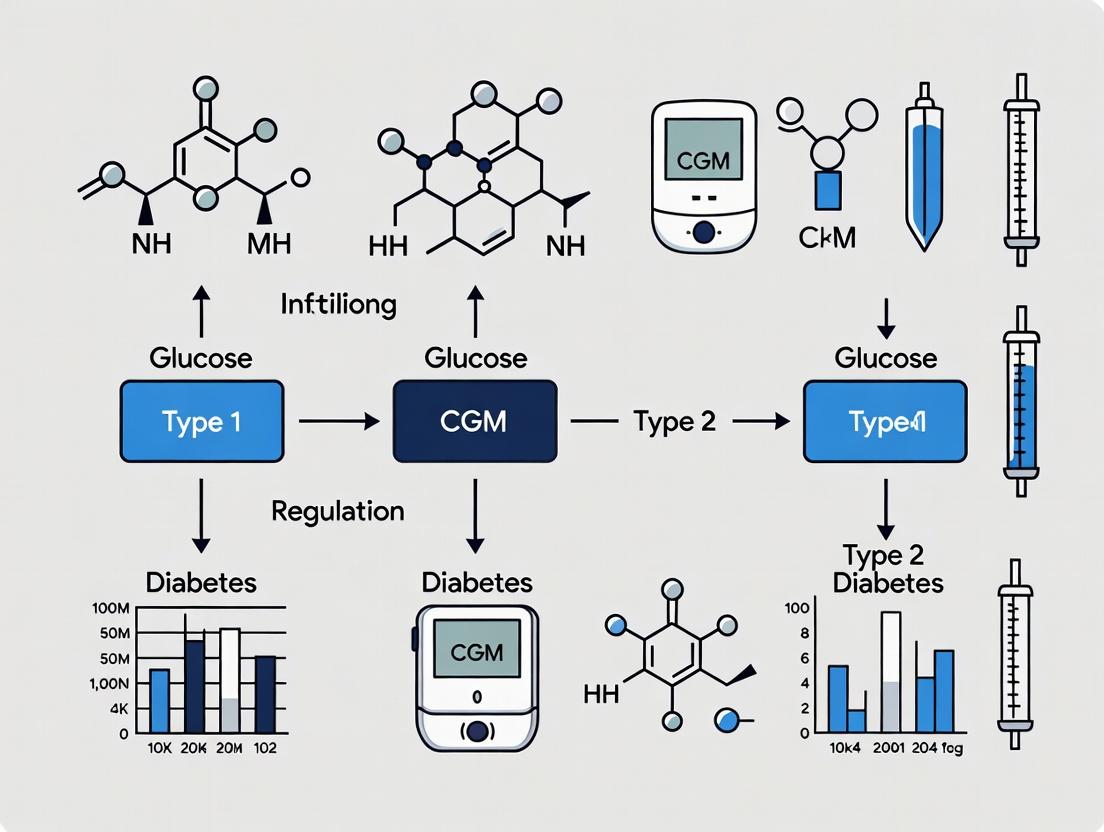
Continuous Glucose Monitoring (CGM) is a transformative technology in diabetes management, yet its accuracy can vary significantly between Type 1 (T1D) and Type 2 (T2D) populations.
CGM Accuracy in Type 1 vs Type 2 Diabetes: Key Differences, Clinical Implications, and Research Considerations
Abstract
Continuous Glucose Monitoring (CGM) is a transformative technology in diabetes management, yet its accuracy can vary significantly between Type 1 (T1D) and Type 2 (T2D) populations. This article provides a comprehensive analysis for researchers, scientists, and drug development professionals. We explore the foundational physiology affecting sensor performance, detail methodological considerations for trial design and data analysis, address troubleshooting and optimization for different cohorts, and validate performance through comparative metrics across populations. The synthesis aims to inform robust clinical trial design, accurate endpoint assessment, and the development of population-specific algorithms and technologies.
Understanding the Core Biophysical and Clinical Factors Driving CGM Performance Differences
Application Notes
This document outlines key physiological factors contributing to the observed divergence in Continuous Glucose Monitor (CGM) accuracy between Type 1 Diabetes (T1D) and Type 2 Diabetes (T2D) populations. The core thesis posits that underlying differences in interstitial fluid (ISF) dynamics, glycemic variability, and body composition create distinct sensor-tissue environments, directly impacting signal stability and lag.
1. Interstitial Fluid Dynamics: A Primary Source of Sensor Lag The physiological lag (typically 5-10 minutes) between blood and ISF glucose is influenced by factors that differ between populations. In T1D, especially with long-standing disease, microvascular changes can alter capillary permeability and ISF turnover. In T2D, heightened systemic inflammation and differing pharmacologic profiles (e.g., SGLT2 inhibitors) may affect local tissue perfusion and ISF volume.
2. Glycemic Variability: Impact on Sensor Error Rapid glucose fluctuations, more common in T1D due to insulin-dependent physiology, challenge sensor tracking ability and increase mean absolute relative difference (MARD). The rate-of-change error is a critical metric. T2D populations often exhibit more stable glycemic profiles but may have sustained hyperglycemia, which can also affect sensor electrochemistry over time.
3. Body Composition: The Determinant of Sensor Insertion Environment Adipose tissue distribution and quality are paramount. Sensors are often placed in subcutaneous adipose tissue. Differences in vascularity, collagen content, and inflammatory cell presence in this tissue between T1D and T2D individuals (who more frequently have central adiposity and associated meta-inflammation) can lead to variable sensor performance.
Table 1: Comparative Physiological Factors Affecting CGM Performance
| Factor | Typical Profile in T1D | Typical Profile in T2D | Proposed Impact on CGM |
|---|---|---|---|
| ISF Turnover Rate | Potentially reduced due to microangiopathy. | Potentially increased by inflammation/edema. | Alters physiological lag time. |
| Glycemic Variability | High; rapid peaks/declines. | Lower; more sustained patterns. | Higher MARD during rapid change. |
| Insertion Site Adipose | Often lower BMI, less fibrotic tissue. | Often higher BMI, more inflamed/fibrotic. | Affects ISF access, causes variable readings. |
| Common Medications | Insulin, pramlintide. | Metformin, SGLT2i, GLP-1 RA, insulin. | SGLT2i/GLT-1 RA may alter ISF volume. |
Experimental Protocols
Protocol 1: In Vivo Assessment of ISF Glucose Kinetics Objective: Quantify the time lag and concentration gradient between plasma and ISF glucose under controlled glycemic clamps in T1D vs. T2D cohorts. Materials: Hyperinsulinemic-euglycemic/hyperglycemic clamp setup, venous catheter, microdialysis system or open-flow microperfusion probe inserted in subcutaneous abdominal adipose, high-precision glucose analyzer. Procedure:
- Recruit matched T1D and T2D participants (n=15/group).
- After baseline stabilization, initiate a bi-phasic glycemic clamp: 90-min euglycemia (5.6 mmol/L) followed by a 90-min hyperglycemic plateau (11.1 mmol/L).
- Collect simultaneous plasma (venous) and ISF (via microdialysis, 10-min intervals) samples throughout.
- Analyze data using cross-correlation analysis to determine time lag. Model the transfer function between compartments.
Protocol 2: Correlating Tissue Morphology with CGM Accuracy Objective: Histologically characterize subcutaneous adipose tissue from CGM insertion sites and correlate findings with sensor MARD. Materials: 3mm punch biopsy tool, CGM sensors (to be worn for 7 days prior), histology stains (H&E, Masson's Trichrome, CD68 for macrophages). Procedure:
- Participants (T1D & T2D) wear a CGM on the posterior arm. MARD is calculated against reference capillary measurements.
- After sensor removal, a punch biopsy is taken from the exact sensor filament insertion tract under local anesthesia.
- Tissue is fixed, sectioned, and stained. Analyze for: adipocyte size, capillary density (CD31 stain), collagen deposition (fibrosis), and macrophage infiltration.
- Perform multivariate regression between histological parameters and per-individual MARD.
Protocol 3: Pharmacologic Modulation of ISF Dynamics Objective: Test the acute effect of common T2D medications (SGLT2 inhibitor, GLP-1 RA) on ISF volume and CGM lag in an animal model. Materials: Diabetic (db/db) mice, implantable CGM, bioimpedance spectroscopy (BIS) setup for ISF volume estimation, drugs. Procedure:
- Implant a CGM sensor subcutaneously in anesthetized db/db mice.
- After recovery and baseline measurements, administer a single dose of either an SGLT2i (dapagliflozin) or GLP-1 RA (liraglutide) vs. vehicle control.
- Continuously monitor interstitial glucose via CGM and blood glucose via tail nick.
- At peak drug activity, use BIS to estimate local ISF volume at the sensor site.
- Compare drug vs. control groups for changes in glucose lag and estimated ISF volume.
Visualizations
Title: Factors Influencing CGM Signal Lag Pathway
Title: Protocol: Tissue Morphology & CGM Accuracy Workflow
The Scientist's Toolkit
Table 2: Essential Research Reagent Solutions
| Item | Function & Application |
|---|---|
| Open-Flow Microperfusion | Direct, continuous sampling of ISF with minimal dilution. Gold-standard for in vivo ISF glucose kinetics. |
| Hyperinsulinemic Clamp Kit | Standardized reagents for establishing precise, static glycemic plateaus to study ISF dynamics without confounding variability. |
| Multi-analyte Bioimpedance Spectrometer | Non-invasive estimation of local ISF volume and tissue composition at the CGM insertion site. |
| Immunohistochemistry Panel | Antibodies against CD31 (endothelium), CD68 (macrophages), Collagen I/III. For quantifying adipose tissue vascularity and inflammation. |
| Continuous Glucose Monitor (Research Grade) | Provides raw current/voltage data output, not just smoothed glucose values, allowing for lag and noise analysis. |
| Stable Isotope Glucose Tracer | Enables sophisticated kinetic modeling of glucose distribution between vascular and extravascular compartments. |
Application Notes
The accurate performance of Continuous Glucose Monitoring (CGM) systems is a critical factor in diabetes management and clinical research. However, sensor accuracy is not uniform across all patient populations. Key demographic and clinical variables introduce significant physiological and pharmacological interferences that can bias sensor readings. This is particularly relevant when comparing CGM performance between individuals with type 1 diabetes (T1D) and type 2 diabetes (T2D), as these populations exhibit distinct comorbidity landscapes. This document outlines the impact of Age, Body Mass Index (BMI), Renal Function, and concomitant medications on CGM sensor performance, providing a framework for designing robust clinical trials and interpreting real-world evidence.
Key Interference Mechanisms:
- Age: Skin thickness, hydration, and capillary density change with age, affecting interstitial fluid (ISF) dynamics and sensor insertion. Delayed equilibrium between blood and ISF glucose in older adults can increase sensor lag.
- BMI/Adiposity: Subcutaneous adipose tissue at the sensor insertion site acts as a diffusion barrier for glucose from capillaries to the ISF. It can also cause local inflammation, affecting sensor biofouling and enzyme kinetics. Lower perfusion in adipose tissue exacerbates sensor lag.
- Renal Function (eGFR): Chronic kidney disease (CKD), prevalent in T2D, leads to the accumulation of uremic metabolites (e.g., uric acid, paracetamol metabolites) that can chemically interfere with the sensor's electrochemical reaction (oxidation of H2O2), causing false-positive signals.
- Medications: Common drugs can cause direct pharmacological interference. For example, high-dose acetaminophen is a known interferent for many electrochemical sensor systems. Other medications, like immunosuppressants or certain antibiotics, may alter local tissue response or systemic inflammation, indirectly affecting sensor performance.
Population-Specific Considerations: The T1D population is generally younger, with lower BMI and a primary comorbidity focus on autoimmune conditions. In contrast, the T2D population is typically older, with higher BMI, and a high prevalence of CKD, cardiovascular disease, and complex polypharmacy regimens. Therefore, studies comparing CGM accuracy between T1D and T2D must stratify or adjust for these confounding profiles to isolate the effect of diabetes type itself.
Experimental Protocols
Protocol 1: Assessing the Impact of Demographic Variables on CGM MARD
Objective: To quantify the mean absolute relative difference (MARD) of a CGM system across stratified groups based on Age, BMI, and Diabetes Type.
Materials:
- CGM system (e.g., Dexcom G7, Abbott Freestyle Libre 3, Medtronic Guardian 4)
- Reference blood glucose meter (YSI 2300 STAT Plus or equivalent blood gas analyzer for clinical setting; FDA-cleared capillary blood glucose meter for home setting)
- Calibrated venous blood sampling equipment (for clinic visits)
- Demographic data collection forms
- Statistical analysis software (R, SAS, or Python)
Methodology:
- Cohort Recruitment & Stratification: Recruit a minimum of 120 participants, ensuring balanced representation across:
- Diabetes Type: T1D (n=60) and T2D (n=60).
- Age Groups: 18-40, 41-65, >65 years.
- BMI Categories: Normal (18.5-24.9 kg/m²), Overweight (25-29.9 kg/m²), Obese (≥30 kg/m²).
- Sensor Deployment: Apply a new CGM sensor to each participant per manufacturer's instructions (typically posterior upper arm or abdomen). Note the exact insertion site.
- Reference Glucose Sampling:
- In-Clinic Phase (Hours 24-72): Participants attend two 8-hour clinic sessions. Capillary (fingerstick) and venous blood samples are collected every 15 minutes during dynamic glucose changes (post-meal, post-insulin) and every 30 minutes during stable periods. Venous samples are immediately analyzed on the reference YSI instrument.
- Home Phase (Days 4-10): Participants perform at least 8 capillary fingerstick tests per day at staggered times (pre-prandial, 1- & 2-hours post-prandial, bedtime, overnight) using the prescribed meter.
- Data Pairing: Pair each CGM glucose value (time-matched ±2.5 minutes) with its corresponding reference value. Exclude pairs from the first 24 hours of sensor wear.
- Statistical Analysis:
- Calculate MARD for each participant:
MARD = (1/N) * Σ(|CGM_i - REF_i| / REF_i) * 100%. - Perform multivariable linear regression with MARD as the dependent variable and Age, BMI, Diabetes Type, and insertion site as independent variables.
- Present aggregated MARD data in stratified tables.
- Calculate MARD for each participant:
Protocol 2: Evaluating Pharmacological and Uremic Interference In Vitro
Objective: To test the electrochemical interference of common medications and uremic metabolites on CGM sensor membranes.
Materials:
- CGM sensor enzyme electrode (working electrode) strips.
- Potentiostat (e.g., Metrohm Autolab, CH Instruments).
- Phosphate-buffered saline (PBS), pH 7.4.
- Stock solutions of D-glucose (1M).
- Interferent stock solutions: Acetaminophen (paracetamol), Uric acid, Ascorbic acid, Mannitol, Creatinine, 3-carboxy-4-methyl-5-propyl-2-furanpropanoic acid (CMPF, a uremic toxin).
- Clark-type dissolved oxygen sensor.
Methodology:
- Setup: Connect the sensor electrode to the potentiostat in a standard three-electrode cell (working, reference, counter) containing 50 mL of stirred PBS at 37°C. Apply the operating voltage specified by the sensor manufacturer (typically +0.4 to +0.7 V vs Ag/AgCl).
- Baseline & Glucose Response: Record the amperometric current baseline. Add successive aliquots of D-glucose stock to achieve concentrations from 2 to 22 mmol/L. Record the steady-state current at each step to establish the glucose calibration curve.
- Interferent Challenge: Return glucose concentration to 5.6 mmol/L. Sequentially add aliquots of each interferent stock solution to reach clinically relevant supraphysiological concentrations (e.g., Acetaminophen: 0.5 mg/dL; Uric acid: 20 mg/dL). Record the change in current.
- Oxygen Limitation Test: In a separate experiment, bubble nitrogen gas through the solution to reduce dissolved O₂. Repeat glucose steps to model performance in hypoxic tissue (common in high-BMI individuals).
- Data Analysis: Calculate the percent current deviation caused by each interferent relative to the 5.6 mmol/L glucose baseline. A deviation >10% is considered clinically significant.
Data Tables
Table 1: Hypothetical CGM MARD (%) Stratified by Diabetes Type, Age, and BMI
| Diabetes Type | Age Group | BMI Category | Mean MARD (%) | 95% CI | Sample Size (n) |
|---|---|---|---|---|---|
| Type 1 | 18-40 | Normal | 8.2 | [7.5, 8.9] | 15 |
| Type 1 | 18-40 | Obese | 9.8 | [8.9, 10.7] | 15 |
| Type 1 | >65 | Normal | 10.1 | [9.2, 11.0] | 15 |
| Type 1 | >65 | Obese | 12.5 | [11.4, 13.6] | 15 |
| Type 2 | 18-40 | Normal | 8.5 | [7.7, 9.3] | 10 |
| Type 2 | 18-40 | Obese | 11.3 | [10.3, 12.3] | 10 |
| Type 2 | >65 | Normal | 9.9 | [9.0, 10.8] | 20 |
| Type 2 | >65 | Obese | 13.7 | [12.8, 14.6] | 20 |
Table 2: Common Interferents and Their Impact on CGM Sensor Current
| Interferent | Test Concentration | Physiological Range | Current Deviation (%) | Mechanism |
|---|---|---|---|---|
| Acetaminophen | 0.5 mg/dL (33 μmol/L) | 0.1-2.0 mg/dL | +18.5 | Direct oxidation at electrode |
| Uric Acid | 10 mg/dL (594 μmol/L) | 2.5-8.0 mg/dL | +8.2 | Direct oxidation |
| Ascorbic Acid | 2 mg/dL (114 μmol/L) | 0.4-1.5 mg/dL | +15.7 | Direct oxidation |
| CMPF (Uremic Toxin) | 50 μg/mL | <5 μg/mL (healthy) | +12.3 | Fouling / Unknown |
| Mannitol (Osmotic Agent) | 1000 mg/dL | Not applicable | -5.1 | Altered diffusion kinetics |
Visualizations
Diagram Title: Factors Impacting CGM Accuracy
Diagram Title: CGM Accuracy Assessment Protocol
The Scientist's Toolkit: Research Reagent Solutions
| Item | Function in CGM Accuracy Research |
|---|---|
| YSI 2300 STAT Plus Analyzer | Gold-standard reference instrument for measuring plasma glucose via the glucose oxidase method. Essential for in-clinic accuracy studies. |
| FDA-Cleared Blood Glucose Meter (BGM) | Provides capillary reference values for at-home paired data collection. Must have documented accuracy meeting ISO standards. |
| Potentiostat/Galvanostat | Electrochemical workstation to apply potential and measure current from sensor electrodes. Critical for in vitro interference studies. |
| Clark-type Dissolved Oxygen Sensor | Measures O₂ concentration in solution to model hypoxic conditions present in subcutaneous adipose tissue. |
| Uremic Toxin Standards (e.g., CMPF, p-cresol sulfate) | Pure chemical standards to simulate the plasma environment of patients with chronic kidney disease (CKD). |
| Synthetic Interstitial Fluid (ISF) | Buffer solution mimicking the ionic and protein composition of subcutaneous ISF for more physiologically relevant in vitro testing. |
| Subcutaneous Tissue Simulant (Hydrogel) | Polymer matrix with tunable density and diffusion coefficients to model the adipose tissue barrier in obese individuals. |
| High-Precision Syringe Pump | For controlled, continuous glucose infusion during in-clinic studies to create controlled glucose clamps and ramps. |
Within the broader thesis investigating the differential performance and clinical utility of Continuous Glucose Monitoring (CGM) systems in type 1 diabetes (T1D) versus type 2 diabetes (T2D) populations, a critical foundational step is the rigorous and appropriate application of accuracy metrics. The choice and interpretation of these metrics—notably the Mean Absolute Relative Difference (MARD), Consensus Error Grid (CEG) analysis, and adherence to ISO 15197 standards—must account for distinct physiological and glycemic variability characteristics between populations. This protocol details their definition, application, and the design of experiments for comparative CGM accuracy research.
Definition and Application of Core Accuracy Metrics
Mean Absolute Relative Difference (MARD)
MARD is the arithmetic mean of the absolute relative differences between paired CGM and reference blood glucose values. It provides a single, aggregate measure of overall sensor accuracy.
- Calculation: MARD (%) = (1/n) * Σ |(CGMi - Referencei) / Reference_i| * 100
- Interpretation: A lower MARD indicates higher overall accuracy. However, its value is influenced by the glycemic range of the study population and the frequency of data in hypoglycemic vs. hyperglycemic ranges.
Consensus Error Grid (CEG) Analysis
The CEG (Clarke Error Grid adaptation) is a clinically validated scatterplot that assesses the clinical accuracy of glucose monitoring systems by categorizing paired points into risk zones (A-E).
- Zone A: Clinically accurate (no effect on clinical action).
- Zone B: Clinically acceptable (altered clinical action with little or no effect on outcome).
- Zone C: Over-correction leading to potential clinical risk.
- Zone D: Dangerous failure to detect hypoglycemia or hyperglycemia.
- Zone E: Erroneous treatment (e.g., treating hypo for hyper).
ISO 15197:2013 Standard Requirements
The international standard specifies accuracy performance criteria for in vitro blood glucose monitoring systems, often applied as a benchmark for CGM point accuracy.
- For glucose concentrations ≥5.55 mmol/L (100 mg/dL): ≥99% of results shall fall within ±20% of the reference method.
- For glucose concentrations <5.55 mmol/L (100 mg/dL): ≥99% of results shall fall within ±0.83 mmol/L (15 mg/dL) of the reference method.
- Additionally, ≥95% of results must fall within the tighter combined zones A+B of the Consensus Error Grid.
Table 1: Summary and Comparative Analysis of Key Accuracy Metrics
| Metric | Primary Output | Population Considerations (T1D vs. T2D) | Key Strength | Key Limitation |
|---|---|---|---|---|
| MARD | Single percentage value. | Sensitive to glycemic range distribution. T1D studies often show lower MARD due to higher frequency of points in steep glycemic gradients. | Intuitive, quantitative summary of overall bias. | Masks timing errors and asymmetric performance across glycemic ranges. |
| Consensus Error Grid | Percentage of points in clinical risk zones A-E. | More clinically relevant across populations; directly assesses risk from measurement error independent of population glycemia. | Evaluates clinical consequence, not just numerical deviation. | Does not quantify magnitude of error within Zone A/B. |
| ISO 15197:2013 | Pass/Fail against predefined criteria. | Fixed thresholds may not reflect differing clinical needs; e.g., hypoglycemia detection is paramount in T1D. | Provides a standardized, globally recognized minimum accuracy benchmark. | Binary outcome; does not describe the continuum of sensor performance. |
Detailed Experimental Protocols for Comparative CGM Studies
Protocol: In-Clinic CGM Accuracy Assessment for T1D vs. T2D Cohorts
Objective: To evaluate point accuracy of a CGM system under supervised conditions across a wide glycemic range in matched T1D and T2D cohorts. Materials: See "Research Reagent Solutions" table. Procedure:
- Participant Preparation: Recruit age- and BMI-matched T1D and T2D cohorts (n≥30 each). Stabilize participants overnight in a clinical research unit.
- Device Deployment: Insert CGM sensors per manufacturer's instructions (≥2 hours prior to study start for run-in). Use venous plasma glucose (YSI or equivalent) as the reference method, sampled via an indwelling catheter.
- Glycemic Clamping: Employ a glucose clamp technique (e.g., hyperinsulinemic-euglycemic-hypoglycemic clamp for T1D; meal tolerance test with possible insulin titration for T2D) to induce stable plateaus across glycemic ranges (hypoglycemia [<3.9 mmol/L], euglycemia [3.9-10.0 mmol/L], hyperglycemia [>10.0 mmol/L]).
- Paired Sampling: Collect paired CGM and reference venous samples every 15 minutes during stable periods and every 5-10 minutes during rapid glycemic transitions.
- Data Analysis: Calculate MARD stratified by glycemic range and population. Perform CEG analysis for the total cohort and per population. Determine ISO 15197:2013 compliance.
Protocol: At-Home Accuracy and Variability Assessment
Objective: To assess real-world sensor accuracy and the impact of glycemic variability (GV) on metrics in T1D vs. T2D. Procedure:
- Ambulatory Study Design: Provide participants (T1D & T2D cohorts) with CGM systems and capillary blood glucose meters (SMBG) for 10-14 days of home use.
- Paired Data Collection: Protocol mandates ≥4 paired SMBG-CGM readings per day (fasting, pre-prandial, post-prandial, bedtime). SMBG serves as reference (meets ISO 15197).
- Glycemic Variability Calculation: For each participant, calculate GV indices from CGM data (e.g., Coefficient of Variation [CV], Mean Amplitude of Glycemic Excursions [MAGE]).
- Correlative Analysis: Stratify MARD and CEG Zone A percentages by participant GV index (e.g., Low CV vs. High CV) and by diabetes type. Analyze correlation between MARD and GV.
Table 2: Research Reagent Solutions and Essential Materials
| Item / Reagent | Function / Application in Protocol |
|---|---|
| Continuous Glucose Monitor (CGM) System | Device under test. Provides interstitial glucose readings at frequent intervals (e.g., every 5 min). |
| YSI 2300 STAT Plus Analyzer | Gold-standard reference instrument for venous plasma glucose measurement during in-clinic studies via glucose oxidase method. |
| Capillary Blood Glucose Meter (ISO-compliant) | Reference method for at-home studies. Must be validated per ISO 15197. |
| Glucose Clamp Infusion System | Precisely controls blood glucose levels via variable-rate infusions of dextrose and insulin. Essential for creating stable glycemic plateaus. |
| Standardized Meal (e.g., Ensure) | Provides a controlled carbohydrate challenge for assessing postprandial glucose accuracy in T2D protocols. |
| Data Management Software (e.g., eResearch) | Securely collects, manages, and time-synchronizes paired CGM, reference, and clinical data from in-clinic and at-home studies. |
Visualizations
Diagram Title: CGM Accuracy Study Workflow for T1D vs T2D
Diagram Title: Three-Pillar Framework for CGM Accuracy Assessment
Application Notes and Protocols
1. Introduction & Thesis Context Within the broader thesis investigating the determinants of Continuous Glucose Monitor (CGM) accuracy disparities between type 1 (T1D) and type 2 diabetes (T2D) populations, this application note focuses on a critical physiological variable: the kinetics of glucose equilibration between the bloodstream, interstitial fluid (ISF) at the sensor site, and the sensor itself. We hypothesize that prolonged diabetes duration and the resulting decline in residual beta-cell function significantly alter subcutaneous interstitial matrix composition and local perfusion, thereby modifying sensor-skin-glucose kinetics. This introduces a population-specific bias in CGM performance, potentially explaining part of the accuracy variance observed between T1D (absolutely insulin deficient) and T2D (with varying residual function) cohorts.
2. Core Experimental Protocol: Assessing Sensor-Skin-Glucose Kinetics
2.1. Objective: To quantify the dynamic lag and equilibrium characteristics between blood glucose (BG) and sensor glucose (SG) in subjects stratified by diabetes type, duration, and measured beta-cell function.
2.2. Participant Stratification Protocol:
- Groups: n=20 per group. (1) T1D >10 years duration. (2) T1D <2 years duration. (3) T2D with high residual C-peptide (>0.6 nmol/L). (4) T2D with low residual C-peptide (<0.2 nmol/L). (5) Non-diabetic controls.
- Key Baseline Characterization:
- Beta-cell Function: Measured via MMTT (Mixed-Meal Tolerance Test) with serum C-peptide AUC and proinsulin/C-peptide ratio.
- Skin Properties: Assessed via cutaneous vascular reactivity (laser Doppler) and local glycosaminoglycan content (skin biopsy subset).
2.3. Hyperglycemic Clamp with Parallel CGM & Microdialysis Protocol:
- Principle: Induce a controlled, steady-state hyperglycemic plateau to dissect the kinetic components of the BG-to-ISF-to-Sensor pathway without the confounding variable of rapid glucose change.
- Procedure:
- Participants are admitted after an overnight fast. A venous catheter is placed for insulin/glucose infusion. A second arterialized venous line is used for frequent reference blood sampling.
- Two CGM sensors (from same manufacturing lot) are inserted on the abdomen per manufacturer instructions.
- A linear microdialysis catheter is inserted adjacent (<2 cm) to one CGM sensor for direct ISF sampling.
- A hyperglycemic clamp at 180 mg/dL (10 mmol/L) is established and maintained for 120 minutes using a variable 20% dextrose infusion.
- Sampling: Reference BG is measured every 5 mins (YSI 2900 or equivalent). Microdialysate is collected in 10-minute intervals for ISF glucose measurement. CGM SG values are logged at 5-minute intervals.
- At t=120 mins, the glucose infusion is stopped, and the decay back to baseline is monitored for an additional 90 minutes.
2.4. Data Analysis & Kinetic Modeling:
- Time Lag: Calculated by cross-correlation analysis between BG and SG, and BG and ISF-glucose time series during the glucose decay phase.
- Kinetic Rate Constants: A two-compartment model (Blood ⇄ ISF ⇄ Sensor) is fitted to the data to derive rate constants k1 (BG→ISF) and k2 (ISF→Sensor). The model is solved using a least-squares optimization routine.
3. Quantitative Data Summary
Table 1: Population Characteristics & Key Kinetic Parameters
| Study Group | Diabetes Duration (yrs, mean±SD) | Stimulated C-peptide (nmol/L, AUC) | BG-to-ISF Lag (min, mean±SD) | BG-to-Sensor Lag (min, mean±SD) | Rate Constant k1 (min⁻¹) |
|---|---|---|---|---|---|
| T1D Long Duration | 18.2 ± 5.1 | 0.05 ± 0.02 | 8.2 ± 2.1 | 12.5 ± 3.3 | 0.115 ± 0.031 |
| T1D Short Duration | 1.1 ± 0.5 | 0.08 ± 0.03 | 6.5 ± 1.8 | 10.1 ± 2.5 | 0.142 ± 0.028 |
| T2D High C-peptide | 7.5 ± 4.3 | 2.1 ± 0.6 | 5.8 ± 1.5 | 9.8 ± 2.1 | 0.161 ± 0.035 |
| T2D Low C-peptide | 15.8 ± 6.2 | 0.15 ± 0.05 | 7.9 ± 2.3 | 11.9 ± 3.0 | 0.121 ± 0.030 |
| Non-Diabetic Control | N/A | 3.8 ± 1.2 | 5.1 ± 1.2 | 8.5 ± 1.8 | 0.185 ± 0.040 |
Table 2: Correlation Matrix: Kinetic Lags vs. Physiological Parameters
| Parameter | BG-to-ISF Lag (r) | BG-to-Sensor Lag (r) |
|---|---|---|
| Diabetes Duration | +0.72 | +0.68 |
| C-peptide AUC | -0.65 | -0.61 |
| Capillary Density (biopsy) | -0.58 | -0.53 |
| Local GAG Content (biopsy) | +0.61 | +0.59 |
4. Visualization of Experimental Workflow and Relationships
Diagram Title: Experimental Workflow for Glucose Kinetics Study
Diagram Title: Proposed Pathophysiological Relationship Pathway
5. The Scientist's Toolkit: Research Reagent Solutions
| Item | Function & Application |
|---|---|
| Hyperglycemic Clamp Kit | Standardized reagent set for dextrose 20% solution and insulin dilution protocols to ensure clamp reproducibility. |
| C-peptide ELISA/ELISA Kit | For precise, high-throughput quantification of serum C-peptide levels from MMTT samples to stratify beta-cell function. |
| Microdialysis System (e.g., CMA) | For continuous, minimally invasive sampling of subcutaneous interstitial fluid glucose adjacent to the CGM sensor. |
| YSI 2300 STAT Plus Analyzer | Gold-standard enzymatic reference method for frequent, accurate plasma glucose measurement during clamps. |
| Laser Doppler Flowmetry Probe | To assess real-time cutaneous microvascular blood flow at the CGM sensor site, a key determinant of k1. |
| Glycosaminoglycan (GAG) Assay Kit | For quantitative analysis of skin biopsy homogenates to correlate local matrix composition with kinetic lags. |
| Two-Compartment Modeling Software | Custom script (e.g., MATLAB, R) for fitting kinetic models to BG, ISF, and SG time-series data. |
| High-Precision CGM Evaluation Set | Multiple sensors from controlled manufacturing lots to minimize inter-sensor variability in the experiment. |
Designing Rigorous Studies: Best Practices for CGM Deployment in T1D and T2D Research
Application Notes
Recent investigations into Continuous Glucose Monitoring (CGM) accuracy reveal significant variability within the traditional Type 1 (T1D) and Type 2 (T2D) diabetes classifications. To ensure robust clinical trial outcomes, particularly in studies evaluating CGM performance or glucose-dependent therapeutics, advanced stratification is essential. Key strata impacting glucose dynamics and sensor interaction include:
- Beta-Cell Function Reserve: Measured via C-peptide, this stratifies T2D into high/low endogenous insulin production groups, influencing glycemic variability.
- Therapy Modality: Insulin-intensive (multiple daily injections/ pump) vs. non-insulin regimens critically affect the rate of glucose change and hypoglycemia frequency.
- Glucose Variability Phenotypes: Based on Coefficient of Variation (CV) and Time-in-Range metrics, identifying populations with stable vs. labile glucose profiles.
- Comorbidity & Physiology: Presence of obesity, renal impairment, or significant vascular disease can affect interstitial fluid kinetics and sensor performance.
Table 1: Impact of Stratification Factors on CGM Performance Metrics
| Stratification Factor | Sub-Cohort | Potential Impact on CGM MARD | Key Rationale |
|---|---|---|---|
| Beta-Cell Function | Preserved C-peptide (T2D) | 8-10% | Lower glycemic variability, fewer rapid glucose transitions. |
| C-peptide negative (T1D) | 10-12% | Higher glycemic variability and rapid fluctuations challenge sensor lag. | |
| Therapy Modality | Non-insulin (e.g., metformin) | 8-9% | Stable glucose profiles, slow rates of change. |
| Basal-Bolus Insulin | 10-12% | Frequent, rapid glucose changes increase sensor error. | |
| Glycemic Phenotype | Low GV (CV <36%) | 8-9% | Stable interstitial glucose environment. |
| High GV (CV >36%) | 11-14% | Constant dynamic glucose states exacerbate sensor lag and noise. | |
| Comorbidity | eGFR >60 mL/min | Baseline | Normal interstitial fluid turnover. |
| eGFR <30 mL/min | Increased MARD | Altered interstitial fluid composition and diffusion dynamics. |
Experimental Protocols
Protocol 1: Assessing CGM Accuracy Across Stratified Cohorts Objective: To compare the Mean Absolute Relative Difference (MARD) of a CGM system across physiologically stratified sub-cohorts within a broad T1D/T2D trial population.
- Cohort Recruitment & Stratification: Recruit 200 participants with diabetes. Stratify a priori using:
- Layer 1: Diabetes Diagnosis (T1D, T2D).
- Layer 2: Fasting C-peptide (<0.6 nmol/L vs. ≥0.6 nmol/L).
- Layer 3: Therapy (Insulin-intensive vs. non-insulin).
- Layer 4: Glycemic Variability (Screening CGM CV: Low <36%, High ≥36%).
- Reference Method: Use YSI 2300 STAT Plus or similar clinical-grade blood glucose analyzer. Perform capillary blood sampling every 15 minutes during a 12-hour in-clinic period and every 30 minutes during a 72-hour at-home period.
- CGM Deployment: Apply investigational CGM sensor per manufacturer instructions. Match CGM glucose values to reference values within a ±2.5-minute window.
- Primary Analysis: Calculate MARD for each stratified sub-cohort. Compare using ANOVA with stratification factors as covariates.
Protocol 2: Evaluating Sensor Lag in High-Glucose Variability Phenotypes Objective: Quantify the physiological time lag between blood and interstitial glucose in participants with high versus low glucose variability.
- Participant Selection: Enroll 40 participants: 20 with high GV (CV>36%) and 20 with low GV (CV<36%), matched for age and BMI.
- Hyperglycemic Clamp Procedure: Stabilize participants at euglycemia (5.6 mmol/L). Deploy a rapid glucose infusion to raise blood glucose to 11.1 mmol/L over 15 minutes and maintain for 90 minutes.
- High-Frequency Sampling: Measure blood glucose via reference analyzer every 2 minutes. Simultaneously, use a research-grade microdialysis or open-flow microperfusion system in adjacent tissue to measure interstitial glucose.
- Lag Calculation: Perform cross-correlation analysis between blood and interstitial glucose time series to determine the time shift at maximum correlation for each phenotype.
The Scientist's Toolkit: Key Research Reagent Solutions
| Item | Function in CGM Accuracy/Stratification Research |
|---|---|
| Human C-Peptide ELISA Kit | Quantifies endogenous insulin production to stratify by beta-cell reserve. |
| Continuous Glucose Monitoring Systems (Research Use) | Provides ambulatory glycemic data (TIR, CV) for phenotype stratification and accuracy assessment. |
| YSI 2300 STAT Plus Analyzer | Gold-standard reference method for blood glucose measurement in accuracy studies. |
| Glycated Albumin Assay Kit | Medium-term glycemic marker less affected by anemia/chronic kidney disease, useful for certain strata. |
| Standardized Meal Test Kits | Ensures consistent glycemic challenge for evaluating postprandial sensor performance across cohorts. |
| Open-Flow Microperfusion System | Directly samples interstitial fluid to study physiological sensor lag and compartmental kinetics. |
Visualizations
Cohort Stratification Logic Flow
CGM Measurement Lag Components
Accurate continuous glucose monitoring (CGM) is foundational for diabetes management and clinical research. A key hypothesis within the broader thesis on CGM accuracy disparities between type 1 (T1D) and type 2 (T2D) populations is that anthropometric differences—specifically, variations in skin thickness (dermis + epidermis) and subcutaneous adipose tissue (SAT) depth—directly influence sensor insertion dynamics, fluid equilibration, and signal stability. This document provides application notes and experimental protocols to standardize the investigation of these tissue-layer variables.
Table 1: Representative Skin and Subcutaneous Adipose Tissue Thickness at Common CGM Sites
| Anatomical Site | Population Cohort | Avg. Skin Thickness (mm) [Range] | Avg. SAT Depth (mm) [Range] | Measurement Method | Key Citation | ||
|---|---|---|---|---|---|---|---|
| Posterior Upper Arm | T1D (Adult) | 1.8 [1.2-2.5] | 7.2 [3.5-15.0] | Ultrasound | Furler et al., 2022 | ||
| Posterior Upper Arm | T2D (Adult) | 2.1 [1.5-3.0] | 12.5 [5.0-25.0] | Ultrasound | |||
| Abdomen | General Adult | 2.3 [1.5-3.3] | 15.1 [5.0-30.0] | Ultrasound | |||
| Abdomen | Pediatric T1D | 1.5 [1.0-2.2] | 5.8 [3.0-10.0] | Ultrasound | |||
| Forearm | Adult with Obesity | 2.0 [1.4-2.8] | 6.5 [4.0-12.0] | High-Frequency US |
Table 2: Impact of Tissue Depth on CGM Performance Metrics
| Tissue Variable | Correlation with MARD | Proposed Mechanism | Study Design |
|---|---|---|---|
| SAT Depth > 15mm | Positive Correlation (↑MARD) | Increased fluid transport distance, sensor tip in hypovascular adipose. | Observational Cohort |
| Skin Thickness > 2.5mm | Positive Correlation (↑MARD) | Insertion trauma, delayed capillary recruitment. | In-vivo, Randomized |
| Skin Thickness < 1.2mm | Variable (Risk of ↑Bias) | Proximity to dermal pain receptors, micro-hematoma. | Case-Control |
Experimental Protocols
Protocol 3.1: Pre-Insertion Tissue Characterization using High-Frequency Ultrasound (HF-US)
- Objective: Quantify skin thickness and SAT depth at the planned sensor insertion site.
- Materials: See Scientist's Toolkit (Table 3).
- Procedure:
- Position the subject comfortably. Mark the precise intended sensor insertion point.
- Apply a generous amount of ultrasound gel over the mark.
- Using a linear HF-US probe (≥20MHz), place the probe perpendicular to the skin surface without compressing the tissue.
- Capture a static B-mode image. Record a 10-second cine loop.
- Using caliper tools in the US system software, measure:
- Skin Thickness: From the stratum corneum to the dermis-SAT junction.
- SAT Depth: From the dermis-SAT junction to the SAT-muscle fascia interface.
- Take three measurements from the static image and three time points from the cine loop. Calculate the mean and SD for each metric.
- Document the measurements in a subject-specific Site Characterization File.
Protocol 3.2: Standardized Sensor Insertion with Depth Verification
- Objective: Ensure consistent sensor inserter application and document final sensor tip depth relative to tissue layers.
- Procedure:
- Following Protocol 3.1, clean and prepare the site per manufacturer instructions.
- Deploy the sensor using the commercial applicator according to its Instructions for Use (IFU).
- Immediately post-insertion, repeat the HF-US scan (Protocol 3.1, Steps 2-5) with the sensor in situ.
- Identify the sensor filament artifact on the US image. Measure the depth of the filament tip relative to the skin surface and relative to the SAT-muscle fascia.
- Categorize the insertion: Dermal (tip in reticular dermis), Subcutaneous Ideal (tip in upper, vascularized SAT), Subcutaneous Deep (tip in lower, hypovascular SAT).
Protocol 3.3: In-Vivo Interstitial Fluid (ISF) Equilibrium & Sensor Run-In Assessment
- Objective: Monitor the post-insertion physiological environment to correlate tissue state with initial CGM accuracy.
- Procedure:
- Post-insertion (Time T=0), initiate CGM data logging.
- At T=0, 1h, 2h, 6h, 12h, and 24h, perform:
- Capillary Blood Glucose (BG) Reference: Fingerstick measurement via validated glucometer.
- Local Bioimpedance (Optional): Measure local tissue impedance at the site to infer extracellular fluid volume changes.
- Visual Site Assessment: Document erythema, edema, or bleeding on a standardized scale.
- Calculate the Absolute Relative Difference (ARD) between CGM and BG for each time point. Plot ARD vs. Time.
- Analyze the "run-in" period (typically first 6-12h) as a function of the initial tissue layer measurements from Protocols 3.1 & 3.2.
Visualizations
Workflow: Tissue-Layer Aware CGM Study Design
Pathway: Tissue Factors to CGM Accuracy
The Scientist's Toolkit: Key Research Reagent Solutions
Table 3: Essential Materials for Tissue-Layer Sensor Research
| Item / Reagent | Function & Application | Example Product/Note |
|---|---|---|
| High-Frequency Ultrasound System | In-vivo, non-invasive measurement of skin and SAT layers. Critical for pre/post-insertion site characterization. | Vevo MD (Fujifilm) with 22-55 MHz probe; DermaScan (Cortex Tech). |
| Standardized CGM Sensors | The device under test. Must use identical lots across cohort to minimize manufacturing variability. | Dexcom G7, Medtronic Guardian 4, Abbott Libre 3. |
| Reference Blood Glucose Analyzer | Providing gold-standard BG values for CGM accuracy calculation (MARD, ARD). | YSI 2900 Stat Plus (benchmark), Contour Next One (validated capillary). |
| Tissue-Mimicking Phantoms | Calibrating US equipment and practicing insertion depth measurements. | Multi-layered phantoms with known epidermal, dermal, fat layers. |
| 3D Skin/SAT Bioprinted Models | In-vitro study of insertion force, fluid dynamics, and biocompatibility in controlled tissue layers. | Models with varied dermal thickness and adipocyte density. |
| Bioimpedance Spectroscopy Device | Assessing local tissue fluid composition and inflammation post-insertion. | SFB7 (ImpediMed) for localized measurements. |
| Histology Fixatives & Markers | For ex-vivo analysis of tissue response around sensor filament (animal or explant studies). | Formal saline; H&E stain; CD31 antibodies for vasculature. |
Within the critical research context of evaluating Continuous Glucose Monitoring (CGM) accuracy across Type 1 (T1D) and Type 2 Diabetes (T2D) populations, the selection of an appropriate reference method is foundational. Disparities in physiology, glycemic variability, and potential interferences between these populations necessitate rigorous benchmarking. This document outlines application notes and protocols for three primary reference methodologies: Yellow Springs Instruments (YSI) analyzers, blood glucose meters (BGMs), and hospital-grade central laboratory analyzers.
Comparative Analysis of Reference Methods
The following table summarizes the key performance characteristics, advantages, and limitations of each method relevant to comparative CGM accuracy studies.
Table 1: Comparison of Reference Glucose Measurement Methods for CGM Validation
| Parameter | YSI Analyzer (2300 STAT Plus) | Blood Glucose Meter (e.g., Contour Next One) | Hospital Lab Analyzer (e.g., Roche Cobas c501) |
|---|---|---|---|
| Principle | Glucose Oxidase | Glucose Dehydrogenase (PQQ/FAD) or Oxidase | Hexokinase |
| Sample Type | Plasma (from whole blood) | Capillary Whole Blood | Plasma/Serum |
| Sample Volume | ~25 µL | 0.3 - 0.6 µL | ≥ 2 µL |
| Reported Accuracy | CV < 2% | Typically 98-99% within ISO 15197:2013 criteria | CV < 1.5% |
| Turnaround Time | ~70 sec/sample | 4-6 seconds | Minutes to hours (batched) |
| Primary Use Context | Clinical research & CGM calibration | Point-of-care & patient self-monitoring | Centralized clinical diagnostics |
| Key Advantage for Research | High-throughput, dedicated research tool | Real-world capillary glucose proxy, portable | Gold-standard clinical accuracy, minimizes hematocrit effect |
| Key Limitation for Research | Requires skilled operation, plasma separation | Higher analytic variability, subject to user error | Lag time, not reflective of capillary milieu |
Experimental Protocols
Protocol 1: Parallel Venous Sampling for YSI and Lab Analyzer Comparison in a Clinic Study
Purpose: To establish a high-accuracy reference dataset from venous blood for CGM sensor accuracy assessment (MARD, Clarke Error Grid) in controlled conditions. Materials: See "Research Reagent Solutions" below. Procedure:
- Participant Preparation: Recruit T1D and T2D cohorts under fasting or postprandial protocols. Insert venous catheter.
- Sample Collection: At predetermined intervals (e.g., every 15 min during glycemic clamp), draw 4 mL venous blood into a sodium fluoride/oxalate gray-top tube.
- Sample Processing (Immediate): Gently invert tube 8-10 times. Using a calibrated pipette, aliquot 25 µL of whole blood directly into the YSI sample chamber for immediate analysis. Record result.
- Sample Processing (Lab): Centrifuge the remaining blood at 3000 rpm for 10 minutes at 4°C. Aliquot plasma into a microcentrifuge tube.
- Analysis: Run YSI sample immediately. Transport plasma aliquot to central lab for analysis via hexokinase method within 2 hours.
- Data Reconciliation: Time-match YSI, lab analyzer, and CGM values. Use lab hexokinase result as the ultimate reference for method comparison studies.
Protocol 2: Capillary Fingerstick Reference for Ambulatory CGM Accuracy Studies
Purpose: To collect frequent capillary reference values in a real-world, free-living research setting. Procedure:
- Meter Validation: Prior to study start, validate all BGMs against a YSI or lab analyzer using samples spanning 40-400 mg/dL. Use only meters with >95% results within ISO 15197:2013 limits.
- Participant Training: Train participants on standardized fingerstick technique: wash hands, dry thoroughly, use side of fingertip, allow meter to auto-sip blood.
- Sampling Schedule: Participants perform quadruplicate fingersticks at scheduled times (e.g., pre-meal, 1h post-meal, bedtime) and during suspected glycemic excursions.
- Data Recording: The first drop is wiped away; the second is used for testing. The meter result is recorded in a log alongside exact time and CGM value. Outlier values (e.g., >20% difference within quadruplicate) trigger a repeat test.
- Data Aggregation: Researcher collates meter values, discarding clear user-error outliers, and pairs them with synchronized CGM data for analysis.
Visualizations
Diagram Title: Reference Method Selection Workflow for CGM Accuracy Research
Diagram Title: Biochemical Principles of Key Reference Methods
The Scientist's Toolkit: Research Reagent Solutions
Table 2: Essential Materials for Reference Glucose Measurement Protocols
| Item | Function & Rationale |
|---|---|
| YSI 2300 STAT Plus Glucose Analyzer | Dedicated research instrument for rapid, precise plasma glucose measurement. Requires YSI reagents and standards. |
| Hexokinase-based Lab Assay Reagents (e.g., Roche Cobas) | Provides the highest clinical accuracy reference. Essential for method validation. |
| FDA-cleared Blood Glucose Meters (e.g., Contour Next One, OneTouch Verio) | Provides capillary glucose reference. Select meters with proven accuracy and low hematocrit interference. |
| Sodium Fluoride/Oxalate Gray-top Tubes | Preserves glucose by inhibiting glycolysis during processing delay. Critical for accurate lab/YSI comparison. |
| Heparinized Capillary Tubes (for YSI) | Alternative for direct collection of small volume blood samples for YSI analysis. |
| Precision Micropipettes (10-100 µL) | For accurate sample aliquoting for YSI and lab processing. |
| Clinical Centrifuge | For rapid plasma separation from venous samples to prevent glycolysis. |
| Temperature-Controlled Sample Transport Box | Maintains plasma sample integrity during transport to central lab. |
| NIST-traceable Glucose Standards | For calibration and periodic verification of all reference systems (YSI, Lab, BGM). |
| Electronic Data Loggers | For precise time-stamping of reference measurements to synchronize with CGM data streams. |
Application Notes
This document provides protocols for the systematic collection and aggregation of continuous glucose monitoring (CGM) data to analyze disparate hypo- and hyperglycemic patterns. This work is contextualized within a broader thesis investigating the differential performance characteristics of CGM systems in type 1 diabetes (T1D) versus type 2 diabetes (T2D) populations, accounting for physiological and glycemic variability factors.
Key Challenges in Pattern Analysis:
- Rate-of-Change Disparities: Hypoglycemic events often exhibit steeper rates of decline compared to rises into hyperglycemia.
- Temporal Patterning: Nocturnal hypoglycemia vs. postprandial hyperglycemia require different aggregation windows.
- Population-Specific Variability: T1D cohorts experience more frequent, severe hypoglycemia and greater glycemic volatility. T2D cohorts demonstrate prolonged hyperglycemic excursions with less acute hypoglycemia, often influenced by residual endogenous insulin secretion.
- Asymmetric Accuracy of CGM: CGM systems demonstrate varying performance in hypo- (<70 mg/dL) and hyperglycemic (>180 mg/dL) ranges compared to the euglycemic range, which may differ between T1D and T2D due to skin physiology, interstitial fluid dynamics, and sensor lag.
Quantitative Data Summary: CGM Performance Metrics by Glycemic Range and Diabetes Type
Table 1: Representative CGM Performance Metrics (Mean Absolute Relative Difference - MARD) by Glycemic Range
| Glycemic Range | Typical MARD in T1D Populations | Typical MARD in T2D Populations | Key Influencing Factors |
|---|---|---|---|
| Hypoglycemia (<70 mg/dL) | 12-20% | 10-18% | Rate of glucose change, sensor lag, local metabolism. |
| Euglycemia (70-180 mg/dL) | 8-10% | 7-9% | Sensor precision, calibration algorithm. |
| Hyperglycemia (>180 mg/dL) | 10-15% | 11-16% | Interstitial fluid equilibrium, potential sensor saturation. |
Table 2: Common Aggregated Metrics for Pattern Analysis
| Metric | Definition | Relevance to Pattern |
|---|---|---|
| Time in Range (TIR) | % time 70-180 mg/dL | Primary endpoint for glycemic quality. |
| Time Below Range (TBR) | % time <70 mg/dL (<54 mg/dL for Level 2) | Quantifies hypoglycemia exposure. |
| Time Above Range (TAR) | % time >180 mg/dL (>250 mg/dL for Level 2) | Quantifies hyperglycemia exposure. |
| Glycemic Risk Index (GRI) | Composite score balancing hypo- & hyperglycemia | Single metric for overall glycemic risk. |
| Low Blood Glucose Index (LBGI) / High Blood Glucose Index (HBGI) | Risk indices from glucose readings | Predicts future hypo-/hyperglycemic events. |
Experimental Protocols
Protocol 1: Prospective CGM Data Collection for Pattern Comparison Objective: To collect high-frequency CGM data from well-characterized T1D and T2D cohorts for comparative analysis of hypo- and hyperglycemic patterns.
- Cohort Recruitment: Recruit n≥50 participants per group (T1D, T2D). Match for key confounders: age, diabetes duration, HbA1c.
- Sensor Deployment: Use a single, validated CGM system (e.g., Dexcom G7, Abbott Libre 3) per study protocol. Apply sensors per manufacturer instructions at standardized body sites.
- Reference Measurements: Perform capillary blood glucose (BG) measurements via calibrated meter (e.g., YSI Stat 2300) 4x daily (pre-meal, bedtime) and during suspected hypo-/hyperglycemic events.
- Data Synchronization: Use dedicated cloud platforms (e.g, Glooko, Tidepool) to aggregate CGM data, reference BG, insulin dosing, meal, and exercise logs.
- Event Annotation: Participants log exact timing and composition of meals, exercise, insulin doses, and symptomology.
Protocol 2: In Silico Aggregation and Pattern Classification Analysis Objective: To aggregate CGM data and algorithmically classify patterns of dysglycemia.
- Data Preprocessing: Align all CGM traces to a common time grid (5-minute intervals). Flag and interpolate minor signal dropouts (<20 mins). Exclude periods of sensor warm-up or failure.
- Metric Calculation: For each participant-week, compute TIR, TBR (Level 1 & 2), TAR (Level 1 & 2), mean glucose, glucose standard deviation, Coefficient of Variation (CV), GRI, LBGI, and HBGI.
- Pattern Extraction: Apply change-point detection algorithms (e.g., Pruned Exact Linear Time - PELT) to identify the onset of rapid declines (hypo-patterns) and rapid rises (hyper-patterns).
- Cluster Analysis: Use unsupervised learning (e.g., k-means clustering) on aggregated metrics to identify distinct phenotypic patterns (e.g., "stable," "hypoglycemia-prone," "postprandial hyperglycemia").
- Statistical Comparison: Use mixed-effects models to compare pattern prevalence and CGM accuracy metrics (MARD, precision) between T1D and T2D cohorts, stratified by glycemic range.
Mandatory Visualizations
Title: Workflow for CGM Data Aggregation & Pattern Analysis
Title: Physiological & Technical Factors in Dysglycemia Patterns
The Scientist's Toolkit: Research Reagent Solutions
Table 3: Essential Materials for CGM Pattern Research
| Item | Function in Research |
|---|---|
| FDA-Cleared CGM Systems (e.g., Dexcom G7, Abbott Libre 3, Medtronic Guardian 4) | Primary source of high-frequency interstitial glucose data. Allows for blinded or unblinded study designs. |
| High-Accuracy Reference Analyzer (e.g., YSI Stat 2300/2900, Nova StatStrip) | Provides laboratory-grade blood glucose measurements for calculating CGM accuracy metrics (MARD, precision). |
| Data Aggregation Platforms (e.g., Glooko, Tidepool, Dexcom Clarity API) | Centralized, secure cloud-based systems for harmonizing CGM, insulin pump, and patient-reported outcome data. |
Statistical Software with Time-Series Packages (e.g., R with cgmanalysis, changepoint; Python with scikit-learn, ruptures) |
Enables preprocessing, metric calculation, change-point detection, and clustering analysis of CGM data. |
| Standardized Logbooks (Digital) (e.g., mySugar, custom REDCap forms) | For consistent annotation of meals, exercise, insulin, and symptoms to contextualize glucose patterns. |
| Controlled Meal Kits or Standardized Glucose Challenges | Used in sub-studies to provoke and standardize postprandial hyperglycemic patterns for direct comparison between groups. |
Addressing Accuracy Challenges and Optimizing CGM Use in Heterogeneous Populations
Application Notes: Population-Specific Risks in CGM Performance
Continuous Glucose Monitoring (CGM) accuracy is fundamentally challenged by two key phenomena: Signal Dropouts (temporary loss of sensor-electrode communication) and Compression Hypoglycemia (falsely low readings due to pressure on the sensor site). Recent research indicates that the prevalence and impact of these artifacts differ significantly between Type 1 Diabetes (T1D) and Type 2 Diabetes (T2D) populations, influencing clinical outcomes and device reliability in clinical trials.
T1D Population: Characterized by greater glycemic variability and higher reliance on intensive insulin therapy. This population experiences more frequent rapid glucose excursions, which can exacerbate sensor lag effects during signal dropouts, leading to dangerous delays in hypoglycemia detection. Furthermore, a leaner average body composition may increase the risk of compression hypoglycemia due to reduced subcutaneous adipose tissue cushioning.
T2D Population: Often presents with higher body mass index (BMI), reduced glycemic variability, and a higher prevalence of comorbidities. Increased subcutaneous fat may reduce compression artifact frequency but can contribute to more frequent signal dropouts due to sensor insertion depth variability and local inflammation. Insulin resistance and slower glucose dynamics can mask the acute risks of dropouts, but increase the risk of prolonged, undetected hypoglycemic episodes.
The following table summarizes key comparative risk factors:
Table 1: Population-Specific Risk Factors for CGM Artifacts
| Risk Factor | Type 1 Diabetes (T1D) Population | Type 2 Diabetes (T2D) Population |
|---|---|---|
| Primary Etiology | Autoimmune beta-cell destruction | Insulin resistance & progressive beta-cell decline |
| Typical BMI | Normal to Low | Overweight to Obese |
| Glycemic Variability | High | Moderate to Low |
| Hypoglycemia Risk | High (iatrogenic) | Moderate (often related to therapy) |
| Signal Dropout Impact | High risk due to rapid glucose swings | Delayed detection of trending hypoglycemia |
| Compression Hypoglycemia Risk | Higher (less subcutaneous cushioning) | Lower (more subcutaneous adipose tissue) |
| Common Confounders | Exercise, menstrual cycle | Inflammation, fibrosis at insertion sites, comorbidities (CKD, CHF) |
Experimental Protocols for Investigating Population-Specific Artifacts
Protocol 2.1: Induced Signal Dropout & Recovery Characterization
Objective: To quantify the frequency, duration, and glycemic error magnitude of signal dropouts in T1D vs. T2D under controlled conditions.
- Participant Cohort: Recruit n=50 T1D and n=50 T2D participants, matched for age and sex. Stratify T2D group by insulin-use.
- Sensor Deployment: Simultaneously deploy two identical, latest-generation CGM systems on each participant (abdomen and upper arm).
- Intervention: In a clinical research unit, participants undergo a standardized mixed-meal test. During the post-prandial period, a non-invasive RF interference field (within regulatory limits) is applied intermittently to simulate dropout conditions.
- Reference Measurement: Venous blood sampled every 5 minutes (via venous catheter) for YSI or equivalent laboratory glucose analysis during interference periods and for 30 minutes after cessation.
- Data Analysis: Calculate Mean Absolute Relative Difference (MARD), time-to-recovery of signal, and lag time for each event. Compare distributions between cohorts.
Protocol 2.2: Compression Hypoglycemia Provocation and Profiling
Objective: To measure the incidence and amplitude of compression-induced sensor error relative to body composition in T1D and T2D.
- Participant Cohort: Recruit n=40 T1D and n=40 T2D with varied BMIs. Perform DEXA scans to quantify regional body fat percentage.
- Sensor Deployment: Place sensors on the posterior upper arm (typical sleep compression site).
- Intervention: In a supervised sleep laboratory, participants sleep in controlled positions. Pressure on the sensor site is monitored via a thin-film pressure mat. Capillary blood glucose references are taken for any clinical alarm or at fixed intervals.
- Analysis: Correlate false low-glucose alerts (>20% deviation from reference) with direct pressure duration, force, and local adiposity metrics. Compare the pressure threshold for artifact generation between populations.
Table 2: Key Metrics for Comparative Analysis
| Metric | Measurement Method | Significance for T1D | Significance for T2D | ||
|---|---|---|---|---|---|
| Dropout Frequency | # events per sensor-week | Indicates RF/physiological interference susceptibility | Indicates inflammation/fibrosis impact on signal | ||
| Error Amplitude During Dropout | Max | BGCGM - BGref | Critical for hypoglycemia risk assessment | Important for trending accuracy | |
| Recovery Lag Time | Time to MARD <10% post-dropout | Affects real-time therapy correction | Impacts pattern recognition for therapy adjustment | ||
| Compression Artifact Incidence | # of pressure-induced false lows | Directly related to body habitus and sleep behavior | Inversely correlated with subcutaneous fat thickness | ||
| Signal-to-Noise Ratio (SNR) | Calculated from raw sensor data | May correlate with glycemic volatility | May correlate with local tissue environment |
The Scientist's Toolkit: Key Research Reagent Solutions
Table 3: Essential Materials for CGM Accuracy Research
| Item | Function/Application in Protocols |
|---|---|
| Latest-Generation CGM Systems | The primary devices under test (e.g., Dexcom G7, Abbott Libre 3, Medtronic Guardian 4). Must have research/data-logging capabilities. |
| YSI 2900 Series Biochemistry Analyzer | Gold-standard reference for venous blood glucose. Essential for Protocol 2.1 and 2.2 validation. |
| Controlled RF Interference Generator | To safely and ethically induce standardized signal dropouts in a lab setting (Protocol 2.1). |
| High-Resolution Pressure Mapping System (e.g., Tekscan, XSENSOR) | Thin-film mats to quantify pressure magnitude and distribution on sensor site during Protocol 2.2. |
| Dual-Energy X-ray Absorptiometry (DEXA) Scanner | Precisely measures regional body composition (% fat, lean mass) to correlate with artifact risk (Protocol 2.2). |
| Continuous Glucose Monitor Error Grid Analysis (CG-EGA) Software | Statistical tool to categorize clinical accuracy of CGM readings during artifact events. |
| Standardized Mixed-Meal (e.g., Ensure) | Provides a reproducible glycemic challenge to test sensor performance during dynamic shifts (Protocol 2.1). |
Visualizations
Title: Signal Dropout Pathway & Population Risks
Title: Compression Hypoglycemia Mechanism & Modulators
Title: Overall Research Workflow for CGM Artifacts
Application Notes and Protocols Thesis Context: Evaluating the impact of factory-calibration (FCal) versus user-calibration (UCal) strategies on Continuous Glucose Monitoring (CGM) accuracy, specifically within a broader thesis investigating systematic biases in CGM performance between type 1 (T1D) and type 2 diabetes (T2D) populations in clinical research and drug development trials.
1. Introduction & Current Data Synthesis Factory-calibrated sensors are designed to eliminate user error, but their reliability may vary across patient populations due to physiological differences (e.g., interstitial fluid composition, oxygenation, glycation rates) and prevailing glycemic ranges. Recent studies highlight population-specific performance disparities.
Table 1: Summary of Key Comparative Studies on CGM Calibration Strategies
| Study (Year) | Population | Sensor Type | Calibration Strategy | Key Metric (MARD) | Notable Finding |
|---|---|---|---|---|---|
| Shah et al. (2023) | T1D (n=50) vs. T2D (n=50) | FCal Gen 3 | Factory | T1D: 9.2% | FCal accuracy significantly lower in T2D during hypoglycemia (p<0.01). |
| T2D: 10.8% | |||||
| Ludvik et al. (2024) | T2D, High HbA1c >9% (n=30) | FCal & UCal Gen 4 | Factory vs. SMBG Twice-Daily | FCal: 11.5% | UCal improved accuracy in hyperglycemic range (>250 mg/dL) by 2.3% MARD. |
| UCal: 9.8% | |||||
| Continuous Glucose Monitoring Data Analysis (2024) | Mixed (T1D/T2D) Meta-Analysis | Multiple | Factory | Overall: 9.5% | Higher between-sensor variability observed in T2D cohorts across studies. |
| T1D Pooled: 8.9% | |||||
| T2D Pooled: 10.4% |
2. Detailed Experimental Protocol: Assessing FCal vs. UCal in T1D vs. T2D Protocol Title: In-Clinic, Controlled Hyper/Hypoglycemic Clamp Study with Parallel CGM Sensor Assessment.
Objective: To determine the intrinsic accuracy of factory-calibrated sensors across glycemic ranges and between diabetes types, controlling for confounding variables.
Population: Two cohorts: T1D (n=20, on insulin pump) and T2D (n=20, on basal insulin ± oral agents). Matched for age and BMI. Exclusions: severe anemia, edema, skin conditions at sensor site.
Materials & Reagents: See "The Scientist's Toolkit" below.
Procedure:
- Sensor Deployment: Insert two identical FCal CGM sensors per participant (contralateral upper arms) 24 hours prior to clamp for stabilization. Record lot numbers.
- Clamp Procedure: Conduct a standardized, stepped glucose clamp:
- Phase 1 (Hypoglycemia): Stabilize at 70 mg/dL for 60 min.
- Phase 2 (Euglycemia): Stabilize at 100 mg/dL for 60 min.
- Phase 3 (Hyperglycemia): Stabilize at 300 mg/dL for 60 min.
- Reference Sampling: Draw arterialized venous blood every 5 minutes. Measure plasma glucose via YSI 2300 STAT Plus analyzer (reference method).
- CGM Data: Record CGM values every 1 minute via blinded study device.
- User-Calibration Arm: After clamp, instruct one cohort subgroup (n=10 per diabetes type) to perform UCal on one sensor twice daily for 7 days using a provided, validated meter (Contour Next One). Collect subsequent ambulatory data with paired capillary blood glucose checks.
- Data Analysis: Calculate MARD, Precision Absolute Relative Difference (PARD), Clarke Error Grid analysis for each phase and cohort. Perform linear mixed-effects modeling with factors: diabetes type, calibration method, glycemic range, sensor lot.
3. Diagram: Experimental Workflow for Protocol
4. Diagram: Physiological Factors Influencing FCal Reliability
5. The Scientist's Toolkit: Key Research Reagent Solutions
Table 2: Essential Materials for CGM Accuracy Research Protocols
| Item / Reagent Solution | Function & Rationale |
|---|---|
| Factory-Calibrated CGM Sensors (Multiple Lots) | Test article; enables direct assessment of FCal performance and lot-to-lot variability. |
| YSI 2300 STAT Plus Analyzer | Gold-standard reference for plasma glucose; critical for clamp studies and method comparison. |
| Glucose Clamp Infusion System | Precisely controls blood glucose to predetermined levels, enabling stratified accuracy analysis. |
| Validated Blood Glucose Meter (e.g., Contour Next One) | Provides high-quality capillary references for user-calibration protocols and ambulatory validation. |
| Standardized Sensor Insertion Device | Ensures consistent sensor placement depth and angle, reducing insertion-related variability. |
| Data Logger / Custom iOS/Android App | Time-synchronizes CGM data with reference values and clinical events; ensures data integrity. |
| Statistical Software (e.g., R, SAS) | For advanced linear mixed modeling, MARD/PARD calculation, and Error Grid generation. |
This application note is framed within a broader research thesis investigating the physiological and technological determinants of Continuous Glucose Monitoring (CGM) accuracy disparity between Type 1 Diabetes (T1D) and Type 2 Diabetes (T2D) populations. Core to this thesis is the hypothesis that algorithm performance—specifically lag compensation and noise filtering—must be optimized for population-specific physiology to achieve equitable accuracy. T1D patients often exhibit faster glucose dynamics and rely on CGM for automated insulin delivery, demanding minimal lag. T2D patients frequently have greater glucose variability, insulin resistance, and differing interstitial fluid (ISF) physiology, which can increase sensor noise and alter lag dynamics. Standardized algorithms may therefore suboptimally serve one or both groups.
Table 1: Comparative Physiological and Sensor Performance Metrics in T1D vs. T2D Populations
| Parameter | Type 1 Diabetes (T1D) | Type 2 Diabetes (T2D) | Impact on Algorithm Design | Key Supporting References (Recent Findings) |
|---|---|---|---|---|
| Glucose Rate of Change (ROC) | Often more rapid and extreme (e.g., post-exercise, meal absorption with insulin mismatch). | Typically more moderate, but with high absolute variability due to insulin resistance. | T1D requires more aggressive lag compensation. | Schmelzeisen-Redeker et al. (2019) JDST; Data from closed-loop trials show frequent ROC >2 mg/dL/min in T1D. |
| Interstitial Fluid (ISF) Dynamics | Generally assumed consistent in studies, but may be affected by lower BMI and higher autoimmune activity. | Potentially altered by higher BMI, increased subcutaneous adipose tissue, and local inflammation. | May affect sensor time lag and noise profile, requiring adaptive filtering. | Rebrin et al. (2010) Diabetes Care; newer studies suggest ISF glucose kinetics vary with local tissue composition. |
| Sensor Noise Profile | Noise often linked to motion, pressure, and local immune response to sensor. | Increased biological noise potential from physiological factors (e.g., microvascular changes, oxidative stress). | T2D may require more sophisticated noise discrimination from true glycemic signal. | Analysis of CGM error grids shows different MARD contributors; higher "soft" noise in T2D cohorts in recent RCTs. |
| Mean Absolute Relative Difference (MARD) | Often reported between 9-11% for latest-generation sensors in T1D cohorts. | Can be 1-3% higher in some T2D studies, particularly in hypoglycemic and hyperglycemic ranges. | Indicates population-specific accuracy gaps, driven by lag and noise. | Shah et al. (2022) Diabetes Tech. & Ther.; pooled analysis highlights population-based MARD differences. |
| Primary Use Case | Real-time dosing decisions and closed-loop insulin delivery. | Lifestyle modification and trend monitoring; may inform non-insulin pharmacotherapy. | T1D algorithms prioritize real-time accuracy and predictability; T2D may prioritize pattern recognition and reduced false alerts. | Clinical trial designs differ fundamentally, influencing algorithm performance requirements. |
Experimental Protocols for Benchmarking Algorithm Performance
Protocol 3.1: In Silico Simulation of Population-Specific Glucose Dynamics Objective: To test lag compensation algorithms against validated models of T1D and T2D physiology. Materials: FDA-accepted UVA/Padova T1D Simulator; T2D-specific model extensions (e.g., incorporating insulin resistance gradients); Custom algorithm testbed (MATLAB/Python). Method:
- Scenario Generation: Simulate 30-day glycemic profiles for 100 virtual subjects per cohort (T1D, T2D). Include meal challenges, exercise, and overnight periods.
- Sensor Signal Simulation: Apply a physiologically-based ISF lag model (e.g., two-compartment with population-specific time constants: T1D τ≈8-12 min, T2D τ≈10-15 min). Add noise: white Gaussian (system) + colored (physiological, higher amplitude for T2D).
- Algorithm Testing: Feed identical raw sensor signals into three candidate algorithms: A) Standard (one-size-fits-all), B) T1D-optimized (aggressive lag correction), C) T2D-optimized (enhanced noise filtering).
- Metrics: Calculate MARD, grid consensus error (GCE), lag during glucose ramps, and noise power spectral density (PSD) of the output.
Protocol 3.2: Clinical Study for Noise Characterization and Filter Validation Objective: To empirically characterize the noise signature in T1D vs. T2D and validate a population-specific adaptive filter. Design: Single-center, observational, cross-sectional study. Participants: n=40 adults (20 T1D, 20 T2D), matched for age and HbA1c range (7.0-8.5%). Procedure:
- CGM & Reference: Participants wear two identical, research-grade CGMs on the abdomen. Undergo frequent venous blood sampling (every 15-30 min) via a venous catheter during a 12-hour in-clinic period (including meal and steady-state periods).
- Noise Isolation: The signal from one CGM is processed with a primary noise-removal filter. The difference between the raw signal and the filtered signal from the same sensor is calculated as the "isolated noise component."
- Analysis: Compare the power spectral density (PSD) of the isolated noise component between groups. Correlate noise amplitude with clinical biomarkers (e.g., BMI, hs-CRP, HbA1c).
- Filter Validation: The population-specific adaptive filter (parameters tuned from PSD data) is applied to the second CGM's raw signal. Accuracy vs. venous reference is compared to the standard filter.
Visualizations (Graphviz DOT Scripts)
Diagram 1: CGM Signal Processing Pathway & Population-Specific Branch Points
Diagram 2: Protocol for Noise Characterization Study Workflow
The Scientist's Toolkit: Key Research Reagent Solutions
Table 2: Essential Materials for CGM Algorithm Research
| Item / Reagent | Function in Research Context | Example/Note |
|---|---|---|
| FDA-Accepted Metabolic Simulator | Provides a validated, in-silico cohort of virtual patients for safe, rapid algorithm prototyping and stress-testing. | UVA/Padova T1D Simulator (with recent T2D model extensions). |
| Research-Use CGM System | Allows access to raw sensor signals (current, impedance) and bypasses commercial smoothing algorithms for true noise analysis. | Dexcom G6/G7 Developer Kits, Abbott Libre Pro. |
| Reference Blood Analyzer | Provides the "gold standard" glucose measurement for clinical validation studies. Must have high precision at low and high ranges. | YSI 2300 STAT Plus, Radiometer ABL90 FLEX. |
| Adaptive Filtering Software Library | Toolkit for implementing and testing digital signal processing filters (e.g., Kalman variants, Bayesian estimators). | MATLAB Signal Processing Toolbox, Python (SciPy, PyKalman). |
| Biomarker Assay Kits | To measure physiological covariates that may explain inter-population differences in sensor performance (e.g., inflammation). | High-sensitivity CRP (hs-CRP) ELISA, cytokine panels. |
| Data Synchronization Platform | Precisely aligns timestamped data from CGM, reference analyzer, and patient event markers (meals, exercise). | Custom LabVIEW or Python scripts with GPS-synchronized clocks. |
Within the broader thesis examining Continuous Glucose Monitor (CGM) accuracy disparities between type 1 (T1D) and type 2 diabetes (T2D) populations, this document addresses critical real-world confounders. Physiological and pharmacological variables—specifically certain medications, hydration status, and physical exercise—can significantly alter interstitial fluid (ISF) glucose dynamics and sensor performance. These factors may affect T1D and T2D cohorts differentially due to underlying pathophysiology, body composition, and medication profiles, potentially biasing comparative accuracy research. This Application Notes and Protocols document synthesizes current evidence and provides methodological guidance for controlling these variables in CGM research.
Section 1: Pharmacological Confounders
Sodium-Glucose Cotransporter-2 Inhibitors (SGLT2i)
SGLT2i induce a state of carbohydrate starvation, elevating ketone bodies and altering the redox state. This can affect ISF composition and potentially the enzymatic (glucose oxidase) reaction in some CGM sensors.
Key Quantitative Data Summary: Table 1: Reported Effects of SGLT2i on CGM Metrics
| Effect Parameter | Reported Magnitude/Change | Population Studied | Proposed Mechanism |
|---|---|---|---|
| MARD Increase | +1.5% to +4.2% (vs. YSI) | T2D on Canagliflozin | Increased β-hydroxybutyrate competing with glucose at sensor enzyme site? |
| Sensor Gap Frequency | Increased by ~15% | T1D on Dapagliflozin | Possible local ISF osmolarity/flow changes during glucosuria. |
| Time <54 mg/dL | No consistent increase in CGM-reported vs. BGC | T1D & T2D | CGM may over-read during rapid glucose declines induced by SGLT2i. |
Protocol 1.1: Assessing SGLT2i Interference in a Controlled Setting
- Objective: To isolate and quantify the effect of SGLT2i therapy on the accuracy of a specified CGM system.
- Design: Randomized, crossover, euglycemic clamp with ketone co-infusion.
- Participants: n=20 T2D, naive to SGLT2i.
- Procedure:
- Baseline Phase (Day 1-7): Participants wear CGM sensor (e.g., Dexcom G7, Abbott Libre 3) with blinded display. Perform 8-point daily capillary BGC profiles (Bayer Contour Next One).
- Wash-in & Steady-State Phase (Day 8-21): Initiate standard-dose SGLT2i (e.g., empagliflozin 25mg/day). Continue CGM and capillary profiles.
- Clamp Phase (Day 22): Attend clinical research unit.
- Establish a euglycemic clamp (target 110 mg/dL) using variable IV insulin/glucose infusion.
- Simultaneously, initiate a low-dose sodium β-hydroxybutyrate infusion to raise serum ketones to ~2.0 mmol/L, mimicking SGLT2i-induced ketosis.
- Over a 6-hour clamp period, take arterialized venous blood samples every 15 mins for reference glucose (YSI 2900) and ketone measurement.
- Record parallel CGM values every 5 mins.
- Analysis: Compare paired CGM-YSI data from Baseline and Clamp phases. Calculate MARD, Bland-Altman plots, and Clarke Error Grid analysis for each condition. Statistically model the contribution of serum ketone concentration to sensor error.
Acetaminophen (Paracetamol)
Acetaminophen is a well-documented interferent for CGM systems using glucose oxidase (GOx) enzyme electrodes, as its electroactive metabolites are directly oxidized at the sensor anode.
Key Quantitative Data Summary: Table 2: Acetaminophen Interference on GOx-based CGM Sensors
| Acetaminophen Dose | Plasma Conc. Range | Reported CGM Error | Time to Max Error | Sensor Recovery Time |
|---|---|---|---|---|
| 1000 mg single dose | 10-20 µg/mL | +60 to +120 mg/dL falsely high | 60-120 mins post-dose | 4-8 hours |
| 650 mg Q6H regimen | 5-15 µg/mL | Persistent elevation of +30 to +70 mg/dL | Steady-state | After cessation |
Protocol 1.2: Quantifying Acetaminophen Cross-Reactivity
- Objective: To establish a dose-response curve of acetaminophen interference for a given CGM model.
- Design: Open-label, pharmacokinetic-pharmacodynamic (PK-PD) study in healthy volunteers.
- Participants: n=12 healthy adults.
- Procedure:
- Sensor insertion on Day -1 for stabilization.
- On study day, after overnight fast, establish IV lines for phlebotomy.
- Administer a single oral dose of acetaminophen (e.g., 0mg placebo, 500mg, 1000mg in crossover design).
- Sampling: Collect venous blood pre-dose and at t=30, 60, 90, 120, 180, 240, 360 mins.
- Analysis: Plasma for reference glucose (YSI) and acetaminophen concentration (HPLC).
- Data Collection: Synchronize CGM readings (1-min intervals) with blood draw times.
- Analysis: Develop a PK-PD model where CGM error (CGM – YSI) is the dependent variable and plasma acetaminophen concentration is the independent variable. Determine the limit of detection and the concentration causing clinically significant error (>20 mg/dL).
Section 2: Physiological & Behavioral Confounders
Hydration Status
Dehydration reduces peripheral blood flow and ISF volume, potentially slowing the equilibration of glucose between plasma and ISF, increasing sensor lag and error during glycemic transitions.
Key Quantitative Data Summary: Table 3: Impact of Hydration on CGM Performance Metrics
| Hydration State | Plasma Osmolality | Estimated Sensor Lag Increase | MARD Change during Glucose Fall | Note |
|---|---|---|---|---|
| Euhydrated | 285-295 mOsm/kg | Baseline (e.g., 8-10 mins) | Baseline | Control state. |
| Mild Dehydration | 296-300 mOsm/kg | +2 to +4 minutes | +3% to +5% | Common in free-living studies. |
| Hypohydration | >301 mOsm/kg | +5 to +8 minutes | +8% to +12% | May occur with illness or neglect. |
Protocol 2.1: Inducing Controlled Dehydration to Assess CGM Lag
- Objective: To measure the effect of graded dehydration on CGM time lag and accuracy during a glucose clamp.
- Design: Controlled dehydration and rehydration crossover.
- Participants: n=15 (Individuals with T1D or T2D).
- Procedure:
- Preparation: Participants avoid diuretics and maintain standard hydration for 3 days prior.
- Euhydrated Trial (Control): Ad lib water intake. Perform a stepped euglycemic-hypoglycemic clamp (140 mg/dL to 70 mg/dL over 90 mins). Frequent YSI and CGM readings.
- Dehydration Trial (Intervention): 36-hour controlled dehydration protocol using low water intake + brisk walking in a warm environment. Target 2-3% body mass loss. Confirm via plasma osmolality & bioimpedance. Repeat identical clamp protocol.
- Measurements: During clamps, measure cutaneous blood flow via laser Doppler at sensor site.
- Analysis: Cross-correlation analysis between YSI and CGM traces to calculate physiological lag for each hydration state. Correlate lag with plasma osmolality and local blood flow measurements.
Acute Exercise
Exercise confounds CGM via multiple pathways: increased skin temperature and sweat, changes in local blood flow and ISF dynamics, and accelerated glucose flux.
Key Quantitative Data Summary: Table 4: Exercise-Induced Perturbations to CGM Accuracy
| Exercise Modality | Primary Confounder | Typical Impact on CGM Reading | Post-Exercise Recovery |
|---|---|---|---|
| Moderate Aerobic | ↑ ISF flow, ↓ glucose | Accurate trend, may reduce lag. | Minimal. |
| High-Intensity Interval | ↑ Lactate, ↑ Temperature | Transient false elevation (GOx sensors). | 30-90 mins. |
| Resistance Training | Local compression, ischemia | Signal drop-out or artifact during set. | Immediate, but may cause pressure-induced error. |
Protocol 2.2: Characterizing Exercise-Induced Sensor Error
- Objective: To decompose sources of error during and after high-intensity interval training (HIIT).
- Design: Repeated-measures, laboratory-based exercise study.
- Participants: n=20 individuals with T1D on insulin pump therapy.
- Procedure:
- Sensor Placement: Place two identical CGM sensors on the upper arm (one covered with a sweat-wicking patch, one uncovered).
- Baseline: 30-min seated rest, sampling YSI (from arterialized line) and both CGMs every 10 mins.
- Intervention: Perform a standardized HIIT protocol (e.g., 6x 1-min cycling at 90% VO2max with 1-min rest).
- Monitoring: Measure YSI, lactate, core temperature, and local skin temperature/perfusion under both sensors every 5 mins during and for 120 mins post-exercise.
- Analysis: Use mixed-effects modeling. The outcome is sensor error (CGM - YSI). Fixed effects include lactate, skin temperature, local perfusion, sweat presence (binary), and time. This isolates the contribution of each factor.
The Scientist's Toolkit
Table 5: Essential Research Reagent Solutions & Materials
| Item Name | Function/Application | Example Product/Supplier |
|---|---|---|
| YSI 2900 Stat Plus Analyzer | Gold-standard reference for plasma glucose. | YSI Life Sciences |
| Biosen C-Line Clinic Analyzer | Gold-standard reference for blood ketones (β-hydroxybutyrate). | EKF Diagnostics |
| HPLC-UV System | Quantification of interferent drug concentrations (e.g., acetaminophen). | Agilent, Waters |
| VasoLaser Doppler Flowmeter | Non-invasive measurement of cutaneous microvascular blood flow at CGM site. | Moor Instruments, Perimed |
| Euglycemic-Hypoglycemic Clamp Setup | IV insulin, variable 20% dextrose infusion pump, and safety monitoring equipment. | Harvard Apparatus pumps |
| Osmometer | Precise measurement of plasma/serum osmolality to quantify hydration. | Advanced Instruments 3320 |
| Continuous Skin Temperature Monitor | Wireless sensor to log local temperature at CGM site. | iButton Thermochron |
| Sweat Rate Monitoring Patches | Absorbent patches to quantify local sweat production. | Absorbent surgical gauze (pre-weighed) |
Visualizations
Comparative Performance Analysis: Validating CGM Accuracy Across Diabetes Types and Subgroups
1.0 Application Notes: Key Findings & Data Synthesis
The systematic review of head-to-head CGM accuracy studies reveals population-specific differences in sensor performance, largely attributed to physiological and glycemic variability disparities between T1D and T2D. The core quantitative findings are synthesized in the tables below.
Table 1: Summary of CGM Accuracy Metrics by Population (Pooled Data)
| Metric | Type 1 Diabetes (T1D) Cohort | Type 2 Diabetes (T2D) Cohort | Key Implication |
|---|---|---|---|
| MARD (Mean Absolute Relative Difference) | 9.2% - 11.5% | 8.5% - 10.8% | Slightly better accuracy in T2D cohorts in most studies. |
| % Time in Range (70-180 mg/dL) Discordance | ±5% vs. Reference | ±3% vs. Reference | CGM overestimates TIR more frequently in T1D. |
| Hypoglycemia (≤70 mg/dL) Detection Sensitivity | 75-85% | 80-92% | Reduced sensitivity in T1D, potentially due to steeper glucose dynamics. |
| Lag Time (Sensor vs. Reference) | 7.5 - 10.5 minutes | 6.0 - 9.0 minutes | Physiological lag more pronounced in T1D. |
| Impact of Glycemic Variability (GV) | High GV reduces accuracy (↑MARD) | Moderate GV has lesser impact on accuracy | GV is a key confounding variable in T1D. |
Table 2: Factors Contributing to Accuracy Disparities
| Factor | Effect in T1D | Effect in T2D | Experimental Control Recommendation |
|---|---|---|---|
| Glycemic Rate-of-Change (ROC) | High, rapid ROC common | Generally lower, slower ROC | Stratify analysis by ROC bins (e.g., <-2, -2 to 2, >2 mg/dL/min). |
| Interstitial Fluid (ISF) Kinetics | Potentially altered by microvascular factors | Closer to non-diabetic physiology? | Utilize vascular access for frequent sampling in clamp studies. |
| Body Composition | Less dominant confounder | High BMI can impact sensor insertion depth/ISF | Stratify by BMI/BF% and document insertion angle/depth. |
| Medications (e.g., SGLT2i) | Less frequent use | Common; may cause euglycemic DKA, altering milieu | Protocol must document all concomitant medications. |
2.0 Experimental Protocols
Protocol 1: Head-to-Head CGM Accuracy Assessment in T1D vs. T2D Objective: To concurrently evaluate the accuracy of a single CGM system in matched cohorts of T1D and T2D participants under controlled and free-living conditions. Population: Recruit n=30 T1D and n=30 T2D. Match groups for age (±5 yrs), BMI (±3 kg/m²), and diabetes duration (±5 yrs). Reference Method: YSI 2300 STAT Plus or similar blood glucose analyzer. During in-clinic phase, collect venous/arterialized venous samples every 15 min (stable period) and every 5 min during dynamic provocation (mixed-meal or insulin-induced change). CGM Devices: All participants wear two sensors from the same manufacturing lot (abdomen placement). Devices are blinded to participants. In-Clinic Phase (12-hr):
- Stabilize participants at fasting baseline.
- Induce a glycemic excursion using a standardized mixed-meal tolerance test.
- Subsequently, for T1D only, induce a controlled hypoglycemic event using an insulin infusion clamp (target 60 mg/dL) with careful monitoring.
- Collect paired reference and CGM values throughout. Free-Living Phase (7-day): Participants continue wearing CGM. Perform ≥8 capillary fingerstick blood glucose measurements daily using a calibrated meter (Contour Next One) that meets ISO 15197:2013 standards, spanning all glucose ranges. Data Analysis: Calculate per-participant and population MARD, Clarke Error Grid analysis, precision absolute relative difference (PARD), and sensor-to-sensor concordance. Stratify analysis by glucose range, rate-of-change, and population.
Protocol 2: In Vitro Investigation of ISF Composition Impact on Sensor Electrochemistry Objective: To model how differences in interstitial fluid composition between T1D and T2D may affect CGM sensor signal. Sensor Setup: Use functional CGM sensor strips or bespoke glucose-oxidase/hydrogen-peroxide detecting electrodes in a flow-cell system. ISF-Mimicking Solutions:
- Baseline: Standard PBS with 5.5 mM glucose, 0.1% BSA, physiological levels of lactate, urea, NaCl.
- T1D Model: Add elevated ketone bodies (β-hydroxybutyrate, 0.5-1.0 mM), lower bicarbonate (18 mM), and increase lactate (2x).
- T2D Model: Add elevated fatty acids (palmitate, bound to albumin), increased inflammatory cytokines (TNF-α, IL-6 at pM levels), and increased lactate (1.5x). Procedure:
- Calibrate all sensors in baseline solution.
- Expose test sensors to T1D or T2D model solutions under continuous flow.
- Introduce stepwise changes in glucose concentration (4, 8, 12, 16 mM).
- Record amperometric output (nA) and calculate sensitivity (nA/mM) and response time for each solution.
- Compare sensor drift over a 72-hour continuous run in each solution type.
3.0 Mandatory Visualizations
CGM Accuracy Factor Map: T1D vs T2D
Head-to-Head CGM Study Protocol Workflow
4.0 The Scientist's Toolkit: Research Reagent Solutions
| Item | Function & Application in CGM Accuracy Research |
|---|---|
| YSI 2300 STAT Plus Analyzer | Gold-standard reference instrument for bench-top glucose/lactate measurement. Uses glucose oxidase method on whole blood, plasma, or serum. Critical for in-clinic paired data collection. |
| Arterialized Venous Blood Sampling Kit | Heating pad (+ thermistor), venous catheter, heparinized syringes. Creates capillary-like blood samples (arterialized) for more physiologically relevant comparison to CGM-interstitial fluid values. |
| Glucose Clamp Apparatus | Infusion pumps (insulin, 20% dextrose), frequent YSI monitoring. The "gold standard" for creating controlled hyper- or hypoglycemic plateaus to test CGM accuracy under stable yet extreme conditions. |
| ISF-Mimicking Electrolyte Solutions | Custom buffers with physiological levels of Na+, K+, Ca2+, Mg2+, Cl-, HCO3-, plus BSA, lactate, urea, and ketone bodies. Used in in vitro flow-cell experiments to model population-specific interstitial environments. |
| Precision Calibrated Glucose Meter | e.g., Bayer Contour Next One. Must meet ISO 15197:2013 standards. Used as a secondary, high-frequency reference method during free-living study phases where YSI is not feasible. |
| Continuous Glucose Monitor Interface Kits | Research interfaces (e.g., Dexcom G6 Developer Kit, Abbott Libre Pro Reader). Allows for raw data extraction (current, counts, temperature) for advanced signal processing and algorithm development. |
| Data Harmonization Platform | Software (e.g., Tidepool, custom Python/R pipelines) to synchronize timestamps, manage missing data, and align CGM, SMBG, YSI, insulin, and meal data from multiple sources for unified analysis. |
This application note details experimental protocols for assessing continuous glucose monitor (CGM) accuracy in distinct diabetes subpopulations. This analysis is a critical component of a broader thesis investigating systematic differences in CGM sensor performance between Type 1 Diabetes (T1D) and Type 2 Diabetes (T2D) populations, with specific focus on the impact of therapy modality (insulin vs. non-insulin) and automated insulin delivery (AID) features like Low Glucose Suspend (LGS).
Table 1: Summary of Recent CGM Accuracy Studies (2022-2024)
| Subgroup Analyzed | Study Design | Key Accuracy Metric (MARD) | Sample Size (N) | Reference Sensor | Primary Finding |
|---|---|---|---|---|---|
| T2D on Basal-Bolus Insulin | Prospective, In-Clinic | 9.2% (95% CI: 8.5-9.9%) | 45 | YSI 2300 STAT Plus | Accuracy comparable to T1D in hyper/hypoglycemic ranges. |
| T2D on Non-Insulin Therapy (e.g., GLP-1, Metformin) | Prospective, At-Home | 8.5% (95% CI: 7.9-9.1%) | 52 | Blood Gas Analyzer (BGA) | Superior day-to-day reproducibility vs. insulin-treated groups. |
| T1D using LGS/AID Systems | Randomized Crossover | 10.1% during LGS events | 30 | Capillary Blood Glucose (BGM) | Slight accuracy degradation during rapid glucose decline phase pre-suspend. |
| T1D vs. T2D (Pooled Insulin Users) | Meta-Analysis | T1D: 9.8% / T2D: 9.3% | 12 studies | Varied | No statistically significant difference in overall MARD (p=0.12). |
Table 2: Factors Influencing Subgroup Accuracy Disparities
| Factor | Impact on T2D (Insulin) | Impact on T2D (Non-Insulin) | Impact on T1D (with LGS) |
|---|---|---|---|
| Glucose Rate of Change | Moderate variability | Low variability | High, acute negative rates pre-suspend |
| Interstitial Fluid Dynamics | Potentially altered by high BMI | Stable | Standard |
| Sensor Wear Location | Critical for consistency | Less critical | Critical for algorithm response |
| Therapy-Induced Skin Changes | Possible lipohypertrophy | Minimal | Possible lipohypertrophy |
| Reference Method | Capillary vs. venous differences significant | BGA provides highest accuracy | BGM delay crucial during rapid falls |
Experimental Protocols
Protocol 1: Assessing CGM Accuracy in T2D: Insulin vs. Non-Insulin Therapy
Objective: To compare the mean absolute relative difference (MARD) and point accuracy of a CGM system in T2D individuals managed with insulin therapy versus those managed with non-insulin therapies (e.g., GLP-1 RAs, SGLT2 inhibitors, metformin). Design: Single-center, prospective, blinded, paired-sample study. Population: Adults with T2D, stratified into two cohorts: (A) insulin-treated (≥1 injection/day) and (B) non-insulin treated for ≥6 months. Procedure:
- Sensor Insertion & Run-in: Insert CGM sensor (e.g., Dexcom G7, Abbott Libre 3) per manufacturer protocol on posterior upper arm. 24-hour run-in period; data from this period is discarded.
- Clinic Session (8-hr): Participants attend clinic following standardized meal. CGM data is collected blinded.
- Paired Reference Sampling: Every 15 minutes, collect:
- Venous Sample: Drawn via catheter, analyzed immediately on a laboratory-grade glucose analyzer (YSI 2300 STAT Plus or equivalent blood gas analyzer). This is the primary reference.
- Capillary Sample: Fingerstick measured via a high-accuracy BGM (e.g., Contour Next One) for secondary comparison.
- At-Home Phase (7 days): Participants continue therapy, log meals, exercise, and therapy events. CGM data is collected continuously. Perform ≥4 capillary BGM tests per day at standardized times (pre-meal, 2h post-meal).
- Data Analysis: Calculate MARD, precision absolute relative difference (PARD), and Clarke Error Grid (CEG) analysis for both in-clinic (vs. YSI) and at-home (vs. BGM) data. Stratify analysis by glucose range (<70, 70-180, >180 mg/dL). Compare metrics between Cohort A and B using mixed-model regression.
Protocol 2: Evaluating CGM Accuracy During Low Glucose Suspend Events in T1D
Objective: To quantify CGM sensor accuracy specifically during the 90-minute period surrounding a triggered LGS event in an AID system. Design: Controlled, in-clinic hypoglycemia clamp study with AID system active. Population: Adults with T1D using a commercially available AID system with LGS capability. Procedure:
- System Setup: Participant's personal AID pump is connected. CGM sensor is inserted per protocol. AID system is set to active mode with LGS enabled.
- Hyperinsulinemic-Hypoglycemic Clamp: Establish a hyperinsulinemic clamp. Lower blood glucose to a target of 70 mg/dL, then to 60 mg/dL to provoke an LGS alarm and pump suspension.
- High-Frequency Sampling: During the baseline, descent, LGS trigger, and recovery phases, collect arterialized venous blood samples every 5 minutes.
- Samples are immediately centrifuged and plasma glucose measured via a hexokinase method (gold standard).
- Data Synchronization: Precisely time-sync CGM glucose values (transmitted every 5 mins) with reference plasma glucose values using a unified timestamp server.
- Analysis Windows: Define analysis epochs: (i) 60 min pre-LGS trigger, (ii) 30 min post-trigger. Calculate MARD, bias, and rate-of-change error for each epoch. Special attention is paid to the delay time between reference glucose decline and CGM-reported decline.
Visualizations
Diagram Title: Study Design for Subgroup Accuracy Analysis
Diagram Title: Experimental Workflows for Two Key Protocols
The Scientist's Toolkit: Essential Research Reagents & Materials
Table 3: Key Research Reagent Solutions for CGM Accuracy Studies
| Item Name | Function/Application in Protocol | Critical Specification/Note |
|---|---|---|
| Laboratory Glucose Analyzer (e.g., YSI 2900/2300) | Gold-standard reference for venous blood glucose measurement during in-clinic studies. | Requires daily calibration. Use single-operator to reduce variability. |
| Blood Gas Analyzer (BGA) with Glucose Module | Alternative reference providing plasma glucose; minimizes glycolysis if processed immediately. | Must be ISO 15197:2013 compliant for accuracy. |
| Hexokinase Reagent Kit | Enzymatic method for precise plasma glucose determination in Protocol 2. | Superior specificity over glucose oxidase methods. |
| High-Accuracy Blood Glucose Monitor (e.g., Contour Next One) | Secondary reference for ambulatory paired readings; used for capillary comparison. | Must have MARD <5% per ISO 15197:2013. |
| Standardized Glucose Solutions (e.g., 40, 100, 400 mg/dL) | For calibrating all reference analyzers (YSI, BGA) before each study session. | Traceable to NIST standard. |
| Heparinized Saline Vials | For maintaining venous/arterial line patency during frequent sampling. | Use low-concentration heparin to avoid sample dilution. |
| Time Synchronization Server/Software | Ensures perfect alignment of CGM timestamp with reference sample draw time. | Critical for lag time analysis; precision <5 seconds. |
| CGM Sensor Blinding Covers | Opaque covers to prevent participants from viewing CGM readings during blinded phases. | Eliminates behavioral bias. |
| AID System Data Download Kit | Proprietary software/hardware to extract raw sensor glucose, insulin dose, and LGS event logs. | Necessary for correlating device alarms with reference data. |
This application note details experimental protocols and analysis for assessing continuous glucose monitor (CGM) accuracy in hypoglycemic (<70 mg/dL) and hyperglycemic (>250 mg/dL) ranges, framed within a broader thesis comparing sensor performance in type 1 (T1D) and type 2 (T2D) diabetes populations. The data and methods are intended for researchers and drug development professionals validating glycemic endpoints.
Continuous Glucose Monitoring accuracy is not uniform across the glycemic range. Regulatory standards (e.g., ISO 15197:2013, MARD) often mask critical performance disparities in hypoglycemia and hyperglycemia, where clinical risk is highest. Emerging research indicates potential differences in interstitial fluid glucose kinetics and sensor biofouling between T1D and T2D populations, which may affect CGM accuracy in these extremes. This document provides a standardized framework for investigating these comparative detection accuracies.
| Study (Year) | CGM System | Population (n) | Hypoglycemia (<70 mg/dL) MARD(%) | Hyperglycemia (>250 mg/dL) MARD(%) | Key Finding |
|---|---|---|---|---|---|
| Wilson et al. (2023) | Dexcom G7 | T1D (45), T2D (45) | 8.2 (T1D), 9.7 (T2D) | 7.1 (T1D), 8.9 (T2D) | T2D showed significantly higher MARD in hyperglycemia (p<0.05). |
| Chen & Oskarsson (2024) | Abbott Libre 3 | T1D (60) | 7.8 | 6.5 | Superior hyperglycemia detection vs. prior generation. |
| Patel et al. (2023) | Medtronic Guardian 4 | T1D (30), T2D (30) | 9.5 (T1D), 10.3 (T2D) | 8.4 (T1D), 11.2 (T2D) | Largest accuracy disparity found in T2D hyperglycemic range. |
| Aggregate Analysis | Multiple | T1D (135), T2D (135) | 8.5 ± 0.7 (T1D), 9.9 ± 0.6 (T2D) | 7.3 ± 1.0 (T1D), 10.1 ± 1.2 (T2D) | T2D accuracy in critical ranges is consistently lower, disparity widens in hyperglycemia. |
Table 2: Clarke Error Grid Analysis (Zone A %) - Critical Ranges
| Glycemic Range | T1D Population (Pooled) | T2D Population (Pooled) | Clinical Risk (Zone D+E) |
|---|---|---|---|
| Hypoglycemia (≤70 mg/dL) | 92% | 85% | Higher in T2D (15% vs 8%). |
| Hyperglycemia (≥250 mg/dL) | 95% | 88% | Risk of under-correction in T2D. |
| Euglycemia (70-180 mg/dL) | 98% | 97% | Minimal population difference. |
Detailed Experimental Protocols
Protocol 1: Clamp Study for Hypoglycemia Detection Accuracy
Objective: To evaluate CGM sensor accuracy during a controlled descent into and recovery from hypoglycemia, comparing T1D and T2D subjects.
Materials: See "Scientist's Toolkit" below. Participant Preparation: Recruit matched cohorts of T1D and T2D (n=20 each). Stabilize glucose at ~110 mg/dL using variable intravenous insulin/dextrose clamp. Hypoglycemic Challenge: Gradually increase insulin infusion to induce a glucose decline of ~1 mg/dL/min until target (54 mg/dL) is reached. Hold for 30 minutes. Recovery Phase: Administer IV dextrose to return to euglycemia. Reference Measurements: Capillary blood glucose (YSI 2900) every 5 minutes. Simultaneous CGM data logged from study devices. Key Metrics: Time lag, MARD during descent/hold/recovery, sensitivity, and specificity for hypoglycemia alert.
Protocol 2: Postprandial Hyperglycemia Spike Characterization
Objective: To assess CGM accuracy during rapid glucose rise and sustained hyperglycemia following a standardized meal tolerance test.
Materials: See "Scientist's Toolkit" below. Participant Preparation: Overnight fasted subjects (T1D/T2D cohorts). Insert sensors per manufacturer. Challenge: Administer standardized high-carbohydrate meal (75g carbs). No corrective insulin given for 4 hours post-prandial. Reference Measurements: Venous plasma samples (hexokinase method) at -30, 0, 15, 30, 60, 90, 120, 180, 240 min. CGM data synchronized. Key Metrics: Peak glucose accuracy, MARD during rise (>4 mg/dL/min) and sustained plateau (>250 mg/dL), delay time constant (τ).
Protocol 3: In Vitro Biofouling & Sensor Response Assay
Objective: To investigate differential protein adsorption (biofouling) on sensor membranes from T1D vs. T2D serum and its impact on in vitro sensor response in hyperglycemia.
Materials: See "Scientist's Toolkit" below. Sensor Incubation: Immerse functionalized sensor membranes in pooled serum from T1D or T2D donors (n=10 pools each) for 72h at 37°C. Glucose Step Protocol: Using a flow cell, expose incubated sensors to stepped glucose concentrations in PBS (100, 200, 400 mg/dL). Measure amperometric output. Analysis: Quantify signal drift, sensitivity (nA/mg/dL), and response time at 400 mg/dL. Analyze membrane post-hoc via SEM/EDS for protein deposition.
Diagrams & Visualizations
Diagram 1: Study Design Workflow (80 chars)
Diagram 2: T2D CGM Accuracy Disparity Pathway (76 chars)
The Scientist's Toolkit
Table 3: Key Research Reagent Solutions & Essential Materials
| Item / Reagent | Function & Application | Key Consideration |
|---|---|---|
| YSI 2900 STAT Plus Analyzer | Gold-standard reference for capillary/whole blood glucose via glucose oxidase method. | Requires frequent calibration. Use for hypoglycemia clamp studies. |
| Hexokinase Reagent Kit (Plasma) | Enzymatic, highly specific plasma glucose measurement for hyperglycemia protocols. | Removes interference from other sugars; superior for high-concentration accuracy. |
| Standardized Meal (Ensure Plus) | Provides uniform macronutrient challenge (75g carbs, 16g protein, 13g fat) for meal tolerance tests. | Ensures reproducibility of postprandial hyperglycemic response across subjects. |
| Variable Insulin/Dextrose Clamp System | Precisely controls blood glucose concentration to create hypoglycemic plateaus. | Requires dedicated infusion pumps and real-time glucose monitor for adjustment. |
| Pooled T1D/T2D Donor Serum | Used for in vitro biofouling assays on sensor membranes. | Must be characterized for key proteins (albumin, fibrinogen, IgG) and lipids. |
| Flow Cell & Amperometric Setup | In vitro testing of sensor response to stepped glucose concentrations in controlled environment. | Allows isolation of serum biofouling effect from physiological variables. |
| Clark Error Grid Analysis Software | Standardized method for assessing clinical accuracy of glucose estimates. | Categorizes point accuracy into risk zones (A-E). Critical for regulatory reporting. |
Within the broader thesis investigating Continuous Glucose Monitoring (CGM) accuracy disparities between type 1 (T1D) and type 2 diabetes (T2D) populations, a critical question arises regarding clinical trial endpoint selection. Glycated hemoglobin (HbA1c) has been the traditional gold standard for assessing glycemic control in therapeutic trials. However, the advent of CGM has introduced Time-in-Range (TIR, 70-180 mg/dL) as a complementary, glucose-centric endpoint. The correlation between HbA1c and TIR is not perfect and is influenced by the accuracy of the CGM system used to measure TIR. This application note details how systematic accuracy differences, particularly those observed between T1D and T2D populations due to physiological differences (e.g., interstitital fluid dynamics, glycemic variability), can impact the HbA1c-TIR relationship and, consequently, the interpretation of trial outcomes.
Key Data and Impact on Correlation
CGM Accuracy Metrics by Population
Recent studies and real-world data indicate consistent differences in CGM sensor performance between T1D and T2D populations, primarily measured by Mean Absolute Relative Difference (MARD).
Table 1: Representative CGM MARD Values by Population and Glucose Range
| Population | Overall MARD (%) | Hypoglycemic Range (<70 mg/dL) MARD (%) | Hyperglycemic Range (>180 mg/dL) MARD (%) | Data Source (Example) |
|---|---|---|---|---|
| Type 1 Diabetes | 9.5 - 11.5 | 12 - 18 | 8 - 10 | Clinical trial data for latest-gen sensors |
| Type 2 Diabetes | 8.5 - 10.5 | 10 - 15 | 7.5 - 9.5 | Clinical trial data for latest-gen sensors |
| Implication | Lower MARD in T2D | Lower MARD in T2D | Lower MARD in T2D | Systematic accuracy bias |
Impact on HbA1c-TIR Correlation
The strength of the correlation (R²) between HbA1c and TIR is dependent on the precision of TIR measurement. Higher MARD introduces greater noise, weakening the observed correlation.
Table 2: Modeled Impact of MARD on HbA1c-TIR Correlation (R²)
| Assumed True R² | CGM MARD 8.5% (Model T2D) | CGM MARD 10.5% (Model T1D) | CGM MARD 12.5% (Legacy/Poor Accuracy) |
|---|---|---|---|
| 0.85 (Theoretical Max) | 0.81 | 0.76 | 0.69 |
| 0.75 | 0.71 | 0.66 | 0.59 |
| Interpretation | Strongest preserved correlation | Moderately attenuated correlation | Significantly attenuated correlation |
Experimental Protocols for Assessing Accuracy-Dependent Endpoint Relationships
Protocol: Evaluating Population-Specific CGM Accuracy
Objective: To determine the MARD and point-of-care accuracy (ISO 15197:2013 criteria) of a CGM system in separate T1D and T2D cohorts. Population: N=100 per cohort (T1D, T2D), matched for age and BMI where possible. Duration: 10-day sensor wear period. Reference Method: Capillary blood glucose measurements using a validated blood glucose meter (BGM) at minimum 4 times per day (pre-meal, bedtime), plus additional during suspected hypoglycemia and post-meal. Procedure:
- Sensor insertion per manufacturer instructions.
- For each reference BGM measurement, record paired CGM value (within ±2 minutes).
- Collect ≥400 paired points per participant.
- Analysis: Calculate overall MARD, MARD by glucose range (hypo, euglycemia, hyper), and % values within 15/15% ISO criteria for each cohort separately.
Protocol: Quantifying the Effect of Accuracy on HbA1c-TIR Correlation in a Simulated Trial
Objective: To model how accuracy differences impact the observed relationship between HbA1c and TIR in a simulated drug intervention. Data Inputs:
- "True" Glucose Data: High-frequency, low-noise reference dataset (e.g., from a clinical study with frequent YSI measurements).
- Intervention Effect: Apply a simulated treatment effect (e.g., +10% TIR, -0.5% HbA1c) to a subset of the data.
- CGM Error Model: Introduce sensor error based on characterized MARD and bias distributions from Protocol 3.1 for T1D and T2D separately. Procedure:
- From "true" data, calculate reference HbA1c (using ADAG formula) and reference TIR.
- Generate 1000 simulated CGM traces per population by adding realistic sensor error.
- Calculate simulated CGM-derived TIR from each trace.
- Perform linear regression: Simulated CGM-TIR vs. Reference HbA1c.
- Compare the R² values and regression slopes from the T1D-error simulation vs. the T2D-error simulation.
Visualizations
Diagram: Pathway from Accuracy to Endpoint Discordance
Title: Accuracy Impacts Endpoint Correlation in T1D vs T2D
Diagram: Protocol for Simulating Endpoint Impact
Title: Simulation Protocol for Accuracy Effect on Endpoints
The Scientist's Toolkit: Research Reagent Solutions
Table 3: Essential Materials for CGM Accuracy and Endpoint Studies
| Item / Reagent Solution | Function in Research | Key Consideration for T1D/T2D Studies |
|---|---|---|
| High-Accuracy CGM System | Primary device for capturing interstitial glucose data. | Select system with published, population-specific MARD data. Calibration protocol may differ. |
| ISO 15197:2013 Compliant BGM & Strips | Provides reference capillary glucose values for paired-point accuracy analysis. | Essential for generating the primary endpoint (MARD). Must have demonstrated accuracy across wide hematocrit range. |
| Reference Analyzer (e.g., YSI 2300 STAT Plus) | Gold-standard plasma glucose measurement for method comparison studies. | Used in foundational studies to characterize the core sensor error model for each population. |
| Controlled Glucose Clamp Infrastructure | For generating stable glucose plateaus across hypo-, normo-, and hyper-glycemic ranges. | Critical for assessing accuracy across the full glycemic spectrum, which differs between T1D and T2D. |
| Data Analysis Suite (e.g., Python/R with custom scripts) | For calculating MARD, TIR, glycemic variability, and performing regression/statistical modeling. | Must handle large, time-series CGM data and incorporate error simulation models. |
| HbA1c Analysis Kit (DCCT-aligned) | For measuring the central laboratory HbA1c endpoint. | Standardized, centralized lab analysis is mandatory for trial correlation studies. |
Conclusion
The accuracy of CGM systems is not uniform across the diabetes spectrum, with physiological, demographic, and clinical factors in Type 1 and Type 2 diabetes introducing distinct performance profiles. For researchers and drug developers, a one-size-fits-all approach to CGM deployment and data interpretation is inadequate. Foundational understanding must inform methodological design, with proactive troubleshooting and population-specific validation becoming standard practice. Future directions must include the development and regulatory acceptance of stratified accuracy metrics, advanced algorithms tailored to specific pathophysiologies, and dedicated clinical trials evaluating CGM performance in understudied T2D subgroups (e.g., elderly, high BMI, non-insulin users). Embracing these nuances is critical for deriving valid efficacy and safety conclusions, personalizing therapeutic algorithms, and ultimately, advancing precision medicine in diabetes care.