Calibration Science for Blood Glucose Meters: Principles, Protocols, and Future Directions for Biomedical Research
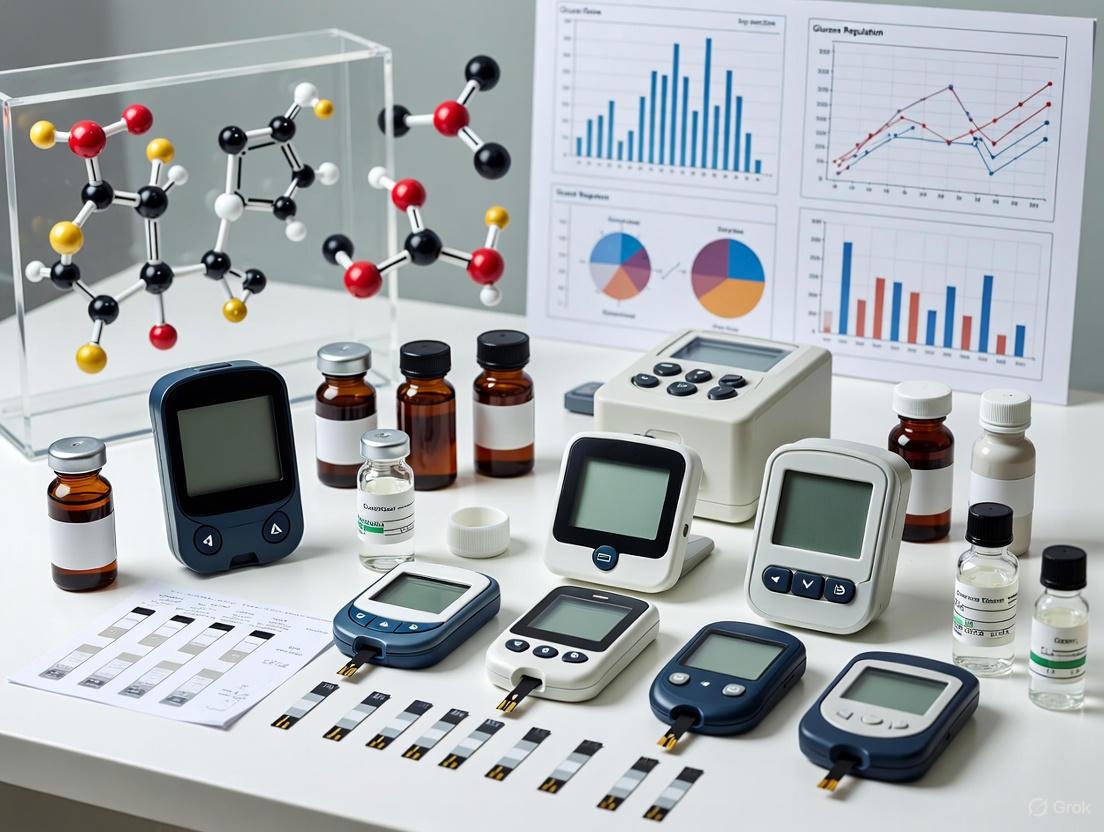
This article provides a comprehensive examination of blood glucose meter (BGM) and continuous glucose monitor (CGM) calibration for a scientific audience.
Calibration Science for Blood Glucose Meters: Principles, Protocols, and Future Directions for Biomedical Research
Abstract
This article provides a comprehensive examination of blood glucose meter (BGM) and continuous glucose monitor (CGM) calibration for a scientific audience. It covers the foundational principles of glucose sensing and the mathematical models underlying calibration, from simple linear regression to advanced machine learning algorithms. The content details standardized calibration protocols, including the critical role of control solutions and proper technique to ensure accuracy, particularly in the critical pre-diabetes range. A systematic troubleshooting framework addresses common sources of error and optimization strategies. Finally, the article reviews the current validation landscape, including performance metrics like MARD and error grid analysis, and explores the frontier of non-invasive monitoring technologies, such as mid-infrared and Raman spectroscopy, discussing their implications for future drug development and clinical research.
Fundamentals of Glucose Sensor Technology and Calibration Theory
The Electrochemical Basis of Minimally Invasive Glucose Sensing
Fundamental Principles of Electrochemical Glucose Sensors
Minimally invasive Continuous Glucose Monitoring (CGM) systems represent a revolutionary advancement in diabetes management, enabling real-time tracking of subcutaneous glucose concentrations every 1-5 minutes for several consecutive days [1] [2]. Most commercially available CGM devices operate on electrochemical sensing principles, utilizing a wire-based sensor implanted in the subcutaneous tissue to measure glucose in interstitial fluid (ISF) through a glucose-oxidase electrochemical reaction [1] [2].
Generations of Electrochemical Glucose Sensors
The development of electrochemical glucose sensors has progressed through four distinct generations based on their electron transfer mechanisms [3] [4]:
- First-Generation Sensors: Utilize glucose oxidase (GOx) with oxygen as a natural electron acceptor. They measure the hydrogen peroxide (H₂O₂) produced when glucose is oxidized. A key limitation is their dependence on environmental oxygen concentration [3] [4].
- Second-Generation Sensors: Employ artificial mediators (e.g., ferrocene derivatives) to shuttle electrons between the enzyme's active site and the electrode, reducing reliance on oxygen and improving detection precision [3].
- Third-Generation Sensors: Achieve direct electron transfer between the enzyme and the electrode without mediators, often facilitated by nanomaterials like gold or carbon nanotubes. This simplifies design and enhances stability [3].
- Fourth-Generation Sensors: Enzyme-free sensors that rely on electrocatalytically active nanomaterials (e.g., metal nanoparticles) to directly oxidize glucose on the electrode surface, offering improved stability and reproducibility [3].
Table 1: Comparison of Electrochemical Glucose Sensor Generations
| Generation | Electron Transfer Mechanism | Key Advantages | Primary Limitations |
|---|---|---|---|
| First | GOx with oxygen as electron acceptor | Pioneered enzymatic glucose sensing | Oxygen dependence; Interference from electroactive substances [3] [4] |
| Second | GOx with artificial mediators | Reduced oxygen dependence; Improved electron transfer efficiency [3] | Potential mediator toxicity; Leaching of mediators [3] |
| Third | Direct electron transfer, no mediators | Simplified design; Enhanced stability and longevity [3] | Challenges in achieving efficient direct electron transfer [3] |
| Fourth | Enzyme-free, direct electrocatalysis | High stability; No enzyme-related deactivation [3] | Selectivity can be a challenge [3] |
The Three-Electrode Sensing System
Most electrochemical CGM sensors use a three-electrode structure, a cornerstone of electrochemical detection [3]. This system comprises:
- Working Electrode (WE): The site where the glucose oxidation reaction occurs. It is often modified with enzymes (e.g., Glucose Oxidase) and nanomaterials [3] [5].
- Reference Electrode (RE): Provides a stable, known potential against which the WE is measured (e.g., Ag/AgCl) [5].
- Counter Electrode (CE): Completes the electrical circuit, allowing current to flow (e.g., platinum) [5].
When a specific potential is applied to the WE, glucose is oxidized, generating a current signal. This signal is proportional to the glucose concentration in the interstitial fluid and forms the "raw" data that is converted into a glucose reading via calibration [3] [2].
Diagram 1: Electrochemical sensing and calibration workflow in a three-electrode CGM system.
Troubleshooting Common Experimental Challenges
This section addresses specific issues researchers may encounter when developing or working with minimally invasive electrochemical glucose sensors.
Sensor Accuracy and Calibration
Issue: My sensor outputs are inconsistent and show poor accuracy against reference measurements. What are the potential causes and solutions?
Inaccurate sensor readings are frequently traced to calibration errors, signal drift, or physiological factors.
Table 2: Troubleshooting Sensor Accuracy Issues
| Problem Root Cause | Underlying Principle | Recommended Solution |
|---|---|---|
| Improper Calibration | Simple linear calibration fails to account for the dynamic, time-variant relationship between current signal and glucose concentration, and for the physiological time lag (typically 5-10 minutes) between blood and ISF glucose [2] [6]. | Implement advanced calibration algorithms that model the blood-to-ISF glucose kinetics and adapt to sensor sensitivity drift over time [2] [6]. |
| Biofouling & Enzyme Degradation | The sensor's performance decays in vivo due to protein adsorption (biofouling) on the electrode and the gradual loss of enzyme (GOx) activity, altering sensitivity (s) and baseline (b) [1] [6]. | Improve biocompatibility via surface coatings (e.g., Nafion). Use enzyme stabilization techniques (e.g., co-immobilization with albumin). Employ adaptive calibration that updates parameters periodically [1]. |
| Low Signal-to-Noise Ratio | The small current signal (nanoamperes) from the WE can be obscured by electrical noise or interference from electroactive substances (e.g., acetaminophen, ascorbic acid) in the ISF [3] [5]. | Apply signal processing filters (e.g., moving average, Kalman filter). Use selective membranes (e.g., poly-o-phenylenediamine) to block interferents [3]. |
| pH Fluctuations | The activity of GOx and the electrochemical reaction rates are pH-sensitive. Fluctuations in skin surface or ISF pH, especially in devices using reverse iontophoresis, can destabilize ISF extraction and sensor response [7]. | Integrate a pH sensor into the device platform and implement a pH-calibration method to correct the glucose reading [7]. |
Experimental Protocol: Evaluating a Novel Calibration Algorithm
A study on the QT AIR CGM system demonstrated a protocol for improving accuracy through calibration [8].
- Device Setup: A sensing platform (e.g., based on FreeStyle Libre) is modified to capture raw electrical signals in real-time.
- Reference Data Collection: Capillary Blood Glucose (CBG) measurements are taken using a standardized meter (e.g., Accu-Chek Performa) during stable glucose periods (change rate < 0.05 mmol/L·min).
- Algorithm Application: A proprietary intelligent algorithm uses the paired CBG and raw signal data to generate calibrated glucose readings. The algorithm's parameters are updated based on the reference values.
- Validation: Accuracy is assessed by calculating the Mean Absolute Relative Difference (MARD) and analyzing results with a Consensus Error Grid (CEG). In one study, calibration reduced the MARD from 20.63% (uncalibrated) to 12.39% (calibrated) in an outpatient setting [8].
Signal Instability and Drift
Issue: The sensor signal drifts significantly over its operational lifetime, compromising long-term reliability.
Signal drift is primarily caused by the inherent instability of the biological-sensor interface and the gradual breakdown of sensor components.
- Potential Cause 1: Inflammatory Response. The body's foreign body response to the implanted sensor can create a dynamic local environment, affecting glucose diffusion to the electrode [1].
- Solution: Investigate more biocompatible sensor materials and geometries (e.g., smaller, flexible probes) and anti-inflammatory coatings [1].
- Potential Cause 2: Enzyme/Electrode Degradation. GOx can denature over time, and electrocatalytic nanomaterials may sinter or become poisoned, leading to a loss of sensitivity [3] [6].
Sensitivity and Selectivity Optimization
Issue: My sensor lacks the required sensitivity for low glucose levels or suffers from interference.
Enhancing sensitivity and selectivity is a core focus of sensor development, often addressed through material science.
- Strategy 1: Nanomaterial Integration. The use of metal nanoparticles, carbon nanotubes, graphene, and metal-organic frameworks provides a high specific surface area, increasing the availability of reactive sites, improving contact with glucose molecules, and enhancing electron transfer efficiency [3] [9].
- Strategy 2: Membrane Technology. Incorporating permselective membranes (e.g., polyurethane, cellulose acetate) can selectively allow glucose to pass while excluding larger molecules like proteins and neutralizing charged interferents [3] [5].
The Scientist's Toolkit: Essential Research Reagents and Materials
Table 3: Key Materials for Developing Electrochemical Glucose Sensors
| Material/Reagent | Function in Sensor Development | Key Considerations |
|---|---|---|
| Glucose Oxidase (GOx) | The primary enzyme used in enzymatic sensors; catalyzes the oxidation of glucose [5]. | Requires immobilization on the electrode; activity is sensitive to pH, temperature, and can degrade over time [1] [5]. |
| Nafion | A perfluorosulfonate ionomer used as a coating to block anionic interferents (e.g., ascorbate, urate) and improve biocompatibility [5]. | Can hinder glucose diffusion if the layer is too thick; optimal concentration and deposition method need empirical determination. |
| Metal Nanoparticles (Au, Pt) | Used in non-enzymatic (4th gen) sensors for direct electrocatalysis of glucose, or to enhance electron transfer in enzymatic sensors [3] [9]. | Particle size, shape, and distribution on the electrode surface critically impact catalytic activity and sensor sensitivity [3]. |
| Carbon Nanotubes (CNTs) / Graphene | Carbon-based nanomaterials that provide high conductivity, large surface area, and facilitate direct electron transfer for 3rd-gen sensors [3] [9]. | Functionalization (e.g., with carboxyl groups) is often necessary to achieve good dispersion and effective enzyme binding [9]. |
| Potassium Ferricyanide | A common artificial redox mediator in 2nd-generation sensors, shuttling electrons from GOx to the electrode [3]. | Must be securely immobilized to prevent leaching; potential long-term toxicity concerns are a research focus [3]. |
| Poly(o-phenylenediamine) | A conducting polymer used to create a selective film via electropolymerization, effectively blocking interferents [5]. | Polymerization conditions (e.g., cycles, monomer concentration) must be optimized to create a dense but non-diffusion-limiting film. |
Diagram 2: Material selection guide based on sensor generation and research goals.
Frequently Asked Questions (FAQs) for Researchers
Q1: Why is calibration so critical for minimally invasive CGM sensors, and what are the limitations of simple linear calibration?
Calibration is essential because the sensor measures a raw current signal (in nA) from the interstitial fluid, which must be converted into a meaningful glucose concentration (in mg/dL) [2]. Simple linear regression (e.g., Glucose = (Signal - Baseline) / Sensitivity) assumes a static relationship. However, this relationship is dynamic in reality due to 1) the physiological time lag between blood and ISF glucose, 2) the gradual decline in sensor sensitivity from enzyme degradation and biofouling, and 3) individual skin/ISF variations [2] [6]. Advanced algorithms that are adaptive and account for these factors are necessary for high accuracy.
Q2: What is the physiological basis for using interstitial fluid (ISF) instead of blood for glucose monitoring?
ISF bathes the cells of the body, and glucose diffuses from blood capillaries into the ISF before being taken up by cells. Consequently, ISF glucose concentration has a high correlation with blood glucose levels [1] [6]. The key difference is a slight time lag (typically 5-10 minutes), as it takes time for glucose to equilibrate between the two compartments. This lag must be compensated for in calibration algorithms, especially during periods of rapid glucose change [6].
Q3: What key metrics should I use to validate the performance of a new CGM sensor or calibration algorithm in a clinical study?
The core metrics for validation include [10] [8] [6]:
- Mean Absolute Relative Difference (MARD): The average of the absolute values of the relative differences between sensor and reference values. A lower MARD indicates better accuracy (commercial systems typically achieve MARDs between 9-12%) [10] [8].
- Consensus Error Grid (CEG) Analysis: A plot that assesses clinical accuracy by categorizing point pairs into zones (A-E). High percentages in Zone A (clinically accurate) and Zone B (clinically acceptable) are required.
- Continuous Glucose-Error Grid Analysis (CG-EGA): Similar to CEG but also evaluates the clinical accuracy of glucose trend arrows.
- Bland-Altman Analysis: Assesses the agreement between the sensor and reference method, identifying any systematic bias.
Q4: For non-invasive ISF extraction methods like reverse iontophoresis (RI), what are the major technical hurdles?
RI extracts ISF by applying a mild current, but the extraction rate can be unstable. A key recent finding is that skin surface pH fluctuations during RI significantly alter the zeta potential of keratin in the skin, directly impacting the electroosmotic flow of ISF and leading to measurement inaccuracies [7]. Integrating pH sensors and developing pH-calibration methods have been shown to markedly improve glucose prediction accuracy, reducing MARD from over 34% to under 15% [7].
FAQs: Core Calibration Concepts
What is calibration in the context of a blood glucose meter, and why is it a critical research variable?
Calibration is the process that establishes the relationship between the raw electrical or optical signal produced by the meter and the corresponding concentration of glucose in the blood [11]. It is the cornerstone of any quantitative measurement procedure, transforming an arbitrary signal into a meaningful, quantitative value. For researchers, this process is a critical source of measurement uncertainty. An improperly calibrated device can introduce systematic bias (shift) or altered sensitivity (drift) into results, compromising the validity of experimental data, especially when comparing results across different reagent lots or instrument platforms [11].
Why might two different measurement systems (e.g., a glucose meter and a lab analyzer) produce different results for the same sample?
Differences can arise from several factors rooted in calibration and methodology:
- Calibration Traceability: Each system may have a different calibration traceability chain to higher-order reference materials or methods. Over time, analytical drift can occur in these chains, leading to bias [11].
- Measurement Source: A key physiological factor is the difference between blood glucose and interstitial fluid glucose, which is measured by Continuous Glucose Monitors (CGMs). A physiological lag of 5-15 minutes exists between changes in blood glucose and interstitial fluid glucose, causing discrepancies, especially during periods of rapid glucose change [12] [13].
- Non-Commutable Calibrators: The calibrators used might not behave in the same manner as human patient samples, potentially obscuring calibration errors when quality control materials are tested [11].
What are the primary technical factors that lead to inaccurate calibration in a research setting?
The main technical factors affecting calibration accuracy include:
- Insufficient Calibration Points: Using only a single calibrator point, as some manufacturer protocols suggest, makes it impossible to properly define a linear regression, as any line can be rotated through a single point [11].
- Measurement Variation: A single measurement of a calibrator carries inherent analytical variation (uncertainty). Relying on a single measurement per calibrator increases the risk of an erroneous calibration curve [11].
- Environmental and Sample Factors: Test strip integrity is compromised by improper storage (exposure to extreme temperature or humidity) [14] [15]. Sample site (fingertip vs. alternative site) can yield different results during rapidly changing glucose levels [16] [15]. Substances on the skin, like alcohol or dirt, can also interfere with the signal [15].
Troubleshooting Guides
Guide 1: Systematic Calibration Error Investigation
Follow this workflow to diagnose and resolve persistent calibration inaccuracies.
Actions and Protocols:
Verify Test Strip Integrity:
- Action: Check the expiration date on the test strip vial. Inspect strips for discoloration, bends, or tears. Ensure strips are stored in their original sealed container at room temperature and have not been exposed to extreme humidity [14] [15].
- Protocol: Open a new, in-date vial of test strips from a controlled storage environment and repeat the experiment.
Inspect Sample Application & Site:
- Action: Ensure a sufficient blood drop is applied and that it is not smeared or added after the first drop. For research, standardize on fingertip sampling, as alternative sites (forearm, thigh) can give different results during rapidly changing glucose levels [16] [15].
- Protocol: Wash and dry hands thoroughly to remove contaminants. Use a fresh lancet to obtain a generous, hanging drop of blood. Apply it to the test strip in one action as per the manufacturer's instructions.
Perform Control Solution Test:
- Action: Use a liquid control solution to verify the system's performance independently of a blood sample [17] [15].
- Protocol: Follow your typical testing procedure, but apply the control solution instead of blood. The result must fall within the range printed on the test strip vial. Perform this test every time you open a new vial of strips and periodically during use [17].
Compare with Reference Method:
- Action: Validate meter accuracy against a laboratory standard.
- Protocol: Take your glucose meter and test strips to a lab. Have blood drawn for a lab test and simultaneously perform a fingerstick test with your meter using blood from a fingertip (not from the blood draw). Compare the results; readings within 15% of the lab value are generally considered accurate [15].
Guide 2: Resolving Specific Error Codes
This guide addresses common error messages related to calibration and measurement.
| Error Message / Symptom | Possible Cause | Researcher-Focused Resolution |
|---|---|---|
| "Test Strip Error" / "Auto-Coding Error" [17] | Damaged, expired, or incorrect test strips; improper insertion; meter-strip communication failure. | - Use new, in-date strips from a validated lot. - Ensure full insertion into the meter. - Restart the meter to reset the electronic contacts. - Standardize strip brand across experiments. |
| "Low Blood Sample" [17] | Insufficient blood volume applied to the strip, leading to incomplete chemical reaction. | - Use a fresh lancet and ensure a adequate blood drop. - Do not add more blood after the first drop. - Train all personnel on standardized sampling technique. |
| "Lo" / "Hi" (Extreme Readings) [17] | Glucose level is outside the meter's measurable range (<20 mg/dL or >600 mg/dL) [16]. | - For "Lo," confirm with a lab test if hypoglycemia is unexpected. - For "Hi," dilute the sample with a known protocol and retest, or use a lab analyzer. Note the limitation in your data. |
| "Temperature Error" [17] | Meter or test strips used outside specified operating range (e.g., below 50°F/10°C or above 104°F/40°C). | - Allow meter and strips to acclimate to room temperature (approx. 45 mins) before testing. - Record environmental conditions as a experimental variable. |
| Inconsistent Results Between Replicates | High measurement uncertainty from single-point calibration; technique variability; strip lot variation. | - Implement replicate measurements (recommended n≥2) for each data point. - Use a two-point calibration method if possible. - Document the reagent (strip) lot number for all experiments [11]. |
Data Presentation: Accuracy Standards & Influencing Factors
Table 1: Quantitative Accuracy Benchmarks for Glucose Monitoring Systems
This table summarizes key performance metrics for different types of glucose monitoring technologies, based on current evidence and standards.
| Monitoring System | Typical Accuracy Metric (MARD) | Accepted Clinical Accuracy Standard | Key Limitations & Research Considerations |
|---|---|---|---|
| Blood Glucose Meter (BGM) [15] | Not Always Specified | Results within 15% of laboratory reference value. | - Accuracy decreases with extreme temperatures, improper sample application, and use of third-party strips. - Requires frequent recalibration via user. |
| Continuous Glucose Monitor (CGM) [12] | 7.9% - 9.5% (Outpatient) | Meets ISO 15197:2013 standards; often evaluated against 20/20 rule (within 20% of reference for values ≥100 mg/dL). | - Physiological Lag (5-15 min): Interstitial fluid glucose lags behind blood glucose during rapid changes [12] [13]. - Reduced accuracy in critically ill patients (MARD 22.7-27.0%) [12]. |
| Laboratory Analyzer [11] | N/A (Reference) | Traceable to higher-order reference materials and methods. | - The "gold standard," but subject to calibration drift and lot-to-lot reagent variation over time [11]. - Requires rigorous internal quality control and third-party control materials. |
Table 2: Factors Compromising Measurement Accuracy
A systematic breakdown of variables that can introduce error into glucose readings, critical for designing controlled experiments.
| Factor Category | Specific Variable | Impact on Accuracy |
|---|---|---|
| Test Strip Factors [14] [15] | Expired, damaged, or improperly stored strips | Chemical reagents degrade, causing significant deviation from true value. |
| Exposure to extreme humidity or temperature | Alters strip chemistry, leading to erroneous signal interpretation. | |
| Use of non-manufacturer (third-party) strips | May not be optimized for the meter, causing unpredictable performance. | |
| Sample & Physiological Factors [16] [15] | Alternative site testing (e.g., forearm) | Can underestimate rapid glucose changes compared to fingertip blood. |
| Low hematocrit (red blood cell count) | Can cause falsely high readings; high hematocrit can cause low readings. | |
| Presence of interfering substances (dirt, alcohol) on skin | Contaminates the sample, interfering with the electrochemical reaction. | |
| Device & Environmental Factors [17] [15] | Low battery power | Can cause erratic meter behavior and unreliable readings. |
| Extreme ambient temperature or humidity | Operation outside specified range affects meter electronics and strip chemistry. | |
| Old meter model (beyond 4-5 years) | Worn-out electronic components can drift out of specification [15]. |
The Scientist's Toolkit: Research Reagent Solutions
Essential materials for ensuring data quality in glucose meter calibration research.
| Item | Function in Research | Critical Usage Notes |
|---|---|---|
| Liquid Control Solution [17] [15] | Verifies the combined performance of a specific lot of test strips and the meter. Contains a known concentration of glucose. | Use when opening a new vial of strips and periodically thereafter. Result must fall within the specified range on the test strip vial. |
| Third-Party Quality Control (QC) Material [11] | Mitigates risk of accepting erroneous calibration by using QC materials independent of the meter/strip manufacturer, as recommended by ISO 15289:2022. | Helps detect subtle calibration shifts or lot-to-lot variations that manufacturer-adjusted controls might obscure. |
| Calibrators for Linear Range [11] | Used to establish a multi-point calibration curve. A minimum of two calibrators at different concentrations is recommended to define the slope and intercept. | Using at least two calibrators, measured in duplicate, enhances linearity assessment and improves measurement accuracy versus a single-point calibration. |
| Reference Standard / Laboratory Analyzer [15] | Provides the "ground truth" measurement against which the accuracy of the glucose meter is validated. | Essential for method-comparison studies. Perform fingerstick test with meter at the same time blood is drawn for lab analysis for a valid comparison. |
Frequently Asked Questions (FAQs)
Q1: What is MARD and how should I interpret it in my glucose sensor research?
MARD (Mean Absolute Relative Difference) is a statistical metric used to represent the average difference between a device's glucose measurements and a reference measurement. A lower MARD value indicates better analytical accuracy and closer agreement with the reference method [18] [19].
For researchers, it's crucial to understand that while MARD provides a single value for comparing system accuracy, it doesn't distinguish between bias and imprecision [18]. Empirical data from system accuracy evaluations of 77 different test strip lots showed MARD results ranging from 2.3% to 20.5% [18].
Q2: How does MARD relate to the ISO 15197:2013 standard requirements?
The relationship between MARD and ISO 15197:2013 compliance is probabilistic rather than deterministic. Research indicates that only 3.6% of test strip lots with a MARD ≤7% showed <95% of results within ISO limits [18]. Bayesian modeling suggests the probability of satisfying ISO 15197:2013 accuracy requirements is nearly 100% when MARD is between 3.25% and 5.25% [20].
The lowest MARD observed for a test strip lot that failed to meet ISO 15197:2013 accuracy requirements was 6.1% [18].
Q3: What are the key differences between various Error Grid Analyses?
Error Grid Analyses evaluate clinical risk rather than just analytical accuracy. The main types include:
Table: Comparison of Error Grid Analysis Methods
| Error Grid Type | Development Year | Key Characteristics | Risk Zones |
|---|---|---|---|
| Clarke (CEG) | 1987 | First established error grid; developed for all insulin users [21] | 5 zones (A-E) [21] |
| Parkes (PEG) | 1994/2000 | Separate grids for type 1 and type 2 diabetes patients [22] | 8 zones [22] |
| Surveillance (SEG) | 2014 | Modern metric for post-market surveillance; more granular risk assessment [22] | 15 zones with continuous risk scale [22] |
The Surveillance Error Grid was developed to address limitations of earlier error grids, incorporating contemporary diabetes management practices and providing more detailed risk assessment for post-market device evaluation [22].
Q4: What are the specific accuracy requirements of ISO 15197:2013?
ISO 15197:2013 specifies that for a blood glucose monitoring system to be considered sufficiently accurate [23]:
- ≥95% of system results must fall within ±15 mg/dL of laboratory reference results at glucose concentrations <100 mg/dL
- ≥95% of system results must fall within ±15% of laboratory reference results at glucose concentrations ≥100 mg/dL
- ≥99% of results must be within zones A and B of the consensus error grid
Troubleshooting Guides
Issue: High MARD Values in Glucose Monitoring Experiments
Potential Causes and Solutions:
Reference Method Inconsistencies
Sample Handling Issues
- Problem: Glycolysis in whole blood samples causing glucose depletion.
- Solution: Process samples within 30 minutes of collection. Consider appropriate glycolysis inhibitors [24].
Calibration Algorithm Limitations
- Problem: Simple linear regression calibration not accounting for time-varying sensor sensitivity.
- Solution: Implement adaptive calibration algorithms that compensate for physiological differences between blood and interstitial fluid glucose [6].
Issue: Achieving ISO 15197:2013 Compliance in Device Validation
Experimental Protocol Requirements:
Diagram: ISO 15197:2013 Compliance Testing Workflow
Study Population: Test a minimum of 100 subjects to obtain 200 evaluable data points from at least 100 capillary blood samples [18].
Glucose Distribution: Ensure glucose concentrations are distributed as specified in ISO 15197 based on reference method values [18].
Reference Method Validation: Use laboratory comparison methods with verified trueness and precision throughout the study (e.g., glucose oxidase or hexokinase methods) [18] [23].
Environmental Controls: Perform measurements at ambient temperature of 23°C ± 5°C in compliance with manufacturer specifications [18].
Research Reagent Solutions
Table: Essential Materials for Glucose Monitoring Research
| Reagent/Instrument | Function/Application | Key Characteristics |
|---|---|---|
| YSI 2300 STAT Plus | Reference glucose analyzer | Glucose oxidase (GOD) method; traceable standardization [18] |
| Cobas Integra series | Reference glucose analyzer | Hexokinase (HK) method; used in clinical laboratories [18] |
| Glucose Oxidase Test Strips | Enzymatic reaction for glucose detection | Generates hydrogen peroxide; susceptible to oxygen interference [24] |
| Glucose Dehydrogenase Test Strips | Enzymatic reaction for glucose detection | Less susceptible to oxygen; may react with other sugars [24] |
| Hexokinase Test Strips | Enzymatic reaction for glucose detection | High specificity; used in laboratory reference methods [24] |
Advanced Methodologies
Calibration Algorithm Implementation
For continuous glucose monitoring systems based on interstitial fluid sensing, consider these calibration approaches:
Basic Linear Calibration
- Traditional method using simple linear function:
ISF_glucose = a × I(t) + bwhereI(t)is sensor current [6].
- Traditional method using simple linear function:
Kinetic Compensation Algorithms
Adaptive Multi-Factor Calibration
- Compensate for time-varying sensor sensitivity due to enzyme loss or electrode degradation.
- Incorporate correction factors for skin temperature, pH, and individual skin impedance differences [6].
Error Grid Analysis Implementation Protocol
Data Collection
- Collect paired measurement results (test device vs. reference method)
- Ensure broad glucose distribution across clinically relevant range (40-400 mg/dL)
Plotting and Zone Assignment
- Create scatter plot with reference values on x-axis and test device values on y-axis
- Assign each data point to appropriate risk zone based on established boundaries
Clinical Risk Calculation
- Calculate percentage of points in each zone
- For SEG, compute average risk score for complete data set [22]
This technical reference provides the essential framework for researchers evaluating glucose monitoring systems. The integrated approach combining analytical metrics (MARD), regulatory standards (ISO 15197:2013), and clinical risk assessment (Error Grids) ensures comprehensive device evaluation for both pre-market validation and post-market surveillance.
FAQ: Core Concepts and Troubleshooting
What is physiological lag, and why is it a critical factor in glucose monitoring?
Physiological lag, often referred to as the blood-to-interstitial fluid (ISF) glucose time lag, is the delay for glucose to equilibrate between the blood plasma and the interstitial fluid where Continuous Glucose Monitors (CGMs) measure. This lag is primarily due to the time required for glucose to traverse the capillary wall endothelial barrier via facilitated diffusion. Typical reported values range from 5 to 10 minutes [25]. This lag is a critical source of measurement error, especially during periods of rapid glucose change (e.g., postprandially or after insulin administration), as the CGM reading reflects a past blood glucose state rather than the current one [26].
How can physiological lag be minimized or accounted for in experimental data?
While the physiological process itself cannot be eliminated, its impact on data can be mitigated through several methods:
- Mathematical Modeling: Employ deconvolution techniques and other modeling approaches on the CGM time-series data to subtract the effect of the lag and reconstruct a more accurate blood glucose profile [26].
- Optimal Calibration: Calibrate CGM devices during periods of stable glucose levels (change rate < 0.05 mmol/L·min). Avoid calibration during periods of rapid glucose change, as the inherent lag will lead to a miscalibrated sensor [8].
- Signal Processing: Apply smoothing filters and predictive algorithms to the raw CGM signal, which can help reduce noise and, to some extent, account for the physiological delay [26].
Our CGM readings are consistently biased (e.g., always lower than reference values). Is this related to physiological lag?
A consistent bias is different from the dynamic error caused by physiological lag and is more likely related to sensor-specific issues or calibration drift. However, the two can interact. For instance, a study on the FreeStyle Libre system noted a systematic underestimation of blood glucose levels [8]. To address this:
- Implement a calibration protocol: Research shows that calibrating a factory-calibrated sensor with point-of-care (POC) blood glucose measurements can significantly improve accuracy. One study demonstrated that calibration reduced the Mean Absolute Relative Difference (MARD) from 25% to below 10-14% for up to 24 hours [10].
- Validate sensor performance: Use a protocol where CGM values are validated against reference values (e.g., ±20% for values ≥100 mg/dL or ±20 mg/dL for values <100 mg/dL) and calibrated if they fall outside this range [10].
Experimental Protocols for Lag and Accuracy Assessment
Protocol for Assessing CGM Accuracy and Lag In-Hospital
This protocol is adapted from a study validating a real-time CGM device in a hospital setting [8].
Objective: To validate the consistency and clinical accuracy of CGM data against capillary blood glucose (CBG) references in a controlled clinical environment.
Materials:
- CGM system(s) for evaluation (e.g., FreeStyle Libre with a transfer hoop for real-time data acquisition).
- Standard blood glucose meter (e.g., Accu-Chek Performa Connect) and a single batch of test strips.
- Hospital glucose management platform/server.
- Study participants (e.g., n=38) meeting inclusion criteria (age ≥16, clinical need for glycemic surveillance).
Methodology:
- Sensor Deployment: With professional assistance, wear the CGM sensor on the outer side of the upper arm. Input patient and device information into the hospital's glucose management platform.
- Reference Data Collection: Nursing staff perform fingertip CBG measurements at prescribed intervals using the standard meter. The CGM device transmits glucose readings to the server at one-minute intervals.
- Data Matching and Analysis: Match each CBG reference value with the CGM value recorded at the nearest timestamp (within a defined window, e.g., 5 minutes). Analyze the paired data for:
- Correlation (e.g., Spearman's rank-order correlation).
- Accuracy Metrics: Calculate Mean Absolute Relative Difference (MARD) and Mean Absolute Difference (MAD).
- Clinical Accuracy: Use Consensus Error Grid (CEG) analysis to determine the percentage of points in clinically accurate zones (A and B).
- Bland-Altman Analysis to assess the agreement and identify any systematic bias.
Protocol for Calibrating a CGM to Improve Accuracy
This protocol is based on a feasibility study using POC blood glucose to calibrate CGMs in critically ill patients [10].
Objective: To determine if POC BG calibration can improve the accuracy of a factory-calibrated CGM in a controlled setting.
Materials:
- Factory-calibrated CGM (e.g., Dexcom G6).
- Point-of-care blood glucose meter.
- Patients in a controlled setting (e.g., ICU).
Methodology:
- Initial Validation Check: Compare the initial CGM reading with a POC BG measurement. Define validation as CGM value being within ±20% of POC BG for values ≥100 mg/dL or ±20 mg/dL for values <100 mg/dL.
- Calibration Trigger: If the CGM reading fails the validation check, perform a calibration. Calibration involves entering the POC BG value into the CGM device or data processing system.
- Post-Calibration Assessment: After calibration, continue to collect paired CGM and POC BG values at intervals (e.g., 6, 12, and 24 hours). Recalculate the MARD and validation success rates to quantify the improvement in accuracy.
- Timeliness: Ensure calibrations are performed promptly, ideally within 5-10 minutes of the POC BG measurement [10].
Quantitative Data on CGM Performance and Calibration
Table 1: CGM Accuracy Metrics from Recent Clinical Studies
| Study Context & Device | MARD (Mean Absolute Relative Difference) | Consensus Error Grid (Zone A) | Key Finding |
|---|---|---|---|
| Inpatient (ICU) - Dexcom G6 Pro [27] | 22.7% (vs. Lab) | N/R | Significant underestimation of glucose in critically ill patients; high inter-patient variability. |
| Inpatient (ICU) - FreeStyle Libre Pro [27] | 25.2% (vs. Lab) | N/R | Similar performance to G6P in critical care setting. |
| Outpatient - FreeStyle Libre [8] | 18.33% | 69.75% | Systematic underestimation of blood glucose. |
| Outpatient - QT AIR (Calibrated) [8] | 12.39% | 87.62% | Calibration significantly improved accuracy over factory settings. |
| In-Hospital - QT AIR (Calibrated) [8] | 7.24% | 95% | Performance of calibrated devices is superior in a controlled setting. |
| Non-Invasive MIR Technology [28] | 19.6% - 20.7% | N/R | Reached accuracy of early-generation CGM systems. |
Table 2: Impact of Calibration on CGM Accuracy in ICU Patients [10]
| Time Point | MARD | Validation Success Rate |
|---|---|---|
| At Calibration (Failure) | 25% | 0% |
| 6 Hours Post-Calibration | 9.6% | 72.6% |
| 12 Hours Post-Calibration | 12.7% | 66.7% |
| 24 Hours Post-Calibration | 13.2% | 77.8% |
Signaling Pathways and Experimental Workflows
Diagram 1: Physiological and Technological Lags in CGM Systems. This diagram illustrates the sequential pathway from blood glucose to CGM reading, highlighting the sources of physiological and technological delays.
Diagram 2: Workflow for CGM Accuracy Validation & Calibration. This chart outlines the experimental procedure for assessing CGM performance and implementing a calibration protocol to correct inaccurate readings.
The Scientist's Toolkit: Research Reagent Solutions
Table 3: Essential Materials for CGM Calibration and Accuracy Research
| Item / Reagent Solution | Function in Research |
|---|---|
| Factory-Calibrated CGM Systems (e.g., Dexcom G6 Pro, FreeStyle Libre Pro) | The devices under investigation. Their factory settings provide a baseline from which to measure improvement through calibration [27] [10]. |
| Point-of-Care (POC) Blood Glucose Meter & Strips (e.g., Accu-Chek Inform II/Performa) | Provides the reference capillary blood glucose values for validation and calibration. Using a single, high-quality meter and batch of strips minimizes reference variability [10] [8]. |
| Laboratory Serum Glucose Assay (e.g., Roche Cobas hexokinase assay) | The gold-standard reference method for glucose measurement. Used for the most rigorous accuracy comparisons, especially in inpatient studies [27]. |
| Consensus Error Grid (CEG) Analysis Tool | A software tool for plotting CGM-reference pairs to determine the clinical accuracy of readings and the potential risk of clinical decisions based on those readings [8]. |
| Signal Processing & Statistical Software (e.g., Python with Pandas, SciPy; GraphPad Prism) | Used for data cleaning, time-matching CGM and reference values, calculating MARD/MAD, performing Bland-Altman analysis, and implementing deconvolution algorithms [27] [8] [26]. |
| Calibratable CGM Platform (e.g., QT AIR with transfer hoop) | A research platform that allows for real-time data acquisition from a sensor (e.g., FreeStyle Libre) and the application of custom calibration algorithms [8]. |
The Critical Challenge of Accuracy in the Pre-Diabetes Range (100-125 mg/dL)
Frequently Asked Questions (FAQs): Foundational Concepts
FAQ 1: Why is meter accuracy particularly critical in the pre-diabetes range (100-125 mg/dL)?
Accuracy in this range is paramount because it directly impacts diagnostic classification and early intervention strategies. The range between normal glycemia and established diabetes is narrow; an error margin of just 10-15% can misclassify a pre-diabetic individual as normal or vice versa [15] [24]. Furthermore, clinical decisions, such as initiating lifestyle interventions or enrolling patients in clinical trials, hinge on precise glucose values within this tight window. Accuracy here ensures that research data is valid and that patient management is based on correct diagnostic information.
FAQ 2: What are the primary technical sources of error in glucose meters that affect research-grade data?
The main technical error sources originate from the enzymatic reaction, the sample matrix, and the meter's detection system [24].
- Enzymatic Specificity: Different enzymes (e.g., glucose oxidase, glucose dehydrogenase) can exhibit varying cross-reactivity with other sugars like maltose or galactose, leading to falsely elevated readings [24].
- Sample Matrix Effects: Glucose meters analyze whole blood, but laboratory reference methods typically use plasma. Hematocrit (red blood cell count) variations can significantly affect results; a high hematocrit can cause underestimation, while a low hematocrit can cause overestimation [15] [29] [24].
- Environmental Factors: The enzymes and electronics within meters and test strips are sensitive to extremes of temperature and humidity, which can denature proteins or disrupt electronic readings [15] [24].
FAQ 3: How do Continuous Glucose Monitor (CGM) calibration challenges differ from those of traditional finger-stick meters in a research setting?
CGMs present a unique set of challenges because they measure glucose in the interstitial fluid (ISF), not capillary blood. This introduces two key complexities [6] [30]:
- Physiological Time Lag: Changes in blood glucose levels are reflected in the ISF with a delay, typically ranging from 4 to 10 minutes. This lag can cause discrepancies during periods of rapidly changing glucose levels [6] [31].
- Calibration Algorithm Dependency: The accuracy of CGM systems is heavily dependent on the sophistication of the algorithm that converts the sensor signal into a glucose value. While factory-calibrated sensors reduce user burden, their algorithms must account for sensor drift and individual physiological variability over the sensor's lifespan [6] [30]. Research using CGM data must account for these inherent lags and algorithmic smoothing.
Troubleshooting Guides & Experimental Protocols
This section provides actionable methodologies for diagnosing and correcting accuracy issues.
Guide 1: Systematic Diagnosis of Accuracy Drift
Follow the logical workflow below to isolate the root cause of inaccurate readings in your experimental setup.
Guide 2: Protocol for Establishing Meter Accuracy Against a Reference
Aim: To validate the accuracy of a point-of-care glucose meter against a laboratory reference method within the pre-diabetes range. Background: This protocol is essential for establishing the reliability of meters used in a research context, ensuring data integrity for pre-clinical or clinical studies [15] [24].
Materials:
- Glucose meter(s) and corresponding test strips
- Lancet device and lancets
- Appropriate control solutions (low, normal, high)
- Venous blood collection equipment (tourniquet, tubes with fluoride/oxalate glycolysis inhibitors)
- Access to a certified clinical laboratory for plasma glucose analysis (reference method)
Methodology:
- Sample Collection: Collect paired samples from each subject or model. Perform a finger-stick capillary test with the meter according to manufacturer instructions, ensuring hands are washed and dried [15] [32]. Simultaneously, draw a venous blood sample.
- Sample Processing: Transport the venous sample to the laboratory immediately. Plasma must be separated from cells within 30 minutes to prevent glycolysis, which can lower glucose levels and skew comparison results [24].
- Testing: Analyze the capillary blood with the meter. The laboratory should analyze the plasma sample using its standard clinical method.
- Data Collection: Record the meter reading and the laboratory plasma glucose value for each paired sample. Aim for a minimum of 100 paired samples across the glycemic range (70-200 mg/dL), with at least 20 samples in the pre-diabetes range (100-125 mg/dL).
Analysis:
- Calculate the Mean Absolute Relative Difference (MARD) between the meter reading and the laboratory value for all samples and specifically for the pre-diabetes subset.
- Plot results on a Clarke Error Grid (CEG) to assess clinical significance of the deviations [30] [33].
- A meter is generally considered sufficiently accurate for research if >95% of results fall within zones A and B of the CEG, and the MARD is <10% [30].
Guide 3: Protocol for Calibrating and Validating a Continuous Glucose Monitor (CGM) System
Aim: To outline the procedure for calibrating a CGM (if required) and validating its performance against reference blood glucose values. Background: CGM systems estimate blood glucose from interstitial fluid measurements. Calibration aligns the sensor's signal with blood glucose, and validation confirms its accuracy in the research context [6] [30].
Materials:
- CGM system and sensors
- A validated and accurate blood glucose meter for reference measurements
- Calibration log sheet or electronic data capture system
Methodology:
- Initial Calibration (for user-calibrated systems): Follow the manufacturer's instructions. Typically, this involves entering a finger-stick blood glucose value into the CGM device after the sensor warm-up period. Use a meter that has itself been validated per the protocol above.
- Validation Testing Schedule: Take reference finger-stick measurements at times that capture a wide range of glucose values (e.g., fasting, postprandial). Avoid calibrating during periods of rapid glucose change (>2 mg/dL per minute) [6].
- Data Recording: Record the CGM glucose value and the time-matched reference meter value for each validation point.
Analysis:
- As with the meter validation, calculate MARD and use Clarke Error Grid analysis.
- Pay specific attention to the Time Lag. Analyze the cross-correlation between the CGM trend and the reference values to quantify the average lag in your experimental setup [6].
Table 1: Summary of Key Accuracy Metrics from Literature
| Metric / Parameter | Typical Target for Acceptable Performance | Clinical / Research Significance |
|---|---|---|
| Mean Absolute Relative Difference (MARD) | <10% [30] | A lower MARD indicates higher overall accuracy. Critical for assessing a device's performance across the entire measuring range. |
| Clarke Error Grid (CEG) Zone A | >95% [30] [33] | Percentage of values that lead to clinically correct treatment decisions. Essential for ensuring data validity in interventional studies. |
| Time Lag (CGM) | 4 - 10 minutes [6] [30] | The physiological delay between blood and interstitial fluid glucose changes. Must be accounted for in dynamic glucose studies. |
| Capillary vs. Plasma Difference | Plasma glucose is ~11% higher than whole blood [24] | A critical conversion factor. Most lab tests use plasma, while most meters use whole blood. Failure to convert can cause misclassification. |
Table 2: Common Interfering Factors and Their Impact on Glucose Readings
| Factor | Direction of Effect on Reading | Recommended Troubleshooting Action |
|---|---|---|
| High Hematocrit | Falsely Low [29] [24] | Use meters with hematocrit correction algorithms; confirm with plasma lab values. |
| Low Hematocrit (Anemia) | Falsely High [15] [29] | Use meters with hematocrit correction algorithms; confirm with plasma lab values. |
| Test Strip Exposure to Humidity | Variable / Inaccurate [15] [32] | Store strips in their original, sealed container; do not use expired strips. |
| Contaminants on Skin (Food, etc.) | Falsely High [15] [32] | Wash hands thoroughly with soap and water, then dry completely before testing. |
| Insufficient Blood Sample | Falsely Low / Error [15] | Apply a generous, single drop of blood to the strip; do not "top it up". |
The Scientist's Toolkit: Essential Research Reagents & Materials
Table 3: Key Materials for Glucose Meter Calibration and Validation Research
| Item | Function in Research | Critical Specifications |
|---|---|---|
| Control Solutions | To verify that the meter and test strip system is functioning within the manufacturer's specified range without biological variability [15] [32]. | Low, Normal, and High glucose concentrations; specific to the meter and strip model. |
| Glycolysis Inhibitors | To preserve glucose concentration in venous blood samples collected for laboratory comparison (e.g., Sodium Fluoride) [24]. | Concentration and efficacy in preventing glucose consumption by blood cells during transport. |
| Certified Reference Materials | To establish traceability and validate the accuracy of the laboratory reference method itself [24]. | Standards with concentrations certified by a recognized body (e.g., NIST). |
| Clinical Laboratory Services | To provide the "ground truth" plasma glucose measurement against which the meter is validated [15] [29]. | Accreditation (e.g., CAP, CLIA); use of standardized methods like ID-MS or hexokinase. |
| Data Analysis Software | To perform statistical analysis (MARD, regression) and generate clinical accuracy plots like Clarke Error Grids [30] [33]. | Capability to handle paired data sets and generate standardized error grids. |
Advanced Research Workflow: From Data Collection to Validation
The following diagram illustrates the integrated workflow for a comprehensive glucose meter validation study, from initial setup to final data interpretation.
Implementing Robust Calibration Protocols and Procedures
Standard Operating Procedures for BGM Calibration with Control Solutions
Control solutions are precisely formulated liquids used to verify the functional performance of blood glucose monitoring (BGM) systems in research settings. These solutions contain a predetermined concentration of glucose, buffers to maintain pH levels similar to human blood (approximately 7.4), and microbicides to prevent bacterial growth that could alter glucose concentration [34]. For researchers investigating BGM accuracy or developing new monitoring technologies, control solutions provide a standardized reference material that eliminates biological variability inherent in human blood samples, enabling controlled experimental conditions and reproducible results across testing sessions.
In the context of research on inaccurate reading correction, control solution testing serves as a critical quality control procedure. It allows researchers to determine whether anomalous readings originate from the meter/test strip system or from other experimental variables. It is crucial to note that control solution testing verifies system functionality rather than calibrating the meter for future blood measurements [34]. This distinction is particularly important when establishing experimental protocols for accuracy validation studies.
Composition and Specifications of Control Solutions
Biochemical Composition
Control solutions are complex chemical formulations designed to mimic key characteristics of human blood while maintaining stability. The standard composition includes [34]:
- Aqueous glucose component: Provides the known glucose concentration for validation
- pH buffers: Maintain physiological pH (approximately 7.4) comparable to human blood
- Microbicides: Prevent microbial growth that could alter glucose concentration during storage
- Stabilizing agents: Ensure consistent glucose concentration throughout product shelf life
Control Solution Levels and Specifications
Manufacturers typically provide multiple control solution levels corresponding to different glucose concentration ranges, enabling researchers to validate system performance across the clinical range of interest [34].
Table 1: Standard Control Solution Levels and Specifications
| Control Level | Glucose Concentration Range | Research Application |
|---|---|---|
| Level 1 | Low (e.g., 40-80 mg/dL) | Hypoglycemia range studies |
| Level 2 | Normal (e.g., 90-130 mg/dL) | Euglycemia validation |
| Level 4 | High (e.g., 250-400 mg/dL) | Hyperglycemia range studies |
Experimental Protocol: Control Solution Testing Procedure
Materials and Equipment
- BGM system under investigation
- Test strips compatible with the BGM (from the same lot number)
- Appropriate control solution specific to the BGM brand and test strips
- Timer/stopwatch
- Laboratory notebook for documentation
- Gloves and appropriate personal protective equipment
- Biohazard disposal container for used test strips
Step-by-Step Experimental Methodology
Preparation: Insert a new test strip into the meter and verify the meter is ready for testing [35].
Solution Preparation: Vigorously shake the control solution bottle for 10-15 seconds to ensure homogeneous glucose distribution [34]. Discard the first drop and wipe the bottle tip clean to eliminate potential contaminants [35].
Sample Application: Dispense a second drop onto a clean, hard, non-absorbent surface. Bring the test strip to the drop (rather than dropping onto the strip) and hold until sufficient solution has been applied [34].
Measurement: Allow the meter to calculate and display the result. Record the value precisely along with the test strip lot number and control solution information [34].
Validation: Compare the test result to the expected range printed on the test strip vial. The result should fall within the specified tolerance range [34].
Disposal: Properly dispose of used test strips and reseal the control solution bottle tightly to prevent evaporation and contamination [34].
The following workflow diagram illustrates the control solution testing procedure:
Research Applications and Testing Frequency
Experimental Scenarios Requiring Control Testing
Control solution testing should be incorporated into research protocols in these specific scenarios [34] [35]:
- Initial validation of new BGM systems or test strip lots before inclusion in study protocols
- Suspected performance degradation when meter readings deviate from expected values
- After physical stress to equipment (e.g., dropping, temperature exposure, humidity)
- Periodic quality assurance during longitudinal studies to ensure consistent performance
- When comparing multiple BGM systems in method comparison studies
- After cleaning or maintenance procedures on BGM equipment
Recommended Testing Frequency for Research Studies
Table 2: Control Testing Frequency for Research Protocols
| Experimental Condition | Recommended Frequency | Rationale |
|---|---|---|
| New test strip lot acceptance | 3-5 replicates per lot | Establish baseline performance |
| Longitudinal studies | Weekly and with each new test strip vial | Monitor performance drift |
| High-precision studies | Daily or with each testing session | Ensure maximal accuracy |
| Environmental challenge studies | Pre- and post-exposure | Isolate environmental effects |
| Multi-center trials | Standardized across all sites | Ensure consistent data quality |
Troubleshooting and Technical Guidance
Common Experimental Issues and Solutions
Out-of-range control solution results: Repeat test with fresh solution. If still out of range, replace control solution and test strips. Contact manufacturer if problem persists [34].
Erratic readings between replicates: Ensure consistent sample volume application technique. Verify control solution is at room temperature before testing [34].
Consistent deviation across multiple systems: Check control solution expiration date and open-container age. Solution is typically stable for 90 days after opening [34].
No reading obtained: Verify test strips are compatible with control solution. Some systems require specific settings for control testing [35].
Data Interpretation Guidelines for Researchers
When control solution results fall outside expected ranges, researchers should:
- Document the variance quantitatively for potential inclusion in method limitations
- Systematically troubleshoot using the methodology outlined in Section 5.1
- Exclude affected data from experimental results if system functionality cannot be verified
- Report the quality control failure in research publications to maintain scientific transparency
Research Reagent Solutions and Materials
Table 3: Essential Research Materials for BGM Validation Studies
| Reagent/Material | Technical Specification | Research Function |
|---|---|---|
| Level-specific control solutions | Known glucose concentrations at low, normal, and high ranges | System validation across clinical measurement range |
| BGM-specific test strips | Manufacturer- and model-specific | Ensures compatibility and valid results |
| pH testing strips | Range 6.0-8.0 | Verify control solution pH stability |
| Temperature monitoring device | ±0.5°C accuracy | Ensure proper storage conditions |
| Humidity indicator | 10-90% RH range | Monitor appropriate storage environment |
Limitations and Considerations for Research Applications
While control solutions are invaluable for verifying BGM system functionality, researchers must recognize several important limitations:
Functional verification, not accuracy assessment: Control testing confirms the meter and strips are working as designed by the manufacturer but does not definitively establish measurement accuracy against reference standards [34].
Brand specificity: Control solutions are formulated for specific meter and test strip combinations. Using incompatible solutions voids validity and may produce misleading results [34] [35].
Stability constraints: Once opened, control solutions typically remain stable for 90 days when properly stored. Researchers must track open-container expiration dates to maintain experimental integrity [34].
Environmental sensitivity: Control solutions must be stored within specified temperature and humidity ranges. Deviations can alter glucose concentration and compromise testing validity [34].
For comprehensive accuracy validation, researchers should combine control solution testing with method comparison studies against reference instruments and, when possible, laboratory glucose analyzers to establish total analytical error across the measuring range [2].
Troubleshooting Guides
Guide: Troubleshooting Persistent CGM Inaccuracy Post-Calibration
Reported Issue: Continuous Glucose Monitor (CGM) values remain inconsistent with reference blood glucose (BG) measurements despite repeated calibrations.
Investigation & Resolution:
- Step 1: Verify Calibration Input Quality: Ensure the reference BG value used for calibration is accurate. Confirm proper hand washing, use of a second blood drop if hands are not washed, and that test strips are not expired or damaged [36] [37]. A poor-quality BG reading will lead to a faulty calibration.
- Step 2: Assess Physiological State at Calibration: Avoid calibrating during periods of rapid glucose change (>2 mg/dL per minute), such as immediately after meals, insulin administration, or exercise. The physiological lag (2-20 minutes) between blood and interstitial glucose (measured by CGM) causes significant errors during these times [37]. Calibrate when glucose is stable.
- Step 3: Check for Interfering Substances: Review the patient's medications and supplements. Common interferents include:
- Acetaminophen: Affects Dexcom G4-G7 and Medtronic Guardian sensors [37].
- Hydroxyurea: Affects Dexcom G4-G7 and Medtronic Guardian sensors [37].
- Vitamin C (Ascorbic Acid): High doses (>500 mg/day) can interfere with FreeStyle Libre 2 and 3 systems [37].
- Action: If interference is suspected, contact the device manufacturer for confirmation and consider temporary alternative monitoring.
- Step 4: Inspect Sensor and Site: Examine the sensor insertion site for signs of infection, irritation, or scar tissue. Ensure the sensor is not under mechanical pressure or compression (e.g., from sleeping on it), which can cause falsely low readings known as "compression lows" [37].
- Step 5: Evaluate Sensor Lifecycle: Note the day of sensor wear. Accuracy can degrade, especially on the last day of the manufacturer's recommended wear period [37]. Replacing the sensor may resolve the issue.
Guide: Addressing High Mean Absolute Relative Difference (MARD) in Clinical Study Data
Reported Issue: A clinical study dataset for a new calibratable CGM shows a MARD value higher than the 10-15% threshold considered acceptable for clinical use [37].
Investigation & Resolution:
- Step 1: Analyze Error by Glucose Range: Segment the data into glycemic ranges (hypoglycemia, euglycemia, hyperglycemia). It is common for MARD to be higher in the hypoglycemic range (<70 mg/dL) [38]. This analysis identifies if the inaccuracy is systemic or range-specific.
- Step 2: Scrutinize the Calibration Algorithm:
- For Factory-Calibrated Sensors: If using a "no-calibration" sensor like the Dexcom G6 in a study, be aware that clinical conditions in an ICU (e.g., low perfusion, medication interference) can reduce accuracy. Implementing a single-point calibration protocol can improve MARD significantly (e.g., from 25% down to ~10%) [10].
- For Calibration-Required Sensors: Evaluate if a one-point calibration model could be superior to a two-point model. Evidence suggests one-point calibration can improve accuracy, particularly in hypoglycemia, by avoiding errors in estimating the sensor's background current (
I0) [38].
- Step 3: Review Reference Method Protocol: Ensure the reference BG method (e.g., Yellow Springs Instrument - YSI, point-of-care meter) is itself accurate and that measurements are properly synchronized. The time stamp of the CGM value and the reference value must account for the physiological blood-to-interstitial fluid glucose lag [37].
- Step 4: Implement a Hybrid Protocol: For inpatient studies, adopt a hybrid CGM-POC BG protocol. Define a validation criterion (e.g., CGM ±20% of POC BG for values ≥100 mg/dL). If validation fails, perform a calibration with a high-quality BG measurement. This protocol can restore and maintain accuracy over a 24-hour period [10].
Frequently Asked Questions (FAQs)
FAQ 1: What are the fundamental advantages of one-point calibration over traditional two-point linear regression for CGM sensors, and what is the underlying technical rationale?
One-point calibration offers two primary advantages: 1) Improved Hypoglycemia Accuracy and 2) Elimination of Background Current (I0) Estimation Error.
The technical rationale stems from the core calibration equation: ISIG = Ig + I0, where ISIG is the raw sensor current, Ig is the true glucose current, and I0 is the background current from interferents [38]. A two-point calibration attempts to estimate both the slope (sensitivity) and the I0 intercept. However, the physiological time lag (2-20 min) between blood and interstitial glucose creates a variable gradient, making a fixed linear estimation of I0 inaccurate. This error is magnified in hypoglycemia [38].
A one-point calibration assumes I0 is negligible, using a single reference point to estimate only the sensitivity. Studies show this often produces more accurate results, especially in hypoglycemia, where a two-point model's error in estimating I0 can lead to dangerous overestimations of glucose levels. One study found one-point calibration reduced median absolute relative difference (MARD) in hypoglycemia from 18.4% to 12.1% compared to two-point calibration [38].
FAQ 2: In a research setting, how can we quantitatively validate the accuracy of a new calibration algorithm against established standards?
Validation requires a multi-faceted statistical and clinical approach against a reference instrument like YSI or a high-quality blood glucose meter. The following table summarizes the key metrics:
Table 1: Key Metrics for Validating CGM Calibration Algorithm Accuracy
| Metric Category | Specific Metric | Interpretation & Benchmark | ||
|---|---|---|---|---|
| System Accuracy | Mean Absolute Relative Difference (MARD) | Standard for overall accuracy. Calculated as `Σ( | CGM - Ref | / Ref) / n * 100%`. Modern CGMs target <10% [10] [8]. |
| Mean Absolute Difference (MAD) | Provides error in mg/dL, useful for clinical context. | |||
| Clinical Accuracy | Consensus Error Grid (CEG) Analysis | Plots CGM vs. Ref values into risk zones (A-E). High accuracy is indicated by >95% of points in Zones A and B [8]. | ||
| Point & Trend Accuracy | Continuous Glucose-Deviation Interval and Variability Analysis (CG-DIVA) | Assesses bias and sensor-to-sensor variability, per FDA requirements for integrated CGM systems [8]. |
FAQ 3: Beyond traditional calibration, what machine learning approaches are emerging for glucose prediction and "virtual" calibration?
Deep learning models are being developed to infer glucose levels without direct sensor calibration or even without prior glucose measurements, creating a "virtual CGM."
- Architecture: Models often use a bidirectional Long Short-Term Memory (LSTM) network with an encoder-decoder architecture. This structure is adept at handling sequential data and capturing long-term dependencies in the factors affecting glucose [39].
- Input Data (Life-log): These models utilize multi-modal data, or "life-logs," including:
- Dietary intake (timing, carbohydrates, nutrients)
- Physical activity (METs, step counts)
- Time of day
- Demographic information [39]
- Function: The model learns the complex, non-linear relationships between these inputs and glucose dynamics. Once trained, it can predict current or future glucose levels based solely on life-log data, compensating for periods when a physical CGM is unavailable or inaccurate [39]. This represents a shift from calibrating a sensor signal to fully predicting the glucose value from contextual data.
Experimental Protocols & Data
Detailed Methodology: Protocol for Assessing One-Point vs. Two-Point CGM Calibration
Objective: To compare the accuracy of a CGM algorithm using a one-point calibration approach against its two-point calibration counterpart in a type 1 diabetic patient cohort.
Materials:
- CGM system with raw data output (e.g., SCGM1 system) [38].
- Reference capillary blood glucose meter with a built-in quality control system.
- Data collection from 132 type 1 diabetic patients (or a similar cohort) [38].
Procedure:
- Data Collection: Collect CGM raw signal data (
ISIG) and paired reference BG measurements over a study period (e.g., up to 5 days). Ensure a sufficient number of reference pairs per day (e.g., up to 20) [38]. - Algorithm Implementation:
- Algorithm A (Two-Point): Implement a real-time CGM algorithm that uses robust regression with a minimum of 2 BG-ISIG pairs per day to estimate both calibration slope and intercept (
I0) [38]. - Algorithm B (One-Point): Implement an updated version of the same algorithm that uses a one-point calibration approach, estimating only the slope.
- Algorithm A (Two-Point): Implement a real-time CGM algorithm that uses robust regression with a minimum of 2 BG-ISIG pairs per day to estimate both calibration slope and intercept (
- Data Processing: Process the raw
ISIGdata through a standard pipeline: 1) Rate-Limiting Filter (to physiologically constrain sudden signal jumps), 2) Noise Filter (e.g., weighted moving average for noisy segments), and 3) Calibration Block (applying the respective one or two-point models) [38]. - Accuracy Evaluation: Calculate MARD and Clarke Error Grid Analysis (EGA) for both algorithms across the entire glycemic range and specifically in the hypoglycemic range (e.g., ≤70 mg/dL).
Expected Outcome: The one-point calibration algorithm is expected to demonstrate a lower MARD, particularly in the hypoglycemic range, and a higher percentage of points in the clinically accurate Zones A and B of the EGA [38].
Table 2: Comparative Performance of Calibration Approaches in Clinical Studies
| Study / Device | Calibration Method | Key Performance Metrics (MARD, CEG) | Population / Context |
|---|---|---|---|
| SCGM1 System [38] | Two-Point | Median MARD in Hypoglycemia: 18.4% | 132 Type 1 Diabetes Patients |
| One-Point | Median MARD in Hypoglycemia: 12.1% | ||
| QT AIR CGM [8] | Factory (Uncalibrated) | MARD: 20.63%; CEG Zone A: 67.80% | 138 Outpatients |
| Real-Time Calibrated | MARD: 12.39%; CEG Zone A: 87.62% | ||
| Real-Time Calibrated (In-Hospital) | MARD: 7.24%; CEG Zone A: 95% | 38 Hospitalized Patients | |
| Dexcom G6 in ICU [10] | Factory + POC BG Calibration | MARD at calibration: 25% -> MARD at 6h post-calibration: 9.6% | 110 ICU Patients (Retrospective & Prospective) |
Visualization: Algorithm Workflows
CGM Signal Processing & Calibration
Virtual CGM via Deep Learning
The Scientist's Toolkit: Research Reagent Solutions
Table 3: Essential Materials and Algorithms for Calibration Research
| Item / Solution | Function / Application in Research |
|---|---|
| CGM System with Raw Signal Access (e.g., SCGM1, Dexcom G6/G7 with research interface) | Provides the fundamental interstitial signal (ISIG) for developing and testing new calibration algorithms. Essential for moving from factory-calibrated values to raw data experimentation [38]. |
| High-Accuracy Reference Analyzer (e.g., YSI 2300 STAT Plus) | Serves as the "gold standard" for blood glucose measurement against which all CGM values and calibration algorithms are validated. Critical for generating reliable MARD and error grid data [37]. |
| One-Point Calibration Algorithm | A software model that estimates only the sensor's sensitivity (slope) from a single reference point, assuming a negligible background current (I0). Used to improve accuracy, particularly in hypoglycemia, and simplify calibration [38]. |
| Bidirectional LSTM Network (Encoder-Decoder) | A deep learning architecture used to build "virtual CGM" models. It infers or predicts glucose levels from life-log data (meals, exercise), compensating for lack of real CGM data or aiding in calibration [39]. |
| Consensus Error Grid (CEG) Analysis Software | A standardized tool for assessing the clinical risk associated with differences between CGM and reference values. A key validation metric beyond MARD to prove clinical utility [8]. |
Frequently Asked Questions (FAQs) for Researchers
Q1: Why is hand hygiene critical before CGM calibration, and what is the experimental evidence?
Hand hygiene is a primary control to prevent contamination of blood samples, which is a major source of pre-analytical error. Inaccurate reference values from contaminated test strips will propagate through the calibration algorithm, systematically degrading Continuous Glucose Monitor (CGM) accuracy for its entire wear cycle [40]. The recommended experimental protocol is:
- Wash hands with soap and water, then dry thoroughly.
- If hand washing is not feasible, wipe away the first drop of blood and use the second drop for the reference measurement [40]. This protocol mitigates the risk of analyte contamination from substances on the skin.
Q2: What are the optimal physiological conditions (glucose stability, range) for calibrating a CGM to minimize dynamic error?
Calibration should be performed during periods of stable glucose levels in the interstitial fluid. The optimal conditions are:
- Glucose Trend: A stable, flat glucose trend is ideal. Avoid calibration when glucose is changing rapidly (e.g., immediately after meals, during or after exercise) or during hypoglycemic events [40].
- Timing: Morning and right before bed are often suitable, as glucose levels tend to be more stable at these times [40].
- Rationale: CGM devices measure glucose in the interstitial fluid, which lags behind blood glucose by approximately 5-15 minutes [12] [30]. Calibrating during a stable state minimizes the impact of this physiological lag on the calibration algorithm's accuracy.
Q3: How does the "sensor soak" method improve first-day CGM accuracy, and what is the validated protocol?
The "sensor soak" is a method to improve the initial accuracy of a CGM sensor by allowing its electrochemical signal to stabilize before the formal calibration process begins [40].
- Validated Protocol:
- Insert a new sensor into the subcutaneous tissue as usual.
- Do not start the official sensor warm-up on the transmitter or receiver for a period of 3-12 hours. During this time, the sensor is "soaking" and acclimating to the local tissue environment.
- After the soak period, attach the transmitter (if separate) and begin the official warm-up. This process extends the sensor's initial equilibration period, leading to better day-one accuracy [40].
Q4: When must a fingerstick blood glucose (BG) measurement be used to verify a CGM reading in a research context, despite using a factory-calibrated device?
Even with factory-calibrated devices, fingerstick verification is a mandatory safety and validation step in several scenarios [12] [40]:
- Symptom Discrepancy: When the participant reports symptoms of hypo- or hyperglycemia that do not match the CGM reading.
- Hypoglycemia Alert: Upon any CGM alert for hypoglycemia, especially if insulin dosing decisions are required.
- Unpredictable Readings: When CGM readings are erratic or do not align with the participant's expected glucose pattern.
- Insulin Dosing: Before making significant corrections to insulin dosing based on CGM data alone.
Experimental Protocols & Data Analysis
Quantitative Data on Calibration Impact
The following table summarizes key metrics from studies on CGM calibration in controlled and clinical settings.
Table 1: Impact of Calibration on CGM Accuracy Metrics
| Study / Context | Key Accuracy Metric (MARD*) | Condition / Intervention | Outcome / Result |
|---|---|---|---|
| Feasibility Study in ICU [10] | 25.0% | At point of failed validation, pre-calibration | Highlights accuracy degradation requiring intervention. |
| 9.6% | At 6 hours post-calibration | Demonstrates significant recovery of accuracy. | |
| 12.7% | At 12 hours post-calibration | Shows maintained improvement post-calibration. | |
| Pivotal Trial (Dexcom G6) [30] | 9.0% - 10.0% | Factory-calibrated system in outpatient setting | Establishes baseline accuracy for a factory-calibrated device. |
| Outpatient CGM Use [12] | 7.9% - 9.5% | Modern CGM systems in outpatient settings | Provides benchmark for expected accuracy in non-critical settings. |
MARD: Mean Absolute Relative Difference, a primary metric for CGM accuracy where a lower percentage indicates higher accuracy.
Detailed Methodological Protocols
Protocol 1: Procedure for Optimal CGM Calibration
This protocol is designed to minimize introduced error during the calibration process for research-grade data collection.
- Pre-Calibration Sensor Stabilization: Implement a "sensor soak" period of 3-12 hours between sensor insertion and initiating the first calibration [40].
- Reference Meter Preparation: Use a single, clinically validated blood glucose meter model throughout the study to ensure consistency. Verify test strip expiration dates and proper storage conditions [41].
- Hand Hygiene: The participant must wash hands with soap and water and dry them thoroughly before obtaining a blood sample [40].
- Stability Check: Confirm via CGM trend data that glucose levels have been stable (no sharp rising or falling arrows) for at least 15-30 minutes.
- Reference Measurement: Obtain a capillary blood sample via fingerstick. If hands were not washed, wipe away the first drop of blood and use the second drop [40].
- Data Entry: Enter the reference value into the CGM system or research data log immediately.
- Validation: When feasible, perform a second calibration point during a different period of stability to strengthen the model.
Protocol 2: Protocol for Investigating CGM Accuracy Drift
This protocol outlines a method to quantify sensor accuracy over time and the effect of calibrated interventions.
- Baseline Data Collection: Simultaneously collect CGM glucose values and reference blood glucose values (e.g., via YSI analyzer or approved BG meter) at fixed intervals (e.g., every 1-2 hours) during the sensor's wear period.
- Induce Drift/Failure: Allow the sensor to naturally drift or continue data collection until a pre-defined accuracy threshold is exceeded (e.g., MARD > 20%).
- Intervention (Calibration): At the point of significant drift, perform a calibration following the optimal procedure outlined in Protocol 1.
- Post-Intervention Data Collection: Continue simultaneous CGM and reference data collection for at least 24 hours after the calibration.
- Data Analysis: Calculate the MARD for pre-calibration and post-calibration periods (e.g., 6h, 12h, 24h) to quantify the magnitude and duration of the calibration's effect [10].
Workflow Visualization: CGM Calibration and Error Mitigation
The following diagram illustrates the logical workflow for proper CGM calibration, integrating key decision points and best practices to minimize error.
The Scientist's Toolkit: Key Research Reagents & Materials
Table 2: Essential Materials for CGM Calibration Research
| Item | Function in Research | Critical Specification / Note |
|---|---|---|
| Clinically Validated Blood Glucose Meter | Provides the reference value ("ground truth") for CGM calibration and accuracy assessment. | Select a single model with proven low analytical error for consistency. Not all meters are equal; performance varies [40]. |
| Compatible Test Strips | Enable the glucose-oxidase reaction for the reference meter. | Must be in-date and stored according to manufacturer specifications to ensure accuracy [41]. |
| CGM Sensors | The device under test (DUT). Measures interstitial glucose via a glucose-oxidase electrochemical reaction [2]. | Note sensor generation (e.g., factory-calibrated vs. user-calibrated) and approved wear duration, as these factors influence calibration strategy. |
| Reference Analyzer (e.g., YSI) | The gold standard for in-vitro glucose measurement in pivotal trials. Used for rigorous accuracy validation [30]. | Provides the highest standard for comparison in controlled lab studies, surpassing clinical BG meters. |
| Data Logging Software | For recording synchronized CGM values, reference values, calibration times, and participant notes. | Essential for post-hoc analysis of MARD, Consensus Error Grid, and other accuracy metrics [42]. |
The 'Sensor Soaking' Technique to Improve Day-One CGM Accuracy
FAQ: Understanding Sensor Soaking and Day-One Accuracy
What is the "sensor soaking" technique? Sensor soaking, also known as early sensor insertion, is the practice of inserting a new continuous glucose monitor (CGM) sensor several hours before its initial calibration or activation. This allows the sensor to equilibrate with the body's subcutaneous interstitial fluid, reducing the bio-fouling effect and improving the stability of its initial readings.
Why is day-one CGM accuracy particularly problematic? The first 24 hours after sensor insertion often show reduced accuracy. This is because the sensor's electrochemical components require a stabilization period after being introduced to the dynamic physiological environment. During this time, the body may initiate a localized foreign-body response, and the sensor's enzyme-coated electrode (typically glucose oxidase) must reach a steady state. This initial inaccuracy is quantifiable through a higher Mean Absolute Relative Difference (MARD) during the first day of wear [43] [12].
What is the physiological basis for the sensor soaking technique? CGMs measure glucose in the interstitial fluid (ISF), not in the blood. This introduces a physiological lag time of 5 to 20 minutes as glucose moves from the bloodstream into the ISF [44]. During the initial hours after insertion, this physiological lag is compounded by sensor-related instability. Soaking the sensor allows this system to stabilize, synchronizing the sensor's signal with the actual ISF glucose concentration before the data is used for clinical or research purposes.
How does sensor soaking improve research data quality? For researchers, consistent and accurate data is paramount. Soaking sensors minimizes systematic errors and reduces "data drift" during the critical first-day period. This leads to more reliable time-in-range (TIR) calculations, more accurate assessment of glycemic variability, and fewer artifacts in the data that could confound the results of drug or intervention studies [45].
Experimental Protocols for Evaluating Sensor Soaking
Protocol 1: Quantifying the Impact of Soaking on MARD
Objective: To determine the effect of sensor soaking duration on the Mean Absolute Relative Difference (MARD) during the first 24 hours of CGM use.
Methodology:
- Subject Cohort: Recruit 20 participants with type 1 diabetes. Each participant will wear two CGM sensors (same manufacturer and lot) simultaneously in a randomized, contralateral design.
- Intervention: One sensor will be activated immediately upon insertion (control arm). The other will be inserted and "soaked" for a period of 2-4 hours before activation (intervention arm). The exact soaking duration (e.g., 2, 3, 4 hours) can be randomized across participants to establish a dose-response relationship.
- Reference Method: During a supervised 24-hour clinical stay, collect venous blood samples every 30 minutes for the first 3 hours post-activation, then hourly thereafter. Analyze blood glucose using a laboratory reference method such as a Yellow Springs Instruments (YSI) analyzer [43] [46].
- Data Analysis: Calculate the MARD for each sensor by comparing every CGM reading to the temporally matched YSI reference value. Perform a paired t-test to compare the MARD of the soaked sensor versus the control sensor for the 0-6 hour and 0-24 hour periods post-activation.
Table 1: Sample Data Structure for MARD Analysis
| Time Period Post-Activation | Control Sensor MARD (%) | Soaked Sensor (3-hour) MARD (%) | P-value |
|---|---|---|---|
| 0-2 hours | 14.5 | 10.2 | < 0.01 |
| 0-6 hours | 12.8 | 9.6 | < 0.01 |
| 0-24 hours | 10.3 | 9.1 | 0.05 |
Protocol 2: Assessing Soaking with Point-of-Care (POC) Calibration
Objective: To evaluate the optimal calibration timing for pre-soaked sensors in a clinical research setting.
Methodology:
- Sensor Preparation: Insert and soak all CGM sensors for a predefined period (e.g., 3 hours) based on results from Protocol 1.
- Calibration Schedule: Randomize participants to different first-calibration timepoints: immediately upon activation, 1-hour post-activation, or 2-hours post-activation. Use a approved, clinical-grade POC blood glucose meter for calibrations, with the meter's accuracy verified prior to the study [47] [10].
- Outcome Measures: The primary outcome is the "validation rate," defined as the percentage of subsequent CGM readings that fall within ±20% of a POC BG measurement for values ≥100 mg/dL or ±20 mg/dL for values <100 mg/dL over the following 12 hours [10].
- Statistical Analysis: Compare validation rates between the different calibration timing groups using a one-way ANOVA.
Table 2: Example Validation Rates for Different Calibration Timings
| First Calibration Timepoint | Validation Rate at 6 Hours (%) | Validation Rate at 12 Hours (%) | MARD at 12 Hours (%) |
|---|---|---|---|
| Immediate (post-soak) | 85.5 | 80.1 | 11.5 |
| 1-hour post-activation | 92.3 | 88.7 | 9.8 |
| 2-hours post-activation | 95.6 | 90.2 | 9.1 |
The Scientist's Toolkit: Research Reagent Solutions
Table 3: Essential Materials for CGM Accuracy Research
| Item | Function in Research | Example & Notes |
|---|---|---|
| CGM Sensors | The primary device under test. Using sensors from a single lot minimizes strip-to-strip and vial-to-vial variance. | Dexcom G7, Abbott Freestyle Libre 3, Medtronic Guardian 4. Note inherent MARD differences (7.9%-11.2%) [45]. |
| Reference BG Analyzer | Provides the "gold standard" for calculating MARD and other accuracy metrics. | Yellow Springs Instruments (YSI) 2300/2900 series. Essential for high-fidelity validation studies [43] [46]. |
| POC Blood Glucose Meter | Used for calibration and as a secondary reference method in outpatient or less controlled research settings. | Ensure the meter used meets ISO 15197:2013 standards [47]. |
| Control Solutions | Used for quality control checks of POC meters and test strips, verifying they are functioning within specifications. | Use manufacturer-specific control solutions (e.g., the "little blue and white bottle" included with some kits) [17]. |
| Data Logging Software | Enables the collection, time-synchronization, and analysis of CGM, YSI, and POC data. | Custom scripts (e.g., in Python or R) or specialized clinical trial software. |
Workflow and Conceptual Diagrams
Factory Calibration and the Path Toward Calibration-Free Sensors
For researchers developing and validating blood glucose meters, understanding calibration paradigms is fundamental to correcting inaccurate readings. Factory calibration denotes that sensors are calibrated during manufacturing, requiring no user-input reference values, while calibration-free operation remains an emerging goal where sensors maintain accuracy throughout their lifespan without any recalibration. Most commercial continuous glucose monitors (CGMs), including the Dexcom G6 and Abbott FreeStyle Libre series, utilize a factory-calibrated approach [27] [48]. These systems operate by measuring glucose in interstitial fluid (ISF) via electrochemical sensors containing glucose oxidase, which catalyzes glucose oxidation to generate a measurable electric current [6]. A primary research challenge is the inherent physiological time lag and concentration gradient between blood plasma and ISF glucose, which calibration algorithms must compensate for to ensure accurate readings [6].
Quantitative Accuracy Assessment of Sensing Systems
Evaluating the performance of factory-calibrated and calibratable systems requires standardized metrics. The tables below summarize key quantitative findings from recent clinical studies, providing a basis for comparative analysis.
Table 1: Overall Accuracy (MARD) of Glucose Monitoring Systems
| Device / System | Study Context | MARD | Reference Method |
|---|---|---|---|
| Dexcom G6 | In-Clinic Exercise [48] | 12.6% | BGM |
| Dexcom G6 | ICU Setting [27] | 22.7% | Lab Serum |
| Guardian 4 | In-Clinic Exercise [48] | 10.7% | BGM |
| Freestyle Libre 2 | In-Clinic Exercise [48] | 17.2% | BGM |
| Freestyle Libre 2 | Home Environment [48] | 16.7% | BGM |
| Freestyle Libre Pro | ICU Setting [27] | 25.2% | Lab Serum |
| QT AIR (Calibrated) | Outpatient Setting [8] | 12.39% | Capillary Blood |
| QT AIR (Calibrated) | In-Hospital Setting [8] | 7.24% | Capillary Blood |
| Glucotrack CBGM (Implantable) | First-in-Human Study [49] | 7.7% | Venous Blood |
Table 2: Clinical Accuracy (Consensus Error Grid Analysis)
| Device | Study Context | Zone A (%) | Zone B (%) | Combined AB (%) |
|---|---|---|---|---|
| Freestyle Libre [8] | Outpatient | 69.75 | N/R | >99 |
| QT AIR (Calibrated) [8] | Outpatient | 87.62 | N/R | >99 |
| QT AIR (Calibrated) [8] | In-Hospital | 95.00 | N/R | >99 |
| GLUCOCARD S onyx BGM [50] | Lab-based | 100.00 | 0.00 | 100 |
| Glucotrack CBGM [49] | Inpatient | 92.00 (DTS EC) | N/A | 92 (DTS EC) |
MARD (Mean Absolute Relative Difference): A key metric for sensor accuracy; lower values indicate higher accuracy. Consensus Error Grid (CEG): Analyzes clinical significance of measurement errors; Zone A represents no effect on clinical action. BGM: Blood Glucose Meter; DTS EC: Diabetes Technology Society Error Grid.
Experimental Protocols for Sensor Validation
For scientists designing experiments to validate sensor accuracy or new calibration algorithms, the following protocols detail standard methodologies.
- Objective: To assess the impact of physiological stress (exercise) on the accuracy of factory-calibrated CGM systems.
- Participant Profile: Adults (≥18 years) with type 1 diabetes, using an insulin pump or multiple daily injections.
- Sensor Placement: Subcutaneous insertion of CGM sensors (e.g., Dexcom G6, Guardian 4, Freestyle Libre 2) into the upper arm 48 hours prior to the in-clinic session to ensure sensor stabilization.
- Exercise Intervention:
- Participants perform a 60-minute moderate-intensity session on an ergometer cycle (50% of individual heart rate reserve).
- Reference Measurements: Blood glucose measurements (BGM) are taken every 10 minutes using a validated meter (e.g., Contour Next One).
- Data Analysis:
- Match each BGM value with the closest-in-time CGM value (≤3 min apart).
- Calculate MARD, Point Error Grid Analysis (PEGA), and Rate Error Grid Analysis (REGA) for each CGM system.
- Objective: To evaluate the performance of factory-calibrated CGMs in critically ill, hospitalized patients.
- Participant Profile: Critically ill adults (≥18 years) requiring continuous intravenous insulin infusion.
- Study Design:
- A prospective, clinically blinded trial where CGM data is hidden from clinical staff.
- Research nurses place CGMs subcutaneously.
- Reference Sampling:
- Collect serum glucose measurements via arterial or venous samples every four hours during insulin infusion, analyzed using a laboratory hexokinase assay (e.g., Roche Cobas System).
- Simultaneously collect point-of-care (POC) glucose values.
- Data Matching and Analysis:
- Match each CGM value with the nearest reference value within a 15-minute window.
- Calculate MARD for CGM-Lab and CGM-POC pairs for each participant.
- Objective: To validate the accuracy improvement of a calibratable real-time CGM (e.g., QT AIR) against its factory-calibrated base system (e.g., FreeStyle Libre).
- Participant Profile: Outpatients and hospitalized patients with diabetes.
- Calibration Procedure:
- Participants pair a fingertip glucose meter with the device's application.
- In a state of stable glucose (change rate <0.05 mmol/L·min), synchronized fingertip blood glucose (FBG) values are used to calibrate the sensor readings.
- Reference and Data Collection:
- In outpatient settings, random capillary blood glucose tests are performed during daily life.
- In hospital settings, healthcare staff perform FBG measurements using a standardized meter (e.g., Accu-Chek Performa Connect).
- Analysis:
- Compare the accuracy (MARD, Consensus Error Grid) of the factory-calibrated data, the uncalibrated data from the new device, and the calibrated data from the new device against the reference FBG values.
Research Reagent Solutions
Table 3: Essential Materials and Tools for Sensor Validation Research
| Item | Function / Application | Example Products / Models |
|---|---|---|
| Reference Laboratory Analyzer | Provides high-accuracy serum/plasma glucose reference values for method comparison. | YSI 2300 STAT PLUS [48] [50] |
| Standardized Blood Glucose Meter (BGM) | Provides capillary blood glucose reference values in clinical and outpatient settings. | Contour Next One [48], Accu-Chek Performa Connect [8] |
| Blood Collection System | For obtaining capillary and venous blood samples for reference analysis. | BD Microtainer tubes with lithium heparin [50] |
| CGM Systems (Factory-Calibrated) | Devices under investigation for accuracy and performance. | Dexcom G6 Pro, Abbott FreeStyle Libre Pro/2, Medtronic Guardian 4 [27] [48] |
| Data Analysis Software | For statistical analysis, error grid creation, and data visualization. | Python (with custom scripts) [27] [8], GraphPad Prism [8] |
Signaling Pathways and Experimental Workflows
The diagram below illustrates the logical workflow for planning and executing a sensor validation study, integrating the key experimental protocols.
Diagram 1: Sensor Validation Workflow
The core challenge in interstitial fluid (ISF) based sensing is the physiological relationship between blood and ISF glucose, which advanced algorithms aim to model. The following diagram outlines this relationship and the algorithmic compensation strategy.
Diagram 2: ISF Glucose Sensing & Calibration
Troubleshooting Guides and FAQs
Q1: In our validation study, a factory-calibrated CGM system shows a high MARD (>20%) in critically ill patients. What are the potential causes and research implications?
- A: This is a recognized challenge. A 2025 study found MARDs of 22.7-27.0% for Dexcom G6 and FreeStyle Libre Pro in the ICU [27]. Contributing factors include:
- Poor Peripheral Perfusion: Common in critical illness, affecting the delivery of glucose to the interstitial fluid.
- Medications: Vasopressors can significantly alter subcutaneous blood flow.
- Edema: Fluid shifts can dilute ISF glucose and disrupt sensor function.
- Research Implications: This validates that factory calibration optimized for outpatients may not suffice for inpatients. It highlights the need for patient-specific calibration or the development of specialized algorithms for hospital use [27].
Q2: How can we objectively determine if a sensor's accuracy is sufficient for use in closed-loop artificial pancreas (AP) research?
- A: Accuracy is multi-faceted. While a MARD <10% is often suggested as a benchmark for insulin-dosing decisions [48], a comprehensive assessment should include:
- Point Accuracy: MARD and Consensus Error Grid (aim for >99% in Zones A+B).
- Trend Accuracy: Analyze with Rate Error Grid Analysis (REGA). A study found Freestyle Libre 2 had a REGA-zone AB of only 73.3% during exercise, indicating poor trend capture compared to Dexcom G6 (100%) [48].
- Timeliness: Ensure the system's inherent lag (physiological + algorithmic) does not render the data obsolete for real-time control.
Q3: What is the practical difference between a "factory-calibrated" and a "calibratable" sensor in a research context?
- A: The key difference is control over the calibration process.
- Factory-Calibrated: The algorithm is fixed. Researchers use the device as a "black box," which is useful for standardized comparative studies but offers no ability to correct for observed drift or population-specific biases (e.g., the systematic underestimation noted with FreeStyle Libre [8]).
- Calibratable: Researchers can input their own reference values to adjust the sensor's output. This is critical for:
- Correcting sensor drift over time.
- Adapting a sensor for use in a non-standard population (e.g., critically ill).
- Researching and validating new calibration algorithms. The QT AIR device, a calibratable version of FreeStyle Libre, demonstrated a MARD reduction from 20.63% (uncalibrated) to 12.39% (calibrated) in outpatients [8].
Q4: Our research involves developing a new calibration algorithm. What are the key limitations of simple linear regression that we should seek to overcome?
- A: Traditional linear calibration (ISF Glucose = Gain × I(t) + Offset) is insufficient because it ignores critical physiological and technical dynamics [6]:
- Time Lag: It does not account for the physiological delay (5-15 minutes) between blood and ISF glucose changes.
- Sensor Sensitivity Decay: The sensitivity (Gain) of the electrochemical sensor can decline over time due to enzyme loss or biofouling, which a static model cannot correct.
- Background Current Drift: The Offset is not constant and can drift.
- Research Direction: Modern algorithms are time-dependent and adaptive. They use techniques like state-space models (e.g., Kalman filters) to simultaneously estimate the changing sensor parameters and the underlying blood glucose trajectory [6].
Diagnosing and Correcting Common Calibration Errors
Troubleshooting Guides & FAQs
FAQ: Common User Technique Errors
Q: What are the most common user-dependent errors that lead to inaccurate blood glucose readings?
A: The most prevalent errors occur during the pre-analytical phase and are largely technique-dependent. These include:
- Improper Handwashing: Residual substances on the skin, such as sugars from fruit or lotions, can artificially elevate readings by 10-30 mg/dL [51].
- Insufficient Blood Sample: Applying too small a blood drop to the test strip can cause falsely low readings [51].
- Over-squeezing the Fingertip: This can dilute the blood sample with tissue fluid, potentially lowering the glucose reading by 5-10 mg/dL [51].
- Misuse of Hand Sanitizer: Testing before alcohol-based sanitizers have fully evaporated can lead to falsely low readings [51].
- Using Expired or Improperly Stored Test Strips: Strips exposed to heat, light, or humidity can degrade, causing errors exceeding 20% [51].
Q: How does alternative site testing (e.g., forearm) affect accuracy compared to fingertip testing?
A: Blood flow to alternative sites is less rapid than to the fingertips. This can cause a physiological lag of 20-30 minutes in the glucose reading, especially during periods of rapidly changing glucose levels (e.g., after meals or exercise) [51]. For the most accurate real-time assessment, particularly when hypoglycemia is suspected, fingertip testing is recommended.
Q: What environmental factors can impact my glucose meter's performance?
A: Glucose meters and test strips are sensitive to environmental conditions. The table below summarizes key factors [51].
Table 1: Environmental Factors Affecting Glucose Meter Accuracy
| Factor | Optimal Range | Effect on Reading | Mitigation Strategy |
|---|---|---|---|
| Temperature | 50-104°F (10-40°C) | Cold: Falsely low; Heat: Erratic | Test at room temperature and store device within range. |
| Humidity | 10-90% relative | High humidity causes strip degradation | Store strips in their original, sealed container. |
| Altitude | Varies by meter | May affect older meter models | Check manufacturer's specifications for altitude ratings. |
FAQ: Device Limitations and Calibration
Q: What are the inherent limitations of Continuous Glucose Monitors (CGMs) regarding accuracy?
A: CGMs measure glucose in the interstitial fluid (ISF), not in the blood. This introduces two key physiological challenges [6]:
- Time Lag: A physiological delay (typically 5-15 minutes) exists as glucose moves from the blood to the ISF.
- Concentration Gradient: The glucose concentration in ISF is not always identical to that in plasma, leading to potential differences. Furthermore, CGM sensor sensitivity can vary over time due to factors like enzyme loss, electrode degradation, and the body's foreign body response [6].
Q: What is the standard for glucose meter accuracy, and how is it measured?
A: Regulatory bodies like the FDA allow a margin of error for home glucose meters. The current standard requires that [51]:
- 95% of results be within ±15% of a reference laboratory value for concentrations ≥100 mg/dL.
- 95% of results be within ±15 mg/dL for concentrations <100 mg/dL. Accuracy is often presented in studies using the Mean Absolute Relative Difference (MARD). A lower MARD indicates higher accuracy. For example, a recent study on a self-calibrating CGM in a hospital setting reported an overall MARD of 9.9% [52].
Q: Our research involves point-of-care (POC) glucose testing. What are the critical risks in a clinical setting?
A: A systematic risk assessment using Failure Mode and Effects Analysis (FMEA) aligned with ISO 15189:2022 identified the following high-risk areas in hospital POC glucose testing [53]:
- Inadequate personnel training and competency assessment.
- Insufficient instrument calibration and quality control procedures.
- Data management issues, including manual transcription errors.
- Inadequate performance verification of devices before clinical use.
Experimental Protocols for Error Investigation
Protocol 1: Systematic Risk Assessment for POC Glucometers using FMEA
This methodology provides a proactive framework for identifying and mitigating potential failures in a glucose monitoring system [53].
1. Team Assembly: Form a multidisciplinary team including clinical laboratory scientists, nurses, physicians, and a POC coordinator. 2. Process Mapping: Deconstruct the entire testing process into pre-analytical, analytical, and post-analytical phases. 3. Risk Identification: Brainstorm potential failure modes for each step (e.g., "operator fails to wash hands," "strip is expired," "meter is out of calibration"). 4. Risk Analysis: For each failure mode, rate three factors on a scale (e.g., 1-10): * Severity (S): The seriousness of the effect on the patient if the failure occurs. * Occurrence (O): The probability of the failure occurring. * Detection (D): The likelihood that the failure will be detected before it impacts the patient. 5. Risk Prioritization: Calculate the Risk Priority Number (RPN): RPN = S × O × D. Failure modes with the highest RPNs are the top priority for mitigation. 6. Implementation & Monitoring: Develop and implement action plans to address high-RPN failures. Re-assess the RPN after interventions to gauge effectiveness.
Protocol 2: Validating CGM Accuracy in a Clinical Cohort
This protocol outlines a method for assessing the clinical accuracy of a Continuous Glucose Monitoring system, as demonstrated in a study with hospitalized patients [52].
1. Study Population: Enroll subjects representative of the intended use population (e.g., non-critically ill hospitalized patients with hyperglycemia). 2. Device Deployment: Place the CGM sensor according to the manufacturer's instructions (e.g., on the abdomen). 3. Reference Method: Obtain capillary (fingerstick) or venous blood glucose (CBG) measurements at regular intervals using a FDA-cleared blood glucose meter or central laboratory method. These are the reference values. 4. Data Pairing: Pair CGM glucose readings with reference CBG values taken at the same time (±5 minutes). A large number of paired data points is required for statistical power. 5. Accuracy Analysis: * Calculate MARD: Compute the Mean Absolute Relative Difference for all paired points. MARD = (|CGM - CBG| / CBG) × 100% [52]. * Clarke Error Grid Analysis (CEGA): Plot paired points on a Clarke Error Grid to determine clinical accuracy. Zones A and B are considered clinically acceptable, while Zones C, D, and E represent increasing levels of dangerous error [52]. * % within 15/15%: Calculate the percentage of CGM values that are within either 15 mg/dL of the reference value for values ≤100 mg/dL or within 15% for values >100 mg/dL.
Workflow and Relationship Diagrams
Diagram 1: Error Source Identification Workflow
Diagram 2: Metrological Traceability in Calibration
The Scientist's Toolkit: Key Research Reagent Solutions
Table 2: Essential Materials for Glucose Meter Calibration Research
| Item | Function & Rationale |
|---|---|
| NIST SRM 965c [54] | Certified Reference Material (frozen human serum) with four defined glucose levels. Used to calibrate laboratory reference methods and establish metrological traceability to the SI, ensuring accuracy from the top down. |
| Control Solutions (Low, Normal, High) | Liquid solutions with known glucose concentrations. Used for routine quality control to verify that a glucose meter or POC system is operating within its specified performance limits. |
| Enzyme-based Test Strips | The core biosensor technology. Contain enzymes (e.g., glucose oxidase, glucose dehydrogenase) that react specifically with glucose to produce a measurable electrical current. Critical for studying assay specificity and interferents. |
| ISO 15197:2013 Standard [55] | The international standard specifying requirements for in vitro blood glucose monitoring systems. Provides the definitive protocol for designing accuracy and performance validation studies. |
| CLSI POCT05 Guideline [55] | Provides expert guidance on performance metrics for Continuous Glucose Monitoring systems. Essential for designing robust clinical trials for CGM accuracy assessment. |
Troubleshooting Drift and Inconsistent Readings in BGMs and CGMs
For researchers investigating the calibration of blood glucose monitors, understanding the source of drift and inconsistent readings is paramount. Glucose monitor malfunctions are not singular events but arise from a complex interplay of device-intrinsic, environmental, and physiological variables [56]. These inaccuracies, if unaddressed, can compromise data integrity in clinical trials and drug development studies. This guide provides a structured, evidence-based approach to diagnosing and correcting these issues within a research framework.
Frequently Asked Questions (FAQs)
1. What are the primary technical failure modes for Continuous Glucose Monitors (CGMs)? CGMs are complex systems where failures can occur at multiple points [56]:
- Sensor/Manufacturing Defects: Improperly manufactured sensors can drift or produce biased readings. There can be significant lot-to-lot variance in test strips and sensors [56] [47].
- Algorithmic Errors: Firmware or app bugs can miscalculate values, misdisplay data, or suppress critical alarms [56].
- Physical Issues: Sensor displacement, adhesive failure, or compression lows (caused by body-position pressure on the sensor) can cause artifactual readings [56].
- Calibration & Warm-Up: Failure to allow for the initial sensor warm-up period or improper calibration protocols introduces significant initial error [57].
2. What pre-analytical and user-dependent factors most commonly affect Blood Glucose Meter (BGM) accuracy? Inappropriate handling is the most significant source of BGM error, accounting for over 90% of inaccuracies [47].
- Contaminated Sample: Even minor contamination with sugar-containing substances on the skin can falsely elevate readings [47].
- Incorrect Coding: While less common in modern meters, incorrect coding can lead to measurement errors of ±30% or more [47].
- Test Strip Handling: Usage of deteriorated strips due to inappropriate storage (e.g., extreme temperature, humidity, or use of open vials), mechanical stress, or use after the expiry date compromises results [47] [14].
3. Which physiological and pharmacological variables can interfere with glucose readings? The chemical reactions within monitors are susceptible to various interferents [47] [57].
- Physiological Factors: Hematocrit levels are a well-documented interferent; extreme values can falsify readings. Other factors include peripheral blood perfusion, partial pressure of oxygen (pO2), and elevated levels of triglycerides, bilirubin, or uric acid [47].
- Medications & Supplements:
- Acetaminophen: A known interferent for some CGM systems, though newer generations have mitigations [58] [57].
- Ascorbic Acid (Vitamin C): High doses (e.g., >500 mg/day) can interfere with some CGM sensors [57].
- Other Substances: Dopamine, mannitol, icodextrin, and hydroxyurea have also been reported to cause interference [47] [57].
4. How do environmental conditions impact device performance?
- Temperature & Humidity: The enzymatic reactions in test strips are temperature-dependent. Operating outside the specified range or rapid temperature changes can produce errors. High humidity can also damage strips and weaken sensor adhesion [47] [57].
- Altitude: Changes in atmospheric pressure can temporarily affect sensor performance [57].
Quantitative Data Analysis
Table 1: CGM System Accuracy Metrics (Dexcom G6)
| Metric | Description | Performance Value | Reference Method |
|---|---|---|---|
| MARD | Mean Absolute Relative Difference (Overall) | 10.0% | YSI Laboratory [58] |
| %15/15 | Values within ±15 mg/dL or ±15% | 82.4% | YSI Laboratory [58] |
| %20/20 | Values within ±20 mg/dL or ±20% | 92.3% | YSI Laboratory [58] |
| MARD (Post-Calibration) | In ICU setting after POC BG calibration | Improved from 25% to 9.6% (at 6 hrs) | Point-of-Care Blood Glucose [10] |
Table 2: Common Interferents and Their Impact on Glucose Monitors
| Interferent | Impact on BGM/CGM | Clinical/Research Relevance |
|---|---|---|
| High/Extreme Hematocrit | Falsifies BGM readings [47] | Requires monitoring in critically ill or specific patient populations. |
| Acetaminophen | Falsely elevates readings in some CGM systems [57] | A common confounder in clinical trials; newer sensors (e.g., G6) feature improved resistance [58]. |
| Ascorbic Acid (IV or High Dose) | Can interfere with BGM and some CGM readings [47] [57] | Must be controlled for in study protocols. |
| Body-Position Pressure | Causes "compression lows" in CGM [56] | A key source of nocturnal error in outpatient studies. |
Experimental Protocols for Troubleshooting and Validation
Protocol 1: Systematic Inaccuracy Diagnosis
Title: Systematic Inaccuracy Diagnosis Workflow
Objective: To isolate the root cause of inaccurate readings from user error, device failure, or physiological/pharmacological interference.
Materials: The glucose monitor in question, test strips/sensors, control solution, laboratory reference method (e.g., YSI), lancets, alcohol swabs.
Procedure:
- Confirm with Reference Method: Obtain a simultaneous measurement using a certified laboratory reference method (e.g., YSI) or a validated BGM. For CGM, note the physiological lag of 5-15 minutes between blood and interstitial glucose [12].
- Check for User/Handling Error:
- Inspect Device & Components:
- Check for Physiologic Interference: Review subject data for extreme environmental conditions, high-intensity exercise, or known physiological conditions (e.g., abnormal hematocrit, dehydration) that could affect readings [47] [57].
- Check for Pharmacologic Interference: Review the subject's medication and supplement list for known interferents like acetaminophen, ascorbic acid, or others [47] [57].
- Replicate: Repeat the measurement with a new test strip or sensor from a different lot to rule out single-component failure [47].
Protocol 2: Validating Calibration Procedures in a Research Setting
Objective: To assess and improve the accuracy of a CGM system against a reference method through a structured calibration protocol.
Materials: CGM system, reference blood glucose method (e.g., Yellow Springs Instrument - YSI), study participants.
Procedure:
- Baseline Measurement: Under controlled conditions, insert the CGM sensor and allow for the full manufacturer-specified warm-up period. Do not use data from this period [57].
- Reference Pairing: Collect frequent venous blood samples for measurement with the reference method (e.g., YSI). Pair each CGM value with the YSI value that immediately follows it (within 5 minutes) [58].
- Calibration: Input the reference glucose value into the CGM system as a calibration point at times of stable glucose (e.g., not during rapid rises or falls) [10].
- Accuracy Calculation: Calculate performance metrics like Mean Absolute Relative Difference (MARD) and the percentage of values within ±15%/+15 mg/dL or ±20%/+20 mg/dL of the reference values at multiple time points post-calibration (e.g., 6, 12, 24 hours) [58] [10].
- Data Analysis: Monitor how MARD changes over time. A study in ICU patients showed MARD could be improved from 25% at calibration to 9.6% at 6 hours post-calibration, with validation success rates of ~73% [10].
The Scientist's Toolkit: Key Research Reagents & Materials
Table 3: Essential Materials for Glucose Monitor Validation Research
| Item | Function in Research |
|---|---|
| YSI (Yellow Springs Instrument) | The gold-standard laboratory reference method for glucose measurement against which BGMs and CGMs are validated for accuracy [58]. |
| Quality Control Solutions | Liquid solutions with known glucose concentrations used to verify that a BGM and its test strips are operating within specified accuracy ranges [16]. |
| Point-of-Care (POC) Blood Glucose Meter | A calibrated BGM is used for calibration of some CGM systems and for confirmatory testing when CGM readings are suspect or during rapid glucose changes [10]. |
| Adhesive Patches/Overtapes | Used in CGM studies to enhance sensor adhesion, preventing movement or loss that could cause data gaps or inaccurate readings, especially during physical activity [57]. |
| Data Logging Software | Essential for exporting and analyzing time-synchronized data from CGM, BGM, and reference methods to calculate MARD and other accuracy metrics [56]. |
Title: Core Relationships in Monitor Validation
Managing Environmental and Physiological Interferences (e.g., Acetaminophen, Pressure)
Frequently Asked Questions (FAQs)
Q1: What are the most common substances known to interfere with glucose meter accuracy?
Several substances are known to cause clinically significant interference. The specific interferents vary by meter model and the enzymatic method used (e.g., glucose oxidase vs. glucose dehydrogenase). The following table summarizes key interferents identified in clinical settings [37] [40].
Table: Common Interfering Substances and Their Effects
| Interfering Substance | Reported Effect on Reading | Example Meter/System Affected | Notes |
|---|---|---|---|
| Acetaminophen (Paracetamol) | False elevation | Dexcom G4, G5; Medtronic Guardian 3 & 4 | For Dexcom G6/G7, dose must exceed 4g/day [37]. |
| Hydroxyurea | False elevation | Dexcom G4, G5, G6, G7 [37] | - |
| High-Dose Vitamin C | False elevation | FreeStyle Libre 2 & 3 (>500 mg/day) [37] | - |
| Maltose, Galactose, Xylose | False elevation | Meters using Glucose Dehydrogenase (GDH) enzymes [24] | Can be problematic for patients on certain immunoglobulins or other therapies. |
Q2: How does physiological pressure affect CGM readings, and how can it be identified?
Pressure on the sensor site, often from sleeping directly on it, can cause transient but significant false low readings known as "compression lows" [37] [40]. This occurs due to localized ischemia that reduces interstitial fluid glucose around the sensor. The signature is a rapid, sharp decline in glucose readings that immediately recovers to the previous level once the pressure is relieved. These events are most common overnight [37].
Q3: What is the proper protocol for using control solution to verify meter and strip performance?
Control solution is a calibrated reference material used to check that a meter and test strip system is functioning within the manufacturer's specified range, not to assess absolute accuracy against a reference standard [59] [34]. The correct procedure is [34] [17]:
- Insert a new test strip into the meter.
- Shake the control solution vial vigorously.
- Discard the first drop and dispense a second drop onto a clean, hard surface.
- Use the meter to draw the solution into the test strip.
- Compare the result to the expected range printed on the test strip vial. A "pass" confirms the system is working; a "fail" suggests the strips, meter, or solution may be damaged or expired [34].
Q4: Why might glucose values differ between a fingertip meter and a CGM, even without interference?
Blood glucose (BG) meters and continuous glucose monitors (CGMs) measure glucose in different physiological compartments. BG meters analyze capillary whole blood from the fingertip, while CGMs measure glucose in the interstitial fluid (ISF) under the skin [37]. A physiological lag time of 2 to 20 minutes exists as glucose moves from the blood to the ISF [37] [6]. This discrepancy is most pronounced during periods of rapid glucose change (>2 mg/dL per minute), such as after meals, insulin dosing, or exercise [37] [40].
Troubleshooting Guides
Guide for Erratic or Unexpected Readings
This workflow provides a systematic method to isolate the cause of inaccurate readings, distinguishing between device failure, user error, and physiological interferents.
Guide for Investigating Substance Interference
When a substance-related interference is suspected, follow this logical path to confirm and mitigate its effect.
Experimental Protocols for Interference Research
Protocol for Validating Meter Performance with Control Solution
This protocol outlines the methodology for using control solution as a reference material to verify the functional performance of a blood glucose monitoring system, a critical step in pre-analytical quality control [59] [34].
Objective: To determine if a specific lot of test strips and the glucose meter are operating within the manufacturer's specified performance range.
Materials:
- Glucose meter
- Test strips from the batch under investigation
- Control solution level(s) appropriate for the glucose range of interest (e.g., Level 1 for low, Level 2 for normal)
- Timer
Procedure:
- Preparation: Ensure the control solution and test strips are at room temperature. Shake the control solution vial vigorously for 10 seconds [34].
- Meter Setup: Insert a test strip into the meter to initiate the test sequence.
- Sample Application: Discard the first drop from the vial. Dispense a second drop of control solution onto a clean, non-absorbent surface. Within 30 seconds, apply the drop to the test strip's sample area as you would with a blood sample [34] [17].
- Data Collection: Record the value displayed on the meter.
- Replication: Repeat steps 2-4 a minimum of n=5 times to account for normal system imprecision.
- Analysis: Calculate the mean of the results. Compare the mean to the acceptable range printed on the test strip vial.
Interpretation: The system is considered functional if the mean value falls within the specified control range. Values outside this range indicate a potential issue with the meter, test strip batch, or the control solution itself (e.g., contamination, expiration) [59] [34].
Protocol for Quantifying Physiological Lag Between Blood and Interstitial Fluid
This protocol describes a method to empirically determine the time lag between blood glucose and interstitial fluid glucose, a key variable in CGM data interpretation and algorithm development [37] [6].
Objective: To measure the time delay (pharmacokinetic lag) for glucose concentration changes to appear in interstitial fluid compared to capillary blood.
Materials:
- Continuous Glucose Monitor (CGM) system
- FDA-approved blood glucose meter and test strips
- Standardized glucose challenge (e.g., 75g oral glucose tolerance test or a standardized meal)
- Data recording sheet or electronic log
Procedure:
- Baseline: After CGM sensor warm-up, establish baseline by taking simultaneous BG and CGM measurements every 15 minutes for one hour.
- Intervention: Administer the standardized glucose challenge. Record the start time (t=0).
- High-Frequency Sampling: Post-challenge, take BG measurements every 15 minutes for the first hour, then every 30 minutes for the next 2-3 hours. Record each BG value and the corresponding CGM value at the exact same timestamp.
- Data Alignment: Plot both BG and CGM values over time. Identify the time points (t) at which BG peaks and begins to decline.
- Lag Calculation: Calculate the time difference between the peak BG concentration and the peak CGM concentration. Alternatively, use cross-correlation analysis on the two full time-series datasets to compute an average lag time across the entire experiment.
Interpretation: A consistent lag time of 5-15 minutes is typical [6]. Significant deviations from the expected range under stable conditions may indicate sensor performance issues or individual physiological variations that need to be accounted for in research models.
Research Reagent Solutions
This table details essential materials and their functions for conducting rigorous experiments on glucose meter performance and interference.
Table: Essential Reagents for Glucose Meter Calibration and Interference Research
| Research Reagent / Material | Function in Experimentation |
|---|---|
| Control Solution (Levels 1, 2, 4) | A certified reference material with a known glucose concentration. Used for quality control (QC) checks to verify the meter and test strip system is functioning within the manufacturer's specified range before and during experiments [59] [34]. |
| YSI (Yellow Springs Instrument) Analyzer | Considered a gold-standard laboratory reference method for glucose analysis in whole blood, plasma, and serum. Used to establish "truth" for evaluating the accuracy of commercial glucose meters and CGM systems in research settings [24] [37]. |
| Certified Test Strip Lots | Batches of test strips with documented performance characteristics. Essential for ensuring consistency and reproducibility across multiple experiments. Using strips from a single, well-documented lot controls for batch-to-batch variability [59]. |
| Pure Chemical Interferents | High-purity substances (e.g., Acetaminophen, Ascorbic Acid, Maltose) used to spike blood or control solution samples at known concentrations. Allows for controlled, dose-response studies to quantify the specific interference profile of a glucose monitoring technology [24] [37]. |
Strategies for Handling Faulty Test Strip Batches and Control Solution Variability
Frequently Asked Questions (FAQs)
1. What are the primary indicators of a faulty test strip batch? A faulty batch is often indicated by a sudden, sustained shift in measured values when switching to a new batch, inconsistent results that do not match clinical symptoms, or repeated control solution tests falling outside the expected range. Research documents cases where a new batch caused a +23% shift in reported glucose levels, pushing readings from a pre-diabetes to a diabetes classification without physiological cause. This is distinct from a single erroneous reading and points to a systemic batch issue [59].
2. How can researchers verify if variability stems from test strips or the control solution? Implement a cross-checking protocol using multiple reference materials. Test the suspect control solution with a different, validated batch of test strips, and concurrently test the suspect strip batch with a fresh, certified control solution. This isolates the variable. Studies show that mean differences between two control solutions can be as high as 11%, highlighting the need for this discriminative approach [59].
3. Why is the pre-diabetes glucose range (100-125 mg/dL) particularly vulnerable to calibration errors? This range is metabolically narrow—only about 25 mg/dL wide—making it highly sensitive to even small measurement errors. A deviation of just 15-20 mg/dL can inaccurately move a patient's classification from pre-diabetes to diabetes, or vice versa, with significant implications for clinical management and research outcomes. The required precision in this zone often exceeds the typical variance allowed by general standards [59].
4. What is the recommended shelf-life for an opened control solution? Manufacturers typically specify that an opened bottle of glucose control solution remains viable for 90 days (approximately 3 months). However, researchers must always consult the manufacturer's instructions for the specific product, as formulations can vary. Always use the solution before its printed expiration date and discard it after the opened timeframe has elapsed [34].
Troubleshooting Guides
Guide 1: Systematic Identification of a Faulty Test Strip Batch
Objective: To confirm with high confidence that a specific batch of test strips is providing systematically inaccurate results.
Step 1: Initial Anomaly Detection Monitor for a persistent deviation in results after introducing a new batch of test strips, especially when patient physiology or experimental conditions remain stable.
Step 2: Control Solution Test with New Batch Perform a control solution test using the new batch of strips. Adhere strictly to the protocol: shake the vial vigorously, discard the first drop, and apply the second drop to the strip [34]. Compare the meter's result to the expected range printed on the test strip vial [34]. A failure here strongly indicates a batch issue.
Step 3: Cross-Verification with Alternate Batches Use the same control solution to test strips from a different, previously validated batch. If the results from the new batch (B) are inconsistent with the validated batch (A) and the control solution's assigned value, the fault likely lies with batch B [59].
Step 4: Re-calibrate the Meter Rule out meter drift by performing a new meter calibration using a known-good control solution and test strip batch [59].
Step 5: Final Confirmation Repeat the control solution test with the suspect batch. If it consistently fails, the batch should be considered defective and withdrawn from use. Report the findings to the manufacturer and relevant regulatory bodies.
Guide 2: Managing Control Solution Variability and Inconsistencies
Objective: To ensure that control solutions, used as reference materials, provide reliable and traceable results.
Step 1: Pre-Use Verification Before use, verify that the control solution is specified for the intended glucose range (e.g., "Level 2" for normal, "Level 3" for high) and is compatible with your specific meter and test strip model [34]. Check both the expiration date and the 90-day "use-by" date from opening.
Step 2: Proper Storage and Handling Store control solution vials at room temperature, away from humidity and extreme environmental conditions. Always recap the bottle tightly immediately after use to prevent evaporation and contamination, which can alter glucose concentration [34] [47].
Step 3: Assess Lot-to-Lot Variability When a new lot of control solution is introduced, perform parallel testing against the previous lot using the same meter and test strip batch. Document any significant differences. One study found lot-to-lot differences for some systems could reach 13.0% [47].
Step 4: Document as a Certified Reference Material Treat control solutions as certified reference materials. Record the lot number, expiration date, opened date, and all results from quality control tests. This creates a traceable chain of validation for your research data [59].
Step 5: Escalate to Higher-Accuracy Validation For critical research, validate your entire monitoring system (meter + strips + control solution) against a laboratory reference method (e.g., YSI Analyzer). Results from the monitoring system that are within 15% of the lab reading are generally considered accurate [58] [15].
The following tables consolidate key quantitative metrics for assessing system performance and variability.
Table 1: Accepted Accuracy Standards for Blood Glucose Monitoring Systems (per ISO 15197:2013)
| Metric | Requirement | Context / Importance |
|---|---|---|
| 95% of Results | Must be within ±15 mg/dL of reference for values <100 mg/dL; within ±15% for values ≥100 mg/dL [47] | The primary benchmark for system accuracy. |
| 99% of Results | Must fall into zones A and B of the Parkes error grid for type 1 diabetes [47] | Ensures clinical safety of readings. |
| Testing Lots | Three different test strip lots must be tested and all must pass the above criteria [47] | Designed to catch lot-to-lot variability. |
Table 2: Documented Variability in Monitoring System Components
| Component | Type of Variability | Documented Range / Impact |
|---|---|---|
| Test Strips | Lot-to-Lot | Maximum difference between lots of the same system found to be 1.0% to 13.0% [47]. |
| Test Strips | Single Faulty Batch | Can cause a systematic positive shift of +23% in reported values [59]. |
| Control Solutions | Lot-to-Lot / Stability | Differences of ≈11% observed between two different control solution lots [59]. |
| Meter | Calibration Drift | Drift over time can necessitate a correction factor of >10% (e.g., 0.893) for the meter itself [59]. |
Experimental Protocols
Protocol 1: Comprehensive Strip Batch and Meter Calibration
This detailed protocol, derived from metrological practices, allows researchers to derive a total correction factor for their specific setup [59].
Methodology:
- Strip Batch Calibration:
- Using the current meter and a new batch of test strips, test a drop of the control solution.
- Record the value displayed by the meter (e.g., 146 mg/dL).
- Calculate the strip batch correction factor: Strip Factor = (Meter Reading) / (Nominal Control Solution Value). Example: 146 / 140 = 1.043.
Meter Calibration:
- Using the same strip batch, test a second drop from the control solution bottle (the first drop is discarded).
- Record the new meter reading (e.g., 125 mg/dL).
- Calculate the meter correction factor: Meter Factor = (Meter Reading) / (Nominal Control Solution Value). Example: 125 / 140 = 0.893.
Total Correction Factor:
- The combined correction factor for any subsequent blood test using this specific meter and strip batch is: Total Factor = Strip Factor × Meter Factor.
- Example: 1.043 × 0.893 = 0.931.
- Application: Multiply any test result by this factor to get the corrected value. A reading of 150 mg/dL would be corrected to 150 × 0.931 = 140 mg/dL.
Protocol 2: In-Clinic Validation Against Reference Method
This protocol is used in clinical studies to establish the fundamental accuracy of a monitoring system [58].
Methodology:
- Setup: Participants are fitted with the monitoring system. Venous blood is drawn periodically (e.g., every 15 minutes) via an intravenous catheter.
- Reference Analysis: The venous blood samples are analyzed immediately using a laboratory-grade instrument such as a Yellow Springs Instruments (YSI) glucose analyzer, which serves as the reference value.
- CGM/Meter Measurement: The CGM system's recorded value or a fingerstick meter reading taken at the same time as the blood draw is paired with the YSI value.
- Data Analysis: Calculate accuracy metrics like the Mean Absolute Relative Difference (MARD). For example, a factory-calibrated CGM system demonstrated an overall MARD of 10.0% in a rigorous study [58].
Research Workflow and Signaling Pathways
The Scientist's Toolkit: Essential Research Reagents & Materials
Table 3: Key Materials for Glucose Meter Calibration Research
| Item | Function / Explanation |
|---|---|
| Glucose Control Solution | A liquid reference material with a known, factory-determined glucose concentration. Used to verify that a meter and test strip combination is functioning properly and producing results within an expected range [34]. |
| Certified Reference Materials | Higher-grade control solutions traceable to international standards. Critical for ensuring measurement accuracy is maintained across different laboratories and studies, as advocated by ISO standards [59]. |
| YSI Glucose Analyzer | The laboratory gold-standard instrument for glucose measurement. Used in clinical studies as the benchmark to validate the accuracy of commercial blood glucose monitors and continuous glucose monitors (CGM) [58]. |
| Contour NEXT ONE Meter | An example of a blood glucose meter used in clinical studies for providing reference values for CGM calibration. Known for its high accuracy in structured settings [58]. |
| Multi-Lot Test Strip Panels | Collections of test strips from 3 or more manufacturing lots. Essential for conducting rigorous accuracy testing as required by ISO 15197:2013 to identify and account for lot-to-lot variability [47]. |
Optimizing Sensor Wear and Adhesion to Improve Signal Stability
For researchers calibrating blood glucose meters and correcting inaccurate readings, ensuring the signal stability of Continuous Glucose Monitors (CGM) is a critical prerequisite for reliable data collection. Sensor signal integrity directly impacts the quality of interstitial glucose measurements, which serve as the foundation for comparative accuracy studies against capillary and venous blood glucose values. The stability of the electrical and chemical signals produced by subcutaneous sensors is highly dependent on two key factors: consistent, uncompromised skin adhesion and optimal sensor placement that minimizes environmental interference. Problems with adhesion can lead to sensor movement, moisture ingress, or partial detachment, which manifest as signal dropouts, erratic readings, or complete sensor failure, thereby compromising experimental datasets. Furthermore, improper wear techniques can introduce physiological artifacts such as compression-induced false readings during sleep or activity periods. Understanding and mitigating these variables through standardized wear protocols and adhesion optimization is essential for generating high-fidelity glucose data suitable for rigorous scientific analysis and method validation in diabetes technology research.
Troubleshooting Guides
Guide 1: Resolving Frequent Signal Loss
Problem: The CGM system frequently displays "Signal Loss" alerts, resulting in gaps in glucose data collection during critical experimental periods.
Background: Signal loss occurs when the display device (e.g., smartphone or dedicated receiver) cannot receive data from the sensor transmitter. For research, this compromises dataset continuity. The issue typically stems from Bluetooth communication obstacles, physical separation, or improper sensor function [60].
Investigation and Resolution Protocol:
Step 1: Verify Proximity and Line of Sight
- Action: Ensure the display device is within 6 meters (20 feet) of the sensor. Keep the device on the same side of the body as the sensor to minimize obstructions [60].
- Research Note: Document the distance and any physical barriers (e.g., walls, experimental equipment) present during signal loss events for protocol refinement.
Step 2: Confirm Application Status
- Action: Do not manually close the CGM monitoring application. It must run continuously in the background to receive data [60].
- Research Note: For extended experiments, configure device settings to prevent battery optimization features from disabling the app.
Step 3: Reset Communication Link
- Action: If signal loss persists for more than 30 minutes, toggle the device's Bluetooth off and then on. If unresolved, restart both the smartphone and the CGM application [60].
- Research Note: Record the time and duration of all signal loss events and resets for correlation analysis with experimental procedures.
Guide 2: Addressing Sensor Adhesion Failure
Problem: The sensor adhesive fails to maintain adequate skin contact for the entire intended wear duration, leading to premature lifting or complete detachment.
Background: Proper adhesion is fundamental to signal stability. Failure can be caused by skin oils, moisture, adhesive incompatibility, or mechanical stress. This can introduce motion artifact noise into readings or terminate data collection [61].
Investigation and Resolution Protocol:
Step 1: Execute Optimal Skin Prep
- Action: Clean the intended site (e.g., back of the upper arm) with soap and water or an alcohol swab. The skin must be completely clean and dry before sensor insertion [61].
- Research Note: Standardize the skin preparation method across all study participants to minimize variability.
Step 2: Apply Adhesive Correctly
- Action: Use the two pieces of oval tape provided with the sensor. One piece should cover the sensor base, and the other should secure the transmitter borders to prevent catching on clothing [61].
- Research Note: For challenging environments (e.g., high humidity, participant perspiration) or active participants, consider using supplemental adhesive overlays approved for research use [61].
Step 3: Manage Skin Reactions
- Action: If skin irritation, itching, or redness occurs, remove the sensor. For subsequent sessions, insert the sensor in a different approved location. Consult with the Institutional Review Board (IRB) regarding approved barrier films or alternative adhesives for participants with known sensitivities [61].
Guide 3: Investigating Inaccurate/Erratic Readings
Problem: Sensor glucose (SG) values are inconsistent, show unexpected drift, or do not align with reference blood glucose (BG) values, raising concerns about data validity.
Background: CGM sensors measure glucose in the interstitial fluid, not capillary blood, which can create a physiological lag of 2-20 minutes, especially during rapid glucose changes [37]. Other factors include sensor compression, interfering substances, and the sensor's day of wear.
Investigation and Resolution Protocol:
Step 1: Rule Out Physiologic Lag
- Action: During periods of rapid glucose change (post-meal, post-exercise, after insulin dose), expect a lag between BG and SG. Analyze trend arrows rather than isolated points [37].
- Research Note: In study protocols, note the timing of meals, insulin, and exercise relative to glucose measurements. Use trend data for analysis during dynamic periods.
Step 2: Check for Compression Lows
- Action: Investigate sudden, unexplained drops in SG that rapidly recover, especially overnight. This "compression low" is caused by lying directly on the sensor, which restricts interstitial fluid flow [60] [37].
- Research Note: In participant logs, record sleep position and any correlation with anomalous nocturnal readings. Advise participants to avoid sleeping on the sensor.
Step 3: Screen for Interfering Substances
- Action: Review participant medication and supplement logs. Common interferents include:
Interfering Substance Effect on CGM Example Products/Sensors Affected Acetaminophen Falsely elevates SG readings Medtronic Guardian 3 & 4 (any dose); Dexcom G6/G7 (>4g/day) [37] Hydroxyurea Can lead to SG overestimation Dexcom G4-G7, Medtronic Guardian 3 & 4 [37] High-Dose Vitamin C Falsely elevates SG readings Abbott Libre 2 & 3 (>500mg/day) [37] - Research Note: Establish a pre-screening protocol for medications and supplements. If interference is suspected, contact the CGM manufacturer's technical support [37].
Frequently Asked Questions (FAQs)
FAQ 1: What is the clinical significance of the "Sensor Updating" alert, and how should it be handled in a research data pipeline?
The "Sensor Updating" alert indicates a temporary safety state where the sensor is recalibrating its algorithm internally, often occurring on the first day of wear. In most cases, it resolves autonomously within an hour. From a research data management perspective, any SG values reported during this period should be flagged as potentially unreliable. If this state persists for more than three hours, the sensor should be considered faulty and replaced. The corresponding data segment should be annotated and may need to be excluded from final analysis, depending on the study's data quality protocol [61].
FAQ 2: How does sensor placement impact measurement accuracy, and what are the approved sites for optimal signal stability?
Sensor placement is critical for accuracy as it affects consistent interstitial fluid perfusion. Manufacturers design and approve sensors for specific anatomical sites to optimize performance. The Guardian 4 sensor is approved exclusively for the back of the upper arm. The Guardian Sensor 3 is approved for the abdomen and arm (ages 14+) or abdomen and buttocks (ages 7-13). The FreeStyle Libre Pro is also designed for the posterior upper arm. Placing a sensor outside its approved site can introduce significant error and invalidate its use in a controlled research setting [61] [27]. Researchers must adhere to manufacturer guidelines and document the placement site for each sensor deployed.
FAQ 3: What is the proper response to a "Calibration Failed" message on a CGM that requires manual calibration?
When a "Calibration Failed" message appears, first verify that the blood glucose (BG) value being entered is from a valid, recent fingerstick test and that the meter time is synchronized with the CGM system. Ensure the BG value was entered at the current time or a past time, not a future time. Wait approximately 15 minutes and attempt the calibration again with a new fingerstick value. If failure persists after multiple attempts, this indicates a potential sensor integrity issue, and the sensor should be replaced. Document the failure for quality control and sensor replacement purposes [60].
FAQ 4: What are the primary biological and physical mechanisms behind compression-induced false hypoglycemia ("compression low")?
Compression low is primarily caused by mechanical pressure on the sensor site (e.g., from lying on it during sleep), which restricts local capillary blood flow and slows the exchange of interstitial fluid. This leads to a localized depletion of glucose in the interstitial fluid surrounding the sensor probe, resulting in a falsely low reading. The phenomenon is an artifact of restricted perfusion rather than true systemic hypoglycemia. The reading typically normalizes rapidly once the pressure is relieved and interstitial fluid flow is restored [60]. For researchers, this underscores the importance of participant education on sleep positioning and the critical need to verify unexpected hypoglycemic readings with a fingerstick BG test before including them in datasets.
Quantitative Data and Analysis
CGM Accuracy Metrics in Clinical Studies
Evaluating CGM performance requires specific metrics that quantify the agreement between sensor readings and reference values. The following table summarizes key accuracy data from a study of factory-calibrated CGMs in a critical care setting, highlighting the performance variance that can occur even in approved systems.
Sensor Performance and Environmental Factors
External factors and user technique significantly influence the reliability of glucose readings from both CGM sensors and blood glucose meters. The table below outlines common variables and their impact on data integrity.
Experimental Protocols and Workflows
Protocol for Assessing Sensor Adhesion and Signal Stability
Objective: To systematically evaluate the impact of different adhesive strategies on CGM signal integrity and data loss over a standard sensor wear period.
Materials:
- CGM Sensors and Transmitters
- Isopropyl Alcohol Swabs
- Standard Sensor Tape (e.g., manufacturer-provided oval tape)
- Supplemental Adhesive Overlays (multiple types for comparison)
- Participant Skin Assessment Form
- Data Logging Sheet (for signal loss events and adhesion quality)
Methodology:
- Site Selection and Preparation: Select the approved sensor site (e.g., back of the upper arm). Mark the insertion area. Clean the area thoroughly with an alcohol swab and allow it to air dry completely [61].
- Sensor Insertion: Insert the sensor according to the manufacturer's instructions. Apply the standard two pieces of manufacturer-provided tape: one over the sensor base and the other securing the transmitter [61].
- Experimental Group Application: For the test group, apply the supplemental adhesive overlay according to its instructions, ensuring full coverage and a smooth application without wrinkles.
- Baseline Data Recording: Record the initial sensor signal strength and successful connection. On the participant log, document the initial skin condition and adhesion quality.
- Daily Monitoring: Participants will log daily activities, showering, and exercise. Researchers will document:
- Frequency and duration of "Signal Loss" alerts.
- Any physical lifting of the sensor edges.
- Skin condition (redness, irritation) upon sensor removal.
- Endpoint Analysis: After sensor expiration, analyze the total data capture (percentage of expected data points received) for each adhesive group and correlate with adhesion failure events.
Workflow for Differentiating Sensor Error from Physiological Lag
This workflow aids researchers in systematically diagnosing the root cause of discrepancies between CGM readings and reference blood glucose values.
The Scientist's Toolkit: Research Reagent Solutions
For researchers designing experiments involving CGM technology, selecting the appropriate materials is fundamental to protocol integrity and data validity. The following table details essential reagents and materials used in this field.
Evaluating Device Accuracy and Emerging Non-Invasive Technologies
Clinical Validation Frameworks for Adjunctive and Non-Adjunctive Use
The clinical validation of blood glucose meters (BGMs), whether for adjuctive (supporting clinical decisions) or non-adjunctive (sole source for diabetes management) use, rests upon rigorously defined accuracy standards. These standards provide the framework for assessing whether a device is fit for its intended purpose.
The International Standards Organization (ISO) 15197 standard stipulates that for a BGM to be considered sufficiently accurate [63]:
- ≥95% of all measured glucose values must fall within:
- ±15 mg/dL of the reference value for glucose concentrations <75 mg/dL
- ±15% of the reference value for glucose concentrations ≥75 mg/dL
However, professional organizations advocate for more stringent criteria. The American Diabetes Association (ADA) has suggested that systems should have an inaccuracy of less than 5% for improved patient safety [63]. Research indicates that most commercially available meters vary significantly in their performance against these standards [64].
Table 1: Blood Glucose Meter Accuracy Tiers Based on ISO 15197
| Inaccuracy Threshold | Average Meter Performance | Best Available Meter Performance |
|---|---|---|
| <5% | ~30% of values meet standard | ~63% of values meet standard |
| <10% | ~50% of values meet standard | ~92% of values meet standard |
| <15% | ~75% of values meet standard | ~98% of values meet standard |
| <20% | ~96% of values meet standard | ~99% of values meet standard |
Troubleshooting Guides for Research-Grade Meter Validation
Systematic Accuracy Verification Protocol
When a glucose meter demonstrates inconsistent results during clinical validation, researchers should implement this systematic troubleshooting protocol to identify and correct error sources.
Control Solution Testing
- Use manufacturer-provided control solution when opening a new vial of test strips [17].
- Apply 2-3 drops of control solution to a test strip as you would a blood sample [17].
- Verify that the result falls within the acceptable range printed on the test strip vial [17].
- Interpretation: Results outside the specified range indicate problematic test strips or meter malfunction [17].
Laboratory Correlation Assessment
- Conduct simultaneous testing with the BGM and laboratory reference method [16].
- Use venous blood samples analyzed within 30 minutes of collection [63].
- Ensure proper sample handling to prevent glycolysis that alters glucose levels [63].
- Interpretation: Significant discrepancies may indicate calibration drift or methodological issues [16].
Environmental Factor Evaluation
- Document temperature, humidity, and altitude during testing [63].
- Allow meters and strips to acclimate to room temperature (30-45 minutes) if exposed to extremes [17].
- Interpretation: Temperature variations >10°C from specified operating range (typically 50-104°F) can affect enzyme reactivity and oxygen solubility, impacting results [63].
Advanced Error Source Identification
For persistent accuracy issues, investigate these specific technical failure points:
- Test Strip Manufacturing Variances: Minute differences in well size (50μm variation = ~3% error) or enzyme coverage can significantly impact results [63].
- Mediator Reduction: Exposure of strips to high temperatures (>40°C/104°F) can cause premature reduction of chemical mediators, falsely elevating readings over time [63].
- Oxygen Interference: Glucose oxidase-based systems compete with atmospheric oxygen, causing:
Figure 1: Glucose Meter Error Source Identification
Frequently Asked Questions for Clinical Researchers
Technical Standards & Methodology
Q: What is the clinical relevance of the 5% accuracy threshold advocated by the ADA? A: Computer simulation models demonstrate that meter inaccuracy exceeding 5% can lead to clinically significant insulin dosing errors, potentially resulting in dangerous hypo- or hyperglycemic episodes. Current data shows only 22% of meters meet this stringent standard, highlighting a significant gap between ideal and actual performance [64].
Q: How do different enzymatic methods affect susceptibility to interference? A: The choice of enzyme chemistry fundamentally determines interference profiles [65]:
- Glucose Oxidase: Specific for glucose, but sensitive to oxygen variations
- GDH-PQQ: Susceptible to maltose, galactose, and xylose interference
- GDH-FAD: Less susceptible to sugar interferences but reacts with xylose
- GDH-NAD: Resistant to cross-reactivity with other sugars
Q: What patient factors most significantly impact meter accuracy? A: Hematocrit abnormalities represent the most common patient-specific variable affecting results. Additional factors include inadequate hand washing (residual sugars on skin), improper sample application, and use of alternative testing sites when glucose levels are changing rapidly [16] [65].
Analytical Considerations
Q: How should researchers evaluate the clinical significance of meter inaccuracy? A: Utilize the Mean Absolute Relative Error (MARE) calculation, which provides the best single measure of both accuracy and precision. This metric averages individual absolute errors relative to reference values, offering a more comprehensive view of system performance than simple percentage compliance [63].
Q: What quality control measures should be implemented in validation studies? A: A comprehensive QC program should include [16]:
- Regular testing with quality control solutions
- Electronic control verification where available
- Periodic comparison with laboratory reference methods
- Documentation of operator technique and environmental conditions
- Ongoing training to maintain proper testing technique
Figure 2: Clinical Validation Decision Framework
Research Reagent Solutions for Method Validation
Table 2: Essential Materials for Glucose Meter Validation Studies
| Reagent/Material | Function in Validation Protocol | Key Specifications |
|---|---|---|
| Control Solutions | Verifies meter and strip functionality; detects strip lot variations [17] | Low, normal, and high glucose concentrations; matrix-matched to blood |
| Interference Standards | Tests susceptibility to common interfering substances [65] | Maltose, galactose, xylose, paracetamol, ascorbic acid at clinical concentrations |
| Hemoglobin Standards | Evaluates hematocrit effect on results [63] | Defined hematocrit levels (20-60%) in glucose solutions |
| Enzyme Inhibitors | Determines enzyme specificity and cross-reactivity [65] | Specific inhibitors for glucose oxidase, GDH-PQQ, GDH-FAD |
| Gas Control Mixtures | Assesses oxygen sensitivity of oxidase systems [63] | Defined pO₂ levels (40-400 torr) for testing oxygen interference |
Experimental Protocols for Key Validation Studies
Interference Susceptibility Testing
Objective: Systematically evaluate the effect of potentially interfering substances on glucose meter performance.
Materials:
- Glucose meter systems to be tested with corresponding test strips
- Interference stock solutions: maltose (1000 mg/dL), galactose (1000 mg/dL), xylose (1000 mg/dL), paracetamol (20 mg/dL), ascorbic acid (10 mg/dL)
- Base glucose solutions at three concentrations: 50 mg/dL (hypoglycemic), 100 mg/dL (normoglycemic), 300 mg/dL (hyperglycemic)
- Reference method (laboratory glucose analyzer)
- Precision pipettes and appropriate vessels
Methodology:
- Prepare test solutions by adding interference stocks to base glucose solutions to achieve clinical relevant concentrations [65].
- Test each solution in triplicate with meter systems following manufacturer instructions.
- Simultaneously analyze samples with reference method.
- Calculate percentage deviation from reference method for each interference condition.
- Acceptance Criterion: Interference should cause <±10% deviation from reference value at all glucose levels.
Hematocrit Effect Characterization
Objective: Quantify the effect of varying hematocrit levels on glucose meter accuracy.
Materials:
- Washed red blood cells from donor blood
- Glucose-containing plasma or serum
- Centrifuge with precise speed control
- Hematocrit measurement device
- Reference glucose analyzer
Methodology:
- Prepare blood samples with identical glucose concentration but varying hematocrit levels (20%, 30%, 40%, 50%, 60%) [63].
- Confirm actual hematocrit and glucose values with reference methods.
- Test each sample in quintuplicate with meter systems.
- Plot glucose reading versus hematocrit value for each system.
- Acceptance Criterion: Variation should be <±10% across 30-50% hematocrit range.
Environmental Stress Testing
Objective: Evaluate meter and strip performance under various environmental conditions.
Materials:
- Environmental chambers capable of controlling temperature and humidity
- Altitude simulation chamber (if testing high-altitude performance)
- Control solutions and reference materials
Methodology:
- Expose meters and strips to temperature extremes (4°C, 45°C) for 24 hours before testing [63].
- Conduct testing at various humidity levels (20%, 50%, 80% RH).
- For altitude testing, simulate conditions up to 10,000 feet [63].
- Compare results with controls maintained at room temperature.
- Acceptance Criterion: All results should remain within manufacturer specifications under stated operating conditions.
Comparative Analysis of Current-Generation CGM Systems and their Calibration Demands
Continuous Glucose Monitoring (CGM) systems have revolutionized diabetes management by providing real-time insights into glucose trends, moving beyond the single-point data offered by traditional fingerstick blood glucose (BG) monitoring [12]. These devices measure glucose concentration in the interstitial fluid, a thin layer of fluid surrounding the cells just below the skin, rather than in capillary blood [37]. This fundamental difference in measurement site is a critical concept for researchers, as it introduces a physiological lag time of 5 to 15 minutes between changes in blood glucose and interstitial glucose [37] [12]. This lag is most pronounced during periods of rapid glucose change (>2 mg/dL per minute), such as post-meal or after insulin administration [37].
Calibration is the process of using capillary blood glucose measurements from a fingerstick to adjust and align the CGM's sensor glucose (SG) readings. The calibration demands of CGM systems represent a significant area of research, particularly for their implications in accurate data collection for clinical trials and the development of closed-loop insulin delivery systems [66]. Current-generation CGMs largely fall into two categories: factory-calibrated devices, which are pre-calibrated by the manufacturer and require no routine user calibration, and user-calibrated devices, which require periodic fingerstick inputs to maintain accuracy [66]. The trend in the market is moving toward factory-calibrated sensors to reduce user error and improve consistency [66]. However, understanding the principles and protocols for calibration remains essential for correcting inaccurate readings in a research context.
Comparative Analysis of Current-Generation CGM Systems
The performance of CGM systems is quantitatively assessed using metrics such as the Mean Absolute Relative Difference (MARD), which is the average percentage error between the CGM reading and a reference value (e.g., Yellow Springs Instrument lab analyzer or BG meter) [37] [66]. A lower MARD indicates higher accuracy. It is crucial for researchers to note that MARD, while a standard benchmark, is a single averaged number derived under controlled conditions and does not fully capture the timing, direction, or clinical consequences of sensor errors [66]. Other important evaluation metrics include the Consensus Error Grid (CEG) and Time in Range (TIR) [66].
The following table summarizes key characteristics of the calibration demands and accuracy profiles of prominent current-generation CGM systems based on available data.
Table 1: Calibration and Accuracy Profiles of Current-Generation CGM Systems
| CGM System | Calibration Type | Key Technical & Performance Data | Noted Interfering Substances |
|---|---|---|---|
| Dexcom G6 | Factory-calibrated [66] | MARD: ~9% [37]. Non-adjunctive use approved by FDA (no BG confirmation required for treatment decisions) [37]. | Acetaminophen (doses >4g/day), Hydroxyurea [37] |
| Dexcom G7 | Factory-calibrated [66] | MARD: Similar to G6 (~9-10%) [37]. | Acetaminophen (doses >4g/day), Hydroxyurea [37] |
| Abbott FreeStyle Libre 2 & 3 | Factory-calibrated [66] | MARD: ~9-10% in outpatient settings [12]. Systematic underestimation of blood glucose noted in some studies [67]. | Vitamin C (>500 mg/day), Aspirin/Salicylates (may cause lower readings) [37] [57] |
| Medtronic Guardian 4 | Factory-calibrated [66] | Designed for smart insulin pump integration. | Acetaminophen (any dose), Hydroxyurea [37] |
| Calibratable QT AIR (Research Device) | User-calibratable [67] | Calibration significantly improved MARD from 20.63% (uncalibrated) to 12.39% (outpatient) and 7.24% (in-hospital) [67]. CEG Zone A results improved from 67.80% to 87.62% post-calibration [67]. | Information not specified in results |
The quantitative impact of calibration is demonstrated in recent research on novel devices. One 2025 study on the calibratable QT AIR CGM showed that calibration dramatically improved accuracy, reducing the MARD from 20.63% to 12.39% in an outpatient setting and to 7.24% in a controlled in-hospital setting [67]. Furthermore, the clinical accuracy, as measured by the Consensus Error Grid (Zone A), increased from 67.80% to 87.62% after calibration [67]. This underscores the potential of proper calibration protocols to correct for sensor drift and individual variations.
Table 2: Key Performance Metrics for CGM Evaluation in Research
| Metric | Definition & Calculation | Research Application & Significance |
|---|---|---|
| MARD | Mean Absolute Relative Difference: Average of absolute values of (CGM Reading - Reference Reading)/Reference Reading * 100% [66]. | Standard, easy-to-calculate benchmark for analytical accuracy. Does not capture clinical risk or error direction [66]. |
| Consensus Error Grid (CEG) | Grid-based classification of paired (CGM, Reference) points into risk zones (A-E) based on potential clinical outcome of acting on the CGM value [67]. | Assesses clinical significance of errors. A high percentage in Zone A (no effect on clinical outcome) is a key indicator of safety [67]. |
| Time in Range (TIR) | Percentage of time CGM readings are within a target glucose range (e.g., 70-180 mg/dL) [66]. | Strongly linked to long-term clinical outcomes (micro/macrovascular complications); a key efficacy endpoint in clinical trials [66]. |
| Glycemic Risk Index (GRI) | A composite index quantifying overall glycemic risk by integrating hypo- and hyperglycemia metrics [66]. | Provides a single score for overall glucose control quality, useful for comparative studies. |
| Surveillance Error Grid (SEG) | A more recent error grid that maps measurement errors to graded clinical risk zones, building upon CEG principles [66]. | Offers a more nuanced view of the clinical risk associated with CGM inaccuracies. |
Troubleshooting Guides and FAQs for Research Applications
FAQ 1: Under what experimental conditions should CGM readings be verified with a reference method (e.g., BG meter)?
Researchers should plan for reference BG measurements in the following scenarios to ensure data integrity:
- During Rapid Glucose Changes: When the rate of change is >2 mg/dL per minute, such as immediately post-meal, after treating hypoglycemia, or during/after intense exercise, due to the physiological blood-to-interstitial fluid lag [37].
- When Symptom-Sensor Mismatch Occurs: If a study subject reports symptoms of hypo- or hyperglycemia that do not align with the CGM readings [37] [68].
- During the Sensor Warm-Up Period: The first 12-24 hours after sensor insertion are often characterized by reduced accuracy as the sensor equilibrates with body tissues [37] [12].
- When Investigating Unexplained Trends: Sudden, unexplained spikes, drops, or periods of stable readings that defy experimental conditions may indicate a sensor issue [68].
- Prior to Critical Decisions: In studies involving automated insulin delivery, confirming a CGM reading with a BG meter before a significant algorithm-driven insulin correction adds a layer of safety [12].
FAQ 2: What are the established protocols for calibrating a CGM device to correct for inaccurate readings?
For CGM systems that require or allow user calibration, the following experimental protocol is recommended to minimize error:
- Preparation of Reference Method: Ensure the blood glucose meter is properly maintained and calibrated with control solutions. Use test strips that are within their expiration date [37].
- Timing of Calibration:
- Perform calibration only when glucose levels are stable (rate of change < 2 mg/dL per minute). Ideal times are before meals or during fasting periods [37].
- Avoid calibrating during the post-prandial period, after treating lows, or during intense physical activity [37].
- Do not calibrate during the first few hours of a new sensor's life unless specified by the manufacturer.
- Technique for Accurate Calibration:
- Obtain a capillary blood sample using a "clean hands" technique. Wash hands with soap and water and dry thoroughly to remove any contaminants. If washing is not possible, use the second drop of blood after wiping away the first [37].
- Input the BG value into the CGM system or its associated app promptly after the measurement.
- Frequency: Follow the manufacturer's specific calibration schedule. Over-calibrating can "confuse" the sensor algorithm and is not recommended [68].
FAQ 3: Which common substances are known to interfere with CGM accuracy, and how can this be controlled for in a clinical trial?
Chemical interference is a critical confounder in research settings. The mechanism typically involves the interfering substance participating in or inhibiting the electrochemical reaction at the sensor site, leading to a false elevation (or, less commonly, reduction) in the reported glucose value [37] [57]. Control strategies are outlined in the table below.
Table 3: Common CGM Interfering Substances and Mitigation Strategies
| Interfering Substance | Affected Systems | Impact on Reading | Recommended Mitigation for Studies |
|---|---|---|---|
| Acetaminophen (Paracetamol) | Dexcom G4, G5 (significant) [37]. Dexcom G6/G7 at high doses (>4g/day) [37]. Medtronic Guardian (any dose) [37]. | Falsely elevated SG [37] [69] | - Document and monitor participant use.- For sensitive trials, consider restricting use above a threshold (e.g., 4g/day).- Use a reference BG meter not susceptible to acetaminophen interference for verification. |
| Vitamin C (Ascorbic Acid) | Abbott FreeStyle Libre 2/3 (>500 mg/day) [37]. Abbott FreeStyle Libre 2 Plus (>1000 mg/day) [37]. | Falsely elevated SG [37] | - Document supplemental vitamin C intake.- Consider a washout period for high-dose supplements prior to and during the study. |
| Hydroxyurea | Dexcom G4, G5, G6, G7 [37]. Medtronic Guardian [37]. | Falsely elevated SG [37] | - Note participant medication lists.- Plan for more frequent BG verification in subjects on hydroxyurea. |
| Aspirin (Salicylates) | Abbott FreeStyle Libre systems [57]. | May cause falsely lower SG [57] | - Document low-dose aspirin use.- Verify surprising low trends with BG meter. |
FAQ 4: What environmental and physiological factors can compromise CGM data integrity?
Beyond chemical interferents, several other factors can affect CGM performance:
- Sensor Compression: Pressure on the sensor site (e.g., from sleeping on it) can cause temporary false lows, known as "compression lows," due to reduced perfusion at the site [37] [69]. In studies involving sleep, sensor placement should be chosen to minimize this risk.
- Temperature Extremes: Exposure to very high or low temperatures (e.g., in saunas, hot tubs, or freezing weather) can affect the sensor's electrochemical performance [57].
- Dehydration and Hypoperfusion: States of dehydration or clinical shock can alter the dynamics between blood and interstitial glucose, potentially degrading accuracy [69] [10]. This is a particular concern in studies involving critically ill patients [10].
- Adhesive Failure and Sensor Dislodgement: Physical activity, sweat, and humidity can compromise sensor adhesion, leading to signal loss or erroneous data [57]. Using additional adhesive overlays is a common mitigation strategy.
Experimental Workflow and Research Toolkit
Experimental Workflow for CGM Calibration and Validation
The following diagram illustrates a generalized protocol for validating and calibrating a CGM device within a research setting, incorporating key decision points to ensure data quality.
Diagram Title: CGM Validation and Calibration Workflow
The Scientist's Toolkit: Essential Research Reagent Solutions
This table details key materials and their functions for conducting rigorous CGM-related experiments.
Table 4: Essential Reagents and Materials for CGM Calibration Research
| Item | Specifications & Function | Research Application Example |
|---|---|---|
| Reference Blood Glucose Meter | FDA/ISO 15197:2013 compliant meter with demonstrated accuracy. | Serves as the primary standard for CGM calibration and point-of-care validation during the study. Provides YSI-correlated capillary glucose values [10]. |
| Control Solution | Manufacturer-specific solutions with known low, normal, and high glucose concentrations. | Used for daily quality control of the reference BG meter to ensure its accuracy throughout the study duration [37]. |
| YSI Laboratory Analyzer | Yellow Springs Instrument (YSI) clinical analyzer. | The gold-standard reference method for plasma glucose used in rigorous CGM validation studies to calculate MARD and other accuracy metrics [37]. |
| Standardized Adhesive Overlays | Hypoallergenic, medical-grade adhesive patches. | Used to secure the CGM sensor and prevent premature dislodgement due to sweat, water, or physical activity, thereby reducing data loss [57]. |
| Skin Preparation Supplies | Sterile alcohol wipes, skin barrier wipes/sprays. | Ensures a clean, oil-free surface for sensor application to optimize adhesion and electrical contact [57]. |
| Data Logging Software | Manufacturer-specific cloud platforms (e.g., Dexcom Clarity, LibreView) or custom data aggregation tools. | Essential for downloading, visualizing, and analyzing aggregate CGM metrics (TIR, MARD, GRI, glucose variability) for the entire study cohort [70] [66]. |
| Known Interferent Stocks | Pharmaceutical-grade Acetaminophen, Ascorbic Acid, etc. | Used in in vitro or controlled clinical studies to systematically quantify the dose-response impact of specific substances on CGM accuracy [37] [57]. |
For researchers and clinicians focused on glucose monitoring technology, the Mean Absolute Relative Difference (MARD) is the paramount metric for evaluating the accuracy of Continuous Glucose Monitoring (CGM) systems. Expressed as a percentage, MARD represents the average of the absolute differences between the CGM sensor readings and reference glucose values; a lower MARD indicates superior accuracy and closer alignment with the true glucose concentration [71]. This technical review provides a systematic benchmarking of contemporary commercial and research devices, detailing experimental protocols for validation and offering targeted troubleshooting guidance for common experimental challenges encountered in device evaluation.
Quantitative Benchmarking of Commercial CGM Devices
The table below summarizes the performance characteristics of leading commercial CGM devices based on recent published data, providing a critical baseline for experimental comparison.
Table 1: Performance Metrics of Commercial Continuous Glucose Monitors (CGMs)
| Device Name | Reported MARD | Sensor Wear Time | Warm-up Time | Key Features & Intended Use |
|---|---|---|---|---|
| FreeStyle Libre 3 | 7.9% - 8.9% [71] [72] | 14 days | 1 minute [72] | Real-time data streaming; factory-calibrated; compact size [71] [72]. |
| Dexcom G7 | 8.2% [71] | 10 days (with 12-hour grace period) | 30 minutes [71] | Integrated sensor/transmitter; no fingerstick calibration; smartwatch compatibility [71]. |
| Eversense 365 | 8.8% [71] | 365 days (Implantable) | Single annual warm-up [71] | Long-term implantable; removable transmitter; on-body vibration alerts [71]. |
| Medtronic Guardian 4 | ~9-10% [71] | 7 days | Not Specified | Calibration-free; seamless integration with Medtronic insulin pumps [71]. |
| Dexcom G6 | 9.0% [58] | 10 days | 2 hours [71] | Factory-calibrated; predecessor to G7 used in many foundational studies [58]. |
| Dexcom Stelo | ~8-9% [71] | 15 days | 30 minutes [71] | Over-the-counter; designed for Type 2 diabetes not using insulin [71]. |
Core Experimental Protocols for CGM Validation
A proper experimental design is crucial for generating reliable and reproducible CGM performance data. The following protocol is adapted from rigorous, peer-reviewed methodologies.
Clinical Study Design for CGM Performance Evaluation
Objective: To assess the accuracy and performance of a continuous glucose monitoring system under controlled clinical conditions.
Key Reagent Solutions:
- Reference Analyzer: Yellow Springs Instrument (YSI) or equivalent clinical-grade glucose analyzer [58].
- Capillary Blood Glucose Meter: FDA-cleared meter (e.g., Contour NEXT ONE) for calibration and supplementary comparisons [58] [73].
- Test CGM System: The CGM device(s) under evaluation.
- Venous Blood Sampling Kit: For collecting blood samples for YSI analysis.
Experimental Workflow:
Diagram 1: CGM Validation Workflow
Methodology Details:
- Participant Cohort: The study should enroll participants with diabetes (Type 1 or insulin-treated Type 2). A typical study involves over 250 participants across multiple clinical sites to ensure statistical power and generalizability [58].
- Sensor Deployment: CGM sensors are inserted at the clinic according to manufacturer instructions (e.g., on the abdomen or upper arm). Sensors that fail early (e.g., within the first 12 hours) should be replaced to control for insertion-related issues [58].
- In-Clinic Sessions: Participants attend one or more prolonged in-clinic sessions (e.g., 6-12 hours) on different days of the sensor's wear period (e.g., days 1, 4, 7, and 10). During these sessions, venous blood is drawn frequently (every 15 ± 5 minutes) and immediately analyzed on the reference YSI instrument. The CGM data is masked during the session to prevent bias [58].
- Glucose Manipulation: To ensure data collection across the entire glycemic range (40-400 mg/dL), participants aged 13 and older may undergo supervised glucose manipulation using insulin and carbohydrate consumption to safely induce hypo-, eu-, and hyperglycemic conditions [58].
- Paired Data Collection: Each YSI reference value is paired with the CGM value that immediately follows it (within a 5-minute window). This generates thousands of matched pairs for a robust statistical analysis [58].
Data Analysis and Accuracy Metrics
Primary Accuracy Metric:
- MARD Calculation: For each matched pair
(CGM_value, YSI_value), the Absolute Relative Difference (ARD) is calculated as|CGM_value - YSI_value| / YSI_value * 100. The MARD is the average of all these ARD values [71] [58].
Supplementary Accuracy Metrics:
- %15/15, %20/20, %30/30: The percentage of CGM values that fall within ±15 mg/dL for YSI values ≤100 mg/dL or ±15% for YSI values >100 mg/dL (and analogously for 20 and 30). These metrics provide a more granular view of clinical accuracy [58].
- Clarke Error Grid Analysis (Not described in results but critical): A plot that assesses the clinical accuracy of glucose estimates by categorizing paired readings into zones (A-E), where zones A and B are clinically acceptable, and zones C-E represent potentially dangerous errors.
The Scientist's Toolkit: Research Reagent Solutions
Table 2: Essential Materials for CGM Calibration Research
| Item | Function in Research | Example Products / Notes |
|---|---|---|
| Reference Blood Glucose Analyzer | Provides the "gold standard" glucose measurement for calculating MARD and validating CGM accuracy. | Yellow Springs Instrument (YSI); used in clinical studies for high-precision plasma glucose measurement [58]. |
| Capillary Blood Glucose Meter | Provides fingerstick capillary blood glucose references for calibration or point-of-comparison in studies. | Contour NEXT ONE, Accu-Chek Active; must be clinically validated to ISO standards [58] [73]. |
| Quality Control Solutions | Verifies the proper functioning and calibration of both reference analyzers and blood glucose meters. | Specific control solutions provided by the meter manufacturer (e.g., BG-710 control solution) [74] [16]. |
| Data Logging & Analysis Software | Used for storing, processing, and statistically analyzing the large datasets of paired CGM-reference values. | Proprietary software (e.g., Dexcom CLARITY), or custom scripts in R/Python for advanced analysis [71] [73]. |
FAQs and Troubleshooting for Experimental Research
Q1: In our validation study, we are observing a consistently higher MARD than the manufacturer's claims. What are the primary factors that can degrade CGM accuracy in a clinical setting? A: Several factors can impact measured accuracy:
- Sensor Insertion Technique: Improper insertion can cause signal instability. Standardize and document insertion procedures [58].
- Reference Method Timing and Handling: Even a small delay in processing venous samples for YSI analysis or improper handling can introduce error into the reference value, inflating MARD [58].
- Physiological Time Lag: CGM measures glucose in the interstitial fluid, which lags behind blood glucose by 5-10 minutes, especially during periods of rapid glucose change (post-meal, post-insulin). This lag is a major source of error if not accounted for in the data pairing protocol [6].
- Individual Biological Variation: Skin properties, local blood flow, and the body's reaction to the sensor implant (biofouling) can vary between participants and affect performance [2] [6].
Q2: What are the key differences between factory-calibrated and user-calibrated CGM systems, and why is this critical for research protocols? A: This is a fundamental distinction in study design.
- Factory-Calibrated Sensors (e.g., Dexcom G6/G7, Libre 3): The calibration function
G(t) = (I(t) - b) / sis applied using parameters (sfor sensitivity,bfor baseline) determined during manufacturing. The sensor code accounts for inter-sensor variability. These systems are designed to be used without fingerstick calibration, which simplifies the user burden and removes a potential source of error from inaccurate meter readings [58]. - User-Calibrated Sensors: These require the user to input fingerstick blood glucose values at specified intervals. The device uses these points to fit its own calibration curve. For research, this introduces variability because the accuracy of the CGM becomes dependent on the quality of the user's meter and their calibration timing [2].
Q3: Our team is developing a novel calibration algorithm. What are the limitations of traditional linear calibration methods? A: Conventional linear calibration, while simple, fails to account for several complex physiological and technical phenomena:
- Time-Varying Sensor Sensitivity (
s(t)) : The sensitivity of the electrochemical sensor is not constant and can degrade over time due to enzyme depletion, biofouling, or the body's foreign body response. A simple linear model with fixed parameters cannot compensate for this drift [2] [6]. - Interstitial Fluid-Blood Glucose Dynamics: The relationship between blood glucose and interstitial fluid glucose is not instantaneous. It is characterized by a physiological time lag and can be modeled as a diffusion process
ISF_glucose = f(BG_glucose, time_lag). Basic linear calibration ignores this kinetic relationship [6]. - Non-Linear Sensor Response: The underlying current-to-glucose relationship may be non-linear, particularly at the extremes of the measurement range [2]. Advanced algorithms using signal processing, kinetic modeling, and machine learning are being researched to address these limitations and improve long-term accuracy [6].
Diagram 2: Calibration Algorithm Challenges
Frequently Asked Questions (FAQs)
Q1: What are the fundamental principles behind Mid-Infrared (MIR) and Raman spectroscopy for glucose monitoring?
Both techniques rely on the interaction of light with molecules to measure glucose concentrations without drawing blood.
- Mid-Infrared (MIR) Spectroscopy: This method probes the fundamental vibrational signatures of the glucose molecule, primarily in the 8 to 12 µm wavelength range. These signatures arise from coupled -C-O- stretching and -O-H bending vibrations, creating a highly specific "fingerprint" for glucose [75]. However, strong water absorption in this region limits photon penetration depth into the skin to about 10 µm, confining measurements to very superficial skin layers [76].
- Raman Spectroscopy: This technique is based on inelastic scattering of light. When laser light interacts with a molecule, a tiny fraction of the scattered light is energy-shifted by molecular vibrations. The resulting spectrum provides a unique molecular fingerprint [77]. A key advantage is its relative insensitivity to water, making it particularly suitable for measuring glucose in the aqueous environment of skin tissue [78].
Q2: Which body compartment do these non-invasive devices actually measure?
Most advanced non-invasive devices target glucose in the interstitial fluid (ISF). This fluid bathes the cells in the skin's dermis and epidermis layers and contains glucose concentrations that correlate closely with blood glucose levels, typically with a time lag of a few minutes [79] [75]. For instance, Raman-based devices are explicitly configured to collect signals from the upper living skin layers (the living epidermis and upper dermis), where ISF is present, while suppressing signal from the outer, dead skin layer (stratum corneum) [78] [79].
Q3: What is the current clinical performance of these technologies?
Recent clinical studies demonstrate significant progress. The table below summarizes key performance metrics from recent trials.
Table 1: Clinical Performance of Non-Invasive Glucose Monitoring Devices
| Technology | Study Cohort | Sample Size | Performance (MARD) | Consensus Error Grid (A+B) | Citation |
|---|---|---|---|---|---|
| Raman Spectroscopy | Type 2 Diabetes | 50 subjects | 12.8% | 100% | [78] |
| Raman Spectroscopy | Type 2 Diabetes | 23 subjects | 14.3% | 99.8% | [79] |
| Raman Spectroscopy | Type 1 Diabetes | 137 subjects | 19.9% | 96.5% | [79] |
| Mid-Infrared (Photothermal) | Mixed (T1D, T2D, Healthy) | 36 subjects | 19.6% - 20.7%* | N/R | [75] |
Note: MARD achieved in a prospective clinical validation; N/R = Not Reported in the provided excerpt.
Q4: What are the most significant technical challenges and limitations?
- For MIR Spectroscopy: The primary challenge is the extremely strong water absorption in the MIR region, which severely limits the penetration depth of infrared light into the skin. This makes it difficult to probe deeper skin layers where the ISF volume is greater [76]. Techniques like Attenuated Total Reflection (ATR) are physically limited to probing only the outermost skin layers (less than the wavelength of the light) and are highly susceptible to confounding signals from saliva, stratum corneum, or mucosa [76].
- For Raman Spectroscopy: The main hurdle is the intrinsically weak Raman signal, which requires relatively complex instrumentation and powerful lasers [78]. Fluorescence from skin or other molecules can also overwhelm the desired Raman signal, creating a high background noise [77]. Furthermore, developing stable calibration models that work across diverse populations and over long periods has been a historical challenge [79].
Troubleshooting Common Experimental Issues
Issue 1: Weak or No Signal in Raman Measurements
- Potential Cause: Fluorescence from the sample or contaminants is overwhelming the Raman signal.
- Solution:
- Use a longer wavelength laser (e.g., 785 nm or 1064 nm) instead of 532 nm to move away from the excitation wavelength of many fluorescent compounds [77].
- Employ instrumentation with fluorescence rejection capabilities [77].
- Ensure the sample and optical surfaces are clean to avoid fluorescent contaminants.
Issue 2: Inconsistent Readings or Poor Calibration Stability
- Potential Cause: Variations in the device-skin interface, such as changes in pressure, temperature, or skin hydration.
- Solution:
- Standardize the measurement protocol, including skin site preparation (cleansing) and application pressure [76] [75].
- Use a confocal optical design, which helps reduce the dependency of the collected signal on the interface by defining a specific measurement volume within the skin [79].
- Implement advanced calibration algorithms like a one-dimensional Convolutional Neural Network (CNN) that can be pre-trained on large datasets and fine-tuned for individual subjects, significantly reducing the calibration burden and improving stability [78] [79].
Issue 3: Physical Limitations of MIR Attenuated Total Reflection (ATR) Technique
- Problem: The ATR technique cannot probe deeper than the evanescent wave's penetration depth, which is less than the wavelength of the light (around 10 µm). This makes it unsuitable for probing ISF in deeper skin layers [76].
- Recommendation: For MIR measurements, consider alternative techniques that can access deeper skin layers, such as:
Experimental Protocols & Methodologies
Protocol: In-Vivo Raman Spectroscopy for Glucose Monitoring
This protocol is adapted from recent clinical trials [78] [79].
1. Objective: To collect Raman spectra from the thenar (base of the thumb) for non-invasive glucose concentration prediction.
2. Materials and Reagents: Table 2: Essential Research Reagents and Materials
| Item | Function/Description |
|---|---|
| Raman Spectrometer | Portable system with an 830 nm diode laser, ~300 mW power, and spectral range of 300-1615 cm⁻¹ [78] [79]. |
| Reference Glucose Meter | FDA-cleared self-monitoring blood glucose system (e.g., Contour Next) for obtaining capillary blood reference values [78]. |
| Venous Blood Sampler | For periodic venous blood draws analyzed on a clinical chemistry analyzer (e.g., Cobas Integra 400) during calibration [78]. |
3. Procedure:
- Calibration Phase: On Day 1, perform an initial calibration session.
- Collect 10 measurement sets. Each set comprises:
- 1 venous blood sample.
- 2 capillary blood samples (reference).
- 4 sequential hand placements on the Raman device, each entailing 50 seconds of spectral data collection [78].
- Collect 10 measurement sets. Each set comprises:
- Validation Phase:
- On subsequent days, perform multiple validation sessions.
- Each session includes 2 capillary blood samples and 4 hand placements on the device [78].
- Data Preprocessing:
- Process raw spectra by:
- Removing spikes from cosmic rays or hot pixels.
- Aligning spectra to a common Raman axis.
- Averaging spectra to improve signal-to-noise ratio.
- Normalizing and mean-centering the spectra [78].
- Process raw spectra by:
- Prediction Model:
- Use a pre-trained shallow Convolutional Neural Network (CNN) model.
- Fine-tune (individualize) the model using the subject's calibration data from Day 1 [78].
The workflow for this protocol is summarized in the following diagram:
Protocol: Mid-Infrared Photothermal Glucose Sensing
This protocol is based on the methodology described by DiaMonTech [75].
1. Objective: To determine glucose concentration in the interstitial fluid by detecting a photothermal signal induced by MIR laser absorption.
2. Materials and Reagents: - Quantum Cascade Laser (QCL): Tunable external cavity laser operating in the 8-12 µm "fingerprint" region. - Probe Laser: A visible or near-infrared laser (e.g., 635 nm) to detect the thermal lens effect. - Position-Sensitive Detector (PSD): To measure the deflection of the probe beam. - Internal Reflection Element (IRE): An IR-transparent crystal that guides the MIR light and probe laser.
3. Procedure:
- Sample Preparation:
- Select a skin site with a thin stratum corneum (e.g., inner forearm).
- Cleanse the area and use a wristband to standardize the measurement spot and application pressure [75].
- Photothermal Measurement:
- Direct pulsed MIR light from the QCL into the skin via the IRE. The wavelength is tuned across glucose-specific absorption bands.
- Glucose molecules in the skin absorb the MIR energy, vibrationally excite, and relax thermally, creating a localized temperature increase (a "thermal lens").
- Simultaneously, direct the visible probe laser through the same region of the IRE.
- The thermal lens in the skin alters the refractive index, deflecting the probe beam.
- Measure the magnitude of the probe beam deflection on the PSD. This deflection is proportional to the glucose concentration [75].
- Data Analysis:
- Use machine learning algorithms to correlate the photothermal signal at various MIR wavelengths with reference blood glucose values to build a calibration model [75].
The core signaling principle of this technique is illustrated below:
The Scientist's Toolkit: Key Research Reagent Solutions
Table 3: Essential Tools for Non-Invasive Glucose Monitoring Research
| Category | Specific Examples / Properties | Critical Function in Research |
|---|---|---|
| Light Sources | Quantum Cascade Laser (QCL), 830 nm Diode Laser | Provides high-power, tunable MIR or stable NIR illumination to excite molecular vibrations. |
| Detection Systems | Mercury Cadmium Telluride (MCT) detector, Position-Sensitive Detector (PSD), CCD Spectrometer | Detects weak MIR signals, beam deflection, or dispersed Raman photons with high sensitivity. |
| Optical Components | Silver Halide Fiber Waveguides, Internal Reflection Element (IRE), Confocal Optics | Transports IR light, creates evanescent field for sensing, and defines precise sampling volume in tissue. |
| Calibration & Algorithms | 1D Convolutional Neural Network (CNN), Principal Component Analysis, Support Vector Machines | Extracts subtle glucose-specific signals from complex spectral data and builds robust prediction models. |
| Reference Analytics | Clinical Chemistry Analyzer, FDA-Cleared Blood Glucose Meter | Provides gold-standard reference values essential for model training and validation. |
Assessing the Clinical Feasibility of Short-Calibration and Pre-Trained Models for NIGM
Frequently Asked Questions (FAQs)
Q1: What are the primary advantages of using a pre-trained calibration model for NIGM? Using a pre-trained model significantly reduces the individual calibration burden. Instead of a calibration period lasting several weeks, a model pre-trained on a large population dataset can be individualized for a new subject through a brief calibration phase of just 10 measurements over 4 hours. This approach accelerates the path towards factory calibration and enhances user convenience [78].
Q2: Why is depth-selective detection important for NIGM accuracy? Depth-selective detection, such as time-gating mid-infrared optoacoustic signals, allows the sensor to target glucose in blood-rich skin volumes while minimizing interference from the metabolically inactive stratum corneum (outer skin layer) and the overall epidermis. This provides more direct access to the clinically relevant glucose concentration in blood, as opposed to the diluted and dynamically delayed glucose levels in the interstitial fluid (ISF), thereby improving measurement accuracy [80].
Q3: My NIGM device shows consistent bias. How can this be corrected? A consistent bias can often be corrected through a process called calibration. This involves taking one or more point-of-care (POC) blood glucose measurements with a reference device (like a fingerstick glucometer) and entering these values into the NIGM device. The device uses this data to adjust its internal algorithm. Studies have shown that such calibration can reduce the Mean Absolute Relative Difference (MARD) significantly; for instance, from 25% down to 9.6% within 6 hours post-calibration in a clinical setting [10].
Q4: What level of accuracy (MARD) can be expected from current leading NIGM technologies in clinical trials? Clinical trial results for different technologies show promising accuracy:
- Raman Spectroscopy: A MARD of 12.8% has been reported with a short calibration period [78].
- Mid-Infrared Photothermal Spectroscopy: A MARD of approximately 20% has been achieved, which is comparable to the performance of early-generation FDA-cleared continuous glucose monitors (CGMs) [81] [82].
- Minimally Invasive CGM Calibration: In ICU settings, calibration of factory-calibrated CGMs with POC BG has been shown to achieve a MARD of 9.6-13.2% post-calibration [10].
Q5: Which spectroscopic techniques are considered most promising for NIGM and why?
- Raman Spectroscopy: It is considered highly promising because it is insensitive to water in the molecular fingerprint region and directly probes glucose molecules in the interstitial compartment, offering high specificity [78].
- Mid-Infrared (MIR) Spectroscopy: MIR techniques target the highly specific "fingerprint" absorbance of glucose molecules (between 8-12 µm), which allows for high specificity. Detection methods include photothermal deflection and optoacoustics [83] [81] [80].
Troubleshooting Guides
Poor Accuracy and High Signal Variance
Problem: Device readings are inconsistent or show a high MARD when compared to reference blood glucose measurements.
| Potential Cause | Solution | Supporting Evidence / Protocol |
|---|---|---|
| Insufficient or Improper Calibration | Perform a new calibration sequence using a trusted POC BG meter. Ensure the reference measurement is taken within 10 minutes of the NIGM reading and that the patient is in a metabolically stable state. | A study on ICU patients demonstrated that a single POC BG calibration could reduce MARD from 25% to below 10% within 6 hours, with validation achieved in 72.6% of patients [10]. |
| Background Spectral Variance | Ensure the device's calibration model captures all sources of background variation within the underlying in vivo spectra. Challenge machine learning models with novel data to reveal the basis for chemical selectivity. | Background spectral variance is a principal confounding factor for accurate glucose quantitation in human subjects. A robust calibration model must account for this [83]. |
| Measurement Depth Variability | For technologies capable of depth-selection, verify that the signal is being captured from the intended compartment (e.g., blood-rich dermal layer vs. ISF). | The DIROS sensor uses time-gating to specifically target blood-rich volumes, which has been shown to provide more accurate readings than bulk ISF measurements in animal studies [80]. |
| Unaccounted-for Patient Factors | Document and account for variables such as skin temperature, hydration levels, and topical products applied to the measurement site, as these can affect the optical signal. | Patient factors like medication, oxygen therapy, and metabolic state can impact the quality of glucose results. Proper documentation helps in identifying confounding patterns [24]. |
Implementing a Short-Calibration Protocol with a Pre-Trained Model
Objective: To individualize a pre-trained convolutional neural network (CNN) model for a new subject using a minimal set of calibration data.
Materials:
- NIGM device (e.g., Raman spectrometer).
- Trusted reference blood glucose meter (e.g., capillary blood glucometer).
- Data processing software (e.g., Python with TensorFlow).
Protocol:
- Baseline Data Collection: On the first day, conduct a calibration phase comprising 10 measurement sessions. Each session should include:
- A reference capillary blood glucose measurement (average of two consecutive readings is recommended).
- Multiple hand placements on the NIGM device to collect spectral data (e.g., 4 placements of 50 seconds each) [78].
- Data Preprocessing: Clean the raw spectral data by removing spikes from flickering pixels and cosmic rays. Align the spectra to a common Raman axis, perform spectral averaging to improve signal-to-noise ratio, and then normalize and mean-center the data [78].
- Model Fine-Tuning: Use the collected paired data (preprocessed spectra and reference glucose values) to fine-tune the parameters of the pre-trained CNN model. This process adapts the general model to the specific physiological characteristics of the individual subject [78].
- Validation: Validate the fine-tuned model against a new set of paired measurements taken on the same day and subsequent days. Performance can be evaluated using MARD and Consensus Error Grid analysis, where 100% of readings should fall in zones A and B [78].
Workflow: Short-Calibration Using a Pre-Trained Model
The diagram below illustrates the workflow for individualizing a pre-trained model for non-invasive glucose monitoring.
Performance Metrics of NIGM Technologies in Clinical Studies
Table 1: Comparison of NIGM technology performance from recent clinical studies.
| Technology | Company/Institution | Study Size (n) | Reported MARD | Calibration Method | Key Outcome |
|---|---|---|---|---|---|
| Raman Spectroscopy | RSP Systems [78] | 50 (Type 2 Diabetes) | 12.8% | Pre-trained CNN + 10 measurements | 100% of readings in clinically acceptable error zones (A & B). |
| Mid-IR Photothermal | DiaMonTech [81] [82] | 36 | 19.6% - 20.7% | Initial calibration with 3 invasive references | Performance equivalent to early FDA-cleared CGM systems. |
| Depth-Gated Mid-IR Optoacoustic (DIROS) | Research Institution [80] | 10 (Mice) | Improved vs. bulk measurement | N/A (Pre-clinical) | Demonstrated superior accuracy by targeting blood-rich skin volumes. |
| Calibrated CGM (Dexcom G6) | Clinical Study [10] | 110 (ICU Patients) | 9.6% (6h post-cal) | Single POC BG calibration | Calibration improved MARD from 25% and achieved validation in 72.6% of patients. |
The Scientist's Toolkit: Key Research Reagents & Materials
Table 2: Essential materials and their functions in NIGM research and development.
| Item | Function / Application in NIGM Research |
|---|---|
| Quantum Cascade Laser (QCL) | A tunable mid-infrared light source used to excite glucose molecules at their specific fingerprint absorption wavelengths (e.g., 8-12 µm) [81] [80]. |
| Raman Spectrometer | A system that uses a laser (e.g., 830 nm) to probe molecular vibrations. It collects the inelastically scattered (Raman) light, which provides a highly specific fingerprint for glucose in the interstitial fluid [78]. |
| Focused Ultrasound Transducer | Used in optoacoustic systems like the DIROS sensor to detect laser-induced ultrasound waves, enabling depth-selective signal localization within the skin [80]. |
| Capillary Blood Glucose Meter | Serves as the primary reference method for obtaining paired data points during device calibration and validation studies (e.g., Contour Next) [78]. |
| Pre-trained Convolutional Neural Network (CNN) | A machine learning model pre-trained on a large dataset of spectral and reference glucose pairs. It forms the foundation for short-calibration protocols and can be fine-tuned for individual subjects [78]. |
Technology Comparison and Selection Workflow
The following diagram outlines a decision-making workflow for selecting and implementing different NIGM calibration strategies based on research objectives.
Conclusion
The precise calibration of glucose monitoring devices remains a cornerstone of reliable diabetes management and clinical research. A deep understanding of the underlying principles, coupled with stringent methodological protocols, is essential for ensuring data integrity. While current BGM and CGM systems have achieved significant accuracy through sophisticated calibration algorithms, challenges persist in sensor stability and specificity. The emergence of non-invasive technologies, validated against rigorous standards, heralds a transformative shift toward pain-free, factory-calibrated monitoring. For researchers and drug developers, these advancements underscore the need to adapt clinical trial designs and biomarker strategies. Future efforts must focus on enhancing the robustness of calibration against physiological and environmental confounders, developing universal standards for validation, and integrating continuous, reliable data streams into digital health platforms for personalized therapeutic development.
References
- 1. Minimally invasive electrochemical continuous glucose ... [https://www.sciencedirect.com/science/article/abs/pii/S0956566323000453]
- 2. Calibration of Minimally Invasive Continuous Glucose ... [https://pmc.ncbi.nlm.nih.gov/articles/PMC5872072/]
- 3. Advancements in electrochemical glucose sensors [https://www.sciencedirect.com/science/article/abs/pii/S0039914024012761]
- 4. Minimally and non-invasive glucose monitoring [https://pubs.rsc.org/en/content/articlehtml/2025/sd/d4sd00360h]
- 5. Advancements in Glucose Monitoring: From Traditional ... [https://www.mdpi.com/2076-3417/15/5/2523]
- 6. Calibration algorithms for continuous glucose monitoring ... [https://www.sciencedirect.com/science/article/abs/pii/S095656632400455X]
- 7. pH calibration allows accurate glucose detection in ... [https://www.nature.com/articles/s41467-025-65453-0]
- 8. Accuracy of a novel calibratable real-time continuous ... [https://www.frontiersin.org/journals/endocrinology/articles/10.3389/fendo.2025.1466358/full]
- 9. Wearable Electrochemical Glucose Sensors for Fluid Monitoring [https://pmc.ncbi.nlm.nih.gov/articles/PMC12110629/]
- 10. The Role of Calibration Practices in Optimizing CGM ... [https://www.sciencedirect.com/science/article/pii/S2949788425000668]
- 11. Calibration – an under-appreciated component in the ... [https://pmc.ncbi.nlm.nih.gov/articles/PMC11206179/]
- 12. Continuous Glucose Monitoring in 2025: Complete Guide ... [https://alternativemedicalcareofarizona.com/2025/11/05/continuous-glucose-monitoring-in-2025-complete-guide-to-cgm-technology-accuracy-and-integration-with-holistic-diabetes-care/]
- 13. What do I do if my BG meter is not within the accuracy (20 ... [https://www.dexcom.com/en-us/faqs/blood-glucose-meter-is-not-within-accuracy-range]
- 14. How to Troubleshoot Your Glucose Meter [https://medenvios.com/troubleshooting-your-glucose-meter/]
- 15. Blood glucose monitors: What factors affect accuracy? [https://www.mayoclinic.org/diseases-conditions/diabetes/expert-answers/blood-glucose-monitors/faq-20057902]
- 16. Trouble Shooting Your Glucose Meter [https://share.upmc.com/2012/11/trouble-shooting-your-glucose-meter/]
- 17. Troubleshooting your Cadence blood glucometer [https://www.cadence.care/learning/troubleshooting-your-cadence-blood-glucometer]
- 18. Mean Absolute Relative Difference of Blood Glucose ... [https://pmc.ncbi.nlm.nih.gov/articles/PMC9445334/]
- 19. What is MARD? [https://www.freestyle.abbott/eg-en/support/faq/question-answer.html?q=the-freestyle-libre-system-tab-question-109]
- 20. The Quantitative Relationship Between ISO 15197 ... [https://pmc.ncbi.nlm.nih.gov/articles/PMC5032952/]
- 21. Clarke Error Grid [https://en.wikipedia.org/wiki/Clarke_Error_Grid]
- 22. The Surveillance Error Grid - PMC [https://pmc.ncbi.nlm.nih.gov/articles/PMC4764212/]
- 23. ISO 15197: 2013 Evaluation of a Blood Glucose Monitoring ... [https://pmc.ncbi.nlm.nih.gov/articles/PMC5951056/]
- 24. Glucose Meters: A Review of Technical Challenges to ... [https://pmc.ncbi.nlm.nih.gov/articles/PMC2769957/]
- 25. 中国1型糖尿病诊治指南(2021版)——持续葡萄糖监测系统 [https://m.10100.com/article/33848258]
- 26. 25、连续血糖监测(CGM)测量误差建模原创 [https://blog.csdn.net/g9h0i1/article/details/151923978]
- 27. Accuracy of Factory-Calibrated Continuous Glucose ... [https://pmc.ncbi.nlm.nih.gov/articles/PMC12061911/]
- 28. 基于中红外光谱的无创血糖监测技术临床验证:迈向糖尿病 ... [https://www.ebiotrade.com/newsf/2025-11/20251118001745872.htm]
- 29. Accuracy of Blood Glucose Measurement ... - PubMed Central [https://pmc.ncbi.nlm.nih.gov/articles/PMC7576954/]
- 30. Factory-Calibrated Continuous Glucose Monitoring [https://pmc.ncbi.nlm.nih.gov/articles/PMC6477582/]
- 31. Blood Glucose Monitoring - StatPearls - NCBI Bookshelf - NIH [https://www.ncbi.nlm.nih.gov/books/NBK555976/]
- 32. 7 reasons you may be getting an inaccurate blood sugar ... [https://www.teladochealth.com/library/article/7-reasons-you-may-be-getting-an-inaccurate-blood-sugar-reading]
- 33. Non-invasive blood glucose monitoring using PPG signals ... [https://www.nature.com/articles/s41598-024-84265-8]
- 34. Using Glucose Control Solution to Check Your Meter & ... [https://agamatrix.com/blog/glucose-control-solution/]
- 35. How To Using Control Solution With Your BGM [https://advanceddiabetessupply.com/blog/the-basics-of-using-control-solution/]
- 36. A Troubleshooting Guide for Inaccurate Meter Readings [https://www.chuwi.com/uploads/healthy/a-troubleshooting-guide-for-inaccurate-meter-readings-8NW4Ky.html?srsltid=AfmBOoqexNmOHeMnRd_oxnAZphsrfibZSYag68rp0DKVSNEoy4NF84Ju]
- 37. Troubleshooting CGM Accuracy [https://diabetesed.net/troubleshooting-cgm-accuracy/]
- 38. Comparison Between One-Point Calibration and Two- ... [https://pmc.ncbi.nlm.nih.gov/articles/PMC4764224/]
- 39. A deep learning framework for virtual continuous glucose ... [https://www.nature.com/articles/s41598-025-01367-7]
- 40. CGM Tips and Tricks for Better Accuracy and Less Frustration [https://diatribe.org/diabetes-technology/cgm-tips-and-tricks-better-accuracy-and-less-frustration]
- 41. Blood Glucose Meters Can Play an Important Role in ... [https://diabetes.org/about-diabetes/devices-technology/blood-glucose-meters-important-role-in-diabetes-care]
- 42. Consensus statement on standardizing CGM evaluation ... [https://dmsjournal.biomedcentral.com/articles/10.1186/s13098-025-01851-0]
- 43. Continuous Glucose Monitoring Sensors for Diabetes Management: A Review of Technologies and Applications - PMC [https://pmc.ncbi.nlm.nih.gov/articles/PMC6712232/]
- 44. Continuous glucose monitor - Wikipedia [https://en.wikipedia.org/wiki/Continuous_glucose_monitor]
- 45. Advances in Continuous Glucose Monitoring: Clinical Applications - PMC [https://pmc.ncbi.nlm.nih.gov/articles/PMC12061739/]
- 46. Real-Time Improvement of Continuous Glucose Monitoring ... [https://pmc.ncbi.nlm.nih.gov/articles/PMC3609535/]
- 47. Interferences and Limitations in Blood Glucose Self-Testing [https://pmc.ncbi.nlm.nih.gov/articles/PMC5032951/]
- 48. Accuracy during In-Clinic Exercise and Home Use [https://www.mdpi.com/1424-8220/23/22/9256]
- 49. Glucotrack and OneTwo Analytics Present Positive Final ... [https://glucotrack.com/glucotrack-and-onetwo-analytics-present-positive-final-results-of-first-in-human-study-for-continuous-blood-glucose-monitor-at-american-diabetes-associations-85th-scientific-sessions/]
- 50. System accuracy evaluation of the new blood glucose ... [https://www.frontiersin.org/journals/clinical-diabetes-and-healthcare/articles/10.3389/fcdhc.2025.1465732/full]
- 51. Why does my blood sugar meter give weird results? [https://siphoxhealth.com/articles/why-does-my-blood-sugar-meter-give-weird-results?srsltid=AfmBOoppxm3E3tQfyf7cIwXnsfrZr5iyBLeLjLrcA7DwViSjLGFH9jQ0]
- 52. Prospective Study on Self-Calibrating Continuous Glucose ... [https://pubmed.ncbi.nlm.nih.gov/40893589/]
- 53. Risk management in POCT blood glucose monitoring [https://journals.plos.org/plosone/article?id=10.1371/journal.pone.0319817]
- 54. SRM Story: SRM 965c Glucose in Frozen Human Serum [https://www.nist.gov/news-events/news/2025/08/srm-story-srm-965c-glucose-frozen-human-serum]
- 55. Analysis of Adverse Events in Medical Devices for Diabetes [https://pmc.ncbi.nlm.nih.gov/articles/PMC12436335/]
- 56. When Glucose Monitors Fail: The Hidden Dangers for ... [https://www.forthepeople.com/blog/when-glucose-monitors-fail-hidden-dangers-diabetics/]
- 57. 7 Factors That Affect Your CGM Accuracy [https://www.snaq.ai/blog/7-factors-that-affect-your-cgm-accuracy-sensor-placement-medications-and-more]
- 58. Accuracy of a Factory-Calibrated, Real-Time Continuous ... [https://pmc.ncbi.nlm.nih.gov/articles/PMC6110124/]
- 59. Home Monitoring Calibration Issues in Pre-Diabetes Testing [https://esmed.org/home-monitoring-calibration-issues-in-pre-diabetes-testing/]
- 60. BUZUD CGM System Help | Setup, Calibration & FAQs [https://help.buzud.com/v2/product/cgm-system/]
- 61. Sensor and Transmitter Troubleshooting [https://www.medtronicdiabetes.com/customer-support/sensors-and-transmitters-support/troubleshoot-sensor]
- 62. Why does my blood sugar meter give weird results? [https://siphoxhealth.com/articles/why-does-my-blood-sugar-meter-give-weird-results?srsltid=AfmBOoqZlxQTmyf0rdKbKie6keFvyc0wt0kYydlDxzLO4X9EPe7BchTE]
- 63. Factors Affecting Blood Monitoring: Sources of Errors in... Glucose [https://pmc.ncbi.nlm.nih.gov/articles/PMC2769960/]
- 64. (PDF) Revised Criteria for Blood Accuracy Glucose Meter [https://www.academia.edu/47834028/New_Criteria_for_Assessing_the_Accuracy_of_Blood_Glucose_Monitors_Meeting_October_28_2011]
- 65. The Accuracy and Interferences in Self-monitoring of Blood ... Glucose [https://touchendocrinology.com/diabetes/journal-articles/the-accuracy-and-interferences-in-self-monitoring-of-blood-glucose/]
- 66. Rethinking Continuous Glucose Monitoring (CGM) Evaluation ... [https://pmc.ncbi.nlm.nih.gov/articles/PMC12401530/]
- 67. Accuracy of a novel calibratable real-time continuous ... [https://pubmed.ncbi.nlm.nih.gov/40331145/]
- 68. Troubleshooting Tips for CGM Users [https://tcoyd.org/2021/08/troubleshooting-tips-for-cgm/]
- 69. CGM Troubleshooting: False Lows & Highs on Dexcom & ... [https://www.glucosense.ai/blog/cgm-accuracy-troubleshooting-false-lows-highs]
- 70. CGM l Pros and Cons of Continuous Glucose Monitors ... [https://www.adces.org/education/danatech/glucose-monitoring/continuous-glucose-monitors-(cgm)/cgm-101/pros-cons-of-cgm]
- 71. 5 Best Continuous Glucose Monitors for 2025 [https://www.type1strong.org/blog-post/5-best-continuous-glucose-monitors-for-2025]
- 72. 9 Most Accurate Blood Glucose Meters of 2025 [https://arhomecare.com/9-most-accurate-blood-glucose-meters-of-2025]
- 73. Differences in glucose readings between the continuous ... [https://www.sciencedirect.com/science/article/pii/S2589936824000148]
- 74. Troubleshooting & FAQs - Blood Glucose Meter [https://kinetikwellbeing.com/troubleshooting-faqs-glucose-meter-bg-710/]
- 75. Clinical validation of non-invasive blood ... | Research Square glucose [https://www.researchsquare.com/article/rs-5289491/v1]
- 76. Evaluation of Opportunities and Limitations of Mid - Infrared Skin... [https://pmc.ncbi.nlm.nih.gov/articles/PMC7780363/]
- 77. Frequently Asked Questions (FAQ) about Raman ... [https://www.metrohm.com/en/discover/blog/20-21/frequently-asked-questions--faq--about-raman-spectroscopy--theor.html]
- 78. Calibration and performance of a Raman-based device for ... [https://www.nature.com/articles/s41598-025-95334-x]
- 79. Accurate Post-Calibration Predictions for Noninvasive ... [https://pmc.ncbi.nlm.nih.gov/articles/PMC10043934/]
- 80. Non-invasive measurements of blood glucose levels by time-gating mid-infrared optoacoustic signals | Nature Metabolism [https://www.nature.com/articles/s42255-024-01016-9]
- 81. Clinical validation of noninvasive blood glucose ... [https://www.nature.com/articles/s43856-025-01241-7]
- 82. Clinical validation of noninvasive blood glucose ... [https://pubmed.ncbi.nlm.nih.gov/41258444/]
- 83. Workshop on Noninvasive Glucose Monitoring 2024 - PMC [https://pmc.ncbi.nlm.nih.gov/articles/PMC11955980/]